+Thomas Dowd

1.4K posts

+Thomas Dowd banner
+Thomas Dowd

+Thomas Dowd

@thomasdowd_ca

Roman Catholic diocesan bishop of Sault Ste. Marie (Ontario).

Diocese of Sault Ste. Marie Katılım Mayıs 2009
120 Takip Edilen2.2K Takipçiler
+Thomas Dowd
+Thomas Dowd@thomasdowd_ca·
In a previous teaching I mentioned how God made us (and the angels) to join with Him in creation, as a kind of cosmic “group chat”. But once, when I used this analogy with kids, one of the little ones realised this meant that there was a time when we didn’t exist, so he wondered: in that time before there were angels and people, was God ever lonely? An awesome question, and one you can tell flowed from a sincere heart. It gave me a chance to do a teaching on the Trinity, in which I explained that God could never have been lonely because, while there is only one God, there are three Persons within God. Of course, that made some kids puzzled, and you could see the wheels turning in their brains with the question, how can there be three people in God? So I used an analogy to try and explain it, something I hoped they could relate to: the analogy of a family. Now no analogy is perfect, and this was no exception. But I think it helped them to understand the inner life of God a bit better, around the most important theme of all: God is love! Please enjoy the video, and the analogy!
English
0
1
4
135
+Thomas Dowd
+Thomas Dowd@thomasdowd_ca·
In a previous video, I explained that, because marriage is part of human nature, there are some minimum criteria that must be met for God to unite a couple in marriage. That said, because we are social animals, society can also add criteria that must be met prior to a marriage taking place. One classic example of this is a minimum age to be married. Human nature requires that the couple be sufficiently mature, but this is hard to measure! So societies set a minimum age as an approximate, measurable proxy for that maturity. Of course, different societies can set other criteria too, to serve the common good. They because a society sets those criteria, it can also dispense from them according to the laws of that society. The Church is a society, so it too can have its own criteria for its members, again for the good of the couples and the common good for the society of the Church. What are those additional criteria? Stay tuned for more!
English
0
0
3
160
+Thomas Dowd
+Thomas Dowd@thomasdowd_ca·
We depend on God for our existence at every moment, but God has made us to be able to participate in the creation he has made, and on some level to be "co-creators" with him. In traditional theological language, this is called being a "secondary cause". As the "ground of being", God is the "first cause" of everything. But by creating us with intelligence and free will, we are not just puppets on strings. We can manipulate the creation around us, according to our powers, and, in a derivative way, create things ourselves. We can’t do so out of nothing, like God does, but it is creation nonetheless. But I know this is hard to understand, to analogies to the rescue! Specifically, the analogy of the group chat, which shows how we (and angels too!) can be secondary creators, while always respecting God as the ultimate creator of everything.
English
0
0
2
87
+Thomas Dowd
+Thomas Dowd@thomasdowd_ca·
God will not unite people in marriage without a positive act of their will to that end, and certainly not against their will. But the desire of the couple, no matter how sincere, can’t force God to unite a couple in marriage if the proposed union goes against principles God himself upholds. In other words, the mutual consent of the couple is essential, but not sufficient. So what else is there? Catholics believe marriage is rooted in human nature, so some of these criteria flow from that nature directly, while others come indirectly from the fact that humans are social animals. For those criteria flowing directly, there are 4: 1. the persons of the couple must have sufficient intellectual and psychological maturity; 2. neither of them can already be married to someone else; 3. no marriage between close blood relatives; and 4. both persons must be capable of sexual union (no impotence). As for the indirect criteria, these can be added on by cultures and societies. There is a lot more to this, so please stay tuned for the next part!
English
0
1
3
126
+Thomas Dowd
+Thomas Dowd@thomasdowd_ca·
God goes by different names in the Bible, but he also says he has a title. This title reveals something very important about him: he is a God of relationship. When God first appeared to our ancestors in faith, he was simply called “God Almighty”. But in his later appearance to Moses, to reveals himself in reference to those ancestors. It’s not just a reference to his attributes, like “almighty”, but in reference to his covenant with Abraham, Isaac and Jacob. Jesus refers to this title to teach about life after death. He says at one point that for God to say he is the “God of Abraham, Isaac and Jacob” implies that those three are in some way still alive, despite their bodies being dead. For Catholics, we believe in continuity with Abraham, Isaac and Jacob. Most of us are not descended from them by blood, but we call them our “fathers in faith”. That is implications for our relationship with the Jewish people, but that will have to wait for another video. Please stay tuned, and like and share this teaching!
English
0
1
4
87
+Thomas Dowd
+Thomas Dowd@thomasdowd_ca·
What virtues do we need to have a good marriage? There are many ways to answer this question, but in my experience there are three that give a “partnership for life” a lot better odds at success. These virtues are: patience, generosity, and gratitude. Gratitude, for me, is the most spiritual of these. It is a virtue that connects us with God, because we develop a sense of how blessed we are. But all of them are spiritually important, and in particular help us grow in humility. I know, I know, there are a lot of other things that could be added there. Being hard-working, for example, is a plus. But in my experience, these three virtues are easy for people to grasp, so they are a good start and foundation for building so many more. I’ve met people who were hard-working without being generous, for example, and I know which virtue matters more.
English
0
1
2
95
Shane Schaetzel †☧
Shane Schaetzel †☧@ShaneSchaetzel·
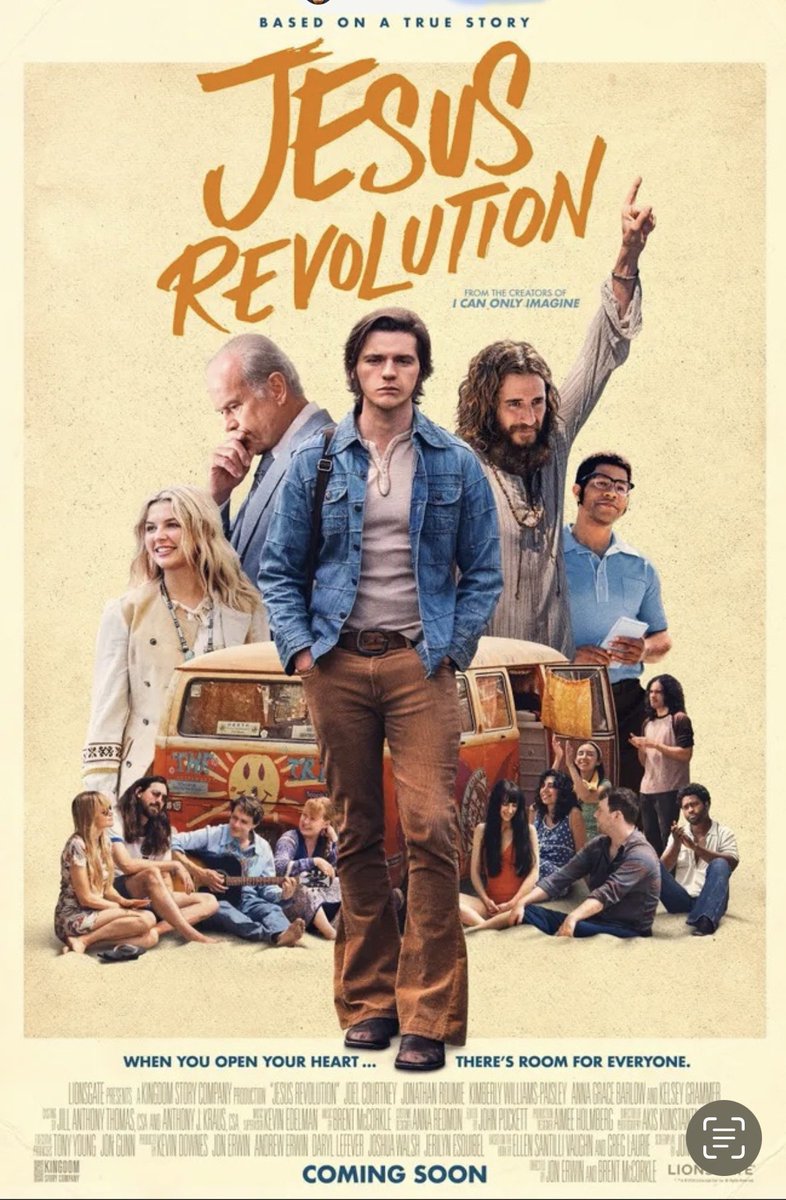
I was there. I was just a child, but I remember flashes of images. It was the Second Protestant Reformation. I’m Catholic now, a student of history, and I realize now how significant this event was. The old Protestantism is dying. Before the end of this century, all the old Protestant denominations will either be gone or unrecognizable. This is what is replacing them. It’s stripped down Protestantism — bare bones minimum. Today, they call it nondenominational Evangelicalism. By the end of this century, 90% of all Protestants will be nondenominational Evangelicals. And this is how it all started. What Catholics need to understand is that this is not what it looks like. Evangelicalism isn’t moving away from Catholicism. It’s stripping away the old Protestant barriers to Catholicism. It’s the final phase of Protestant evolution, before returning to the Catholic Church. We Catholics have no idea what is coming. It’s best to get familiar with it now. This is Reformation 2.0, and Catholics would do well to familiarize themselves with it. All you need is one movie to understand the whole thing. Yeah, it really is that simple. Get some popcorn and rent it.👇🏻
Shane Schaetzel †☧ tweet media
English
6
8
41
3K
+Thomas Dowd
+Thomas Dowd@thomasdowd_ca·
@JLLiedl Thanks for the share! I'm still getting the hang of this video teaching thing, so apologies if it all seems pretty rough. But I had fun with this one.
English
1
1
4
118
+Thomas Dowd
+Thomas Dowd@thomasdowd_ca·
Marriage, in its simplest definition, is a “partnership of life”. From the Catholic point of view, this includes three ideas: it lasts indefinitely, “until death do us part”; it promotes the good of the spouses; and it is meant for the raising up of children. That last point can be tricky for inter-faith couples, because religion is part of raising up children. A Catholic party to a marriage has a duty to share their faith with their kids and to raise them Catholic, and sometimes the non-Catholic feels the same way about their faith tradition (or lack thereof). It is a point that needs serious discussion and discernment before the day of the wedding. All these points can, quite frankly, be a tall order! But there are certain virtue which, if developed, go a long way to making marriages successful. Stay tuned for part 2!
English
0
0
4
3.3K
+Thomas Dowd
+Thomas Dowd@thomasdowd_ca·
@LarsFinn12in Laws of science, certainly. But 2+2=4 is a logical truth, not a physical one. It must necessarily be true, based on the definitions of "2", "4", "plus", and "equals". To say otherwise is to violate the principle of non-contradiction, which is a key basis of truth.
English
0
0
1
17
Lars Finn
Lars Finn@LarsFinn12in·
@thomasdowd_ca in our reality/dimesion 2+2=4. There are likely other dimensions where our laws of math/science do not apply
English
1
0
0
6
+Thomas Dowd
+Thomas Dowd@thomasdowd_ca·
Can God do anything? Yes, and no. There are no physical limits to God’s power. He is the ground of being, the very source of the existence of everything else. If he wanted to make a galaxy disappear, or create a second universe, it wouldn’t take more than a thought. In this regard, he is most certainly all-powerful. But… Catholic tradition holds that God cannot do what is logically impossible. He cannot make 2+2=5. He can’t make a circular square, or a triangular rectangle. And he cannot go against his own eternal nature. He can’t, for example, make himself stop existing. He is existence itself, his essence is to exist. To stop existing would be self-contradictory, and therefore impossible. Where this gets interesting is when God makes promises. Can God break a promise? Catholic tradition says No. For God to break a promise would be for him to go against his nature, and so is logically impossible. But the Bible says that God does make promises (called “covenants”), so in a sense God, while all-powerful, can choose to self-limit the expression of his power. This is super important to understand for Catholic teaching. A lot is riding on this distinction, and not just theoretically. When people get this wrong, all kinds of spiritual errors (and even spiritual distress) arises. So please stay tuned!
English
1
1
3
108
+Thomas Dowd
+Thomas Dowd@thomasdowd_ca·
God will not join a couple in matrimony if they do not truly consent to be joined. Period. Full stop. When you look at cultures throughout history, this has not always been universally observed. There are cases where in some cultures child marriage was practiced, or forced marriage for captives of war. The Catholic Church believes God is opposed to any of those deviations. For marriage to be real, it must be free, and that involves genuine consent. This is a part of our lives where even the most humble person can stand up to the most tyrannical authority and say, “No.” And God will back them up. There may be threats, even violence, but the simple truth is that the tyrant cannot force God to unite a couple in matrimony, and God will not do so without the genuine consent of the parties being part of the equation. It is a declaration of true human freedom, built into our human nature. God bless everyone!
English
0
1
4
163
+Thomas Dowd
+Thomas Dowd@thomasdowd_ca·
Those who know me, know I like to teach using analogies. Want to get an idea how God creates? Just think of the screen you are using to watch this video! Entry #6 in the All About God series.
English
0
0
0
110
+Thomas Dowd
+Thomas Dowd@thomasdowd_ca·
Preview of tomorrow's video - the analogy the viewscreen! Enjoy!
English
0
1
1
91
+Thomas Dowd
+Thomas Dowd@thomasdowd_ca·
New video in the Catholic Marriage for non-Catholics series! The key insight here: the Catholic Church believes that marriage is built into human nature, so if a union here on earth respects those principles, God enters in and joins the couple.
English
0
0
2
106
+Thomas Dowd
+Thomas Dowd@thomasdowd_ca·
Good morning friends! Here is episode 5 of my "All" About God series, with an intro to God's most ancient name and a bit of fun about the world's most famous superhero.
English
0
1
2
158
+Thomas Dowd
+Thomas Dowd@thomasdowd_ca·
The most ancient Biblical name for God is EL, and it can be found all over the place, including in people's names. New full teaching video coming tomorrow!
English
0
0
4
184
+Thomas Dowd
+Thomas Dowd@thomasdowd_ca·
Back to the teaching videos! I'm starting a second series, called "Catholic Marriage for non-Catholics". I'll keep going with "All about God" earlier in the week, and this series for later. I hope it will be helpful for people!
English
0
1
3
131
+Thomas Dowd
+Thomas Dowd@thomasdowd_ca·
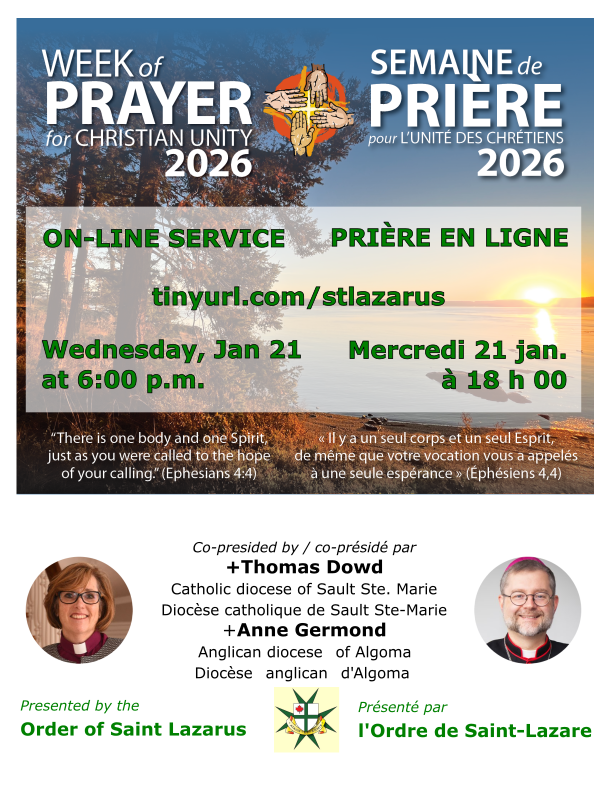
Today kicks off the Week of Prayer for Christian Unity! I'll be co-presiding an online prayer service sponsored by the Order of Saint Lazarus Canada. Please join us Wednesday Jan 21 at 6 pm EST!
+Thomas Dowd tweet media
English
0
0
1
95
+Thomas Dowd
+Thomas Dowd@thomasdowd_ca·
What is God's name? The Bible gives several answers to this question, and each name reveals something. Moses himself asked God this question, and the answer wasn't just a label. It was insight into the nature of God himself.
English
0
1
4
151