
Timo Hemsley retweetledi
Timo Hemsley
56 posts


Timo Hemsley retweetledi
Timo Hemsley retweetledi

Timo Hemsley retweetledi

Timo Hemsley retweetledi
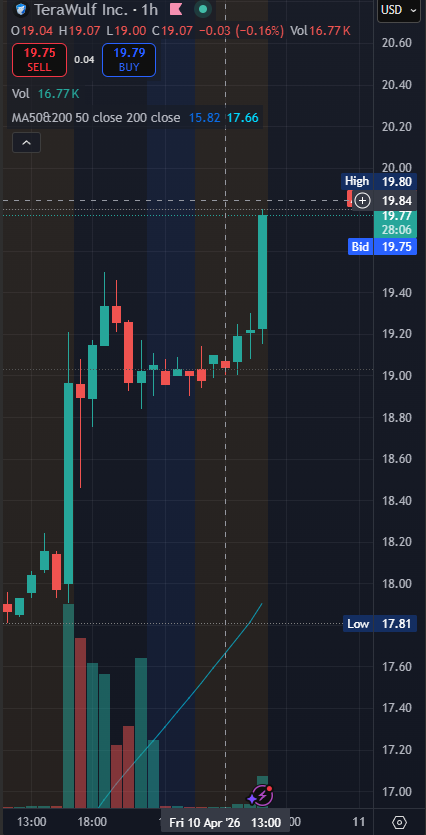
My initial Price Target for $WULF for 2026, was $25. We just hit the target! I did update my PT after the 2 acquisitions though, and the new PT is now $30, which I think is pretty conservative. Could definetly go way higher than $30, but in any case, @TeraWulfInc is one of the best long term holds for the AI/HPC era! $WULF will eventually be one of the biggest Energy REITs in the World for HPC/AI!

English
Timo Hemsley retweetledi

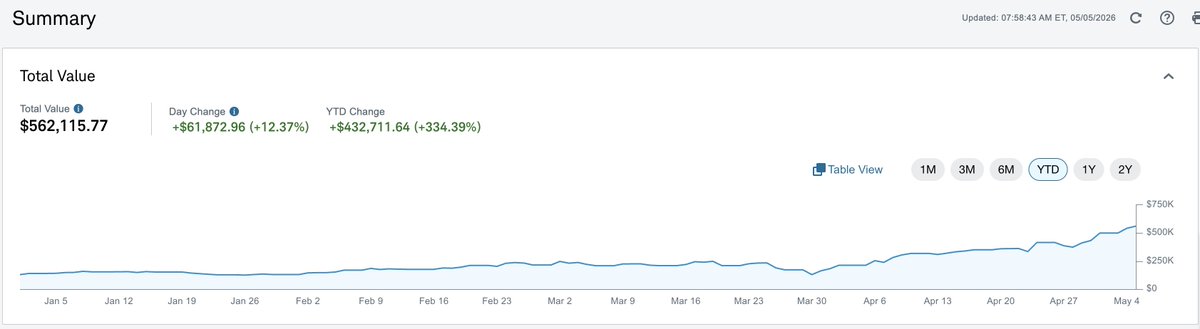
More than halfway there! This will be by far my biggest giveaway!
George Koutalidis@geokoutalidis
I'll make a promise publicly here. Bookmark this so you can hold me accountable. I made this portfolio literally just for fun. When it hits $1M, I will give it ALL away. My main portfolios make enough so I can definitely afford to give the profits of this fun portfolio away.
English
Timo Hemsley retweetledi

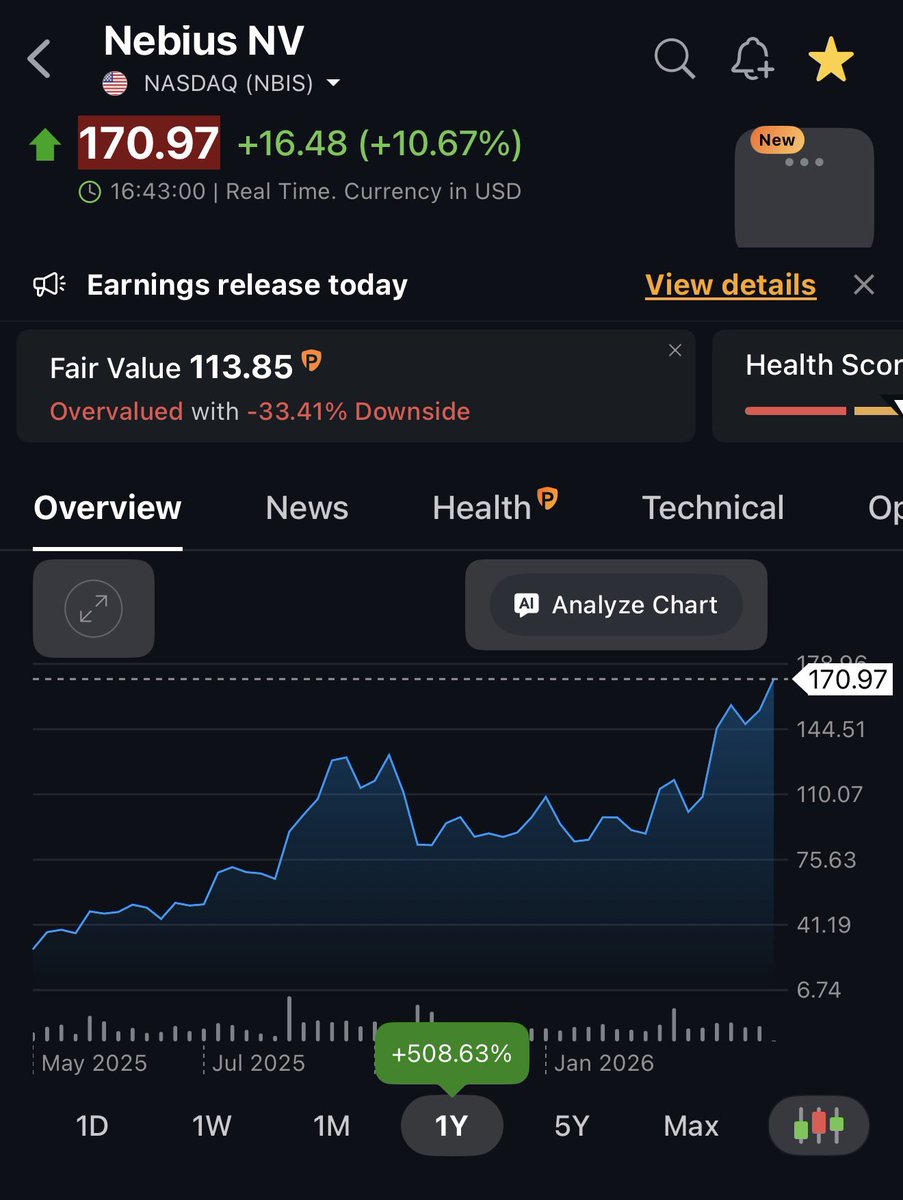
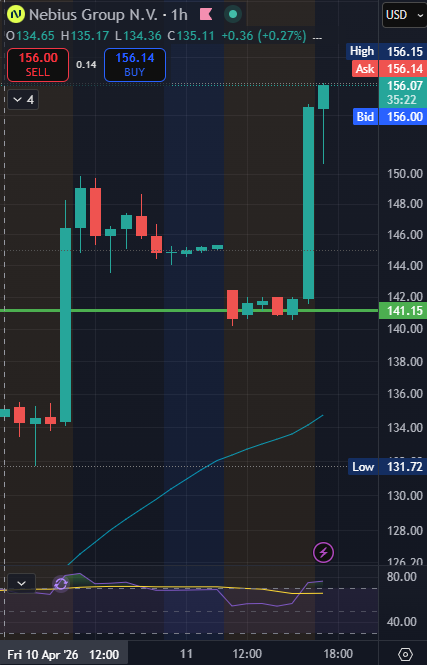
Glad to see $NBIS finally return 100%+ since my original thesis post back at ~$87.
I covered Nebius a ton late last year and at the start of this year.
Focusing on sum of parts from Avride to Clickhouse to how their balance sheet help them scale up their AI Cloud.
Was a little disappointed with timing, in terms of the massive drop in Dec/Jan.
But glad to see the company keep on delivering as Nebius is my favorite Neocloud in the entire sector.
I think we’re witnessing the rise of the next hyperscaler.

English
Timo Hemsley retweetledi
Timo Hemsley retweetledi
Timo Hemsley retweetledi
Timo Hemsley retweetledi
Timo Hemsley retweetledi

Reuters: Nebius $NBIS is building a $10B, 310 MW AI data center in Lappeenranta, Finland, with developer Polarnode. Capacity is set to come online in phases starting in 2027.

English
Timo Hemsley retweetledi

Nebius unveils plans to build one of Europe's largest AI factories as region scrambles for compute cnbc.com/2026/03/31/neb…
English
Timo Hemsley retweetledi

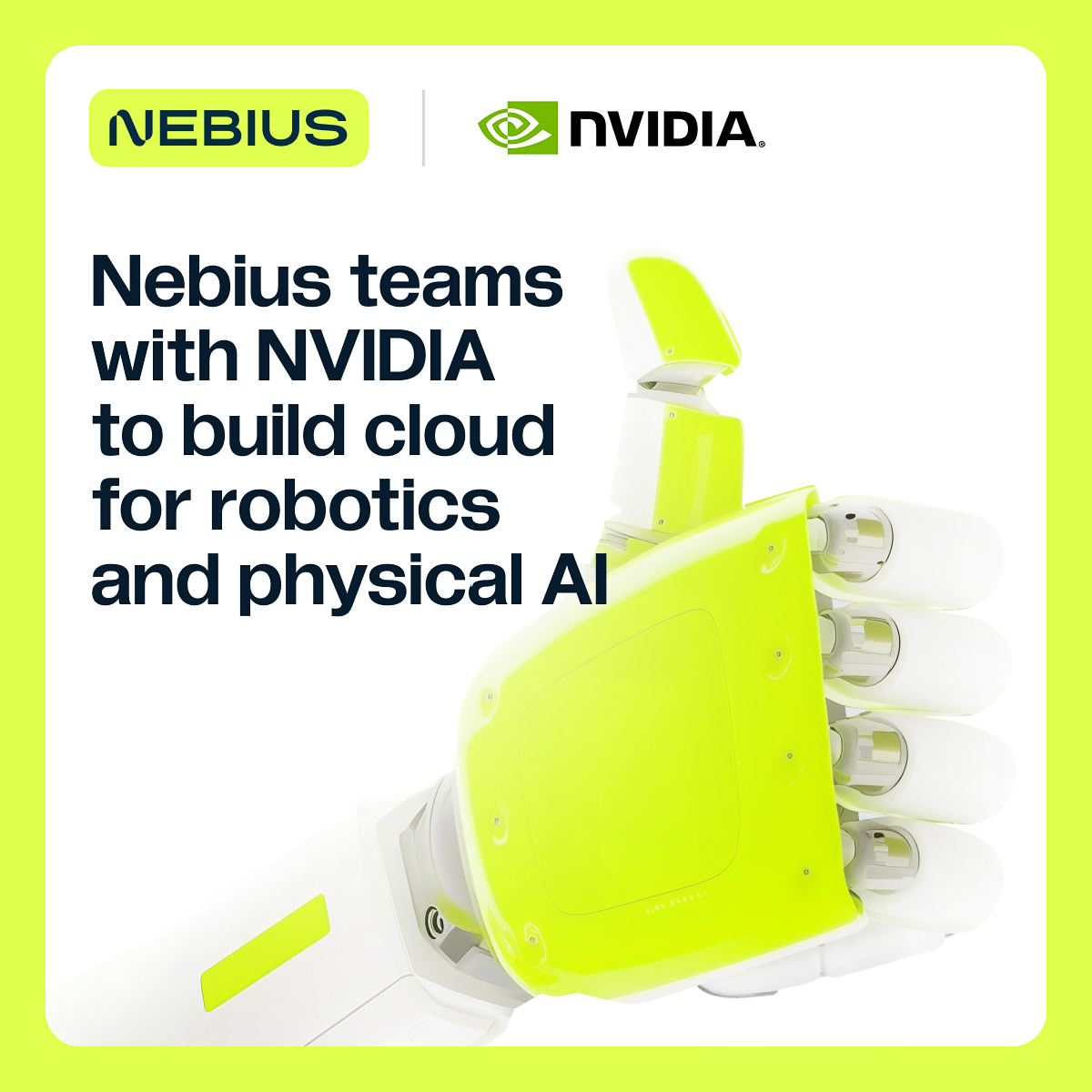
Nebius and @nvidia are collaborating to build the cloud for robotics and physical AI.
Combining Nebius AI Cloud with NVIDIA OSMO and the NVIDIA Physical AI Data Factory Blueprint, teams can move from raw data to simulation and deployed robots faster.
Early customers are already cutting iteration cycles from weeks to days.
Read the PR: nebius.com/newsroom/nebiu…
English
Timo Hemsley retweetledi

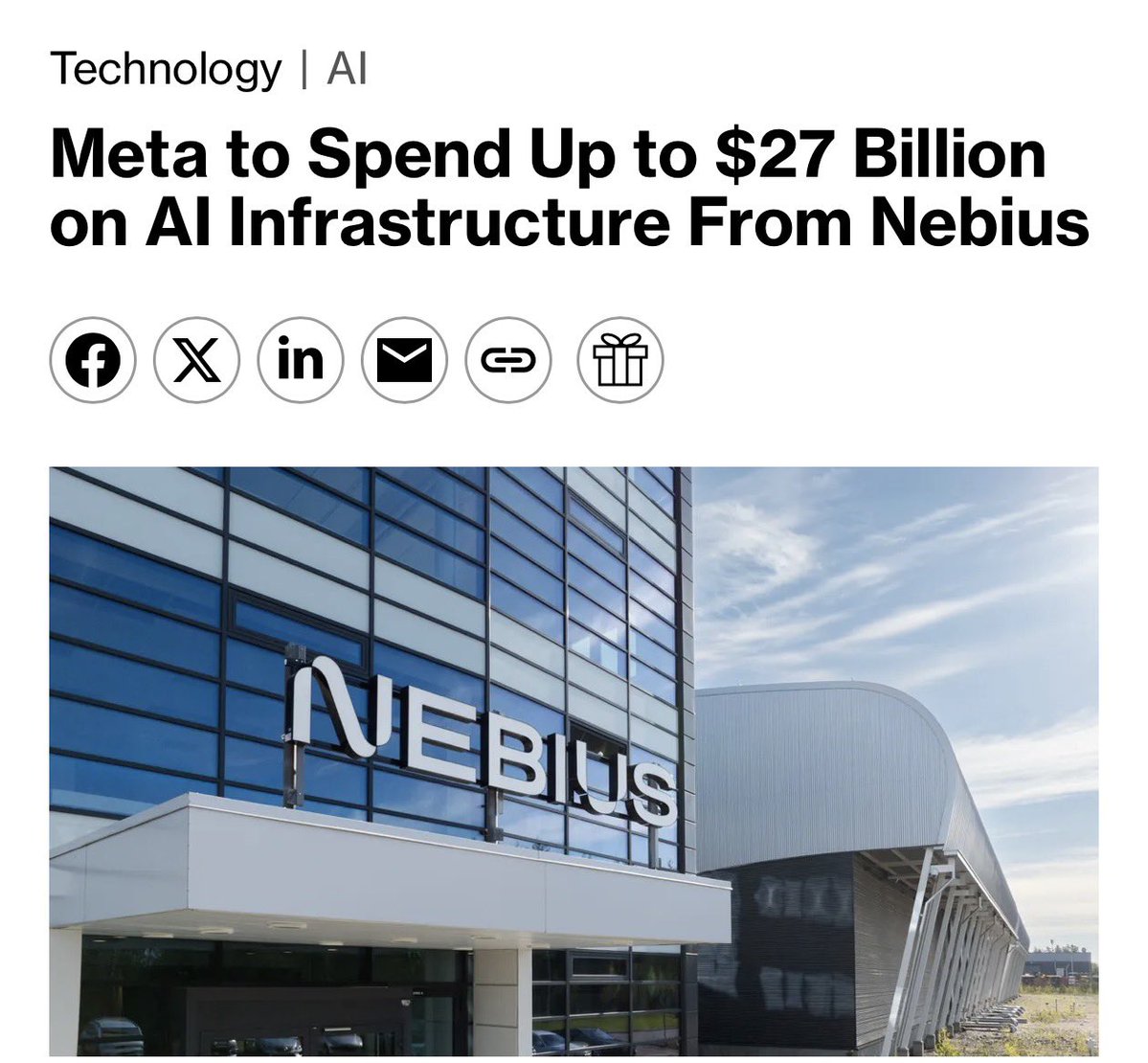
Meta will pay as much as $27 billion over the next five years for access to cutting-edge AI infrastructure from cloud provider Nebius Group as it spends aggressively to compete with the industry’s top frontier models bloomberg.com/news/articles/…
English
Timo Hemsley retweetledi
Timo Hemsley retweetledi
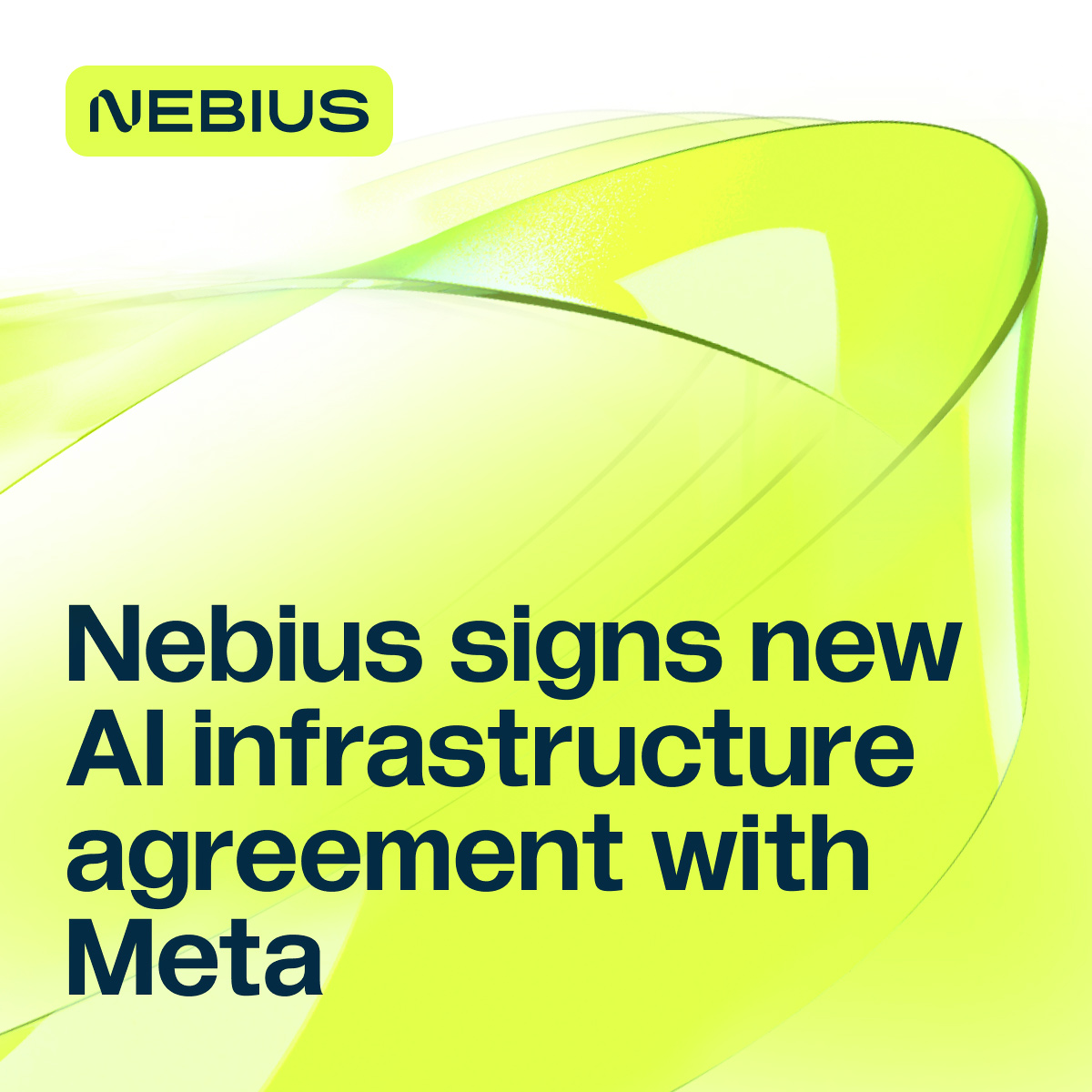
Nebius signs a new AI infrastructure agreement with Meta (up to ~$27B).
"We are pleased to expand our significant partnership... to accelerate the build-out and growth of our core AI cloud business." - CEO Arkady Volozh
Read more: nebius.com/newsroom/nebiu…
English
RT @dsteinberg10000: Unstoppable momentum. We crushed 4Q and 2025. It was a record quarter, to cap a record year! 🚀
✅18th straight “beat an…
English
Timo Hemsley retweetledi
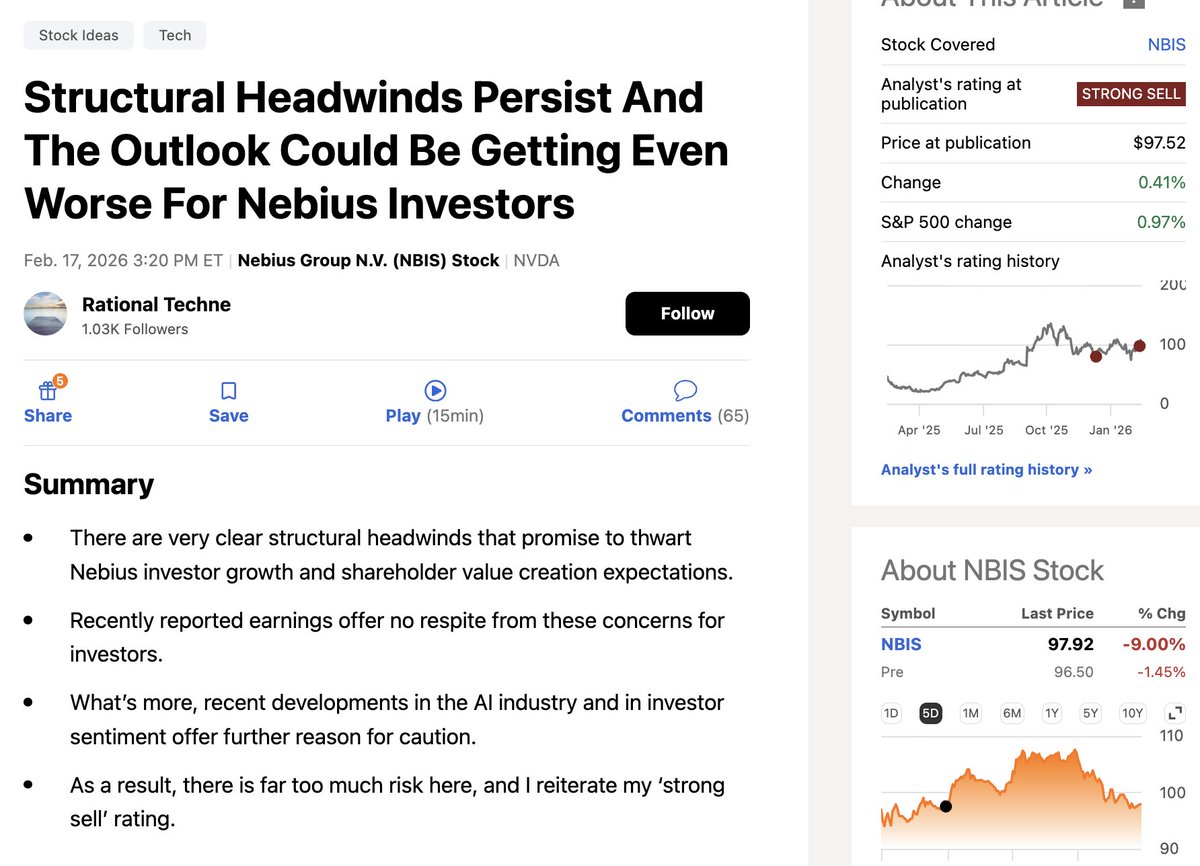
I read this article on $NBIS recently and I wanted to share with all of you the reply I posted on SeekingAlpha:
''Respectfully, this article contains several fundamental analytical errors, misapplied financial frameworks, and a critical failure to engage with the actual unit economics of the business. I’ll address each major claim directly.
1. The GAAP Operating Loss Argument Misunderstands How Infrastructure Scaling Works
The author fixates on the $234.5M Q4 operating loss as evidence of a broken business model. Let’s look at what actually drove that loss.
Depreciation and amortization alone was $180.7M in Q4, up from $33.3M a year ago. This is the single largest line item in the operating loss, and it reflects GPUs that were purchased and deployed to serve contracted, prepaid customers. This isn’t speculative spending - it’s the mechanical accounting treatment of capital assets that are already generating revenue and cash flow. The author’s preferred GAAP metric - operating income - is by construction punitive to any capital-intensive business in its deployment phase. By this logic, Amazon was a “sell” for its first 20 years.
More importantly, look at what happened to operating expenses as a percentage of revenue*. From the earnings release:
- Cost of revenues: 60% → 30% (halved YoY)
- Product development: 91% → 23%
- SGA: 243% → 70%
- Total OpEx as % of revenue: 488% → 203%
That is a 285-percentage-point improvement in operating cost efficiency in a single year. To claim there is “no evidence of operational leverage” when every single cost line is compressing at this rate is to simply not read the financial statements you’re citing.
2. The EBITDA Critique Misapplies Buffett and Munger
Invoking Buffett and Munger’s skepticism of EBITDA is a rhetorical move, not an analytical one. Buffett’s critique was directed at mature, stable businesses using EBITDA to obscure mediocre performance. He has never argued that depreciation is a real cash cost in the same period it’s recognized - because it isn’t.
In Nebius’s case, the adjusted EBITDA reconciliation is straightforward and publicly available. The addbacks are: D&A ($180.7M in Q4), SBC ($24.9M - actually *declining* YoY from $37.6M, which is unusual), one-off restructuring, and the ClickHouse revaluation gain (which is subtracted, not added - meaning the adjustment actually hurts EBITDA, contrary to the author’s implication). The company’s adjusted EBITDA definition explicitly strips out the ClickHouse gain. The author either didn’t read the reconciliation or chose not to engage with it.
The core AI cloud business - 94% of revenue - delivered a 24% EBITDA margin in Q4, up from 19% in Q3. Management guided 40% group EBITDA margins for 2026 and a medium-term EBIT margin target of 20-30%. You can disagree with the achievability of these targets, but to claim there is “no obvious path to profitability” while ignoring the stated and improving margin trajectory is analytically dishonest.
3. The CapEx / Free Cash Flow Argument Confuses Investment with Destruction
This is the most consequential error in the article. The author observes that CapEx exceeded operating cash flow and concludes this represents “shareholder value destruction.” This framework only holds if the capital being deployed earns below its cost of capital. Let’s check.
COO Ophir Nave broke down the CapEx on the earnings call:
- <1% goes to securing power (extremely high-return; locks in scarce, strategic infrastructure)
- ~20% goes to building data center shells (which management described as “one of the best investments we’ve made” - shells ready for GPU deployment sell out at premium terms)
- ~80% goes to GPU procurement (deployed with full demand visibility and confirmed pricing)
This CapEx is not speculative. It is being deployed against a $20B+ contracted backlog with blue-chip counterparties (Microsoft, Meta) who are making upfront cash prepayments. The $834M in Q4 operating cash flow was primarily customer prepayments - meaning the customers are financing the buildout before the GPUs are even energized. The $1.57B in deferred revenue on the balance sheet represents contracted capacity that has been paid for but not yet delivered.
Comparing this to a company “burning cash” is like calling a real estate developer who pre-sells condominiums before breaking ground a cash-burning business. The capital is being deployed against contractually committed, pre-funded demand.
4. The GPU Refresh Cycle Argument Is Empirically Wrong
The author claims GPUs have a “1-2 year” useful life based on “pessimistic estimates” and that constant refresh cycles will prevent profitability. The actual data from Nebius’s business contradicts this entirely.
CEO Volozh stated on the call that GPU pricing held firm across *all families*, including previous-generation hardware, and that even Hopper instances coming up for renewal are being re-signed at 12+ month terms with pricing “nudging up.” The company is extending its depreciation schedule from 4 years to 5 years specifically because observed utilization commitments support longer useful lives.
The reason is straightforward: in a supply-constrained environment where demand dramatically exceeds capacity, even prior-generation GPUs remain economically productive. Inference workloads - now roughly two-thirds of all AI compute - do not require bleeding-edge silicon. A company running production inference at scale on H100s is not going to rip them out and replace them with Blackwell just because Blackwell exists, especially when the H100s are fully utilized and generating strong margins.
5. The ARR Critique Misunderstands Capacity-Gated Revenue Recognition
The author argues that ARR “overstates” revenue by 2x and therefore misleads investors. This betrays a misunderstanding of how revenue recognition works in a capacity-gated infrastructure business.
Nebius can only recognize revenue once data center capacity is physically online and power is flowing. The company was *sold out* of capacity in Q3, Q4, and Q1 2026. ARR measures the current earning power of the installed base at a point in time. Revenue for the full year is lower because the installed base grew throughout the year - most capacity was deployed in H2 2025.
This is not an aggressive accounting trick. It is exactly how ARR works at every SaaS and infrastructure company. If you add 100 customers in December, your December ARR captures all 100, but your full-year revenue only captured the pro-rated contribution of each customer from their start date. CFO Alonso explained this clearly on the call, stating that in a hypergrowth phase, ARR is the better metric for evaluating the business.
The fact that ARR was $1.25B against $530M in annual revenue is not evidence of manipulation - it’s evidence that the business was scaling rapidly throughout the year. That’s exactly what you want to see.
6. The “No Evidence of Shareholder Value Creation” Claim Ignores $20B+ in Contracted Revenue
This is perhaps the most baffling claim in the article. Nebius has:
- A $17.4-19.4B Microsoft contract (first tranche delivered on time November 2025, remaining tranches scheduled throughout 2026)
- An ~$3B Meta contract (both tranches fully deployed and servicing as of early February 2026)
- $4B+ pipeline creation trajectory in Q1 2026 alone (per CRO Marc Boroditsky)
- Deal terms lengthening, average deal sizes increasing, ASPs up 50%+ QoQ
- Nearly 2x more transactions with 12+ month duration in Q4 vs Q3
- Customers prepaying to secure future capacity
The company has zero corporate-level debt, $3.7B in cash, a 25% stake in ClickHouse (recently valued at ~$15B, implying ~$3.75B for Nebius’s stake), and has not utilized its ATM equity program. The Q4 EBITDA was positive. Core AI cloud margins improved 500bps sequentially. Revenue grew 547% YoY.
To look at this data set and conclude “there’s no compelling reason for hope” requires ignoring virtually every metric the business reports.
7. The “Market Can’t Value This” Argument Proves the Bull Case
The author points to NBIS’s price volatility as evidence that “the market has no idea how to accurately value this company.” I agree - but this cuts in favor of bulls, not bears. When the market cannot value a hypergrowth company, it tends to underprice it during periods of sentiment weakness and overprice it during momentum runs. At ~$97, with the stock 31% off its high and trading at roughly 6-7x 2026E revenue for a company growing 5-6x YoY with contracted backlog and 40% EBITDA margin guidance, the risk-reward is skewed heavily to the upside. Six of seven covering analysts rate NBIS a Buy with a consensus target of ~$150 and a street high of $211.
8. The “Hyperscaler ROI Concerns” Argument Ignores What Hyperscalers Themselves Are Saying
The author suggests that hyperscaler CapEx may pull back due to ROI concerns. Every single hyperscaler *raised* their 2026 CapEx guidance in Q4 earnings. Amazon committed $200B. Alphabet guided $175-185B. Meta guided $115-135B. Combined 2026 CapEx is tracking toward $635-700B, up 67-74% from 2025. Every one of them is supply-constrained, not demand-constrained. AWS backlog hit $244B (+40% YoY), Azure unfulfilled demand exceeds $80B, and Google Cloud backlog surged 55% past $240B.
The author can speculate that this spending will slow, but the actual data from Q4 2025 earnings shows the opposite: the spending is accelerating. And Nebius’s contracted backlog exists today, not in a hypothetical future.
Conclusion
This article’s analytical framework - applying steady-state profitability metrics to a hypergrowth infrastructure business in its second year of operation, dismissing ARR as obfuscation, conflating investment-phase CapEx with value destruction, and claiming “no path to profitability” while ignoring rapidly compressing cost ratios and an explicit 40% EBITDA margin guide - reflects either a fundamental misunderstanding of how infrastructure businesses scale or a deliberate choice to present a one-sided narrative.
The risks with Nebius are real: execution risk on the capacity buildout, customer concentration, and financing complexity. These deserve serious analysis. But the article doesn’t engage with these actual risks. Instead, it builds a bear case on misread financial statements, misapplied value investing frameworks, and a refusal to engage with the forward-looking contracted revenue base that underpins the entire business.
I am long NBIS. You’re welcome for the actual proper analysis, hope you’ve learned something.''
Article Link: #comment-102183375" target="_blank" rel="nofollow noopener">seekingalpha.com/article/487105…
English