Sabitlenmiş Tweet
GreatKoppiteHist
189.4K posts

GreatKoppiteHist
@TKoppite
Liverpool Fan in the womb. History. Food. Victorious Annoying Red. Books. Sport. Music. Love to the World. YNWA 💙 No DMs🌈🌞❤️🏴 🇮🇱💖🏆20x J97RIP
Katılım Temmuz 2020
5.8K Takip Edilen3.8K Takipçiler

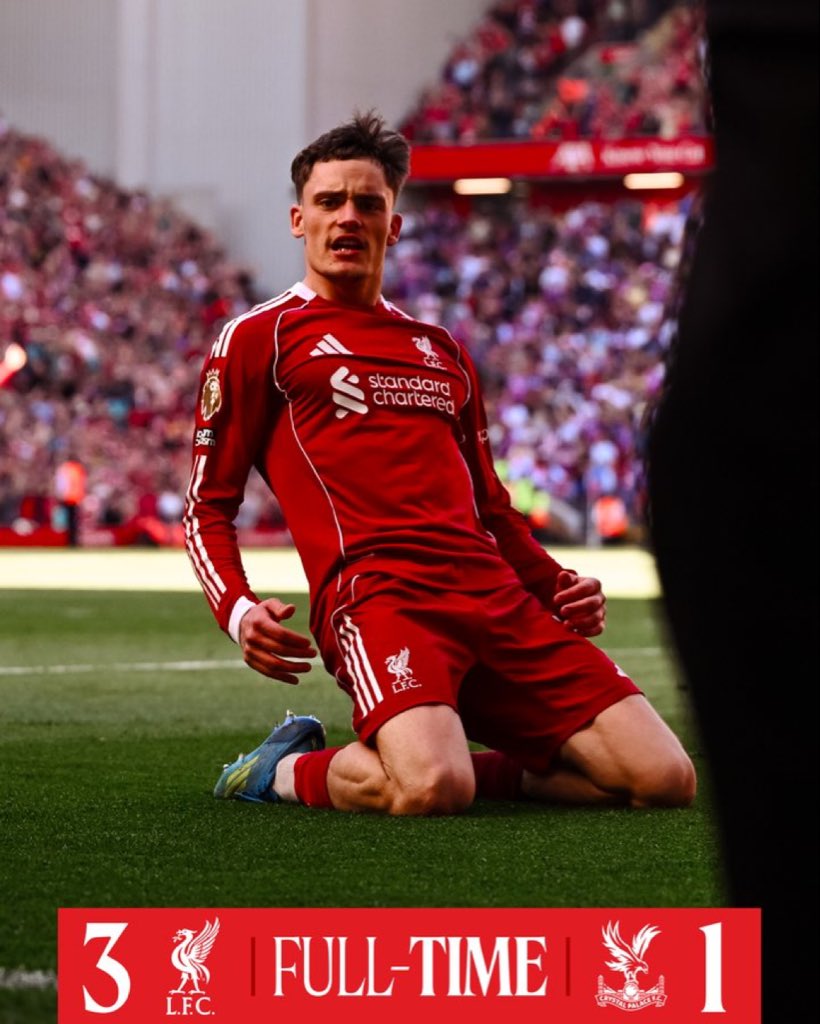
@wandera28 What a ridiculous question!!! Celebrate the flipping win.
English
GreatKoppiteHist retweetledi

GreatKoppiteHist retweetledi

St Laurence’s Church at Bradford-on-Avon in Wiltshire 🇬🇧 is one of the very few surviving Anglo-Saxon churches in England to have escaped later medieval rebuilding or alteration...
Dating to around 700 AD, the structure remains largely as it was first constructed, offering a rare and direct glimpse into early Christian architecture in England.
Its narrow proportions, tall walls, and distinctive Saxon masonry set it apart from later Norman and medieval churches. The survival of the building in such an unaltered state is exceptional, making it one of the most important early ecclesiastical structures still standing in the country.
#archaeohistories

English
GreatKoppiteHist retweetledi

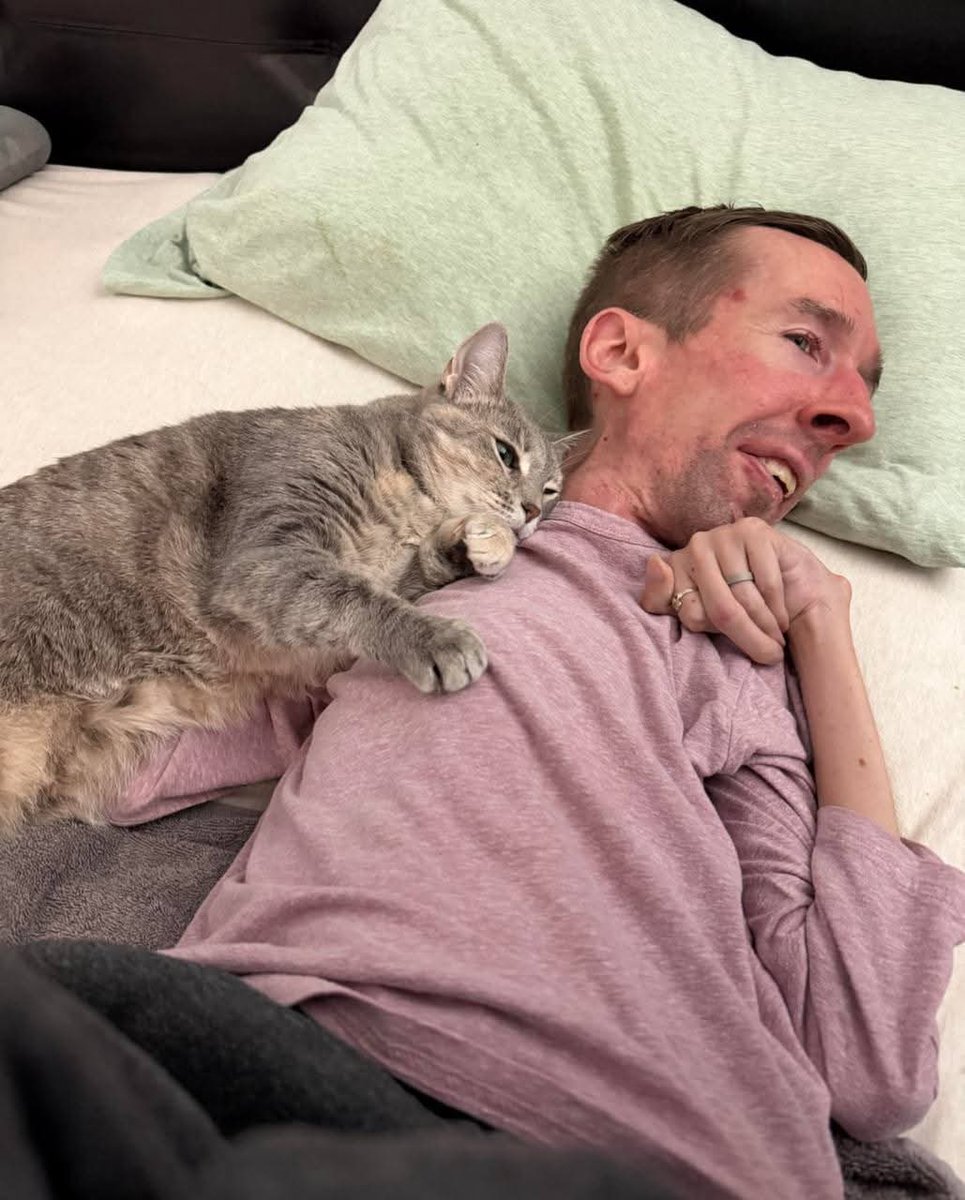
My disabled uncle got a cat last week, and I honestly don’t think I’ve ever seen him this happy. Not the polite smile he puts on for people. Not the “I’m fine” look. Real happiness, the kind you don’t have to perform.
Ever since that cat showed up, something shifted. He laughs more. He talks to it. He actually looks forward to his days. Seeing that hit me harder than I expected, because for the first time in a long while, it was obvious he wasn’t just getting through life, he was genuinely enjoying it.
It made me incredibly grateful that this little cat came into his life when it did. So grateful that I didn’t even hesitate, I went out and bought the cat about $1,000 worth of toys, treats, and food just to help out and make sure they’re both taken care of.
Watching someone you love finally experience real happiness again is priceless. And realizing that something so simple could bring him that much peace honestly made my heart feel full.
By Frank Paul

English

@LauraAKarim He was far from the butcher of England and I love that cheesy smile on his face. 😂
English
GreatKoppiteHist retweetledi

#WarsoftheRoses
OTD in 1464 - #EdwardIV appointed his enforcer, John Tiptoft, Earl of Worcester as Chancellor of Ireland for life .Tiptoft is described in sources written after the 1485 Tudor invasion as ‘the Butcher of England.’ But was this an over-simplification?
Let’s start with the origins of Tiptoft’s bloodthirsty reputation. Edward IV appointed Tiptoft as Constable of England in February 1462 during a period when he was seeking to impose his authority on England & deal with defeated Lancastrian opponents. The role of Constable involved trying treason cases with no jury; simply an examination of the evidence followed by a decision on guilt or innocence & then sentencing (likely to death if the accused was found guilty.)
Soon after his appointment Tiptoft convicted John de Vere, 12th Earl of Oxford, Oxford’s heir Aubrey de Vere & Sir Thomas Tuddenham of high treason & they were beheaded on Tower Hill. However, Oxford’s second son John de Vere was allowed to succeed his father, which would later prove to be a mistake when he established himself as one of the most able Lancastrian commanders, playing prominent roles in the 1470 restoration of Henry VI & Henry Tudor’s victory at Bosworth in 1485.
Tiptoft was present in the North East as the Neville brothers, John Neville (later Earl of Northumberland & Marquess of Montagu) & Richard Neville, Earl of Warwick (the Kingmaker) crushed the remaining Lancastrian resistance in the early 1460s. He tried prisoners captured after the Battle of Hexham & the taking of Bamburgh Castle.
In 1467 Edward sent Tiptoft to Ireland to deal with the troublesome deputy governor, Thomas Fitzgerald, who he removed from office, tried for treason & had executed alongside the Earl of Desmond.
But there was more to Tiptoft than sentencing prominent men to death on Edward IV’s behalf. He was a brilliant scholar renowned for his Latin expertise & had studied at University College, Oxford between the ages of 13 & 16. He was created Earl of Worcester in July 1449 around the time of his marriage to Warwick’s widowed sister (& possible twin) Cecily Neville, Dowager Duchess of Warwick.
Even though Cecily herself died in July 1450 (likely of pregnancy complications) their marriage ensured Tiptoft became a prominent member of the party forming around Henry VI’s dynastic rival Richard, 3rd Duke of York & his Neville relatives.
Tiptoft undertook a pilgrimage to the Holy Land in 1458 & on his way home spent two years studying at the University of Padua. Perhaps a wise decision as it provided a safe haven during the turbulent years when control of England swung between the Lancastrian Queen Margaret of Anjou & the Yorkist lords.
Tiptoft returned to England following Edward’s usurpation in 1461. As well as his appointment as Constable he was elevated to the Order of the Garter.
In 1470 Tiptoft was captured & prevented from fleeing to Burgundian held Flanders with Edward IV. His execution is usually presented as a moment of karma for the Lancastrians, which no doubt it was, but I’d like to suggest to you that there was another element which is often overlooked.
Tiptoft was Warwic:k’s brother-in-law & owed his rise to that connection. Therefore Warwick might have expected Tiptoft would take his side rather than Edward’s in 1469-70 & was likely incensed at Tiptoft’s ‘betrayal.’ With Warwick ruling England on behalf of the restored Henry VI this sealed Tiptoft’s fate & he knew it. He faced death bravely & reportedly requested to be killed with three blows of the axe to honour the Trinity.

English
GreatKoppiteHist retweetledi

Hope you enjoy this on the anniversary
Historia – the HWA@HistoriaHWA
"The scaffold was his stage in this theatre of death: every gesture he made, every detail of what followed, would be remembered." Read Leanda de Lisle's feature about the execution of Charles I #otd 30 January, 1649. In Historia at historiamag.com/killing-king-c…
English
GreatKoppiteHist retweetledi

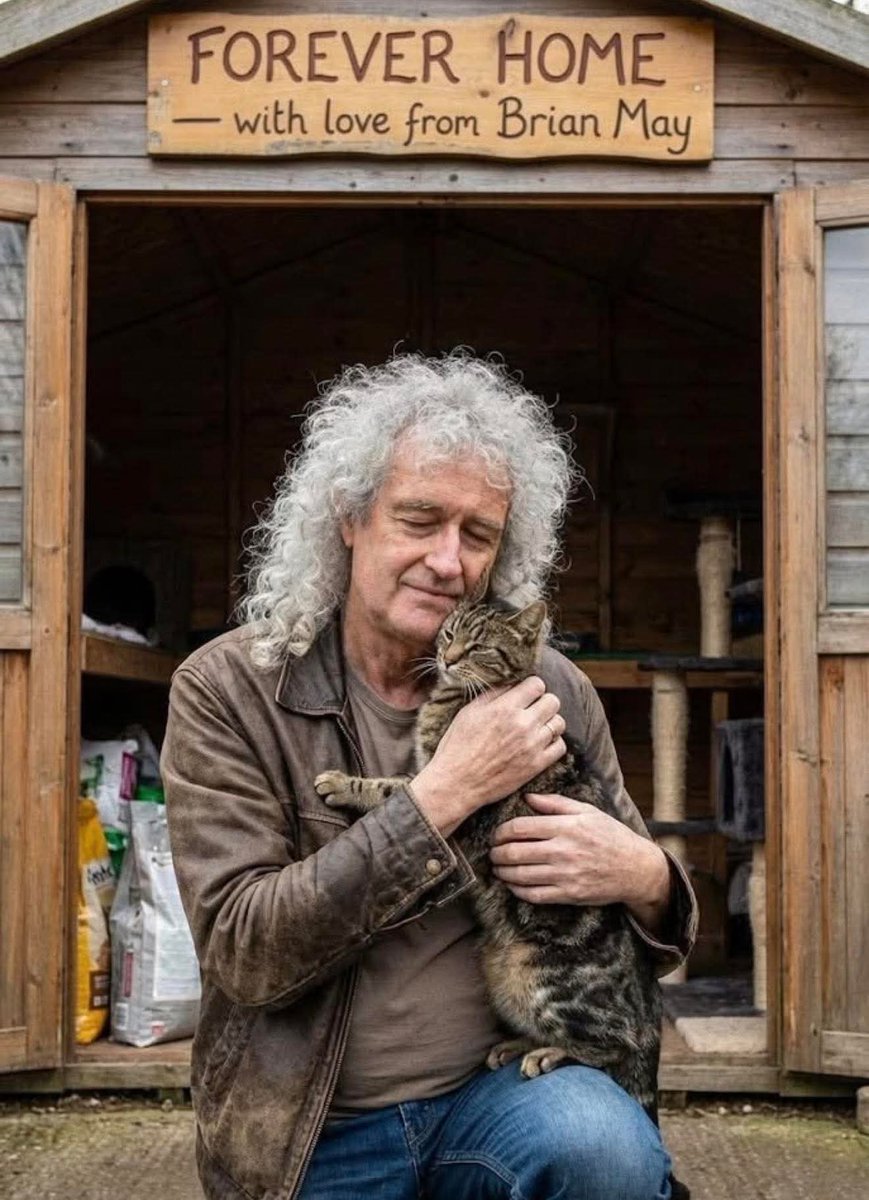
BRIAN MAY QUIETLY WALKED INTO A SMALL RESCUE SHELTER ON THE BRINK OF CLOSING — WITH JUST 48 HOURS LEFT BEFORE EVERY CAT INSIDE WOULD BE PUT DOWN
The bills were overdue. Donations had dried up. The owner had run out of options. In less than 48 hours, 39 cats were scheduled to be euthanized—not because they were sick or aggressive, but because there was nowhere left for them to go.
Then, without cameras, a film crew, or any announcement, Brian May walked through the door.
Known to millions as the legendary guitarist of Queen and a lifelong animal-rights advocate, Brian didn’t ask for recognition. He didn’t lead with his iconic status. Dressed simply, with his familiar calm presence, he walked straight to the back of the shelter—to the quietest row of enclosures, where the oldest and weakest cats lay unnoticed.
There, curled up in the corner of a worn blanket, was an 11-year-old tabby mix named Buddy.
Too tired to lift his head.
Too old to be adopted.
Too close to the end.
Brian knelt beside him, his gentle hands resting softly on the cat’s head. He spoke quietly, careful not to startle him. For several moments, he said nothing at all. Then he looked up at the owner and asked softly,
“How many cats are here?”
“Thirty-nine,” the owner replied, her voice breaking.
Brian nodded. No hesitation. No phone calls to assistants. He said calmly—with a steady certainty that stilled the room:
“All 39 cats deserve a future.”
What followed felt unreal to the shelter staff. The very next morning, delivery trucks began arriving.
New bedding and climate-safe flooring.
High-quality food and medical supplies.
Scratching posts, grooming stations, and enrichment areas.
Every enclosure was repaired and restored. All outstanding debts were paid in full. Veterinarians were brought in to examine every single animal. Above each enclosure, a small wooden sign appeared: “Forever home — with love from Brian.”
But the moment that brought everyone to tears came from the quietest corner of the room. Buddy was being lifted gently for a checkup when Brian stepped forward.
“I’ll take him,” he said.
The room went silent. Buddy—overlooked for a decade—finally belonged.
“He’s waited long enough,” Brian said later, a soft smile on his face. “I think it’s time he came home.”
Brian May didn’t post about it. He didn’t mention it on stage. He didn’t call the press. The story surfaced days later when a volunteer, overwhelmed by what she’d witnessed, decided people needed to know.
He didn’t just save a shelter.
He didn’t just save cats.
He saved 39 lives—and reminded the world that compassion doesn’t need applause.
Sometimes, the greatest acts of kindness happen when the spotlight is off.

English
GreatKoppiteHist retweetledi

It's nearly Candlemas, traditionally the very end of the Christmas season, which joins a last look back to midwinter with the first glimmer of spring. Time for a few more medieval carols: aclerkofoxford.blogspot.com/2015/01/tiding…
'Tidings, tidings that be true:
Sorrow is past and joy doth renew.'

English
GreatKoppiteHist retweetledi

#WarsoftheRoses
OTD in 1479 - #EdwardIV appointed Robert Stillington, Bishop of Bath & Welles to negotiate with the French ambassador. This would not be remarkable were it not for who Stillington was.
After Edward’s death in 1483 Stillington revealed he had married Edward to Eleanor Talbot, rendering Edward’s subsequent marriage to Elizabeth Woodville bigamous & their offspring illegitimate. This revelation led to the accession of Edward’s brother, Richard, Duke of Gloucester as #RichardIII.
Philippe de Commynes described Stillington as ‘this bad bishop’ & it is often argued that the Talbot marriage was fabricated to enable Richard to gain the throne. However, there is also no evidence of Stillington committing any impropriety or of him having had a prior association with Richard. We do though have significant evidence of Stillington’s closeness to Edward IV & of him having risen through the King’s favour, as might befit someone privy to the King’s secrets.
Stillington served as keeper of the Privy Seal for Edward IV from 1461 to 1467. His star continued to rise after Edward’s marriage to Elizabeth Woodville in 1464 (perhaps in part due to the secret knowledge he possessed?) & he was chosen as the new bishop for Bath & Welles in October 1465.
In June 1467 Edward appointed Stillington as Lord Chancellor, replacing George Neville, Archbishop of York (brother of Warwick the Kingmaker.) Stillington served as Lord Chancellor until the restoration of #HenryVI in autumn 1470, when George
Neville regained the office. After Edward fought his way back to the throne in March-May 1471 Stillington returned as Lord Chancellor serving until July 1473, when Edward replaced him with the Bishop of Durham, Laurence Booth.
In early 1478 Stillington was imprisoned in the Tower of London alongside the King’s brother, George, Duke of Clarence, who was executed for treason on 18 February 1478. The reasons for Stillington’s imprisonment have been lost to us. However, it seems likely that
he may have confided his knowledge of Edward’s prior marriage to Eleanor Talbot to Clarence. This would have given Edward & Elizabeth a powerful motivation to eliminate Clarence in 1478 in order to protect the legitimacy of their own sons.
It has been argued that if Stillington truly possessed such dangerous knowledge Edward would not have trusted him to serve as part of his negotiating team with the French at a critical moment in 1479, when Edward was concerned he might be about to lose his valuable French pension. The other members of the delegation were the Queen’s brother, Anthony Woodville & John Morton, Bishop of Ely.
However, it is even more unlikely that Edward would have trusted such a delicate embassy to someone who had plotted against him with his disgraced brother Clarence (the alternative explanation for 1478 Stillington’s imprisonment.) Most likely the appointment was part of a reconciliation between Edward & Stillington, & perhaps an attempt to incentivise him to resume his former discretion.

English
GreatKoppiteHist retweetledi