
yadav
3.2K posts


yadav
@tlonic
forever @MITGradUnion @UEUnion. linguist. it consulting for unions. chicagoan https://t.co/54W5CjCNGt
Chicago, IL Katılım Mart 2008
2K Takip Edilen481 Takipçiler


There seems to be quite the scandal brewing in our little corner of the left
David Brophy@Dave_Brophy
I've now checked with both Wang Hui and Wang Ke and confirmed that the works attributed to them in this article do not exist. @MaxBlumenthal can perhaps clarify the status of his piece. @vijayprashad @t_ings @monthly_review
English
@sridatta_a @cobbaltt i completely forgot that those dirghas were decomposable in the kannada block! thanks
English

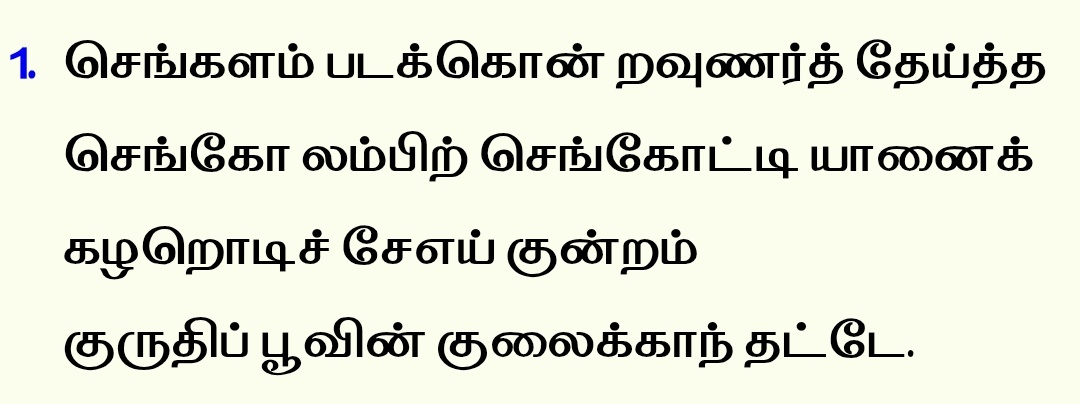

@generalusername @hanssium no, zwnj's aren't used in that case, those are used when you *don't* want a conjunct consonant. क्रौ is made up of क + ् + र + ौ. You can use this to see the breakdown: unicode.scarfboy.com/?s=%E0%A4%95%E…
English


it pains me to see that complex scripts will always be discriminated in tech against simple, typographically uncomplicated scripts
Aksara Jawa will always be "waste of horizontal & vertical space", Mongolian Hudum will always be "too difficult to implement" etc
English
@generalusername @hanssium is still very small and very compressible compared to most other types of data
English
@generalusername @hanssium not sure what you mean by latin-like tokens. brahmic scripts use their own codepoints, they are not made up of other characters. the codepoints are higher up so they do use more bytes than Latin characters but that's not really an issue on modern computers; text data in any lang
English

English
My hottake is that Ḍosā/Dhosā and Dōsɛ/Dōse are different dishes, just like Poroṭṭā and Parāṭhā are now different.
historiakayasthas@historiakayasth
@entropied2223 I would argue Dosa is no more south Indian at this point.
Română

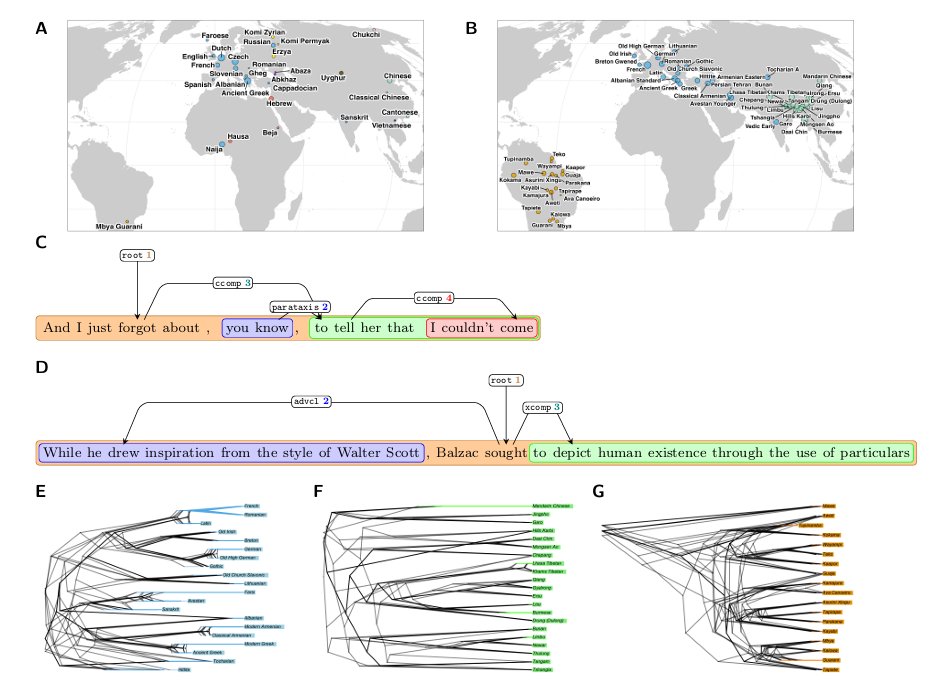
No effect of writing on syntax complexity
❌ hierarchy depth and sentence length are similar in spoken vs written language
❌the introduction of writing had no discernible effect on clause combining
✅decrease in variance = effect of increased normativity
biorxiv.org/content/10.110…
English
@learningnothing @cobbaltt No, I just meant that as an example of the class.
English
@cobbaltt @iwsfutcmd @langofmind Linguistics has gone in all sorts of directions, including cognitive, as it should, but Chomsky has been pretty consistent that his focus is on the formal properties of language. That's why 'intensional' is one of the 'i's of i-language.
English
@cobbaltt @iwsfutcmd @langofmind "language" here is an abstraction, again, not cognitive, trying to get at the formal language properties of natural language. The "point" is understanding the basic problem of language acquisition. Children do not only learn "particular" languages, they will learn any language
English

oh come on man that's a low blow
(real talk though how many modern mathematicians have read Euclid's Elements?)
Gopalakrishnan R@cobbaltt
"Aspects of the Theory of Syntax, which I'm sure generativists have read."
English
@cobbaltt @iwsfutcmd @langofmind any child to learn the grammar of any language with minimal input (c.f. Gold's identification in the limit)
English
@cobbaltt @iwsfutcmd @langofmind I agree that there's real tension here within the field about what kind of claims UG involves, but UG doesn't come from a cognitive perspective, it's an application of formal language theory to the basic problem of language acquisition: what must language look like in order for
English
@cobbaltt @iwsfutcmd @langofmind I disagree with this characterization. At least pre-Biolinguistics, Chomsky's program is focused on what Marr (1982) calls the computational level of analysis: what does the system do and why? He sees the "how" question as difficult to answer without knowing the "what" first.
English
@iwsfutcmd @langofmind ... based on the thesis that language is primarily cognitive and his syntactic theories attempt to model how language is cognitively stored and processed.
I've had conversations of pointing out that competing syntactic models - if they explain the data equally well - can ...
English