N T

68.2K posts

N T banner
N T

N T

@tomopi777

プロ野球(中日・時に荒れる)、ホームシアター、映画、斉藤和義や久石譲、Def Techを好む。 家族が増え、希望と不安と共に生きています。 大したことは呟いていません。 現在、政権の所業、コロナ対策の酷さ、五輪強行等々への怒りが募るばかりで関連リツイートが多くなっております🙇また趣味コメントも混ざる形になっています。

Japan Katılım Mayıs 2010
3.9K Takip Edilen1.3K Takipçiler
N T retweetledi
Dr.パパ
Dr.パパ@DrKarte·
プリン →「容器が来ないから5月から販売休止検討するわ」 カルビー →「インクが来ないからポテチ白黒で出すわ」 日清オイリオ →「ビニール包材来ないから業務用油5商品休売や」 チチヤス →「ポリスチレン来ないから毎朝快調ヨーグルト生産休止や」 ← なお全部同じ月の出来事 ←なお全部「中東情勢の影響」が公式コメント 「ナフサ不足はデマ 」 「ナフサ煽り」とは何だったのか。 結論は出とるんよ。 ナフサ問題以前に、 そもそも彼らには「知性」が足りなかったんよ。
琥珀色な空@kohakuironasora

@DrKarte もう既に容器不足で販売停止になる物が出始めています。結局3月頃から煽りだ何だと言われても警告を発していた人達が言ったとおりに包材不足で物が出荷できなくなるという正にその状況になっています。 chugoku-np.co.jp/articles/-/833…

日本語
55
3.2K
8.1K
402.3K
N T retweetledi
HRK
HRK@on_and_under·
トランプ氏支持率35%、今任期でほぼ最低水準 共和党内でも不満拡大=調査 jp.reuters.com/world/us/NLET4…
日本語
2
12
20
2.3K
N T retweetledi
町山智浩
町山智浩@TomoMachi·
選挙や改憲やスパイ防止法やヘイトや増税とマスメディアが戦わなくなった今、後ろ盾もなく戦う人々を助けもせずに「デモに行かない人が社会を支えている」だの「負けてる現実を受け入れろ」だの後ろから撃つばかりで結果的に権力のサポしてる東浩紀や常見陽平のいったいどこが「本当のリベラル」なのか
町山智浩@TomoMachi

「彼らこそ本当のリベラルだ!」みたいなレスがついてるけど、この二人、高市政権やレイシストと戦ってる人たちに難癖つけてるのしか見たことないけど?

日本語
5
55
153
6.4K
N T retweetledi
田中 均 (Hitoshi Tanaka)
田中 均 (Hitoshi Tanaka)@TanakaDiplomat·
トランプ氏を見るたびに「何故こんな人が米国大統領なのか?」との疑問が浮かぶ。暴力、嘘など、禁じられている事から解き放たれたいとの人間の渇望がトランプ支持の背景ではないかとすら思う。それにつけてもそういうトランプ氏を潤んだ目で見つめる首相がいるのが理解出来ないし、恥ずかしい。
日本語
100
891
3.1K
34.8K
N T retweetledi
Ihtesham Ali
Ihtesham Ali@ihtesham2005·
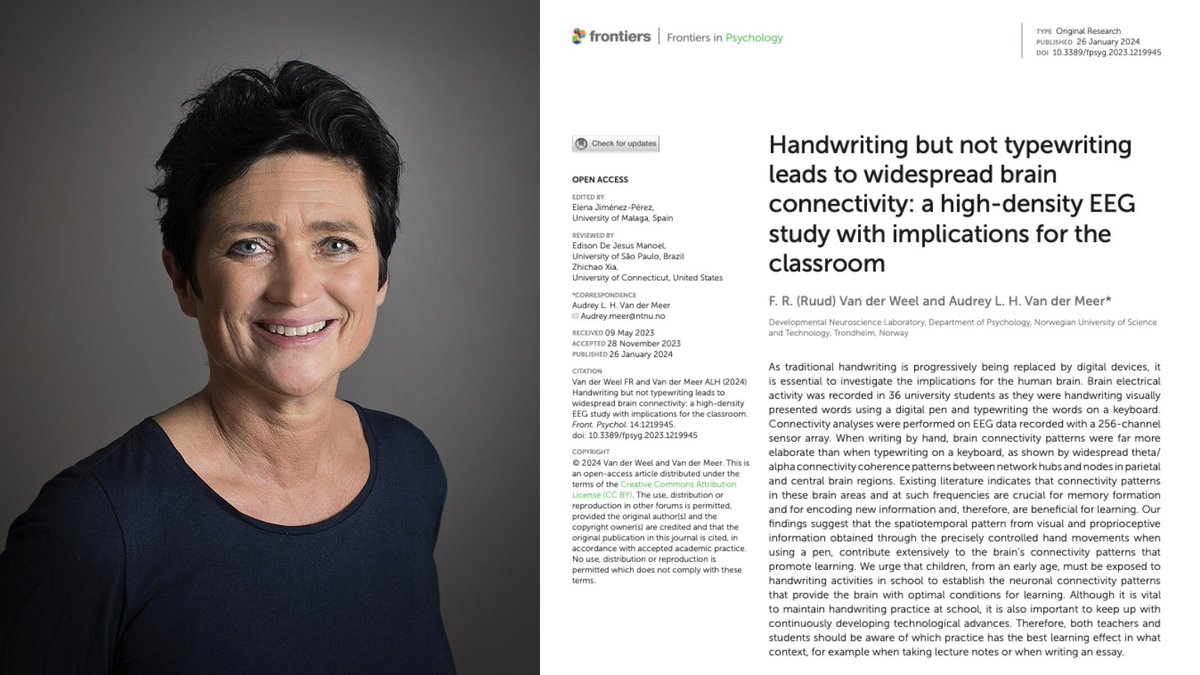
A Norwegian neuroscientist spent 20 years proving that the act of writing by hand changes the human brain in ways typing physically cannot, and almost nobody outside her field has read the paper. Her name is Audrey van der Meer. She runs a brain research lab in Trondheim, and the paper that closed the argument was published in 2024 in a journal called Frontiers in Psychology. The finding is brutal enough that it should have changed every classroom on Earth. The experiment was simple. She recruited 36 university students and put each one in a cap with 256 sensors pressed against their scalp to record brain activity. Words flashed on a screen one at a time. Sometimes the students wrote the word by hand on a touchscreen using a digital pen, and sometimes they typed the same word on a keyboard. Every neural response was recorded for the full five seconds the word stayed on screen. Then her team looked at the part of the data most researchers had ignored for years, which is how different parts of the brain were communicating with each other during the task. When the students wrote by hand, the brain lit up everywhere at once. The regions responsible for memory, sensory integration, and the encoding of new information were all firing together in a coordinated pattern that spread across the entire cortex. The whole network was awake and connected. When the same students typed the same word, that pattern collapsed almost completely. Most of the brain went quiet, and the connections between regions that had been alive seconds earlier were nowhere to be found on the EEG. Same word, same brain, same person, and two completely different neurological events. The reason turned out to be something nobody had really paid attention to before her work. Writing by hand is not one motion but a sequence of thousands of tiny micro-movements coordinated with your eyes in real time, where each letter is a different shape that requires the brain to solve a slightly different spatial problem. Your fingers, wrist, vision, and the parts of your brain that track position in space are all working together to produce one letter, then the next, then the next. Typing throws all of that away. Every key on a keyboard requires the exact same finger motion regardless of which letter you are pressing, which means the brain has almost nothing to integrate and almost no problem to solve. Van der Meer said it plainly in her interviews. Pressing the same key with the same finger over and over does not stimulate the brain in any meaningful way, and she pointed out something that should scare every parent who handed their kid an iPad. Children who learn to read and write on tablets often cannot tell letters like b and d apart, because they have never physically felt with their bodies what it takes to actually produce those letters on a page. A decade before her, two researchers at Princeton ran the same fight using a completely different method and ended up at the same answer. Pam Mueller and Daniel Oppenheimer tested 327 students across three experiments, where half took notes on laptops with the internet disabled and half took notes by hand, before testing everyone on what they actually understood from the lectures they had watched. The handwriting group won by a wide margin on every question that required real understanding rather than surface recall. The reason was hiding in the transcripts of what the two groups had actually written down. The laptop students typed almost word for word, capturing more total content but processing almost none of it as they went, while the handwriting students physically could not write fast enough to transcribe a lecture in real time, which forced them to listen carefully, decide what actually mattered, and put it in their own words on the page. That single act of choosing what to keep was the learning itself, and the keyboard had quietly skipped the choosing and skipped the learning along with it. Two studies. Two countries. Same answer. Handwriting makes the brain work. Typing lets it coast. Every note you have ever typed instead of written went into your brain through a thinner pipe. Every meeting, every book highlight, every idea you captured on your phone instead of on paper was processed at half depth. You did not forget those things because your memory is bad. You forgot them because typing never woke the part of the brain that would have made them stick. The fix is the thing your grandmother already knew. Pick up a pen. Write the thing down. The slower road is the faster one.
Ihtesham Ali tweet media
English
2.3K
42.1K
113.4K
8.2M
N T retweetledi
樺島万里子 Mariko Kabashima@海外ニュース翻訳情報局
やはりそうだよね。 自分でも、ずっと違和感があった。 最近、 「長文が読めない」 「文脈を追えない」 「すぐ感情だけで反応する」 人がかなり増えた気がする。 しかも今の子どもたちは、 手書きもしない、 タイピングも苦手、 短文フリック入力中心。 ノルウェーの神経科学者 Audrey van der Meer の研究では、 手書きは脳全体を強く活性化する一方、 タイピングでは脳活動がかなり弱くなることが確認された。 さらに Pam Mueller らの研究でも、 手書きノートの学生のほうが、 理解力・記憶定着率が高かった。 便利になった代わりに、 人類は、 “深く考える力”そのものを削っているのかもしれない。 ちょっと怖い話だと思う。
Ihtesham Ali@ihtesham2005

A Norwegian neuroscientist spent 20 years proving that the act of writing by hand changes the human brain in ways typing physically cannot, and almost nobody outside her field has read the paper. Her name is Audrey van der Meer. She runs a brain research lab in Trondheim, and the paper that closed the argument was published in 2024 in a journal called Frontiers in Psychology. The finding is brutal enough that it should have changed every classroom on Earth. The experiment was simple. She recruited 36 university students and put each one in a cap with 256 sensors pressed against their scalp to record brain activity. Words flashed on a screen one at a time. Sometimes the students wrote the word by hand on a touchscreen using a digital pen, and sometimes they typed the same word on a keyboard. Every neural response was recorded for the full five seconds the word stayed on screen. Then her team looked at the part of the data most researchers had ignored for years, which is how different parts of the brain were communicating with each other during the task. When the students wrote by hand, the brain lit up everywhere at once. The regions responsible for memory, sensory integration, and the encoding of new information were all firing together in a coordinated pattern that spread across the entire cortex. The whole network was awake and connected. When the same students typed the same word, that pattern collapsed almost completely. Most of the brain went quiet, and the connections between regions that had been alive seconds earlier were nowhere to be found on the EEG. Same word, same brain, same person, and two completely different neurological events. The reason turned out to be something nobody had really paid attention to before her work. Writing by hand is not one motion but a sequence of thousands of tiny micro-movements coordinated with your eyes in real time, where each letter is a different shape that requires the brain to solve a slightly different spatial problem. Your fingers, wrist, vision, and the parts of your brain that track position in space are all working together to produce one letter, then the next, then the next. Typing throws all of that away. Every key on a keyboard requires the exact same finger motion regardless of which letter you are pressing, which means the brain has almost nothing to integrate and almost no problem to solve. Van der Meer said it plainly in her interviews. Pressing the same key with the same finger over and over does not stimulate the brain in any meaningful way, and she pointed out something that should scare every parent who handed their kid an iPad. Children who learn to read and write on tablets often cannot tell letters like b and d apart, because they have never physically felt with their bodies what it takes to actually produce those letters on a page. A decade before her, two researchers at Princeton ran the same fight using a completely different method and ended up at the same answer. Pam Mueller and Daniel Oppenheimer tested 327 students across three experiments, where half took notes on laptops with the internet disabled and half took notes by hand, before testing everyone on what they actually understood from the lectures they had watched. The handwriting group won by a wide margin on every question that required real understanding rather than surface recall. The reason was hiding in the transcripts of what the two groups had actually written down. The laptop students typed almost word for word, capturing more total content but processing almost none of it as they went, while the handwriting students physically could not write fast enough to transcribe a lecture in real time, which forced them to listen carefully, decide what actually mattered, and put it in their own words on the page. That single act of choosing what to keep was the learning itself, and the keyboard had quietly skipped the choosing and skipped the learning along with it. Two studies. Two countries. Same answer. Handwriting makes the brain work. Typing lets it coast. Every note you have ever typed instead of written went into your brain through a thinner pipe. Every meeting, every book highlight, every idea you captured on your phone instead of on paper was processed at half depth. You did not forget those things because your memory is bad. You forgot them because typing never woke the part of the brain that would have made them stick. The fix is the thing your grandmother already knew. Pick up a pen. Write the thing down. The slower road is the faster one.

日本語
40
3K
8K
547.9K
N T retweetledi
Koichi Kawakami, 川上浩一
Koichi Kawakami, 川上浩一@koichi_kawakami·
戦争の準備ばかりしていないで、中国に話し合いに行ってはどうでしょうね?それができないなら、即刻お辞め下さい。 「尖閣諸島の領空侵犯に那覇からスクランブルでは間に合わない」「無人機やロボットが上陸したらどうする?」維新議員が問題提起 小泉防衛相の答えは news.yahoo.co.jp/articles/21145…
日本語
30
401
890
12.7K
N T retweetledi
町山智浩
町山智浩@TomoMachi·
そうならないですよ。「◯◯人のくせに」は出自で人を差別するヘイトスピーチだけど、「ヘイトやめろ、レイシストめ」と批判するのがいったいなんの差別にあたるんですか? レイシスト差別?
河野有理@konoy541

「ヘイトは言論の自由に入らない」の人たちは「ただし、何がヘイトかは自分が決める」と思ってるのかもしれないが、そうは問屋が卸さないので、「その通り、ところでお前の言論こそヘイトだ」と言われて問答無用に事前キャンセルされる恐れについても想像した方がよいのではないか。

日本語
39
202
676
27.4K
N T retweetledi
N T retweetledi
但馬問屋
但馬問屋@wanpakuten·
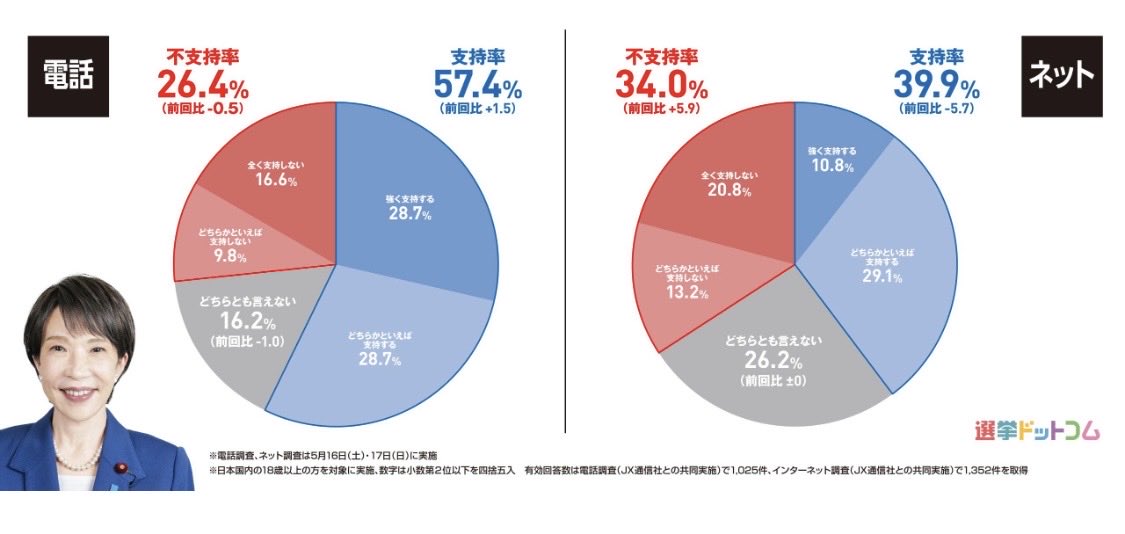
「選挙ドットコム」による、かなり信ぴょう性の高そうな調査。 やはり電話だけの調査は高支持率に偏る。大手メディアはそろそろ調査方法を見直すべき時だろう。 ↓ 【速報】高市内閣支持率に異変!電話調査の「強い支持」が初の3割割れ。食料品消費税ゼロ公約への賛否は?2026年5月電話×ネット意識調査 | 日本最大の選挙・政治情報サイトの選挙ドットコム go2senkyo.com/articles/2026/…
但馬問屋 tweet media
日本語
19
782
1.8K
34.5K
N T retweetledi
桃太郎+
桃太郎+@momotro018·
チチヤス「毎朝快調ヨーグルト」3種類を生産休止 中東情勢の影響 まじか‥。値上げとか白黒包装になるのは全然マシな方で、お気に入り商品がいきなり生産休止はショック‥。 カルビーらのナフサ節約対応策にすら、政府がいちいち圧力をかけて妨害してる結果がこのザマだろ。 chugoku-np.co.jp/articles/-/833…
日本語
18
2K
3.1K
49.1K
N T retweetledi
鈴木 耕
鈴木 耕@kou_1970·
「私に聞かれても分かりませんけど」というおかしな答弁。自分の事務所の秘書に聞けば一発で分かることではないか。記者は「なぜ秘書の方に確認しないのですか」と突っ込むべきだったが、高市氏はさっといなくなってしまった。頑張った朝日の女性記者に、次回の記者会見での質問を期待したい。
首相官邸@kantei

【お知らせ】 本日(5月19日) 9時25分頃、高市総理は韓国訪問等についての会見を行いました。 ※要旨(速報版) (記者) これから韓国に向けて出発ですが、訪問の意義や期待する成果について教えてください。また、先週行われた米中首脳会談やイラン情勢、また関連するエネルギー問題についても話し合う予定でしょうか。 (高市総理) 本日、これから韓国を訪問し、李在明(イ・ジェミョン)大統領と首脳会談を行ってまいります。今年1月には、李在明大統領が、「高市総理のふるさとである奈良を訪ねたい。」と言ってくださって、来日いただきました。今回は、私(総理)が李在明大統領のふるさとであります安東(アンドン)にお招きをいただきました。現下の戦略環境の下、日韓関係、それから日韓米の連携の重要性というのは一層増していると考えております。このような中で、両政府は、日韓関係を未来志向で、安定的に発展させていくために、緊密な意思疎通を行うということで一致しておりまして、今回の訪韓も重要な機会となります。中東情勢やインド太平洋地域情勢を含む現下の厳しい国際情勢、また戦略環境の下での両政府間の協力や、日韓関係の一層の発展に向けた方向性について、李在明大統領とじっくり議論を深めて、成果をもたらすということを楽しみにいたしております。お尋ねのエネルギーに関してもですね、具体的な協力の在り方というものをしっかり議論していきたいと思っております。以上です。 (記者) 週刊誌の報道についてお伺いします。総裁選や衆院選で、総理の陣営が他候補を中傷する動画をSNSに投稿したとされる週刊誌の報道なんですけれども、国会の答弁で、総理は、動画の作成に関わったとされる男性について、私(総理)自身も秘書も面識がないというふうに答弁されました。一方でですね、男性が昨日YouTubeの動画の方で、秘書とやりとりしていって、実施していたと述べていました。総理の答弁と男性の発言の整合性についてどのようにお考えでしょうか。 (高市総理) お会いしたことはない、私(総理)自身も秘書もお会いしたことのない方でございます。お名前も確認をいたしました。答弁の整合性とっていうのはしっかりあると思います。 (記者) お会いしたことはないとっていうのは、オンラインはやりとりがあったということでしょうか。 (高市総理) いや、それはちょっと私(総理)に聞かれてもわかりませんけれども、他候補を誹謗中傷するですとか、そういったことについて、私どもの事務所から発信をしたり動画を作成したりということは一切ございません。

日本語
47
2.5K
6.6K
145.4K
N T retweetledi
猪股東吾/TOGO INOMATA
猪股東吾/TOGO INOMATA@oogesatarou·
まあ、今まで30年以上続く理不尽には目をつぶっていたのに、反対運動の事故があった時だけ現場に来る記者や本土のメディア。 そんな人たちが沖縄県民や沖縄の運動をジャッジできると思ってること自体がおかしいんですよね。本土の側が原因を作っているので、ジャッジされるのは自分たち側ですよ。
日本語
0
124
294
22K
N T retweetledi
侠客ジジイ総本家
侠客ジジイ総本家@banruikyouson·
また嘘をついておる。 いつもの嘘ついてる時のサナの顔になっておる。 統一教会なんざ私は一切知らぬ。存ぜぬ。 と、シラを切る時のサナの顔になっておる。 過去の嘘つき顔を、下に貼っておくから、自分の目で見て確認してみてな。
日本語
433
7.1K
23.3K
542.4K
N T retweetledi