

@pepemoonboy Sell a call for $700 7/17/26 exp. for $13.50 premium today!
English
tdubw
114 posts

$META is reportedly testing paid subscription tiers across its apps: • Instagram Plus: $3.99/month • Facebook Plus: $3.99/month • WhatsApp Plus: $2.99/month Meta is turning extra app features into another recurring revenue layer across its massive user base.

I swear the greatest social arb traders ever are young women. I’ve seen it in every girl i’ve dated. They are on top of every trend by consuming IG, Pintrist, and Tiktok 24/7. There is no more informed group on trends in the world. The only problem… 99% of them have never considered investing.

$SG Visit #6 sweetgreen wrap update - Wednesday, May 27th 12:00 pm- Aventura, Florida. see thread for location details this visit 🧵 LOCATION IS SLAMMED! @DumbMoneyTV @ChrisCamillo @sweetgreen @davehanson


When a stock gaps up and you don’t see institutions continuing to buy at the highs, the move often has a higher chance to stall because the fuel that pushed it there isn’t still pushing. Why gap-ups often retrace or chop when there’s no call flow at highs The “new buyer” disappears A gap up is usually followed by: - Profit-taking from people who bought earlier - Trimming from funds that got the move they wanted - If there’s no fresh institutional call positioning, there may be no new wave of demand to absorb that selling. Gaps create overhead supply. A big up move creates a lot of: - Traders taking profits into strength - Trapped shorts covering (one-time buying) Once that initial burst is done, price needs new sponsorship to keep extending. Without it, the path becomes sideways/down to rebalance. The market needs to “rebuild” a base After a fast move, price often needs to: Consolidate Form support Retest key levels (VWAP, hourly 5, daily 5) That base-building is what makes the next continuation leg possible. If institutions aren’t buying at highs, it’s often because they’re waiting for that reset too. Follow-through requires continuous participation Strong trends usually show repeated interest over multiple windows. No call flow at highs is a signal that participation cooled, meaning follow-through probability drops and mean reversion probability rises. Why it’s more important to wait for a re-entry Because you want to enter when the trade becomes asymmetric again: After it resets into a level After selling pressure is absorbed When institutions show up again (fresh sponsorship) That’s when risk is cleaner and you’re not buying into someone else’s exit liquidity. Why “no call flow at highs” is valuable It’s not a bearish signal by itself — it’s a sponsorship signal: “Is real money still pressing this higher, or is the move running on fumes?” Blademap helps you avoid the classic mistake: buying strength when the fuel has already stopped. You take profit, let it stall/retrace, and then re-enter only when you see institutions step back in.

Did you listen?
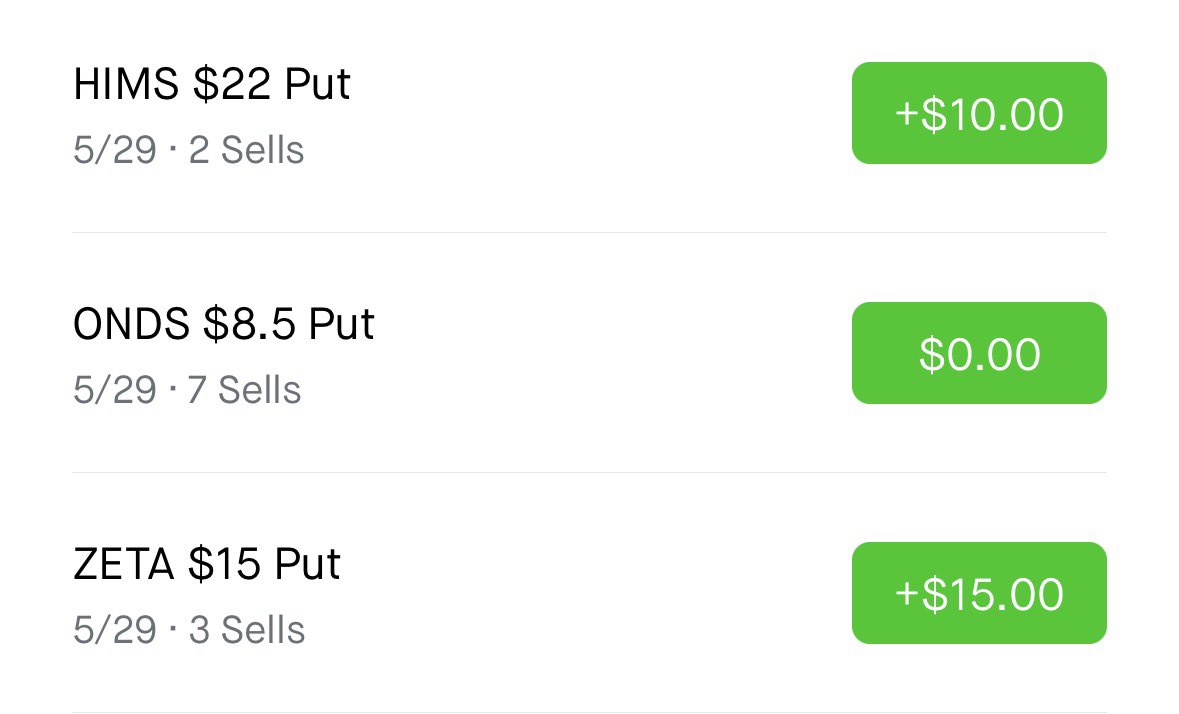
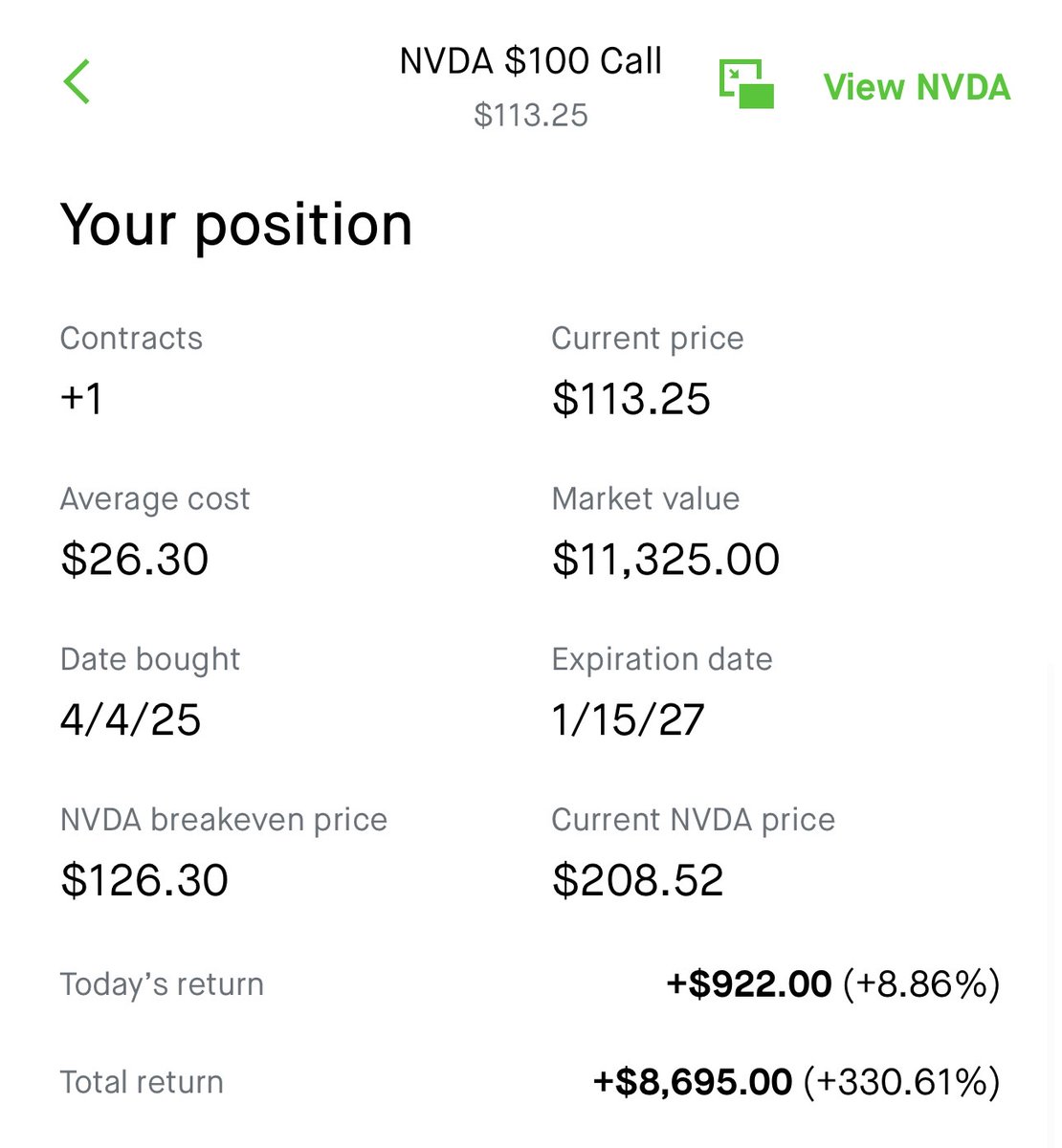

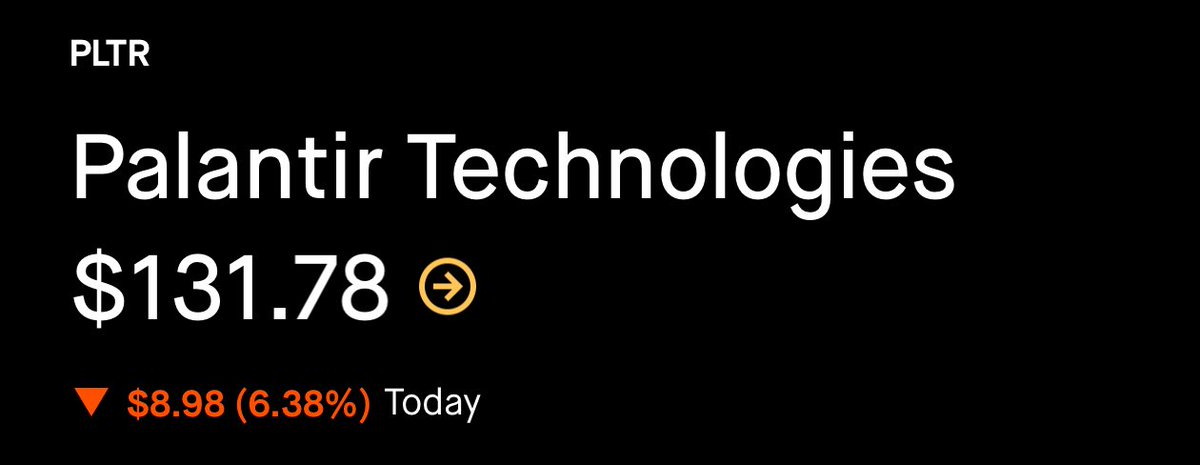



I've been getting a lot of stock weighting questions. A portfolio I'd build would be: 30% $NBIS 6% AMZN 5.5% TSM 5% BTC 5% LULU 4% UNH 4% $RKLB 4% LTC 3% ORCL 3% TGT 3% GRAB 2% $IREN 2% META 2% HOOD 2% HIMS 2% AMD 2% NVO 1.5% CRDO 1% BITF 1% ASTS 1% SG 1% UPWK 1% MP 1% FOUR 1% ETOR 1% INTC 1% COIN 1% SMCI 1% MRVL 1% DAVE .5% DLO .5% MELI .5% SNAP .5% CRWV .2% ONDS .2% NFE .2% TSSI .2% BKKT .2% GRRR
So just to add to the discussion on learning option selling: 1. BROKERAGE IS EXTREMELY IMPORTANT, NEVER USE $HOOD IF YOU HAVE A LARGE PORT. They claim it's free but it's probably one of the worst for option trading since they route your order to MMs and that's how they make money off of you by screwing your fills. Unless you're selling CC's CSP on Mag7/SPY with low spread, then use $IBKR for order execution since they give you the best fill even if you sell for the lowest price. It looks like you're losing a few dollars but .2 -.4 per contract on execution makes thousands of dollars of a difference. 2. If you're a smaller account, I'd recommend margin instead of 2x leveraged ETFs because of volatility decay. (you can use google to learn why you don't hold 2x leveraged ETFs for more than a short time). You have liquidation risks if you use margin but it's still better than leveraged ETFs. Think they pointed it out already in the post 3. Learn IV of stocks. Eg. Hood probably doesn't go up and down more than 4-6% a day normally. NBIS probably doesn't move more than 7% a day. TSM doesn't really move 4%+ a day. If you're selling CCs 4 days out like on NBIS, 6*4 for example, selling 24%+ OTM for like $130 if it's $107 is usually smart and profitable. If you sell CCs for like $110, you're asking for your stock to be called away and it's usually a strategy when you try and sell it. It's also important to learn catalysts. If there's an earnings coming up the original IV doesn't apply anymore since it could swing a lot higher or lower. Earnings CCs is completely different. 4. CSP is good. If you want to do a lot of this with a small account use IBKR portfolio margin, that way you can write a sell a ton of puts way OTM on a lot of stocks. Biggest risk is either you don't know what you're doing, or there's some black swan event like random 20% tarrifs on the world crashing the market earlier on in the year. Again I'm saying this from the perspective of tons of experience, but a newcomer might lose a lot of money. Same rule for IV applies. If AMZN is usually +-5% a week, you can sell PUTS 7% OTM and likely profit every week. Earnings again is a whole new strategy. it will probably take me a whole lot of time to explain this but it's extremely profitable too. A lot of people just sit on $1M+ and make like $10k a week passively doing "safer" CSPs or DCAing into positions. And earnings week every quarter is an insane amount of money. Unless a stock gets nuked like how TTD tanked 40%. But generally important to learn if you want to compound your wealth + existing assets. Option selling is great real estate (for selling CCs, or extremely OTM put selling) ONLY if you know what you're doing + do it on legitimate assets like IIBIT, HOOD. Otherwise there's tons of risks involved. Generally great advice overall for traders to learn. Just my thoughts and nuances to the lesson from personal experience.
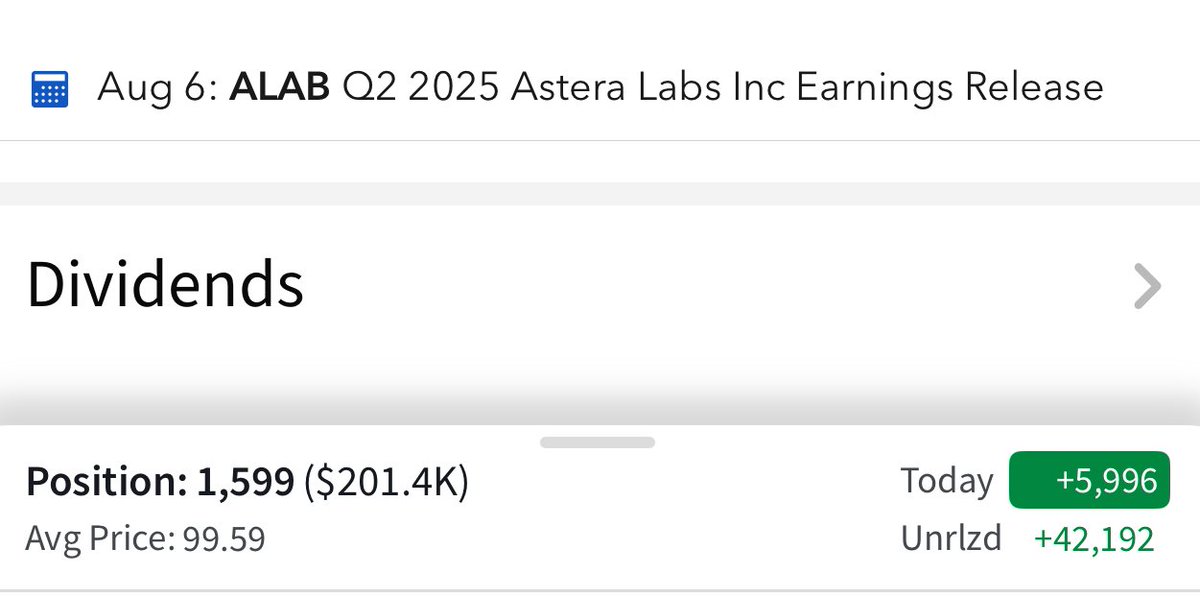
I just bought long term ~$175k+ positions in $ALAB and plan to scale this to ~$500k as a potential $50B+ moonshot. NVDA-like profit margins (76%), 144%+ Y/Y growth, customers like NVDA, AWS, MSFT, GOOGL, NVDA, AMD at 16B market cap. Unreal customers + growth/margins.