Aakash Gupta@aakashgupta
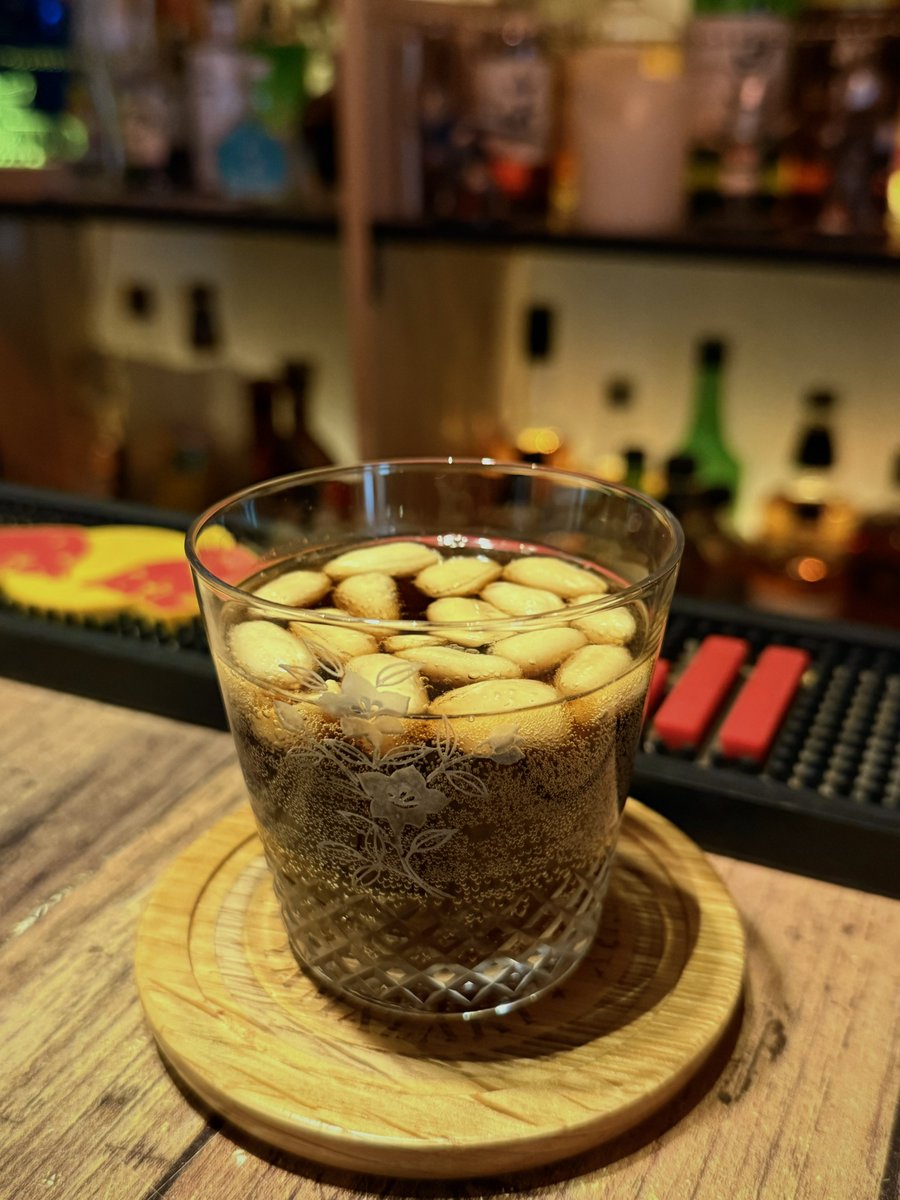
Peanuts in Coke is one of the most accidentally perfect food pairings in history, and the chemistry explains why this guy can't go back.
Coca-Cola sits at pH 2.5, roughly the same acidity as stomach acid. When you drop roasted peanuts into that, the phosphoric acid partially denatures the surface proteins on the nut, releasing free glutamate. You're generating umami in real time inside the glass.
The salt on the peanuts suppresses bitter taste receptors on your tongue, which amplifies your perception of sweetness without adding a single gram of sugar. Coca-Cola already has 39g of sugar per can. Your brain registers it as even sweeter because the salt is clearing the noise from competing flavor signals.
Then carbonation does two things. CO2 dissolved in liquid forms carbonic acid, which triggers pain receptors (TRPA1), not taste receptors. That mild irritation resets your palate between sips so you never get flavor fatigue. Every sip hits like the first. Second, the bubbles physically agitate the peanut surface, accelerating the protein breakdown and glutamate release. The longer the peanuts sit, the more umami you extract.
The fat content seals it. Peanuts are 49% fat by weight. Fat is the only macronutrient that activates CD36 receptors, which your brain interprets as richness and satisfaction. Mix that with sugar, salt, acid, umami, and carbonation and you've accidentally triggered every major reward pathway in the human taste system simultaneously.
Georgia farmers in the 1920s did this because they needed one hand free while working. They stumbled into the optimal salt-acid-umami-fat-carbonation loop a century before food science could explain why it worked.