Triffle

7.4K posts

Triffle banner
Triffle

Triffle

@triffleraffles

Decentralized Raffle Marketplace on @base Provably fair by @chainlink

Katılım Haziran 2022
478 Takip Edilen23.7K Takipçiler
Sabitlenmiş Tweet
Triffle
Triffle@triffleraffles·
Meet Triffle: Decentralized Raffle Marketplace on @base Run or join on-chain raffles for NFTs and Tokens with provably fair draws via @chainlink VRF. Join the OG NFT whitelist and participate the Beta: 1. Visit triffle.xyz and connect your wallet 2. Join the free OG NFT whitelist 🎟️ 3. Choose a raffle to join or create your raffle with the test assets 4. Wait until the countdown ends to see results Simple as that 🫡 Anyone can participate. Each ticket is one equal chance, and holding more tickets increases your odds. Holding all tickets provide 100% win rate. Fully decentralized. Fully automated. Fully transparent. Ticketize and sell your assets through on-chain raffles on Triffle.
Triffle tweet media
English
33
2
93
8.6K
Peter Todd
Peter Todd@peterktodd·
When I was a teenager I converted my manual Sherline mill to CNC control using open source CNC software and some electronics I designed and built myself. I later gave that CNC mill to a friend. I would have been in violation of this proposed law for transferring that mill.
Alder@alder_riley

Hahaha oh no. New anti-manufacturing law in WA defines both additive and subtractive manufacturing as 3D printing. Anyone selling manufactured parts or equipment to residents of WA are subject to fines & imprisonment. Is Washington about to nuke its aerospace industry?

English
4
4
25
7.6K
Anthony Pompliano 🌪
Anthony Pompliano 🌪@APompliano·
I used to hate managing all my financial assets in a spreadsheet. Public equities. Startup investments. Funds. Real estate. Cars. Collectibles. Credit cards. Retirement accounts. It got overly complex and took a significant amount of time. Now there is a better way though. We built @cfosilvia to solve my personal problem. She can dynamically track your net worth in real-time, send you alerts for any event you want, and answer any questions you have about your finances, regardless of how complex the question is. I am a power user of the product. It has completely changed the way I manage my finances. I make more money because of it. And I save money on my taxes too. We have opened the product up for anyone else to use it now. Completely free. Try Silvia here: cfosilvia.com
Anthony Pompliano 🌪 tweet media
English
64
20
165
56.5K
Marty Bent
Marty Bent@MartyBent·
The journos are learning to code.
English
2
2
29
7.6K
BeInCrypto
BeInCrypto@beincrypto·
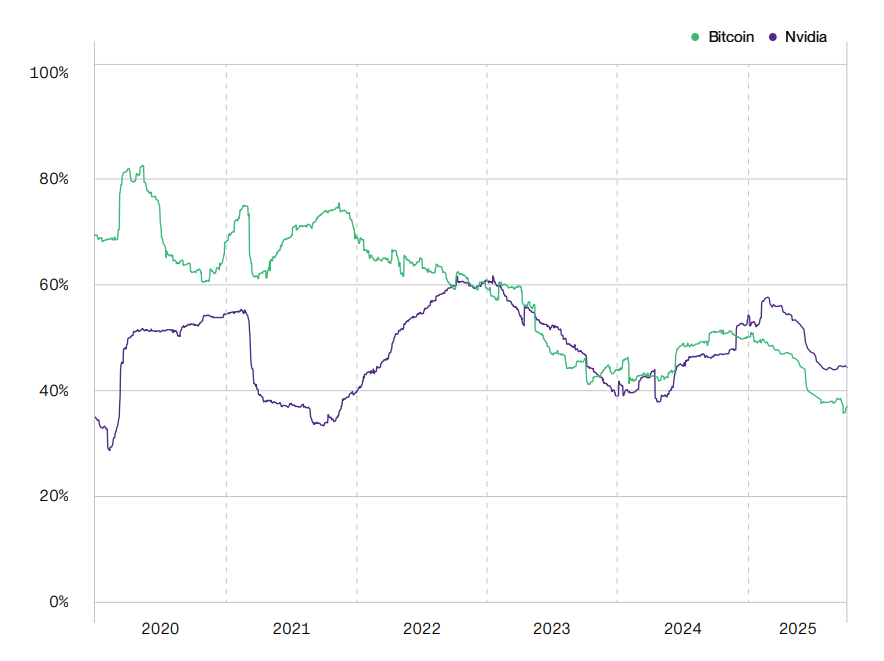
Bitcoin is volatile, sure, but $BTC was actually less volatile than $NVDA in 2025. Bitcoin’s volatility has been trending lower for over a decade. Source: @bitwise
BeInCrypto tweet media
English
2
0
6
604
The Factor Report
The Factor Report@PeterLBrandt·
For me, the number is two or three
English
8
1
52
14.9K
The Factor Report
The Factor Report@PeterLBrandt·
How many different new trades do in an average week?
English
56
1
66
39K
Binance
Binance@binance·
It takes a high IQ to answer this.
Binance tweet media
English
2.6K
254
2K
519.3K
kokocodes.base.eth 🌳
kokocodes.base.eth 🌳@kokocodes·
We have allocated over $200 USDC into our speed boost collab with @GameStockHQ , and here is how it’s gonna work 👇👇
kokocodes.base.eth 🌳@kokocodes

Here is how we moved from $50 USDC leaderboard rewards to now continuous $200, $250 collabs with other @base projects via ENB blast 👇👇 We have allocated over $200 USDC into our speed boost collab with @GameStockHQ , and here is how it’s gonna work 👇👇 Daily reminder that @base is for everyone, and everyone is a builder on @base All you need is a thesis, a group of people to test it, reiteration flows and conviction.

English
10
6
19
398
Cointelegraph
Cointelegraph@Cointelegraph·
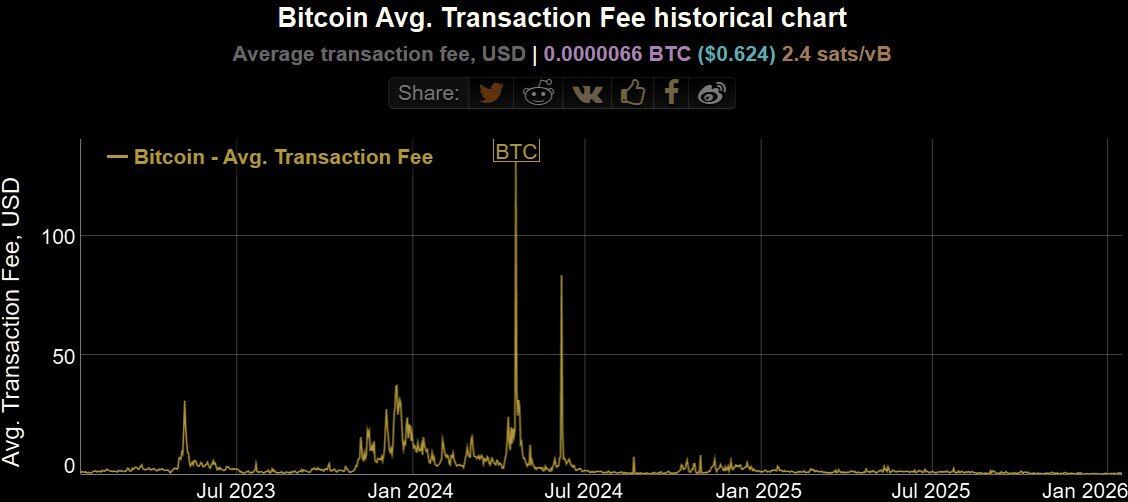
🔥 NOW: The average $BTC transaction in 2026 would only cost you $0.624.
Cointelegraph tweet media
English
119
44
344
29.6K
IURIIdev >_
IURIIdev >_@IURIIdev·
GM Fam ☀️ ❄️ Have a great day🤙
IURIIdev >_ tweet media
English
5
0
7
96
vitalik.eth
vitalik.eth@VitalikButerin·
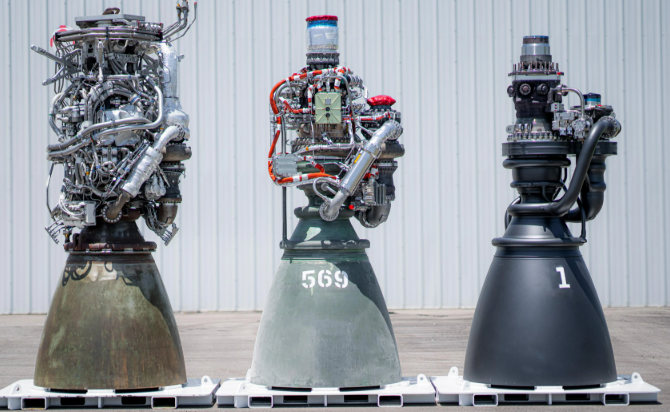
An important, and perenially underrated, aspect of "trustlessness", "passing the walkaway test" and "self-sovereignty" is protocol simplicity. Even if a protocol is super decentralized with hundreds of thousands of nodes, and it has 49% byzantine fault tolerance, and nodes fully verify everything with quantum-safe peerdas and starks, if the protocol is an unwieldy mess of hundreds of thousands of lines of code and five forms of PhD-level cryptography, ultimately that protocol fails all three tests: * It's not trustless because you have to trust a small class of high priests who tell you what properties the protocol has * It doesn't pass the walkaway test because if existing client teams go away, it's extremely hard for new teams to get up to the same level of quality * It's not self-sovereign because if even the most technical people can't inspect and understand the thing, it's not fully yours It's also less secure, because each part of the protocol, especially if it can interact with other parts in complicated ways, carries a risk of the protocol breaking. One of my fears with Ethereum protocol development is that we can be too eager to add new features to meet highly specific needs, even if those features bloat the protocol or add entire new types of interacting components or complicated cryptography as critical dependencies. This can be nice for short-term functionality gains, but it is highly destructive to preserving long-term self-sovereignty, and creating a hundred-year decentralized hyperstructure that transcends the rise and fall of empires and ideologies. The core problem is that if protocol changes are judged from the perspective of "how big are they as changes to the existing protocol", then the desire to preserve backwards compatibility means that additions happen much more often than subtractions, and the protocol inevitably bloats over time. To counteract this, the Ethereum development process needs an explicit "simplification" / "garbage collection" function. "Simplification" has three metrics: * Minimizing total lines of code in the protocol. An ideal protocol fits onto a single page - or at least a few pages * Avoiding unnecessary dependencies on fundamentally complex technical components. For example, a protocol whose security solely depends on hashes (even better: on exactly one hash function) is better than one that depends on hashes and lattices. Throwing in isogenies is worst of all, because (sorry to the truly brilliant hardworking nerds who figured that stuff out) nobody understands isogenies. * Adding more _invariants_: core properties that the protocol can rely on, for example EIP-6780 (selfdestruct removal) added the property that at most N storage slots can be changedakem per slot, significantly simplifying client development, and EIP-7825 (per-tx gas cap) added a maximum on the cost of processing one transaction, which greatly helps ZK-EVMs and parallel execution. Garbage collection can be piecemeal, or it can be large-scale. The piecemeal approach tries to take existing features, and streamline them so that they are simpler and make more sense. One example is the gas cost reforms in Glamsterdam, which make many gas costs that were previously arbitrary, instead depend on a small number of parameters that are clearly tied to resource consumption. One large-scale garbage collection was replacing PoW with PoS. Another is likely to happen as part of Lean consensus, opening the room to fix a large number of mistakes at the same time ( youtube.com/watch?v=10Ym34… ). Another approach is "Rosetta-style backwards compatibility", where features that are complex but little-used remain usable but are "demoted" from being part of the mandatory protocol and instead become smart contract code, so new client developers do not need to bother with them. Examples: * After we upgrade to full native account abstraction, all old tx types can be retired, and EOAs can be converted into smart contract wallets whose code can process all of those transaction types * We can replace existing precompiles (except those that are _really_ needed) with EVM or later RISC-V code * We can eventually change the VM from EVM to RISC-V (or other simpler VM); EVM could be turned into a smart contract in the new VM. Finally, we want to move away from client developers feeling the need to handle all older versions of the Ethereum protocol. That can be left to older client versions running in docker containers. In the long term, I hope that the rate of change to Ethereum can be slower. I think for various reasons that ultimately that _must_ happen. These first fifteen years should in part be viewed as an adolescence stage where we explored a lot of ideas and saw what works and what is useful and what is not. We should strive to avoid the parts that are not useful being a permanent drag on the Ethereum protocol. Basically, we want to improve Ethereum in a way that looks like this:
YouTube video
YouTube
vitalik.eth tweet media
English
656
514
3.7K
381.3K
BeInCrypto
BeInCrypto@beincrypto·
No greed, no fear! Crypto sentiment is neutral, at 50.
BeInCrypto tweet media
English
4
0
8
634
Cointelegraph
Cointelegraph@Cointelegraph·
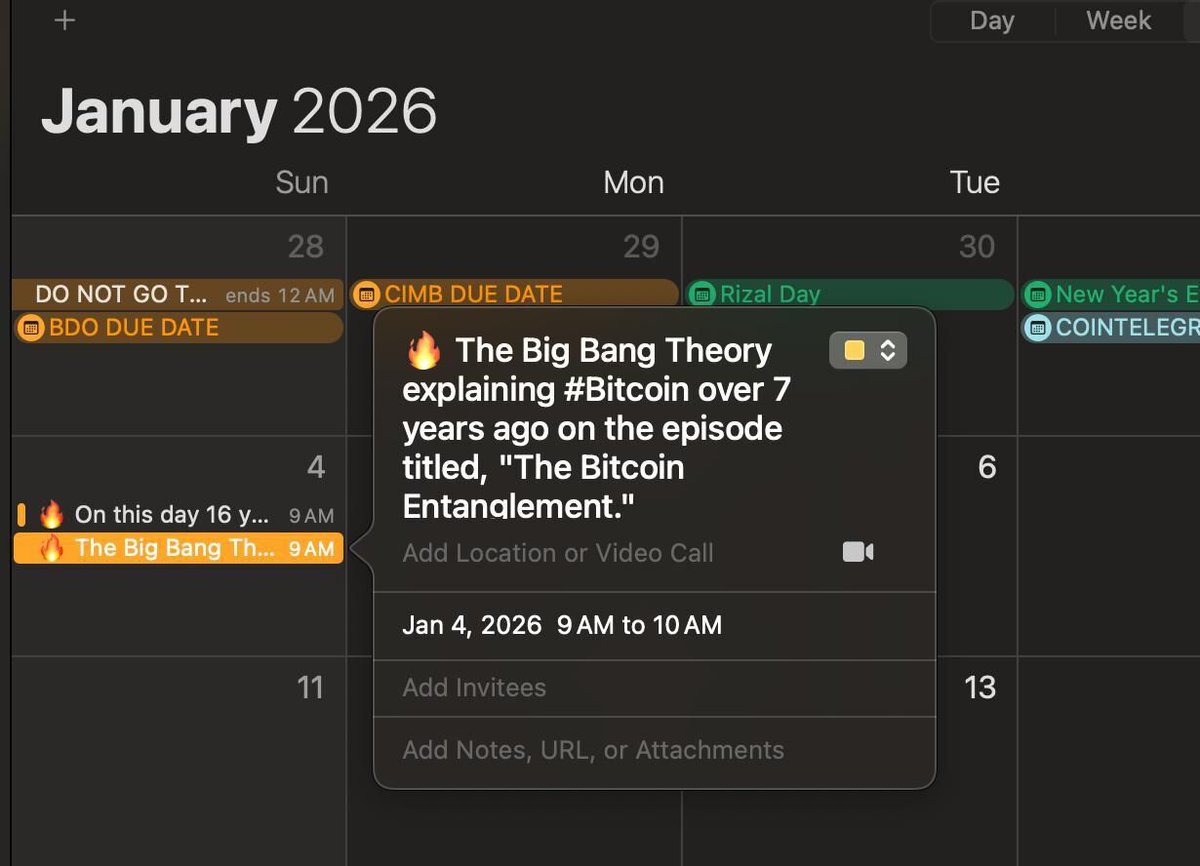
🚨 THROWBACK: Remember when the Big Bang Theory did an entire episode on Bitcoin. Do you remember what happened?
Cointelegraph tweet media
English
67
19
254
41.6K