Theodore Roosevelt Presidential Library

1.5K posts

Theodore Roosevelt Presidential Library banner
Theodore Roosevelt Presidential Library

Theodore Roosevelt Presidential Library

@TRPresLibrary

The official Twitter account of the Theodore Roosevelt Presidential Library #TRLibrary

Medora, North Dakota Katılım Ekim 2016
114 Takip Edilen5.3K Takipçiler
Theodore Roosevelt Presidential Library
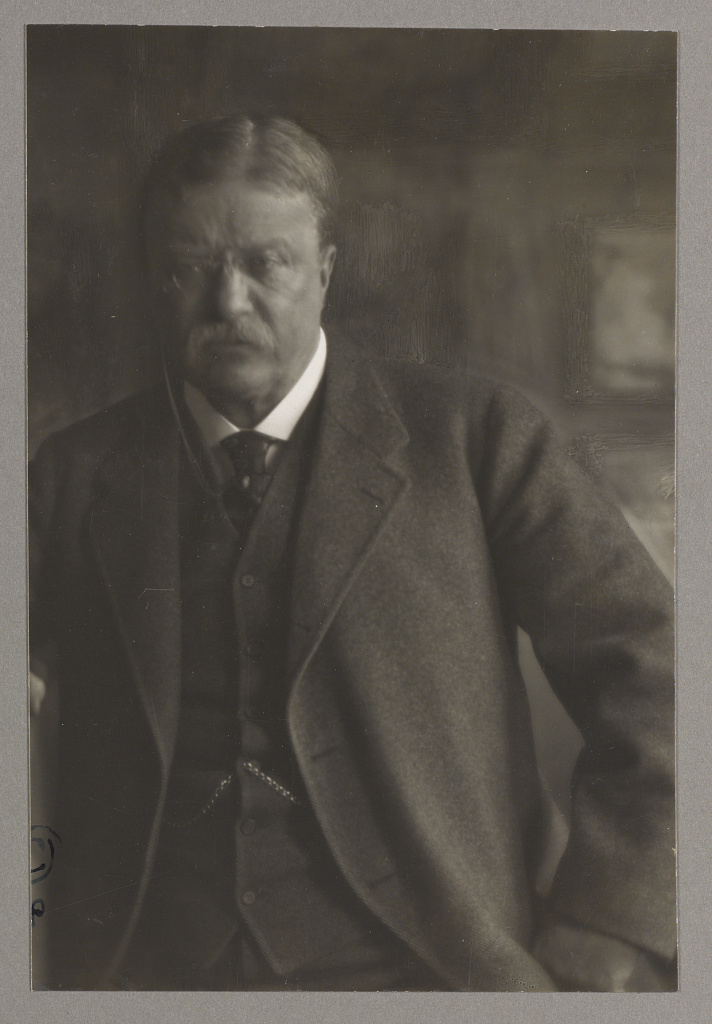
#OTD in 1916, Theodore Roosevelt traveled to Detroit and delivered an address titled "Righteous Peace Through National Preparedness" — one of the clearest statements of his late-life conviction that America could not afford to look away from the war already consuming Europe. By 1916, Roosevelt was a private citizen. A former president. A former Bull Moose nominee. A man who had returned from the Brazilian Amazon two years earlier, gravely ill, and who was now in poor health but louder than ever. He believed America needed to prepare militarily for the war he was certain it could not avoid. He was openly, publicly critical of President Wilson's policy of neutrality. And he refused to be quiet about it. The Detroit speech laid out the case as Roosevelt saw it. Peace, he argued, was worth pursuing only if it was a righteous peace — not the kind purchased by silence on atrocities or by abandoning allies. And national strength, he believed, was the precondition for that peace, not its enemy. His argument was aimed squarely at the pacifist movement of his day, which he viewed as well-intentioned but, as he put it, comparable to the pacifists of the Civil War era who had opposed Lincoln's preparations for war. It was vintage TR: blunt, impatient, and convinced. The speech also had a moment that made the next day's papers. When Roosevelt called for universal service, a woman in the gallery — Mrs. Anna Neuer — waved an American flag and called out that she had two sons and would offer them if the need came. Roosevelt answered: if every mother in the country would make that offer, no mother would need to send her sons to war. History would prove some of TR's positions controversial and others prescient. Within a year, the United States entered the war he had been demanding America prepare for. Within three years, Roosevelt was dead, and his youngest son, Quentin, was buried in France. But on this day in 1916, in Detroit, he was still doing what he had always done: standing in the arena, on his feet, saying exactly what he thought. #OTD #OnThisDay #TheodoreRoosevelt #WorldWarI #Detroit #DareGreatly
Theodore Roosevelt Presidential Library tweet media
English
1
19
57
903
Theodore Roosevelt Presidential Library
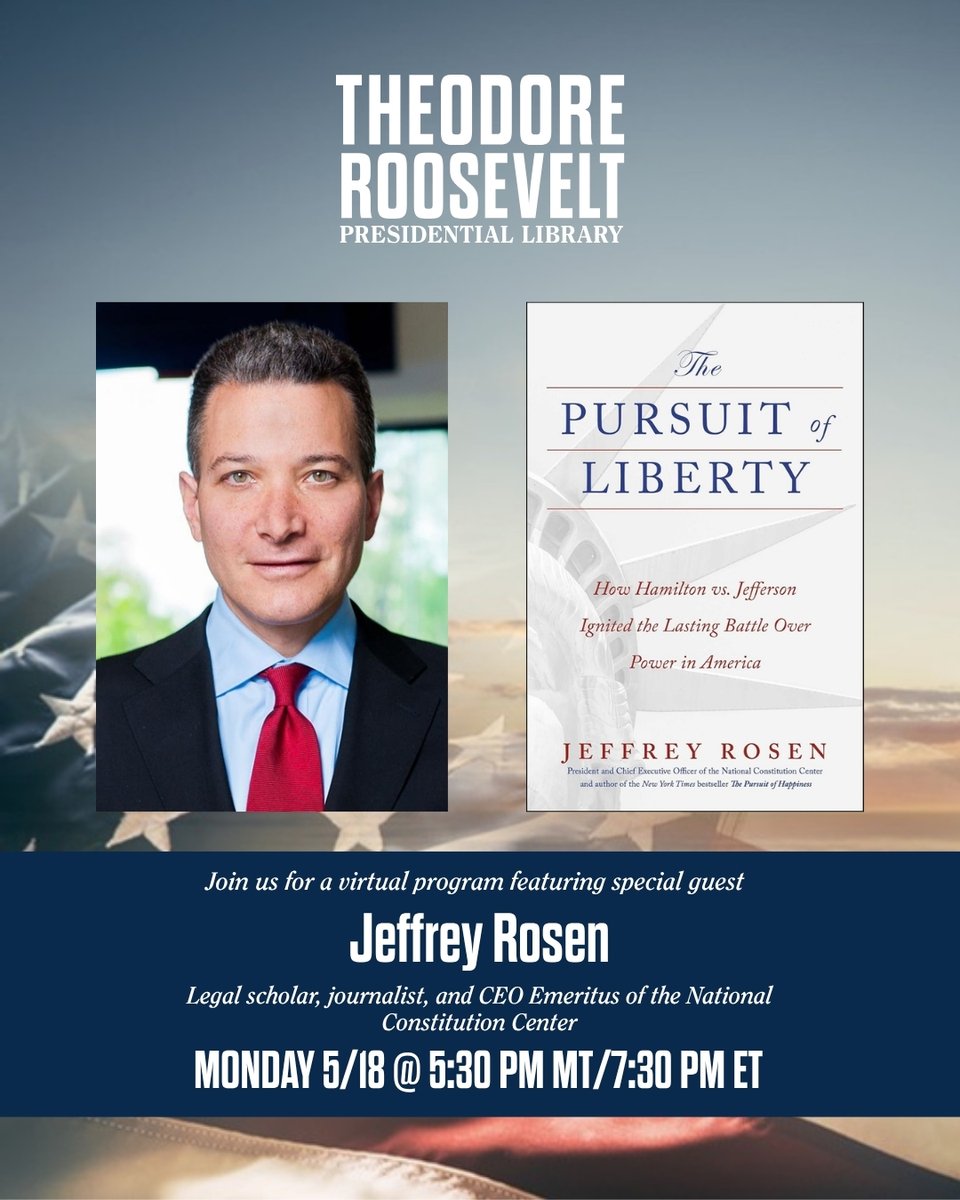
TONIGHT | 5:30 PM MT / 7:30 ET | Join us this coming Monday for a virtual program featuring Jeffrey Rosen, legal scholar, bestselling author, and CEO Emeritus of the National Constitution Center (@constitutionctr) for a discussion featuring his book 𝘛𝘩𝘦 𝘗𝘶𝘳𝘴𝘶𝘪𝘵 𝘰𝘧 𝘓𝘪𝘣𝘦𝘳𝘵𝘺: 𝘏𝘰𝘸 𝘏𝘢𝘮𝘪𝘭𝘵𝘰𝘯 𝘷𝘴. 𝘑𝘦𝘧𝘧𝘦𝘳𝘴𝘰𝘯 𝘐𝘨𝘯𝘪𝘵𝘦𝘥 𝘵𝘩𝘦 𝘓𝘢𝘴𝘵𝘪𝘯𝘨 𝘉𝘢𝘵𝘵𝘭𝘦 𝘖𝘷𝘦𝘳 𝘗𝘰𝘸𝘦𝘳 𝘪𝘯 𝘈𝘮𝘦𝘳𝘪𝘤𝘢. Through the lens of Jefferson and Hamilton’s competing visions, Rosen will explore how enduring debates over liberty and federal power continue to shape American democracy today. This event is free and open to the virtual public. Meet us at our YouTube, LinkedIn, or Facebook (all links in bio) at 5:30 PM MT/7:30 PM ET to tune in! #constitution #democracy #america250 #theodoreroosevelt #liberty #program #bestseller
Theodore Roosevelt Presidential Library tweet media
English
0
0
3
213
Theodore Roosevelt Presidential Library
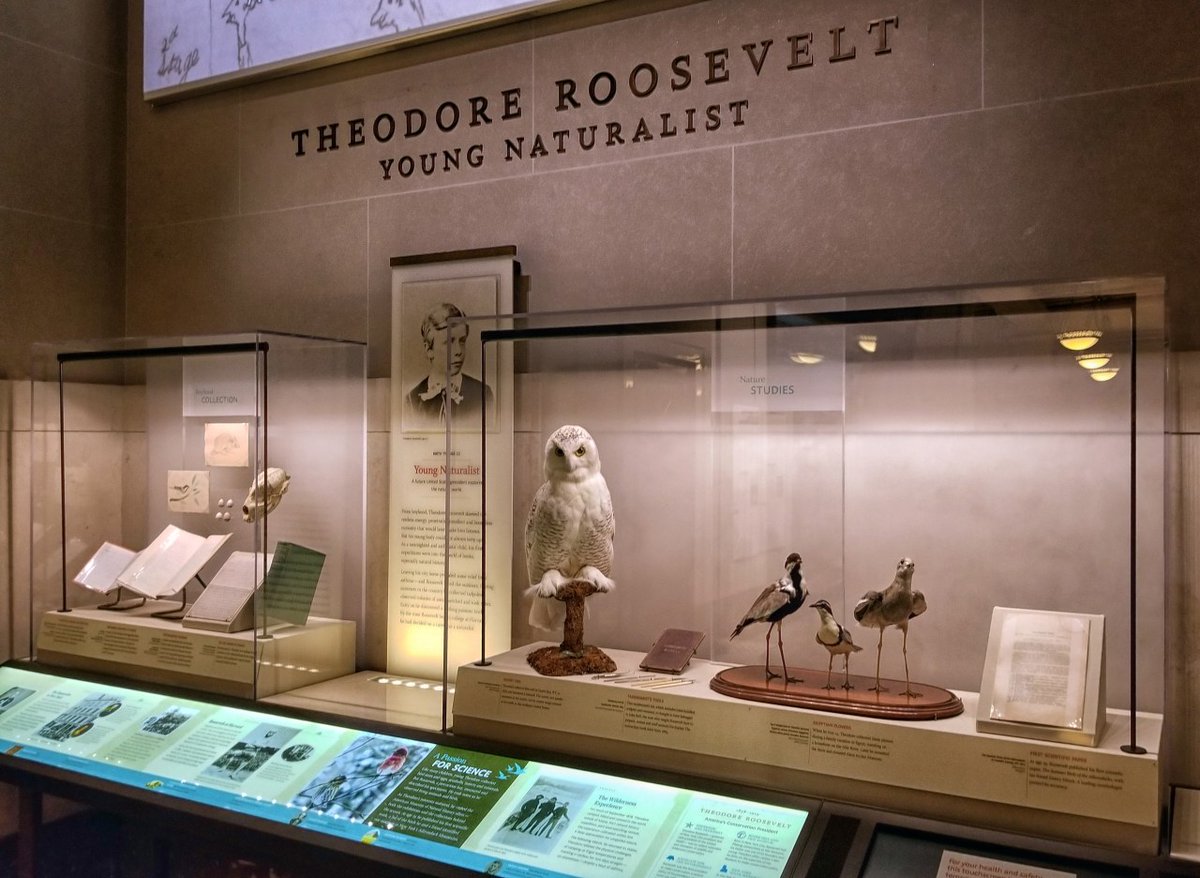
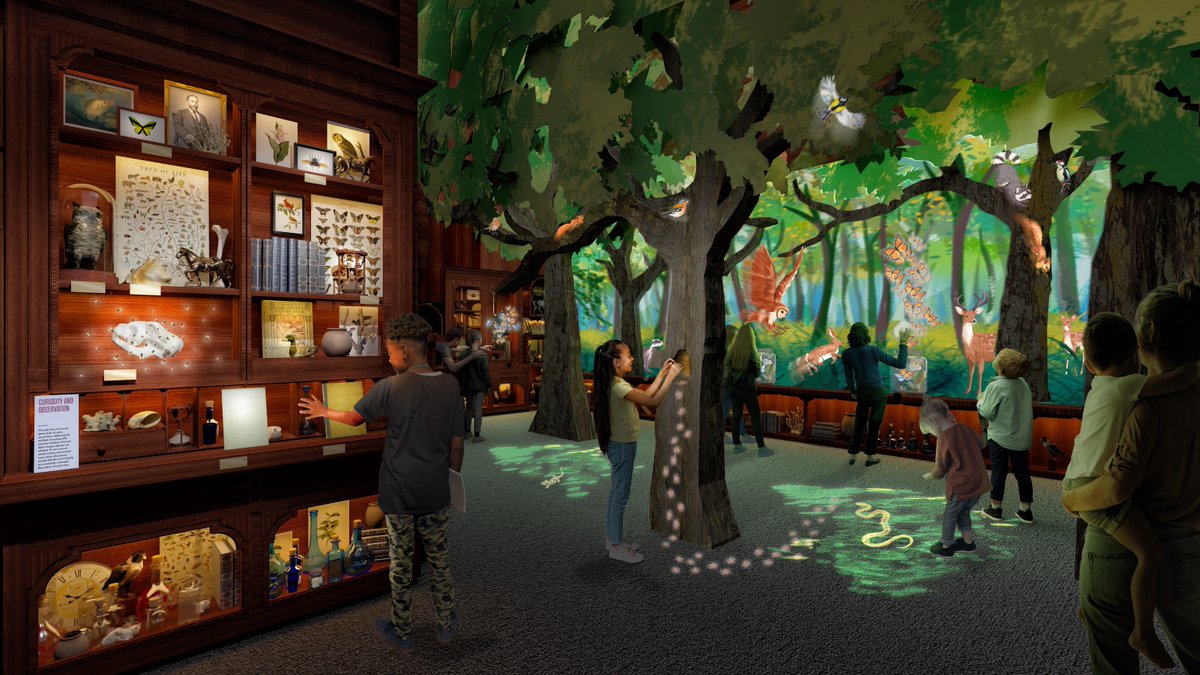
Today is #InternationalMuseumDay — and we'd like to introduce you to a small boy whose backyard taxidermy projects helped found one of the world's great museums. When Theodore "Teedie" Roosevelt was a child in the 1860s, his bedroom was a cabinet of natural curiosities. He kept jars of preserved frogs, drawers of bird skins, mounted insects, pressed plants, and a notebook he called "the Roosevelt Museum of Natural History." He labeled specimens. He cataloged them. He gave tours to long-suffering visitors. In 1869 — when Teedie was just ten years old — his father became one of the founding trustees of the actual American Museum of Natural History in New York City. Some of the boy's own carefully prepared specimens were among the museum's earliest donations. As an adult, TR continued that relationship, sending specimens from his Western hunting trips and, decades later, from the African Game Trail expedition of 1909–1910, which produced thousands of specimens still studied at the museum today. Museums mattered to Roosevelt because they were, in his view, democratic institutions. They put scientific knowledge, cultural heritage, and natural history within reach of any citizen who could walk through the door. They were a quiet but profound argument for the proposition that knowledge belongs to the public. That argument is one we believe in, too. As a presidential library, our entire purpose is to preserve and share — to make Roosevelt's life and legacy accessible to anyone who cares to come learn from it. So today, on #InternationalMuseumDay, visit a museum. Donate to one. Bring a child to one. Or just step inside and remember why these places exist. #InternationalMuseumDay #TheodoreRoosevelt #TeddyRoosevelt #AMNH #Museums #TRPL
Theodore Roosevelt Presidential Library tweet mediaTheodore Roosevelt Presidential Library tweet media
English
2
6
39
711
Theodore Roosevelt Presidential Library
#OTD in 1910, former President Theodore Roosevelt walked in the funeral procession of King Edward VII of the United Kingdom — the official American representative at one of the most extraordinary gatherings of European royalty the world has ever seen. Roosevelt had left the presidency just over a year earlier, in March 1909. Since then, he'd hunted lions and rhinoceros in British East Africa, climbed peaks, given speeches at the Sorbonne and Oxford, met the Pope, and dined with kings. By the time he reached Windsor for King Edward's funeral, he had become the most famous private citizen in the world. The funeral itself was a spectacle of declining empires. Nine European kings rode together in the procession. So did the German Kaiser, the Russian Grand Duke, and a dozen princes whose dynasties would not survive the world war that was four years away. Roosevelt walked among them as the representative of a republic — a former president, deliberately untitled, by tradition walking rather than riding with the crowned heads of Europe. For TR, it was a moment of pride for the office he had recently held and the country that had elected him. He believed in the American republic with a force that bordered on religious. Walking with kings and refusing their precedence — that was, in a real sense, his personal embassy on behalf of democracy. #OTD #OnThisDay #TheodoreRoosevelt #TeddyRoosevelt #KingEdwardVII #Diplomacy #TRHistory #AmericanHistory
Theodore Roosevelt Presidential Library tweet media
English
2
21
90
3.2K
Theodore Roosevelt Presidential Library
NEW EPISODE: Senator Mitt Romney on Formative Moments, Presidential Leadership, and the Question of Legacy What keeps a politician anchored to his principles when every incentive pulls the other way? On the latest Good Citizen, Senator @MittRomney traces the answer back to his father's kitchen table — where George Romney, a man who rose from government housing in El Paso to the governor's mansion in Michigan, never once confused success with worth. Senator Romney joins host Ted Roosevelt V for a wide-ranging conversation about moral clarity, the outsized influence of presidential character on American values, and why he built a deliberate system to guard against self-rationalization during the impeachment trial. "The human mind has the capacity to rationalize self-interest. It is something we are all subject to," he told Ted. "You have to begin by asking yourself, what are your most fundamental values and is obedience the truth and right and wrong, as you understand it, one of those fundamental values?" He also offers a surprisingly grounded take on what it will actually take to rebuild common ground — and it starts with something simpler than you'd think. Listen now: ow.ly/wgkh50Z0TiS #GoodCitizen #TheodoreRooseveltPresidentialLibrary #TRPL #MittRomney #Leadership #Citizenship #MoralCourage
English
3
2
9
738
Theodore Roosevelt Presidential Library
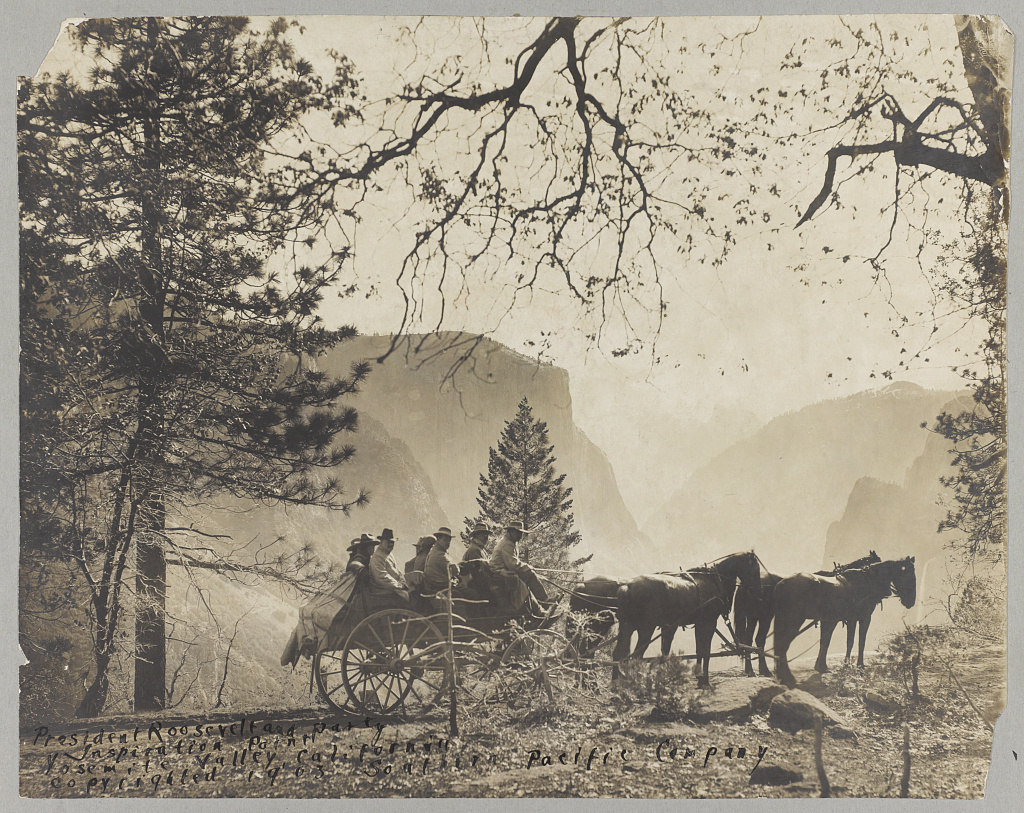
#OTD in 1903, Theodore Roosevelt slept his third and final night in Yosemite, this time on the floor of the valley itself — at Bridalveil Meadow, with granite walls rising on every side and the falls audible in the dark. The first night had been beneath the Mariposa Grove sequoias. The second, near Glacier Point, where he and Muir woke in five inches of fresh snow. By the third night, Muir had Roosevelt exactly where he wanted him: a president, on the ground, in the place itself, with a campfire and time enough to listen. Muir made his case. Yosemite Valley and the Mariposa Grove had been under California state control since 1864. The surrounding national park, created in 1890, formed a doughnut around them — a federal ring around a state-controlled core. Mismanagement, overgrazing, and unchecked tourism had taken their toll. The valley needed to come back to the federal government, unified with the park around it. Roosevelt listened. Three years later, on June 11, 1906, he signed the bill that brought Yosemite Valley and the Mariposa Grove into the national park. The Antiquities Act, signed three days earlier, gave him unilateral authority to protect lands of "historic or scientific interest." He would use that authority eighteen times — at Devils Tower, the Grand Canyon, Muir Woods, and elsewhere — before leaving office. The Yosemite trip didn't create Roosevelt's conservation impulse. He'd had that since boyhood. But three nights under the trees, with a man who knew them better than anyone alive, sharpened it into urgency. The next morning, May 18, he climbed back into Tom Gordon's stagecoach and made the sixty-seven miles to Raymond in ten hours — a speed record. The president left Yosemite at a gallop. The conservation he carried with him would last forever. #OTD #OnThisDay #TheodoreRoosevelt #JohnMuir #Yosemite #Conservation #PublicLands #DareGreatly
Theodore Roosevelt Presidential Library tweet media
English
1
19
111
1.6K
Theodore Roosevelt Presidential Library
Join us this coming Monday for a virtual program featuring Jeffrey Rosen, legal scholar, bestselling author, and CEO Emeritus of the National Constitution Center (@constitutionctr) for a discussion featuring his book 𝘛𝘩𝘦 𝘗𝘶𝘳𝘴𝘶𝘪𝘵 𝘰𝘧 𝘓𝘪𝘣𝘦𝘳𝘵𝘺: 𝘏𝘰𝘸 𝘏𝘢𝘮𝘪𝘭𝘵𝘰𝘯 𝘷𝘴. 𝘑𝘦𝘧𝘧𝘦𝘳𝘴𝘰𝘯 𝘐𝘨𝘯𝘪𝘵𝘦𝘥 𝘵𝘩𝘦 𝘓𝘢𝘴𝘵𝘪𝘯𝘨 𝘉𝘢𝘵𝘵𝘭𝘦 𝘖𝘷𝘦𝘳 𝘗𝘰𝘸𝘦𝘳 𝘪𝘯 𝘈𝘮𝘦𝘳𝘪𝘤𝘢. Through the lens of Jefferson and Hamilton’s competing visions, Rosen will explore how enduring debates over liberty and federal power continue to shape American democracy today. This event is free and open to the virtual public. Meet us at our YouTube, LinkedIn, or Facebook (all links in bio) at 5:30 PM MT/7:30 PM ET to tune in! #constitution #democracy #america250 #theodoreroosevelt #liberty #program #bestseller
Theodore Roosevelt Presidential Library tweet media
English
0
2
8
268
Theodore Roosevelt Presidential Library
#OTD in 1903, day two of Theodore Roosevelt's camping trip with John Muir found the two men deep in Yosemite's high country, riding through alpine meadows and discussing what TR himself would later call "the whole subject of forestry and the preservation of the wild creatures." Muir was, as one biographer put it, the perfect tour guide for the wrong tourist — except Roosevelt was exactly the right tourist. Muir tended toward mystical exuberance about wilderness, calling it "the inestimable wealth of the forests" and walking long distances to chase a single rare flower. Roosevelt was more practical, more political, but no less devoted to the country he was passing through. The chemistry between them was immediate. Sometime that day, the two men reached a high vantage point — the Yosemite Valley spread out below them, the granite domes of the Sierra rising in every direction. It was the kind of place that makes serious people quiet. Roosevelt and Muir, normally two of the most loquacious men in America, are reported to have simply stood and looked. The moment didn't end with a treaty signed or a proclamation issued. It ended with two men, slightly older than they had been the day before, planning what they would do. #OTD #OnThisDay #TheodoreRoosevelt #TeddyRoosevelt #JohnMuir #Yosemite #Conservation #TRHistory
Theodore Roosevelt Presidential Library tweet media
English
3
18
73
1.1K
Theodore Roosevelt Presidential Library
50 days. We're at the halfway mark between when tickets went on sale and when the doors open. The countdown has a different energy now. Fifty days feels close. Fifty days feels real. The Theodore Roosevelt Presidential Library opens July 4 in Medora, North Dakota — and every one of those 50 remaining days is a day closer to telling the story that this landscape has been waiting to tell for 140 years. T.R. arrived in the Badlands in 1883. He left a changed man. Now there's a place built to show you how and why — in the exact terrain where it happened. 50 days. Have you grabbed your tickets yet? trlibrary.com/visit #OpeningJuly4 #TRLibrary #TheodoreRoosevelt #Medora #NorthDakota #GrandOpening #CountingDown #50Days
English
1
11
56
1.1K
Theodore Roosevelt Presidential Library
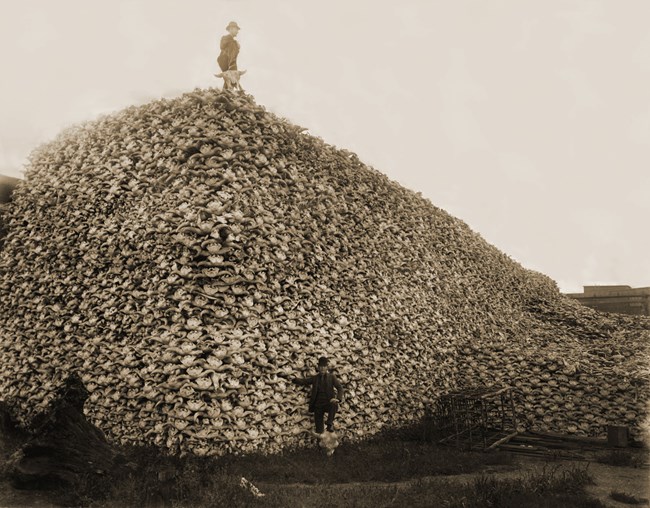
Today is #EndangeredSpeciesDay — and Theodore Roosevelt's role in shaping how America protects vulnerable wildlife is hard to overstate. When TR took office in 1901, the American bison was nearly extinct. Once numbering in the tens of millions across the Great Plains, the herds had been destroyed within a single generation by commercial hunting and federal policy aimed at undermining Plains tribes. By the early 1900s, fewer than a thousand bison remained alive in the entire United States. Roosevelt's response was characteristic. In 1905, he served as founding honorary president of the American Bison Society, which was led by William Hornaday, the New York Zoological Society director and a conservationist Roosevelt deeply admired. In 1907, his administration shipped 15 bison from the Bronx Zoo to the Wichita Mountains Wildlife Refuge in Oklahoma — the first federal effort to restore an endangered species to its native range. In 1908, he established the National Bison Range in Montana. By the time he left office, the federal government was actively breeding and protecting bison on multiple federal preserves. The species is alive today because Roosevelt and his contemporaries refused to let it slip away on their watch. The principle they established — that the federal government has an obligation to protect endangered species — would eventually grow into the Endangered Species Act of 1973, signed by another Republican president, Richard Nixon. So when you hear a meadowlark in a pasture Roosevelt protected, or see a bison on a refuge he helped establish, you're seeing the long arc of an idea: that we owe something to the wild creatures we share this country with. #EndangeredSpeciesDay #TheodoreRoosevelt #TeddyRoosevelt #Conservation #BisonRestoration #TRPL
Theodore Roosevelt Presidential Library tweet media
English
1
17
73
1.5K
Theodore Roosevelt Presidential Library
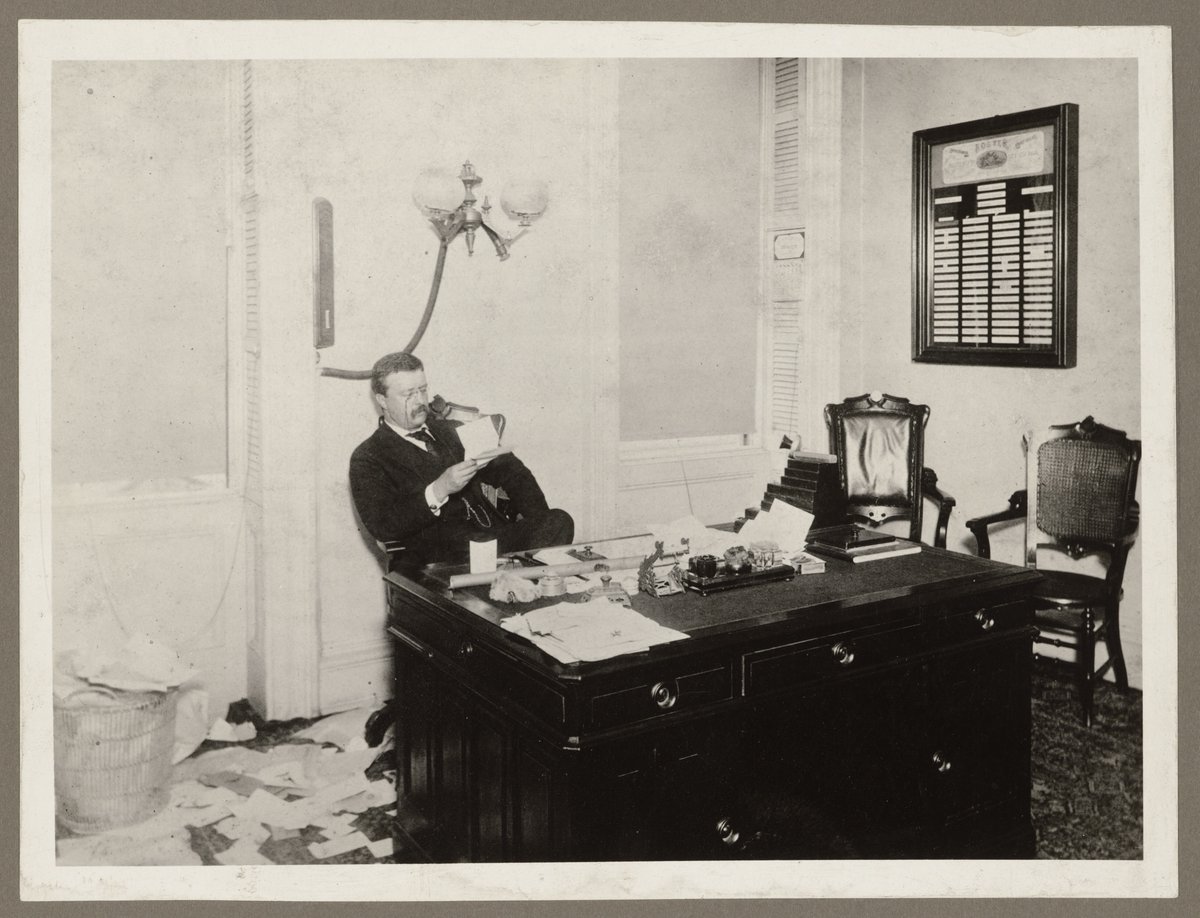
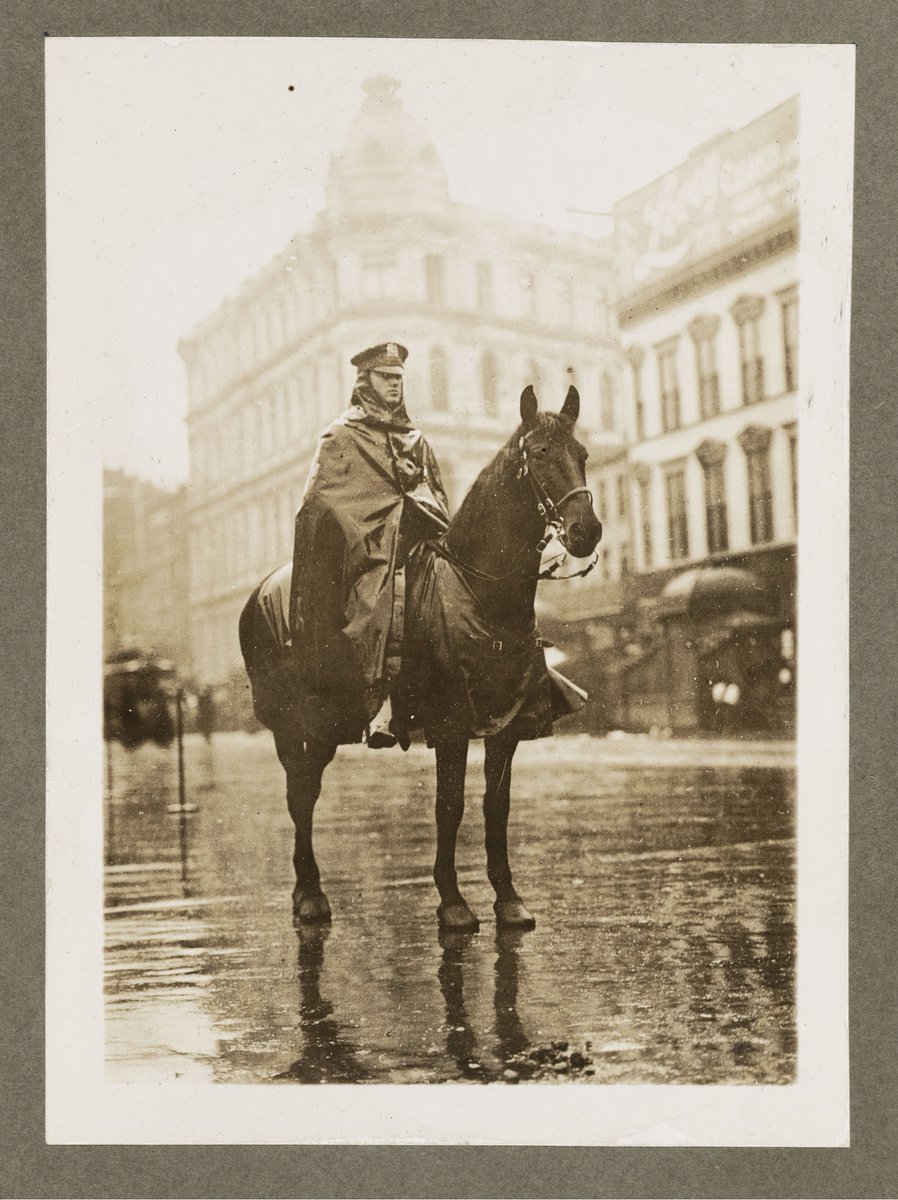
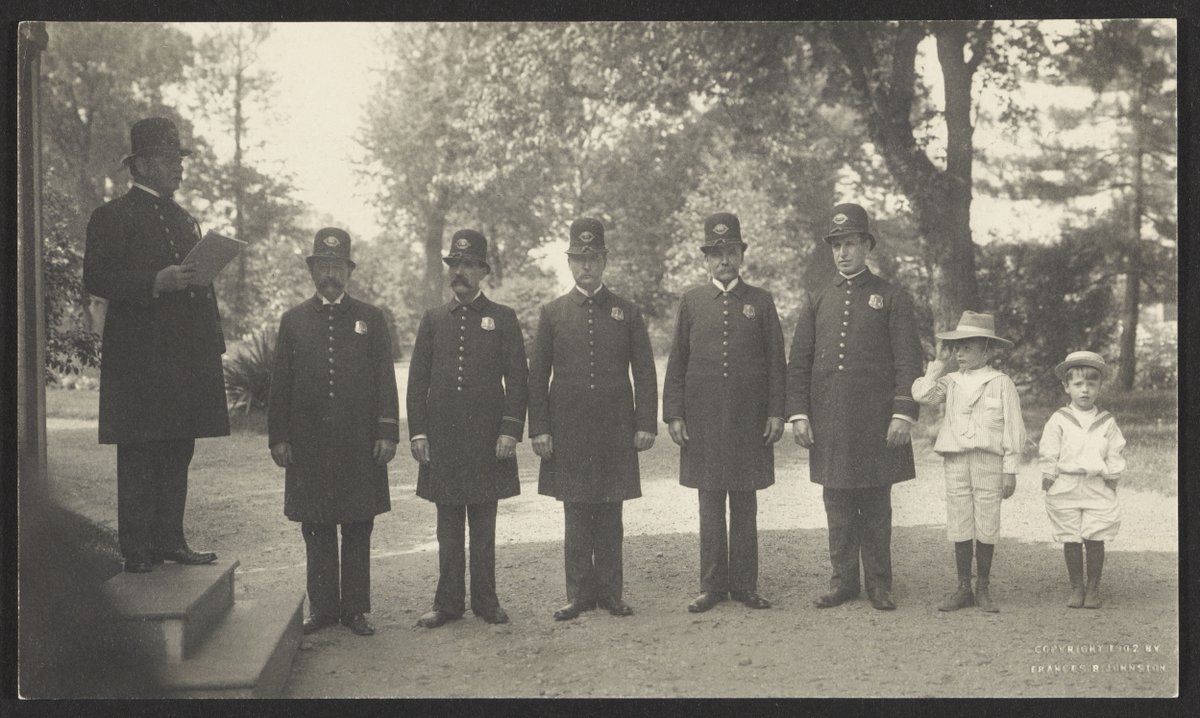
It's #PeaceOfficersMemorialDay — and we're thinking about a former NYC Police Commissioner who walked the Manhattan beat in the dead of night. In 1895, Theodore Roosevelt was appointed to the Board of Police Commissioners of the City of New York — and quickly became the loudest, most visible reformer the department had ever seen. NYC policing in 1895 was a swamp of patronage, payoffs, and political interference. Cops paid for promotions. Captains protected favored saloons. Whole precincts operated as fiefdoms of Tammany Hall. Roosevelt's response was relentless. He showed up at police stations unannounced. He walked patrol routes at 2 a.m. with reporter Jacob Riis at his side, looking for officers who weren't on their posts. He moved aggressively to fire or discipline officers for corruption or dereliction of duty — in numbers that shocked the political class. He insisted, against fierce political opposition, that the law applied equally — even, controversially, to the closing of saloons on Sundays. Was he beloved by the rank and file? Not always. He stepped on toes. He alienated political allies. He earned editorial criticism and street-level resentment. But by the time he left the Board in 1897 to become Assistant Secretary of the Navy, he had begun a transformation of NYPD culture that would take decades to complete — and he had given honest officers cover to do their jobs without paying tribute to bosses. Today, on #PeaceOfficersMemorialDay, we honor the officers who give their lives in service. And we remember a former commissioner who believed deeply that the badge meant something — and who spent two years of his life fighting to make sure it did. #PeaceOfficersMemorialDay #NationalPoliceWeek #TheodoreRoosevelt #NYPD #TRPL
Theodore Roosevelt Presidential Library tweet mediaTheodore Roosevelt Presidential Library tweet mediaTheodore Roosevelt Presidential Library tweet mediaTheodore Roosevelt Presidential Library tweet media
English
2
8
41
762
Theodore Roosevelt Presidential Library
#OTD in 1903, Theodore Roosevelt stepped off his presidential train at Raymond, California, climbed into a stagecoach, and began one of the most consequential camping trips in American history. His guide was John Muir — naturalist, writer, founder of the Sierra Club, and the most passionate wilderness advocate of his generation. Muir had been pestering Washington for years to extend federal protection over Yosemite Valley. Roosevelt had finally said: "don't tell me about it; show me." That first night was spent in the Mariposa Grove of giant sequoias. Roosevelt slept beneath the Grizzly Giant — one of the largest living things on earth — on a bed made up of forty wool army blankets that park rangers had laid down beneath the tree. Muir built a fire. The two men talked late into the night about glaciers, forest fires, sheep grazing, and the federal government's responsibility to protect what was here long before any of us. It would be hard to overstate what those four days did to American conservation. By the time Roosevelt left Yosemite, he had decided to push for federal control of the valley. By 1906, Congress had returned Yosemite Valley and the Mariposa Grove to federal jurisdiction. Within a decade, his administration would protect more than 230 million acres of land — five national parks, 18 national monuments, and over 150 national forests. It started here. With a stagecoach, a sequoia, and a man named Muir. #OTD #OnThisDay #TheodoreRoosevelt #TeddyRoosevelt #JohnMuir #Yosemite #Conservation #PublicLands #TRHistory
Theodore Roosevelt Presidential Library tweet mediaTheodore Roosevelt Presidential Library tweet media
English
1
28
140
2.6K
Theodore Roosevelt Presidential Library
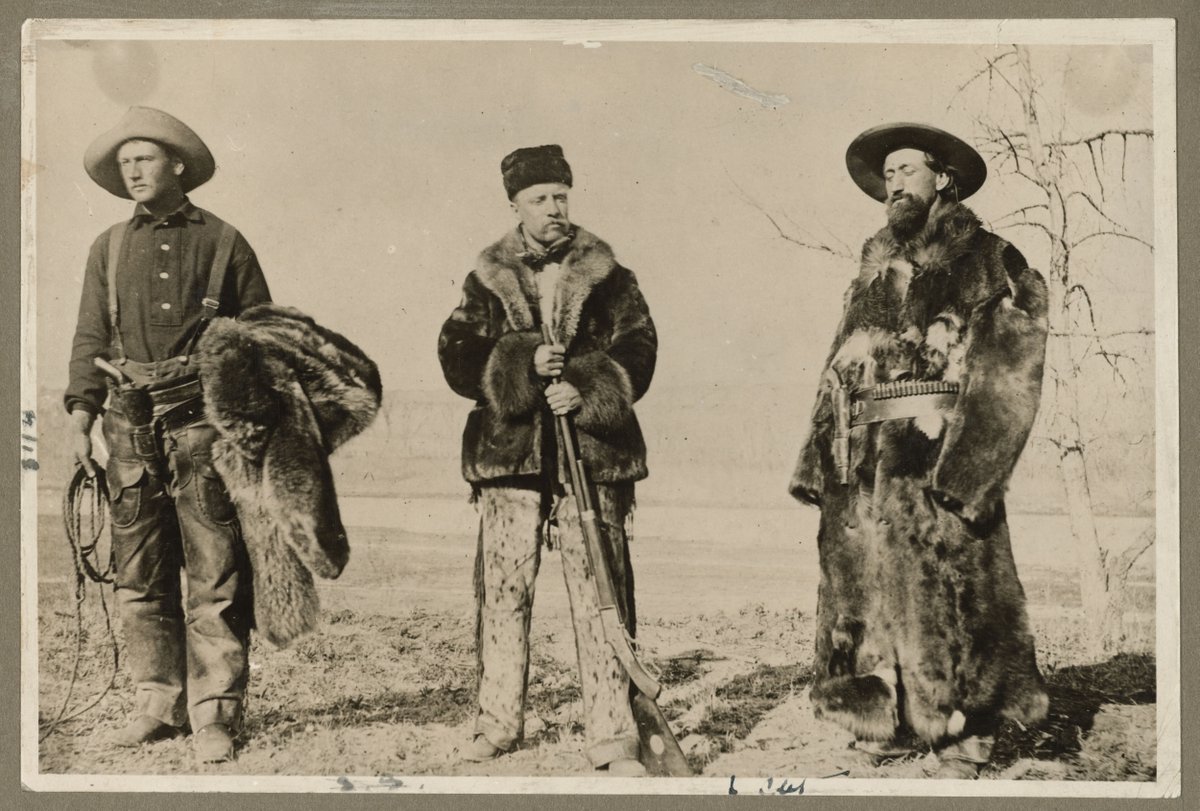
Roosevelt was born into wealth. His family was one of the most prominent in New York. He attended Harvard. He published his first book at 23. And then he came to the Badlands and worked alongside men who had nothing but their skill, their toughness, and their character. That's the part of the story that changes everything. In the Badlands, Roosevelt was judged by his work, not his name. The cowboys didn't care about his Harvard degree. They cared about whether he could stay in the saddle during a roundup. Gregor Lang, the Scottish rancher Roosevelt admired most, earned respect through honesty and hard work, not inherited position. Bill Sewall and Wilmot Dow, the Maine woodsmen who ran the Elkhorn Ranch, were men whose competence Roosevelt could never match — and he knew it, and respected them for it. The Badlands taught Roosevelt that character was built, not born. That lesson informed everything that followed — from his reform crusades to his conservation legacy to his insistence that a "square deal" was owed to every American, regardless of background. The Theodore Roosevelt Presidential Library opens July 4 in Medora. trlibrary.com/visit #TheodoreRoosevelt #TRLibrary #Medora #NorthDakota #Leadership #SquareDeal #AmericanHistory #OpeningJuly4
Theodore Roosevelt Presidential Library tweet media
English
2
21
117
2.1K
Theodore Roosevelt Presidential Library
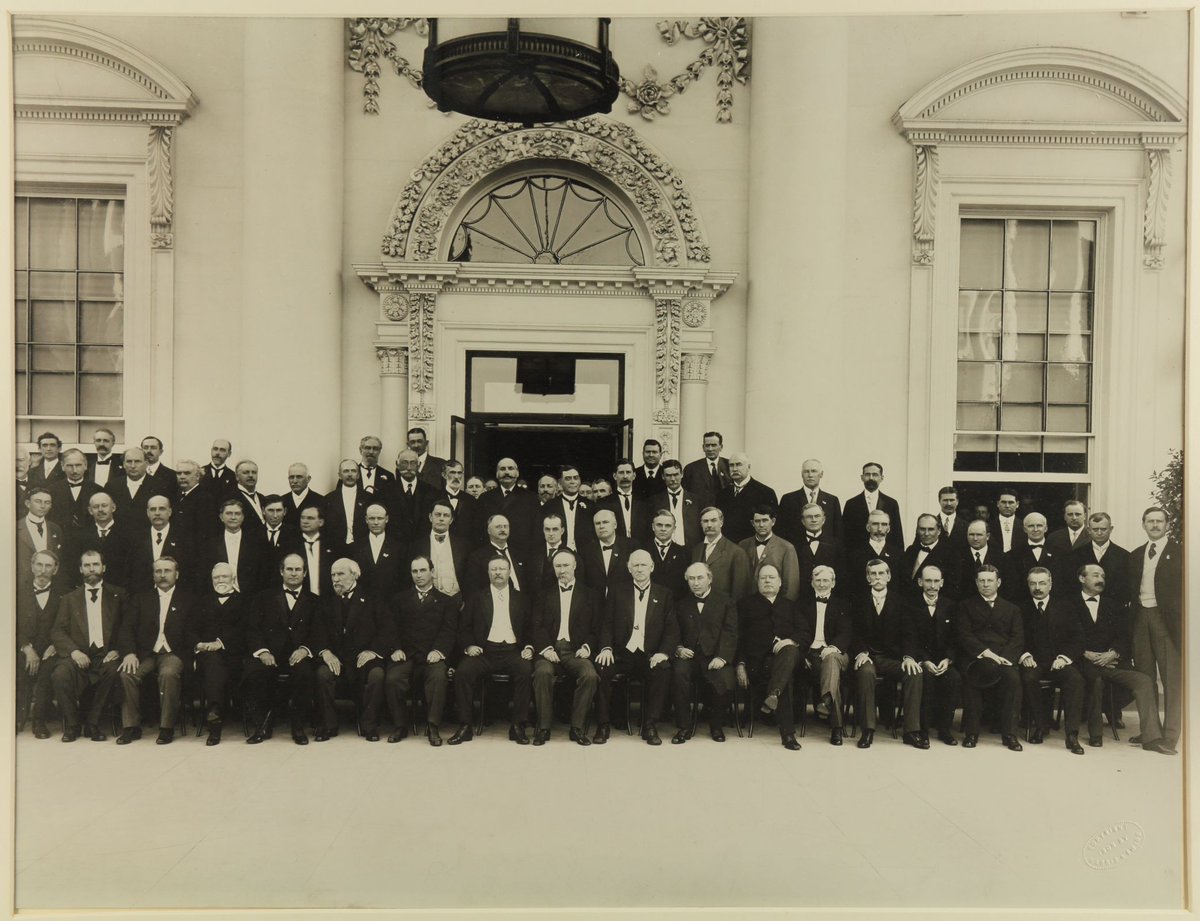
#OTD in 1908, the East Room of the White House was packed. Thirty-six governors. The entire United States Supreme Court. Most of Roosevelt's Cabinet. Andrew Carnegie. Railroad baron James J. Hill. William Jennings Bryan. Speaker of the House Joe Cannon. Hundreds of representatives from civic and industrial organizations. It was the second day of the Governors' Conference on the Conservation of Natural Resources — and it was the first time in American history a sitting president had convened all the state governors for a single policy purpose. The purpose was conservation. The day before, Roosevelt had opened the conference with a speech titled "Conservation as a National Duty." But May 14 was the working day — the day the speeches gave way to the hard part. Forestry. Water. Soil. Minerals. Floods and droughts. Whose responsibility it was to manage what was left of the country's natural inheritance, and how to do it without ruining state authority or letting the federal government drift toward inaction. The conference produced a unanimous Declaration of the Conservation of Natural Resources. Within a year, almost every state in the union had created a conservation commission. The annual gathering of governors that began in 1908 has continued, in one form or another, ever since — today's National Governors Association traces its roots directly to this room. It is hard, in 2026, to imagine the leadership of every state, the entire Supreme Court, the country's most powerful industrialists, and a Democratic former presidential candidate sitting together for three days to work on a single problem. But it happened. Once. Right here. Tomorrow, we'll tell you where Roosevelt's conservation conviction came from — five years earlier, in a place very far from Washington, with a man named John Muir. #OTD #OnThisDay #TheodoreRoosevelt #Conservation #PublicLands #DareGreatly
Theodore Roosevelt Presidential Library tweet media
English
1
9
63
1.2K
Theodore Roosevelt Presidential Library
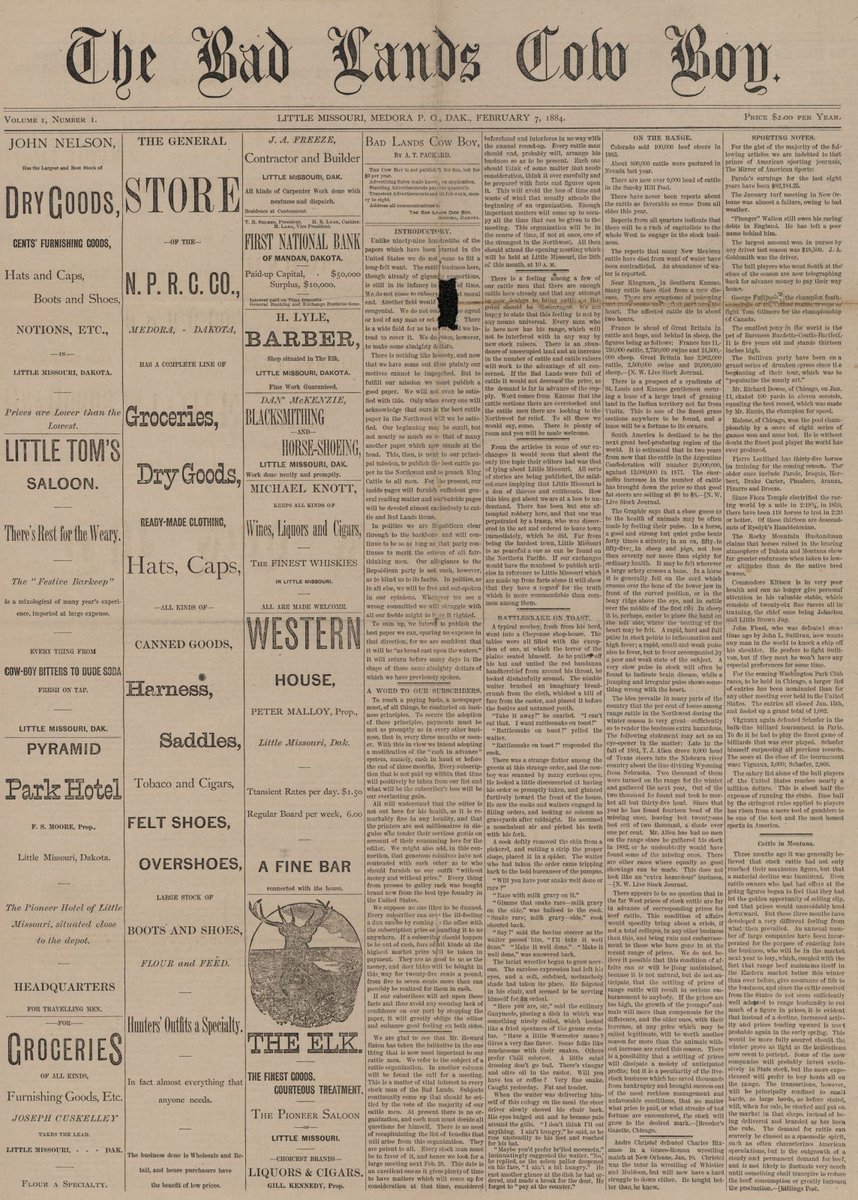
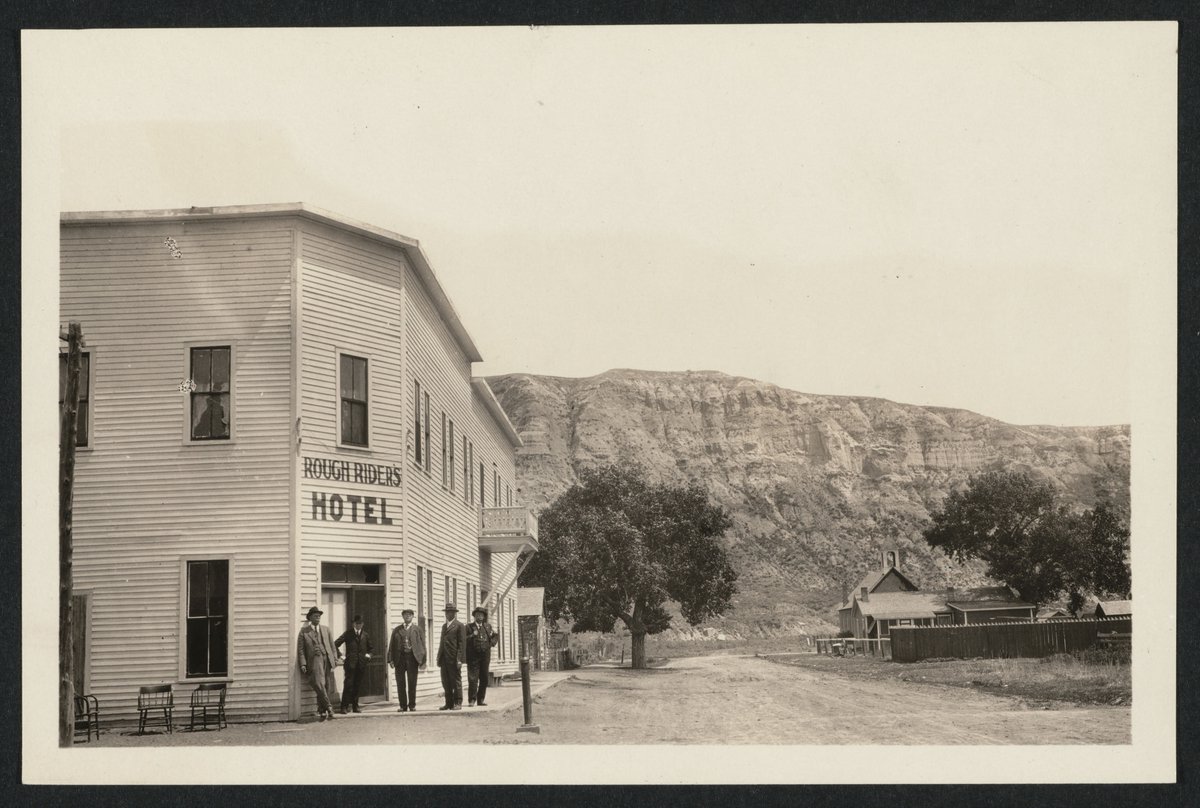
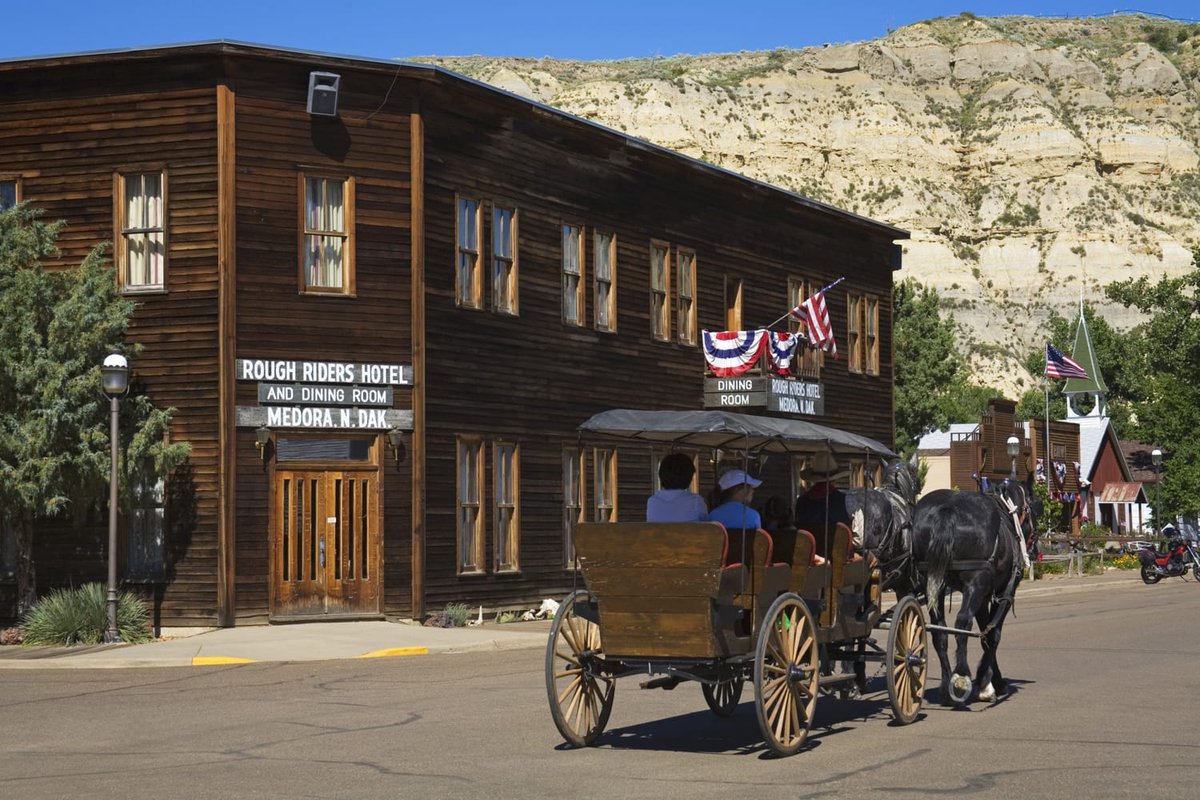
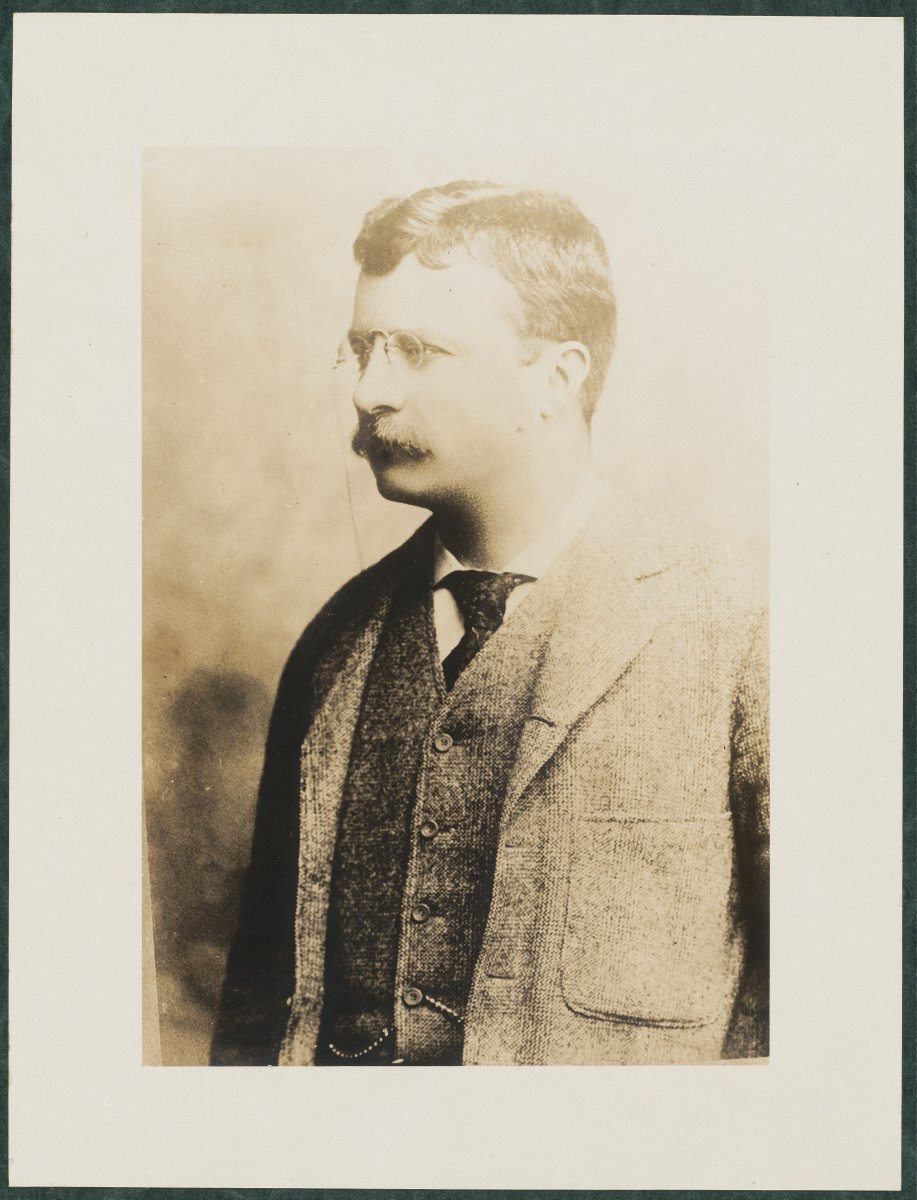
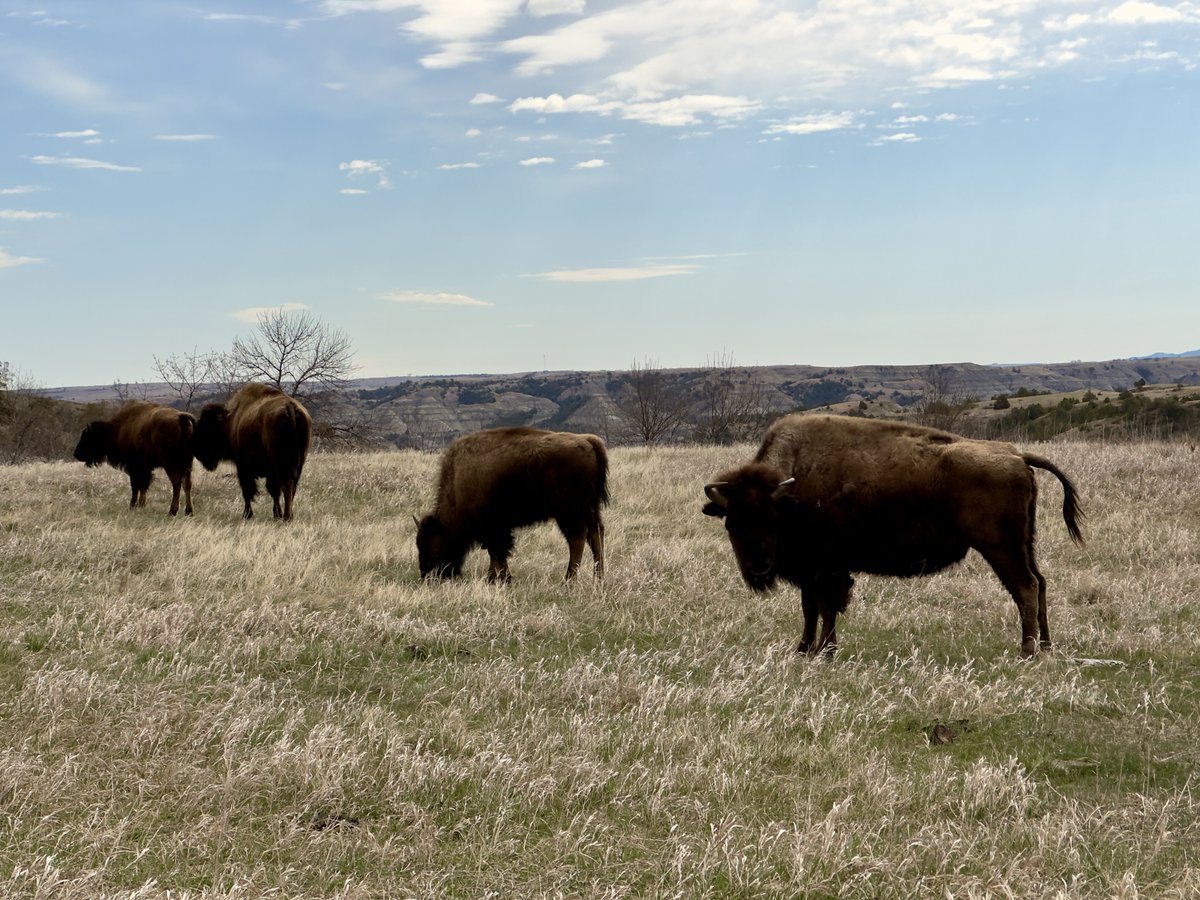
The first newspaper in the Badlands was called the "Bad Lands Cow Boy". Arthur Packard founded it in Medora in December 1884 and used it to chronicle the life of the community — the roundups, the weather, the comings and goings of ranchers and drifters. It was also, according to local tradition, where one of the most remarkable predictions in American political history was made. Packard reportedly looked at the young rancher named Roosevelt — a man with no national reputation, no clear political path, and a personal life in ruins — and told him: "You will become President." Whether or not the prediction was actually made, the fact that it was later attributed to Packard tells you something about how the Badlands community eventually understood what was happening. They watched a man rebuild himself from scratch, and some of them recognized, before the rest of the country did, what he was becoming. The Theodore Roosevelt Presidential Library opens July 4 in Medora — the town where that transformation played out. trlibrary.com/visit #TheodoreRoosevelt #Medora #NorthDakota #Badlands #WalkInHisFootsteps #TRLibrary #PresidentialHistory #AmericanHistory
Theodore Roosevelt Presidential Library tweet mediaTheodore Roosevelt Presidential Library tweet mediaTheodore Roosevelt Presidential Library tweet mediaTheodore Roosevelt Presidential Library tweet media
English
0
6
39
788
Theodore Roosevelt Presidential Library
#OTD in 1889, Theodore Roosevelt was appointed United States Civil Service Commissioner by President Benjamin Harrison. It was supposed to be a sleepy little job. It wasn't. The Civil Service Commission had been created in 1883 to break the patronage system — the practice of staffing the federal government with party loyalists, regardless of qualification. By 1889, the Commission was widely considered toothless. Both parties paid it lip service and worked around it whenever it suited them. Then Roosevelt arrived. Within days, he had launched a systematic investigation of patronage abuses. Within weeks, he was openly fighting senior figures in his own Republican Party who had assumed they could ignore him. Within a year, he was a household name as a reformer who could not be quieted, bought, or scared off. He stayed in the job for six years, serving under both Harrison (Republican) and Cleveland (Democrat), and he made the Civil Service Commission feared in a way it had never been before. By the time he left, the principle that federal jobs should go to the qualified rather than the connected was no longer aspirational. It was operational. It was also Roosevelt's first taste of national-level reform — and the first time the country saw, clearly, the kind of public servant he intended to be. #OTD #OnThisDay #TheodoreRoosevelt #TeddyRoosevelt #CivilService #Reform #TRHistory #AmericanHistory
Theodore Roosevelt Presidential Library tweet media
English
1
18
76
1.3K
Theodore Roosevelt Presidential Library
The North Unit of Theodore Roosevelt National Park is the one the crowds skip — and that's exactly why you should go. Eighty miles north of Medora on US-85, the North Unit offers what the National Park Service calls "the park's most dramatic scenery." A 14-mile scenic drive ends at Oxbow Overlook with panoramic views that'll stop you in your tracks. Bighorn sheep perch on cliff faces. A small herd of longhorn steers roams the grasslands as a living history exhibit from the open-range ranching era. The Achenbach Trail is a 16-mile loop that crosses the Little Missouri River twice and takes you through some of the most remote terrain in North Dakota. It's not for casual hikers. T.R. would have approved. Make the North Unit the adventure day on your Medora trip. Then come back to town for the Library, the Musical, and the best steak you've had in a while. trlibrary.com/visit #Badlands #NorthDakota #NationalPark #TRNP #StrenuousLife #TheodoreRoosevelt #TRLibrary #Hiking #WildNorthDakota #Medora
Theodore Roosevelt Presidential Library tweet mediaTheodore Roosevelt Presidential Library tweet mediaTheodore Roosevelt Presidential Library tweet mediaTheodore Roosevelt Presidential Library tweet media
English
1
17
118
2.3K
Theodore Roosevelt Presidential Library
#OTD in 1869, a ten-year-old boy stood on the deck of the SS Scotia in New York Harbor as it pulled away from the dock and pointed itself toward Liverpool. His name was Teedie. He was small, asthmatic, a little frail — the kind of boy who carried a notebook and watched birds. With him were his older sister Bamie (14), his younger brother Elliott (9), his little sister Corinne (8), and his parents, Theodore Sr. and Mittie. The family would spend the next year touring Europe. For Teedie, the voyage was the beginning of something he would later describe as the awakening of his serious naturalist's mind. He filled his diary with observations of seabirds, sailors, fish, and weather. In London, he would haunt the British Museum's natural history collections. In the Alps, he would push himself harder than his lungs wanted, climbing higher and farther than his parents thought wise. This is the Teedie who, almost forty years later, would stand on the rim of the Grand Canyon and say "Leave it as it is." The conservation president was already there, on the deck of the Scotia, with a notebook in his pocket and Europe ahead. #OTD #OnThisDay #TheodoreRoosevelt #TeddyRoosevelt #YoungTR #TRHistory #AmericanHistory
Theodore Roosevelt Presidential Library tweet mediaTheodore Roosevelt Presidential Library tweet media
English
1
5
64
1.1K
Theodore Roosevelt Presidential Library
The Library has a White House. Not a model. A full-scale facade of the White House that serves as the centerpiece of the presidential years chapter. You approach it, you enter it, and inside you find the story of the most consequential presidency of the early twentieth century. T.R. became president on September 14, 1901, after the assassination of William McKinley. He was 42 years old — the youngest president in American history. And he immediately set about transforming the office and the country: trust-busting, the Panama Canal, the Pure Food and Drug Act, the conservation of 230 million acres. The Library's presidential galleries include an interactive "Run Your Own Presidency" experience where you make the decisions T.R. faced and see what happens. It also includes the White House Gang gallery — telling the story of the Roosevelt children who turned the executive mansion into an adventure playground. Tickets on sale now. trlibrary.com/visit #TRLibrary #TheodoreRoosevelt #Medora #NorthDakota #PresidentialLibrary #WhiteHouse #AmericanHistory #OpeningJuly4
Theodore Roosevelt Presidential Library tweet mediaTheodore Roosevelt Presidential Library tweet mediaTheodore Roosevelt Presidential Library tweet media
English
1
9
48
1K