
Sabitlenmiş Tweet
Ty Smith
14.3K posts


Ty Smith
@tsmith
Principal Engineer @Uber leading the agentic engineering shift - Mobile, OSS, Advisor, Investor, Founder, Public Speaker - https://t.co/XrjLdX5qxI
San Francisco, CA Katılım Eylül 2008
909 Takip Edilen11.6K Takipçiler
Ty Smith retweetledi

Agentic AI adoption is on fire at @Uber, and it's changing the way we build, not just in engineering, but across the entire company.
Today, 99% of our engineers use AI tools. More than 70% of pull requests are attributed to local or cloud agents. And our engineers have built 2,500+ agent skills across the software development lifecycle.
Those numbers are exciting, but they led us to a much bigger question:
How do we bring agentic AI beyond engineering?
Finance. Legal. Operations. Marketing. Customer Support. HR. Procurement.
These functions run on complex workflows that are often manual, highly nuanced, and spread across dozens of systems. You can't automate them effectively by looking at process diagrams or documentation. You have to understand how the work actually gets done.
So we created something called Agentic Pods.
The idea is simple.
We handpicked ~30 of our most AI-proficient engineers (people with deep knowledge of Uber's systems) and paired each of them with a domain expert from a business function.
Then we gave every pod just two weeks.
• Days 1 – 2: Shadow the expert. Observe every step. Document workflows. Ask questions. Build intuition.
• Day 3: Prioritize opportunities based on scale, repetition, business impact, and data availability.
• Days 4 – 5: Build a working agent alongside the person doing the job.
• Days 6 – 9: Validate with several others performing the same work. Does it generalize? Does it actually make their job better?
• Day 10: Ship.
In just the past two months, we've run 16 Agentic Pods across 16 different business functions.
• Capital allocation across 150 cities: 15 hours → 30 minutes.
• Financial pacing reports: 2 days → 10 minutes.
• Marketing web quality assurance: 2 weeks → 50 minutes.
• Support workflow creation: 9,000 manual workflows → self-service automation.
The productivity gains are impressive, but what surprised us most wasn't the speed.
• It was how quickly engineers embedded in unfamiliar domains uncovered opportunities that had been hiding in plain sight.
• The biggest wins rarely come from automating one task. They come from rethinking an entire workflow. Once you redesign the workflow around AI, you often eliminate handoffs, remove unnecessary approvals, replace legacy tooling, reduce vendor spend, and dramatically accelerate decision-making.
• The workflow becomes the unit of automation - not the individual task.
• The most impactful agent skills cut across teams, orgs, functions, tools, and systems.
The biggest lesson? The best AI opportunities are rarely visible from the outside.
You discover them by sitting next to the people doing the work, understanding every friction point, and building with them, not for them.
We're now forming a dedicated team to scale this further and go deeper. They'll deeply understand the work, redesign it from the ground up, and use AI to fundamentally change how the business operates.
It's exciting times!

English

What's the most ambitious project you have Fable working on right now?
English

Does anybody work on or work at a company with a multi-million line web codebase? If so, I'd love to chat about what architectural decisions scale horizontally.
I've seen it work with Android but the toolchains on web are sufficiently different that I can't apply learnings 1:1
English
Ty Smith retweetledi

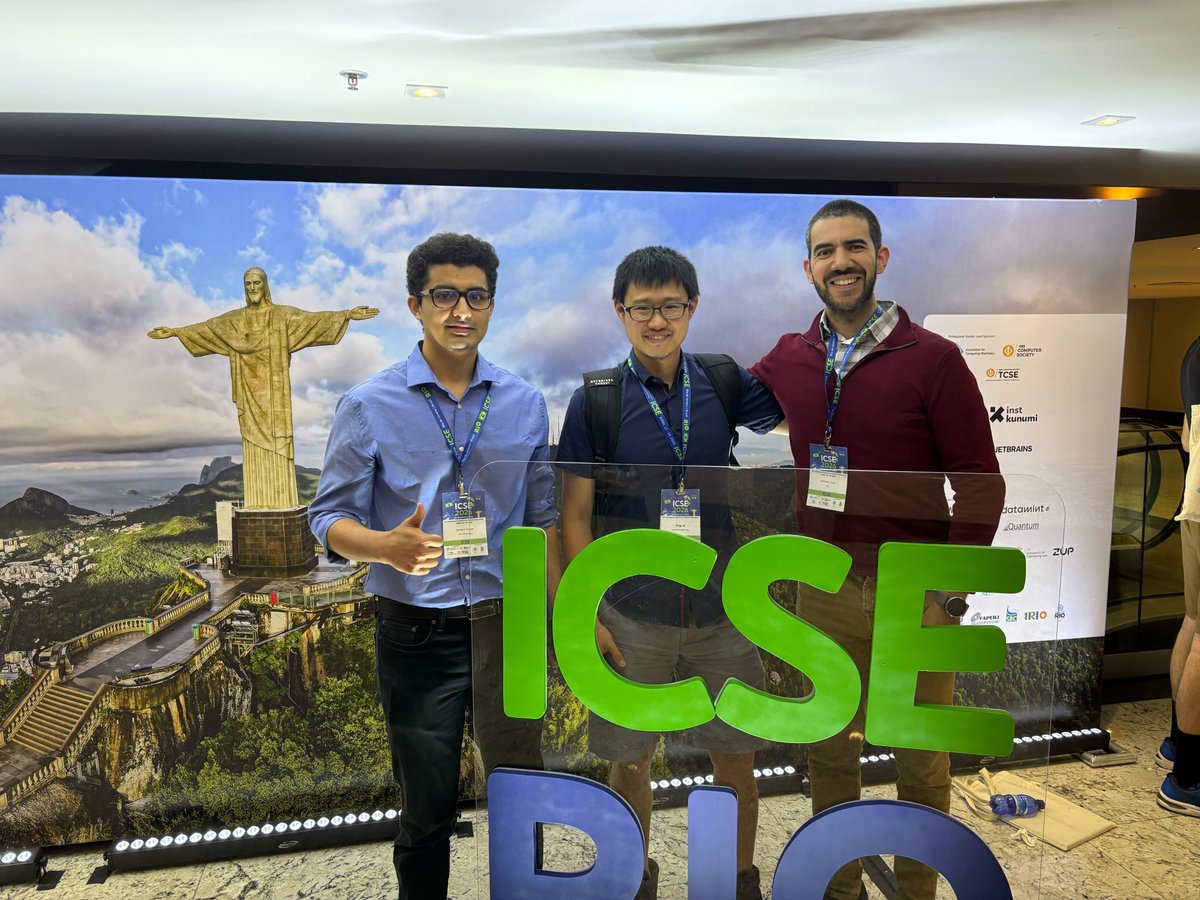
It was a big week for Uber Engineering at hashtag #ICSE2026. Read the award-winning research and learn how we’re scaling our testing infrastructure below.
AutoCover: Scaling Test Coverage: conf.researchr.org/details/icse-2…
AI-Driven Mobile Chaos Engineering: arxiv.org/pdf/2602.06223

English
Ty Smith retweetledi

Ty Smith retweetledi
Staying on top of code reviews and CI/CD updates shouldn't feel like a full-time job in itself.
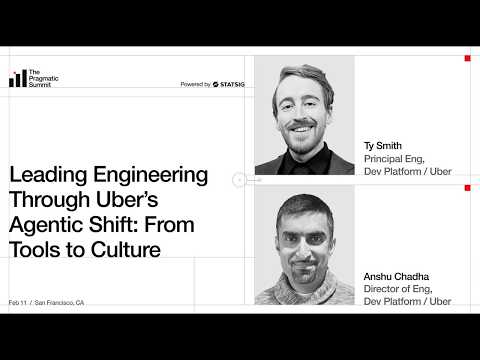
Check out this recording from @tsmith and Anshu Chadha from Uber's Developer Platform team on how we're tackling toil with Uber's Agentic Shift:
youtube.com/watch?v=i1tZN4…
YouTube
English
Ty Smith retweetledi
Agentic software engineering adoption is on fire at @Uber. 1,800 code changes per week are now written entirely by Uber's internal background coding agent, and 95% of our engineers now use AI every month across all the tools we track.
This is a real reset moment for engineering; it's one of the most exciting times to lead. This shift requires builders to be curious and hands-on. I’m incredibly lucky to be surrounded by a team that’s doing exactly that.
The best part is that the strongest adoption isn’t being pushed top down from leadership announcements; it’s coming from engineers who are quietly experimenting, quietly shipping, and quietly pushing things forward.
I love spending time with those engineers because there’s no substitute for being close to the work.
Over the last few months, we leaned in hard, and the results have been phenomenal.
The bigger shift: going agentic.
84% of AI users are now working with agent-style workflows, not just tab completion. Claude Code usage nearly doubled in 2 months (32% → 63%), while IDE-based tools have largely plateaued.
Engineers are moving from accepting suggestions to delegating tasks. Even within traditional IDEs, ~70% of committed code is now AI-generated.
Background agents are writing code autonomously.
Our internal background coding agent went from <1% of all code changes to 8% in just a few months. There is zero human authoring. Engineers review and approve, but the code is written entirely by AI agents.
The role of the engineer is shifting - from writing every line to architecting systems and reviewing AI-generated code.
More to come from the @UberEng team in the coming days.
English
Ty Smith retweetledi

At @Uber, AI isn’t replacing developers – it’s helping them move faster.
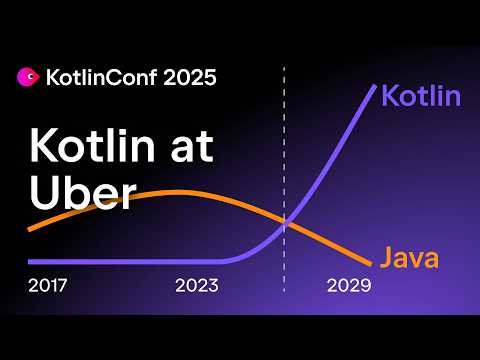
In this KotlinConf talk, @tsmith shows how Uber uses LLMs, RAG, and the Model Context Protocol to automate Java→Kotlin migrations safely across millions of lines of code.
🎥 Watch the full talk here: youtube.com/watch?v=K2PN03…
YouTube
English
The video for using Agents, LLMs, and LSC techniques to migrate Java to Kotlin for our @UberEng's Android apps from @kotlinconf is now public.
youtube.com/watch?v=K2PN03…
#Kotlinconf
YouTube
English
Ty Smith retweetledi

Technical excellence meets real-world leadership at #dcnyc25 🚨
The techlead summit is your toolkit for the next step in your #MobileDev career. @tsmith goes over #AI code assistants to agentic systems & explores how top teams are using AI to boost #dev productivity across the SDLC. nyc.droidcon.com/speakers/ty-sm…
English
Ty Smith retweetledi

Our first in-person #DPE meetup of 2025 is @PinterestEng offices in SF on Thurs Jan 23 from 3-6 PM. we have talks from @rpalcolea @AubreyChipman @NetflixEng on Testing, Pinterest on Prompt Engineering, and @Gradle on Failure analytics RSVP:
dpe.org/dpe-san-franci…

English
Apparently the link embedded on Twitter is broken and prompting an app install.
Click through the link on this cross post if you’re interested.
bsky.app/profile/tysmit…
English
I’m building out @UberEng's first dedicated @Kotlin Language platform team in our Amsterdam office to make Kotlin first class across Bazel, IDE, LSPs, Android, KMP, AI language migrations, backend services, & to help in the Kotlin Foundation.
Apply here: uber.com/careers/list/1…
English
@SarahDADAX1 Still emerging, but many long time tech folks are active. When I worked at Twitter, we categorized users in buckets, one of the smallest (sub 5% iirc) drove 80% of content and engagement on the platform. Those type of folks seem to be moving. Early, but good long term sign.
English

Seeing a lot more posts and engagement over there these days, and posting more myself. Feels a bit more like Twitter from a few years ago before my following communities fragmented across 4 platforms and many folks stopped posting on social media entirely.
Ty Smith@tsmith
Since many folks seem to be joining Bluesky, I'm bsky.app/profile/tysmit… over there.
English


Since many folks seem to be joining Bluesky, I'm bsky.app/profile/tysmit… over there.
English
@joenrv @0xEricBrown Even though there's official third party passkey integration in the Android system APIs, I've found it rarely works. On my iOS device, using 1password for passkeys in most apps was a seamless experience.
English

my problem is that i'm an Android user with a mac 😅 we also have windows users who really dislike passkeys because the integration there is much worse. Might be decent if you're fully bought into the apple ecosystem though.
As for 1password, I have never seen the option to pick anything else but google on Android. Android's CredentialManager is pretty deeply coupled with google play services, would be surprised if they let third parties inject themselves in that flow.
English
You think passkey is the end game for crypto UX? Well I have some bad news for you.
I love passkeys, but they have MASSIVE flaws that NOBODY talks about.
People are hyping passkeys as the savior for crypto apps, combining sovereignty + UX. But it's actually not sovereign at all, and I would argue it's the wrong direction for crypto altogether. Here's why.
#1 - the domain problem
Passkeys are scoped to a domain. You can have a passkey for foo dot com, and one for bar dot com, but you can't have the same passkey for both.
If passkey=wallet, then this forces you to have a different wallet for every website. Passkeys are not meant to be global.
To work around this, what some wallets do is open a pop up window, which is always on the same domain, and prompt the passkey from there. Kinda works but... That makes that domain a central point of failure, and the only way to access your wallet. Domains can go down / be banned at any time. A DNS takeover could compromise every wallet. The site owner could decide to shut down your access at any time. Not sovereign at all.
#2 - the new device problem
Passkeys are supposed to be "synced" cross devices, but in practice, it only syncs if you're using iCloud on 2 Apple devices or Chrome/android with the same Google account. If you own a Mac and an Android (like me) or a Windows PC and an iPhone, you're screwed.
Even on Mac, I get a different passkey if I use chrome vs safari vs arc (where I have the 1password extension) on the SAME WEBSITE.
Just read what ppl say about it online, like this article from DHH: world.hey.com/dhh/passwords-…
The whole thing is a mess, my mom will never get this right.
Not to mention that we're basically giving all our keys to Google/Apple because of that sync feature, and there is no way to eject from that or even turn it off! Passkeys are just giving tech giants more power, opposite of the promise of crypto.
... So what can we do?
Instead of falling into the hype trap, let's look at the tech and understand what needs to change to truly use our devices as universal signers. It's actually very close, hardware is there, all that's needed is a change in the specification and for everyone to agree on it.
We keep throwing new EIPs out there, how about we get together as a community and push for an extension of the webauthn standard instead?
How about we create a passkey sync manager that lives onchain instead of in those tech giant servers?
I'm worried that if we keep going this way, we'll end up exactly where we started. We can do better.

English
Excited to finally be building the Kotlin Language Platform team out at Uber. Come work with us in our Amsterdam office!
Yahya Bayramoglu@yahyabayramoglu
We are creating a Kotlin team in Amsterdam office @UberEng ! 🥳 Let's work together! You can check out the roles and apply here. uber.com/us/en/careers/…
English

i've seen so many tweets from people switching to Apple Music from Spotify..
i get that Apple Music is fine on mobile, but here on desktop i can't even get Apple Music to respond to button clicks half the time, everything is microscopic font, loading some pages is like a 1 second delay. what am i missing?
English