
Sabitlenmiş Tweet
TxPipe
1.6K posts

TxPipe
@txpipe_tools
#OpenSource tools and infrastructure for #Cardano blockchain developers. We focus on integrating on-chain data with off-chain infrastructure.
Katılım Şubat 2022
507 Takip Edilen6.4K Takipçiler
TxPipe retweetledi

HTTP/JSON wins at simplicity, but if you care about low-latency or high throughput, gRPC makes a huge difference.
- binary serialization (compact & fast)
- HTTP/2 request multiplexing
- schema-driven, less payload
TxPipe@txpipe_tools
UTxO RPC is a gRPC API for Cardano nodes. Because it's gRPC, you get something REST APIs can't easily do: server-side streaming. You open ONE long-lived stream and the node pushes txs to you as they land on chain — a live firehose of every tx. No polling. 🧵
English

Dolos is a lightweight Cardano data node. It speaks UTxO RPC natively — no extra adapters needed.
If you're building indexers, wallet backends, or anything that needs to react to on-chain events in real time, this is an efficient pattern.
github.com/txpipe/dolos
English

We put together a fully working TypeScript example using the official utxorpc/sdk.
Five scripts that cover every WatchTx filtering pattern.
docs.txpipe.io/dolos/integrat…
English
TxPipe retweetledi

I’m happy that the UTxO model is getting the attention it deserves. Cardano has been leading the way in building actual dApps with it.
One thing we were missing was a way to describe the interfaces for these protocols. Tx3 solves this.
TxPipe@txpipe_tools
English

I voted YES on the @txpipe_tools Pallas proposal.
Pallas is not a flashy growth proposal.
It is core developer infrastructure.
It provides Rust libraries for important Cardano primitives, including ledger data structures, serialization, cryptography, transaction building, chain synchronization, multi-era support and node communication.
This kind of work sits low in the stack.
When low-level libraries fall behind protocol changes, ledger evolution, hard forks or dependency updates, the impact can ripple through many downstream tools and applications.
My principle remains:
Fund the rails before the growth bets.
In the current NCL environment, I am being selective.
I am prioritising:
core developer infrastructure
open-source public goods
protocol compatibility
maintenance of tools real builders depend on
modest, scoped requests with oversight
Pallas fits that framework.
It is one of the stronger TxPipe proposals in my view because it is foundational. Higher-level tools are only as reliable as the primitives and libraries underneath them.
The ask is also modest compared with many other live treasury requests, and the proposal uses the 2026 treasury management framework with administration, oversight, milestone-based disbursement and community auditability.
Cardano needs to keep its technical foundations maintained.
This is exactly the kind of low-level open-source infrastructure I believe the treasury should support.
My vote: YES
My DRep ID:
drep1ytuufvd6maykgfcp20fxgpx7g6a9z2suchqehfejwdsx8cgpx80yg
If you agree with an infrastructure-first, fiscally disciplined approach to Cardano treasury voting, please consider delegating to me.
English

📢 As a dRep I Voted ✅
🗳 I Voted YES ✅
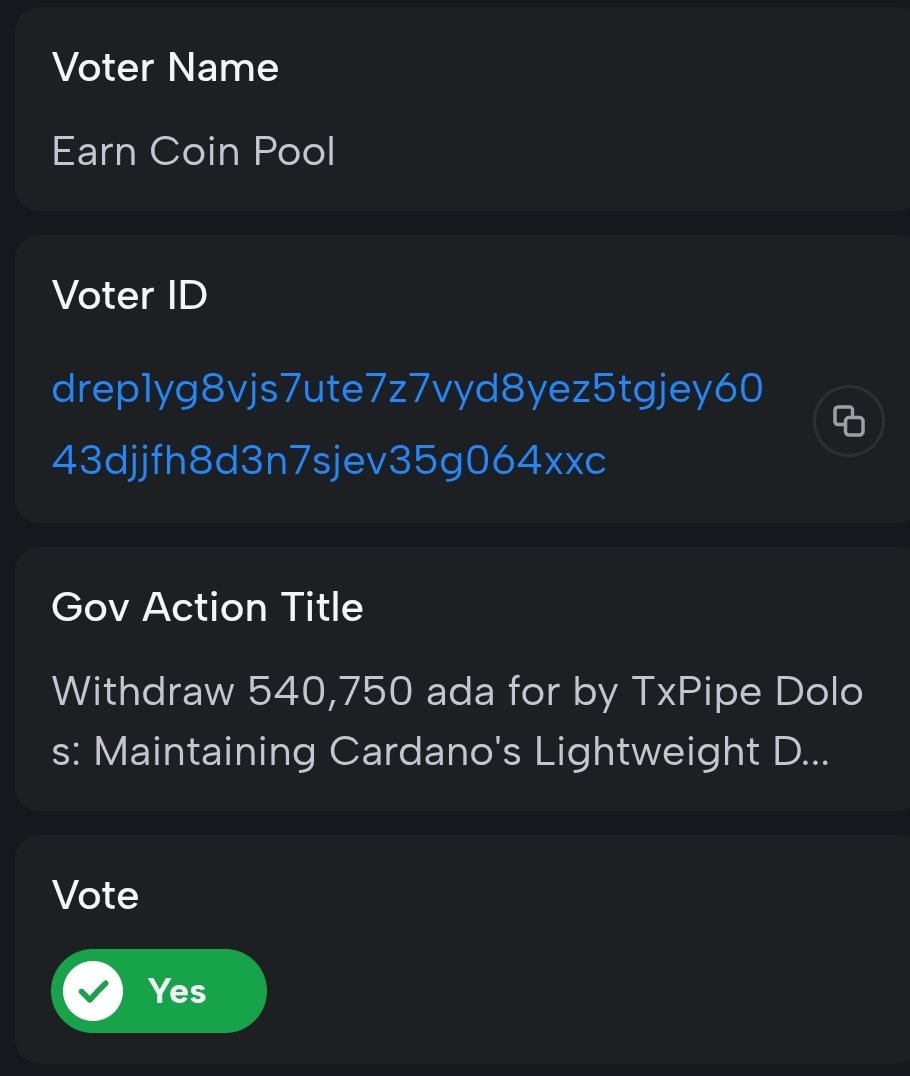
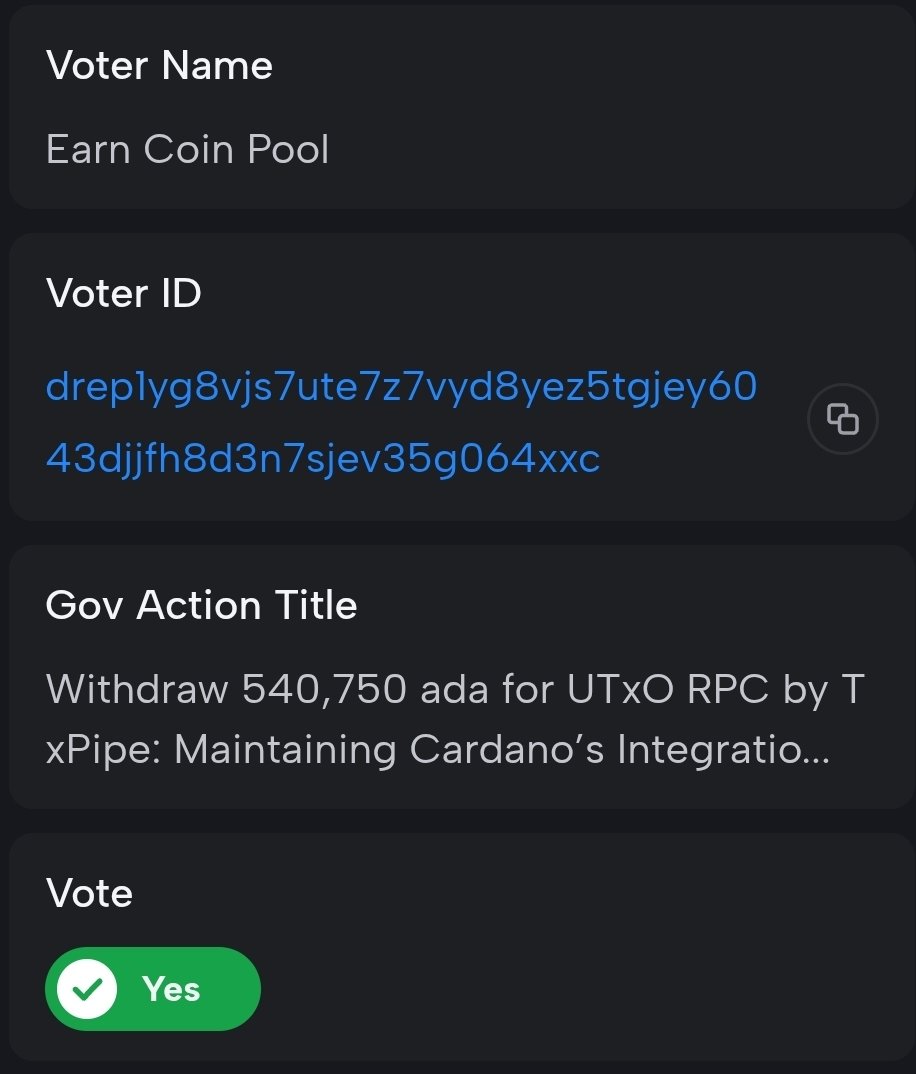
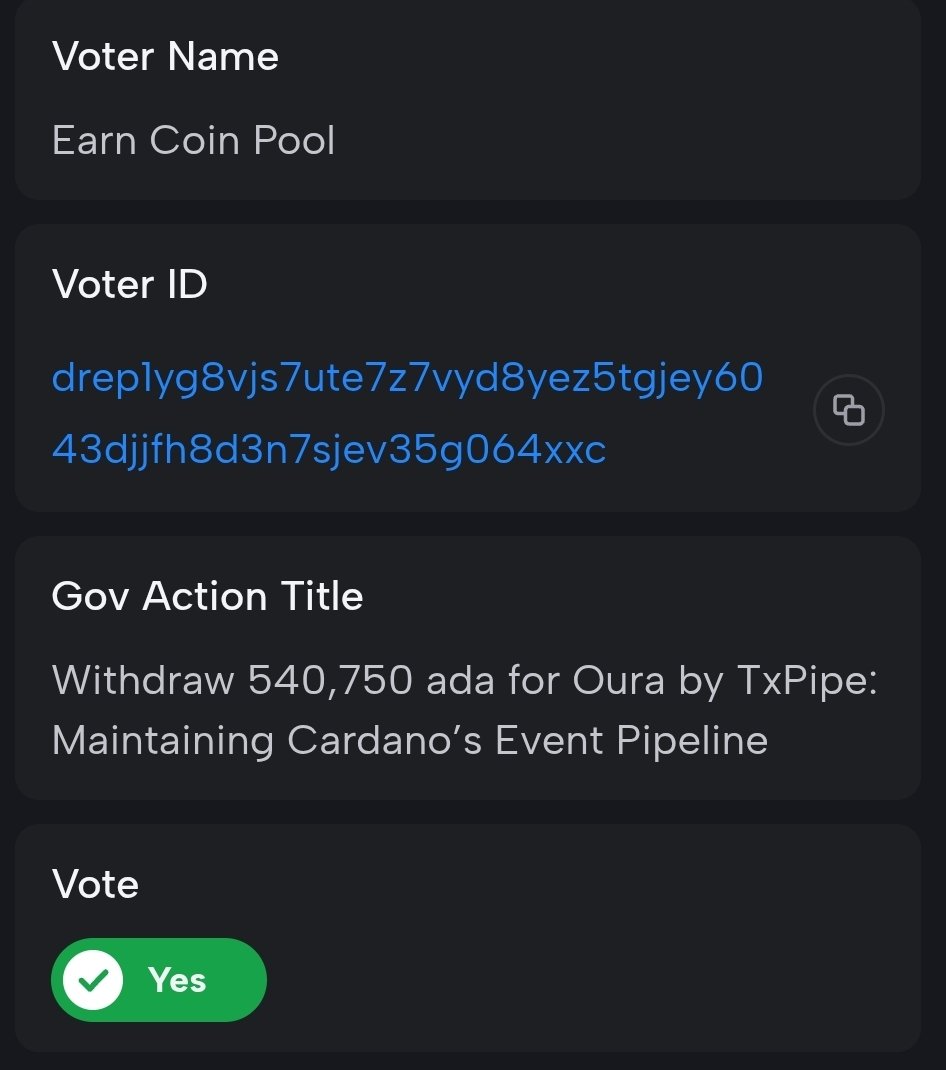
YES To: All 5 of @txpipe_tools Treasury Withdrawals from the Intersect Budget Process.
Proof of dRep votes:
cardanoscan.io/vote/fec4949e3…
cardanoscan.io/vote/cb5a02dc0…
cardanoscan.io/vote/7c071216c…
cardanoscan.io/vote/99a0a53c6…
cardanoscan.io/vote/bcca40551…


English
TxPipe retweetledi

I wanted to learn more about Leios, so I vibe-coded this visualization TUI on top of Pallas.
It's not meant for operations, just a personal visual aid to understand the flow of the protocol. It was quite useful, but it also raised some new questions.
What you can see is an initiator node connected to the Musashi Dojo. The TUI is divided into two horizontal lanes:
- top lane: the Praos part, a sequence of ranking blocks (RBs)
- bottom lane: the Leios part, a sequence of endorser blocks (EBs)
The X-axis represents time, so you see blocks ordered from left to right, representing the sequence of the chain.
The interesting part to notice from the video: the heavy lifting of Leios (votes, tx processing, etc.) happens between RBs, making use of the idle time.
Being a vibe-coded PoC, the TUI uses some heuristics to work around much of the complexity and the current protocol gaps. For example:
- the link between RBs and EBs is estimated using slot proximity
- the votes are just a counter, and the denominator is the peak number of voters seen so far
One question that popped up and I'm still looking into:
the idle time doesn't seem to be enough to observe all the EB votes and download all the txs. This is probably related to data diffusion; maybe client prioritization on the responder side; maybe just bad performance on my code. 🤷
TxPipe@txpipe_tools
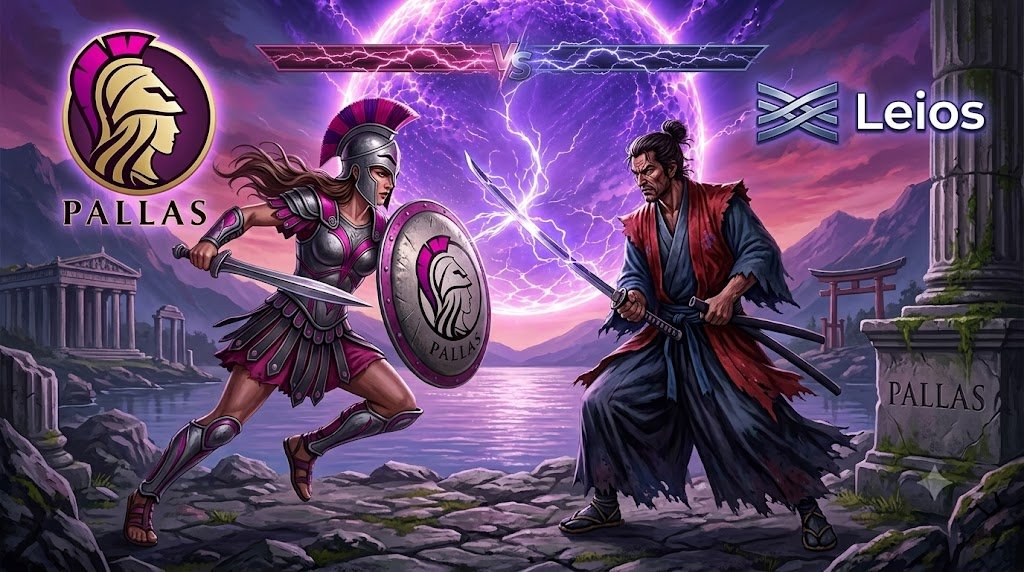
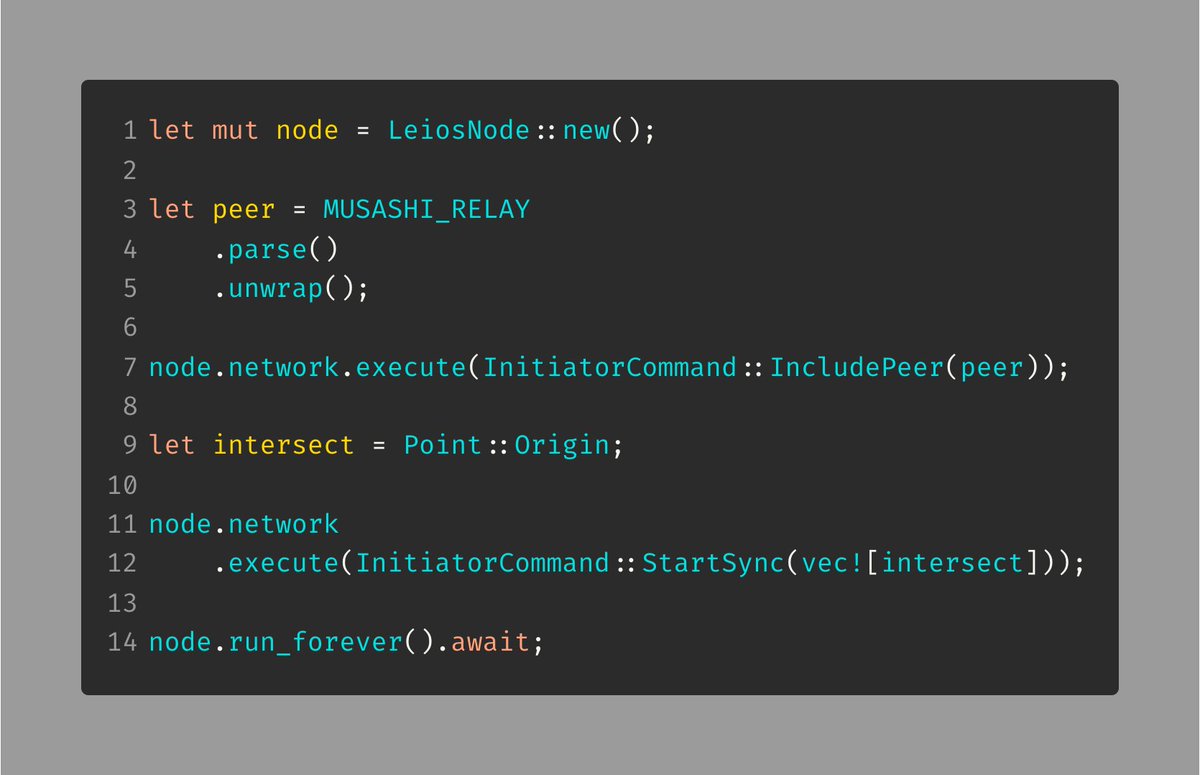
New in Pallas: Leios support 🚀 There's now a way to talk to Cardano's Leios protocol directly, with nothing but Rust 🦀. Ready to run against the live Musashi Dojo. Here's what you can do with it. 🧵
English

Live now in Pallas, open-source, Apache-2.0.
Build indexers, explorers, dashboards, monitoring. They can all see Leios traffic now, so don't wait until the hard fork to integrate.
github.com/txpipe/pallas
English