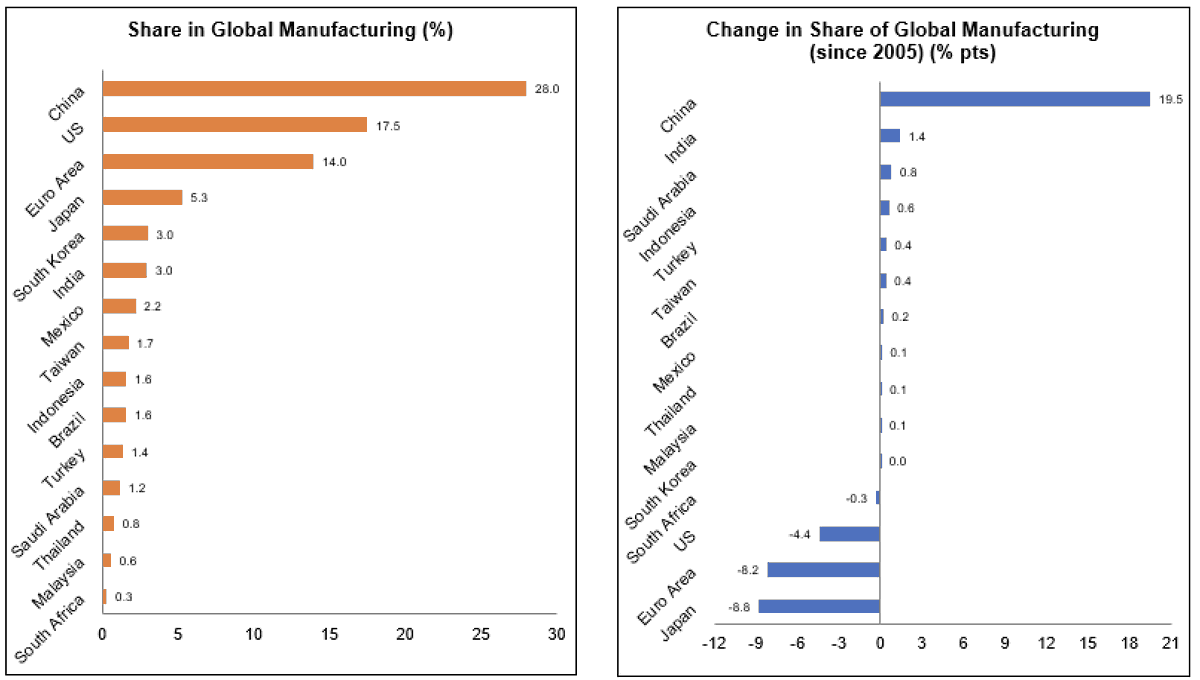
China today accounts for 28% of global manufacturing.
In the last 20 years it increased its share by a staggering 20% points. Pretty much what US, Europe and Japan lost.
No other emerging market using lower wages or tech innovation could come close to what China has achieved.
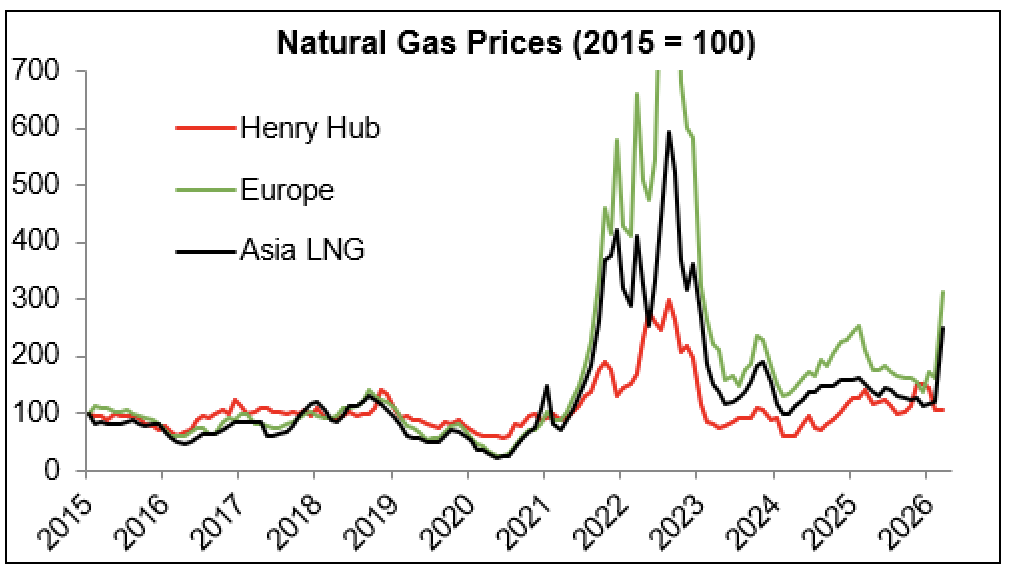
Natural gas prices have doubled for Asian and European importers, since the start of the war on Iran.
However, still well below the price spike we saw during the Russia-Ukraine war.
Meanwhile Henry Hub, the US benchmark gas price has been flat since Feb 28th.
India's weight in the MSCI Emerging Market Index peaked at 20% in August 2024.
Today it has fallen to 13%.
Taiwan's TSMC the largest stock in the same index has a 13% weight, same as India.
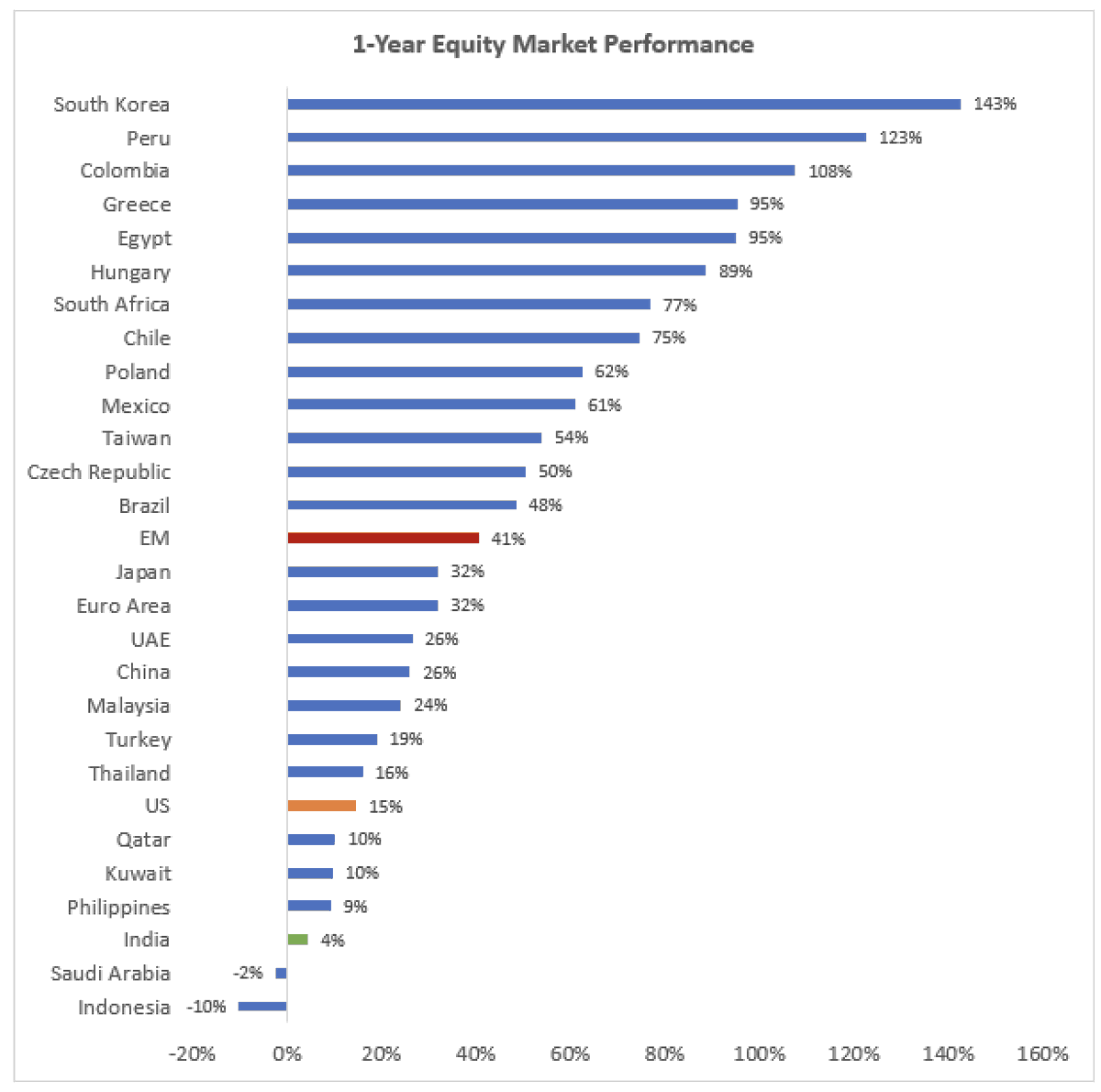
India has significantly underperformed EM and global equity markets over the last 1-year. Underperforming the EM index by 37% pts.
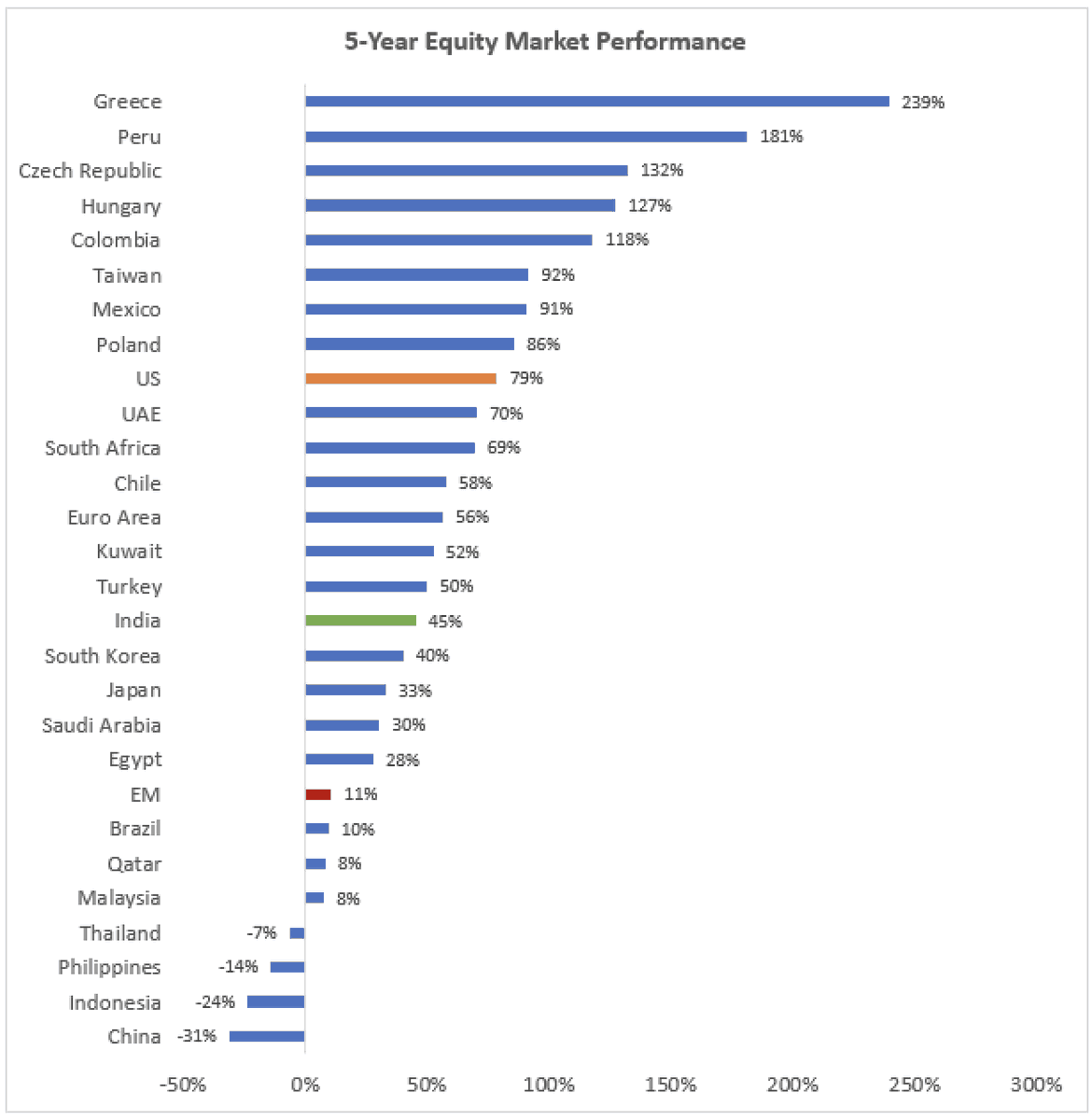
The recent underperformance has been so large that it makes India's 5-year returns look pretty average in the global context.
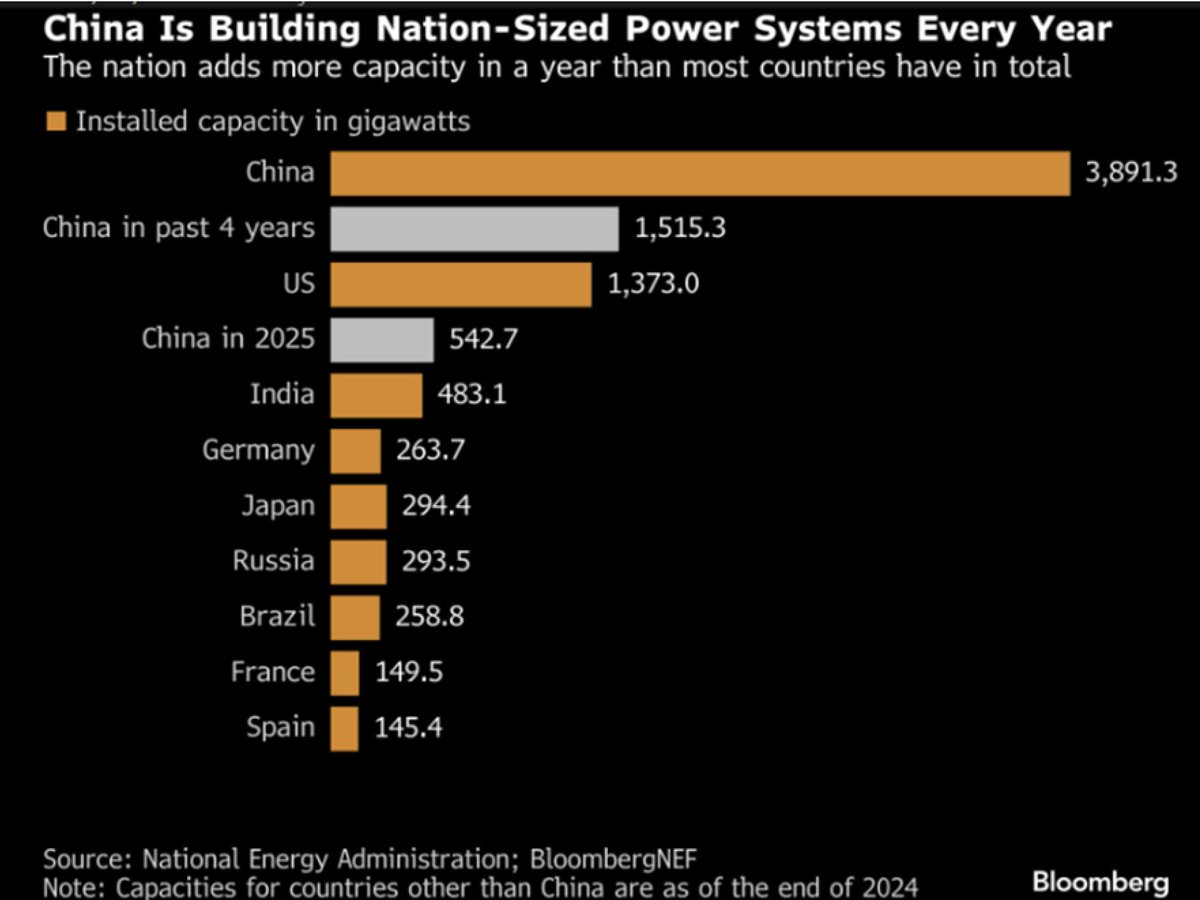
China in just one year that is 2025 installed more power capacity than India ever has. Over the last 4 years more than what US ever has.
Global power demand will increase materially in the next few years driven by data centers for AI computing.
Globally total car sales have had a weak cycle with current sales still 8% below 2017 levels. Non-EV (ICE) car sales are down 25% from 2017 peak.
However, EV sales growing at strong pace with global penetration hitting 20%. Led by China at 40%, 25% in Europe and 9% in US.
Total value of equity issuance in India's stock market in the first 6-months of 2024 at $40 billion is already the highest ever.
While primary issuance (IPO) is still low, its the block deals and secondary issuances that have sky rocketed.
India today gets included in the JPM Emerging Market Global Bond Index. Foreign inflows of about $25bn (0.6% pf GDP) expected.
India's weight to rise by 1%pt each month and capped at 10%.
Most EM countries (except China, Indonesia, Mexico) will lose share at India's expense.
The top two telecom players in India that are Jio + Airtel now control 78% of total telecom revenue rising from 43% in FY18.
This comes at the loss of Vodafone Idea + Others whose combined share has fallen from 57% in FY18 to just 22% now.
Domestic inflows into India's equity market so far this year have been at a staggering US$ 7 billion per month. Annualised $ 85 billion. This is nearly 2x the previous high seen in 2022 and more than 3x of 2023.
Are domestic investors positioning for strong election results?
Retail money flowing into Indian equities is not just an SIP story (a thread)
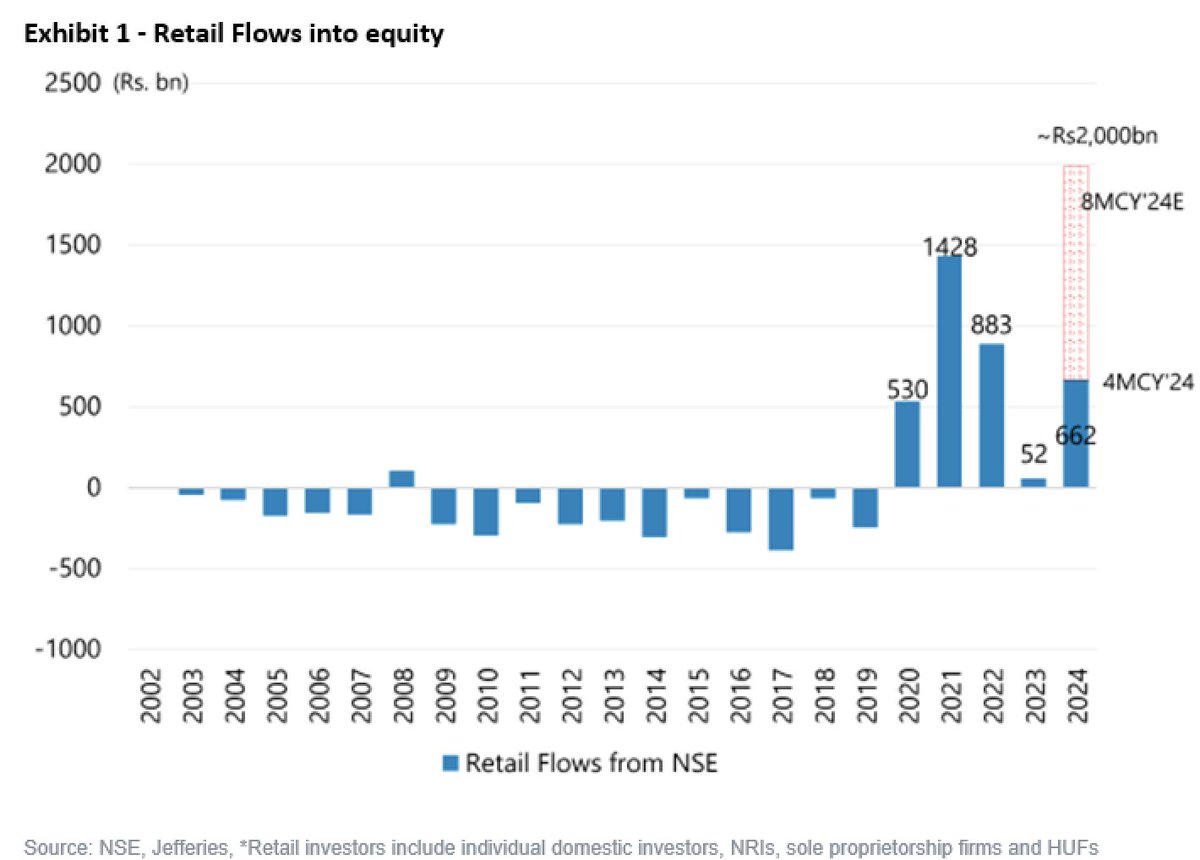
After being net sellers of single stocks in all but one year between 2003 & 2019, Indian retail investors have been net buyers every year since 2020. With 2024 YTD annualised at US$ 24 billion.
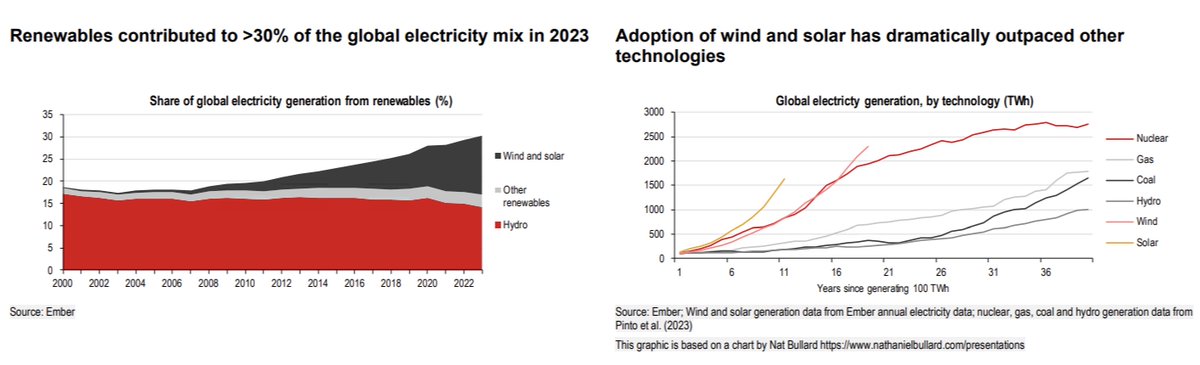
Global share of electricity generation from renewables passed 30% in 2023. Solar + Wind rising from 3% in 2013 to 13% in 2023. Including nuclear the share of zero-carbon electricity is about 40%. Solar has significantly outpaced other technologies in term of speed of adoption.
India has one of the lowest mobile data tariffs globally. Last 5-years have seen only two tariff hikes by Indian telcos despite heavy capex. Post elections telcos are expected to take price hikes of about 20% which would still keep Indian tariffs one of the lowest in the world.
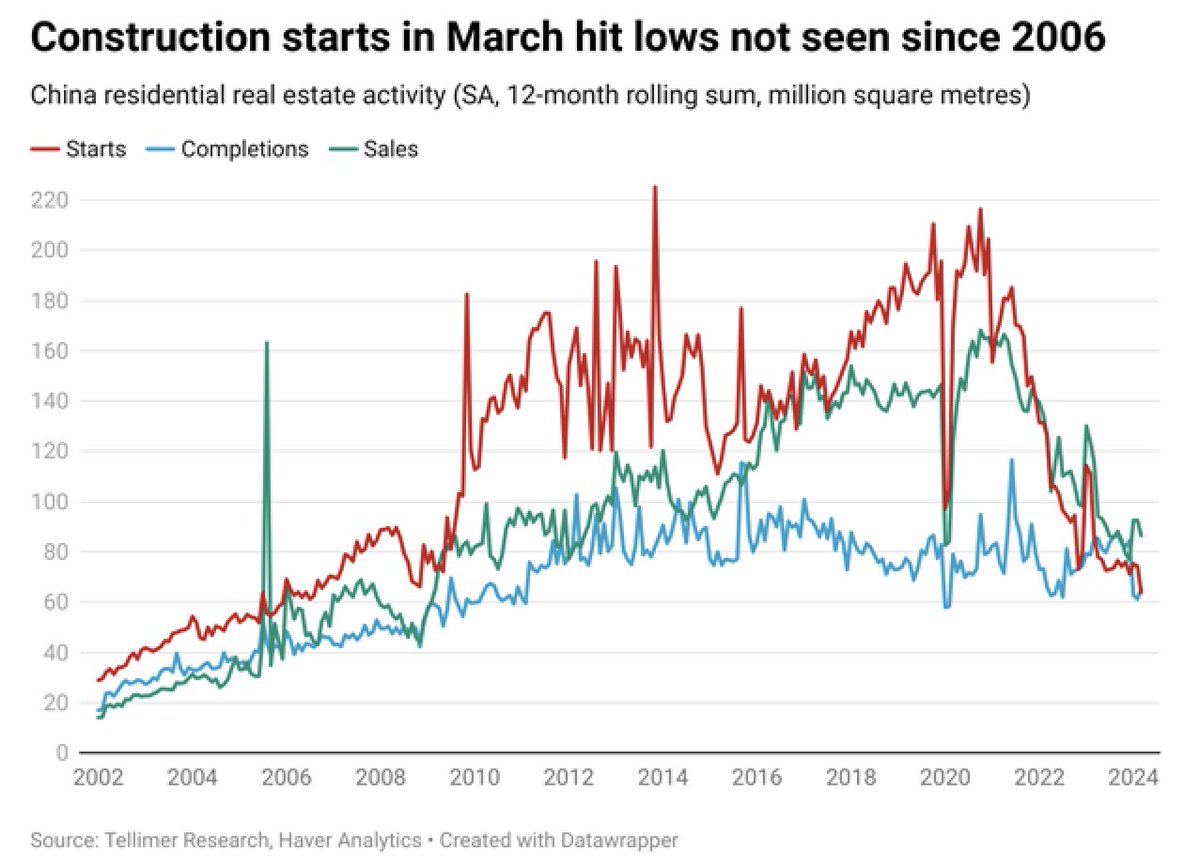
Chinese housing market showing no signs of bottoming. Housing starts hit lows last seen in 2006. Completion and sales at 10-year lows.
Construction + Real Estate now accounts for 12.5% of GDP falling from 14.5% of GDP just 3-year back. Will be a large drag on overall GDP growth.
Chinese government started the new energy vehicle (NEV) program in 2009. NEVs are fully or predominantly powered by electricity. Today NEV penetration in China is 42%. A country where annual car sales is around 30 million (7 times of India). Heavy discounts are helping.
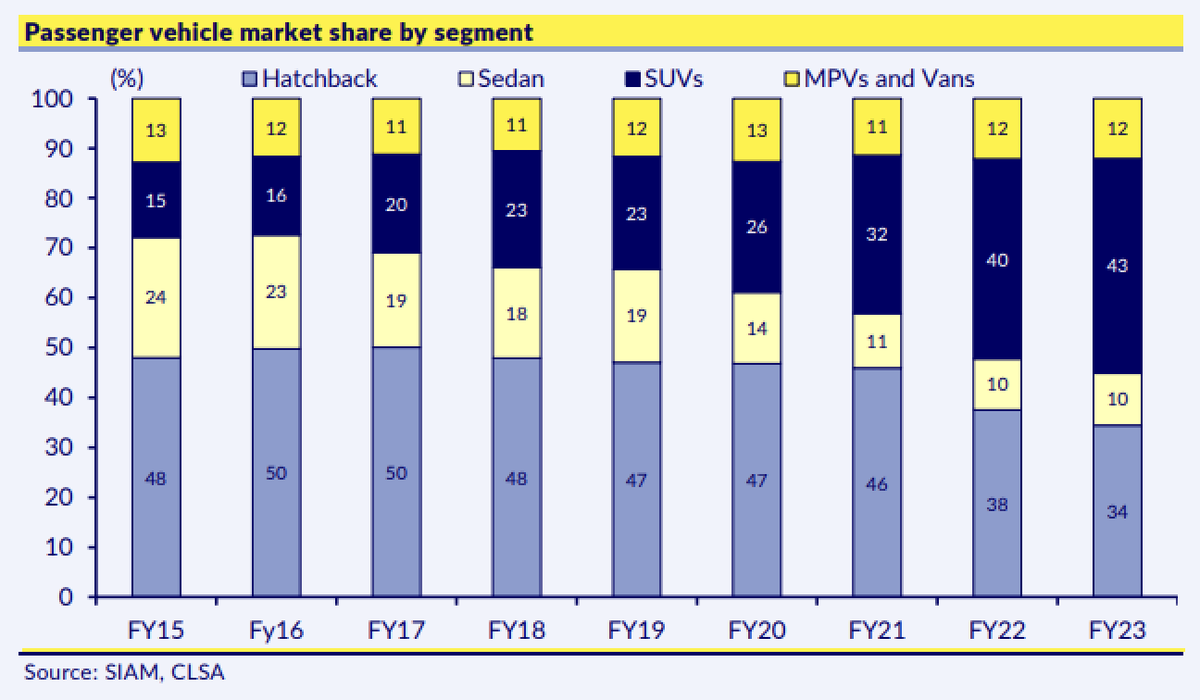
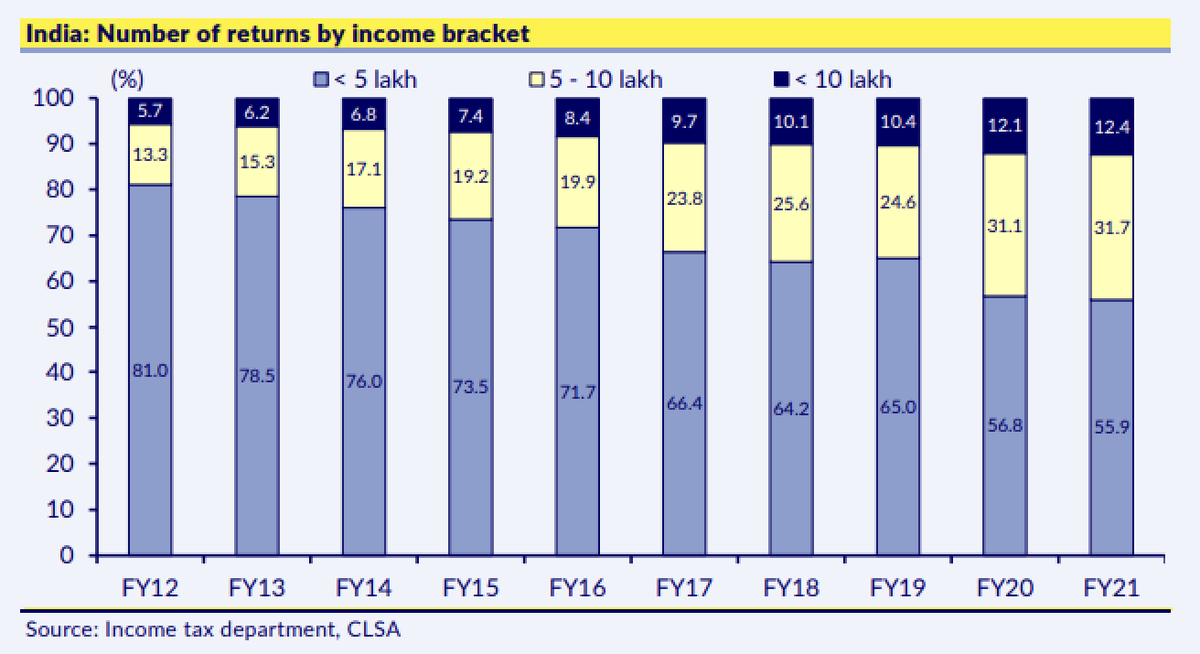
As India's economy grows and the middle/upper class becomes larger, some clear premiumisation trends are appearing in India. A thread:
1) Share of tax returns with income above Rs 10 lacs up from 5.7% in 2012 to 12.4% in 2021