udomsak chundang

58K posts

udomsak chundang

udomsak chundang

@udomsak

Interrest in spiritual development , computer programming , pararell , cloud ,security . I'm Computer Staff , https://t.co/2CvFdg6qBW

Thailand Katılım Şubat 2009
1.6K Takip Edilen916 Takipçiler
Sabitlenmiş Tweet
udomsak chundang
udomsak chundang@udomsak·
Dear follower, this is my personal account and it's not a promote campaign nor SEO or news feed. Sometime may have some nude photograph i'm apologize. But i'm kind of gentle and respect no sexual harassment. Thank you. #me

udomsak chundang tweet media
English
1
0
3
0
udomsak chundang retweetledi
Dan Kornas
Dan Kornas@DanKornas·
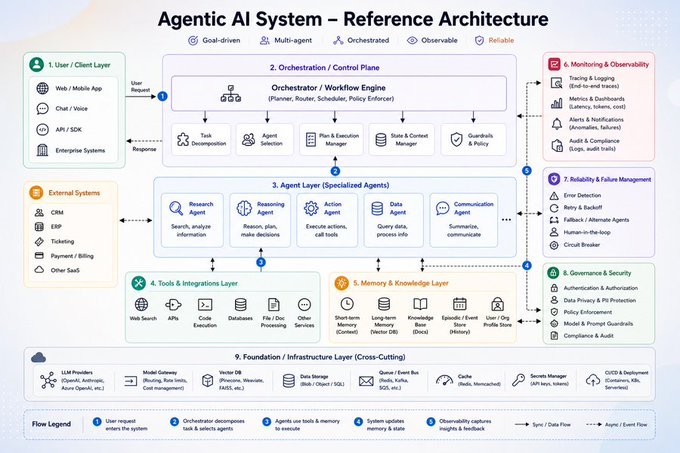
Agentic AI System Architecture
Dan Kornas tweet media
English
5
70
394
13.5K
udomsak chundang retweetledi
Akshay 🚀
Akshay 🚀@akshay_pachaar·
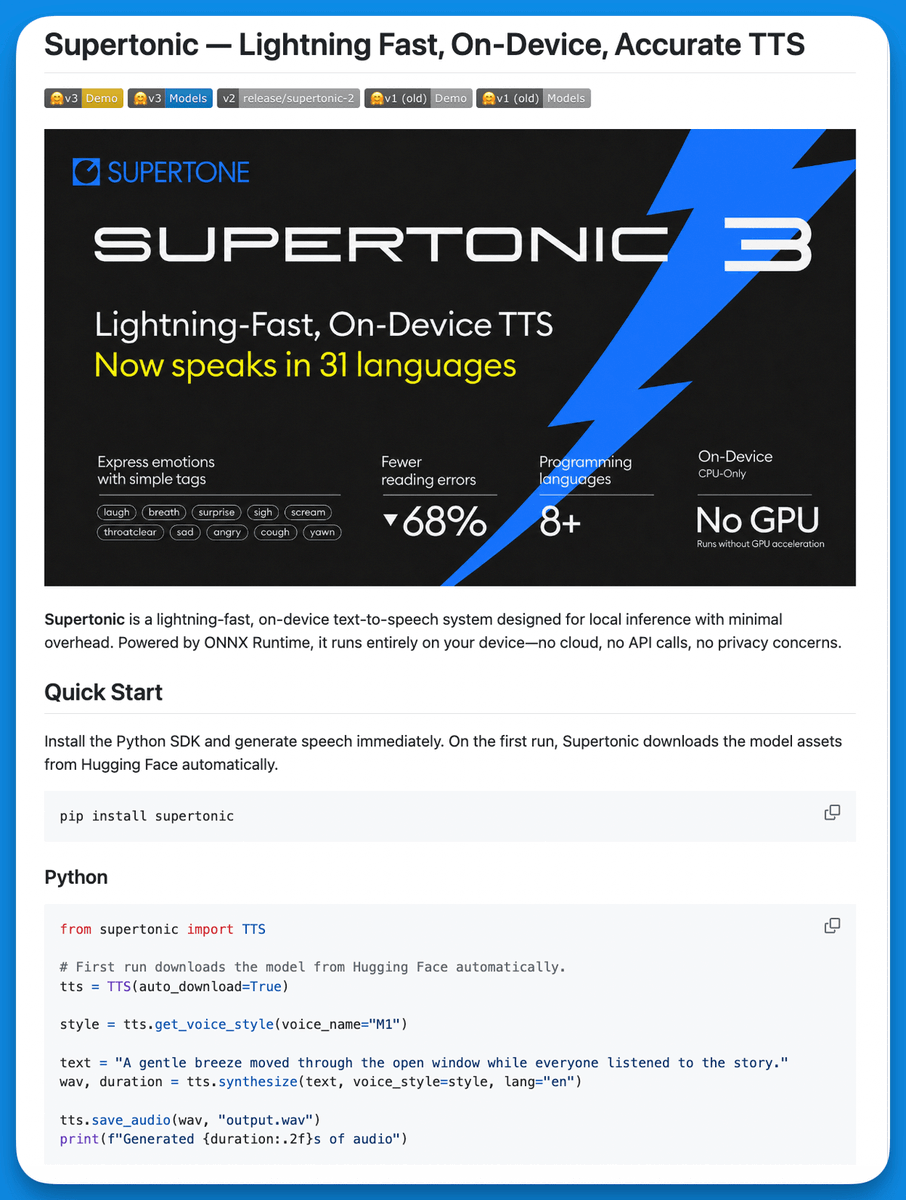
this TTS model generates speech 167x faster than you can hear it. Supertonic is an on-device TTS engine that runs via ONNX for cross-platform inference. - no GPU - 31 languages - captures every emotion - beats ElevenLabs on speed - runs even on a Raspberry Pi 100% open-source.
Akshay 🚀 tweet media
English
22
102
712
42.5K
udomsak chundang retweetledi
MTS
MTS@MTSlive·
We asked the CEO of HuggingFace @ClementDelangue what the risks of releasing powerful open source models are. He says restricting AI creates more risk than openness. "Six, seven years ago, at the time it was GPT-2, and there was already a lot of people saying that it was too dangerous to release in open source." "Mythos, when it was announced was crazy dangerous... In a few weeks or a few months, everyone is gonna be using Mythos, and not destroy the world as a result." "For cybersecurity, the biggest risk is that a few players have capabilities that other people don't have... If you make it more open, it's usually easier for defenders to react and make the whole system safer." "The idea of restricting a technology like AI based on risks is like saying, 'Some people can punch other people, so let's tie down everybody's hands.'" "Otherwise you slow down progress, you create massive gaps in terms of controls, in terms of capabilities, and you create actually additional risks."
clem 🤗@ClementDelangue

Weird how some people always target open-source in AI! First it was: “Open-source AI will destroy the world” (spoiler: it didn't and it won't) Now: “Open-source is a cybersecurity threat because of AI” Both narratives are far too simplistic. The truth is that the exact same risks exist in closed-source systems, often even more so. For example, in practice, APIs can create much bigger data and security vulnerabilities than open systems you can inspect, self-host, and secure yourself. And as with software more broadly, open-source often ends up more secure because it benefits from far more scrutiny than private internal systems. The reality is not “open vs closed.” The reality is that AI is raising cybersecurity stakes across the board, and we need to tackle that seriously together.

English
44
107
554
314.4K
udomsak chundang retweetledi
Salomon
Salomon@salomon_diei·
@akshay_pachaar amazing. you should try out this : github.com/Salomondiei08 a workfllow i built around hermes that sets up specialized agents for software engineering
English
1
1
12
3.3K
udomsak chundang retweetledi
Pau Labarta Bajo
Pau Labarta Bajo@paulabartabajo_·
Advice for AI engineers 💡 In 2026 audio to function call can be solved with Small Models. This is how you build local, fast and private voice assistants... that work :-) Here's a full example with code⭣ github.com/Liquid4All/coo…
English
6
16
144
7.4K
udomsak chundang retweetledi
Guri Singh
Guri Singh@heygurisingh·
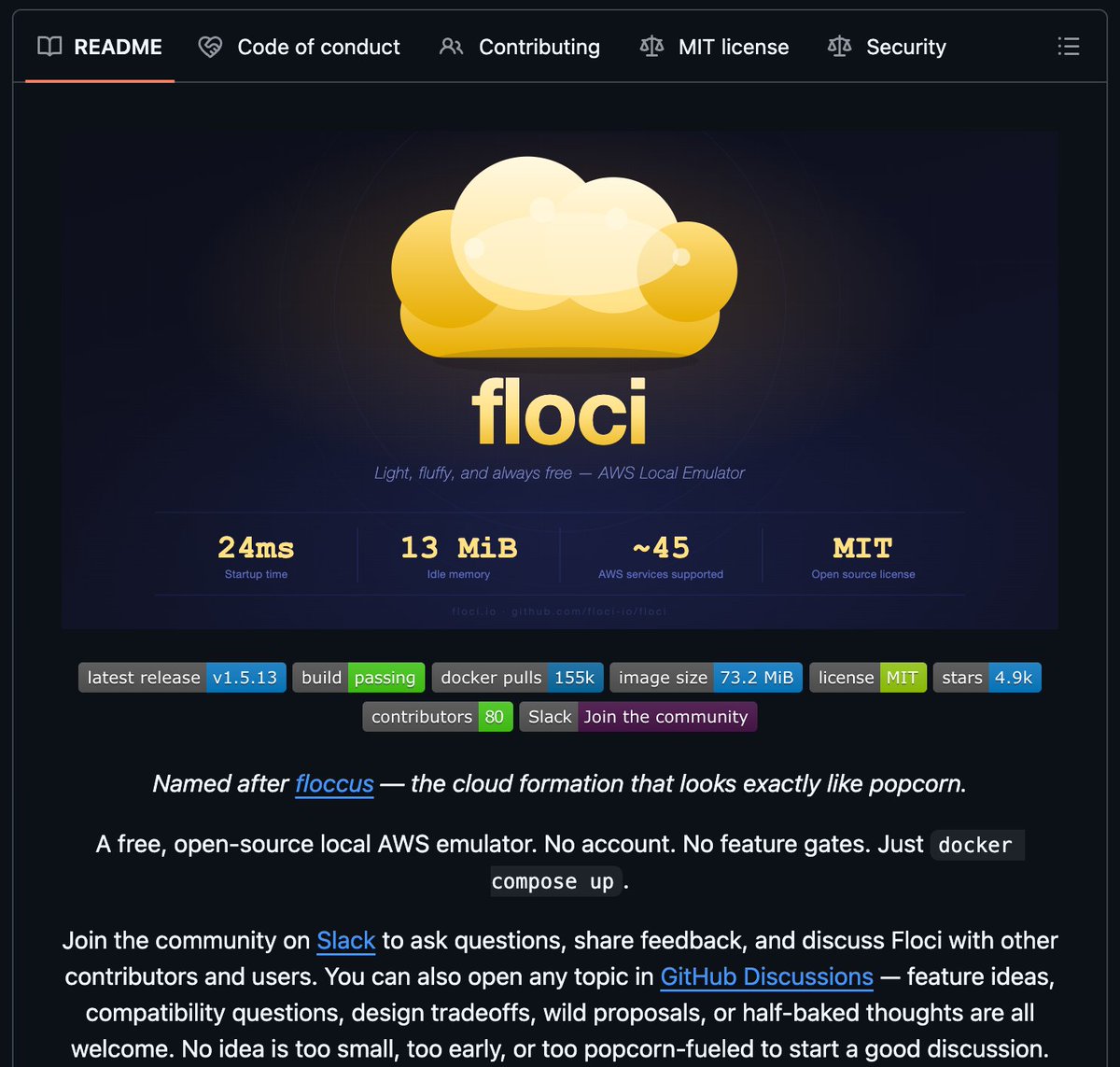
Holy shit... a team just open sourced an AWS emulator that runs the entire cloud on your laptop with 13 MiB of memory. It's called Floci and it boots 45 AWS services in under a second, no Docker, no LocalStack subscription, no $30/mo dev environment bills. Every AWS dev tool before this needed Docker, gigabytes of RAM, and 30 second cold starts just to test a Lambda function. Floci is a single Go binary that runs the entire AWS stack in memory and starts faster than your terminal can render the prompt. Here's what makes it different from every AWS emulator that came before: → 13 MiB total memory footprint, the average Chrome tab uses 200x more RAM than this entire AWS clone → 45 services emulated locally including S3, Lambda, DynamoDB, SQS, SNS, IAM, CloudFormation, Step Functions, all in one binary → Sub-second cold start, your tests finish before LocalStack even pulls its Docker image → Zero dependencies, no Docker daemon, no Python runtime, no Java VM, just one Go executable → Drop-in compatible with AWS SDK and CLI, point your endpoint at localhost and every existing script works untouched Killed: $40/mo LocalStack Pro, every AWS dev environment burning $200+/mo on staging accounts, Docker Desktop eating 4GB of RAM just to run a fake S3 bucket. Pre-built binaries for Linux, macOS, Windows. No install scripts, no config files, no setup wizard. Download the binary, run it, your local AWS is live. Works in CI pipelines where spinning up Docker containers takes longer than the actual tests. 100% Opensource.
Guri Singh tweet media
English
35
280
1.9K
119.2K
udomsak chundang retweetledi
Darryl Ruggles
Darryl Ruggles@RDarrylR·
The choice between StatefulSet and Deployment in Kubernetes looks small on paper but tends to surface real problems once a database or message queue is involved. The article below walks through both controllers and the cases where each one actually fits inside a Kubernetes cluster. The MySQL primary and replicas example is the part that makes the distinction click IMO, showing why predictable Pod names like mysql-0 matter when applications need to find the primary node. Discussion on ordered scaling, persistent volume claims, and headless Services are included as well. Emmanuel Fordjour Kumah has put together a good side by side breakdown and a short summary that ties stateless versus stateful thinking back to controller choice. Check it out! lckhd.eu/GFdlFi #Kubernetes #StatefulSets #deployments
English
0
2
19
1.3K