
Pedro

27.6K posts

Pedro banner
Pedro

Pedro

@ultravioletpet

'A glória será não esquecer...'

🇫🇮, 🇵🇹, 🇪🇺, 🌍 Katılım Nisan 2016
2.7K Takip Edilen434 Takipçiler
Pedro retweetledi
🇨🇭🏴󠁧󠁢󠁥󠁮󠁧󠁿InLucysHead🏴󠁧󠁢󠁥󠁮󠁧󠁿🇨🇭©
Oxford University researchers have discovered the densest element yet known to science... The new element, Governmentium (symbol=Gv), has one neutron, 25 assistant neutrons, 88 deputy neutrons and 198 assistant deputy neutrons, giving it an atomic mass of 312. These 312 particles are held together by forces called morons, which are surrounded by vast quantities of lepton-like particles called pillocks. Since Governmentium has no electrons, it is inert. However, it can be detected because it impedes every reaction with which it comes into contact. A tiny amount of Governmentium can cause a reaction that would normally take less than a second, to take from 4 days to 4 years to complete. Governmentium has a normal half-life of 2 to 6 years. It does not decay, but instead undergoes a reorganisation in which a portion of the assistant neutrons and deputy neutrons exchange places. In fact, Governmentium's mass will actually increase over time, since each reorganisation will cause more morons to become neutrons, forming isodopes. This characteristic of moron promotion leads some scientists to believe that Governmentium is formed whenever morons reach a critical concentration. This hypothetical quantity is referred to as a critical morass. When catalysed with money, Governmentium becomes Administratium (symbol=Ad), an element that radiates just as much energy as Governmentium, since it has half as many pillocks but twice as many morons.
English
665
2.9K
8.7K
194.4K
Pedro
Pedro@ultravioletpet·
@manocancela O que vem a seguir? Torresmos deluxe?
Português
1
0
1
114
Cancela ©
Cancela ©@manocancela·
Gentrificaram a fartura 😭😭
Cancela © tweet media
Português
11
27
579
42.7K
Pedro retweetledi
Atlas Press
Atlas Press@realAtlasPress·
“My father observed that most buildings, and most buildings that we truly love, are not the work of architects. The agreeable settledness of the old English town, he reasoned, was the work of local craftsmen…” —Sir Roger Scruton
Atlas Press tweet media
English
28
527
3.7K
66K
Pedro
Pedro@ultravioletpet·
@PeterHRatcliffe Please dont. We love everybody, but we can t afford anything. Please stay where you are and send twitts. Thank you for your atrention to this matter.
English
0
0
9
341
Peter Ratcliffe, forever Canadian 🇨🇦
Our last few days in Portugal.🇵🇹 I will do a long wrap-up thread later, but it’s been a wonderful trip in a very beautiful country full of interesting and caring people with a very long history. I understand why people move here.
English
28
14
362
12.5K
Pedro
Pedro@ultravioletpet·
@PocasPedro Agora só quando o Benfica voltar a jogar um mundial de clubes. Lá para o ano 3778
Português
0
0
0
16
Pedro Daniel Almeida
Pedro Daniel Almeida@PocasPedro·
Eu só uma vez na vida fiz a maluqueira de ficar a ver um jogo de futebol ás 2 da manhã. Foi aquela final do Mundial de Sub-20 da Seleção "Nelson Oliveira + 10". Fiquei com uma azia que nunca mais.
Português
2
0
23
1.2K
Pedro
Pedro@ultravioletpet·
@donocooperativa O mundo já está a deitar por fora esse valor de que falas. Valor material. O que é preciso é criar valor cultural, intelectual, espiritual e ecológico. Um pessoa, um povo ou uma espécie inteira pode ter uma afluência prodigiosa e sentir-se miserável
Português
1
0
1
15
dono da c🅾️🅾️perativa ™
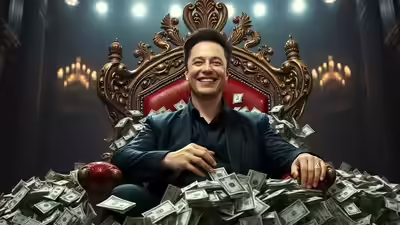
☢️ Reflexão da Cooperativa: o dia em que distribuímos tudo, ficámos com nada. Fortuna do Elon Musk 💰 Cerca de 770 a 790 mil milhões de €. 👉 Tudo liquidado e redistribuído pela população mundial, quase 100 € a cada 1. Feliz?🥸 A riqueza dos outros é sempre o depósito à ordem da nossa indignação. Escolhe-se um alvo, de preferência vistoso, olha, o Musk, por exemplo. Depois faz-se a conta, e dá-se o milagre aritmético que costuma estragar a festa, divide-se tudo por todos, e o resultado não é a redenção, são trocos. 100 paus por cabeça. Um jantar, vinho, talvez uma baba de camelo à sobremesa. Uma rodada para todos e acabou. É isso que vale a fortuna do Musk, o gajo mais rico do mundo. Mas pelo que ouço, a redistribuição é uma espécie de santo milagreiro. Um erro. Não é um erro de cálculo; é um erro de natureza. Confunde-se riqueza com dinheiro parado, como se fosse uma pilha de notas à espera de redistribuição, quando na verdade é um processo, instável, imperfeito, às vezes obsceno, mas vivo e dinâmico. A riqueza não está sentada. Está a ser criada, destruída, reinvestida, multiplicada ou perdida em cada momento. Bem sei que em Portugal os investimentos são feitos sem risco, mas tal consitui uma realidade anómala própria de um país acéfalo. Adiante. É muito mais fácil imaginar que o mundo é um bolo fixo, já cozido, só que mal dividido. E que basta cortar melhor as fatias para que tudo se resolva. Só que há um detalhe inconveniente, o bolo não é fixo. E quando passamos mais tempo com a faca na mão do que com o forno ligado, o que acontece não é justiça, é apenas escassez bem repartida. Não há milagres, é mesmo assim. preferia que fosse mais simples, mas não é. ➡️Uma sociedade obcecada em punir quem cria riqueza acaba, inevitavelmente, por criar menos riqueza. Não por castigo, mas por lógica elementar. Se o prémio do risco é confiscado, o risco em si também desaparece. E com ele desaparecem as empresas, os empregos, as inovações, tudo aquilo que, ironicamente, depois se quer redistribuir.⬅️ Depois sobra apenas a pureza. Uma igualdade impecável, sem arestas, sem excessos, sem desconfortos, mas sem nada para repartir. Camaradas, não se melhora a vida de todos destruindo quem cria valor. Melhora-se criando mais valor, e depois, sim, discutindo como o repartir com algum juízo, aceitando que um mundo melhor será invetivalmente assimétrico, por força do mérito de alguns, da preguiça de outros, e do infortúnio dos demais. Mas é melhor assim. Tudo o resto não passa de um luxo retórico. Um vício elegante. Uma forma sofisticada de dividir miséria e chamar-lhe justiça. Tenho dito. Bom domingo. o dono da cooperativa
dono da c🅾️🅾️perativa ™ tweet media
Português
57
32
256
9.2K
Pedro
Pedro@ultravioletpet·
@miguel_milhao Como tudo, depende da maneira como é alegado. Mas se a Prozis é tua e tu tens essas opiniões, há, de facto, uma ligação. Por outro lado, lá está, isto é publicidade de borla.
Português
0
0
0
26
miguel milhao
miguel milhao@miguel_milhao·
O dia esta a comecar bem : 🚨 A PROZIS avança com processo judicial de intimação contra a ERC e o EXPESSO no Tribunal Administrativo de Lisboa. Em causa: o Expresso associou a imagem da Prozis a uma peça sobre “influencers radicais e misóginos” sem qualquer referência no texto. O direito de resposta foi negado — sem sequer ouvir o conselho de redação, como a lei exige. A ERC deu razão ao Expresso. Agora, a Prozis recorre ao tribunal para fazer valer os seus direitos, liberdades e garantias. 😘 @expresso
Português
228
155
2.9K
92.3K
Pedro
Pedro@ultravioletpet·
@elonmusk I love you man, but I cant wait you leaving to Mars. This is all too tiresome.
English
0
0
1
9
Pedro retweetledi
PortHarcourt Sailor
PortHarcourt Sailor@GodsgreatG·
The best thing you’ll watch today 🚨 ‼️ Many of us have heard about Liquefied Natural Gas (LNG), and some of us may even use it as a source of energy. More commonly, we’re familiar with Liquefied Petroleum Gas (LPG), the cooking gas used in many homes. But have you ever wonder how these gases are transported? This video shows how they are carried across the seas on an LNG ship. Please retweet.
English
10
180
570
59.3K
Pedro retweetledi
Daniel Fuberski 🇵🇱🇫🇷
Trump thinks he can solve a clash of ancient civilisations that started more than 2500 years ago. The Israelis are Mesopotamians, and the Iranians are Indo-Europeans. Abraham is explicitly from Ur of the Chaldees, which is in southern Iraq, near modern Basra. There is no meaningful genetic discontinuity between the people of ancient Mesopotamia and the people who became Canaanites who became Israelites. Hebrew is a Semitic language. The Semitic language family originated in Mesopotamia and the Arabian Peninsula. Hebrew, Aramaic, Akkadian, Arabic, Babylonian — all branches of the same tree. Hebrew and Babylonian Akkadian are cousin languages the way Spanish and Italian are cousins. They share root words, grammatical structures, and conceptual vocabulary going back thousands of years before the Bible was written. The foundational myths of Judaism — creation, the flood, paradise, the first man, the tower — all have direct Mesopotamian predecessors that are older. The ethical and legal framework — the covenant structure, the law codes — mirrors Mesopotamian forms. The calendar is Babylonian. The alphabet is Aramaic-Mesopotamian. The very concept of recording sacred history in written texts is a Mesopotamian invention. El — the chief god of the early Israelites and the root of the word Elohim, one of the Hebrew names for God — was a Canaanite/Mesopotamian deity. The word Israel itself contains El. The angels, the cosmic hierarchy, the idea of a divine council — all have deep Mesopotamian roots. Early Israelite religion before the exile looks very much like a local variant of broader Mesopotamian religious culture, with Yahweh gradually absorbing the attributes of El, Baal and others into a single deity. "Iran" comes directly from "Aryana" — land of the Aryans. The Iranians were Indo-European, not Semitic. This is the foundational distinction. Where the Semitic world — Sumerians absorbed by Akkadians, Babylonians, Canaanites, Jews, Arabs — emerged from the Fertile Crescent and Arabian Peninsula, the Iranians came from somewhere completely different. The Iranian peoples were part of the great Indo-European migration — a population that originated on the Pontic Steppe, the grasslands north of the Black Sea and Caspian Sea, in what is now Ukraine, southern Russia and Kazakhstan. Around 2000–1500 BC these steppe peoples began expanding in all directions on horseback, carrying their languages with them. One branch went west and became the Greeks, Romans, Celts, Germans, Slavs. Another branch went south and east and split into two streams — one into India becoming the Vedic civilization, one into Iran becoming the Persians and Medes. Old Persian, Sanskrit, Greek, Latin and all their descendants are branches of the same tree. The word for father in Persian is "pedar," in Latin "pater," in Greek "patér," in Sanskrit "pitár," in English "father." The word for god in Persian is related to the Sanskrit "deva." The Iranian god Mithra appears in Roman religion as Mithras and possibly echoes in the Vedic Mitra. These are not coincidences — they reflect a common origin perhaps 5,000 years ago on the Eurasian steppe. The two main Iranian tribes that entered history were the Medes in the northwest and the Persians in the south. The Medes formed the first Iranian empire around 700 BC, destroying the Assyrian Empire — the superpower of its day — in alliance with the Babylonians. Then the Persians under Cyrus the Great overthrew the Medes in 550 BC and built the Achaemenid Empire. In 651 AD the Sassanid Persian Empire — the last great pre-Islamic Persian dynasty — was destroyed by the Arab Muslim armies in one of the fastest conquests in history. Iran was Islamicized. Arabic became the language of religion and high culture. Yet something remarkable happened — unlike Egypt, like North Africa, like the Levant, which gradually became Arabized in language and identity, Iran kept its language. Persian survived. Within two centuries Iranians were writing sophisticated poetry, philosophy and science in Persian — using the Arabic script but their own language. The Persian cultural identity proved resilient enough to absorb Islam without being dissolved by it. The Persian literary renaissance of the 9th-10th centuries produced figures like Ferdowsi, whose Shahnameh — Book of Kings — deliberately reconstructed pre-Islamic Persian identity and mythology. It was a conscious act of cultural preservation remarkably similar to what the Jewish scribes did with the Torah in Babylon. A conquered people writing their way back into existence. So you have two civilizational streams that met in the Middle East: The Semitic stream — out of Arabia and the Fertile Crescent, producing Sumerians, Akkadians, Babylonians, Canaanites, Jews, Arabs. Urban, agricultural, text-centered from very early, building civilization in river valleys. The Indo-European Iranian stream — out of the Eurasian steppe, mounted, pastoral, bringing a completely different cosmology, a dualistic theology, a warrior aristocratic culture that then learned to govern sedentary civilizations from the Semitic world. Modern Iranians are the descendants of that Indo-European Iranian stream, heavily mixed with the pre-existing Elamite and Semitic populations of the region, then further shaped by Arab Islamic conquest. Genetically they are distinct from Arabs — closer to South Asians and Europeans than to Semitic Arabs in certain markers, reflecting that ancient steppe origin. Linguistically Persian is closer to English than it is to Arabic — both are Indo-European, while Arabic is Semitic. Which makes the current conflict between Iran and Israel — between the heirs of the Indo-European Iranian world and the heirs of the Semitic Mesopotamian-Canaanite world — in some sense a resumption of the oldest cultural fault line in the Middle East. The same two civilizational streams that first encountered each other when Cyrus walked into Babylon in 539 BC, when he freed the Jews and sent them home. Except then they were allies. And the Iranian was the liberator of the Semite. History has a very dark sense of humor.
Daniel Fuberski 🇵🇱🇫🇷 tweet media
English
235
795
2.5K
255.8K
shayla
shayla@callmeMaharani·
What is a sound or smell that doesn’t exist anymore, but 30 years ago was so common it was considered background noise?
English
750
66
6.5K
3.4M
Pedro retweetledi
onionweigher 🧅⚖️
onionweigher 🧅⚖️@onionweigher·
I'm no expert in global shipping but as soon as you see a major television network mention the Strait of Magellan you should probably sell everything
English
60
673
17.3K
492K
Pedro retweetledi
Nassim Nicholas Taleb's Wisdom
"Nation-states like war; city-states like commerce; families like stability; and individuals like entertainment." - Nassim Nicholas Taleb in The Bed of Procrustes
English
5
96
642
18.7K
Pedro retweetledi
Neil Renic
Neil Renic@NC_Renic·
"It's probably fine to launch a massive war without thinking too much about the consequences - these things typically work themselves out" - Sun Tzu
English
23
288
4.6K
87.8K
Pedro
Pedro@ultravioletpet·
@GreatAbysmal Perfect. Man I love those characters!!
English
0
0
1
45
Pedro retweetledi
Marianne 🔆🌲❤️‍🔥
Jim Hacker: Humphrey, I'm told there's a situation at Diego Garcia. Sir Humphrey Appleby: Only geographically, Prime Minister. Jim Hacker: Geographically? Sir Humphrey Appleby: Yes. It's still in the Indian Ocean. Jim Hacker: Humphrey, Iran fired missiles at it! Sir Humphrey Appleby: Towards it, Prime Minister. Jim Hacker: Towards it? Sir Humphrey Appleby: One missile ceased to function and the other was intercepted. So the island remains entirely where it was. Jim Hacker: I'm not worried about the island moving! I mean the implications. Sir Humphrey Appleby: Ah. Strategically speaking, the implications are extremely stable. Jim Hacker: Stable?! Sir Humphrey Appleby: Yes. Since nothing actually hit us, we can express grave concern without the administrative complications of retaliation. Jim Hacker: But the base is on British territory! Sir Humphrey Appleby: Indeed, Prime Minister. Which means we are in the enviable position of being attacked in principle while remaining uninvolved in practice. Bernard Woolley: It's what the Foreign Office calls a very tidy situation, Prime Minister. Jim Hacker: Tidy? Sir Humphrey Appleby: Yes. Untidy situations are the ones where the missiles land.
English
89
496
2.8K
145.2K