Un altre perplex

5.6K posts

Un altre perplex

Un altre perplex

@unaltreperplex

Este espacio se ha dejado deliberadamente en blanco.

Semper in nubibus. Katılım Mayıs 2014
467 Takip Edilen94 Takipçiler
Un altre perplex retweetledi
Jordi Évole
Jordi Évole@jordievole·
Que una estrella del fútbol con millones de seguidores se meta en ese jardín, ya sea desde la inconsciencia o desde la militancia, descoloca al mundo mundial, acostumbrado a la docilidad política del futbolista de élite. lavanguardia.com/opinion/202605…
Español
710
665
3K
70.5K
Un altre perplex retweetledi
Pedro Sánchez
Pedro Sánchez@sanchezcastejon·
Todavía estoy esperando a que la derecha se solidarice con Lamine Yamal, que por ondear la bandera de Palestina ha sido criticado por el Gobierno de Netanyahu. Todo nuestro respaldo a él y al pueblo palestino. Y todo nuestro rechazo a la violación de derechos humanos.
Español
2.6K
8.9K
44.9K
628K
Un altre perplex
Un altre perplex@unaltreperplex·
@hildherlo Pues ya solo faltaría saber qué cuenta como ’teorías de conspiración', conjunto en el que creo que se ha metido más de lo que cabe. Ya sabes, 'que sea un paranoico no implica que no me persigan'😅
Español
0
0
0
36
Un altre perplex
Un altre perplex@unaltreperplex·
@Infodiel @Ivan_Insig @edugaresp Bueno, queda claro que, estando de acuerdo con lo que dices, no vemos lo mismo. En todo caso, qué cosas tienen quienes los 'pusieron a dedo', y qué afortunada 'casualidad' la desaparición de su competencia, y absorber de golpe una legión de curritos eligiendo entre marketing🤷
Español
0
0
0
12
Nassier
Nassier@Infodiel·
@unaltreperplex @Ivan_Insig @edugaresp Claro, las pudrieron los políticos puestos a dedo para dirigirlas. Pocas entidades me dan más asco que los bancos, pero en este caso hay que reconocer que ni un solo banco privado necesitó ser rescatado. Las que cascaron fueron todas cajas públicas.
Español
1
0
2
22
Un altre perplex retweetledi
Eduardo Garzón
Eduardo Garzón@edugaresp·
Todos los bancos deberían ser públicos porque sin el Estado ni siquiera podrían existir y mucho menos hacer negocio. Necesitamos una banca pública ya!
Eduardo Garzón tweet media
Español
95
52
159
8.3K
Un altre perplex
Un altre perplex@unaltreperplex·
@3CatInfo El 'caradura d'ous grossos' es una espècie lluny del perill d'extició😳🤷🥸
Català
0
0
0
102
3CatInfo
3CatInfo@3CatInfo·
Enxampen un ciclista pedalant pel carril del mig de la C-58, a l'altura de Badia del Vallès. Segons els Mossos d'Esquadra, quan se li va demanar què feia a l'autopista va explicar que "s'havia confós" 3cat.cat/3catinfo/enxam…
Català
17
13
48
27.4K
Un altre perplex
Un altre perplex@unaltreperplex·
@Ivan_Insig @edugaresp Pero no te cortes, explícalo todo...Su trabajo costó pudrirlas para, después, cargárselas porque estaban podridas'. 😳 Gran país para cínicos, Españistán.🤷
Español
1
0
1
37
Iván de Aragón
Iván de Aragón@Ivan_Insig·
@edugaresp Las Cajas eran lo más parecido a público que ha existido. Responsables políticos puestos a dedo en todos los órganos de administración Quebradas todas y 70.000 millones de costo para las arcas. ¿Quieres más como eso?
Español
2
0
7
292
Un altre perplex
Un altre perplex@unaltreperplex·
@edugaresp ¿A tí tampoco te convence lo de la 'comeptencia desleal' del Estado?🤔😅🥸
Español
0
0
0
57
Un altre perplex
Un altre perplex@unaltreperplex·
@TheRebelGraphic Gran tema. Sordina al que le está metiendo hachazos a la acometida del agua, mientras te indican que tú vecino se ha dejado el grifo abierto...😳 Y así nos tienen, entretenidos y peleados para 'don't look up'.🤔🤷🥸
Español
1
0
1
58
Un altre perplex retweetledi
Yo soy la Grafi
Yo soy la Grafi@TheRebelGraphic·
Mientras tú, como autónomo, tributas el 20% de tus beneficios, las grandes empresas, empresas del IBEX y fondos de inversión lo hacen rondando el 4% de los beneficios que declaran, tras mucha ingeniería financiera y entramado de empresas para mantener la mayor parte en +
Español
8
48
111
2.5K
Un altre perplex
Un altre perplex@unaltreperplex·
@Ralisnchzz Muy de acuerdo, pero el problemilla es que se ha pateado la portería tanto a la derecha en los últimos 30 años, que eso a día de hoy es 'comunismo revolucionario'. En general, el liberalismo más o menos social es el tope por la izda que admite la 'democracia'.
Español
0
0
0
165
Raúl🔻
Raúl🔻@Ralisnchzz·
A mi desde una postura completamente socialdemócrata, me parece bien empezar por arriba e ir bajando Que llegas a propietarios de 10 pisos y no hace "falta" seguir expropiando? Te lo compro ¿Que hay que expropiar al que tiene dos? Me la bufa, lo siento mucho
Pas 🇪🇸@rusmad17

A mí la gente que tiene 2-3 pisos en propiedad, no me va a dar ninguna pena si el estado expropia esas viviendas para alquiler social. Que se gasten el dinero en otra cosa.

Español
71
33
223
15.9K
Un altre perplex
Un altre perplex@unaltreperplex·
@Godivaciones Muy sugerente y bien trabada. No es definitivo, pero de las mejores explicaciones que he visto 👍
Español
0
0
1
485
María Blanco
María Blanco@Godivaciones·
Me acaba de explotar la cabeza: (Los sueños son) “una descarga selectiva de señales lanzadas directamente a la parte posterior del cerebro, donde reside la visión. La corteza cerebral se ilumina como si estuviera recibiendo imágenes reales, y tú percibes esa activación artificial como un sueño. La historia que tu mente consciente inventa después no es más que tu cerebro intentando dar sentido a ese ruido”. El sueño es un efecto secundario.
Ihtesham Ali@ihtesham2005

A Stanford neuroscientist published a paper a few years ago that quietly answered one of the oldest questions in human history, and almost nobody outside his field has heard of it. The question is why we dream. Not what dreams mean. Why they exist at all. Why your brain spends a third of its sleep hallucinating images instead of just resting like every other organ in your body. His name is David Eagleman. He runs a lab at Stanford. The paper is called "The Defensive Activation Theory", and the moment you read it the explanation collapses every other theory you have ever been taught about dreams. Freud said dreams were repressed desires. He was guessing. He had no brain scans. He had no electrodes. He had a couch and a notebook and a century of credibility that nobody has been able to fully scrub off the subject since. Modern neuroscience replaced him with the memory "consolidation theory". The idea that dreams are your brain sorting through the day, filing things away, deciding what to keep. That story is partially true. Sleep does consolidate memory. But it does not explain the single strangest thing about dreams, which is that they are almost entirely visual. You do not dream in pure sound. You do not dream in taste. You do not dream in smell. You dream in pictures. Vivid, detailed, often impossible pictures that activate the back of your brain so hard a scientist scanning you would think your eyes were wide open. Eagleman started from one fact almost nobody outside neuroscience knows. The brain is territorial. Every region holds its turf through constant electrical activity. The moment a region goes quiet, its neighbors start invading. They take the silent territory and reassign it to themselves. This is called "cortical takeover", and it is not slow. It is not a long process measured in years. In experiments where adults are blindfolded, the visual cortex starts processing touch and sound within an hour. One hour of darkness, and the territory is already being annexed. In congenitally blind people, the visual cortex is fully repurposed. It runs language. It runs hearing. It runs touch. The hardware never went unused. It was just reassigned to whoever showed up first. Now sit with the implication of that for a second. Every night, when you close your eyes and fall asleep, the sun has set. The planet has rotated. The visual cortex, which takes up roughly a third of your entire cortex, is suddenly receiving zero input. For eight hours. Every single night. For your entire life. And evolution has shaped your brain inside a planet that has been spinning into darkness for billions of years. If cortical takeover happens in an hour, the visual cortex should have been lost a long time ago. Stolen by hearing. Stolen by touch. Reassigned by morning. Humans should have evolved into a species whose vision works fine during the day and then degrades every time the sun goes down because the territory keeps getting renegotiated overnight. But that did not happen. Vision works the moment you open your eyes. Which means something is defending the territory while you sleep. Eagleman's claim is that dreams are that defense. Every 90 minutes through the night, a precise burst of activity fires from the brainstem into the visual cortex. Pontine-geniculate-occipital waves. PGO for short. They are anatomically aimed. They are not general arousal. They are a targeted volley of signal launched directly at the back of the brain where vision lives. The cortex lights up as if it is receiving real images, and you experience that artificial activation as a dream. The bizarre narrative your conscious mind invents around it later is just your brain trying to make sense of the noise. The dream is not the point. The dream is the side effect. The point is keeping the territory occupied. The evidence for this is the part that should haunt you. Newborns spend roughly 50% of their sleep in REM. Adults spend twenty. Old adults spend fifteen. The amount of dreaming you do tracks almost perfectly with how plastic your brain is. Newborns have the most plastic brains on earth. Their visual cortex is in the highest danger of being overrun by neighboring senses while it develops. So evolution gave them an enormous defense budget. As you age, your brain becomes less plastic, the takeover risk drops, and the defense system scales down accordingly. Eagleman and his co-author ran the same correlation across twenty-five primate species. The more plastic a species' brain, the higher the proportion of REM sleep. The relationship held across the entire primate family tree. Plasticity and dreaming move together. They are two halves of the same evolutionary equation. A species that ranks higher on flexibility and learning also dreams more. A species that is born ready to walk and survive dreams less. Plasticity is the asset. Dreaming is the insurance premium. And the prediction the theory makes is the one that quietly closes the case. Of all your senses, only one is disadvantaged by darkness. You can still hear in the dark. You can still feel in the dark. You can still smelll and taste in the dark. The only sense that depends on light is vision. Which is exactly the sense your dreams are made of. The defense system is targeted at the only territory that is actually vulnerable while you sleep. Memory consolidation is real. Emotional processing is real. Your brain does do those things at night. But Eagleman's argument is that those functions piggyback on a much older system whose original job was simpler and more brutal. Keep the lights on inside the visual cortex while the planet is dark, or lose it. For thousands of years, people have asked what dreams mean. Prophets wrote about them. Poets wrote about them. Freud built a discipline on them. None of them had access to the actual answer, which is that dreams may not mean anything in the symbolic sense at all. They may be the visible flicker of a defense system running in the background, the way a screen saver protects a monitor by keeping the pixels moving even when nobody is looking. The strangest thing about the theory is how cleanly it explains why dreams feel so real. Your visual cortex cannot tell the difference between a PGO wave and an actual photon. It is the same hardware lighting up the same way. The cortex does its job. It builds an image. Your conscious mind, half-awake, wraps a story around it and calls it a dream. You are not seeing your subconscious tonight. You are watching your brain defend a piece of itself from being stolen. Every animal that has ever closed its eyes on this planet has done the same thing.

Español
35
465
3.3K
226.3K
Un altre perplex
Un altre perplex@unaltreperplex·
@pitiklinov Me parece un magnífico ejemplo de un mecanismo que permea la cultura ultraliberal' en qué vivimos -demcrática o no-. Desviar la frustración vital que genera el sistema a cualquier colectivo para que cargue con 'la culpa', desviando así la atención sobre la necesidad de cambiarlo.
Español
1
0
4
263
Pablo Malo
Pablo Malo@pitiklinov·
Bettina Arndt da aquí una versión muy diferente a la que dan las feministas de por qué cada vez más hombres están optando por salirse del mercado laboral y del matrimonio. Según ella, el pacto tradicional (hombre proveedor a cambio de matrimonio y familia) se ha roto. Ya no hay vergüenza social que obligue al hombre a comprometerse, y lo que ofrece la mujer moderna ya no compensa el coste. Cita datos duros: la participación laboral masculina en EE.UU. está en mínimos históricos (solo 67 %, con 1 de cada 3 hombres sin trabajar ni buscar), y lo mismo ocurre en Australia, UK y Canadá. Paralelamente, las tasas de matrimonio se han desplomado (de 71 % a 47 % de hogares de parejas casadas en EE.UU.). Arndt hace un retrato de la mujer contemporánea como “mal negocio” para el hombre racional. Por un lado son la generación más ansiosa, depresiva e infeliz de la historia (las encuestas dicen que las mujeres modernas tienen menor satisfacción con la vida que las anteriores). Por otro lado, muchas muestran abierto desprecio hacia los hombres, especialmente las más educadas (según una encuesta reciente famosa) ya que solo el 36 % de ellas tiene una visión positiva de los hombres. Por último estaría la radicalización política (no salen con hombres de otro bando), la hipergamia, la baja libido en el matrimonio, así como la hipervigilancia ante cualquier “red flag” masculina y un conocimiento experto de las ventajas del divorcio. Por todo ello, Arndt concluye que los hombres no están “fallando” por pereza o toxicidad, sino que están respondiendo racionalmente a un mal trato: ¿para qué trabajar duro y casarse con alguien que te ve como problema, no te desea sexualmente y puede destruirte legalmente? Muchos hombres miran la oferta que se les hace y prefieren los videojuegos. api.omarshehata.me/substack-proxy…
Español
30
153
429
13.4K
Un altre perplex retweetledi
Isabel Guerrero
Isabel Guerrero@IsitaMona·
Yo tengo 50 años, no tengo casa propia, llevo viviendo 26 años de alquiler, soy autónoma, tengo trabajo y no siento vergüenza más que de mi país, por dificultar, cada vez más, el Artículo 47 de la Constitución. Nada más. No os avergoncéis de vosotr@s, que no es culpa vuestra.
La 2@la2_tve

“Tengo 44 años, trabajo y siento vergüenza por no tener casa propia. Siento que no he triunfado en la vida" El durísimo testimonio que pone voz a varias generaciones atrapadas en la precariedad. 💔🏠 #ElJuicioVivienda

Español
98
215
1.1K
40.2K
Un altre perplex retweetledi
Ihtesham Ali
Ihtesham Ali@ihtesham2005·
A Stanford neuroscientist published a paper a few years ago that quietly answered one of the oldest questions in human history, and almost nobody outside his field has heard of it. The question is why we dream. Not what dreams mean. Why they exist at all. Why your brain spends a third of its sleep hallucinating images instead of just resting like every other organ in your body. His name is David Eagleman. He runs a lab at Stanford. The paper is called "The Defensive Activation Theory", and the moment you read it the explanation collapses every other theory you have ever been taught about dreams. Freud said dreams were repressed desires. He was guessing. He had no brain scans. He had no electrodes. He had a couch and a notebook and a century of credibility that nobody has been able to fully scrub off the subject since. Modern neuroscience replaced him with the memory "consolidation theory". The idea that dreams are your brain sorting through the day, filing things away, deciding what to keep. That story is partially true. Sleep does consolidate memory. But it does not explain the single strangest thing about dreams, which is that they are almost entirely visual. You do not dream in pure sound. You do not dream in taste. You do not dream in smell. You dream in pictures. Vivid, detailed, often impossible pictures that activate the back of your brain so hard a scientist scanning you would think your eyes were wide open. Eagleman started from one fact almost nobody outside neuroscience knows. The brain is territorial. Every region holds its turf through constant electrical activity. The moment a region goes quiet, its neighbors start invading. They take the silent territory and reassign it to themselves. This is called "cortical takeover", and it is not slow. It is not a long process measured in years. In experiments where adults are blindfolded, the visual cortex starts processing touch and sound within an hour. One hour of darkness, and the territory is already being annexed. In congenitally blind people, the visual cortex is fully repurposed. It runs language. It runs hearing. It runs touch. The hardware never went unused. It was just reassigned to whoever showed up first. Now sit with the implication of that for a second. Every night, when you close your eyes and fall asleep, the sun has set. The planet has rotated. The visual cortex, which takes up roughly a third of your entire cortex, is suddenly receiving zero input. For eight hours. Every single night. For your entire life. And evolution has shaped your brain inside a planet that has been spinning into darkness for billions of years. If cortical takeover happens in an hour, the visual cortex should have been lost a long time ago. Stolen by hearing. Stolen by touch. Reassigned by morning. Humans should have evolved into a species whose vision works fine during the day and then degrades every time the sun goes down because the territory keeps getting renegotiated overnight. But that did not happen. Vision works the moment you open your eyes. Which means something is defending the territory while you sleep. Eagleman's claim is that dreams are that defense. Every 90 minutes through the night, a precise burst of activity fires from the brainstem into the visual cortex. Pontine-geniculate-occipital waves. PGO for short. They are anatomically aimed. They are not general arousal. They are a targeted volley of signal launched directly at the back of the brain where vision lives. The cortex lights up as if it is receiving real images, and you experience that artificial activation as a dream. The bizarre narrative your conscious mind invents around it later is just your brain trying to make sense of the noise. The dream is not the point. The dream is the side effect. The point is keeping the territory occupied. The evidence for this is the part that should haunt you. Newborns spend roughly 50% of their sleep in REM. Adults spend twenty. Old adults spend fifteen. The amount of dreaming you do tracks almost perfectly with how plastic your brain is. Newborns have the most plastic brains on earth. Their visual cortex is in the highest danger of being overrun by neighboring senses while it develops. So evolution gave them an enormous defense budget. As you age, your brain becomes less plastic, the takeover risk drops, and the defense system scales down accordingly. Eagleman and his co-author ran the same correlation across twenty-five primate species. The more plastic a species' brain, the higher the proportion of REM sleep. The relationship held across the entire primate family tree. Plasticity and dreaming move together. They are two halves of the same evolutionary equation. A species that ranks higher on flexibility and learning also dreams more. A species that is born ready to walk and survive dreams less. Plasticity is the asset. Dreaming is the insurance premium. And the prediction the theory makes is the one that quietly closes the case. Of all your senses, only one is disadvantaged by darkness. You can still hear in the dark. You can still feel in the dark. You can still smelll and taste in the dark. The only sense that depends on light is vision. Which is exactly the sense your dreams are made of. The defense system is targeted at the only territory that is actually vulnerable while you sleep. Memory consolidation is real. Emotional processing is real. Your brain does do those things at night. But Eagleman's argument is that those functions piggyback on a much older system whose original job was simpler and more brutal. Keep the lights on inside the visual cortex while the planet is dark, or lose it. For thousands of years, people have asked what dreams mean. Prophets wrote about them. Poets wrote about them. Freud built a discipline on them. None of them had access to the actual answer, which is that dreams may not mean anything in the symbolic sense at all. They may be the visible flicker of a defense system running in the background, the way a screen saver protects a monitor by keeping the pixels moving even when nobody is looking. The strangest thing about the theory is how cleanly it explains why dreams feel so real. Your visual cortex cannot tell the difference between a PGO wave and an actual photon. It is the same hardware lighting up the same way. The cortex does its job. It builds an image. Your conscious mind, half-awake, wraps a story around it and calls it a dream. You are not seeing your subconscious tonight. You are watching your brain defend a piece of itself from being stolen. Every animal that has ever closed its eyes on this planet has done the same thing.
Ihtesham Ali tweet media
English
260
1.3K
4.5K
638.3K
Un altre perplex retweetledi
Tay
Tay@BioTay·
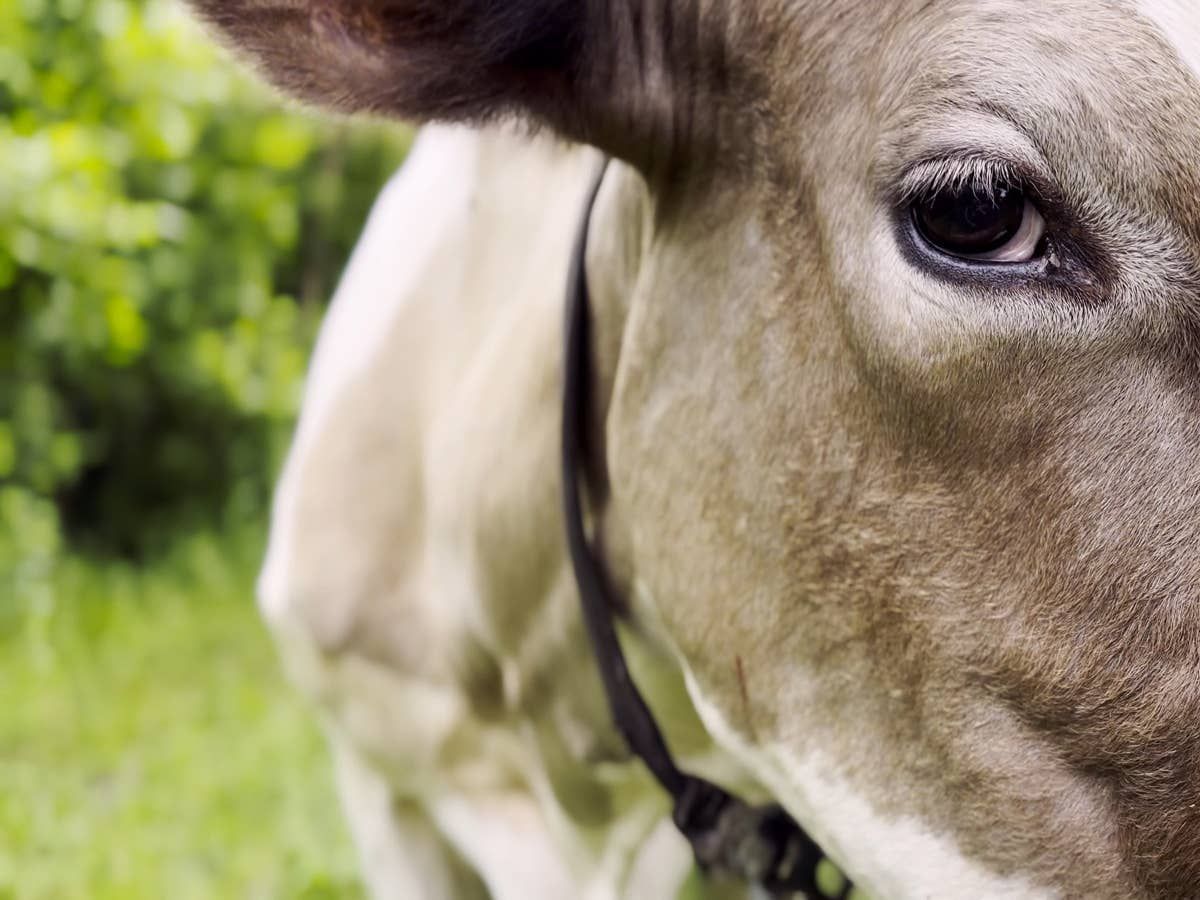
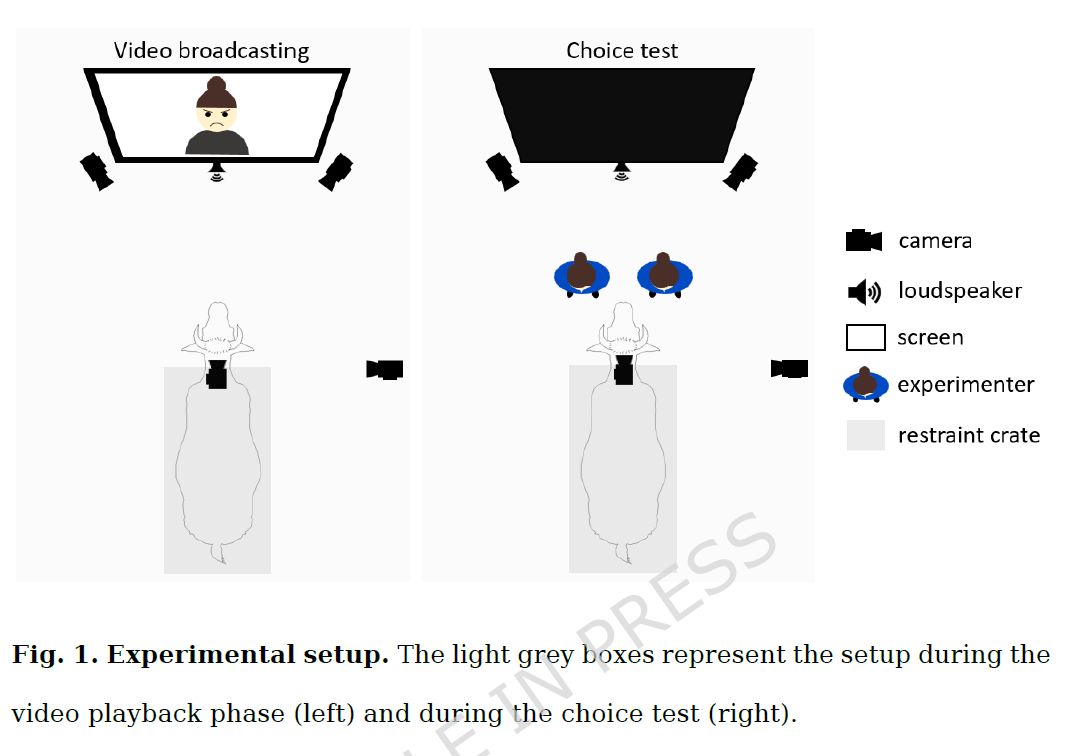
1/2 Cine de emociones para vacas. Las vacas distinguen entre emociones humanas (enfado y alegría) que se les muestran en vídeo. Después, cuando se encuentran con ellas en persona, prefieren a la que mostraba alegría. (paper) DOI 10.1038/s41598-026-51623-7
Tay tweet mediaTay tweet media
Español
1
36
126
4.9K
Un altre perplex retweetledi
GBX
GBX@GBX_Press·
Mearsheimer: ​"If Israel loses the war, it might launch a nuclear attack on Iran. There should no longer be a rogue state in the world." ​Israel must either be disarmed or abolished. The world can no longer carry this burden.
English
311
6.2K
17.2K
345.3K
Un altre perplex retweetledi
Abraham Mendieta
Abraham Mendieta@abrahamendieta·
Qué chiquitos se vieron los grandes.
Abraham Mendieta tweet media
Español
1.2K
17.2K
123.2K
1.3M
Un altre perplex retweetledi
صوت الحق
صوت الحق@AlqadmAlthar·
سفير إسرائيل لدى الدنمارك يحتج على انتشار هذا الفيديو دعونا نجعل هذا ينتشر في جميع أنحاء العالم
العربية
1.8K
60.4K
94.8K
2.7M
Un altre perplex retweetledi
Accountable
Accountable@Accountable2019·
@sanchezcastejon Llevas 8 años usando la ley de Aznar de sanidad que dijiste que derogarías en menos de 6 meses. Hay récord de lista de espera quirúrgica, huelgas de sanitarios, recortes salvajes como los que aplicó Montero en Andalucía. PSOE, PP, la misma mierda asesina es.
Español
7
81
127
1.3K