ナナの インヤン

16.1K posts

ナナの インヤン banner
ナナの インヤン

ナナの インヤン

@uncle_st3f

デジタル エンジニア 🐺

127.0.0.1 Katılım Mart 2020
513 Takip Edilen595 Takipçiler
ナナの インヤン retweetledi
Olúmáyòwá.dev
Olúmáyòwá.dev@akintunero·
If you’re intentional about writing any of the exams below, I’ll provide you with a 90days lab access free for some of them and you’ll get your exam voucher at a very low cost. AZ-104 AZ-204 AZ-305 AZ-400 AZ-500 AZ-700 SC-200 SC-300 SC-401 Reach out to @cyberjeremiah for more info Send a
English
7
53
166
8.2K
ナナの インヤン retweetledi
Olúmáyòwá.dev
Olúmáyòwá.dev@akintunero·
Just a quick note given all the recent news about cyber attacks: please don’t try to “practice” on anyone’s systems or infrastructure. That’s illegal and WILL lead to serious consequences including jail time, and can damage your reputation long term. Stick to environments where you have clear permission and defined scope from the owners or maintainers. It’s just a friendly advice
English
7
71
191
18.7K
ナナの インヤン retweetledi
Olúmáyòwá.dev
Olúmáyòwá.dev@akintunero·
There’s been a massive rollout of data centres lately. Now’s a great time to start building your infrastructure skills.
English
7
25
195
59.9K
ナナの インヤン retweetledi
Wendell Odom
Wendell Odom@Wendellodom·
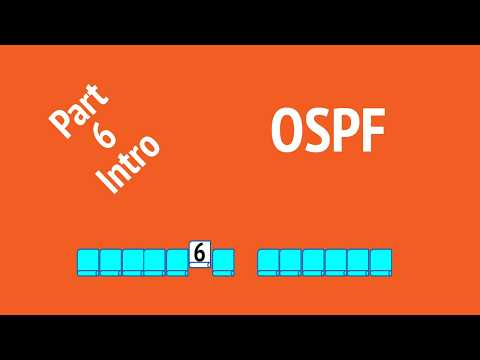
New OSPF drops for CCNA 200-301! 1️⃣ OSPF Explained: CCNA 200-301 Complete Course (Part 6 Overview) – get the big picture and see how Part 6 fits into the CCNA journey 2️⃣ OSPF Exam Practice & Review: CCNA 200-301 (Part 6) – lock in OSPF neighbors, routing table behavior, and a BIG OSPF lab 👉 youtu.be/cY6ahL_j8wY 👉 youtu.be/BrPoW8FVRPc #CCNA #CCNAOCG #CiscoChampion #OSPF
YouTube video
YouTube
YouTube video
YouTube
English
1
23
105
5K
ナナの インヤン retweetledi
David Hundeyin
David Hundeyin@DavidHundeyin·
Nothing. To. Add. 🇳🇬
English
459
8K
13.8K
510.4K
ナナの インヤン retweetledi
New Direction AFRICA
New Direction AFRICA@Its_ereko·
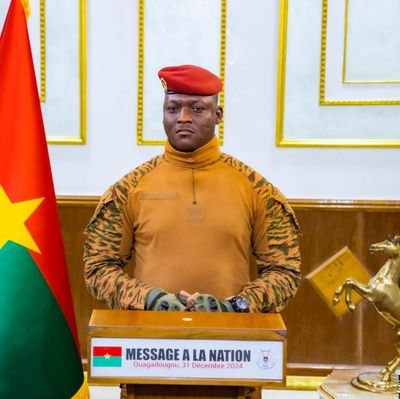
🇲🇱💰 BREAKING: Mali just shared $33 million in gold revenue with local communities. Not foreign corporations. Not European banks. Not Swiss accounts. Local communities. The people who live where the gold is mined. This is what the new mining code does. This is what sovereignty looks like. For decades, Mali's gold left. The people got nothing. Now, $33 million goes straight to them. Schools. Roads. Hospitals. Built with money that used to disappear. The West called it instability. Mali calls it justice. The miners are local. The revenue is local. The future is local. This is why the empire panics. This is why France screams. This is why the EU threatens. When Africans control African resources, everyone wins. Except the colonizers. Mali just proved it. $33 million. In their pockets. Not ours. The continent is watching. The lesson is spreading. The old order is dying. One gold bar at a time.
New Direction AFRICA tweet media
English
374
6.2K
17.6K
376.8K
ナナの インヤン retweetledi
𝗔𝗟𝗕𝗨𝗠 𝗧𝗔𝗟𝗞𝗦 📀
On this day in 2000, Lagbaja released “Suuru Lere”, speaking on the struggle of the Average Nigerian for basic amenities. The year is 2026.
English
128
2.3K
4.9K
187.7K
ナナの インヤン retweetledi
Iyo Obietonbara
Iyo Obietonbara@sankofa360·
After Iran, their next major stop in the next 10-15 years will be in Africa. Possibly in South Africa and Nigeria. These two nations will likely be blown apart from within and fragmented. Few days ago, U.S deputy secretary of state, Christopher Landau, while in an event in India told Indian leaders: We will not repeat with India the mistake we made with China twenty years ago. We let China develop its market and it has become our rival today. If the U.S. deputy secretary of state will look at India leaders in the eyes and tell them, we will stifle your growth and ensure you stay where you are, what do you think they will do to African nations with ambitions for growth and development? It doesn't matter if you realize it or not. The quality of your life is determined by geopolitical considerations. Brace up, drawers of water and hewers of wood. Their next major stop will be at your doorstep and it will be to seal your fate for the next 100 years....except a miracle happens.
English
61
498
807
35.8K
ナナの インヤン
ナナの インヤン@uncle_st3f·
@akintunero Same. It’s exhausting when the few times they are even on the news it’s for something substantial nor positive.
English
0
0
0
106
Olúmáyòwá.dev
Olúmáyòwá.dev@akintunero·
When I was younger, I was really into current affairs. I used to stay up with my dad to watch the 9pm news on NTA, and because of that I actually knew the names of government ministers. Back then they seemed active and you heard about them often. I remember liking Frank Nweke Jr. because he was sharp and always showing up in the news. The funny thing is, that was before the internet. Now we’re in the internet age where information is everywhere, yet I can’t even tell you who the Minister of Transport is. Who’s the Minister of Education these days? Honestly, it feels like we went from 60 to 0. Not a fan of Umahi but I see him being up to something, same as Keyamo. 😪
English
5
4
40
1.9K
ナナの インヤン retweetledi
Ehis
Ehis@EhistheGreat·
I’m a certified Network Engineer and a fresh graduate of olabisi Onabanjo university - seeking a job or internship opportunity in the IT field . I’m also skilled in hardware repairs with years of experience. Please share and repost .🕴️🥳
English
5
95
203
6.1K
ナナの インヤン retweetledi
Olúmáyòwá.dev
Olúmáyòwá.dev@akintunero·
Lab idea for intermediate network engineers: A regional organization wants to connect HQ, a DR site, and 3-4 agency offices across different cities using a shared backbone. Each site connects via routed links. Core requirements: - OSPF or IS-IS - MPLS in the core - L3VPN for agency isolation - Basic iBGP between core routers - Simple routing policy Internet edge: - 1–2 ISPs using eBGP - Default route injected into the backbone - Dual links or LACP for redundancy - Backup path if one ISP fails Deliverables: Topology diagram, IP plan, AS design, VRFs per agency, BGP explanation, failover tests, and verification screenshots. Failure tests: Core link shutdown, ISP outage, router restart, traffic isolation checks, convergence measurement. The focus is architecture, traffic flow, and resilience not just CLI commands.
English
9
30
145
6.6K
ナナの インヤン retweetledi
Dr Danish
Dr Danish@operationdanish·
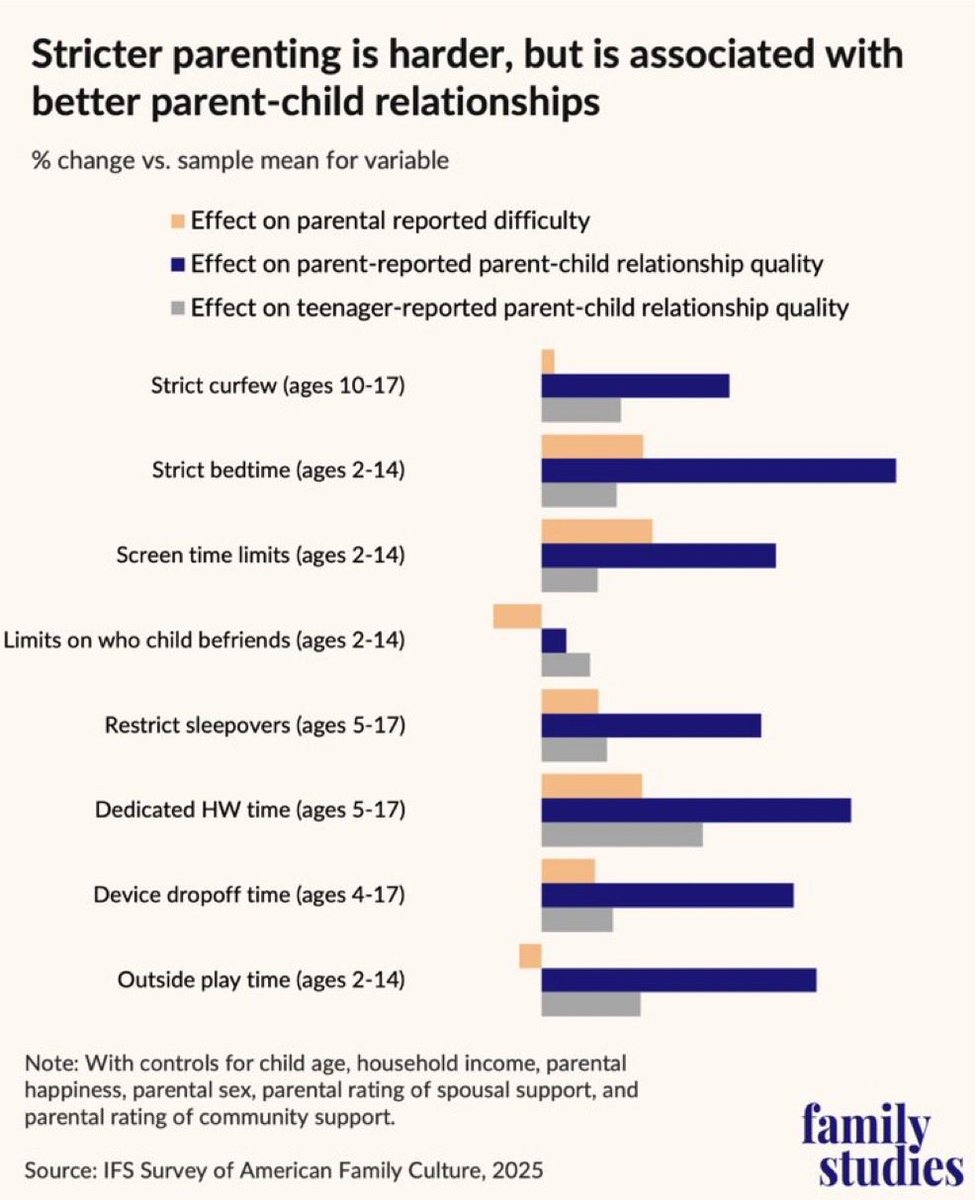
We now have evidence that gentle parenting doesn’t work. Here’s an uncomfortable truth about parenting no one wants to say out loud: The data is not kind to gentle parenting. According to teenagers, strict curfews. strict bedtimes, screen limits, device drop off times, dedicated homework blocks, and sleepover restrictions IMPROVE higher relationship quality. And yes, parenting difficulty goes up. Of course it does. Leadership is harder than appeasement. For the past decade we have been sold a watered down, Instagram friendly version of “gentle parenting” that often collapses into boundary avoidance, endless negotiation and emotional processing without enforcement. Parents terrified of saying no because they do not want to rupture connection. But connection without authority is not connection. It is dependency. When parents impose structure, the relationship improves. Teenagers report better parent child relationship quality in homes with curfews and rules. Younger kids report better relationships in homes with screen limits and bedtimes. Even device drop off times correlate positively. Why? Because structure is not cruelty. Structure is love made visible. A bedtime says: your brain matters more than your entertainment. A screen limit says: your dopamine system is not fully developed and I will guard it until it is. A curfew says: your safety matters more than your social standing. That is not authoritarianism. That is caring. Boundaries create friction. Friction creates growth. The parent absorbs the short term discomfort so the child does not pay the long term cost. Children do not experience well calibrated limits as rejection. They experience them as stability. The human brain craves predictability. Predictability reduces anxiety. Reduced anxiety strengthens attachment. That is why relationship quality goes up. Notice something else in the data. The strongest effects are around time structure. Bedtime. Homework. Devices. Outside play. These are environmental constraints. They scaffold executive function. The winning formula is not tyranny. It is high warmth plus high structure. The modern failure mode is high warmth plus low structure. That is just abdication of responsibility wrapped in empathy. Children need leadership, not negotiation. They need adults who can tolerate their anger. They need boundaries that do not move every time emotions spike. They need someone whose prefrontal cortex is fully myelinated. The harder path produces the stronger bond. Because when a child feels that someone is strong enough to hold the line, they relax. And relaxed nervous systems build durable relationships.
Dr Danish tweet media
English
715
4.5K
20.9K
2.8M
ナナの インヤン retweetledi
Mololuwa | Cybersecurity - (The God Complex)
@akintunero @segoslavia @ireteeh @lanceeihoda @commando_skiipz @TemitopeSobulo @OnijeC May God bless all of the people quoted here Some of you genuinely do not understand the amount of effort and help these people have put into building and raising talents in this country If you've benefited from these people in any way,form of manner include this people into your daily prayers, You people do not know how much of an impact these people have made both directly and indirectly May God continue to bless these people fo us amen🙏🙏
English
12
11
38
1.6K
ナナの インヤン retweetledi
Olúmáyòwá.dev
Olúmáyòwá.dev@akintunero·
The next gold rush isn’t AI itself. It’s the infrastructure powering it. Right now, everybody is focused on building models, prompting LLMs and fine tuning GPUs. That’s great; but very few people are paying attention to what actually keeps AI running in real life and that is data centres. We’re about to see serious demand for Data Centre Operations, Network Architecture, Power and Cooling Engineering, BMS and Monitoring, Infrastructure Automation and Reliability roles. Not just in the US or Europe; Globally because Cloud regions are expanding, edge sites are increasing, and hyperscalers are pouring billions into new facilities. But here’s the real issue; It’s not just about GPUs but the shortage of people who understand racks, redundancy, load balancing, failover, PUE, cross connects, fibre routing, rack density, cooling design, power redundancy and incident response. People who truly understand how the building works. You can invest billions in infrastructure, but without engineers who know how to manage power, cooling, topology and uptime, you’ve basically built an expensive warehouse. If you’re still early in your career, this is the time to plug into Data Centre Ops, Network Engineering or core Infrastructure. While everyone is chasing AI hype, the smarter move might be becoming the engineer who keeps AI running.
Aakash Gupta@aakashgupta

This game is solving a $600B industry’s biggest bottleneck. The data center industry needs 650,000 workers this year. 58% of operators can’t find qualified talent. Hiring timelines for key roles have doubled from 8 weeks to 4+ months. AWS, Google, and Microsoft are spending $600B+ on GPU and data center infrastructure, but the buildings are useless without people who understand how racks, cooling, power redundancy, and network topology actually work. The workforce grew 60% from 2016 to 2023 and still can’t keep up. The industry’s official answer? “Partner with universities” and “recruit military veterans.” Both pipelines take years to build and compete with every other sector chasing the same people. Meanwhile a solo developer built a $20 game where you physically place servers in racks, route Ethernet by hand, watch colored packets reveal your bottlenecks, manage hardware failures, and learn redundancy through consequence. 84% positive reviews on the demo. Releasing March 31. This tells you everything about how the industry thinks about talent development. Hyperscalers will spend $17M per day on a single data center campus but won’t fund the thing that actually creates intuition for how these systems work: repetition in a low-stakes environment where failure is cheap and feedback is instant. Kerbal Space Program created more aerospace engineers than any recruitment brochure NASA ever printed. Factorio teaches supply chain optimization better than most MBA programs. The pattern is clear: games that make complex systems tangible produce practitioners, not just awareness. The talent shortage is the real constraint on data center buildout, and the solution looks like a $20 Steam game, not a $200K university pipeline.


English
12
43
257
17.7K
ナナの インヤン retweetledi
Aakash Gupta
Aakash Gupta@aakashgupta·
This game is solving a $600B industry’s biggest bottleneck. The data center industry needs 650,000 workers this year. 58% of operators can’t find qualified talent. Hiring timelines for key roles have doubled from 8 weeks to 4+ months. AWS, Google, and Microsoft are spending $600B+ on GPU and data center infrastructure, but the buildings are useless without people who understand how racks, cooling, power redundancy, and network topology actually work. The workforce grew 60% from 2016 to 2023 and still can’t keep up. The industry’s official answer? “Partner with universities” and “recruit military veterans.” Both pipelines take years to build and compete with every other sector chasing the same people. Meanwhile a solo developer built a $20 game where you physically place servers in racks, route Ethernet by hand, watch colored packets reveal your bottlenecks, manage hardware failures, and learn redundancy through consequence. 84% positive reviews on the demo. Releasing March 31. This tells you everything about how the industry thinks about talent development. Hyperscalers will spend $17M per day on a single data center campus but won’t fund the thing that actually creates intuition for how these systems work: repetition in a low-stakes environment where failure is cheap and feedback is instant. Kerbal Space Program created more aerospace engineers than any recruitment brochure NASA ever printed. Factorio teaches supply chain optimization better than most MBA programs. The pattern is clear: games that make complex systems tangible produce practitioners, not just awareness. The talent shortage is the real constraint on data center buildout, and the solution looks like a $20 Steam game, not a $200K university pipeline.
P.M@p_misirov

there is a game called "data center" on steam which let's you build and manage your own data center. this is lowkey genius, the best way to educate people on a new trait. hyperscalers should learn a thing or two from "edutainment".

English
87
586
7.2K
758.9K
Olúmáyòwá.dev
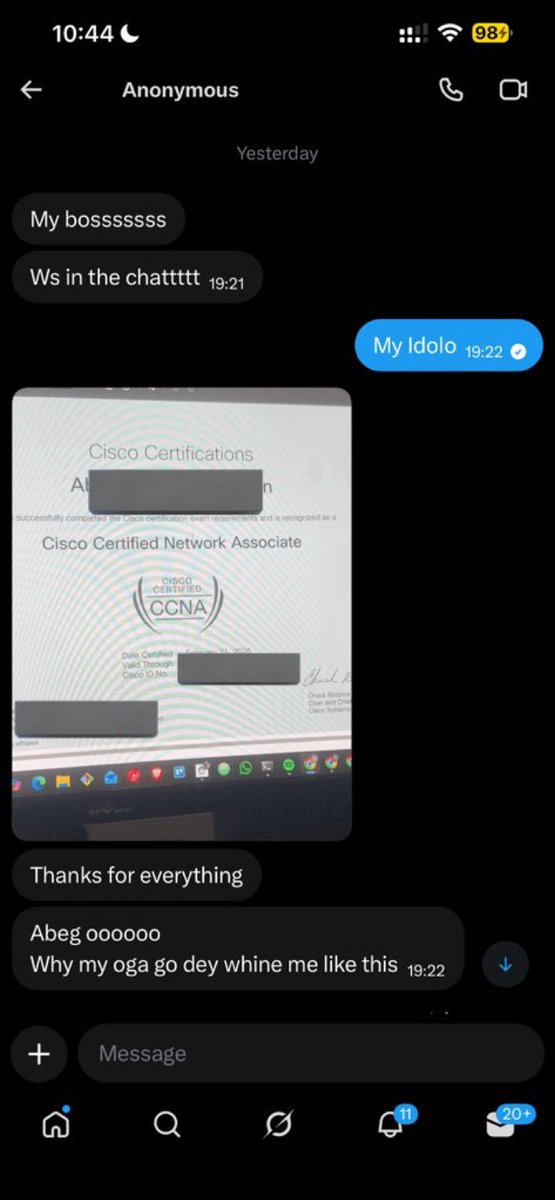
Olúmáyòwá.dev@akintunero·
How I’m starting the week 🎉🎉👌🏾
Olúmáyòwá.dev tweet media
English
14
6
123
3.5K
ナナの インヤン retweetledi
P.M
P.M@p_misirov·
there is a game called "data center" on steam which let's you build and manage your own data center. this is lowkey genius, the best way to educate people on a new trait. hyperscalers should learn a thing or two from "edutainment".
English
442
2.8K
36.2K
7.3M