
urlin retweetledi
urlin
40 posts


urlin retweetledi

The periodic table limits battery breakthroughs, with only 118 elements, most unsuitable: - 39 are radioactive - 23 are too scarce or costly (e.g., rare earths, platinum group metals) - 6 are inert noble gases - 4+ are toxic (e.g., cadmium, cobalt, mercury, arsenic) - Some are too heavy, scarce, valuable (e.g., gold, platinum), hard to recycle, or have low reduction/oxidation potential Energy density has peaked by using lighter elements—from lead to zinc to nickel to lithium. Be skeptical of battery improvement claims. A 100% renewable grid needs at least six weeks of energy storage. Storing one day of U.S. electricity with Li-ion batteries would cost $11.9 trillion, cover 345 square miles, and weigh 74 million tons, excluding grid upgrade costs. The mining required is immense and must be repeated every 15 years. Other battery types exist, but commercial focus remains on lithium. A 100% renewable grid with battery backup is a pipe dream.
Adam Lowisz X Meetup 🇺🇸🇵🇱🇪🇺🇬🇧🇺🇦@AdamLowisz
@elonmusk We need to let Trump know that solar and batteries are the future of energy. Battery chemistry has improved tremendously in the last decade. Coal isn't the future of energy. We are going to fall behind China we don't transition now.
English
@GodsWhisper777 Then God blessed them, and God said to them, «Be fruitful and multiply; fill the earth and subdue it.»
Genesis 1:28
English





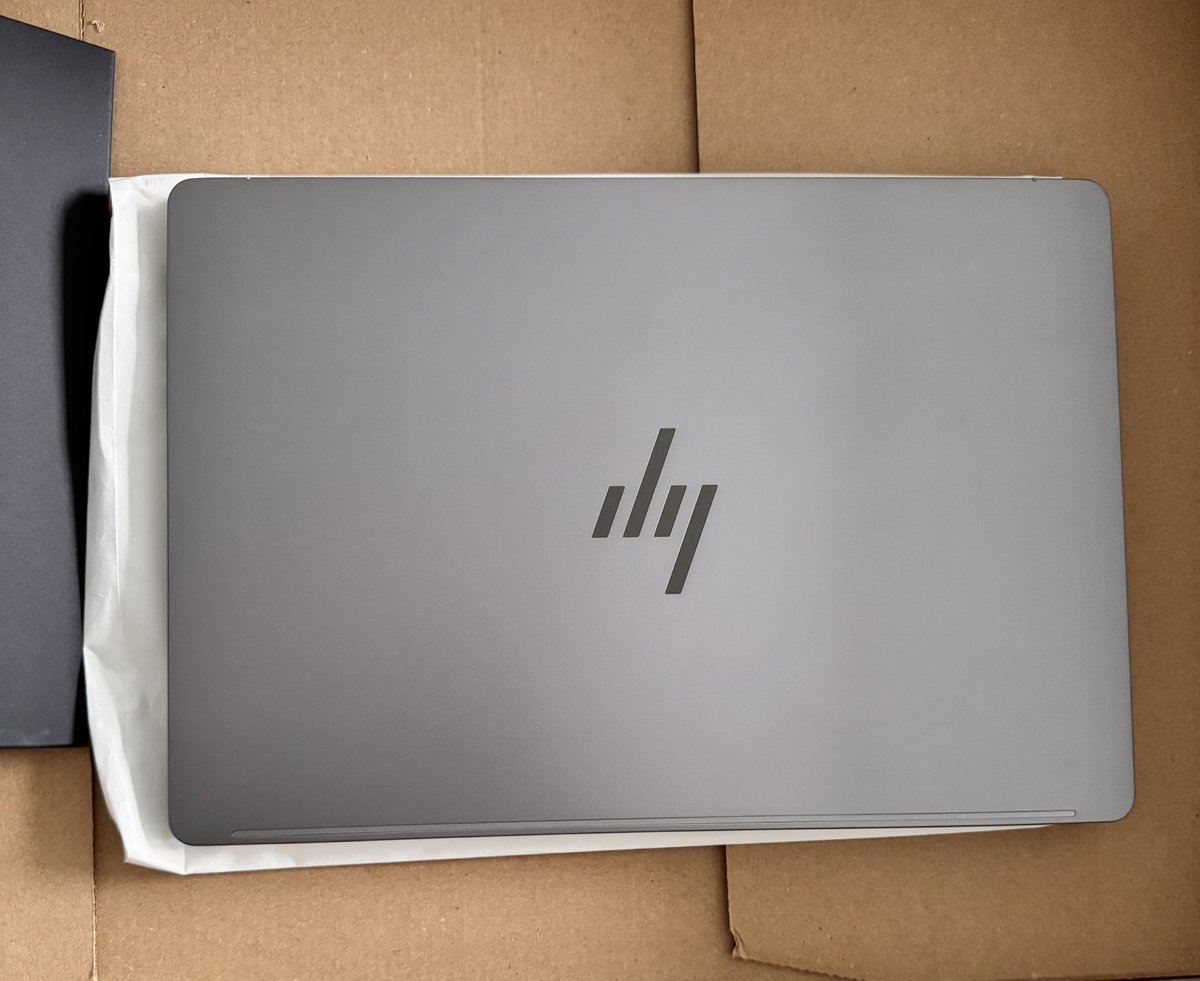
It's over, HP (and AMD) won
m*cbois are disallowed from interacting with this high-performance Hewlett-Packard device-enjoyer
how could you sell out? shame
wavefnx@wavefnx
Got the same one on its way and should arrive anytime soon I’d never get a M*cBook 128gb RAM unified with iGPU 16 cores / 32 threads 2TB NVMe SSD Good Linux support
English
urlin retweetledi

Not ECDSA. Not Schnorr. Meet DahLIAS 🌺
A full aggregate signature scheme, that actually works on Bitcoin’s curve!
New breakthrough from @n1ckler, @real_or_random, and @yannickseurin
👇 bitcoinmagazine.com/technical/not-…
English
urlin retweetledi

We have just released vminer: a virtual machine introspection tool. Unlike icebox our previous project, it is not tied to any specific hypervisor, and can also run on memory images! Built with ♥️and 🦀 github.com/thalium/vminer
English

urlin retweetledi

urlin retweetledi


@super_testnet @Ademan555 Cash transaction has essentially the same trust assumptions
English
urlin retweetledi


urlin retweetledi

Bypassing disk encryption on systems with automatic TPM2 unlock by @oddlama
oddlama.org/blog/bypassing…
English
@therunetard @THORChain > These churns happen every 86,000 blocks (~3 days)
In fact it is not that simple
English

What a glorious sight. Let me explain.
@THORChain has:
1) Commenced the routine rotation (churn) of the validator set (every ~3 days) by initiating a KEYGEN ceremony between 120 anonymous THORNodes.
2) On the first attempt, all of the 120 nodes created new vaults to house the many various assets (across multiple independent blockchains).
3) The oldest node, the worst performing node and the smallest bond node were booted from the active node set. Based off of their $RUNE bond amount, 3 new nodes were selected to replace these nodes and 2 other nodes were selected to build out the validator set (to a max of 120 nodes).
4) All of the assets that @THORChain manages were then sent from the old vaults to the new vaults.
5) Once the old vaults were drained and the new vaults were established, the churn announced it was 'complete'. At this point the churned out nodes could access they earned rewards and/or initial $RUNE bonds (all other BP'd $RUNE & rewards continue to be locked as they are still active and providing economic security).
--
Note: These churns happen every 86,000 blocks (~3 days) to ensure the validator set is not stale, to prove control of the claimed TVL and to grow the network. It is a beautiful design.
This one is particularly impressive because there were zero 'KEYGEN failures' where some nodes missed or where too slow to participate in the KEYGEN ceremony. There is usually a few of these but they don't negatively affect the protocol.

English

OFT FORGOTTEN BITCOIN SCALING LIMITS
Many aren't aware of how limited current on-chain capacity is.
Forget P2P commerce or checking acct volume; even savings acct. vol. (2 tx/mo.) or L2 use is out of reach for all but 2.7% of the US, or 0.1% of the world.
Some numbers:
English
urlin retweetledi

Long story short: there are a few opcodes that are already incredibly safe and well reviewed for bitcoin: CHECKTEMPLATEVERIFY(CTV, BIP319), VAULT(345), and CAT(347). Any combination of those could be activated within months without material risks.
Those do great things, but do not enable major lightning network improvements. CHECKSIGFROMSTACK(348) with CTV or CAT brings the same lightning improvements originally promised by SIGHASH_ANYOREVOUT(118), and is approaching code readiness.
INTERNALKEY(349) is an incredibly simple optimization for using the same key to sign certain scripts as for your taproot key spend and is also nearly ready.
An alternative to VAULT has been in the world for years called CHECKCONTRACTVERIFY(CCV, no number), and it's incredibly useful, but not quite as close to ready as the ones so far listed.
Some folks don't like CAT, to some degree myself included, because it enables transaction introspection in an ugly way. In that case, an argument can be made that CAT shouldn't be added to bitcoin until TXHASH(soon 346) or similar are already present. TXHASH has a lot of details to review, but is also fairly far along in development, like CCV.
Feel free to ask me anytime for more information about any of these. Or join my weekly spaces (every Wednesday) and ask out loud.
Cosmo Crixter 🟠@CosmoCrixter
@reardencode @JohnstonFredJ @nvk I surely will if/when they are explained to me clearly enough! I don’t write or read code but I do run a node on a Linux system and getting it up and running (swapping the OS over from Windows, etc.) pretty much felt like I was learning how to walk again. 😂
English