A diagnosis that understandably causes anxiety for many families:
“One of my twins has been diagnosed with growth restriction. What does that mean?”
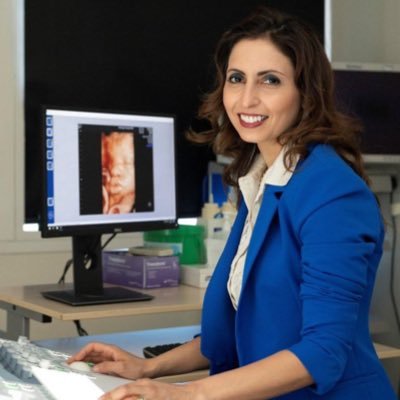
This is a question I discuss frequently with families attending my Harley Street clinic, particularly in pregnancies where twins share a placenta.
𝗦𝗲𝗹𝗲𝗰𝘁𝗶𝘃𝗲 𝗳𝗲𝘁𝗮𝗹 𝗴𝗿𝗼𝘄𝘁𝗵 𝗿𝗲𝘀𝘁𝗿𝗶𝗰𝘁𝗶𝗼𝗻 (𝘀𝗙𝗚𝗥) — where one twin grows significantly smaller than the other — is one of the key complications we aim to identify early in twin pregnancy.
In this short video, I discuss some of the key sFGR questions.
What I want expectant parents to know is that 𝘀𝗙𝗚𝗥 𝗰𝗮𝗻 𝗯𝗲 𝗺𝗮𝗻𝗮𝗴𝗲𝗱 𝘃𝗲𝗿𝘆 𝗲𝗳𝗳𝗲𝗰𝘁𝗶𝘃𝗲𝗹𝘆 𝘄𝗶𝘁𝗵 𝗲𝗮𝗿𝗹𝘆 𝗱𝗶𝗮𝗴𝗻𝗼𝘀𝗶𝘀, 𝗰𝗮𝗿𝗲𝗳𝘂𝗹 𝘀𝘂𝗿𝘃𝗲𝗶𝗹𝗹𝗮𝗻𝗰𝗲, 𝗮𝗻𝗱 𝘁𝗵𝗲 𝗿𝗶𝗴𝗵𝘁 𝘀𝗽𝗲𝗰𝗶𝗮𝗹𝗶𝘀𝘁 𝗽𝗮𝘁𝗵𝘄𝗮𝘆. With appropriate care, outcomes for both babies can be excellent.
Find out More: asmakhalil.co.uk#TwinPregnancy#sFGR#FetalGrowthRestriction#FetalMedicine#HighRiskPregnancy@Twins Trust (4)
Vitamin D should ideally be taken after food, not on an empty stomach.
Because physiologically, vitamin D is a fat soluble vitamin.
After a meal, especially one containing some fat, the gallbladder releases bile salts into the intestine. These bile salts help form micelles, which carry vitamin D across the intestinal lining.
Then vitamin D gets packed into chylomicrons and enters the lymphatic system before reaching the bloodstream.
In a fasting state:
• Less bile release
• Less micelle formation
• Poorer absorption
That’s why the same tablet can give better absorption after meals compared to empty stomach.
Practical advice:
Take it after breakfast, lunch, or dinner. Even normal Indian meals usually contain enough fat for absorption.
This applies to:
• Daily vitamin D tablets
• Weekly 60,000 IU sachets/capsules too.
I was out for a jog last night and spotted this boy.
He is tiny and I could tell he was utterly broken from living on the streets.
I couldn’t get him out of my head so we went back today… (1/7) 🧵
Name the best-tasting chocolate in the world.
And don't even think about posting "Hershey's." That stuff tastes like vomit-flavored wax.
For me? Cadburys Dairy Milk and Milka.
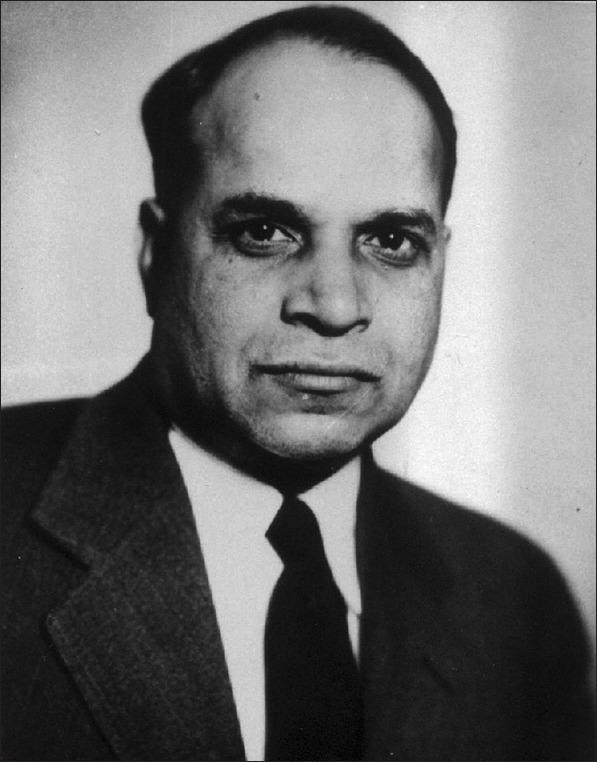
A man who was denied his medical degree for wearing Swadeshi Khadi, forcing him to flee to America where he worked as a night-janitor scrubbing hospital bedpans. Yet, he co-discovered the absolute energy source of all living cells (ATP), synthesized the world's 1st effective cancer chemotherapy drug, & led the wartime research team that discovered the 1st broad-spectrum antibiotic, only to be denied tenure by his university, & completely overlooked by the Nobel Committee.
This is the story of the ultimate invisible colossus: Dr. Yellapragada Subbarao (1895-1948).
To understand the complete, crushing silo Subbarao worked in, we have to look at his early days at the Madras Medical College in the 1920s. Subbarow was a fierce, uncompromising Indian nationalist. He routinely wore hand-spun Khadi surgical scrubs to class to mock the British profs.
Furious at his defiance, his British supervisor, Dr. Bradfield, deliberately failed him in his final medical exams, refusing to grant him an M.B.B.S. degree. Instead, they handed him a humiliating, 2nd-class "L.M.S." certificate, legally banning him from practicing major medicine/holding a research position anywhere in British India.
Subbarao did not break. Backed by charity funds, he boarded a ship to America, landing at Harvard Medical School in 1923. Because his Indian degree was treated like garbage by the West, Harvard refused to give him a research fellowship.
To survive, Subbarao entered a state of brutal, claustrophobic isolation. For yrs, he worked as a night-shift janitor at the Peter Brent Brigham Hospital in Boston, manually scrubbing vomit & blood off hospital pans for pennies, & then spending his dawn hours hidden in the basement laboratories, teaching himself advanced biochemistry in complete anonymity.
In that dark basement silo, Subbarao partnered with a scientist named Cyrus Fiske. The scientific world at the time was facing a massive, wall-like mystery: How does the human body actually store & spend energy? When we move a muscle/blink an eye, what is the literal fuel burning inside the cell?
Operating in a completely isolated lab with self-made chemical filters, Subbarao discovered a highly volatile, ephemeral molecule containing phosphorus. He realized this molecule was the universal energy currency of every single living cell on the planet.
He discovered Adenosine Triphosphate (ATP) & Phosphocreatine. It was a discovery so monumental it rewrote biology textbooks forever. It was the literal software code of biological energy. But because Subbarao was an introverted Indian alien working on a janitor's schedule, his supervisor Cyrus Fiske received the lion's share of the academic credit. Subbarao did not care about the fame; he immediately walked away from the glory of ATP to go deeper into the dark.
Subbarao left Harvard (after getting his PhD) & joined Lederle Labs (now part of Pfizer), a small pharmaceutical firm. There, the introvert Subbarao demanded half of the annual salary, which was offered at $14K/yr, under the condition that a new research building be erected for him at Pearl river.
He locked himself inside a private research silo, working up to 18 hrs a day, sleeping on a canvas cot right next to his chemical vats. From this complete isolation, his mind generated a relentless, devastating series of global breakthroughs:
- Subbarao was fascinated by folic acid. Working with a doctor named Sidney Farber, he engineered a chemical compound called Methotrexate. It was the world's 1st ever effective cancer chemotherapy drug, directly destroying leukemia cells in children. Modern oncology was literally born from his hands.
- He synthesized Diethylcarbamazine (Hetrazan), which became the global standard cure for filariasis, saving millions of poor agricultural laborers across Asia & Africa from elephantiasis.
- He guided the discovery of Aureomycin (Chlortetracycline), the world's 1st true tetracycline antibiotic, which was far more powerful than Alexander Fleming’s penicillin & cured deadly outbreaks of typhus & plague across postwar Europe.
He was a pure, unadulterated research machine who utterly loathed self-promotion. He never signed his name 1st on academic papers, frequently giving his junior American assistants the lead author credit. He routinely refused to do press interviews, stepping into the back corners during corporate photo-ops.
When he died suddenly in his lab in 1948 at the young age of 52 while working on a polio drug known as Darvisul, he possessed absolutely nothing but a few books & his lab glass rods. Because he worked behind the closed corporate curtain of Lederle Labs rather than the loud, public arenas of university politics, & because the American establishment in the 1940s was quietly prone to burying the contributions of non-white immigrants, his name vanished into total oblivion.
Despite discovering the engine of cellular life (ATP), inventing the baseline of cancer treatment (Methotrexate), & synthesizing the antibiotics that saved millions of lives, he was never awarded the Nobel Prize. When his death was announced, Doron Antrim, a reporter for Argosy magazine wrote: "You probably never heard of Dr. Yellapragada Subbarao... but because he lived, you may live longer."
The next time we hear about a breakthrough in cancer treatment/open a biology textbook to read about the energy of a living cell, remember that night-janitor at Harvard; for India's ultimate ghost scientist proved that we do not need an imperial crown/public applause to sustain humanity, we can quietly change the destiny of the entire human race from a dark basement, & then vanish into the night w/o leaving a single trace of vanity behind.
I try to think of the dogs' names out a lot when we rescue them and I called her Bianca because she was covered in her own poop. Her skin was battered and I dreamt that one day she would be as white as snow. Those dreams all came true and she's now found her amazing home in America.
What I love so much is that our lovely owner buys her soft toys and Bianca's favorite thing to do is round them up around the house and bring them all onto her bed. She's probably the most innocent and angelic dog that we've ever had and I think this sums her up perfectly.
Not in a million years could I have dreamt that your life would turn out like this, Bianca, but it has and you deserve it, darling ❤️
@missscorpion34 External cephalic version is not always feasible...plus it can lead to an emergency CS(elective becomes emergency)
Having said that...under the correct circumstances...correct pt...non engaged fetal part...doctor expertise and correct location...it is done
Knowledge is having the right answers.
Intelligence is asking the right questions.
Wisdom is knowing when to ask the right questions.
—Professor Richard Feynman
@urwithRitzy Parimal means fragrance, Ma'am…
I am just the 1 who carries it a little further, the scent that rose somewhere else, from lives the world chose not to remember.
The name sounds British, but it is actually a purely Indian acronym. In 1952, a 55 yr old grocery store owner from Nagpur named Keshav Vishnu Pendharkar decided to shut down his shop, pack up his family of 10 children, & move to Bombay. He wanted to create a chemical-free, swadeshi alternative to the foreign cosmetic brands that were ruling post-independence India.
He started his business in a tiny, cramped godown in Parel, Bombay. He named his company after his father: Vishnu Industrial Chemical Company. V-I-C-C-O. There was no British Lord or foreign laboratory. It was just a middle-aged Marathi man & his sons working out of a shed with a dream to revive ancient texts.
Keshav Pendharkar’s brother-in-law held a basic degree in Ayurveda. Together, they huddled over ancient scripts & formulated a tooth-cleaning powder made from 20 rare herbs & barks (including Babool, Bakul, & Neem).They called it Vajradanti.
In the 1950s, urban Indians were rapidly switching to chemical, white, sweet-tasting toothpastes imported by MNCs like Colgate. When the Pendharkers tried to sell a brown, astringent Ayurvedic powder, shopkeepers laughed them out of their stores. Keshav & his sons refused to surrender. They literally walked the streets of Bombay, going door to door to hand out samples, educating people on how chemical foam was destroying their gums, & manually building their empire 1 household at a time.
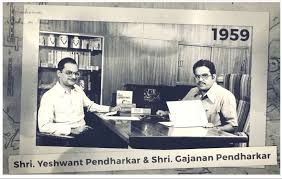
In 1971, Keshav passed away, & his son, Gajanan Pendharkar, took over. Gajanan looked at the skincare market & saw it was utterly dominated by colonial-legacy snow creams like Afghan Snow, Pond's, & Nivea. All of them were stark white. Gajanan decided to launch a face cream containing Turmeric (Haldi) & Sandalwood oil. When the product launched, shopkeepers panicked. They screamed, "Baap re! If women put this on their faces, it will turn them yellow!" Nobody wanted to buy a yellow cream because the world had been conditioned to believe that beauty products had to be white.
The Pendharkars weaponized the traditional Indian wedding ritual of Haldi-Chandan. They sent salesmen into the markets armed with handheld mirrors. The salesmen would manually apply the cream onto the shopkeepers' faces right then & there to prove it absorbed completely into a vanishing base, leaving a glow w/o any yellow stains. If you remember the iconic jingle: "Vicco Turmeric, Nahi Cosmetic, Vicco Turmeric Ayurvedic Cream"... you should know that those words were not just a clever marketing tagline. They were a battle cry born from a massive legal warfare.
In 1975, the Central Excise Department of India dropped a bombshell on Vicco. They insisted on classifying Vicco Turmeric & Vajradanti as "Cosmetics." If classified as cosmetics, the govt could levy a crippling 105% luxury tax on the products, which would have priced Vicco completely out of the market & forced them into bankruptcy. The Pendharkars refused to pay. They argued that their products were manufactured under a formal Drug License & were Ayurvedic Medicines (Drugs), which attracted significantly lower taxes.
This was not a minor dispute; it turned into a historic, grueling 25 yr legal battle. The case climbed all the way up to the Supreme Court of India. While battling global giants in the market, the family spent their resources fighting their own govt in courtrooms for ~3 decades. Finally, in the 2000s, the Supreme Court ruled in favor of Vicco, legally decreeing that their products were indeed medicinal, cementing the truth of their tagline forever.
How did a homegrown brand from a Parel godown become globally famous? Through sheer marketing brilliance before the internet existed. In the 1980s, South Asian immigrants abroad were obsessed with watching Bollywood movies on rented VHS video cassettes. Gajanan Pendharkar realized this & started buying ad space directly inside the video cassettes distributed globally.
Long before foreign networks recognized Indian brands, families in the US, UK, & Middle East were singing along to the Vajradanti jingle before their favorite movie started.
Despite controlling a multi-million dollar empire, the house had only 1 giant mega-kitchen. Every single meal was cooked in massive industrial-sized pots, & the entire family sat on the floor together to eat. Gajanan believed that if the family broke bread separately, the business would fracture into pieces.
In the early decades, the sons & grandsons who worked for Vicco did not get individual corporate salaries/luxury allowances. The company took care of all household expenses centrally. If a family member needed a car/a dress/a medical trip, it was cleared by the family elders, ensuring that personal greed could never overtake the company's mission.
Vicco did not survive because it was backed by British capital/Western tech. It survived because an Indian family was willing to go door to door with brown tooth powder, rub yellow cream onto skeptical faces, & spend 25 yrs in court defending the scientific validity of Ayurveda. The name might sound like a colonial legacy, but the blood inside the tube is Sampoorna Swadeshi.