
Soham retweetledi
Soham
1.9K posts

Soham
@valens
Head of Gaming & Data Science @EvilGeniuses .:. ex-@Cloud9 @Google @Tesla .:. Electrical Engineering @Stanford @UCDavis .:. [email protected]
Katılım Kasım 2014
545 Takip Edilen13.7K Takipçiler
Soham retweetledi

The Genius League is excited to host the VALORANT Collegiate Cup bringing top SoCal collegiate programs together on LAN!
📅 March 21 @ 10:00AM PT
📍 Newegg Gamer Zone
📺 twitch.tv/evilgeniuses
Join us in person to watch live and meet the EG VCT team.
Limited tickets below ⬇️

English

The Big EG Bundle might be @deapps' new go-to bundle. Who else is counting down the days until your duo buys it for you?
English

@EvilGeniuses @deapps L O L... I think you can officially change your name to Chris McD
English

@EvilGeniuses according to science, if this is my pov when I pre-order then I must already have a windbreaker... which means you should order 2
∎ Q.E.D.
English

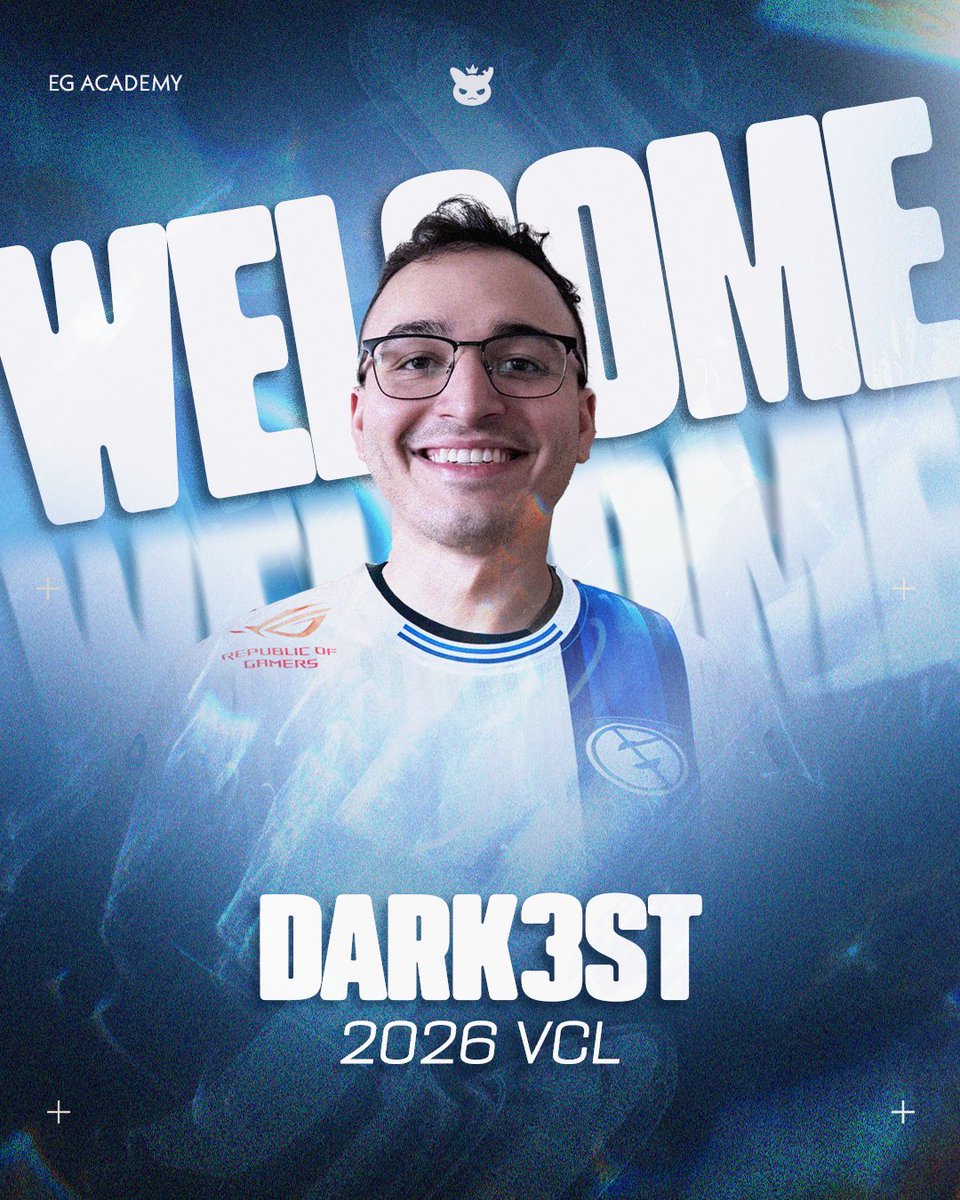
Happy to announce that i have joined EG this season, so excited to represent the team in the upcoming tournaments🙏
Evil Geniuses@EvilGeniuses
Rooted in Genius. Growing the Legend. @k1johnn has officially joined EG.
English
Soham retweetledi
Soham retweetledi


Actions speak louder than words, but when two champions are talking, it's probably worth listening.
Great convo between DC and TB on why "match mode" shouldn't feel that different from practice. The best performers don't flip a switch on game day. They just do what they've already trained to do… with a little more noise around them
UFC@ufc
DC 🤝 Tom Brady Championship Mindset is now available on YouTube! Watch here: UFC.ac/4brzMBX @DC_MMA | @TomBrady
English
Soham retweetledi

Playing Inside the Read
Most teams try to fix what they are bad at. That is necessary. It is also exactly what the other team prepares for. Once skill stops being the separator, games start getting decided in layers instead of mechanics. One of those layers is how you see yourself and how the opponent sees you. If you actually know your weaknesses and you know the other team has seen them too, that should change how you call close games. At that point, decisions stop being about what you want to do and start being about what the other team thinks you will avoid.
You saw this early in CS:GO with NaVi. They were known for slow, heavy defaults and late-round decision making. Everyone built their prep around that pace. Then once in a while they would hit a site fast, at moments when the other team was already set up for patience. The power was not the fast round itself. It was that it came from a team that was supposed to be slow. The expectation did more damage than the strat.
Later, Astralis did something similar with utility on dust2 (and inferno). Their HE meta trained teams to assume cat wasn't being watched because Astralis liked to play passive and harass bricks with utility mid-round AFTER the typical map control phase. So opponents sped up to take cat control, cleared less, and shaped their rounds around that setup-- this was the go-to adjustment for top teams. Chess ensued when Astralis adjusted to their own counter: Suddenly dev1ce was in your face AWPing off cat while two teammates were ready to push upper B and long A off his contact. You couldn't even reach palm tree or green box because you were still playing against the Astralis you prepared for, not the one that could swing to the opposite end of their playstyle in the middle of the game.
The same thing happens at the player level. If someone is known for peeking when they are up numbers, even when it doesn't make sense, that becomes part of the read on them. Opponents hold for it. They stop moving. They wait. The moment that player does nothing, the round quietly tilts. Seconds fall off the clock for free. Space shows up without a duel. The value comes from not doing the thing everyone is braced for.
This only works if you accept that some problems, your own and your team's, aren't solved yet. They are just clearly understood. That is very different from pretending they don't exist. Teams that panic here try to rebuild everything at once. New defaults, new protocols, new structure, new rules. It looks productive. Most of the time it just buries the signal under motion.
When you really know your weak points, you also know what the other team will aim at and what they expect you to clean up. They watch the same demos. They reach similar conclusions. That expectation becomes something you can play inside. You show them the habit they recognize. You let them line up the punish they have been waiting for. Then you change the layer underneath it. This works better than trying to "condition" an opponent with a gameplan that isn't anchored to how they already see you-- you're asking too much of them.
This can seem like you're pretending the flaw in your game is gone but in practice it is about letting it exist in a way that draws attention. The weakness becomes something you can stand behind instead of something you hide from. Progress isn't always about fixing everything as fast as possible. Sometimes it is about choosing how your problems are seen while you are still fixing them. After all, "We do not see things as they are, we see them as we are." -- Anaïs Nin
English

The Argument That Wins the Match
In almost every great comeback in esports, there's a round where someone on the winning team says something they wish they hadn't. It usually happens in comms, not in the post-game interview. An IGL gets sharper than he meant to and says, "We need to slow this down." Someone answers, "I don't know what we're doing anymore." A timeout starts with tension instead of confidence. None of that makes the highlight reel, but it shows up in almost every match that ends in a win.
Inside the server, it isn't heroic. It's loud and ugly. Players are gripping their mice harder than usual. Shots they normally hit start missing. Rotations get rushed. Info comes in late or not at all. One voice gets too loud. Another disappears. Everyone feels the game slipping and nobody wants to be the reason this round breaks.
Sounds like collapse? Not quite-- That's the moment before collapse.
What people forget is that this is usually the round that decides everything. The bad call forces honesty. The lost fight forces simplicity. The tense timeout forces someone to say the thing everyone was avoiding. The coach stops cooking and says to play the map. The IGL stops gambling and calls the boring round. The star player stops talking and starts hitting. The support player says one sentence that resets the room. The mess turns into structure.
Fans remember the clutch, not the argument before it. They remember the 3K, not the round where someone said, "dude stop dying early" But that's the real pivot. Comebacks aren't built on hype. They're built on correction.
There's another trap hiding in all of this. The players who say pressure never affects them. The ones who claim they're always calm. Those are often the ones who crack the hardest, just quietly. They don't snap in comms. They don't argue. They internalize it, play through it, and let it leak out later as bad decisions and passive mistakes. Nobody sees it. They don't talk about it. They never really reflect on it. And sometimes that's worse for a team than a loud mistake, because nothing gets fixed if nobody admits there was a problem.
The goal isn't to avoid these moments. You can't. If you care, they're coming. The goal is to get good at what happens after them. To hear the bad sentence and not spiral. To lose the ugly round and not lose the plan. To feel the pressure and not let it turn into panic. Elite players don't stay calm. They get back to calm faster.
Strong teams aren't the ones that never crack. They're the ones that know how to put themselves back together in real time. They can survive a bad call, a missed shot, a tense timeout, and a sentence they wish they could take back, then walk into the next round believing in the same idea. That might be the real skill ceiling in esports. Not aim or brain. It's recovery speed. A comeback isn't a miracle. It's five people choosing discipline after almost choosing chaos.
"We suffer more often in imagination than in reality." - Seneca
English

@TheSupernoon @EvilGeniuses NOON! It has been such a pleasure seeing how you approach your passion. Really couldn't be more excited to (re)start our FGC journey with you. WELCOME!!!!
English

surprise! Joined @EvilGeniuses ! Grew up watching them compete in multiple titles and in the FGC so it really is an honor to get the chance to represent them in 2XKO and in the FGC as a whole! Lookin forward to getting evil out there 😈
Evil Geniuses@EvilGeniuses
System loading [■■■□□□□□□□] WARNING ⚠️ GENIUS DETECTED Welcome to EG 2XKO, @TheSupernoon!
English
Soham retweetledi

IT'S ALMOST TIME...
Today, we begin our journey in @UniteEsports against @LuneXGG 🔥
⏰ 2pm PT
📺: twitch.tv/pikadiff_
#UNITEesports #LIVEEVIL

English

@1zerona @EvilGeniuses You joined because there are zeroNA players out there like you... WELCOME!
English