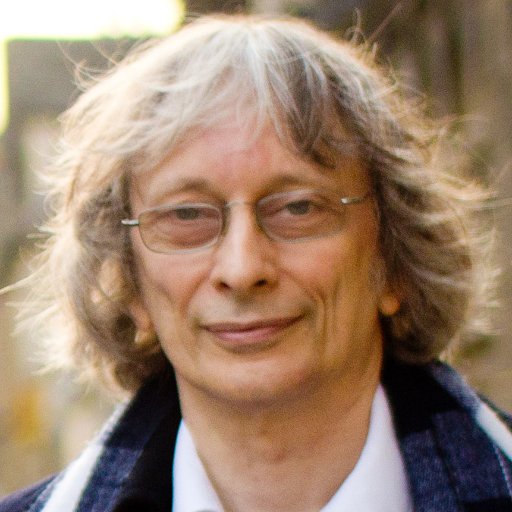
Govind Vashistha

3.1K posts

Govind Vashistha banner
Govind Vashistha

Govind Vashistha

@vash_go2012

Purely for the love of the game. built @pgxpodcast | @prvkhvr; 24. psychology, epistemology, phenomenology, game theory, decisions,etc.

Katılım Ocak 2013
802 Takip Edilen211 Takipçiler
Sabitlenmiş Tweet
Govind Vashistha
Govind Vashistha@vash_go2012·
>be me >15, going to be a doctor, it's decided >actually clear NEET >"wait, i don't want to be a doctor" >fine, psychologist then >major in psychology, three years >"wait, i don't want to do psychology" >okay. join a podcast >scale it >"wait, i don't want to work in media" >mfw i keep clearing the bar and walking away >now i want to join a startup >turns out this one needs patience >can't speedrun a founder's trust >brain at 12am: "you are ruined" >open twitter to find a stranger to pitch myself to >get left on read >repeat >narrator: he was not ruined. he was 24.
English

0
0
9
2.5K
interpretation
interpretation@materialcritic·
for some reason AI loves using the word "chaos"
English
3
1
12
486
Sam Altman
Sam Altman@sama·
i talk to chatgpt more than i type to it at this point new voice model really crossed a threshold
English
1.7K
351
12.2K
794K
Govind Vashistha
Govind Vashistha@vash_go2012·
I read one of the best books I have ever read today. What a feeling.
English
1
0
4
164
Govind Vashistha
Govind Vashistha@vash_go2012·
Reading Hume and Wittgenstein makes you devastatingly good at arguments. They are both making the same moves throughout their works - Take a connection everyone treats as necessary, logical, given, and show that it’s actually not there. Hume does it with - cause and effect, future and past, is and ought. Wittgenstein does it with - “each fact is logically independent of every other” Almost every argument anyone makes, especially moral and political ones, has an ought smuggled into a chain of is-statements, and once you can see the smuggle, you can stop the argument cold by pointing at it. It is especially lethal against someone not trained in it, because the smuggle is invisible to them.
English
0
0
1
102
Govind Vashistha
Govind Vashistha@vash_go2012·
The ability to distinguish between using “ruin-avoidance” and “expected value” is the judgement. Game theory, incentives, and decision theory are entirely descriptive/predictive, they tell you what a rational agent will do given their goals and payoffs.They can tell you the Nash equilibrium, the dominant strategy, what a self-interested agent optimizes toward, but nothing in that machinery tells you what anyone should value or do in a moral sense. The “ought” has to be imported from outside the math.
English
0
0
0
20
Govind Vashistha
Govind Vashistha@vash_go2012·
Seeing the common skeleton behind seemingly unrelated problems is a major alpha. Although, it tempts you to ignore details of the problem which might be very useful. Example - Theoretically, buying a health insurance is a poor decision because of its expected value. If you applied decision/game theory on problems that involve humans and treat them as “agents” like maths does, you might run into issues.
English
1
0
0
51
Govind Vashistha
Govind Vashistha@vash_go2012·
If you could see how an “idk” would resolve, it wouldn’t have been an “idk”.
English
0
0
1
55
Govind Vashistha
Govind Vashistha@vash_go2012·
If two people have genuinely different terminal values, and both are internally coherent and well-informed, then formal rational argument alone is unlikely to settle the disagreement.
English
0
0
1
83
json
json@JsonBasedman·
Y'all know you could have just been using the "Following" tab this whole time right?
English
17
0
46
1.6K
Govind Vashistha
Govind Vashistha@vash_go2012·
I am not understanding this. The explanatory nature of theories is a human desire, not one nature is bound by. The phenomena can just change. How can losing a good explanation be an evidence that nature can't do it? Isn't the assumption that reality stays explicable an inductive leap?
English
0
0
0
85
David Deutsch
David Deutsch@DavidDeutschOxf·
@vash_go2012 No. The theories explaining sunrises don't distinguish between today's and tomorrow's (angular momentum, solar system layout etc). Varying them to distinguish would spoil their explanatory power. But the same theories explain other things that will ONLY happen tomorrow.
English
1
0
7
356
Govind Vashistha
Govind Vashistha@vash_go2012·
I don’t understand how Deutsch explains the Hume’s problem of induction. Does anyone?
English
3
0
0
350
N
N@nehalism_mp4·
Hello, I have a question: If there were a reading circle where people read for leisure, discussed ideas across disciplines, and occasionally (or frequently) dissected research papers together, would you join? What would you want from a community like that?
English
10
0
44
2K
Govind Vashistha retweetledi
kache
kache@yacineMTB·
Wow, didn't realize I followed all these people. *Clicks unfollow*
English
71
15
803
29.6K
Brett Hall
Brett Hall@ToKTeacher·
@Jaydeep_25 @vash_go2012 An article if one prefers. By the way: if you want “Deutsch’s view” go to “The Fabric of Reality” and check the index there. bretthall.org/blog/induction The long and short of it is: there is *no* “problem of induction” because science is about explanations first, not predictions.
English
1
0
1
62