
Sabitlenmiş Tweet
వాయుపుత్ర
1.1K posts

వాయుపుత్ర
@vayuputra
Developmental #zebrafish Biologist, undergraduate biology education #CURE ambassador, #తెలుగు #scicomm ఔత్సాహికుడు. RTs are not endorsements.
Katılım Nisan 2009
559 Takip Edilen522 Takipçiler

REGISTER before this Friday (15 May ‘26) — only a few spots remain!
The program will feature exciting conversations, new ideas & opportunities for collaboration across the bioed community.
We hope to bring together as many educators, researchers, and stakeholders as possible.
English
వాయుపుత్ర retweetledi

Cellulose, the main component of paper, can be turned into clear, waterproof objects such as cups that are almost indistinguishable from plastic, but break down more quickly #Echobox=1745221801" target="_blank" rel="nofollow noopener">newscientist.com/article/247582…
English
వాయుపుత్ర retweetledi

There's a perspective that most people in the West don't realize about China.
Every kid in China grows up knowing that they're part of a 5000-year-old civilization. You hear this a lot but it's not obvious the effect it has on you.
What it means is that even if you're a bunch of peasants right NOW, your people have always had civilization. The civilizations aren't perfect or eternal - they rise and fall when the rulers get corrupt and stupid - but civilization is part of the fate of your people, almost the natural default state of things. Even when it's fallen, it's always come back, because that's how your people DO things.
It's like knowing your family has been rich for generations and you're just in one of the down periods. That's different from having been poor and primitive from the beginning of time. It means that Chinese people internalize a default notion of "yeah, we have a civilization, it's just a down period right now, but eventually another strong leader will come about, we'll all work hard, and our civilization will rise again as it has dozens and dozens of times throughout history."
Westerners looked at China in the past 100-200 years as a primitive society like all the others, having always been primitive. But no, for most Chinese history, China was the world-leading civilization and Chinese people know that.
So any emergence of a leader (like Mao, who unified the country) was a thing Chinese people expected, because that's happened before. And then once it transitioned to Deng, and material conditions started to improve, it was a familiar pattern, like "oh look, China is rising again, if we work hard and educate our youth, we will be a top-tier civilization, we just had some bad times for a while."
It is a matter of society-wide inherent expectations. Chinese people don't think of their current trajectory as "rising," they think of it was "getting back up" because they've been here dozens of times before. The distinction is important.
Now to answer the direct question:
Inherent in this "we're getting back up" is the idea that "all we have to do" is work hard at long-term plans. It's not communism or American manufacturing - those are surface elements - it's Chinese history and culture.
One thing I've learned over my own life is that if you have never witnessed or successfully executed a long-term plan, you are likely to not have the motivation to work on one, because you don't have the same kind of hands-on faith that it will succeed.
I was lucky in my youth to work for a boss who was executing a long-term project plan (years long) and watched that as I and other students executed his long list of tasks one by one that the whole thing actually came together. It helped me understand very early in my career that you can make a big plan, break it down, and then patiently execute each portion and see it eventually come to fruition.
The West has less experience like that (on a generational scale). In the 1970s and 80s, China embarked on the long road to industrializing itself. It realized that to regain national strength, it would have to slowly, in sequence, acquire the skills and industrial capabilities needed to produce and develop technologically advanced industries that underpin and support a modern nation. So they started doing it, entrusting the ongoing task to each generation of leaders who also understood what it took.
These days, people often say, "it'll take 20 years to get manufacturing started again in the US."
And the inherent unspoken response to that is, "oh man, that's too long, I guess we're sunk."
But the Chinese response is, "Okay, better start working on it then and we'll have it in 20 years."
Because every Chinese person has internalized the idea that that's just how it goes! That's how civilization always rises again after it fell. Chinese people in 1980 were not primitives who needed to be "led" to advancement, they knew what a civilization looks like. They know how governance works, how a civil service needed to administer a huge country works, and they knew that you educate your people, work hard, build industry, and then you can build everything else - and this works at any time in history, at any level of technology.
I'm trying to express this deep idea of "they always knew it was in their blood, because it was part of their history." There is a deep sense of historical inevitability which enables China to simply get to work and know that it'll get where it's going.
The closest analog to this in Western culture is something like the Roman Empire, and that's why "men always think about the Roman Empire." But the direct linkage is weaker, because there isn't a direct linguistic or cultural line from the Roman Empire (except for Italians specifically). There is enough of one that the West thinks of its ancient predecessor as Rome, then European empires up to the UK, and then the US. But in China, the historical linkage is stronger - it's always been China.
China rises and falls, sometimes it collapses and falls, or get invaded and beaten up, but leaders always re-emerge to unite the people and rebuild their civilization.
And this is why, in the 1980s, China's leaders said, "Oh, I guess we're going to need a modern navy if we're to keep other nations from bullying us, so I guess we're going to have to learn to build modern ships, and that's going to take decades, so I guess we'll have to start the first step and learn to make steel."
The Chinese people are not submissive fools being kept down by authoritarian dictators (like the West thinks), they are people who know that that's how it always goes, and what it takes, and what the ultimate rewards are for their children, and that's why the country is going the way it is.
English
వాయుపుత్ర retweetledi

@singhsahana Research in Delft: delta.tudelft.nl/en/article/bui…
PhD thesis: repository.tudelft.nl/file/File_9bf6…
English
వాయుపుత్ర retweetledi

Read the full story and subscribe: press.asimov.com/articles/nobel…
English
వాయుపుత్ర retweetledi

"In recent years, every day in the newspaper, I see academia saying, 'I have done this, I have done that' — all half-baked, unfinished things, not even necessarily proof of concept..."
swarajyamag.com/science/why-in…
English
వాయుపుత్ర retweetledi

The recent @nbcsnl sketch mocking Hinduism, from disrespecting sacred mantras to misrepresenting our deities, isn’t just bad comedy...it’s harmful.
These inaccurate depictions of Hindu deities and mantras perpetuate long-standing stereotypes that have fueled Hinduphobia and real-life violence against our Hindu community.
We urge SNL to apologize and consider the real-world impact of perpetuating such harmful stereotypes.
Comedy should bring us together, not tear us apart!
Like and repost.



English
వాయుపుత్ర retweetledi

Interested in presenting a talk or poster at the Open Science in Undergrad Education Symposium? Here are some important deadlines!
🎙️ Feb. 22 - Abstracts for 20-minute talks
🖼️ April 1 - Abstracts for posters
Learn more and submit your abstract. 👇
alleninstitute.org/events/opensci…
English
వాయుపుత్ర retweetledi

Shocking. Police in Congress ruled Karnataka book student @_Meenakshiii for her remarks on Mahatma Gandhi. You can insult and abuse Shivaji Maharaj and Lord Ram in this country but you dare not say Gandhi does not deserve to be the father of the nation.
I stand with Meenakshi.
English

వాయుపుత్ర retweetledi

I have asked the traffic police to take up operation ROPE seriously and not bring in aspects of poverty , livelihood etc in areas where the cycle tracks and the footpaths are being occupied relentlessly by people , mainly from other states , to sell goods and also to live . It’s a mafia type of activity . This adversely affects the flow of traffic . It’s a continuous process to be done daily with the cranes . Our officers face tremendous pressure while doing this activity. So please support them . Wherever the encroachments have been there for years , white lines will be drawn to indicate that no one can cross that limit .
Chilkaguda Tr Ps@shotr_cklguda
@Sociallycommit @hydcitypolice @HYDTP @CYBTRAFFIC @RCKTRAFFIC @UppalTrPS @LbnagarTrPS @CVAnandIPS Sir regularly we have are conducting operation ROPE and removing the pushcart which are on the carriageway and imposed challans and we have addressed a letter to @CommissionrGHMC for relocation of Mettuguda Vegetable Market for free flow of traffic
English
వాయుపుత్ర retweetledi
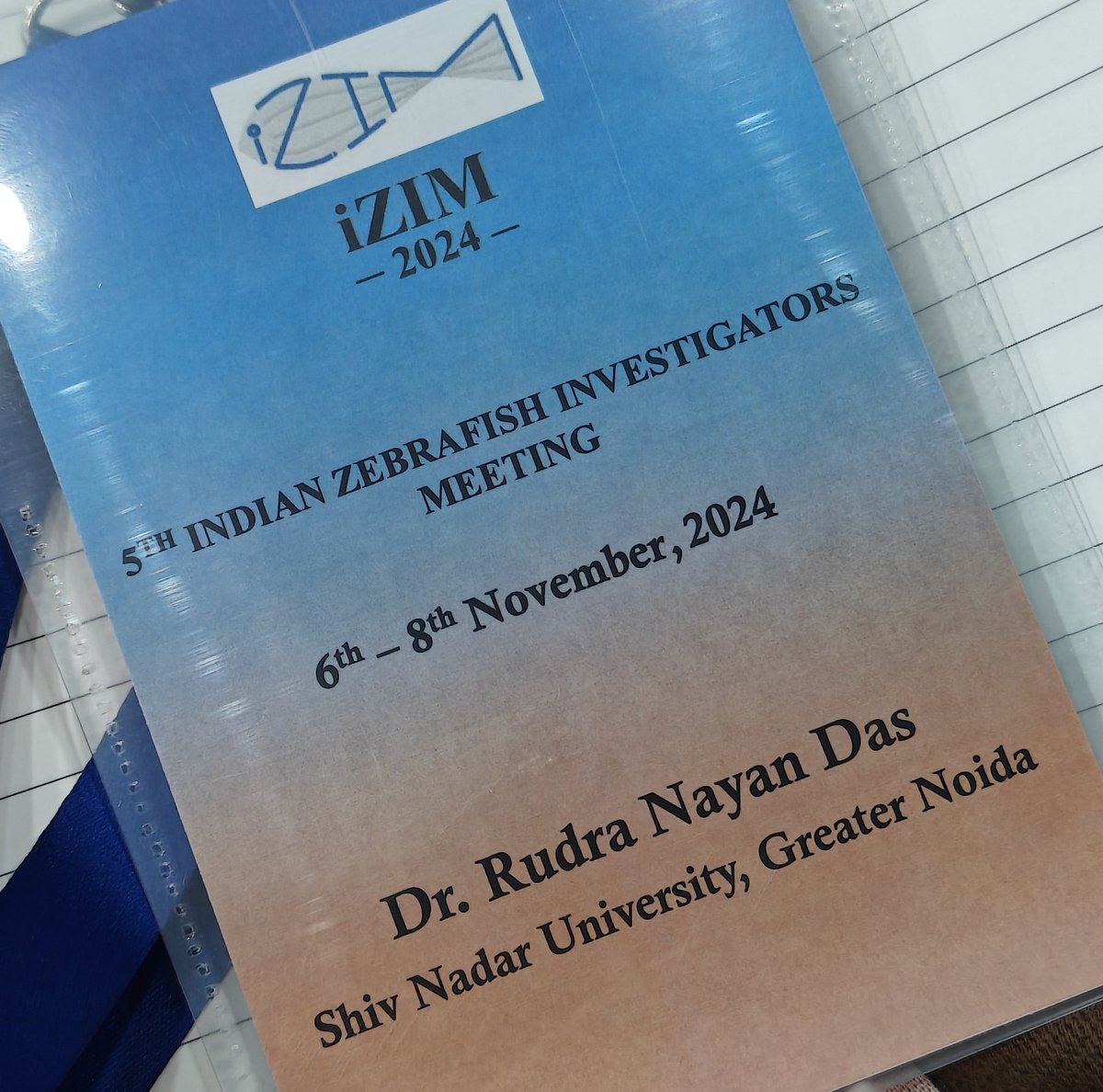
The Indian Zebrafish Investigators Meeting #iZIM has began now at ILS Bhubaneswar! Looking forward to 3 days of exciting science and knowing the Indian #Zebrafish community better. #iZIM2024
@ZebrafishRock
English
వాయుపుత్ర retweetledi

The 5th Indian Zebrafish Investigators Meeting is happening in Nov 2024!! Excited to attend my first #IZIM and give a talk. Hope to meet all the Indian zebrafish biologists here and exchange ideas. Do register 😊
ils.res.in/izim-2024/inde… #IZIM2024
@ccmb_csir @DBT_ILS @ari_pune

English
వాయుపుత్ర retweetledi
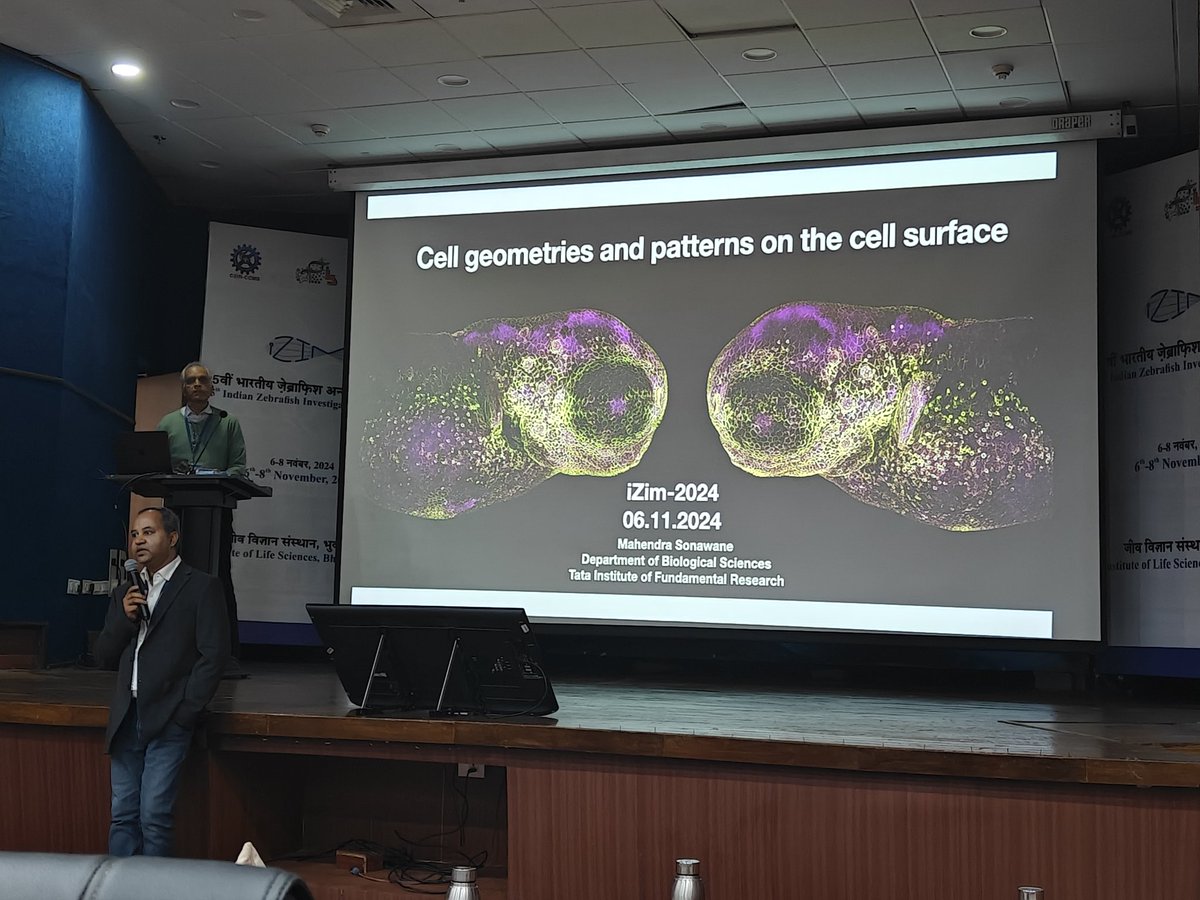
The day ends with a tour-de-force keynote talk from @Mahen_Son on epithelial cell stretching and microridges
#iZIM #iZIM2024 #Zebrafish
English


@anilkumarchalla/build-meaningful-connections-before-seeking-letters-of-recommendation-from-instructors-and-ca082641f767" target="_blank" rel="nofollow noopener">medium.com/@anilkumarchal…
ZXX
వాయుపుత్ర retweetledi

A few days back, our friend Pradip Krishen led us to an utterly splendid sight. About an hour’s drive from central Delhi, situated somewhere between Delhi, Gurgaon, and Faridabad, lies a 250-hectare forest known as Mangar Bani. This ancient forest draped on the crest of a hill is almost entirely populated by Dhau trees, distinguished by their small leaves and silvery trunks. It’s a species remarkably adapted to rocky land, particularly the quartzite stone of the northern Aravalli range.
What’s truly extraordinary, however, is that it’s likely that vast sections of the forest aren’t simply clusters of individual trees, but rather a single, interconnected organism. The Dhau trees here form a clonal colony—a forest of genetically identical trees, all interconnected through a single root system, sharing water, minerals, and nutrients in a subterranean project, for survival. Though there may be hundreds of trunks, they are, in fact, one entity, sharing the same vascular system beneath the surface.
This forest, sacred to the local Gujjar herdsmen (and now their descendants in three villages), has remained unchanged for as long as living memory serves. It’s believed to be watched over by the spirit of Gudariya Das Baba, a mystic whose temple stands amidst the foliage. The villagers, convinced of Baba’s enduring power, believe that to harm even a branch of a tree in the forest is to invite his wrath. The stories they tell are properly mythological: a house built with wood taken from the forest caught fire, animals brought to graze within its fold went mad etc. These legends, in their persistence, have done more to preserve the forest than any modern conservation effort ever could.
Standing there in the grove, I was drawn back to an account I’d once read of the battle of the Teutoburg Forest. 1/3

English
CS education in India needs academics with an implementation bent of mind.
People with just the right blend of academia and industry. Of theory and practice. And with an appreciation of both.
Right now, it's mostly people at either ends of the spectrum. With little to no appreciation of the other end.
And it is a much harder problem to solve than it sounds.
English