
Vera Ghali, MD

19.2K posts

Vera Ghali, MD banner
Vera Ghali, MD

Vera Ghali, MD

@veraghali

Medical Doctor 🩺 Pediatrics, Allergy, and Clinical Immunology.

A free mind and spirit Katılım Mayıs 2013
4.7K Takip Edilen5.6K Takipçiler
Vera Ghali, MD
Vera Ghali, MD@veraghali·
Pulmonary Aspergilloma (PA), caused by a fungus, mostly Aspergillus fumigatus, that is transmitted via spores. It usually invades a cavity previously formed by a pre-existing pulmonary disease, especially tuberculosis (TB). It is composed of a tangled mass of fungal hyphae, mucus fibrin, and cellular debris usually located in the upper lobe of the lungs, a specific prediliction for TB, where TB bacilli initially form granulomas surrounded by a "wall" of lymphocytes and macrophages in order to contain the infection, in immunocompetent patients as in simple PA where they remain localized without invading surrounding lung tissue and blood vessels. However, in severely immunocompromised patients with HIV/AIDS, in patients undergoing solid organ and stem cell transplantation, and patients on chemotherapy and bone marrow failure, what starts as a simple localized aspergilloma can invade the cavity wall and progress to Subacute Invasive Aspergillosis (SAIA), and further to Acute Invasive Pulmonary Aspergillosis (AIPA) that can be fatal. PA causes hemoptysis, chronic cough fever, dyspnea and chest pain. Dx. Localized aspergilloma doesn't cause an inflammatory syndrome, so WBCs aren't elevated; chest X-ray shows a mass that mimics the appearance of a tumor like a dense nodule surrounded by an "air-crescent" sign or appearance; CT-scan detecting a pseudo-tumor that shifts when the patient moves called the "Monod" sign and the adjacent pleura appearing fibrosed with a "ground-glass" halo surrounding the lesions. Confirm diagnosis with bronchoalveolar lavage (BAL), sputum culture of 3 separate samples with fungal hyphae seen on Koh mount and culture grows fungus; sputum bronchial fibroscopy, and serology of anti-Aspergillus antibodies. Ddx. Invasive Pulmonary Aspergillosis (IPA), sarcoidosis, histoplasmosis, coccidiomycosis, hydatid cyst, pneumocystosis in HIV/AIDS patients, lung abscess, and neoplastic tumor. Tx. Oral antifungals like itraconazole or voriconazole as first line of treatment and I.V. Amphotericin B, micofungin, caspofungin with close monitoring of renal toxicity. However, antifungals may be ineffective as the aspergillomas are resistant to medical treatments as they can't infiltrate the avascular fungal walls; Surgical resection: lobectomy or pneumonectomy, if resistant and in cases of complex aspergillosis. If the aspergilloma can't be resected, then drainage of the cavity followed by thoracoplasty to collapse the residual cavity; embolization of blood supply to the area to stop hemorrhage. Prognosis depends on coexisting morbidities like immunodeficiency, sarcoidosis, and HIV/AIDS.
English
0
1
3
596
Vera Ghali, MD
Vera Ghali, MD@veraghali·
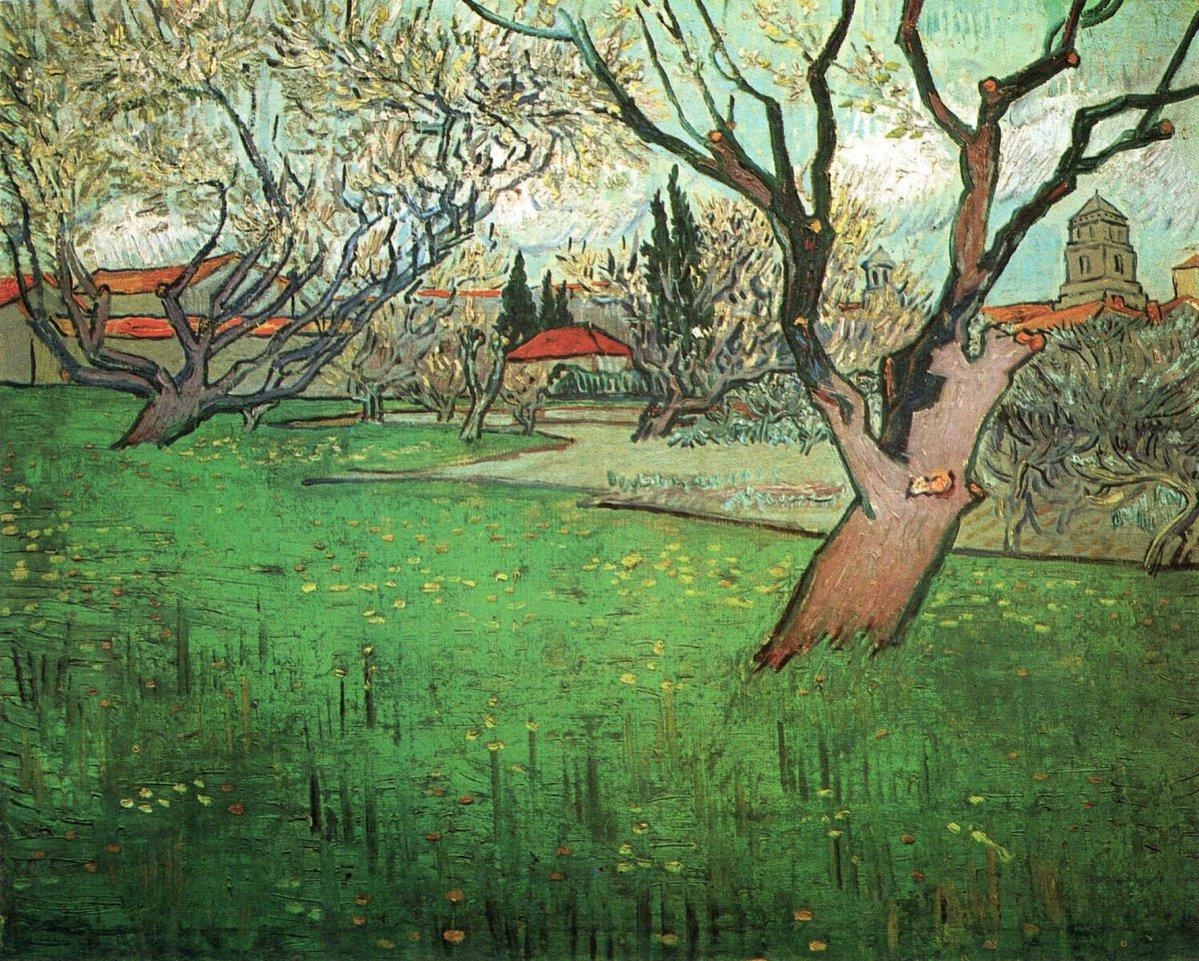
I wish you my friends a peaceful day ✨️ "Trees in Blossom and Arles" Vincent van Gogh
Vera Ghali, MD tweet media
English
0
0
3
37
Dr Ihab Suliman
Dr Ihab Suliman@IhabFathiSulima·
Very unique chest Xray. A 42 years old lady with Hemoptysis. What is the diagnosis?
Dr Ihab Suliman tweet media
English
17
13
99
17.9K
Vera Ghali, MD
Vera Ghali, MD@veraghali·
Genetic factors' influence on the viral load, their effect on the immune system's responses, and on the ability of infected and cancer cells to dodge an immune attack. The immune system controls the amount of viruses hiding in the body and the variations in immune responses among different individuals and over time. In consequence, a high Epstein-Barr viral load can become a causal risk factor for Hodgkin Lymphoma (HL) and Multiple Sclerosis (MS).
Broad Institute@broadinstitute

By analyzing DNA data from over 900,000 people, a new study found that some of the most common viruses hiding in the body vary with age, sex, and the seasons — and that genes influence the long-term effects these viruses have on our health. broad.io/virome-news

English
1
2
2
256
Vera Ghali, MD
Vera Ghali, MD@veraghali·
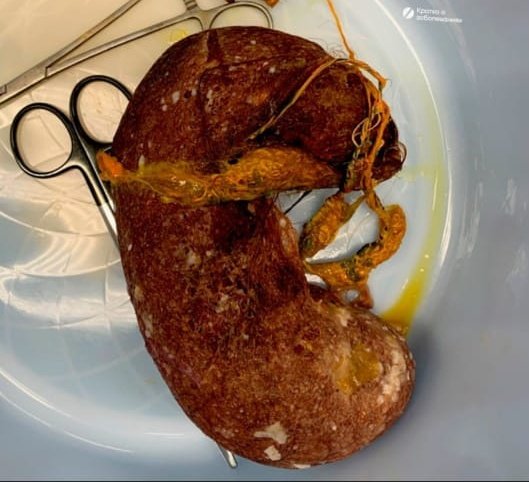
Post-operative specimen showing a Gastric Trichobezoar (GB) with a tail that extends from the stomach to the small intestine resulting in a Rapunzel Syndrome. GB presents as a solid mass of undigested ball of hair accumulating in the GI tract with hair strands trapped in stomach folds. It is associated with trichotillomania, (compulsive hair pulling) and trichophagia (compulsive hair eating). It affects adolescent females and women <30 years of age. As the mass grows in volume, it fills stomach space taking the form of the stomach and extends from the stomach to the small intestine affecting peristalsis and causing epigastric pain, nausea, halitosis, weight loss with patchy alopecia. Dx. CT- scan showing mottled appearance caused by trapped air bubbles and endoscopy. Tx. Surgery to remove the bezoar by laparotomy for large bezoars and laparoscopy for small or medium-sized ones and psychiatric follow-up to treat the underlying psychiatric conditions of trichotillomania and trichomania.
English
0
2
6
400
Vera Ghali, MD
Vera Ghali, MD@veraghali·
I wish you my friends a peaceful day 🌸 "Cherry Blossoms and Mount Fuji" Okada Koichi Masterpieces of Japan
Vera Ghali, MD tweet media
English
1
1
3
122
Vera Ghali, MD
Vera Ghali, MD@veraghali·
I wish you my friends a peaceful and happy day ✨️ "Circles" Wassiliy Kandinsky
Vera Ghali, MD tweet media
English
1
3
5
153
Dr Ihab Suliman
Dr Ihab Suliman@IhabFathiSulima·
Post Operative View. What is the cause of abdominal pain ⁉️
Dr Ihab Suliman tweet media
English
7
2
18
3.1K
Vera Ghali, MD
Vera Ghali, MD@veraghali·
The "poodle" sign 🐩: mesothelial cells forming complex arborizing clusters in pleural effusion cytology having the appearance of a "poodle" 🐩, a positive indicator of Mesothelioma, seen especially in patients with clear malignant criteria and with markers such as BAP1.
Natasha Rekhtman MD PhD@natasharekhtman

Hi #pathology friends! Pleural effusion. Do you see what I see? 🐩 When mesothelial cells form complex arborizing groups like this - it is a good clue to mesothelioma. So .. new diagnostic term: the “poodle sign”? #PathArt

English
0
1
3
194
Vera Ghali, MD
Vera Ghali, MD@veraghali·
The results of a study found that romiplastim, a thrombopoietin receptor agonist (TPO-RA) was a promising addition to immunosuppressive therapy (IST) (anti-thymocyte globulin [ATG] and cyclosporine), as a first line treatment for severe pediatric Aplastic Anemia (AA) at a starting dose of 10 mcg/kg/week titrated up to 20mcg/kg/week. It was found to be well tolerated and signifanctly improved hematologic outcomes while reducing transfusion dependence. AA is a severe hematologic disorder characterized by cytotoxic T-lymphocyte- mediated depletion of hematopoietic stem cells, as the bone marrow fails to produce enough new blood cell (RBCs, WBCs, and platelets), resulting in pancytopenia, leaving patients vulnerable to recurrent severe infections and risk of uncontrolled hemorrhage.
Haematologica@Haematologica

Romiplostim in pediatric aplastic anemia (AA) Can romiplostim be safe and effective in children with acquired AA who are naïve to immunosuppressive therapy? This study explores romiplostim’s role in early treatment. haematologica.org/article/view/1…

English
0
1
3
335
Vera Ghali, MD retweetledi
Vera Ghali, MD
Vera Ghali, MD@veraghali·
Shedding new lights on the role of the thymus in the development of the immune system, in supporting T-cell development, and in discriminating between self and foreign, non-self antigen proteins with production of dendritic cells. New landmark studies in regenerative experimental biology have shown the critical role of the thymus in maintaining adaptive immunity.
Eric Topol@EricTopol

The medical dogma has been that the adult thymus is involuted, fatty tissue, and not functional. Was that ever wrong! erictopol.substack.com/p/your-thymus-…

English
0
1
2
148