Sabitlenmiş Tweet
Hayley Gibbons
12.5K posts

Hayley Gibbons
@versemileage
Teacher. Homeschooler. Verse-smith. Proudly South African. Retweets don't = endorsement.
ZA Katılım Ocak 2020
978 Takip Edilen416 Takipçiler
Hayley Gibbons retweetledi

My magtig, mense, iets het skeefgeloop...
𝓵𝓸𝓷𝓮𝓻𖤐@wyd_loner
Charlize Theron says she prefers freedom over relationships, has had one-night stands, believes there’s nothing wrong with intimacy on the first date, and even recently hooked up with a 26-year-old at 50😳 “Who has time for all the effort that comes with dating? I have children to take care of.”
Nederlands
Hayley Gibbons retweetledi

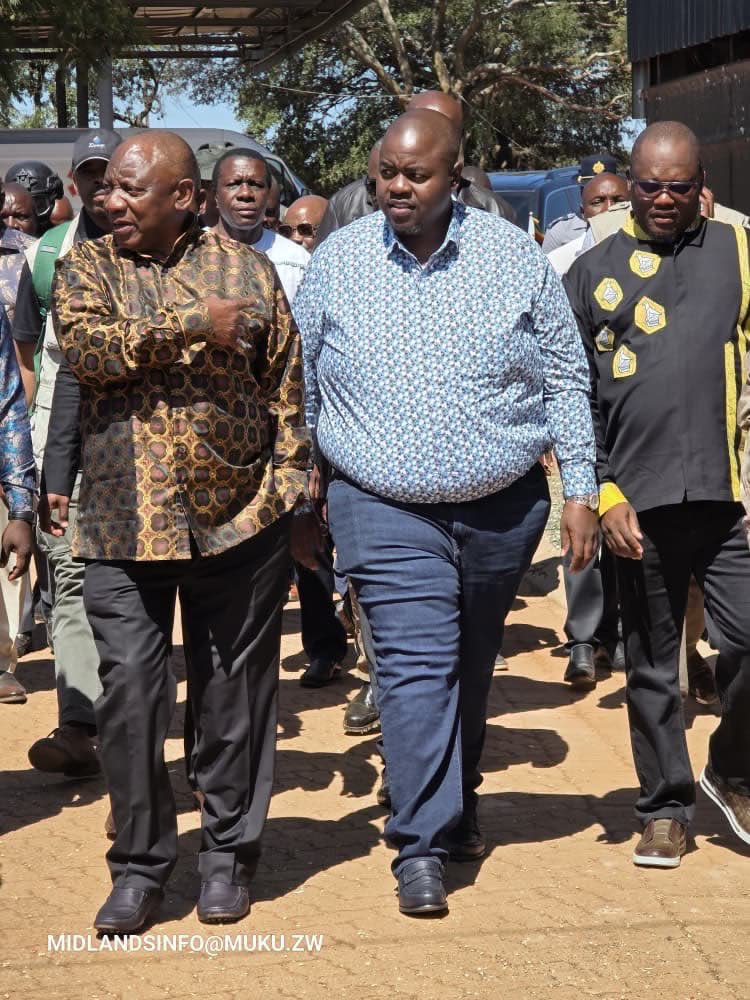
Today, President @CyrilRamaphosa visited Zimbabwe and was photographed with Wicknell Chivayo, a man currently under investigation by South Africa's own FIC for allegedly laundering over R800 million in Zimbabwean public funds.
South Africa's Financial Intelligence Centre found that over R1.1 billion from Zimbabwe's Ministry of Finance @ZimTreasury flowed into a South African printing company, with more than R800 million rapidly transferred into accounts belonging to Chivayo-linked companies.
The Hawks, SARS and SAPS are all involved. A South African High Court has already frozen Chivayo's bank accounts at FNB, Absa and Standard Bank and grounded his private jet in a case brought by his estranged wife Louise Sonja Madzikanda.
But it gets worse.
Wicknell's younger brother, Joachim 'G6' Chivayo, was arrested in November 2024 by the Hawks' Serious Organised Crime Unit in Brakpan for possession of six gold bars worth approximately R15 million. He was granted bail of R20,000 with strict conditions; he could not leave Gauteng or South Africa. He then failed to appear in court, and a warrant of arrest was issued against him on March 11, 2025.
He jumped the border and never came back.
Joachim Chivayo was subsequently appointed ZANU-PF's deputy secretary for information and publicity in Harare province in September 2025, a fugitive from South African justice, rewarded with a political position.
So here is the full picture: South Africa's FIC is actively investigating the elder Chivayo. South Africa's Hawks have an outstanding warrant for the younger Chivayo. A South African court has frozen the family's assets. And Ramaphosa flew to Zimbabwe and posed for photographs with the man at the centre of all of it.
What does this say about South Africa's rule of law?
When a sitting president shares a frame with someone his own country's financial intelligence unit is investigating for money laundering and whose fugitive brother is sheltered by the very government hosting that visit, the message sent to criminals everywhere is clear: connections trump consequences.
You genuinely cannot make this up. 🇿🇦🇿🇼 @Leon_Schreib @Sophie_Mokoena

English
"Permits and visas were allegedly sold for cash, with even citizenship reportedly up for negotiation.
The findings point to organised, sustained corruption stretching back nearly two decades."
Eyewitness News@ewnupdates
A damning interim report by the Special Investigating Unit (SIU) has exposed what investigators describe as a “marketplace” inside the Department of Home Affairs. ewn.co.za/2026/05/04/hom…
English
Hayley Gibbons retweetledi

You can't rely on the state for water and safety, let alone the arts. You can expect even less from Gayton McKenzie.
What's stopping BEE mining billionaires and Ebrahim Patel's black industrialists from stepping in to save the National Arts Festival?
Ta West@wfreemantle
I really hate how the National Arts Festival has just dwindled and waned over the years, due to neglect by the various Departments. Such a shame for the Arts of this country. It's supposed to be a National showpiece that attracts thousands!!!!
English
Hayley Gibbons retweetledi



Hayley Gibbons retweetledi
We DON'T CARE what the freakin' colour of cheese is. We don't want the additives!
English
Dear Woolies
Your periodic reminder that the day you add annatto to the last version of cheddar cheese you sell that still doesn't have it, is the day I never buy cheese from you again.
We have to do warnings now, because, you know, ProNutro.
Yours sincerely
@WOOLWORTHS_SA
English
Hayley Gibbons retweetledi
Instead of worrying that humanities degrees don’t prepare students for jobs in today’s world [product managers finance consultants startups], we should worry that we’ve created a world with such little value for literature, art, philosophy—anything that expresses the human soul
English
Yes. You won't fight for them without it.
Søren Kierkegaard Club@Kierkegaarddd
Is it moral to feel joy in a world where so many are denied it?
English


Hayley Gibbons retweetledi

Nigeria is working towards the permanent repatriation of its willing citizens from South Africa back to their home country.
tinyurl.com/bdcnka78

English
Hayley Gibbons retweetledi

reading this book as a kid genuinely changed my brain chemistry, i still believe this to this day

English
@ginnydmm @VenterNic Waiting for someone to be impressed. Yep, stealing that one.
English
From the “Alternative Afrikaner”
“The Boy Who Crossed His Arms Twice
Max du Preez has a new book. The cover tells you everything the pages won't.
There is a photograph doing the rounds. Max du Preez, seventy-four years old, arms folded, jaw set, staring at the camera with the expression of a man who has just been told the wine bar is out of Pinotage. Next to him, the cover of his eleventh book, The End of Normal, featuring a photograph of a small boy, also with his arms folded, also looking cross. The subtitle reads: "Witness to the Unravelling of White Power in South Africa."
Two versions of the same man, seventy years apart, doing the same thing. Arms folded. Waiting for someone to be impressed.
Let me describe the face in that photo properly because I have been staring at it for five minutes and I still cannot decide what it is. It is not anger. Anger has energy. It is not defiance. Defiance has a target. It is the expression of a man who has been standing at a book launch for forty minutes and nobody has brought the canapes. It is the face of a cat that was promised tuna and received biscuits. It is the face that says "I will be signing copies between two and four, and you will queue."
The subtitle is doing a lot of heavy lifting. "Witness to the Unravelling of White Power." Not participant. Not analyst. Witness. Max watched white power unravel. From a front-row seat. With a wine list. And he has written eleven books about what he saw while he was watching from the seat he was watching from. The man is not a journalist. He is a dashcam.
Now, about this book. The End of Normal examines, according to the marketing copy, "how otherwise decent people came to implement and support an evil system like apartheid." It is published in May 2026, timed precisely to the peak of the Afrikaner refugee programme controversy, by Jonathan Ball Publishers, which is owned by NB Publishers, which is part of Media24, which is owned by Naspers.
For those keeping score, Max du Preez left Naspers in 1983 because it supported apartheid. He then spent forty-three years building an independent brand. His independent publication died three times. And now his book about the dangers of conformity is published by the media conglomerate he left because of conformity. The circle of life, except the lion ate itself.
The book warns about the rise of "a new Afrikaner nationalism." This is Max's latest concern. Not the old Afrikaner nationalism, which he has been writing about since the Bee Gees were charting. A new one. Fresh nationalism. He does not define it in any available interview, but the word "nationalism" does useful work because it makes literary festival audiences in Franschhoek shift uncomfortably in their seats, and uncomfortable seats buy hardcovers.
Here is what I find extraordinary. Max du Preez ran an Afrikaans-language publication aimed at progressive Afrikaners. It launched in 2019. Could not hold subscribers. Was rescued in 2022 by Andre Pienaar, a billionaire whose venture capital firm lists a former CIA European chief, the former director of GCHQ, and the former chairman of the US Joint Chiefs of Staff as "strategic partners." The publication then died again in March 2025 because not enough Afrikaners would pay to read it.
The man whose Afrikaans audience could not fill a subscription list is now writing a book warning about the dangerous power of Afrikaner nationalism. If this nationalism is so powerful, you would think at least six hundred of them could have maintained a monthly direct debit.
But the book is not for them. The book is for Jonathan Ball's English-language catalogue. For literary festivals in Cape Town and London. For BBC producers who need a pull quote. For NPR's booking team. For the exact audience that has been buying the exact same product since 1988. Apartheid was bad. Max was brave. Afrikaners are concerning. Repeat until royalties.
English
Hayley Gibbons retweetledi

Banger
Wilfred Reilly@wil_da_beast630
Almost a year after release, this book is still top-10 in Historical Study. Check it out! Are the mainstream media and academic narratives surrounding slavery, white flight, Native American pacifism, hippies, the Red Square, and the benefits of the sexual revolution for women...at all real? Maybe not. amazon.com/Lies-My-Libera….
Indonesia
Hayley Gibbons retweetledi