Vesper

767 posts

Vesper banner
Vesper

Vesper

@vesper_369

Meditation, mitochondria, metaphysics, mathematics.

Katılım Haziran 2023
753 Takip Edilen69 Takipçiler
Vesper
Vesper@vesper_369·
@connorfowlerx It’s an insightful experiment with yourself to see what remains after chronic stress chemistry is finally under control
English
0
0
0
11
Connor
Connor@connorfowlerx·
@vesper_369 how did it help you? what noticeably changed
English
2
0
0
354
Vesper
Vesper@vesper_369·
@connorfowlerx Now: Crushed porn addiction with 1/100th the effort, healthy sex drive, desire to feel, connect, and climax instead of a obsessive urge to bust 4x, focused on the current moment much more often, relaxed and dgaf about others, just a healthy challenge towards my own axioms. 2/2
English
1
0
0
75
Vesper
Vesper@vesper_369·
@connorfowlerx Before: Struggled with controlling porn addiction, was ALWAYS trying to sex my gf, sleep sucked and was in 90-180 min chunks, ruminations, worrying, egotistical fixations on proving myself to others. 1/2
English
1
0
0
39
Jamal Dinkoui
Jamal Dinkoui@BerbarianWizard·
Cyproheptadine + AlloP/DHT/Andro : total control on Calm / Aggressive switch
Jamal Dinkoui tweet mediaJamal Dinkoui tweet media
English
4
1
61
8.6K
Jamal Dinkoui
Jamal Dinkoui@BerbarianWizard·
Whenever stress from life and responsibilities builds up, things start to spiral out of control. It reaches a point where my focus and sleep are seriously affected. Then I take 1 mg of cyproheptadine before bed, and everything falls back into place. The next day, my mind is clear again. I’m focused, calm, and confident. I can organize myself properly and finally deal with the tasks that were weighing on me. It’s like lowering serotonin and stress hormones allows my nervous system to reset, clarity replaces chaos.
Jamal Dinkoui tweet media
English
27
13
542
112.1K
Vesper retweetledi
William A. Wallace, Ph.D.
William A. Wallace, Ph.D.@drwilliamwallac·
Where vitamins and minerals are stored in the body Vitamins and minerals use different storage strategies. Some are stockpiled in organs and tissues, while others are used immediately and must be replenished often. Storage pattern explains why some deficiencies appear quickly and why a few nutrients can accumulate to toxic levels if overconsumed. 1️⃣ Water-soluble vitamins (B-complex, vitamin C) Mostly circulate in blood and are not stored in large amounts. Excess is lost in urine, so steady intake matters. Vitamin B12 is the notable exception and is stored in the liver for years. 🟢 Example: a few weeks with little vitamin C can cause fatigue and gum irritation, while low B12 may not show up for months because liver stores buffer intake. 🟢 Example: intense sweating or diuretics can raise B-vitamin needs since these dissolve and leave with fluids. 2️⃣ Fat-soluble vitamins (A, D, E, K) Absorbed with dietary fat and stored in liver, adipose tissue, and to a lesser extent skin. Deficiency develops slowly, and excess intake can accumulate. 🟢 Example: vitamin D stored in liver and fat can help maintain status through winter when sunlight is low. 🟢 Example: chronic high vitamin A intake from supplements can build up in the liver and cause headaches or skin peeling. 3️⃣ Major minerals (calcium, magnesium, phosphorus, potassium, sodium, chloride, sulfur) Stored mainly in bone, muscle, and extracellular fluids. They maintain structure and electrical balance. 🟢 Example: about 99 percent of calcium is stored in bone; low dietary calcium draws from bone reserves over time, weakening bone density. 🟢 Example: magnesium is stored in bone and muscle; heavy sweating or stress can deplete it and trigger muscle cramps or irregular heartbeat. 🟢 Example: sodium and chloride are held in extracellular fluids; high salt intake increases extracellular volume and can raise blood pressure in salt-sensitive people. 4️⃣ Trace minerals (iron, zinc, copper, selenium, iodine, manganese, chromium, molybdenum, fluoride) Required in small amounts with specific storage sites. 🟢 Example: iron is stored as ferritin in liver, spleen, and bone marrow; low ferritin reduces red blood cell production and causes fatigue. 🟢 Example: iodine concentrates in the thyroid gland to make thyroid hormones; low iodine intake slows metabolism and can enlarge the thyroid. 🟢 Example: zinc is distributed in skin, pancreas, and brain; low zinc impairs wound healing and blunts taste and smell. 5️⃣ Choline and other water-soluble nutrients Choline is stored in the liver and incorporated into phospholipids and acetylcholine. 🟢 Example: inadequate choline raises risk for fatty liver and can affect memory because the body cannot synthesize enough to cover needs in many people. Water-soluble vitamins are used quickly and need regular intake. Fat-soluble vitamins and many minerals can be stored for longer periods, which delays deficiency but increases the risk of buildup with excessive supplementation. The liver, bone, muscle, fat, and thyroid serve as the body’s nutrient vaults, releasing or storing what the brain and tissues need in real time.
William A. Wallace, Ph.D. tweet media
English
19
504
2.3K
105K
Vesper retweetledi
Clark Engelbert
Clark Engelbert@MetalsBrah·
This notion that aluminum binds more tightly to ATP than the essential mineral (magnesium) normally used to activate it seems a bit weird. How could the body make such a mistake to allow for a toxic metal with zero known function in any biological system on earth to bind to something as fundamental as ATP tighter than an essential element? Two things drive this seemingly odd fact of inorganic chemistry: 1. Charge Density 2. Ionic Mimicry’s Substrate Flexibility Charge density is, simply put, the amount of electric charge per unit of length, area or volume. Aluminum is a positively charged (Al+3) ion with a relatively low ionic radius of 54 picometers (this is lower than many essential elements). This higher charge and lower surface area means higher charge density than magnesium, in this example. Magensium is +2 and 72 picometers. With a higher charge density comes a stronger binding capacity to negatively charged molecules like ATP, which is as such because of its three phosphate groups. This is the first aspect of this seemingly contradictory aspect of bioinorganic chemistry. The second aspect of this equation is the substrate flexibility given to many metalloenzymes requiring enzyme activation. In a food-scare evolutionary environment which we evolved in, the body developed a trade off in which certain enzymes would allow for multiple minerals to activate it to protect against any single element deficiency. In this scenario, if one mineral was seriously lacking in one’s diet, another mineral could be used in its place to activate said enzyme. This is a defense mechanism evolved to ensure survival in a food scare environment. This is one of the most important mechanisms for survival we have as human beings. Where this starts to fall apart is when we introduced toxic metals from the earths crust where they laid inert for millennia (mostly) into the environment in which we live, breathe, eat and drink from. Because of this evolutionary adaptation to use multiple elements for enzyme activation, metals with similar physiochemical properties as minerals may then be utilized by the body on these same enzymes, where they destroy enzyme activity and efficacy and ultimately lead to disease. So, ionic mimicry’s substrate flexibility allows for this aluminum/magnesium substitution in the first place…..and charge density then pulls the trigger, causing aluminum to bind to ATP much more tightly than the essential element magnesium.
Clark Engelbert@MetalsBrah

Aluminum, as one example, binds to ATP 107 times more tightly than magnesium does, ruining ATP dependent reactions and tanking energy and glucose metabolism. PIC RELATED. But these fckin morons drone on over and over about CICO. Not good enough.


English
6
8
84
7.4K
Vesper retweetledi
Pyrucet Soldier
Pyrucet Soldier@pyrucet·
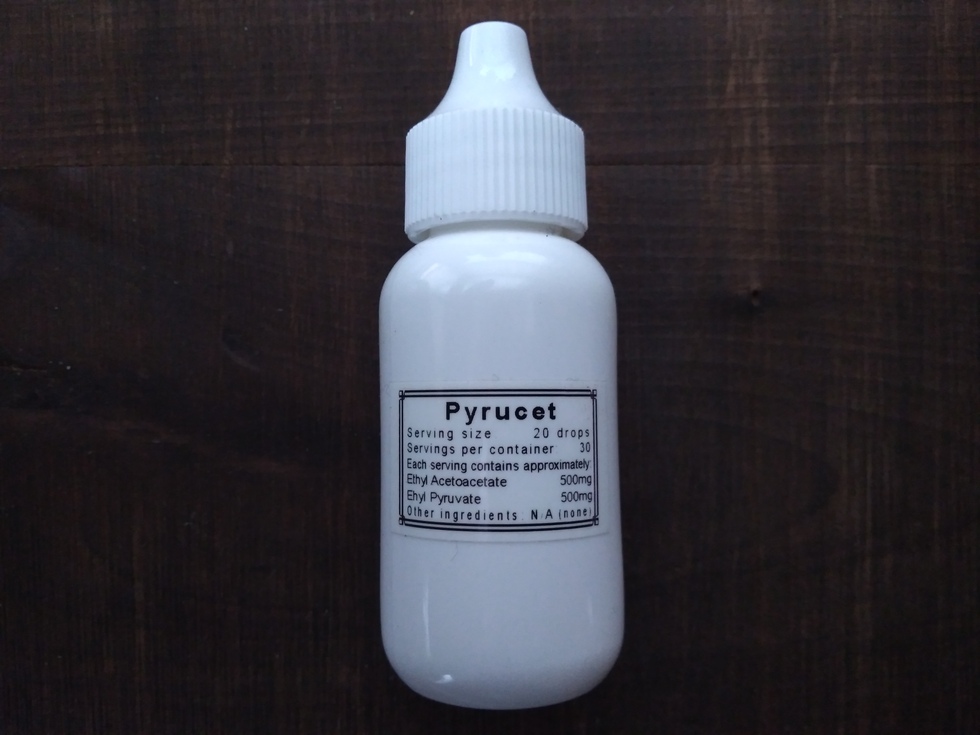
Thread explaining what Pyrucet is and how it works ⬇️
Pyrucet Soldier tweet media
English
14
13
349
28.8K
Vesper retweetledi
Solana Sensei
Solana Sensei@SolanaSensei·
No way this actually works wtf VPN set to 🇮🇳 = cheaper flights VPN set to 🇿🇦 = cheaper hotels VPN set to 🇲🇽 = cheaper Airbnbs VPN set to 🇧🇷 = cheaper car rentals Airlines: “Prices vary by region” Me: “Cool, so does my IP”
English
322
2.2K
45.2K
12.8M
Vesper retweetledi
Metabolic Uncle
Metabolic Uncle@MetabolicUncle·
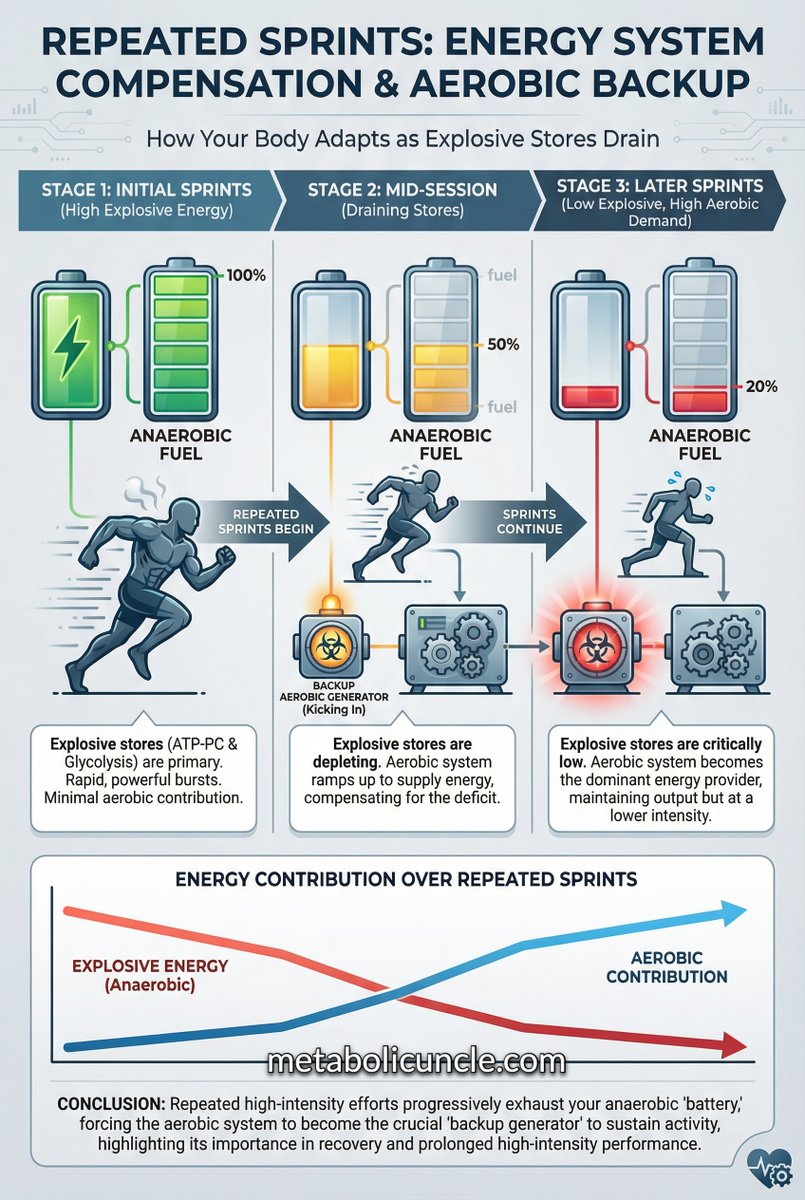
NO HIIT FOR ME ANYMORE I'm not doing high-intensity interval training anymore. Not the four-minute Norwegian method, not the classic HIIT protocols everyone talks about. I switched a while ago to repeated sprint training, and I'm not going back. Here's why. When you do traditional HIIT, you're under load for three to eight minutes at a time. Several times. Your body floods with cortisol and other stress hormones. Recovery takes longer. The metabolic cost adds up. Yes, it works for VO2 max gains, but the price is higher than most people realize. Repeated sprint training gives you the same gains without the metabolic beating. You sprint all-out for five to ten seconds. Then you rest. Not full recovery, just 30 to 60 seconds. Then you go again. Every minute, another sprint. Ten minutes total and you're done. The beauty is in what happens physiologically. Short sprints rely almost entirely on your phosphocreatine system. This is the fastest energy pathway your body has. When you jump, lift heavy, or explode into a sprint, phosphocreatine donates a phosphate group to ADP molecules, instantly regenerating ATP. No oxygen needed. No lactate buildup. Just pure, fast energy. But here's the trick. Your phosphocreatine stores deplete fast during that first sprint. Maybe 60 percent gone in ten seconds. Then you rest, but not enough to fully recover. After 30 or 60 seconds, your stores are still partially depleted. So when you sprint again, your body can't rely on phosphocreatine as much. It has to pull more energy from your aerobic system. Sprint after sprint, this pattern intensifies. Your phosphocreatine contribution drops. Your oxygen consumption rises. By the final sprints, you're hitting close to your VO2 max, even though each individual sprint is only five to ten seconds. You're training your aerobic system through repeated explosiveness. It doesn't matter that your sprints get slower. With this training method, the all-out effort is what counts! Research backs this up. A 2024 meta-analysis looked at 51 studies and over 1,200 athletes. They compared repeated sprint training, traditional HIIT, sprint interval training, and continuous endurance work. Repeated sprint training and HIIT tied for the biggest VO2 max improvements. Both showed large effect sizes, statistically significant and biologically meaningful, with RST having a slight edge in effectiveness. But repeated sprint training has even more advantages HIIT can't match. First, time efficiency. Ten minutes versus 30 or 40 for a full HIIT session. Second, metabolic stress. Short sprints don't flood your system with cortisol the way sustained high-intensity efforts do. Third, skill and power development. Every sprint trains explosiveness, speed, and total-body coordination. You're engaging every muscle fiber, not grinding through sustained discomfort. Fourth, repeated sprint training can actually increase your total daily energy expenditure. After a session, your metabolism stays elevated. Two or three sessions per week and you're always burning more calories at rest, not fewer. Traditional HIIT can suppress metabolism if you overdo it. Repeated sprints avoid that trap. The mechanism makes sense when you think about muscle fiber recruitment. Short, maximal efforts activate fast-twitch fibers. These fibers have huge growth potential and high metabolic demand. You're training power and endurance simultaneously. Over time, your body adapts. Phosphocreatine stores regenerate faster. Your aerobic system gets better at supporting repeated efforts. Your nervous system learns to recruit fibers more efficiently. If you're already fit, you can use a cluster approach. Do four to six sprints every minute on the minute. Then rest two to four minutes. Repeat the cluster two or three times. This lets you maintain higher power outputs across the session while still accumulating the aerobic stimulus. The key is insufficient recovery between sprints. If you rest too long, your phosphocreatine stores fully recover and you're just doing power training. Useful, but not the same stimulus. The magic happens when you force your aerobic system to step in because your anaerobic system can't keep up. I'm not saying abandon endurance training entirely if you like it. Long, slow Zone 2 cardio is ineffective for VO2max, but it builds capillary density around muscle cells, improving oxygen delivery, which will level up the effect of your RST. That matters for long-term aerobic development. But for time-efficient VO2 max gains with minimal metabolic downside, repeated sprint training alone wins. Ten minutes. Full-body engagement. Speed, power, and aerobic capacity in one package. No cortisol overload. No metabolic suppression. Just clean, effective training that makes you faster, stronger, and fitter without the recovery cost of traditional intervals. That's why this is my preferred method now. I get the same gains in less time with fewer downsides. For anyone serious about improving VO2 max without accumulating unnecessary stress, repeated sprint training deserves serious consideration.
Metabolic Uncle tweet media
English
80
248
1.9K
147.1K
Vesper retweetledi
Abdul Șhakoor
Abdul Șhakoor@abxxai·
1. Copy + paste these search filters These expose hidden space-killers: •filename:pdf larger:10mb •older_than:1y has:attachment •filename:mp4 •filename:zip •filename:docx Select → “Select all conversations” → Delete. You’ll be shocked by what shows up.
English
17
94
1.1K
298.2K
Vesper retweetledi
Sama Hoole
Sama Hoole@SamaHoole·
The fewer carbs you eat, the less Vitamin C you need. The less seed oil you eat, the less Vitamin E you need. The less Omega 6 you eat, the less Omega 3 you need. The less sugar you eat, the less magnesium you need. The fewer vegetables you eat, the less sodium you need. The fewer phytates and oxalates you eat, the less calcium you need. Carnivore isn't deficient. It's efficient.
English
50
341
2.4K
67.2K
Vesper retweetledi
Meredith Arthur
Meredith Arthur@MeredithWTS·
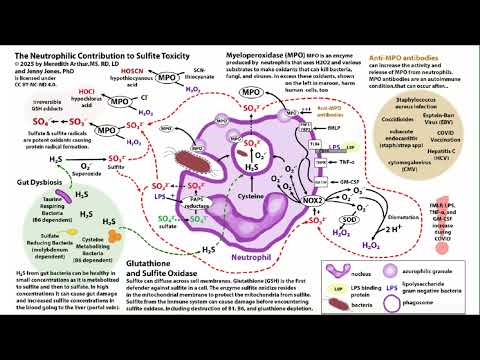
Sulfur intolerance feels like toxicity. Is this from sulfite oxidase/MoCo deficiency, from an excessive neutrophil response, or H2S-producing bacteria in the gut fueling neutrophil production of sulfite, or all of these? Do we take high-dose molybdenum? 🤔youtu.be/gve_oNlF87s
YouTube video
YouTube
English
0
2
6
721
Vesper retweetledi
CO2 + T3 + B1
CO2 + T3 + B1@spheno_xiphoid·
The idea of infoceuticals becomes less far-fetched when you understand that living organisms already use light and electromagnetism to order themselves. Extending this idea to seemingly physical molecules is not far off. Link to article in bio :)
CO2 + T3 + B1 tweet media
English
1
3
37
2.3K
Vesper retweetledi
ₕₐₘₚₜₒₙ
ₕₐₘₚₜₒₙ@hamptonism·
Free 600 Page Game Theory Book:
ₕₐₘₚₜₒₙ tweet media
English
7
113
1.2K
49.1K
@simpleorganix
@simpleorganix@simpleorganix·
When you’re eating… DON’T FKN TALK. (I’m not talking about food)
English
2
0
26
1.2K
🌞HELIOS🌞
🌞HELIOS🌞@helios_brah·
For any significant vitD you actually do want a bikini 😂 fyi David here just works on his computer in swim trunks outside in december and says hes actually getting more tanned in winter than in summer this way x.com/i/status/19991… Hes making use of the UV light scattering off the atmosphere and snow on goosebumped skin (=more light delivery per square inch) Thats IN ADDITION to the biophoton release on the inside from cold thermogenesis
David Herrera@DavidHerr05

@DrJackKruse 35° outside but it's sunny so I'm getting sun and cold exposure today all day long

English
8
6
41
3.7K
🌞HELIOS🌞
🌞HELIOS🌞@helios_brah·
Hey @grok put her in a thinner jacket To further stimulate mitochondrial cold thermogenesis by uncoupling energy production from ATP synthesis and dissipate the proton gradient as heat 👍
🦌🌲@kikimancy

Day 4 of my 30 day walking for cold exposure to stimulate my mitochondria to generate their own inner light and vitamin D challenge complete 🦌🎄❄️ You can just wear vintage furs to do mundane things and spread immaculate vibes everywhere you go 🤍
English
1
1
30
6.6K