vfxpro88.Ξth

7K posts

vfxpro88.Ξth banner
vfxpro88.Ξth

vfxpro88.Ξth

@vfxpro88

AI x (Crypto + Meme) maximist

Katılım Temmuz 2015
7.5K Takip Edilen1.1K Takipçiler
vfxpro88.Ξth retweetledi

Runway
Runway@runwayml·
A breakthrough in real-time video generation. As a research preview developed with @NVIDIA and shared at @NVIDIAGTC this week, we trained a new real-time video model running on Vera Rubin. HD videos generate instantly, with time-to-first-frame under 100ms. Unlocking an entirely new creative paradigm and bolstering the foundations of our General World Model, GWM-1. Real-time generation opens a fundamentally different design space for video models and world simulation. We're investing in co-designing our models alongside advances in hardware to keep pushing this frontier.
English
207
490
3.9K
1.1M
vfxpro88.Ξth retweetledi
Jupiter
Jupiter@JupiterExchange·
Pre-IPO trading is now on Jupiter. Limit Orders are live on @PreStocks, giving you more control over how and when you enter and exit your trades. jup.ag/prestocks
English
98
122
841
107.2K
vfxpro88.Ξth retweetledi
MiniMax (official)
MiniMax (official)@MiniMax_AI·
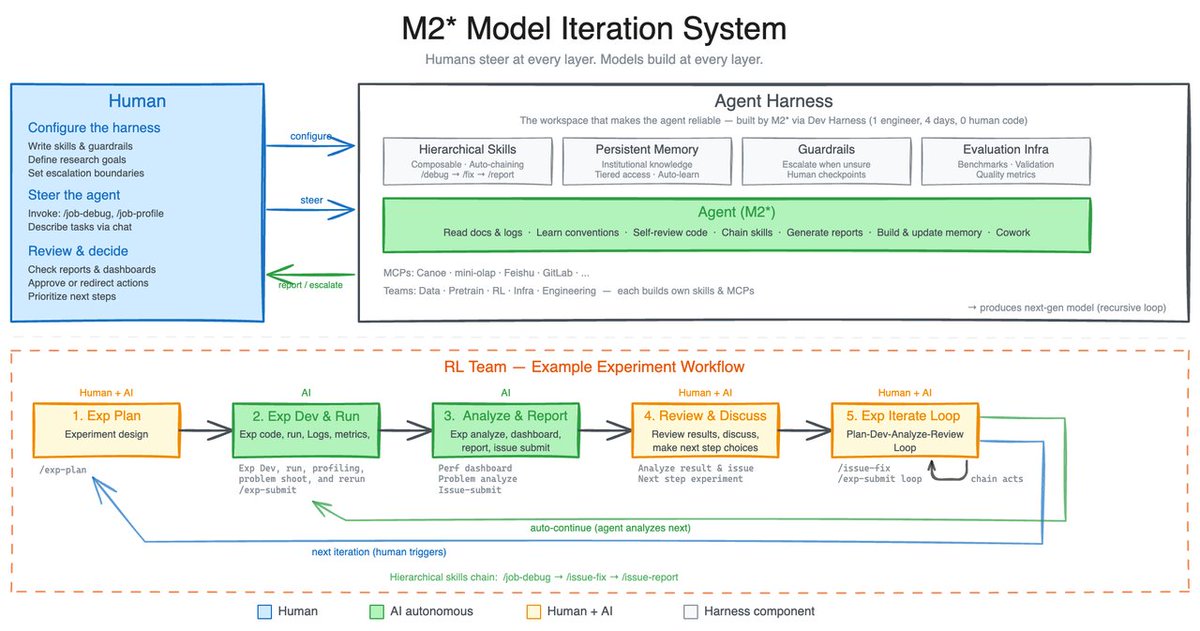
During the iteration process, we also realized that the model's ability to recursively evolve its harness is equally critical. Our internal harness autonomously collects feedback, builds evaluation sets for internal tasks, and based on this continuously iterates on its own architecture, skills/MCP implementation, and memory mechanisms to complete tasks better and more efficiently.
MiniMax (official) tweet media
English
14
58
713
142.8K
vfxpro88.Ξth retweetledi
Derya Unutmaz, MD
Derya Unutmaz, MD@DeryaTR_·
In my new quest to train as a plumber-one of the most coveted jobs now, I' m creating plumbing videos & lessons using @NotebookLM. Here is an amazing short video! Turns out to be more interesting than I thought! Thanks to @GeminiApp, we are making plumbing great again (MPGA)!😅
English
101
284
3.6K
316.9K
David McKenzie
David McKenzie@mckenzielaw·
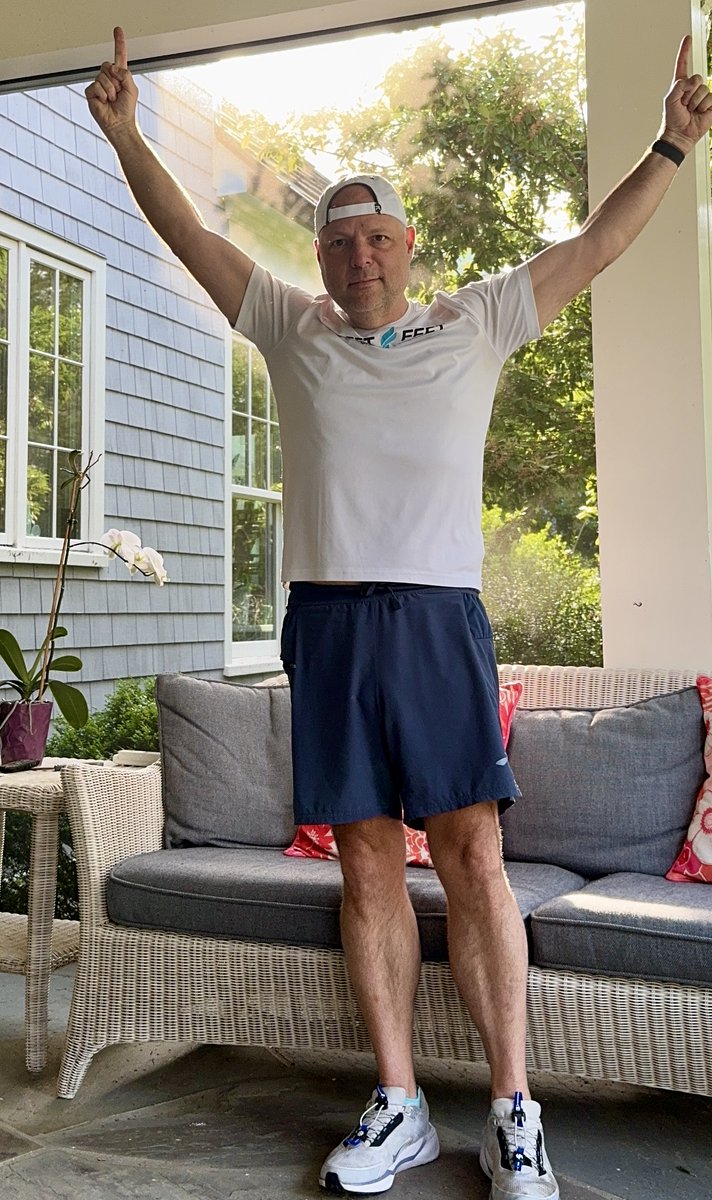
I am 51 years old, and this morning I woke up with my bladder. In the clinical vernacular of high-grade urothelial carcinoma, that qualifies as a small miracle of modern immunotherapy. I am now six consecutive cystoscopies clear — cancer-free by every measure available to modern urology — thanks to a drug called #Anktiva, an IL-15 superagonist that, when combined with BCG, activates the body's own natural killer cells (NK) to hunt residual disease. It is, in the estimation of the physicians who administer it, a genuine paradigm shift in bladder preservation. It is also, in the estimation of the bureaucracies that control access to it, an inconvenient line item. Just yesterday, March 9, 2026, @ImmunityBio officially resubmitted its supplemental biologics license application to the FDA seeking approval of Anktiva for papillary-only NMIBC— the precise indication that describes my disease. The FDA acknowledged receipt. No new clinical trials were requested because, from my unscientific mind, none were needed: the QUILT-3.032 data have been shouting for two years. The three-year numbers show 96% disease-specific survival and an astonishing bladder-preservation rate for patients like me. The question that should haunt every policymaker in Washington is elemental: How many bladders were unnecessarily removed in the 24x months it took for the paperwork to catch up with the science? A brief autobiography of absurdity. In April 2024, I sat in a urologist's office in Raleigh, North Carolina, learning that a recurrent tumor had appeared near my bladder neck. I was 49 (!). BCG — the only FDA-approved intravesical immunotherapy for 4x decades — had seemingly failed me. My urologist did not reach for the cystectomy playbook; no, he's a careful clinician who exhausts every bladder-sparing option before surrendering an organ. But we both understood the arithmetic. High-grade recurrence after BCG narrows the corridor. Each failed therapy nudges you closer to the end of the algorithm, where a surgeon removes your bladder, your prostate, and your surrounding lymph nodes, harvests a segment of your small intestine, and constructs a urinary diversion. Not fun to this David. The clinical euphemism for the aftermath is "altered quality of life." The honest term is grimmer (you pick that term). And here is what the euphemism obscures: a radical cystectomy is not even a cure. It is a trade. Urothelial carcinoma can recur in the upper tracts, the urethra, or at distant sites. The surgery itself carries a complication rate that would make a malpractice actuary reach for a stiff drink — bowel obstruction, chronic metabolic acidosis, recurrent urinary infections, sexual dysfunction, stomal complications. You surrender the organ and still live under the piano. The insurer, in other words, is not purchasing a definitive solution with a cystectomy. It is purchasing a more expensive, more morbid uncertainty. Five days after my recurrence surgery, by sheer providence, I learned at a Bladder Cancer Advocacy Network walk in Chapel Hill that the FDA had approved a drug called Anktiva — just five days earlier. A nurse practitioner pointed me toward the ImmunityBio booth. I waited for the company's representatives to return from the walk (I had run it), took their cards, and connected them with my urologist that same week. The timing was cinematic. The bureaucratic odyssey that followed was Kafka. Anktiva had been approved for NMIBC with carcinoma in situ. My disease was papillary without CIS. Same organ, same lethality, same drug, same mechanism of action — but a different billing code. And in American medicine, the billing code is sovereign. What ensued was two months of insurance denials, appeals, prior authorizations, secondary denials, secondary appeals, and the occasional Orwellian phone call in which a claims adjuster with no medical training explained to my board-certified urologist why the drug he prescribed was not "medically necessary." My nurse and I wept on the phone when the first approval came through. Then it was rescinded. Then approved again. Then denied again. That the drug eventually reached my bladder is a testament to individual heroism within an institutional wasteland. My urologist refused to accept no for an answer and waged a months-long campaign against an insurance apparatus designed to outlast precisely that kind of physician. A hospital administrator at WakeMed stuck his neck out to find a pathway through his own institution's reimbursement labyrinth when others might have shrugged and deferred. The drug company's field representatives (Erin, prayers up 🙏, and thank you) moved with an urgency that matched the clinical stakes. And I, for my part, brought twenty-two years of litigation instincts to a process that rewards exactly that disposition and punishes everyone who lacks it. These are the people who took risks. My urologist took clinical risk. The administrator took institutional risk. ImmunityBio took the scientific and financial risk of developing a novel immunotherapy. I took the existential risk of being a guinea pig. The system rewarded none of us. It rewarded the toll collectors. There are three absurdities that define the Bladder Preservation Tax, and they are worth naming precisely. The first is architectural. My urologist — the physician who scoped my bladder, resected my tumors, prescribed the drug, and monitors me quarterly — could not administer Anktiva in his own office. Not because he lacked clinical competence. The procedure is identical to a standard BCG instillation: you mix the drug in, catheterize the patient, wait two hours, and drain. A nurse practitioner could supervise it. But under the "Buy and Bill" reimbursement regime, a private urology practice cannot absorb the financial risk of a $36,000 retrospective denial triggered by an insurer's retroactive coverage determination. Only the hospital's oncology department — bolstered by 340B drug pricing discounts and a battalion of billing specialists — could afford to play the game. I've been physically relocated one floor down, from urology to oncology, not for any medical reason but to satisfy a ledger. My urologist became a referring physician for his own treatment plan. If this drug is not moved into the urological setting — into the offices of the physicians who actually treat bladder cancer — the vast majority of eligible patients will simply never receive it. The oncologists were there to catch the ball, and I am grateful they did. But the ball should never have been thrown. The second is regulatory. The FDA approved Anktiva for CIS on the strength of a 71% complete response rate — a figure that crushed the agency's own 30% efficacy benchmark. For papillary disease without CIS, the QUILT-3.032 trial showed a 54% improvement in BCG efficacy, 96% disease-specific survival at three years, and an 80% bladder-preservation rate — the highest in any published series for this population. And yet the FDA issued a Refusal to File letter in May 2025, then spent ten months in procedural back-and-forth before acknowledging the resubmission yesterday. I do not doubt the agency's scientific rigor. I question its sense of proportion. When the data show that four out of five patients in a study cohort preserved their bladders over three years, the regulatory question is no longer whether the drug works. It is whether the agency can process its own answer fast enough to matter. The third is economic. Blue Cross Blue Shield of North Carolina was prepared to pre-authorize a radical cystectomy — a six-figure hospitalization with a high complication rate and a lifetime of follow-up costs — while simultaneously denying coverage for a $36,000 outpatient immunotherapy that might render the surgery unnecessary. Let that settle. Read that once more. The insurer preferred the more expensive, more dangerous, less efficacious option because the immunotherapy didn't fit neatly into an existing reimbursement code. This really pisses me off. The cystectomy generates facility fees, billable complications, durable medical equipment revenue, and downstream specialist referrals for years. The immunotherapy generates a coverage headache. One need not be a health economist to identify which outcome the system is optimized to produce. Because I fought this battle — loudly, exhaustingly, and with a lawyer's instinct for leverage — our local oncology center at WakeMed in Raleigh is now treating seven additional patients who might otherwise have faced more drastic interventions. Seven bladders preserved because one patient happened to have the resources, the temperament, and the professional training to survive the bureaucracy. That's not a healthcare system. That is a proof of concept for its failure. The rent-seekers — and I use that term with its full Ricardian weight — are not the scientists who developed this drug or the surgeons who administer it. They are the intermediaries who profit from complexity: insurers who have industrialized denial, hospital systems that have mastered 340B arbitrage, and a regulatory apparatus that cannot distinguish between protecting patients and protecting the administrative status quo. They take no clinical risk. They accept no physical consequence. They produce no innovation. They collect a toll. I have my bladder. I have my health. I have six clear cystoscopies and a gratitude that borders on the theological. But I am a fifty-one-year-old attorney with a combative disposition, a patient girlfriend, and enough disposable rage to treat the insurance appeals process as a second litigation practice. Most bladder cancer patients do not have those luxuries. Most comply with the denial letter. Most lose the organ. --- *David L. McKenzie is an attorney in Raleigh, North Carolina, specializing in intellectual property and First Amendment law. He is a bladder cancer patient advocate and has been in sustained remission from high-grade non-muscle invasive bladder cancer since April 2024.
David McKenzie tweet media
English
108
185
1.2K
60.2K
vfxpro88.Ξth retweetledi
Jupiter
Jupiter@JupiterExchange·
Pay like a local with Jupiter Global. An onchain QR payment system, built directly into @JupGlobal. Pay merchants with QR or send money to friends instantly, powered by hyper-local rails that connect directly into your country’s QR network. - Low Fees. No exceptions. - Quick P2P and merchant payments - Native integration with local QR systems This is the gateway to onchain finance for billions, especially in regions where QR payments power everyday life. Just use Jupiter (Global).
English
62
54
375
37.7K
vfxpro88.Ξth retweetledi
𝚉𝚊𝚎𝚜𝚊𝚛
𝚉𝚊𝚎𝚜𝚊𝚛@zaesarius·
Peking University releases Helios real time long video generation model. Researchers from Peking University and ByteDance released Helios, a 14B parameter model generating minute scale videos at 19.5 FPS on single NVIDIA H100 GPU. The autoregressive diffusion model produces up to 1449 frames (60 seconds at 24 FPS) without commonly used anti-drifting strategies. No self-forcing, error-banks, or keyframe sampling required. Achieves real-time generation without KV-cache, sparse attention, linear attention, or quantization techniques. Supports three generation modes: text to video, image to video, and video to video. Unified input representation handles all tasks natively within single architecture. Technical innovations address drifting through training strategies that explicitly simulate drifting during training while eliminating repetitive motion at source. Heavy compression of historical and noisy context reduces sampling steps to computational costs comparable to or lower than 1.3B models. Infrastructure optimizations accelerate both inference and training while reducing memory consumption. System fits up to four 14B models within 80GB GPU memory using image diffusion scale batch sizes. Three model variants released: Helios-Base for best quality, Helios-Mid as intermediate checkpoint, Helios-Distilled for best efficiency with 2-step generation. Apache 2.0 license permits commercial use without restrictions. Code, training scripts, and all model weights available on GitHub and HuggingFace. More info. Link in comments.
English
1
1
2
200
vfxpro88.Ξth retweetledi
Jupiter
Jupiter@JupiterExchange·
Introducing Jupiter Card: a fully integrated onchain card inside Jupiter Mobile. Built natively into Jupiter Mobile, use your wallet balance for spending: ✅Spend wherever Visa is accepted ✅Visa Infinite and Platinum virtual cards ✅1-1.8% FX on Card Spend ✅Funded by USDC, designed for smooth settlement. A fully integrated onchain card for everyday finance. Just use Jupiter (Card). @JupGlobal
English
111
109
771
60.2K
vfxpro88.Ξth
vfxpro88.Ξth@vfxpro88·
100% agree on bitcoin is the most honest 100% disagree on "nothing lese", many crypto VC funds are in the "marked down to zero in record time" category BTW, great article, love this poetic quote: "This is liquidity transformation as it has always existed in finance, stripped of its pretense. Through instruments they did not choose, at prices they cannot see, bearing risks they have not been asked to underwrite. The lockup ensures they cannot exit. The absence of public marks ensures they cannot protest. And the quarterly smoothing of valuations ensures that by the time the bill arrives, the chain of accountability will be long enough that no single actor can be made to answer for it. It does not present itself as theft; it presents itself as yield, and the two are indistinguishable until they aren't."
English
0
0
0
41
Jeff Park
Jeff Park@dgt10011·
Private credit is “uncorrelated” to your other assets because nothing else can be marked at 100 for three months and the next morning is a zero At least Bitcoin is “uncorrelated” in an honest way
English
15
16
239
12.2K
vfxpro88.Ξth
vfxpro88.Ξth@vfxpro88·
@_VVSVS Great article! Was thinking about many of the same issues in your article, thanks for the clarity!
English
0
0
1
26
vfxpro88.Ξth retweetledi
Perplexity
Perplexity@perplexity_ai·
Introducing Perplexity Computer. Computer unifies every current AI capability into one system. It can research, design, code, deploy, and manage any project end-to-end.
English
1.7K
5.4K
47.3K
37.9M
vfxpro88.Ξth retweetledi
The Dor Brothers
The Dor Brothers@thedorbrothers·
We made a $300,000,000 movie starring @LoganPaul with AI in less than 7 days. Yes, this is 100% AI.
English
2.7K
1.3K
9.8K
5.4M