wetracked.io

1.1K posts

wetracked.io banner
wetracked.io

wetracked.io

@wetracked

The #1 Highest Rated Ad Tracking Software for Ecommerce. Raise your ROAS by 50% in just a matter of 1 week. No-code. No extra dashboards. Just real results.

Katılım Ocak 2023
1.1K Takip Edilen1.2K Takipçiler
wetracked.io
wetracked.io@wetracked·
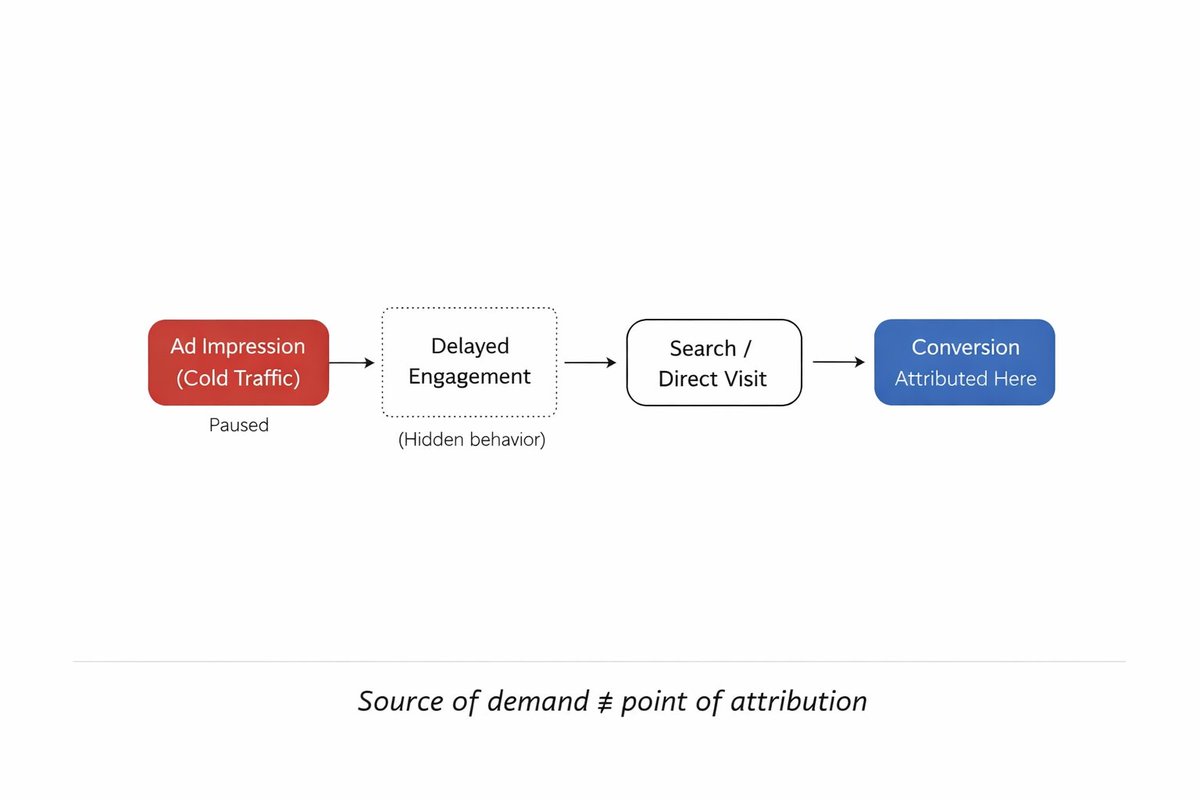
You killed the wrong ad. It looked like a loser. The CPA was climbing, the ROAS was slipping, and the platform kept shifting budget away from it. So you did what any smart marketer would do. You paused it, archived it, moved on. Except that ad was doing the hard work your dashboard couldn't see. It was bringing in cold traffic, starting conversations, planting seeds that converted three weeks later through a different campaign that got all the credit. This happens more often than anyone admits. The ads that look inefficient are often the ones driving the top of the funnel. They don't get the conversion credit because the customer journey is messier than any attribution model wants to acknowledge. Someone sees your ad, doesn't click, comes back through Google, and your search campaign gets the win. The ad that actually created the demand gets killed for underperforming. And once it's gone, you can't get the data back. You can't rerun the test with accurate tracking. You just move forward with a little less confidence in your own judgment, wondering why scaling feels harder than it used to. wetracked.io exists because the best ads often look like the worst ones when you're measuring the wrong thing. You can't scale what you already buried.
wetracked.io tweet media
English
0
10
11
958
wetracked.io
wetracked.io@wetracked·
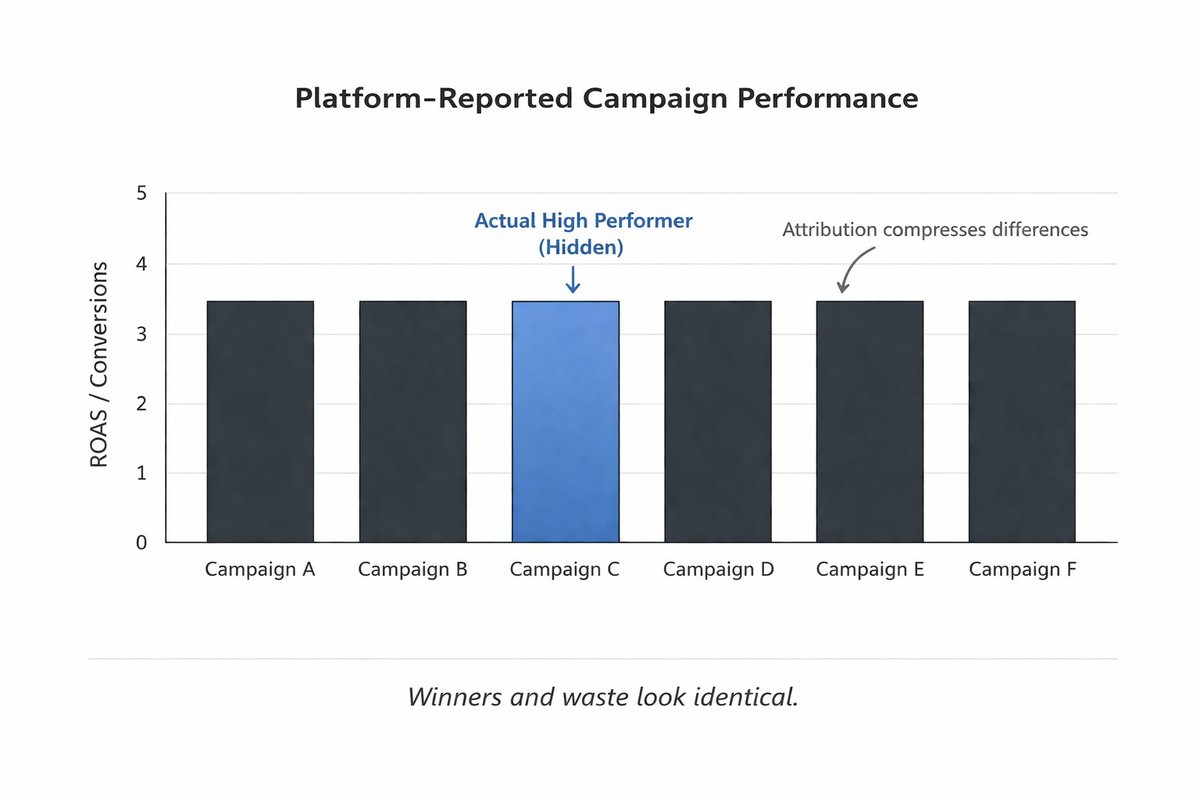
Only 6% of your ads drive value. That's not my number. That's what the industry admitted at Cannes in 2024. Ninety-four percent of advertising spend does nothing measurable. The problem is nobody can tell you which 6% is actually working. Your dashboard shows every campaign contributing something. Your attribution spreads credit around like participation trophies. Meanwhile the real performers are buried in the same reports as the waste. Think about what that means for your budget decisions. You're cutting and scaling based on data that treats winners and losers almost identically. That campaign you paused last month might've been in the 6%. That one you doubled down on might be pure waste. You'll never know because your measurement system isn't built to separate signal from noise at that level of precision. This is why gut instinct is making a comeback in media buying. Not because marketers got dumber but because the data stopped being trustworthy. wetracked.io exists to fix that gap. It doesn't promise to make every ad work. It shows you which ones actually do so you can stop funding the 94% and start doubling down on what's real. You can't find the 6% if everything looks the same.
wetracked.io tweet media
English
0
4
6
767
wetracked.io
wetracked.io@wetracked·
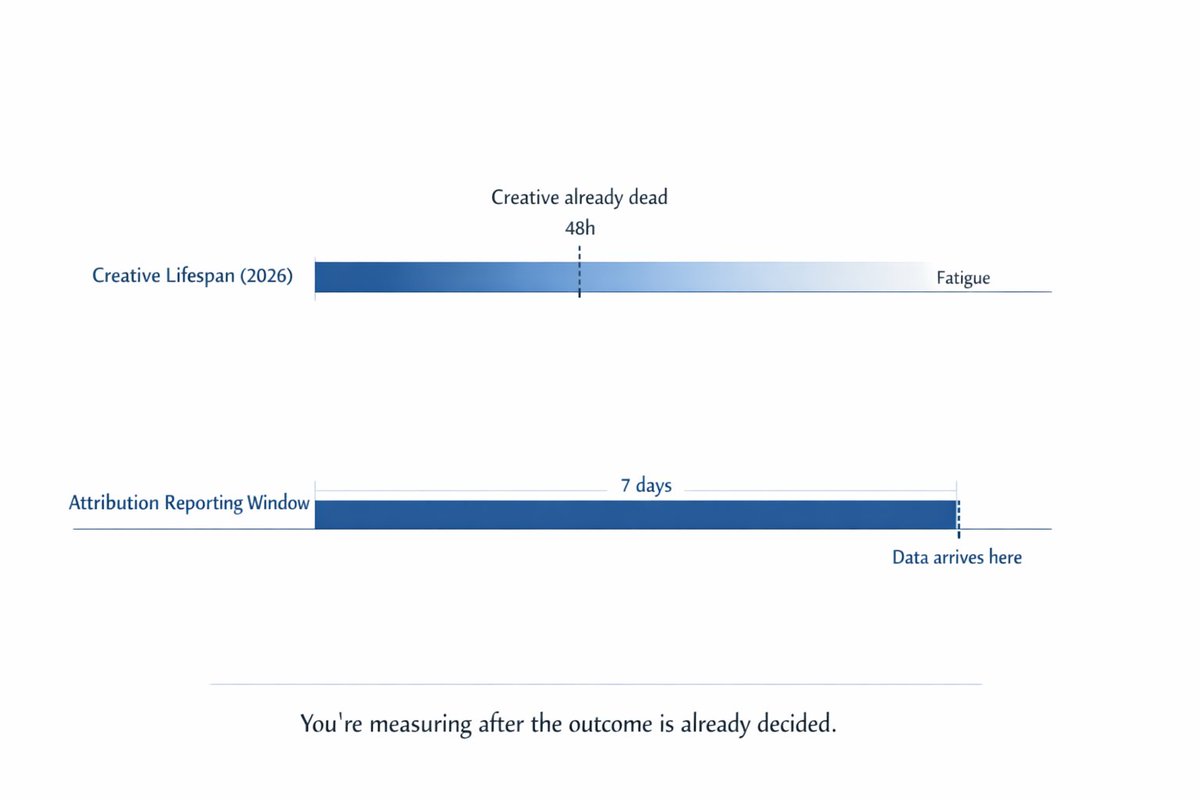
Your creative dies in 48 hours now. In 2023 a winning ad lasted two weeks before fatigue set in. In 2026 you're lucky to get two days. The platforms got faster, the audiences got more saturated, and the algorithms got more aggressive about rotating away from anything that stops performing. But here's the part nobody mentions. Your attribution still reports on a 7-day window like it's 2021. You're measuring slow while the game moves fast. By the time your data tells you something worked, the creative is already dying. By the time you react, it's dead. You're making decisions on week-old information in a platform that resets every 48 hours. The lag between reality and reporting is now longer than the lifespan of your best ads. This is why scaling feels impossible lately. You find a winner, you push budget, and by the time you ramp it's already fatigued. The creative wasn't weak. Your visibility was just too slow to keep up. wetracked.io gives you real-time signal so you can move at the speed the platforms actually operate. You can't win a 48-hour game with 7-day vision.
wetracked.io tweet media
English
1
3
5
742
wetracked.io
wetracked.io@wetracked·
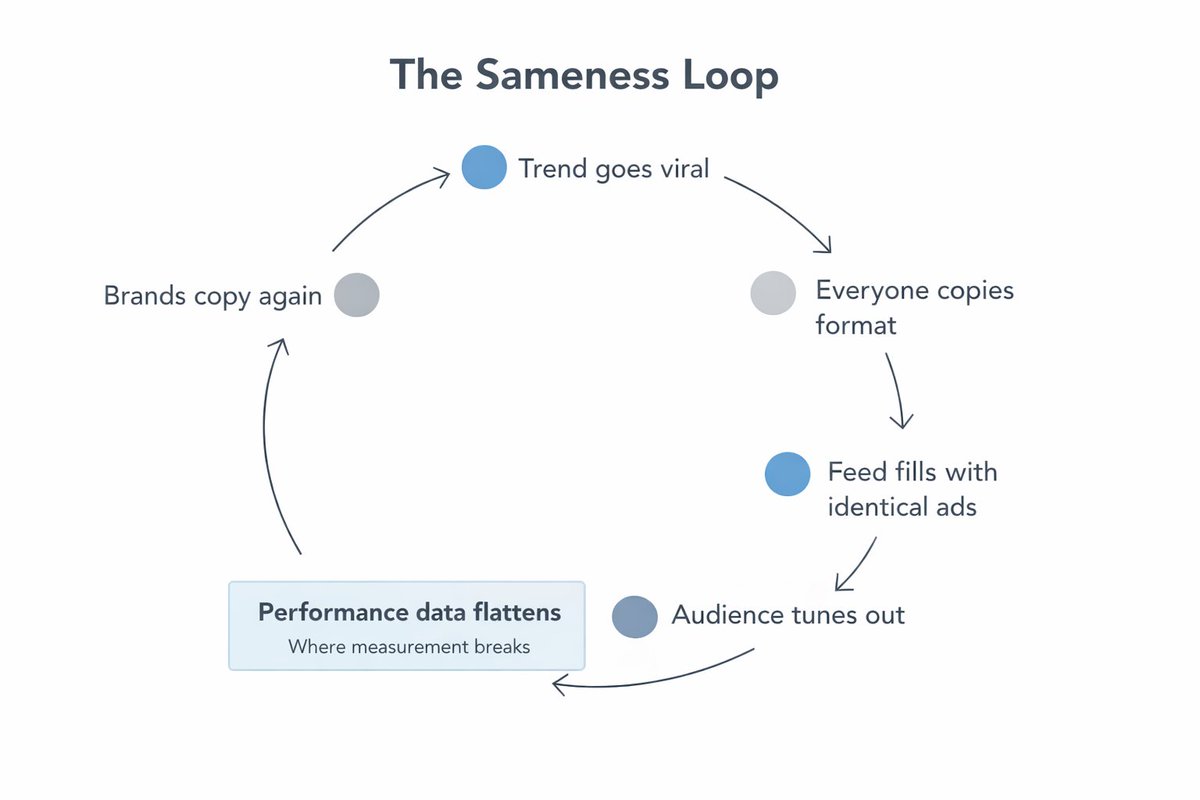
Everyone's AI makes the same ad now. Same hooks. Same formats. Same trending sounds. Same UGC style that worked for someone else last month. The tools got democratized and now every brand is pulling from the same playbook. The feed is flooded with content that looks identical, and audiences are tuning out faster than ever because nothing feels different anymore. But here's where it gets dangerous. When everything looks the same, the only way to know what's actually working is to measure accurately. And most brands can't. They're guessing based on platform data that gives every identical ad identical-looking credit. You can't tell if your version of the trend performed better because your tracking doesn't have that resolution. This is why creative differentiation alone won't save you. In a sea of sameness, measurement becomes your edge. wetracked.io doesn't make your creative more original. It tells you exactly which version of the same idea is actually converting so you can iterate with precision instead of guessing like everyone else. When all the ads look alike, the brand that sees clearest wins.
wetracked.io tweet media
English
0
3
4
460
wetracked.io
wetracked.io@wetracked·
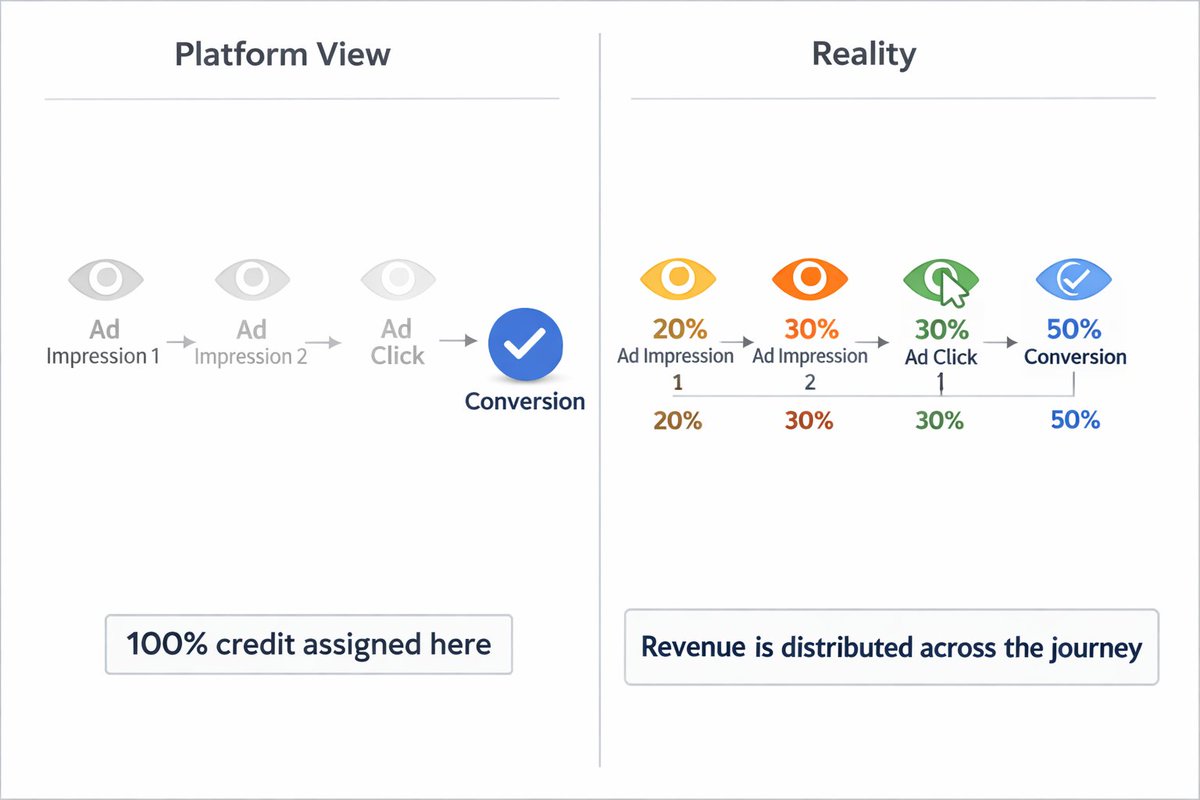
5 platforms claimed the same conversion. Meta counted it. Google counted it. TikTok counted it. Email claimed it assisted. Analytics attributed it somewhere else entirely. Everyone had proof. Every dashboard showed the purchase. Every report insisted the platform played the key role. Add them together and it looked like the same customer purchased four times. Nobody questioned it at first. Because each individual report looked reasonable. The problem only appeared when someone tried to reconcile the numbers with actual revenue. Suddenly conversions exceeded reality. Campaigns looked wildly profitable. Budgets expanded based on credit that didn’t actually exist. Everyone was measuring attribution. Nobody was measuring truth. The system didn’t break. It just quietly allowed every platform to tell the story that benefited them most. wetracked.io exists because attribution credit and actual performance are rarely the same thing. One conversion should only belong to reality once.
wetracked.io tweet media
English
0
9
10
1.4K
wetracked.io
wetracked.io@wetracked·
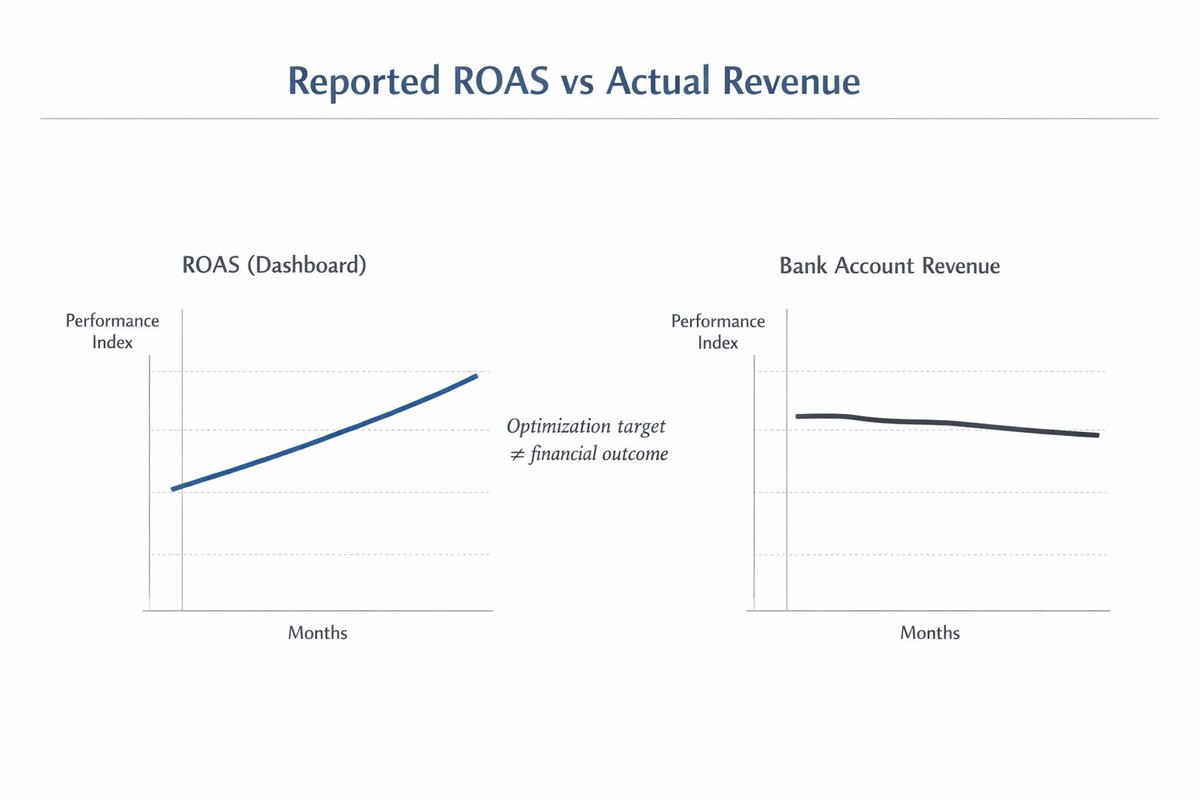
Your ROAS dashboard and your bank account disagree. Nothing looked alarming. The campaigns were still reporting conversions. The ROAS number stayed comfortably above the threshold everyone agreed meant “we’re profitable.” So budgets kept flowing. Last month someone increased spend by $18K because the numbers said the campaign was scaling cleanly. Revenue didn’t follow. Not immediately. Not dramatically. Just enough drift that nobody could prove anything was wrong. So the meeting conversation shifted. Maybe the offer needed improvement. Maybe the creative had fatigue. Maybe the market slowed down. All reasonable explanations. All built on the assumption the numbers were telling the truth. But attribution systems don't measure revenue. They measure credit. And the more platforms involved, the more confident each one becomes that it deserves it. You optimized toward the story the dashboard was telling. Not the reality the bank account was showing. wetracked.io exists because financial truth and platform attribution are rarely the same thing. Revenue is honest. Dashboards are interpretations.
wetracked.io tweet media
English
1
9
14
1.5K
wetracked.io
wetracked.io@wetracked·
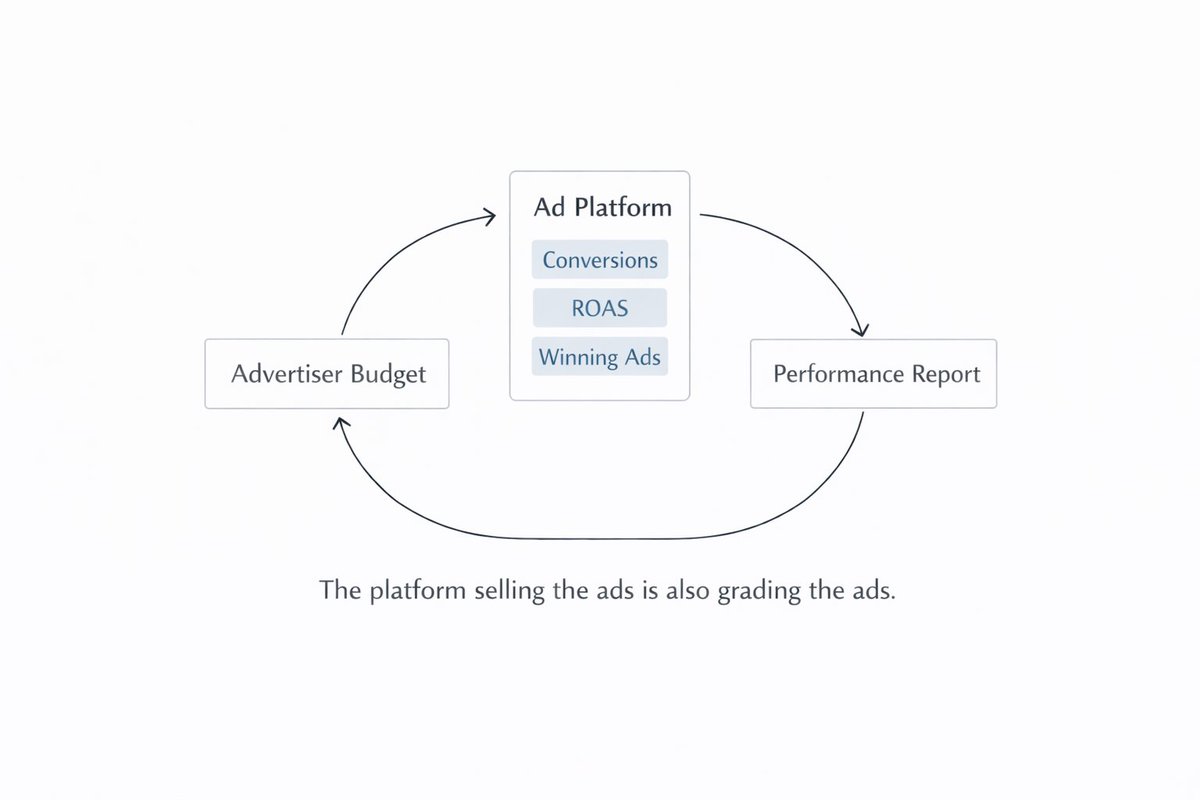
The platform grading your ads is the same one selling you more ads. It doesn’t feel strange when you first start running campaigns. Meta shows you conversions. Google reports ROAS. TikTok tells you which ad “won.” The dashboards look clean. The charts move upward just enough to keep the budget conversation comfortable. So you trust the feedback loop. Scale the ad the platform says is working. Kill the one the algorithm says is weak. Shift budget where the numbers look strongest. Every step feels rational. Until the business numbers start drifting away from the reporting numbers. Not dramatically. Just quietly enough that nobody wants to say it out loud in the meeting. Because admitting the measurement might be wrong means admitting the last six months of decisions might also be wrong. The platforms didn’t lie. They just measured success in a way that benefits the platform. Not necessarily the business. wetracked.io exists for the moment you realize asking an ad platform if your ads are working is a conflict of interest. Trust is comfortable. Verification is profitable.
wetracked.io tweet media
English
1
3
7
413
wetracked.io
wetracked.io@wetracked·
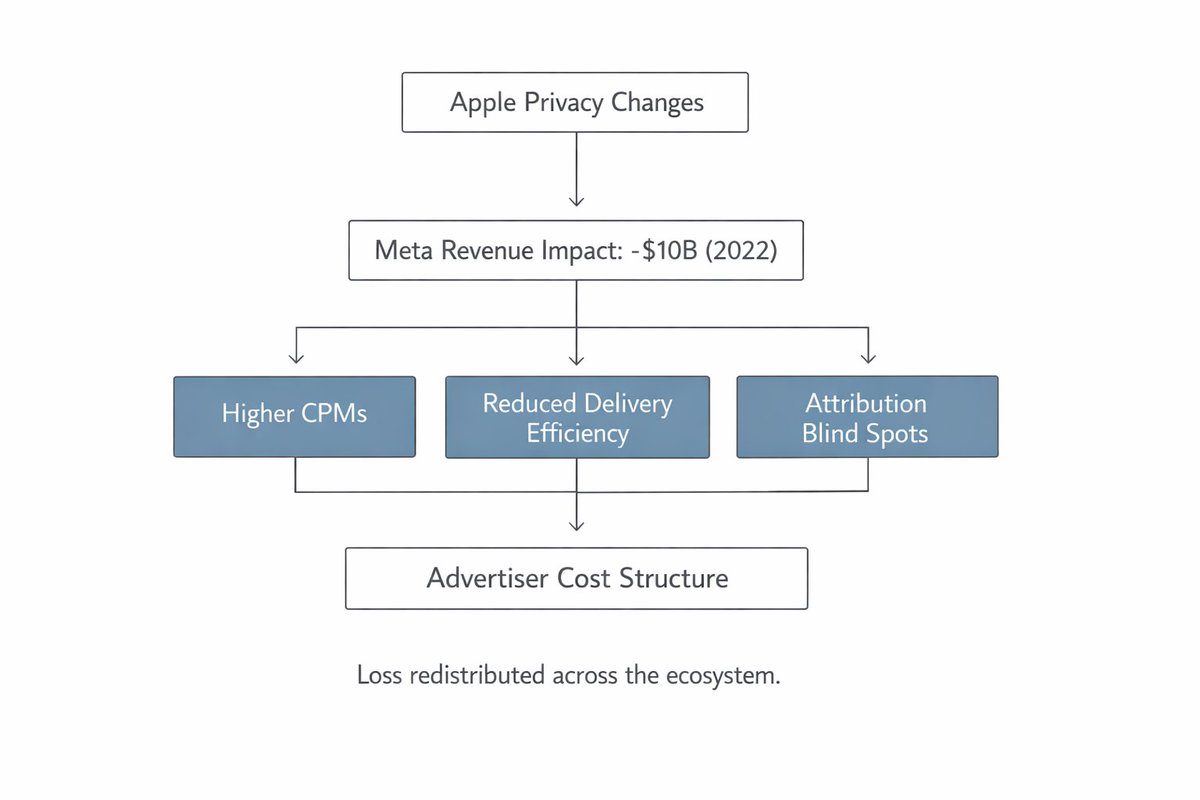
The $10 billion you didn't know you were splitting. Apple's privacy changes cost Meta $10 billion in 2022 alone. That loss didn't disappear. It just got distributed. Meta didn't absorb it. They didn't eat the cost. They passed it down the chain, quietly, through inflated CPMs, reduced delivery, and attribution that can't see half your conversions. You're paying more to reach fewer people with less certainty about what's working. And here's the part that makes it worse: the invoice looks normal. There's no line item that says "iOS 14.5 tax." No adjustment for "privacy compliance overhead." Your CPMs just climbed. Your ROAS just dropped. Your campaigns just got harder to scale. And when you asked Meta why, they pointed at iOS updates and auction dynamics and "increased competition." All technically true. None of it your fault. But you're the one paying for it. The platforms lost visibility. You lost signal. And the cost of that lost signal gets passed to advertisers as higher prices for worse data. This is why your 2019 playbook doesn't work anymore. Not because you're doing it wrong. Because the infrastructure underneath it fundamentally changed and nobody sent you an adjusted invoice. You're spending the same money. Getting less signal. Making decisions with lower confidence. And wondering why performance keeps drifting. The $10 billion didn't vanish. It just became part of your cost structure. wetracked.io exists because you can't optimize your way out of a measurement tax. You need your own scoreboard. One that doesn't lose signal when the platforms do.
wetracked.io tweet media
English
1
7
11
907
wetracked.io
wetracked.io@wetracked·
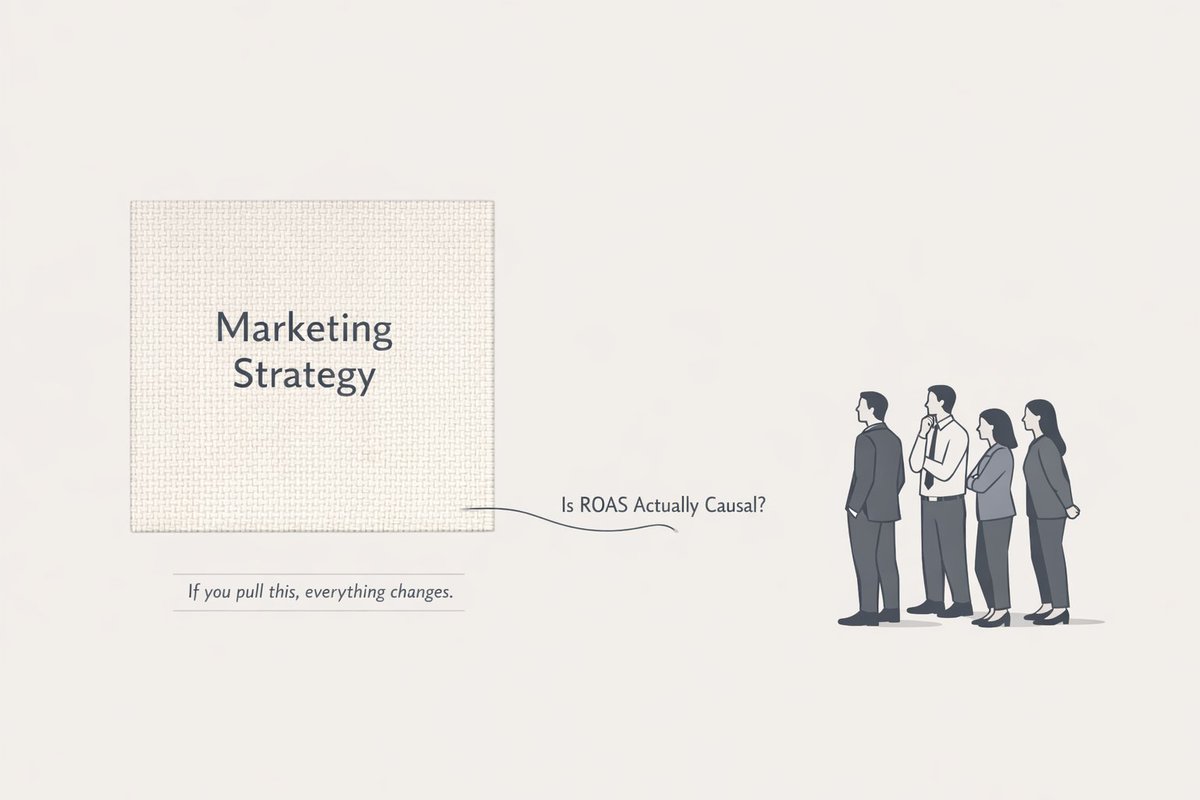
Every marketer in your Slack is optimizing toward the same broken metric. Nobody's said it out loud yet. You've all seen it. The campaigns that "perform" but don't move revenue. The ROAS that climbs while the bank account stays flat. Someone probably mentioned it once. In a standup. In a retrospective. And everyone nodded. Made a note. Then went back to optimizing ROAS because that's what the dashboard measures and what leadership asks for. Nobody wants to be the one who says the thing everyone's thinking. That the metric we're all chasing might not mean what we think it means. Because if you say it out loud, you have to do something about it. And doing something about it means admitting the last six months of "wins" might've been theater. So it stays quiet. Everyone keeps testing. Keeps scaling. Keeps reporting improvements. And the whole team slowly stops trusting the data while pretending they do. You're in meetings defending a 4.2x ROAS. Your colleague is scaling a 3.8x. Your manager is celebrating the trend. All of you know something feels off. None of you want to be the one to pull the thread. This is how entire teams optimize in the wrong direction for months. Not because they're bad at their jobs. Because the shared reality is built on a measurement system that's guessing. And the longer nobody says it, the more expensive it gets to admit. wetracked.io is what happens when someone finally pulls the thread. You can't fix what nobody's willing to name.
wetracked.io tweet media
English
0
8
13
722
wetracked.io
wetracked.io@wetracked·
You fired the creative that was working. Meta told you to. Not directly. They didn't send you a message. They just stopped showing it. The algorithm saw declining performance. Shifted budget to the "better" variant. Let the old one die quietly. You checked the dashboard. Saw the spend dropping. Saw the new creative getting more delivery. So you made it official. Paused the loser. Archived it. Moved on. Except it wasn't losing. It was converting outside Meta's visibility. People were seeing the ad, not clicking, then coming back through direct traffic three days later. Or searching the brand name. Or converting on a different device. None of that showed up in the ad report. So Meta thought it was dead weight. And you trusted Meta's judgment because that's what the system is designed for. To optimize. To reallocate. To find winners. But the system can only optimize based on what it can see. And it's increasingly blind. So it killed your best performer and told you it was helping. You didn't fire the creative. You just agreed with the execution. You co-signed a decision that was already made for you. And now that creative is gone. The test is over. The signal is lost. You'll never know if it was actually your best asset. Because the thing that recommended killing it is the same thing that couldn't measure it properly in the first place. wetracked.io doesn't override the algorithm. It shows you what the algorithm can't see. You can't let Meta decide if Meta is blind.
wetracked.io tweet media
English
0
9
15
839
wetracked.io
wetracked.io@wetracked·
The $92K you 'saved' by pausing that campaign is now your competitor's margin. You made the disciplined call. The numbers weren't there. CPA was climbing. ROAS was slipping below threshold. So you pulled the plug. Reallocated budget. Moved on. It felt responsible. It felt smart. Your manager probably approved it in the same Slack thread. But that campaign wasn't failing. It was working in places the dashboard couldn't see. Conversions happening days later. Attribution getting stolen by retargeting. iOS users converting without a trace. And while you were cutting it, someone else was looking at the same type of campaign with better tracking. Seeing the full picture. Watching it print. They scaled it. You killed it. Now they're running profitably in the exact space you abandoned. Same audience. Same offer. Different visibility. The $92K wasn't wasted. It was working. You just couldn't see it working. So you made a rational decision to stop. And handed market share to someone who could measure what you couldn't. This is how you lose without knowing you're losing. The dashboard said stop. You stopped. And someone with a clearer view said go. They didn't outspend you. They didn't out-creative you. They just knew what was actually happening. wetracked.io exists because saving money on a campaign that's working is the most expensive mistake you can make. The margin didn't disappear. It just moved to someone else's P&L.
wetracked.io tweet media
English
1
7
17
771
wetracked.io
wetracked.io@wetracked·
You spent $180K learning the wrong lesson. The data was confident. The data was wrong. Every test was clean. Every decision was justified. Every pivot made sense at the time. You increased budgets on what worked. Cut what didn't. Moved fast. Stayed disciplined. The dashboards agreed with you. The reports backed you up. The retrospectives felt productive. And somehow, six months later, you're sitting in a room trying to explain why $180K in ad spend didn't move the needle. Not because the creative was bad. Not because the offer was weak. Not because you weren't testing enough. Because the thing measuring success was measuring something else entirely. It counted conversions that were already happening. It credited the last click when the real work happened three touches earlier. It modeled outcomes for users it couldn't actually track. So you learned that audiences don't convert. That creative doesn't matter. That paid acquisition is getting harder. None of that was true. What you actually learned is that attribution models lie politely. They give you answers. They just don't tell you the answers are guesses. And the worst part? You can't unlearn this. You can't get the budget back. You can't rerun the experiment with accurate data. You just move forward a little more cautious. A little less trusting. A little more reliant on gut feel because the data failed you. That's the real cost. Not the $180K. It's the confidence you lost in your own ability to read signals. wetracked.io doesn't make the lessons easier. It makes sure you're learning the right ones. You can't afford to spend six figures on fiction.
wetracked.io tweet media
English
1
3
10
708
wetracked.io
wetracked.io@wetracked·
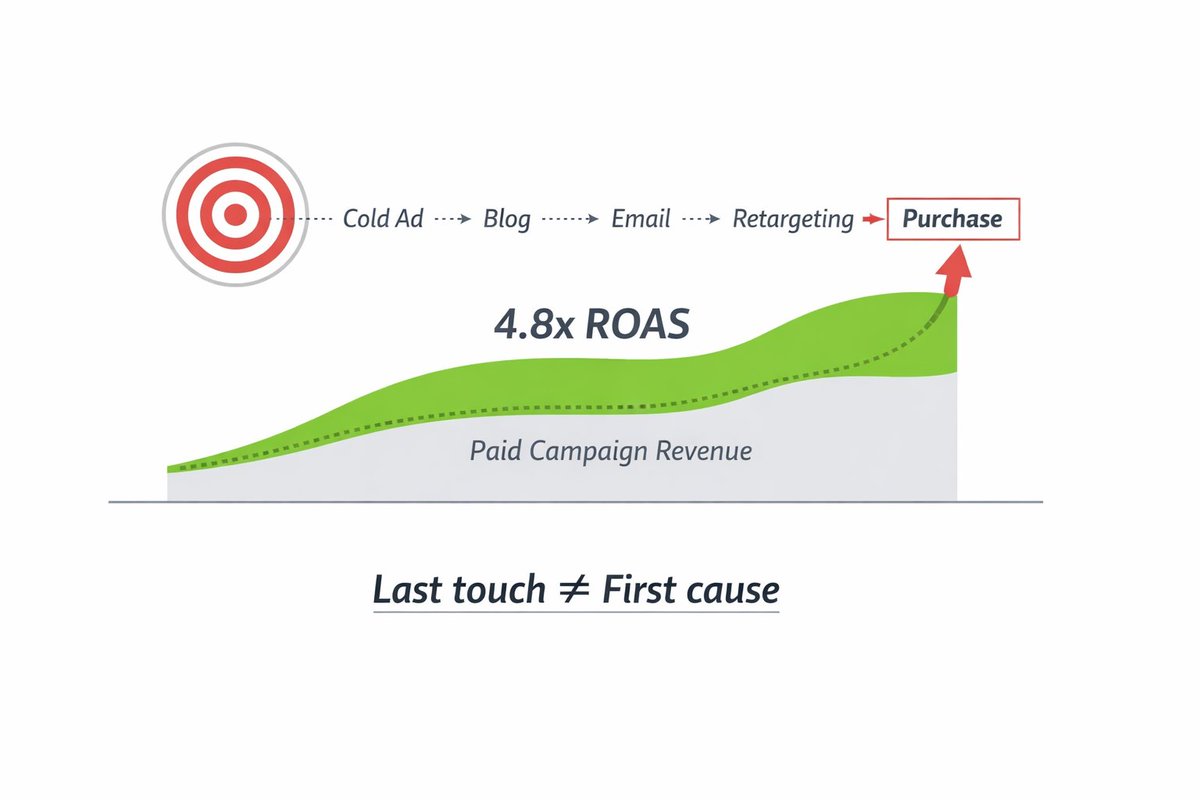
The campaign with 2.1x ROAS printed money. The one with 4.8x lost you everything. Same product. Same funnel. Same landing page. One looked mediocre. One looked like a winner. You scaled the winner. Killed the loser. Did exactly what you're supposed to do. And six months later, the math didn't make sense. Revenue was flat. The campaign that "won" never actually moved the business. Because the 4.8x was counting conversions that would've happened anyway. Attribution stacking on top of organic. Last-click getting credit for a journey that started weeks earlier. The 2.1x campaign? That one was doing the hard work. Bringing in cold traffic. Starting the journey. Building the pipeline. But it looked inefficient. So you cut it. And the moment you did, the 4.8x campaign collapsed too. Because it was never driving anything. It was just taking credit. This is the nightmare scenario. Not that you made a bad decision. But that you made the correct decision with corrupted inputs. You optimized perfectly. You followed best practices. You trusted the data. The data just wasn't measuring cause and effect. It was measuring proximity. And now you'll never know what that 2.1x campaign could've scaled into. Because the thing that told you to kill it is the same thing that can't tell you what it was actually worth. wetracked.io doesn't make ROAS look better. It makes sure ROAS is measuring the right thing. You can't scale what you can't see clearly.
wetracked.io tweet media
English
0
9
18
889
wetracked.io
wetracked.io@wetracked·
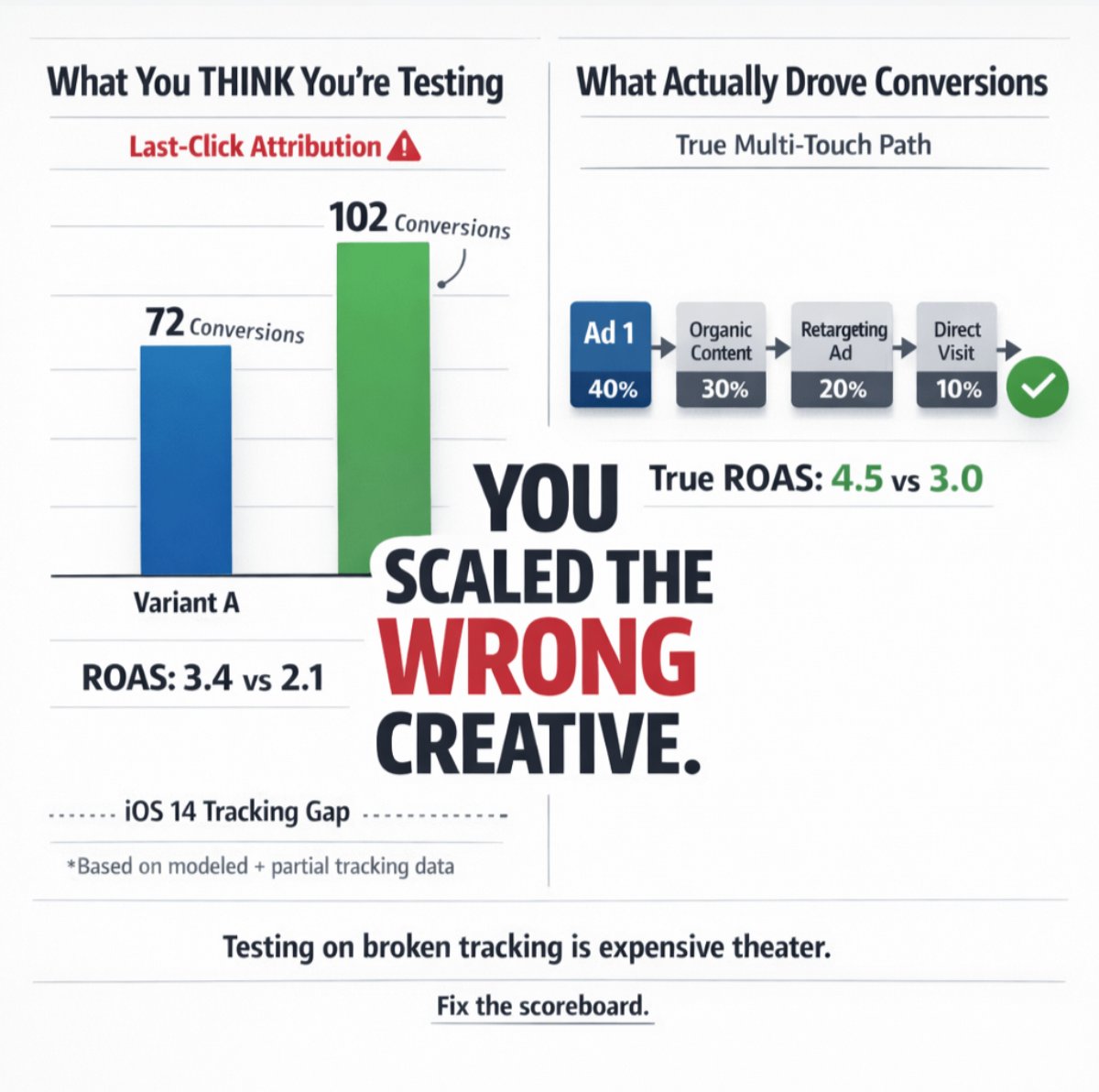
You've been split-testing the wrong thing for 8 months. So has everyone else. You tested headlines. Tested images. Tested audiences, placements, bid strategies. You ran the tests properly. Waited for significance. Let the winner scale. And the whole time, you were optimizing toward a metric that wasn't measuring what you thought it was measuring. Not because you're careless. Because the attribution model you inherited with the ad account is fundamentally guessing. It's crediting conversions to the last click when the real driver was three touchpoints ago. It's counting iOS users it can't actually track. It's modeling outcomes based on users who opted out. So when variant B "won," it didn't actually win. It just happened to get credit for conversions that were going to happen anyway. You scaled it. Killed the "loser." Moved on to the next test. And somewhere in your account history is a creative you paused that was actually printing money. You just couldn't see it. This isn't a you problem. This is an everyone problem. Every marketer is running tests on top of broken infrastructure and calling it rigorous. We've all been taught that more data equals better decisions. But more bad data just makes you confidently wrong faster. The tests weren't useless. The insights weren't fake. You just weren't testing what you thought you were testing. wetracked.io exists because testing without accurate tracking is just expensive theater. You can't split-test your way to truth if the scoreboard is lying.
wetracked.io tweet media
English
0
9
16
1K
wetracked.io
wetracked.io@wetracked·
Every dollar you 'wasted' is still in someone's account. Just not yours. You cut the budget. Paused the campaign. Moved spend somewhere that looked better. The platform said it wasn't working. The CPA was too high. The ROAS didn't justify it. So you made the smart move. The disciplined move. The move every performance marketer is trained to make. Except that budget wasn't wasted. It was working. Just not in the place you were looking. The conversions were happening later. Through a different device. After someone saw the ad three times but only the last click got credit. And now? Someone else is running that exact campaign. Seeing the full picture. Scaling it profitably. Because they're not measuring what the platform shows them. They're measuring what actually happens. You didn't lose money on bad ads. You lost it on incomplete visibility. The campaign you killed might've been break-even. Might've been profitable. You'll never know because the system you trusted only showed you half the story. And the brutal part? You made the right call with the information you had. That's the trap. It's not that you're bad at this. It's that you're optimizing with one eye closed. wetracked.io doesn't tell you what to spend. It shows you what your spend actually did. The money's still out there. It just went to someone who could see it.
wetracked.io tweet media
English
0
9
14
945
wetracked.io
wetracked.io@wetracked·
Your best performing ad got paused three weeks ago. By the algorithm you trusted. It wasn't you. You didn't make a bad call. The platform saw declining performance and pulled budget. Shifted spend to the "winner." Did exactly what it was designed to do. Except the signal it was reading was wrong. The ad that looked like it was dying was actually ramping. The conversions were happening off-platform, or delayed, or filtered out by iOS, or credited to something else entirely. And the "winner" it scaled? That one was riding borrowed attribution from the thing you just killed. This is how good ads die quietly. Not because they stopped working. Because the system measuring them couldn't see what they were actually doing. You'll never get that test back. You'll never know what would've happened if you'd let it run. And the worst part? You made the rational choice. You trusted the data. You let the machine optimize. It's not your fault. But it's still your loss. Most marketers don't realize they're not actually controlling the campaigns. They're controlling what the algorithm is allowed to see. And if the algorithm is blind, your best moves look like mistakes. wetracked.io doesn't guess what's working. It tracks what's actually happening. You can't let the machine decide if the machine can't see.
wetracked.io tweet media
English
0
9
15
880
wetracked.io
wetracked.io@wetracked·
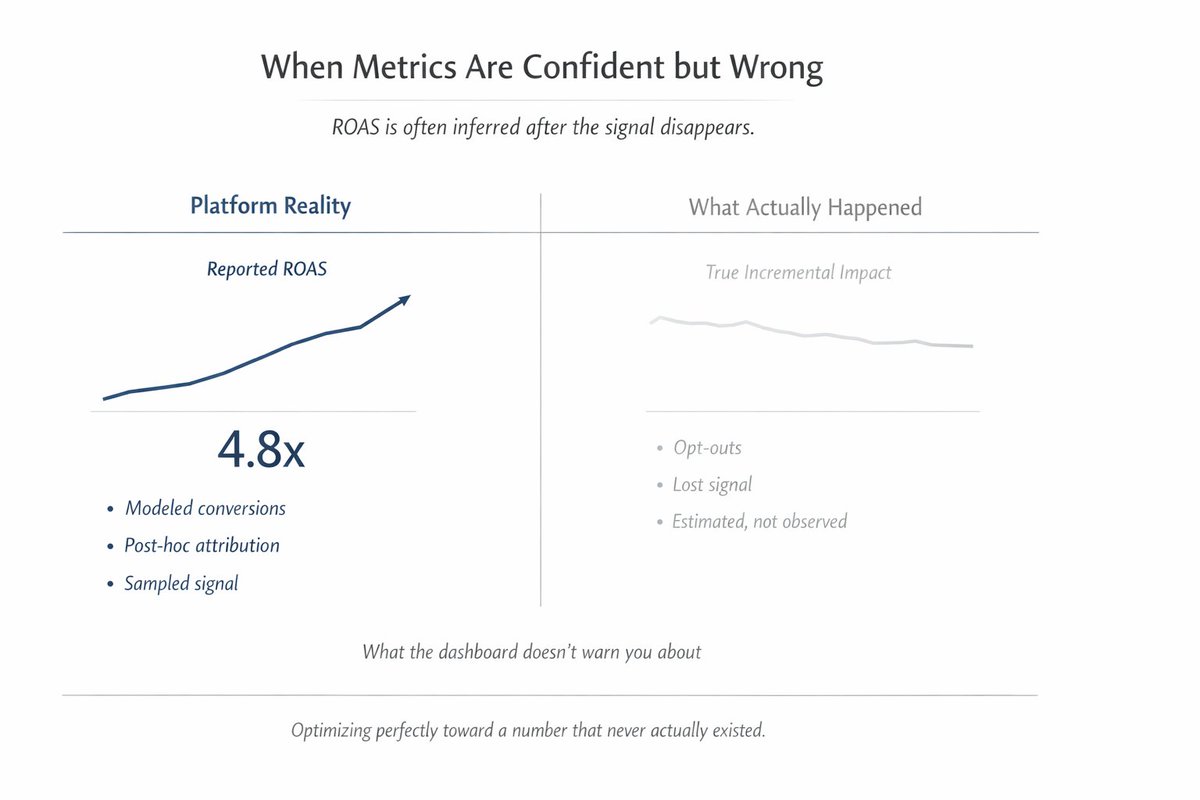
Someone at Meta knows your ROAS is fake. You're the only one who doesn't. They built the model. They know what gets estimated, what gets sampled, what gets attributed after the fact because the signal disappeared. They know which conversions are guesses. Which clicks never loaded. Which users opted out but still got counted because the math needed to close. You don't. You see 4.8x and you scale. You see 2.1x and you pause. You make million-dollar decisions based on numbers that were reverse-engineered to feel accurate. And here's the part that makes it worse: the dashboard never warns you. It doesn't say "modeled" in red. It doesn't flag the 30% of conversions that are statistical best guesses. It just shows you a number with two decimal places and you treat it like ground truth. Meta's not hiding this. It's in the documentation. In the fine print. In the support articles nobody reads. But you're busy. You're running campaigns. You're hitting deadlines. And the dashboard looks so confident. So you keep optimizing. Keep testing. Keep scaling the thing that might not even be the thing. The platform benefits when you believe the number. You benefit when you verify it. wetracked.io is what happens when you stop asking Meta if Meta is right. The people winning aren't trusting more. They're measuring independently.
wetracked.io tweet media
English
0
9
14
1.1K