
Sabitlenmiş Tweet
Luther
1.2K posts

Luther
@whereisluther
Community Manager | Community Moderator | Reply guy
Wales, United Kingdom Katılım Eylül 2025
694 Takip Edilen513 Takipçiler

@ChelseaFC I unfollowed you before, I just followed you back,if you don’t win this I will block you
English


Luther retweetledi

Final day. 🏆
Wear yellow. Bring the noise. Make history. 💛

English
Luther retweetledi

K → Keep it private on KalqiX
A → Always verifiable on KalqiX
L → Lightning-fast execution on KalqiX
Q → Quant-grade performance on KalqiX
I → Institutional-ready trading on KalqiX
X → X marks the future on KalqiX
Base@base
B → Base A → Also Base S → Still Base E → Extra Base
Suomi

Luther retweetledi

🚨 Chelsea have had a direct meeting with Xabi Alonso and final decision is expected very soon.
#CFC plan to announce their next manager before the World Cup, talks are accelerating.
Chelsea also spoke to Iraola, Glasner and Marco Silva as part of their list.

English
@kalqix @calllmeedany Real activity. Real execution. Real verification.
English
Luther retweetledi
→ 6.5M transactions
→ 3.4M orders
→ 3,216 trades settled on-chain with ZK proofs
→ 327 users
→ 942K+ blocks
Every match verified. Every settlement provable.
This isn't a vanity dashboard. It's a working market.
app.kalqix.com/explorer
English
Luther retweetledi
Luther retweetledi

The CLARITY Act just cleared the Senate Banking Committee. 15-9 bipartisan vote.
BTC crossed $80k. Crypto stocks are ripping. The regulatory cloud that's been hanging over DeFi for years is finally lifting.
But here's the part that matters most for builders:
Regulatory clarity doesn't just protect existing projects. It unlocks the next wave. The teams that built production-grade infrastructure during the uncertainty are now positioned to scale into the clearest regulatory environment crypto has ever had.
We launched KalqiX mainnet 9 days ago. ZK-verified CLOB on Base. Non-custodial. Sub-10ms. Zero front-running.
The timing wasn't luck. We spent 2+ years building so we'd be ready for exactly this moment.
The rules are being written. The infrastructure is live. The institutions are here.
Q2 2026 is the quarter everything changes.
English
@kalqix @calllmeedany KalqiX is here to make traders winners again
English
Luther retweetledi
Most traders think MEV is random.
⏰ Wake Up Call: It's NOT.
It’s a natural consequence of order flow transparency.
Here’s what happens after you submit a swap:
1⃣ It hits the public mempool
2⃣ Bots detect parameters
3⃣ Bots front-run your trade
4⃣ You lose to MEV
KalqiX is here to make traders winners again 🏆
And that starts with making order flow invisible again.

English
Luther retweetledi


To maintain a stable, reliable, and transparent user experience, the platform will be carrying out scheduled maintenance and verification on the Claude series model service pipeline.
During this maintenance period, Claude series models may become temporarily unavailable, and some users may experience request failures, delayed responses, or interruptions when trying to access Claude-powered services.
This process is necessary to strengthen service stability, improve billing accuracy, and ensure that model usage is properly monitored and recorded across the platform.
Please note that this maintenance only affects Claude series models.
Other available model services will continue to operate normally.
Users are encouraged to switch temporarily to alternative models such as GPT, DeepSeek, Gemini, or any other supported models available on the platform.
Our technical team is working to complete the maintenance as quickly and safely as possible.
Claude series model services will be restored immediately after the verification and maintenance process is completed.
We sincerely apologize for any inconvenience this may cause and appreciate your patience, understanding, and continued support as we work to improve platform performance and service reliability.
@BAI_AGI @justinsuntron #TRONEcoStar

English

You can always tell when a platform was built for actual users and not just for marketing.
Everything feels smoother.
Cleaner interface, faster execution, less stress trying to figure things out.
That’s the feeling I get with @rezorexchange
You open it and it already feels ready to work.
No extra noise.
Just trading the way it should be.
Fast when you need speed.
Reliable when timing matters.
Simple enough to keep your focus where it belongs.
That balance is underrated.
Visit rezorex.com to start trading
#RezorEx #RZR

English


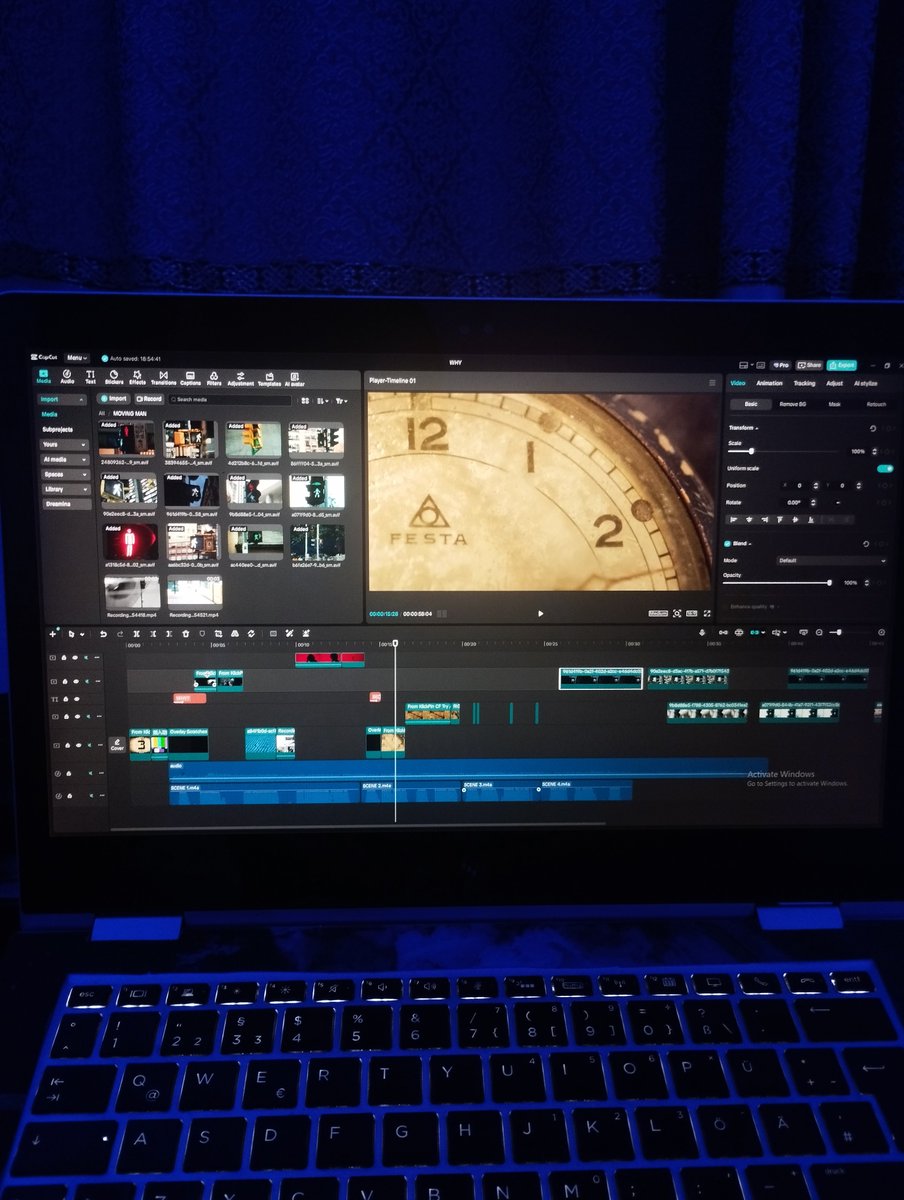
I had limited time but, I'm happy I still cooked something.
Directed, Shot and edited by me 🤞🏿
This is just the beginning.
Something new is cooking
Tomorrow
Turn on your notis.🖤
EMEBOK 🥷🕸️@EMEBOK_
onchain assets are useless if they’re stuck in a fragmented system. tokenization isn't just about making things digital; it’s about making them programmable. i’m breaking down how BTOS by @byzanlink provides the end-to-end engine for the full $200T capital market lifecycle. learn more 👇 byzanlink.substack.com/p/introducing-…
English

Choosing to hold mostly $USDD in 2026 is a “safe stablecoin” decision.
It’s a calculated yield + infrastructure bet.
And understanding that distinction matters.
#USDD has gone through one of the more aggressive evolutions in crypto stablecoins over the past few years.
Back in 2022, the market questioned whether USDD could survive long term after multiple depeg events during broader market stress, especially after the collapse of UST and the FTX contagion cycle.
At the time, the model still carried stronger algorithmic characteristics tied heavily to TRX dynamics.
But the system today looks very different from the original launch architecture.
With USDD 2.0, the protocol moved toward a far more overcollateralized and reserve-backed structure.
As of April 2026:
➠ Collateral value exceeded $2.16B
➠ Collateral ratio reached 146%
➠ Supply surpassed $1.55B
➠ Reserves remain publicly viewable on-chain across TRON, Ethereum, and BNB Chain
That transparency layer matters.
Especially in a post-UST market where trust is no longer given easily.
Another important shift:
USDD is no longer operating purely as a TRON-native experiment.
The ecosystem has expanded into:
• Ethereum
• BNB Chain
• cross-chain DeFi integrations
• AI-oriented infrastructure layers
The Ethereum deployment especially changed the peg structure significantly through:
➠ fixed-rate mint/redeem systems
➠ stablecoin-backed issuance modules
➠ protocol-controlled liquidity mechanisms
That reduced dependence on secondary-market arbitrage alone.
But let’s be honest:
The main reason many users choose USDD is still yield.
And this is where the tradeoff becomes obvious.
Most fiat-backed stablecoins today offer:
• low native yield
• conservative treasury exposure
• tighter regulatory alignment
Meanwhile USDD continues competing through:
✔️ high APYs
✔️ DeFi integrations
✔️ Smart Allocator yield systems
✔️ sUSDD strategies
✔️ ecosystem incentives
Depending on platform and campaign structure, yields can still range far above traditional stablecoin alternatives.
That upside attracts capital.
But it also introduces additional systemic risk.
Because unlike fiat-backed models such as USDT or USDC:
USDD still relies heavily on crypto-native collateral systems.
TRX exposure remains meaningful.
And while the collateral structure has improved substantially compared to earlier years, crypto-backed systems naturally carry higher volatility sensitivity during major market stress events.
Governance concentration is another factor people should understand clearly.
A large portion of ecosystem direction, liquidity coordination, and strategic decision making still revolves around:
@justinsuntron
and the broader TRON DAO ecosystem.
Supporters view that as strong coordination.
Critics view it as centralization risk.
Both perspectives are understandable.
Regulation is another major variable.
Globally, stablecoin regulation increasingly favors:
✔️ fiat reserves
✔️ treasury-backed models
✔️ banking integrations
✔️ compliance-heavy issuers
Crypto-backed stablecoins may face a more complicated long-term regulatory path depending on jurisdiction.
So the real question is not:
“Is USDD perfectly safe?”
The real question is:
“Does the yield and ecosystem exposure justify the additional risk profile?”
For some users:
yes.
Especially for:
• DeFi-native users
• yield-focused strategies
• TRON ecosystem participants
• crypto-native capital allocators
For others, diversification still makes more sense.
Personally, the more rational framework is probably:
➠ USDT/USDC for baseline liquidity + lower-risk stability
➠ USDD for higher-yield crypto-native exposure
Because USDD today is less of a pure stablecoin narrative…
…and more of a high-yield crypto infrastructure asset sitting at the intersection of:
DeFi + stablecoins + AI integrations + TRON ecosystem liquidity.
Always size risk appropriately.
@usddio @usddio_cn @justinsuntron #TRONEcoStar

English

𝐖𝐡𝐚𝐭 𝐲𝐨𝐮 𝐜𝐚𝐧 𝐚𝐜𝐭𝐮𝐚𝐥𝐥𝐲 𝐝𝐨 𝐨𝐧 𝐒𝐔𝐍.𝐢𝐨 – 𝐚 𝐟𝐮𝐥𝐥 𝐛𝐫𝐞𝐚𝐤𝐝𝐨𝐰𝐧
Most people think SUN.io is just a swap. Connect, trade, leave. But that's like using a smartphone only for calls. SUN.io is a complete DeFi suite – and here's everything you can do with it.
𝐈. 𝐒𝐰𝐚𝐩 𝐢𝐧𝐬𝐭𝐚𝐧𝐭𝐥𝐲.
USDT to TRX. TRX to SUN. Any supported pair. Low fees (TRON is cheap), deep liquidity (millions in TVL), seconds to execute. That's the basics but it's also the fastest way to move between assets without leaving the ecosystem.
𝐈𝐈. 𝐏𝐫𝐨𝐯𝐢𝐝𝐞 𝐜𝐨𝐧𝐜𝐞𝐧𝐭𝐫𝐚𝐭𝐞𝐝 𝐥𝐢𝐪𝐮𝐢𝐝𝐢𝐭𝐲 (𝐒𝐮𝐧𝐒𝐰𝐚𝐩 𝐕𝟑).
On old-school DEXs, your capital is spread across every price from zero to infinity most of it sits idle. On V3, you choose a specific price range where trading actually happens. Your money works harder. You earn more fees per dollar deployed. Just watch your range if the market price moves outside it, you stop earning until you adjust. You can always reposition. This is active, not passive and the rewards reflect that.
𝐈𝐈𝐈. 𝐒𝐞𝐭 𝐥𝐢𝐦𝐢𝐭 𝐨𝐫𝐝𝐞𝐫𝐬.
A market swap executes immediately at the current price. A limit order waits for your price. Want to buy SUN at $0.18 but it's trading at $0.20? Set a limit order and walk away. If the market reaches your price, it fills automatically. If not, nothing lost. No need to stare at charts. This is how professional traders manage entries and exits and now it's on SUN.io.
𝐈𝐕. 𝐄𝐚𝐫𝐧 𝐲𝐢𝐞𝐥𝐝 (𝐟𝐚𝐫𝐦𝐢𝐧𝐠 & 𝐬𝐭𝐚𝐤𝐢𝐧𝐠).
When you provide liquidity, you earn swap fees from every trade in that pool. On top of that, you can stake your LP tokens or your SUN tokens to earn extra rewards. The APYs come from real trading volume not token printing or inflationary gimmicks. Check the dashboard for current rates. The more volume SUN.io processes, the more yield you earn.
𝐕. 𝐆𝐨𝐯𝐞𝐫𝐧 𝐰𝐢𝐭𝐡 𝐯𝐞𝐒𝐔𝐍.
SUN.io isn't a black box. Lock your SUN tokens to get veSUN (voter-escrowed SUN). The longer you lock, the more voting power and fee rewards you receive. You decide which liquidity pools get extra incentives, which fee tiers to prioritize, and which new pairs to list. Your vote matters. Your locked position earns passive income. That's alignment.
𝐕𝐈. 𝐏𝐫𝐞𝐩𝐚𝐫𝐞 𝐟𝐨𝐫 𝐀𝐈 𝐭𝐫𝐚𝐝𝐢𝐧𝐠.
SUN.io hosts SunFlash roundtables where builders and developers plan AI agent integration. Soon, autonomous trading bots will execute strategies here 24/7 no sleep, no hesitation. If you're providing liquidity, you'll be on the other side of those trades, earning fees from machines that never stop. The infrastructure is being built right now.
Start simple. Try a swap. Then a limit order. Then dip your toe into V3 with a small position. You don't need to master everything at once. The tools are live. The future is autonomous.
Explore SUN.io today at sun.io
#TRONEcoStar @justinsuntron @OfficialSUNio
English
I just created and minted my own NFT using Banana King AI on @AINFTcom 🍌🤖
And honestly…
The process was way easier than most people think.
So here’s a beginner-friendly step-by-step tutorial showing exactly how I created my Lobster Crown NFT
🧵🔻
#TRONEcoStar @AINFTcom

English