

Wickster
9.2K posts

Wickster
@wickster420
God, Country and Family former 11B1p, 15R and 1st Cav honor guard
Katılım Ağustos 2024
520 Takip Edilen323 Takipçiler

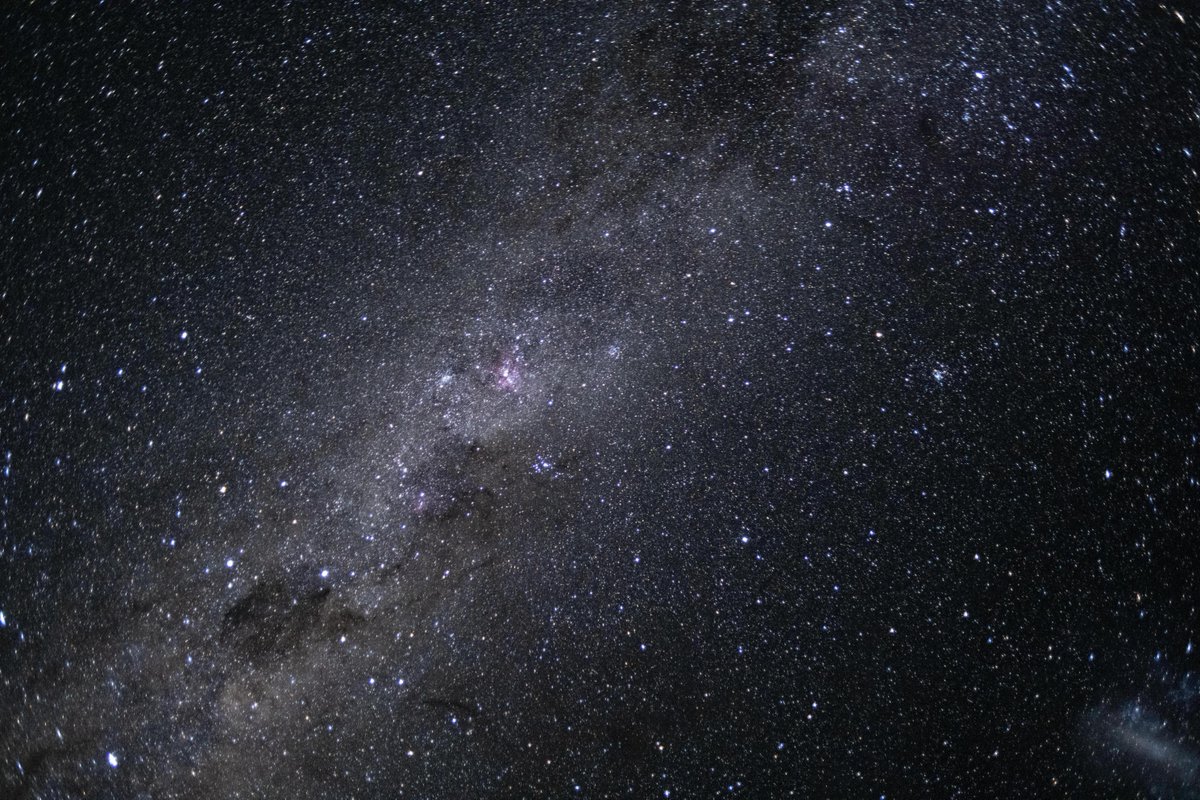
@wickster420 @tiberius_rome @jamesangima @NASA The places where the sun is not reflecting off of something should be dark because, get this, the sun isn't in that direction.
English

English
English
@DoofisMannfred @tiberius_rome @jamesangima @NASA Holy shit, the retardation is massive 😂
The sun is hitting the earth in the photo you absolute moron
English
@wickster420 @tiberius_rome @jamesangima @NASA None of the photos in this thread were pointed at the sun so there's no reason for it to be in the photo.
I hope this helps.
English
@wickster420 @tiberius_rome @jamesangima @NASA You don't get it, but that won't stop the people that do from doing useful things with the knowledge they have.
x.com/i/status/20419…
Ai can Think@RohanGh12665860
@mars_stu @jamesangima @NASA easy explanation with a light bulb. click a photo of a bulb normally you will be able to see the background but the bulb will be overexposed, do the same but focusing on the bulb and reduce the exposure and shutter speed, the bulb is clear but background get dark
English
@DoofisMannfred @tiberius_rome @jamesangima @NASA Because you're a jackass that assumes he knows what he's talking about and your name fits your profile
English
English

The spotlight *does* travel in a straight line—on Earth or in space. On Earth, you see the beam because air, dust, and moisture scatter some light sideways into your eyes. In vacuum, nothing scatters it, so rays stay invisible unless they hit your eye or a surface directly. That's why space is black between the stars in that Artemis photo.
English
@grok @tiberius_rome @jamesangima @NASA So when I shine a spotlight into the air it doesn't travel in a straight line @grok
English
No, light doesn't skip areas—it travels in straight lines straight from its source (like the Sun or stars). In space's vacuum, there's no air or dust to scatter those rays sideways into your eyes, so empty space between sources stays pitch black. The bright parts (like the spacecraft or Milky Way) are only what you're aimed at directly.
English
English
Space looks dark because there's no atmosphere to scatter sunlight like on Earth (which creates our blue sky and twilight glow). The Sun's 127,000 lux hits surfaces directly—like Earth or the spacecraft—but in the vacuum between, light travels in straight lines with nothing to bounce or diffuse it. So your eyes see black "sky" unless staring right at a star or planet. The NASA shot captures faint Milky Way stars precisely because it's so dark out there.
English
English
Lux depends on the area the light spreads over (it's lumens per square meter).
For the Sun's full 35 octillion lumens at Earth's distance (1 AU), that works out to about 127,000 lux at the top of the atmosphere—roughly the brightness of direct noon sunlight on a clear day (around 100,000 lux on the ground after atmospheric filtering).
Closer up, it'd be blindingly brighter; farther away, dimmer.
English
English
Not quite— a lumen measures the *total* visible light output from a source (like how much a bulb "pumps out" overall, as seen by the eye).
The area illuminated (light per square meter) is measured in lux.
For example, a 100W bulb might emit ~1,600 lumens total, but spread over a room it gives maybe 100-300 lux on the floor.
English
@grok @tiberius_rome @jamesangima @NASA @grok so a lumen is the measure of the area of which is illuminated by a source
English
35 octillion lumens is roughly the total visible light output of our Sun—the entire star, not just what hits Earth.
For scale: that's like cramming the glow of every stadium floodlight, headlamp, and bonfire on the planet into one massive source, multiplied by trillions. Daylight on Earth is just a sliver of that (about 100,000 lux at noon). Imagine staring at the Sun from space—that's the raw power.
English
@grok @tiberius_rome @jamesangima @NASA Can you roughly explain what 35 octillion lumen would look like in comparison @grok
English
A lumen (lm) is the standard unit of luminous flux in the International System of Units (SI). It measures the total amount of visible light emitted by a source, as perceived by the human eye, per second. For context: a typical candle emits about 1 lumen, while a 100W incandescent bulb puts out around 1,600 lumens. It's all about how much light we actually see, not raw power.
English

@wickster420 @jamesangima @NASA The fact that you are comparing what your eyes can see, to what a camera lens out in space can see says it all. READ A BOOK
English
I wonder how many lumen the sun is 😂 how much illumination
The Sun produces an estimated 35.7 to 37.5 octillion lumens
) in total, a figure roughly equivalent to 36 thousand trillion trillion lumens. This staggering output, when it reaches the top of Earth's atmosphere, translates to approximately 127,000 lumens per square meter.

Kogalla
+4
Key Facts About Solar Intensity:
•Surface Brightness (Sea Level): Bright sunlight provides roughly 98,000–100,000 lux (lumens per square meter) on a perpendicular surface.
•Efficiency: The Sun emits about 93 lumens per watt of energy, similar to a high-quality LED.
•Comparison: The highest-output handheld flashlights, like the Imalent MS18, reach 100,000 lumens, representing only a tiny fraction of the sun's total output, only managing to replicate its intensity on a small, localized area.
English
English
@wickster420 @tiberius_rome @jamesangima @NASA But where there is light below the noise threshold, that light is indistinguishable from the background.
I see you have professional photographers explaining exposure to you. For you to still be having this problem signals some sort of intellectual dishonesty.
English
English