

WISEDIRECT
10.2K posts
WISEDIRECT
@Wise_Direct
We are only limited by our own imagination.
Katılım Temmuz 2023
460 Takip Edilen492 Takipçiler

JUST IN: 🇺🇸 Rep. Thomas Massie says 10% of all US debt in history will be added during the first half of President Trump's second term.
English
@AboundWealth @WatcherGuru Not when you have rogue judges that decide to give it all back
English

@WatcherGuru I thought the whole tariffs thing was supposed to pay off our national debt, no?
GIF
English
@AsShopped Ozempic can't help Jonah Mountain head or inflated ego.
English




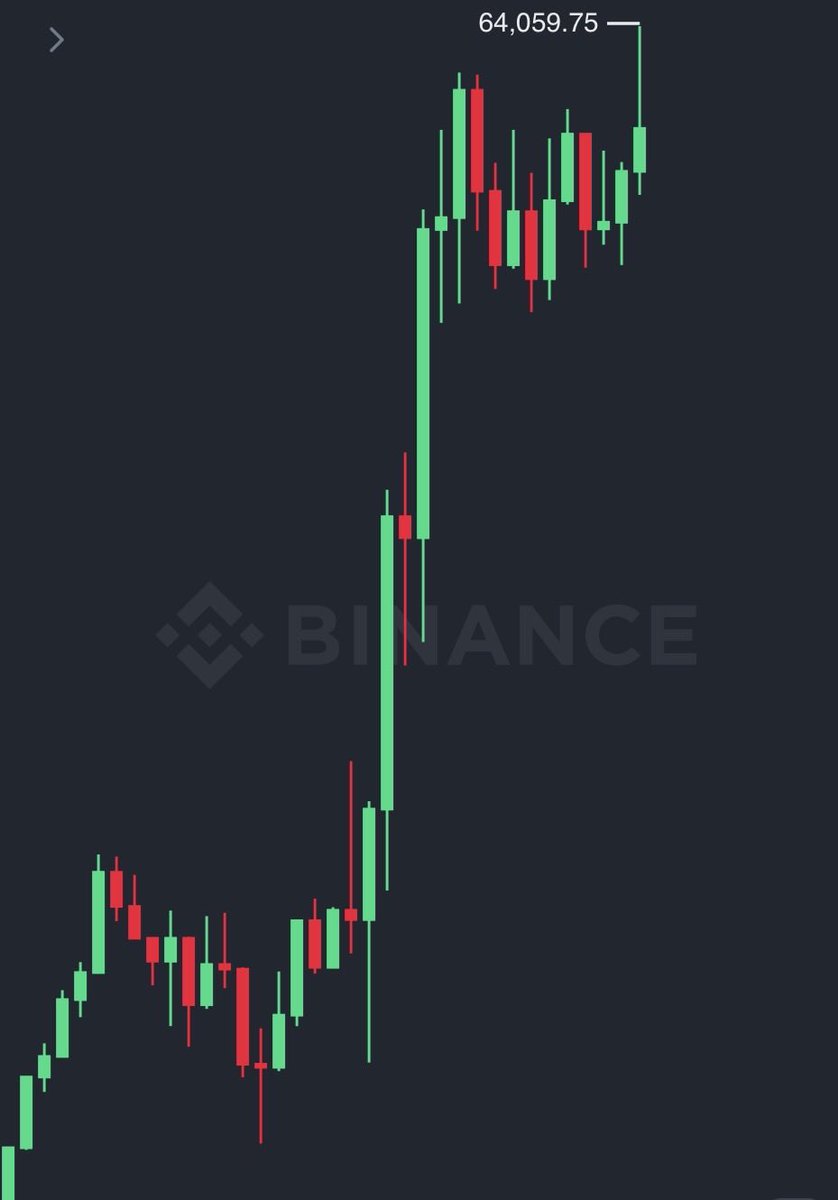
@WhaleSatoshi JUST IN: $Bitcoin forecasted to go as high as $65,721.00 this month, per BTC Maxi's
English

JUST IN: $XRP forecasted to go as high as $1.20 this month, per Kalshi traders.


English



I actually want a team full of men to play in the WNBA.
Just like I wanted a team full of men to play against Megan Rapinoe and the US National Team.
Men in women’s sports is ridiculous.
So people should be able to see how ridiculous it is.
I’d actually pay to watch that!
English
@realMAG1775 Just because you wear a training bra, don't mean you can train
English

A female drill instructor berating male recruits like she’s running the show. This is not the Marine Corps that forged warriors that I was in. This is the Corps after the Biden social engineers got their hands on it.
English
@FearedBuck "His release".....he was in a male Russian jail. Facts matter
English


@EleanorTerrett They need to include stocks and insider trading on ethics proposal if Democrats hold up Clarity.....arresting Pelosi would be a good start. Did Warren receive money from banks and Pharma to buy her vote?
English

🚨🗞️NEW: President Trump Weighs Bipartisan Ethics Proposal as Clarity Hangs in the Balance
This weekend will be a high-stakes waiting game for Clarity Act supporters as the White House considers an ethics counteroffer involving state attorneys general.
cryptoinamerica.com/p/president-tr…
English
@FBIDirectorKash @FBIHouston Kash....Please build more DNA research facilities throughout the nation. They're behind by years!
English

Another breakthrough for the FBI’s Investigative Genetic Genealogy tech team - using DNA evidence to reconstruct family trees and ultimately identify and arrest a suspect in a serial rape case related to four sexual assaults between 1997-2016.
Proud of our @FBIHouston team and partners.
FBI Houston@FBIHouston
FBI Houston's Investigative Genetic Genealogy (IGG) team worked with @houstonpolice to identify and arrest suspected serial rapist Philip Cerf. Our IGG team built family trees of persons identified as potential relatives of the unknown perpetrator at the time. "We hope his identification is a positive step in closure and healing for the victims after all these years," said SAC Jason Hudson. Cerf is suspected in at least four sexual assaults that took place between 1997 and 2016. x.com/houstonpolice/…
English

@GuntherEagleman The judge needs to lose her license to practice and removed from her position immediately ..... the overreach needs to stop and punished
English

🚨 ONE JUDGE JUST OVERRULED THE SUPREME COURT
Judge Allison Burroughs just blocked President Trump from ending Temporary Protected Status for Somali migrants.
SCOTUS already ruled lower courts don’t get to dictate this.
She did it anyway.
This isn’t a ruling.
It’s open defiance.
One unelected activist in a robe is trying to keep the border open against the President and the highest court in the land.
Impeach her and end the judicial coup.

English

This shit gas got to stop
Catturd ™@catturd2
This is what Democrats do to our country when they're in power.
English

Major updates coming to the XRP Ledger.
The XRP Ledger core philosophy on fast, low cost settlement is expressed in this expansion of capabilities. My highlights.
1) Privacy is coming to the XRP Ledger! ❤️
2) Trustless peer 2 peer swaps, OTC trading, flash loans, and very creative composition of transactions that settle atomically.
3) Permission Delegation. Born out of the necessity to manage a treasury while keeping the account in cold storage.
4) Sponsored Fees and Reserves is the onboarding tool for the XRPL. On ramps are great, but short cutting this step is even better!
Jazzi Cooper@jazzicoop
XRPL has already proven it can support tokenized assets at scale. Now it’s time to put these assets to use: global transfers, trading, collateralizing, and settling. The upcoming release of xrpld 3.3.0 includes five amendments that move XRPL significantly closer to that goal. Here's what each one enables: 𝗖𝗼𝗻𝗳𝗶𝗱𝗲𝗻𝘁𝗶𝗮𝗹 𝗠𝗣𝗧 Confidential MPT brings native privacy to Multi-Purpose Tokens (MPTs) on XRPL by combining zero-knowledge proofs with elliptic-curve encryption. Issuers and token holders can keep balances and transfer amounts private on a public ledger, while designated parties - such as auditors or regulators - can verify transaction details when required. For financial institutions, privacy is often a prerequisite for using public blockchain infrastructure. 𝗕𝗮𝘁𝗰𝗵 Batch enables up to eight transactions across different accounts to execute atomically in a single ledger. Either every transaction succeeds, or none do. For the XRPL community, this unlocks more sophisticated workflows without introducing trust assumptions. For institutions, it enables capabilities like delivery-versus-payment (DvP) and atomic settlement, where both sides of a transaction execute together or not at all. 𝗣𝗲𝗿𝗺𝗶𝘀𝘀𝗶𝗼𝗻 𝗗𝗲𝗹𝗲𝗴𝗮𝘁𝗶𝗼𝗻 Permission Delegation allows institutions to delegate narrowly scoped transaction permissions without handing over full signing authority. It's the on-chain primitive for role-based access control. Treasury teams can retain custody of issuance keys while authorizing trading desks or operational teams to perform specific actions within defined limits. This separation of duties is a common requirement for institutional operations. 𝗦𝗽𝗼𝗻𝘀𝗼𝗿𝗲𝗱 𝗙𝗲𝗲𝘀 𝗮𝗻𝗱 𝗥𝗲𝘀𝗲𝗿𝘃𝗲𝘀 Sponsored Fees and Reserves allows a sponsor - such as a bank, issuer, or platform - to pay XRP transaction fees and account reserves on behalf of another account. Users continue to own their accounts and keys, while removing one of the biggest onboarding hurdles: requiring every participant to acquire and manage XRP before they can interact with the network. This improves the experience for both institutions and consumer-facing applications. 𝗗𝘆𝗻𝗮𝗺𝗶𝗰 𝗠𝗣𝗧 Today, once a Multi-Purpose Token is issued, its configuration is effectively fixed. If an issuer needs to update transfer fees, metadata, or enable new capabilities later, the alternative is often issuing an entirely new token and migrating holders. Dynamic MPT allows issuers to define, at issuance, exactly which properties may be updated over time. This provides a practical way to adapt to changing business needs and regulatory requirements without requiring a full token migration. — The release is currently anticipated for next week. As always, these amendments will only activate following validator approval. If you run a validator, we encourage you to review the amendments as they become available. Specifications and documentation are available at opensource.ripple.com, and the Ripple team will be publishing technical deep dives, implementation guidance, and security reviews over the coming weeks.
English

Aging well after the Bank of Japan held rates once again.✅
I warned you months ago that this would be a distraction.💯
I also predicted months ago that after every missed goal post, a new one would be added to extend the theory.
Over time, the documents will always be accurate.🎯
I don’t expect those who are married to the RCT narrative to backtrack.
Just expect a new factor to be added or a new time frame that will align with future price action for XRP.
Justice@ap11cent
@SMQKEDQG was right. The RCT was a distraction - Yen has stabilised, bonds a lowering, oil collapsed. Unless something drastic actually happens now that theory looks to have lost it's legs
English
English


Hey, @Samsung, how many home service attempts is reasonable before you replace a high-end television that failed under warranty? I'm at 13 right now (including two over seven hours) and it still doesn't work.
English