William Thomason

21.1K posts

William Thomason banner
William Thomason

William Thomason

@wmthomason

music, art, etcetera - thomason.eth 🦇🔊

Fayetteville, NC Katılım Ağustos 2007
5.1K Takip Edilen1.4K Takipçiler
William Thomason retweetledi
Shanaka Anslem Perera ⚡
Yesterday, four institutions settled tokenized United States Treasury debt across borders, across banks, and across time zones on a public blockchain in under five seconds. Nobody connected it to what happened the same day at Morgan Stanley. Read them together and the two-tier architecture stops being a thesis and becomes infrastructure. On May 6, Mastercard, Ondo Finance, JPMorgan via its Kinexys blockchain platform, and Ripple completed the first near-real-time cross-border redemption of tokenized U.S. Treasuries on a public ledger integrated with interbank settlement rails. Ondo’s OUSG fund, representing short-term Treasury holdings with approximately $610 million in assets, processed the redemption on the XRP Ledger in under five seconds. Mastercard’s Multi-Token Network routed the instruction to Kinexys. Kinexys debited Ondo’s blockchain deposit account. JPMorgan’s correspondent banking delivered USD to Ripple’s Singapore bank account. The entire workflow executed outside traditional banking hours. Ian De Bode, president of Ondo Finance, called it the first time tokenized Treasuries had settled across borders and banks in near real time. The XRP Ledger was chosen for a reason that matters more than speed. XRPL tokenizes assets via native Issued Currencies with built-in Trust Lines that give issuers the ability to freeze, authorize, and restrict transfers at the protocol level without smart contracts. Ondo controls who holds OUSG. Mastercard controls the routing. JPMorgan controls the fiat leg. Every node in the settlement chain has a compliance switch. The blockchain is public. The assets on it obey. On the same day, Morgan Stanley began actively testing direct cryptocurrency trading on its E*Trade platform for 8.6 million self-directed clients at 0.50% per transaction. The bank already launched MSBT, the lowest-fee spot Bitcoin ETF at 0.14%, on April 8. It advises clients to allocate two to four percent to Bitcoin. It plans a proprietary digital wallet for the second half of 2026. Morgan Stanley is building every on-ramp to Bitcoin, the one public blockchain that has no Trust Lines, no issuer freeze, no compliance switch, and no admin key at any layer of its protocol. Two public blockchains. Two architectures. One has freeze switches at every node. The other has none. Both are being integrated into Wall Street’s plumbing on the same day by some of the largest financial institutions on the planet. The GENIUS Act mandates freeze capabilities for stablecoins. The CLARITY Act classifies Bitcoin as a digital commodity because it lacks them. Mastercard is building the controllable tier’s settlement infrastructure with a $1.8 billion BVNK acquisition and more than 100 partners in its Crypto Partner Program. Morgan Stanley is building the uncontrollable tier’s distribution infrastructure across ETF, spot, advisory, and wallet layers. Bessent froze $344 million in USDT on April 24 under Operation Economic Fury. Nobody froze a single satoshi because nobody can. The distinction is no longer public versus private blockchain or crypto versus banks. It is controllable versus uncontrollable, and both sides are now being built by the institutions that once rejected both. Mastercard and JPMorgan are building rails for money that obeys. Morgan Stanley is building on-ramps to money that computes. The architecture is live. Both tiers are being constructed simultaneously, by the same class of institution, for different purposes, on different ledgers. One settles tokenized Treasuries in five seconds with freeze switches at every layer. The other settles value in ten minutes with no switches at all. open.substack.com/pub/shanakaans…
Shanaka Anslem Perera ⚡ tweet media
English
56
369
1.4K
117.2K
William Thomason retweetledi
Gene Munster
Gene Munster@munster_gene·
Last night Anthropic announced a multi year $200B commitment to $GOOG Cloud. The debate about can Anthropic make good on the deal misses the point. The big picture is this announcement underscores how early we are in AI, with the need for compute taking off on the heels of last Novembers step function improvement in many of the models utility. That’s good news for the entire AI model and infrastructure stack.
English
15
13
229
18.5K
William Thomason
William Thomason@wmthomason·
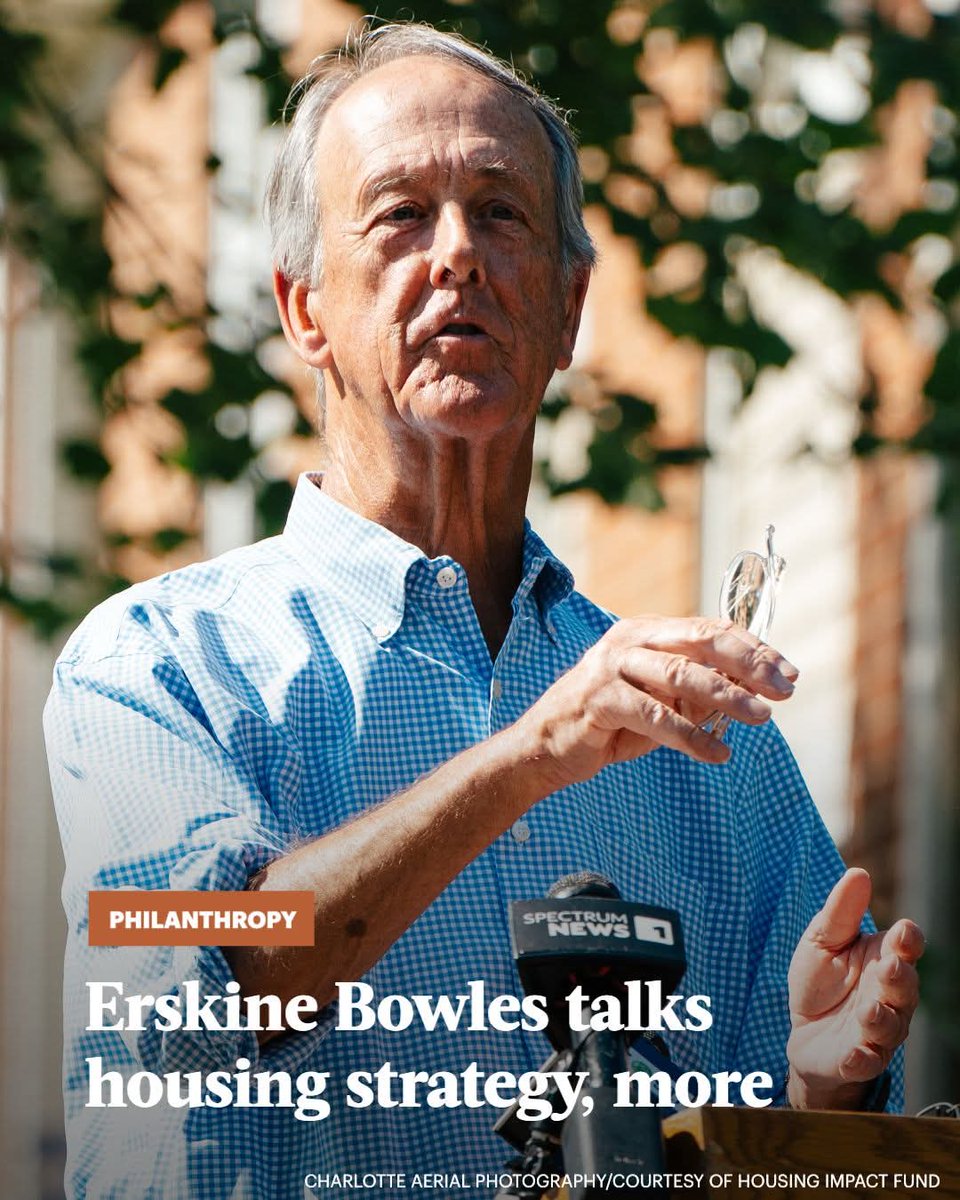
"Erskine Bowles recently talked with @CBJnewsroom about his interest in affordable housing and what he’s focusing on in his semi-retirement. Here are excerpts from that interview: bit.ly/4naJH2B
William Thomason tweet media
English
0
0
0
11
William Thomason retweetledi
Kentucky Derby
Kentucky Derby@KentuckyDerby·
If you watch anything today, watch Jose Ortiz’s ride in the Kentucky Derby👏👏👏
English
40
322
1.9K
58.1K
William Thomason retweetledi
Shanaka Anslem Perera ⚡
Shanaka Anslem Perera ⚡@shanaka86·
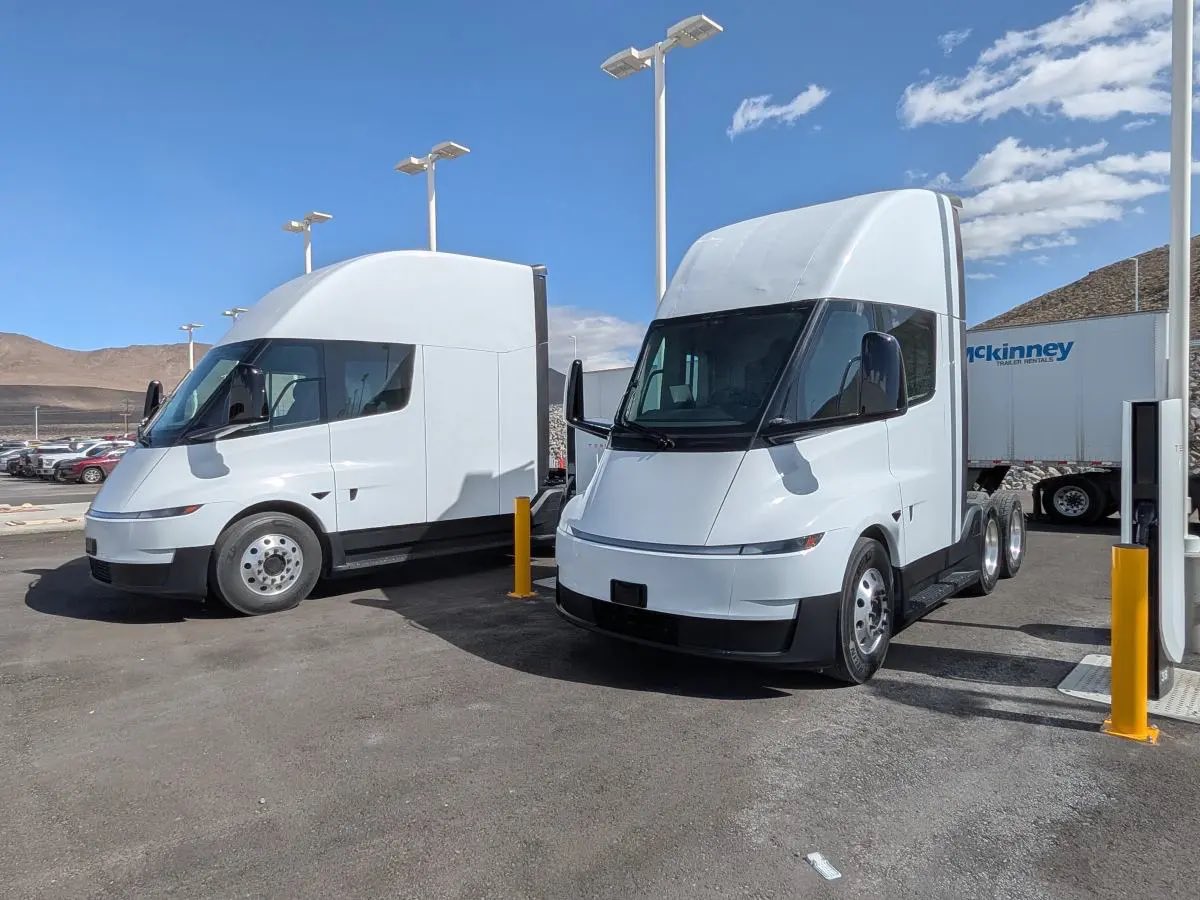
In 2020 Bill Gates wrote that electric vehicles would “probably never be a practical solution for things like 18-wheelers.” In 2018 Martin Daum, head of Daimler Trucks, said the Tesla Semi “defies laws of physics if true” and offered to buy two and tear them apart to check the specs. In 2019 Professor Markus Lienkamp, Chair of Automotive Engineering at TU Munich, called it “pointless both economically and ecologically” for long-haul. In 2018 a Cummins spokesman told Bloomberg: “Right now, we don’t think it’s viable.” Yesterday the first Tesla Semi rolled off the high-volume production line in Nevada. The specs are now public on tesla.com. Standard Range: 325 miles at 82,000 pounds gross combined weight. Long Range: 500 miles at the same weight. Energy consumption: 1.7 kilowatt-hours per mile. Three independent rear motors producing up to 800 kilowatts. Charging at 1.2 megawatts via Megacharger, recovering 60 percent of range in 30 minutes. Every critic made the same argument. Batteries are heavy. Heavy batteries require more energy to move. More energy requires more batteries. The weight spiral makes long-haul electric trucks physically impossible beyond short regional routes. The argument was logical. It was also wrong. And it was wrong because of one number. 1.7 kilowatt-hours per mile. ABF Freight measured 1.55 kWh per mile over a 4,494-mile pilot at full 82,000-pound loads including Donner Pass. PepsiCo’s fleet confirmed roughly 1.7 kWh per mile across years of commercial operation with 65 percent of miles above 70,000 pounds. The trucks met or beat Tesla’s published efficiency. At maximum legal weight. On public highways. In commercial freight service. The weight spiral breaks when efficiency per mile drops below the threshold where pack size stays manageable at the target range. Tesla’s 4680 cells, manufactured at Giga Nevada in the same complex as the Semi factory, achieved the energy density that Gates, Daum, Lienkamp, and Cummins assumed would not arrive for decades. The Standard Range variant weighs under 20,000 pounds. A conventional diesel Class 8 tractor weighs 15,000 to 22,000. The weight penalty on the Standard Range is functionally zero. The Long Range at 23,000 pounds carries a modest payload trade but delivers 500 miles of range at 82,000 pounds gross weight. Fleet operators report energy costs of roughly 15 to 17 cents per mile versus 48 cents for diesel. No oil volatility. No DEF fluid. No particulate filter replacements. No turbocharger service intervals. Over-the-air updates instead of scheduled downtime. Daimler’s eCascadia delivers 155 to 230 miles with 270-kilowatt charging. Tesla delivers double the range at four times the charge rate. Daimler has the dealer network. Tesla has the physics. Two Megacharger sites are operational today with 64 more mapped across 15 states. Pilot Travel Centers is building the first wave with openings targeted for summer. The infrastructure is early. The truck is not. Jay Leno drove a prototype and called it “the end of diesel.” That was entertainment. Yesterday was engineering. The first unit off a line designed for 50,000 trucks per year, powered by cells manufactured in the same building, charged by a proprietary network being built along the same corridors the trucks will drive. The laws of physics did not change. The batteries did. And four of the most prominent voices in transportation, energy, and technology spent the better part of a decade being wrong about which laws mattered.
Shanaka Anslem Perera ⚡ tweet media
English
52
180
819
75.8K
William Thomason retweetledi
Ricardo
Ricardo@Ric_RTP·
Nvidia just admitted that "AI efficiency" is a LIE. Every major tech company is doing the same thing right now: Firing humans and replacing them with AI to "cut costs." 92,000 tech workers laid off in 2026 so far. Every single earnings call sounds the same: "AI is driving efficiency." But the VP of Applied Deep Learning at Nvidia, the company that literally SELLS the AI infrastructure, just told Axios: "For my team, the cost of compute is far beyond the costs of the employees." The man whose entire job is making AI work admitted that AI costs his company MORE than the humans it's supposed to replace. And he doesn't work at some struggling startup. We're talking about the most valuable company on Earth. An MIT study backs this up too: Researchers analyzed whether AI could actually replace human workers at a competitive cost and found that AI automation only makes financial sense in 23% of jobs. In the other 77%, humans are still cheaper. So companies are firing cheap labor and replacing it with expensive labor, then telling shareholders it's "innovation." But it gets even WORSE... Uber just revealed that they burned through their ENTIRE 2026 AI budget in 4 months. Their CTO said: "I'm back to the drawing board because the budget I thought I would need is blown away already." What happened is that Uber gave their engineers access to AI coding tools and encouraged them to use them as much as possible. They even built internal leaderboards ranking engineers by how many AI tokens they consumed, basically gamifying their own budget crisis without realizing it. By March, 95% of Uber's engineers were using AI tools monthly. 70% of all committed code was coming from AI. Monthly API costs per engineer hit $500 to $2,000. One software engineer in Stockholm told the New York Times: "I probably spend more than my salary on Claude." A human being now costs LESS than the AI tool they use to do their job. And Uber isn't some edge case. Big Tech has announced $740 billion in AI capital expenditures this year alone, up 69% from 2025, according to Morgan Stanley. Meanwhile the Yale Budget Lab says there is NO widespread data showing AI is actually displacing jobs or improving productivity at scale. So follow the money: Companies fire humans ↓ Stock goes up because "AI efficiency" ↓ Those same companies spend MORE on AI than they saved on salaries ↓ That money flows to Nvidia, Anthropic, OpenAI, and Microsoft ↓ Those companies use the revenue to justify their own insane valuations ↓ Everyone books growth ↓ But nobody's actually saving money McKinsey projects total AI spending will hit $5.2 TRILLION by 2030. The biggest wealth transfer in modern history is happening right now, and it's not from workers to companies. It's from companies to AI infrastructure providers. Every dollar "saved" on layoffs is being spent twice over on compute, tokens, and data centers. Nvidia posted $31.9 billion in profit last quarter. And somebody is paying that bill - the same companies telling their employees that AI made them "redundant." The entire narrative is a shell game: CEOs get to announce layoffs, Wall Street rewards them with a stock bump, and then the real cost shows up three months later when the AI budget explodes and nobody connects the two events. What's your take on this?
Ricardo tweet media
English
254
1.1K
2.9K
300.9K
William Thomason
William Thomason@wmthomason·
Tedeschi Trucks Band played in Raleigh, NC. 4.29.26 🎶 songs that they played - not a sound board or bootleg - just previous recordings mostly live. music.youtube.com/playlist?list=… if you have a recording of this, or any TTB concerts, share a link S.V.P.
William Thomason tweet mediaWilliam Thomason tweet media
English
0
0
0
46
William Thomason
William Thomason@wmthomason·
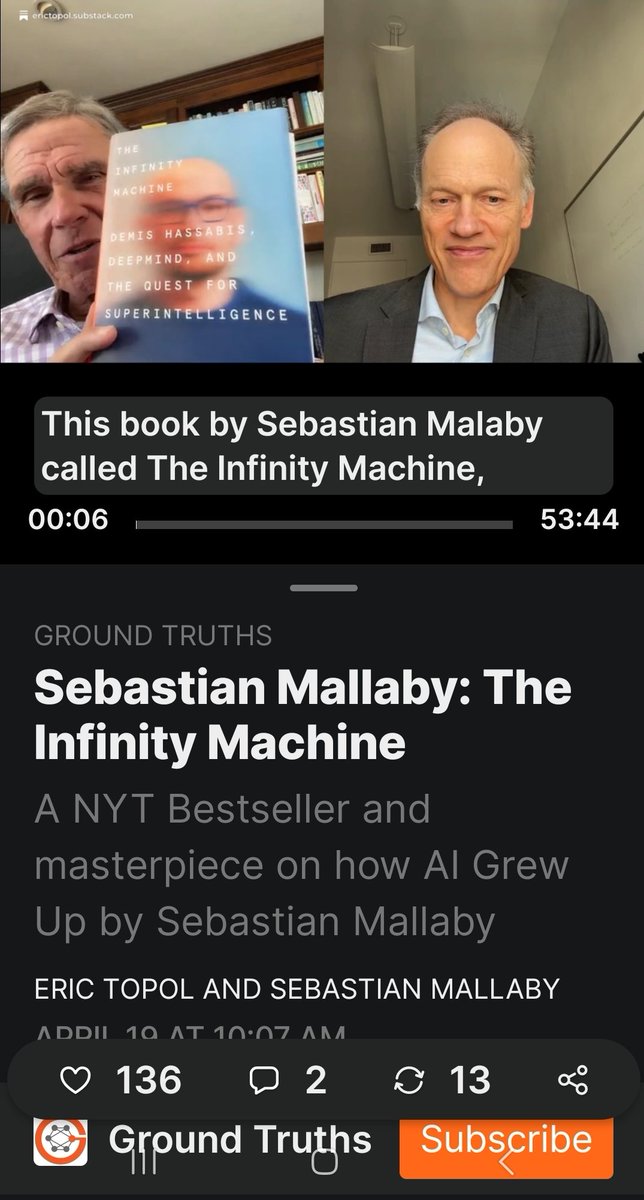
Discussion about the book The Infinity Machine - 53 minutes @erictopol/note/p-192906777?r=qrr0" target="_blank" rel="nofollow noopener">substack.com/@erictopol/not… #AI
William Thomason tweet media
English
0
0
0
10
William Thomason retweetledi
The Kobeissi Letter
The Kobeissi Letter@KobeissiLetter·
BREAKING: The US Government has begun refunding up to $166 billion in tariffs charged under President Trump after the Supreme Court ruled the policy unlawful. Beginning today, businesses can file claims through a new customs system. Over 330,000 importers across 53 million shipments are expected to be eligible. Once approved, refunds plus interest will be paid within 60 to 90 days.
The Kobeissi Letter tweet media
English
1.9K
4.6K
18.1K
3.1M