Workfabric AI

19 posts

Workfabric AI banner
Workfabric AI

Workfabric AI

@workfabricai

Transform how your teams work into AI-ready context.

Palo Alto, CA Katılım Ağustos 2025
7 Takip Edilen86 Takipçiler
Sabitlenmiş Tweet
Workfabric AI
Workfabric AI@workfabricai·
The most important asset companies will have in the AI era is context, a durable record of how organizations actually get work done. Most enterprise AI still treats context as static input - documents, emails, and stored records. But real businesses don’t run only on static data. They run on something far more dynamic and specific to them - decisions, exceptions, approvals, judgment calls, and hard-won operating knowledge that emerges in live workflows, handoffs, escalations, and day-to-day collaboration. This context is specific and unique to each team within each organization. Today, that context rarely survives. A discount is approved, a contract is escalated, or an exception is granted. The system of record captures the outcome, but the reasoning as to why and how it happened disappears. No replay. No audit. No precedent. But that is the exact truth that AI needs to have situational awareness, serve your teams, and produce ROI. That’s the gap we are building ContextFabric to fill. ContextFabric turns your teams’ lived work into an execution backbone for AI: -Learns intent from real workflows and work patterns -Delivers the right context at the moment decisions are made -Powers every agent with shared, governed enterprise context This is how AI moves beyond pilots and becomes a true digital teammate, one that is embedded in daily operations, operating within real constraints, and delivering durable enterprise value. Context is the enduring competitive advantage in the AI era. Read more about ContextFabric in the link below (in the comments section). If you’d like to learn more, we’d love to hear from you. Feel free to reach out to us (contact@workfabric.com) We just launched a new site. See what we’re building: workfabric.com @RohanMurty @gnychis @guruprasad_r94 @NabeelQuryshi
English

22
5
36
17.1K
Workfabric AI retweetledi
nasscom events
nasscom events@NasscomEvents·
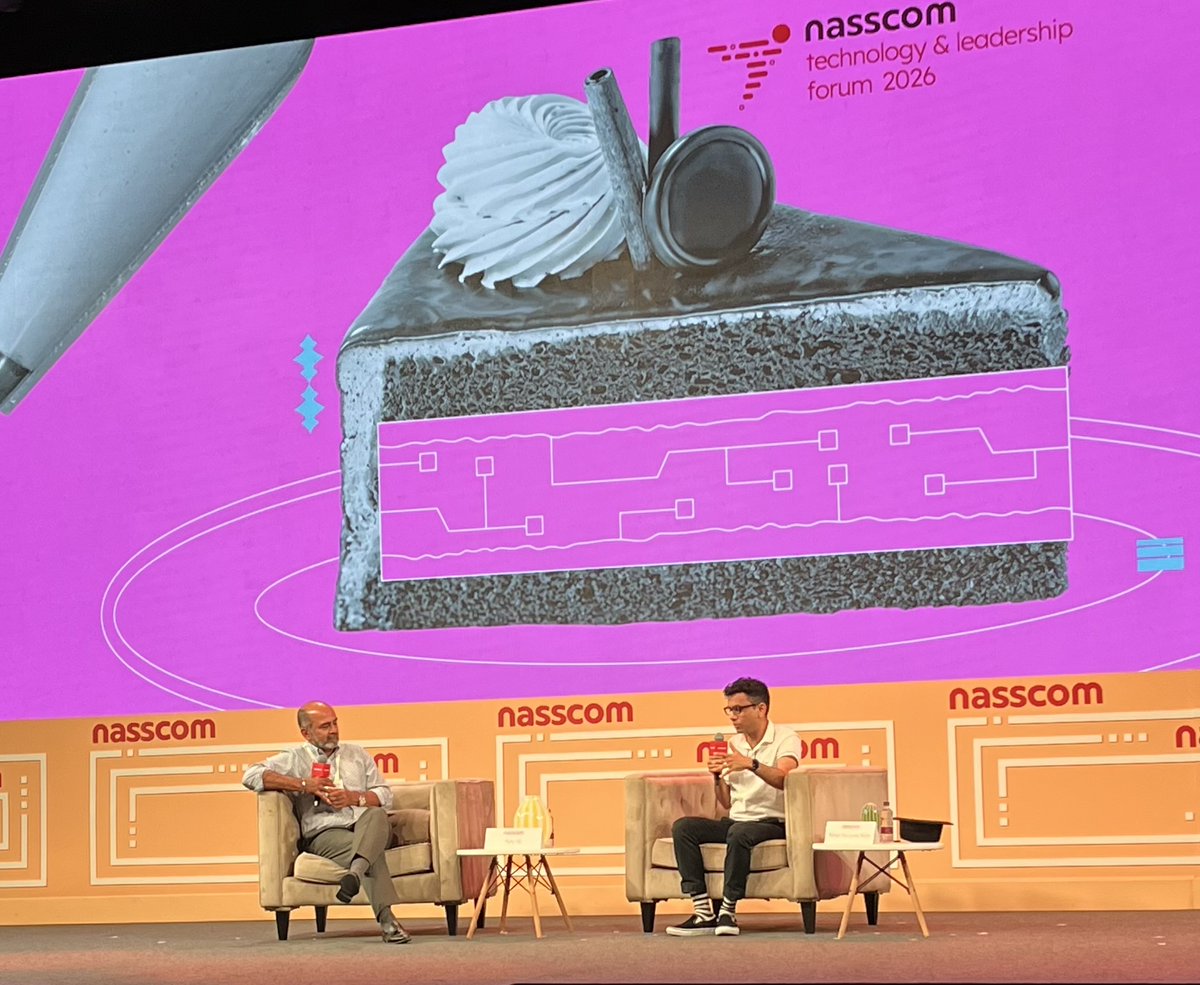
Fireside Chat at #NTLF26 saw @RohanMurty, Founder, @workfabricai, in conversation hosted by Ajay Vij, Senior Country Managing Director, @Accenture, explore whether AI truly understands how work happens inside enterprises.
nasscom events tweet media
English
1
2
3
169
Workfabric AI retweetledi
Rohan N. Murty
Rohan N. Murty@RohanMurty·
If you and your closest competitor use the same AI models, the same platforms, and the same tools then what exactly is your edge? This is the question @imravikumars (CEO, @Cognizant ) and I set out to answer in our new @HarvardBiz article. We answer this question with data. After studying 200+ work patterns across 50+ large enterprises, the answer was clear: context. Not the models. Not the tools. Not the budget.
Workfabric AI@workfabricai

New in Harvard Business Review - from our founder @RohanMurty and @Cognizant CEO @imravikumars: Context is Your Competitive Advantage. The core insight from actual measurements in enterprises - when every company has access to the same AI models and platforms, the only remaining differentiator is how well you ground that AI in how your organization actually works. 200+ work patterns. 50+ large enterprises. One consistent finding: context, not technology, explains the performance gap. This is a follow-up to an earlier HBR article, which was the first to show real-world proof that context-driven AI produces dramatically better outcomes. Same tools, radically different results. At Workfabric AI, this is exactly what we do. We capture execution context, the decision patterns, coordination rhythms, and trade-offs that no system of record holds, and make it available to AI at the moment of decision. Context compounds. And the companies that capture it first will be the ones that pull ahead. @gnychis @guruprasad_r94 @NabeelQuryshi @juggy_17 workfabric.com/context-is-you…

English
1
1
1
253
Workfabric AI retweetledi
Ravi Kumar S
Ravi Kumar S@imravikumars·
Excited to share our latest @HarvardBiz co-authored with @workfabricai Co-founder Rohan Murty on why context is the true competitive advantage in the age of AI. We partner with Workfabric AI on this pioneering work of Context Engineering. We present that AI must be grounded in the unique operating DNA of a business to unlock real value. Our conclusion comes from five years of rigorous analysis, examining over 200 work patterns across more than 50 Fortune 500 and equivalent global enterprises. It’s this deep, institutional knowledge that turns technological promise into tangible performance @Cognizant
Cognizant@Cognizant

In a new article for @HarvardBiz, @imravikumars and @RohanMurty explore why context offers companies an edge in the AI era. Read more: cgnz.at/6011QVrxd

English
1
2
11
919
Workfabric AI
Workfabric AI@workfabricai·
New in Harvard Business Review - from our founder @RohanMurty and @Cognizant CEO @imravikumars: Context is Your Competitive Advantage. The core insight from actual measurements in enterprises - when every company has access to the same AI models and platforms, the only remaining differentiator is how well you ground that AI in how your organization actually works. 200+ work patterns. 50+ large enterprises. One consistent finding: context, not technology, explains the performance gap. This is a follow-up to an earlier HBR article, which was the first to show real-world proof that context-driven AI produces dramatically better outcomes. Same tools, radically different results. At Workfabric AI, this is exactly what we do. We capture execution context, the decision patterns, coordination rhythms, and trade-offs that no system of record holds, and make it available to AI at the moment of decision. Context compounds. And the companies that capture it first will be the ones that pull ahead. @gnychis @guruprasad_r94 @NabeelQuryshi @juggy_17 workfabric.com/context-is-you…
Workfabric AI tweet media
English
1
2
9
2K
Workfabric AI
Workfabric AI@workfabricai·
Workfabric AI and Context Engineering are now being discussed on earnings calls! On @Cognizant's (strong) Q4 earnings call, Ravi Kumar S (CEO, Cognizant) spoke about Context Engineering as a strategic focus and named WorkFabric AI as the platform partner behind it. This builds on Cognizant Technology Solutions’s earlier commitment to train and deploy 1,000 context engineers on ContextFabric, our context engineering platform, to operationalize context across the enterprise. Context is becoming infrastructure. This is what it looks like when AI moves from models → systems → real work. Proud to be partnering with @imravikumars and the Cognizant leadership team that’s building for where enterprise AI is actually going. @RohanMurty @gnychis @NabeelQuryshi @guruprasad_r94 fool.com/earnings/call-…
English
3
2
9
783
Workfabric AI retweetledi
Athena
Athena@shiraviii·
Cognizant earnings call today :) hat tip to the hardest workers on earth @workfabricai
Athena tweet media
English
0
1
6
372
Workfabric AI
Workfabric AI@workfabricai·
What can Cursor and Granola teach us about sales onboarding? At a Fortune 500 enterprise software company, we cut sales onboarding time in half by applying the same idea they use: capture intelligence from how teams actually work. Our point is simply this: humans, not systems, are the true source of context. This isn’t about better models. It’s about better context. Every accept, edit, reject, and rewrite becomes an execution trace. Those traces are live training signals that compound over time. We built a sales coaching system that learned directly from how top reps sell in practice. Not from CRM fields or static playbooks, but from the micro-actions that reveal judgment, confidence, and intent. The results were stark: • New reps closed their first deal in 3 weeks vs. the typical 7 • Reps hit quota consistently by month 5 instead of month 9 workfabric.com/how-human-work… @RohanMurty @gnychis @NabeelQuryshi @guruprasad_r94 @juggy_17
Workfabric AI tweet media
English
0
4
5
1.4K
Workfabric AI
Workfabric AI@workfabricai·
Most productivity problems are social, not personal. That’s why AI is shifting from single-player to multi-player. Read @RohanMurty's article for @IndiaToday, in their latest issue on themes for AI. After working with Fortune 500 teams deploying real AI agents, we've learned the biggest drain on productivity isn't individual inefficiency. It's coordination. Handoffs between teams, unclear ownership, decisions made in one place but needed in another, work stalled because context lives elsewhere. Multi-player AI isn’t “my assistant.” It’s “our colleague.” Every team builds tribal knowledge about what usually goes wrong and how similar problems were handled before. Today, that knowledge is scattered across people and systems. Multi-player AI can learn from these experiences and make them available to everyone, so answers don’t depend on who happens to remember. The biggest gains won’t come from individual copilots, but from AI that shares team context. indiatoday.in/magazine/futur…
English
1
3
7
430
Workfabric AI
Workfabric AI@workfabricai·
AI agents need a harness that safeguards execution, aligns with how teams work, and evolves over time As we started building production agents for Fortune 500 companies, one thing became impossible to ignore: success has very little to do with squeezing more text into the context window. It’s tempting to frame the problem as “context engineering” in the narrow sense. Bigger prompts. Better summaries. Smarter retrieval. But once agents run for days or weeks, execute hundreds of tool calls, and move through real enterprise workflows, that framing collapses — because the environment is not static. The business changes. The team adapts. New conditions emerge. For the agent to remain useful, it must adapt alongside the team. This is not a context window problem. It is an execution and alignment problem. An agent harness is the system that sits around a model to support long-running execution. It governs how context is assembled and refreshed, how plans evolve, how tools are invoked, how state persists, and how drift or breakdowns are detected and corrected. More importantly, it enables adaptation by shaping what context the agent receives as work evolves. As agents become more autonomous, the harness increasingly holds execution together. A useful mental model: - Model = Individual reasoning capability - Context window = Short-term working memory - Harness = The system that safeguards execution, maintains alignment, and enables adaptation - Agent = The digital worker performing task-specific logic Many of the most effective “AI tools” today are best understood through this lens. Claude Code, Manus, and other vertical agents differentiate not on the model they use, but on how well their harnesses manage behavior over time: maintaining state, revisiting plans, coordinating tools, and keeping work coherent across long horizons. What became obvious in real deployments is that the harness cannot be designed from abstractions alone. Large enterprises do not run on clean workflows or fully documented logic. They run on undocumented decisions, informal processes, edge cases, exceptions, and tribal knowledge. That logic does not live in prompts or systems of record. It lives in human execution. You see it in digital interactions: - What gets rewritten before approval - Where someone pauses, escalates, or overrides - Which signals are trusted versus ignored - How exceptions are handled when reality breaks the workflow These execution-time behaviors form decision traces. They are the most reliable source of truth for how work actually happens. When signals from human work are captured, the learning signal becomes explicit. Every correction, override, escalation, or adjustment teaches the harness how work is really done. Over time, the harness evolves by observing how teams adapt. The competitive advantage is no longer the prompt. It is not even the model. It is the harness, shaped by real execution. @NabeelQuryshi @RohanMurty @gnychis @guruprasad_r94 @juggy_17
English
0
2
3
413
Workfabric AI
Workfabric AI@workfabricai·
How much context is there really inside the enterprise? The largest 2000 companies generate 50+ trillion digital work experiences per year. After deploying real agentic workflows inside multiple Fortune 500 companies, one fact became clear: we are underestimating how much context exists inside the enterprise, and how little of it shows up in systems of record. The tribal knowledge of how teams work lives in digital experiences created as work happens. This is the context that matters most. Here's what we've observed in deployments: -Each person generates ~2,500 digital work experiences per day -A 20-person team generates ~50,000/day -Over ~250 working days, that’s ~12.5M digital work experiences per year for one small team Scaled up, a 50,000-person company (median Fortune 500) generates ~31B digital work experiences per year. And this scale will only accelerate with more digitization of work. For comparison, social media companies are considered data giants because they collect clicks, views, graphs, and engagement at global scale. Yet enterprises generate roughly 8x more data in digital work experiences than all social media interaction data combined. This dataset was ignored for decades because there was no practical way to use it. Social media turned interaction data into trillion-dollar ad engines. Enterprises had no equivalent engine. What are these “digital work experiences”? Execution traces of how teams actually work: steps, sequence, systems touched, approvals, exceptions, dependencies, workarounds, and handoffs across email, documents, CRMs, ERPs, ticketing tools, browsers, spreadsheets, and legacy software. This is the context that matters most because it’s where judgment lives. Systems of record capture the outcome: a form, a finalized doc, a deal marked closed, an email sent. But there is often an order of magnitude more signal behind the outcome than in the outcome itself: the checks run, sources consulted, policies applied, exceptions allowed, approvals required, and the reasoning that made it correct here. Example: a workflow that looks simple in the CRM, “generate an account renewal email,” is rarely simple. The real work involves pulling usage and billing from multiple systems, understanding prior concessions, applying pricing and approval policies, coordinating with finance and legal, and relying on tribal knowledge about similar renewals. None of that execution context is captured. AI changes that. These execution traces are precisely what you need to build a company’s context backbone, a living layer that reflects how work actually gets done: what mattered, which policies applied, where exceptions were made, who approved what, and why. Context is not a feature. It is the missing substrate that allows agents to operate with real situational awareness inside a company. That’s why we are building ContextFabric. @gnychis @RohanMurty @NabeelQuryshi
Workfabric AI tweet media
English
2
3
7
724
Workfabric AI
Workfabric AI@workfabricai·
Not theory. Not abstract AI advice. Production. These are real lessons from a live Fortune 500 retailer deployment last year, and they explain why we built ContextFabric. The durable enterprise AI moat is context derived from execution traces of how teams actually work - the systems they touch, the checks they run, the exceptions they allow, and the approvals they require. And this is specific to each team in each org. It is not easily replicable. From our HBR article (April 2025) written by @RohanMurty @imravikumars (CEO, @Cognizant) and @gnychis workfabric.com/context-makes-…
English
0
5
11
811
Workfabric AI retweetledi
Bob McGrew
Bob McGrew@bobmcgrewai·
Smarter models are no longer the barrier to deploying AI for real problems in enterprise - context is. Your AI is smart enough to be a teammate, it just doesn’t know what it means to do a good job. I’m excited to be supporting @workfabricai led by @RohanMurty and @gnychis!
Workfabric AI@workfabricai

The most important asset companies will have in the AI era is context, a durable record of how organizations actually get work done. Most enterprise AI still treats context as static input - documents, emails, and stored records. But real businesses don’t run only on static data. They run on something far more dynamic and specific to them - decisions, exceptions, approvals, judgment calls, and hard-won operating knowledge that emerges in live workflows, handoffs, escalations, and day-to-day collaboration. This context is specific and unique to each team within each organization. Today, that context rarely survives. A discount is approved, a contract is escalated, or an exception is granted. The system of record captures the outcome, but the reasoning as to why and how it happened disappears. No replay. No audit. No precedent. But that is the exact truth that AI needs to have situational awareness, serve your teams, and produce ROI. That’s the gap we are building ContextFabric to fill. ContextFabric turns your teams’ lived work into an execution backbone for AI: -Learns intent from real workflows and work patterns -Delivers the right context at the moment decisions are made -Powers every agent with shared, governed enterprise context This is how AI moves beyond pilots and becomes a true digital teammate, one that is embedded in daily operations, operating within real constraints, and delivering durable enterprise value. Context is the enduring competitive advantage in the AI era. Read more about ContextFabric in the link below (in the comments section). If you’d like to learn more, we’d love to hear from you. Feel free to reach out to us (contact@workfabric.com) We just launched a new site. See what we’re building: workfabric.com @RohanMurty @gnychis @guruprasad_r94 @NabeelQuryshi

English
4
10
76
14.2K
Workfabric AI
Workfabric AI@workfabricai·
The most important asset companies will have in the AI era is context, a durable record of how organizations actually get work done. Most enterprise AI still treats context as static input - documents, emails, and stored records. But real businesses don’t run only on static data. They run on something far more dynamic and specific to them - decisions, exceptions, approvals, judgment calls, and hard-won operating knowledge that emerges in live workflows, handoffs, escalations, and day-to-day collaboration. This context is specific and unique to each team within each organization. Today, that context rarely survives. A discount is approved, a contract is escalated, or an exception is granted. The system of record captures the outcome, but the reasoning as to why and how it happened disappears. No replay. No audit. No precedent. But that is the exact truth that AI needs to have situational awareness, serve your teams, and produce ROI. That’s the gap we are building ContextFabric to fill. ContextFabric turns your teams’ lived work into an execution backbone for AI: -Learns intent from real workflows and work patterns -Delivers the right context at the moment decisions are made -Powers every agent with shared, governed enterprise context This is how AI moves beyond pilots and becomes a true digital teammate, one that is embedded in daily operations, operating within real constraints, and delivering durable enterprise value. Context is the enduring competitive advantage in the AI era. Read more about ContextFabric in the link below (in the comments section). If you’d like to learn more, we’d love to hear from you. Feel free to reach out to us (contact@workfabric.com) We just launched a new site. See what we’re building: workfabric.com @RohanMurty @gnychis @guruprasad_r94 @NabeelQuryshi
English
22
5
36
17.1K