Parag Waknis

6K posts

Parag Waknis banner
Parag Waknis

Parag Waknis

@wparag

Macro & Monetary Economics @SRMUAP. views personal, retweets not endorsements & likes= bookmarks. PhD from @UConn

Delhi, India Katılım Temmuz 2010
2.1K Takip Edilen1.2K Takipçiler
Sabitlenmiş Tweet
Parag Waknis
Parag Waknis@wparag·
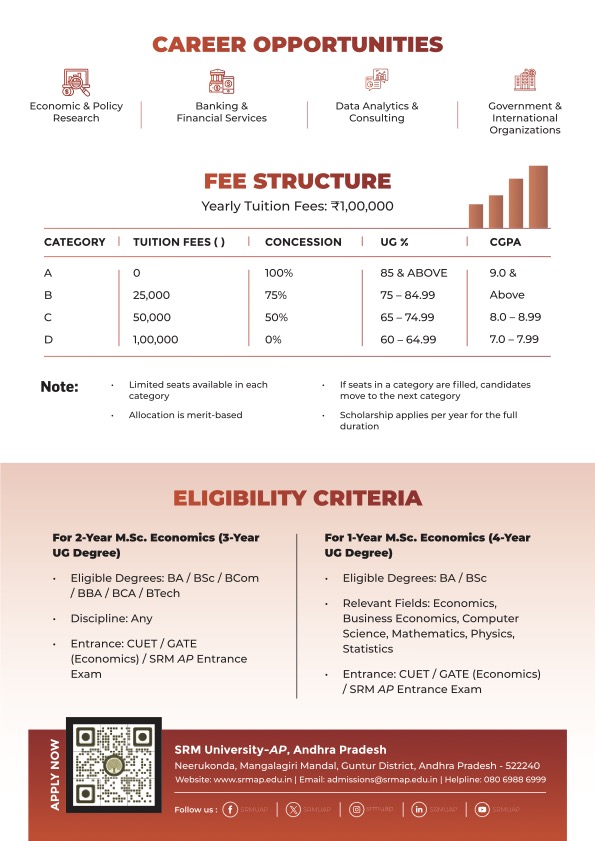
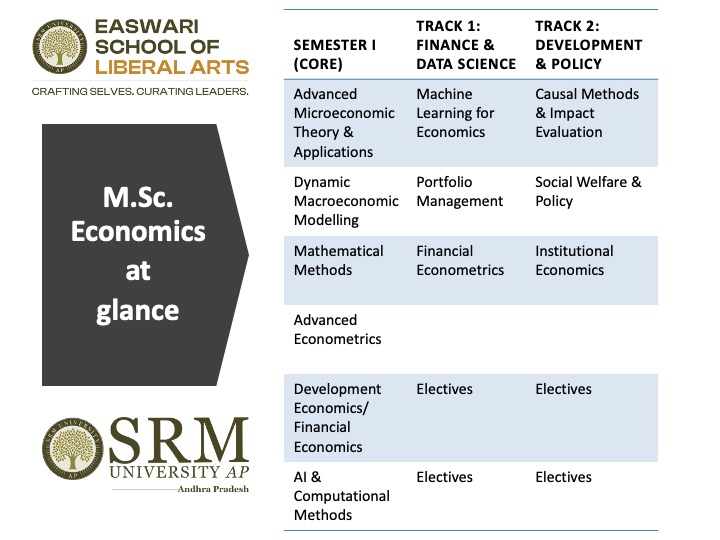
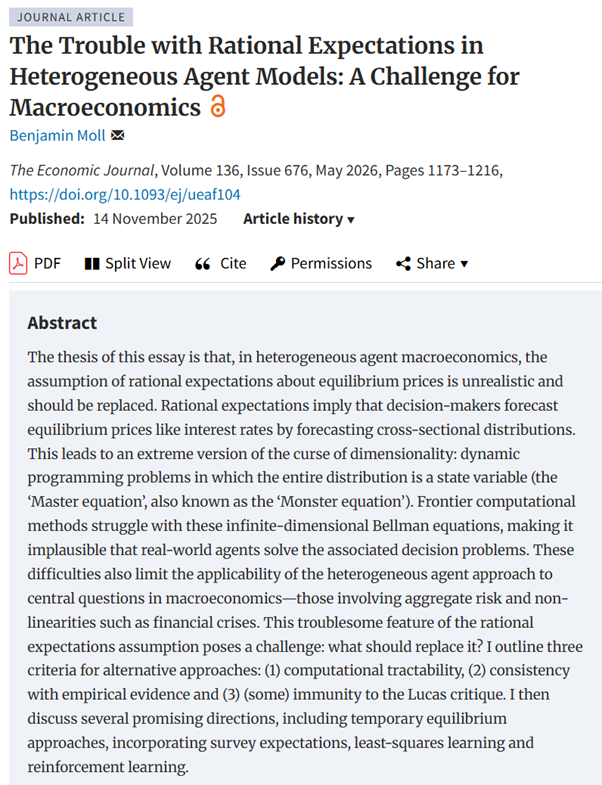
We didn't just add AI as a module. We asked a harder question: if AI already runs the regressions or simulations, what should an economist actually know? This is Economics training rebuilt for a world where the tools are smarter. So the thinking has to be sharper. Excited for what's ahead? Come join us to find out. @SRMUAP @vishnupad1

Parag Waknis tweet mediaParag Waknis tweet mediaParag Waknis tweet media
English

0
0
0
110
Parag Waknis retweetledi
John Cajas Guijarro 🇵🇸 🇨🇩
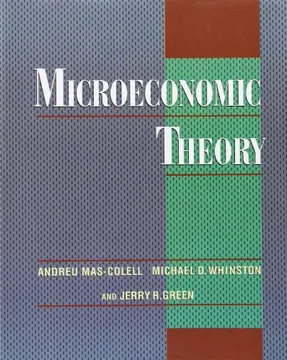
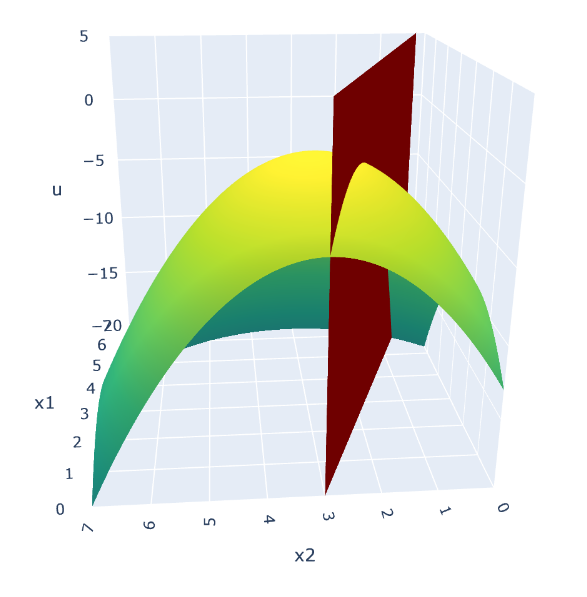
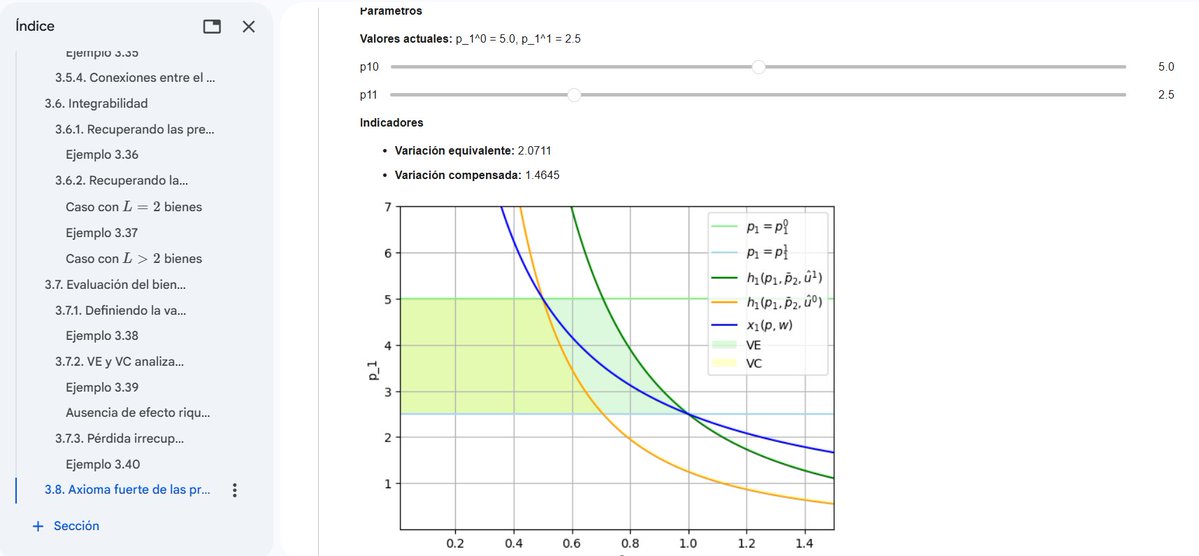
Fue complejo, pero se completó una primera versión de los Notebooks en Google Colab con gran parte del capítulo 3 de Mas-Colell, Whinston y Green (1995) (incluyendo varios ejemplos en Python). Este es el nivel que buscamos alcanzar con el doctorado de economía en @FLACSOec.
John Cajas Guijarro 🇵🇸 🇨🇩 tweet mediaJohn Cajas Guijarro 🇵🇸 🇨🇩 tweet mediaJohn Cajas Guijarro 🇵🇸 🇨🇩 tweet mediaJohn Cajas Guijarro 🇵🇸 🇨🇩 tweet media
Español
8
44
403
18.6K
Parag Waknis retweetledi
J-PAL
J-PAL@JPAL·
Excited to announce Frontiers of Applied Economics—a new elective in the DEDP MicroMasters Program with @MITxCourses! This masters-level course covers topics in public finance, market design, labor economics, transportation & more. Learn from 6 distinguished MIT professors over 11 weeks. Free to audit or earn a certificate. Enroll today: bit.ly/3P12CjC
J-PAL tweet media
English
0
12
55
4.7K
Parag Waknis retweetledi
International and Monetary Economics Network
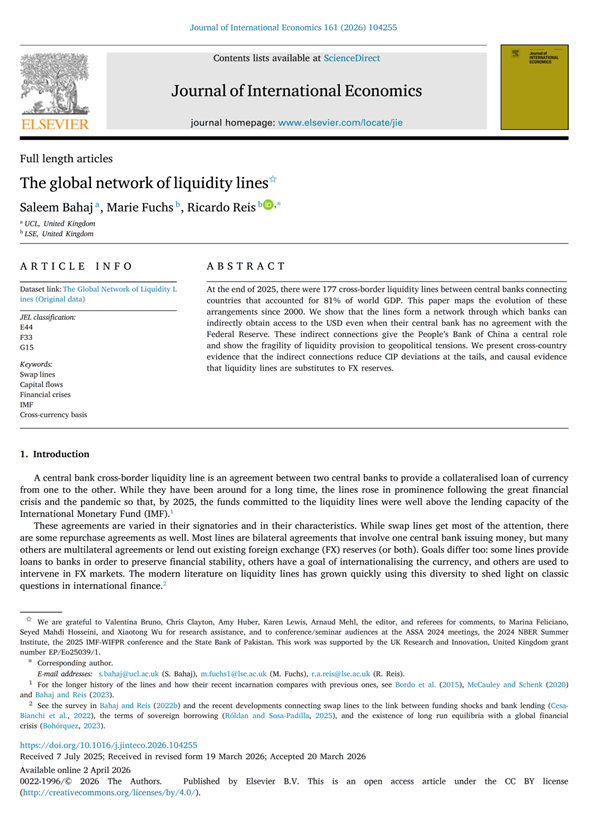
Super interesting! "The global network of liquidity lines" by Saleem Bahaj, Marie Fuchs, and Ricardo Reis. "At the end of 2025, there were 177 cross-border liquidity lines between central banks connecting countries that accounted for 81% of world GDP. This paper maps the evolution of these arrangements since 2000. We show that the lines form a network through which banks can indirectly obtain access to the USD even when their central bank has no agreement with the Federal Reserve. These indirect connections give the People’s Bank of China a central role and show the fragility of liquidity provision to geopolitical tensions. We present cross-country evidence that the indirect connections reduce CIP deviations at the tails, and causal evidence that liquidity lines are substitutes to FX reserves." sciencedirect.com/science/articl…
International and Monetary Economics Network tweet media
English
3
43
124
11.5K
Parag Waknis retweetledi
Jesús Fernández-Villaverde
Jesús Fernández-Villaverde@JesusFerna7026·
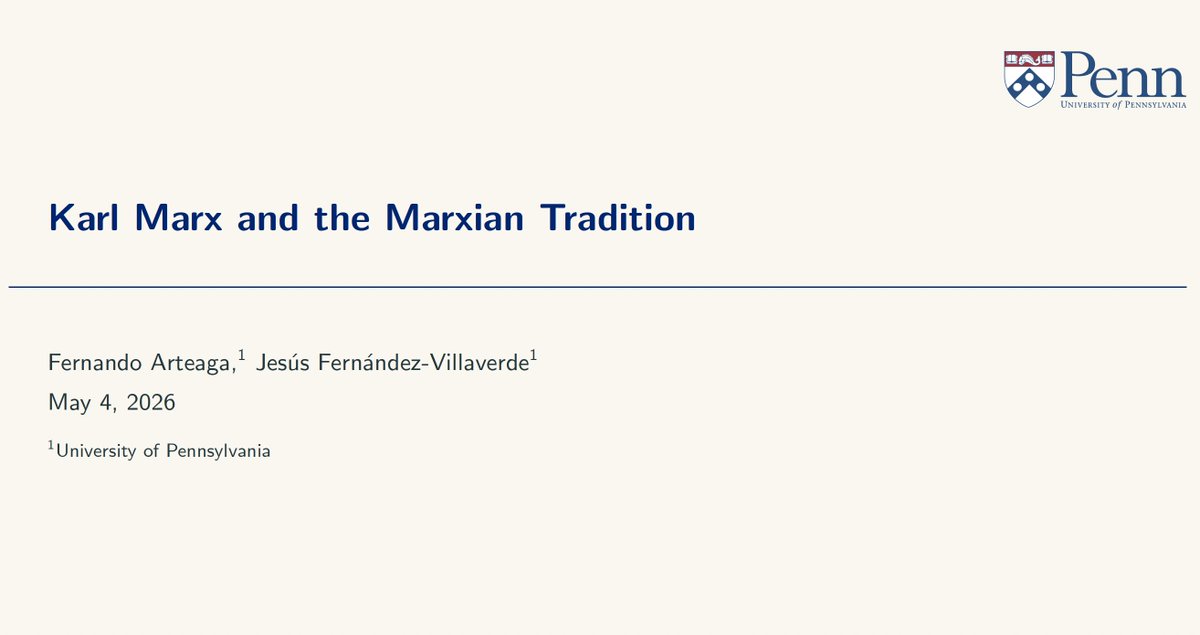
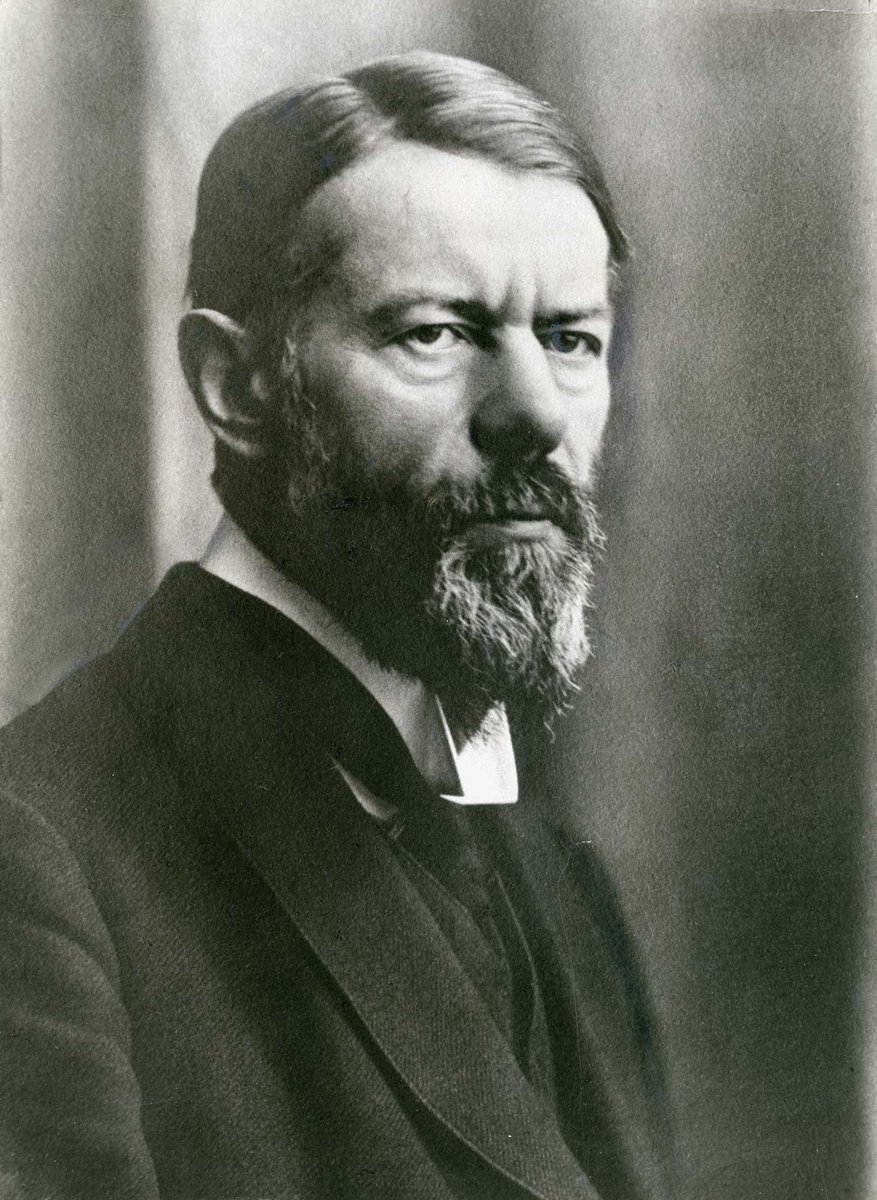
Since I have posted so much on Marx vs. Weber, modernity, and development over the last few weeks, I have posted an updated slide deck of my lectures on Karl Marx and the Marxian Tradition (together with @ferarteaga) here: sas.upenn.edu/~jesusfv/ET_3_… This is a long deck: 437 slides in the last compilation! (It also takes a few seconds to upload.) If I were to teach it carefully, with plenty of class discussion, I would require a whole semester. Even then, some topics (e.g., the Frankfurt School) receive only a cursory treatment because I focus more on economics and political economy, broadly construed. I hope to extend the discussion of those someday. However, I cover topics rarely seen in these courses, such as Hans-Georg Backhaus and the Neue Marx-Lektüre, because most of the work is not translated into English and must be read in the original German. I don’t have an equivalent slide deck on Max Weber, as I haven’t lectured on him. Hopefully, one day I will. Comments and feedback are very welcome.

Jesús Fernández-Villaverde tweet media
English
40
206
1.2K
385.9K
Parag Waknis retweetledi
Ivan Werning
Ivan Werning@IvanWerning·
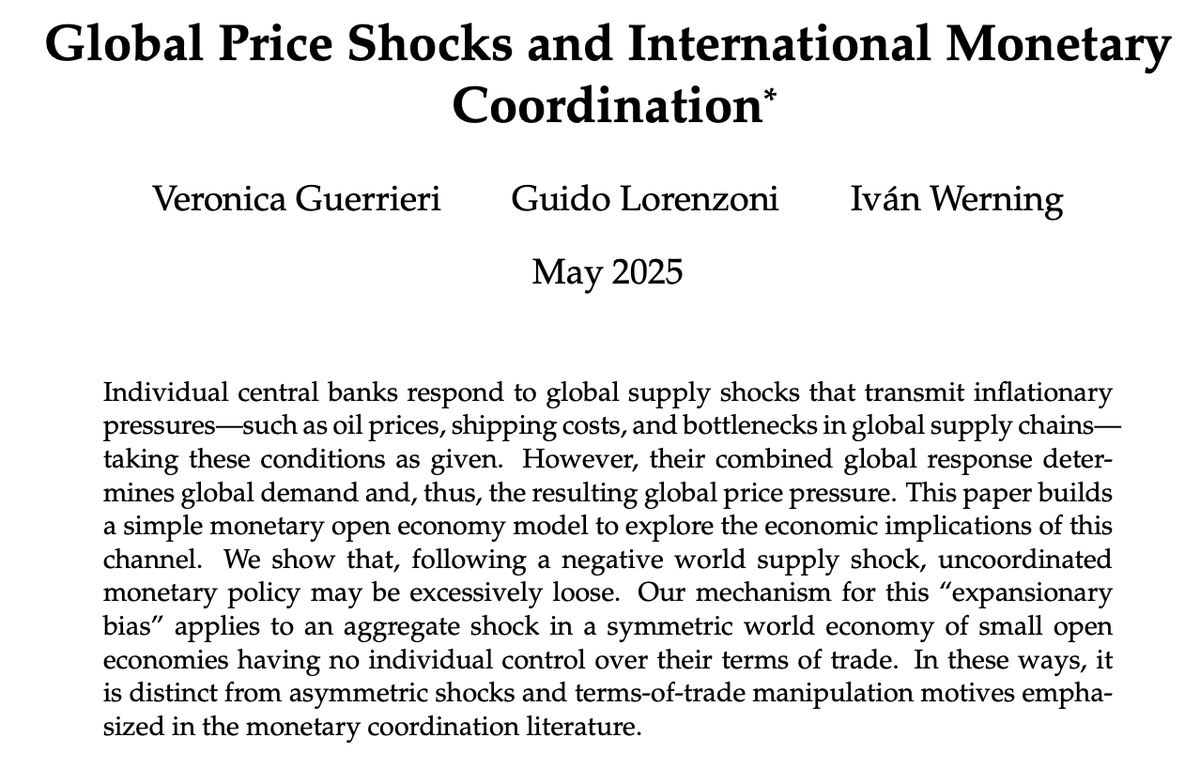
Iran War --> Oil shock 📈 How should central banks respond? Why is coordination needed? When inflation comes from global price shocks, each central bank takes the shock as given—but their policies jointly determine global demand. That’s the mechanism in our paper.
Ivan Werning tweet media
English

7
90
380
67.2K
Parag Waknis retweetledi
Jostein Hauge
Jostein Hauge@haugejostein·
I've just updated the outline for my course, “Development Economics”, which I teach at Cambridge. Here are the ten key books for the course.
Jostein Hauge tweet media
English
56
210
1.1K
284.3K
Parag Waknis retweetledi
AEA Journals
AEA Journals@AEAjournals·
Forthcoming in the AER: "The Effect of Omitted Variables on the Sign of Regression Coefficients" by Matthew A. Masten and Alexandre Poirier. aeaweb.org/articles?id=10…
English
0
75
287
23.7K
Parag Waknis retweetledi
Ismael Sanz
Ismael Sanz@sanz_ismael·
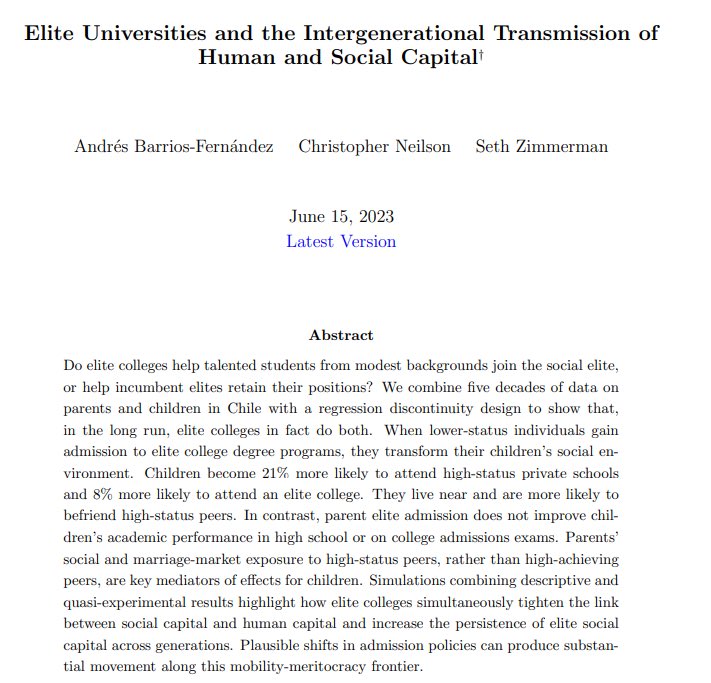
Las universidades de élite no mejoran el rendimiento académico de los hijos, pero sí amplían sus redes sociales y de pareja con personas de mayor estatus. Así, el capital social se transmite y concentra, incluso cuando el capital humano no cambia @ChrisANeilson @andres_bafer christopher-neilson.com/work/documents…
Ismael Sanz tweet media
Español
22
522
1.4K
62K
Parag Waknis retweetledi
Press Trust of India
Press Trust of India@PTI_News·
VIDEO | Amaravati, Andhra Pradesh: SRM University launches AI-integrated economics and psychology programmes for postgraduates. Professors say the programmes will help students navigate and carve out a niche for themselves in the competitive digital market. (Full video available on PTI Videos – ptivideos.com)
English
0
2
14
2.4K
Parag Waknis retweetledi
Jon Steinsson
Jon Steinsson@JonSteinsson·
Technical change often simplifies the tasks performed by labor. This raises productivity. But it can also erode the bargaining power of workers. My new paper “The Commoditization of Labor” (with Fukui and Nakamura) is about this. Some thoughts. (Link below) 1/
English
10
63
300
30.8K
Parag Waknis retweetledi
NBER
NBER@nberpubs·
Classic macroeconomic models impose that firms target prices or quantities. Endogenizing this choice and characterizing its implications for business cycles and monetary policy, from @joel_flynn, George Nikolakoudis, and Karthik A. Sastry nber.org/papers/w35099
NBER tweet media
English
0
18
83
16.4K
Parag Waknis retweetledi
Milan Vaishnav
Milan Vaishnav@MilanV·
Interesting @ieuditmisra piece on India's GDP growth: "Just above 6% real GDP growth over the past 12 years & less than 5.5% growth over the past 7 years is nowhere near the kind of growth rate required to become a developed country in the next 2 decades" indianexpress.com/article/explai…
Milan Vaishnav tweet media
English
19
88
209
15.1K
Parag Waknis retweetledi
Jesús Fernández-Villaverde
Jesús Fernández-Villaverde@JesusFerna7026·
As reflected in many of my posts over the past few months, I have been reading (and re-reading) a lot of social theory. What strikes me is that most critics of “capitalism” (whatever “capitalism” might mean, and regardless of the value of those critiques) are really critics of modernity, understood as the organization of society around technology, formal institutions, and rational criteria. I teach the economic history of the Soviet Union and socialist China, and all the pathologies (pollution, reliance on fossil fuels, inequality, depersonalization, consumerism, alienation, you name it) that you can find in a poor neighborhood of 2026 Philadelphia appeared in the same way, or even more, in a factory in Leningrad in 1970 or on a collective farm in Jiangsu in 1978. Critics seem to lack a vocabulary (or, if you prefer, a cognitive framework) for distinguishing “capitalism” from modernity. For example, people everywhere tend to link personal relationships to displays of consumption. There are likely deep evolutionary reasons for this. De Beers did not invent spending a lot of money on a useless engagement ring: it rode a pre-existing disposition into a particular form of consumption. Couples in Leipzig in 1982 were as interested in conspicuous consumption as those in Chicago in 2026. Talking about “Love and the Cultural Contradictions of Capitalism” misses the point completely. Of course, you can try, as some of the more perceptive Trotskyists did, to argue that the Soviet Union or China were not truly socialist countries, but this is just a lazy application of the “no true Scotsman” fallacy, and, consequently, their complaints failed to gain much traction outside some departments of cultural studies. But this is not just a matter of poor analytic skills, as bad as those are. More importantly, it means that 99% of the policy proposals activists put on the table to correct the problems of “capitalism” are doomed to fail because they do not understand where the root cause of the phenomena they complain about lies. I see this at the university. Do you think the corporation you deal with is self-serving and incompetent? Wait until you need to deal with the Graduate School at a private Ivy League university. The incentive problems (asymmetric information, career concerns, lack of timely feedback, pressure toward conformity) that cause dysfunction in the former are even more pronounced in the latter because of the absence of a profit motive, the sharpest disciplinary mechanism. At a very fundamental level, Marx got modernity wrong; Weber got it right. Time to spend much less time with Marx and much, much more time with Weber.
Jesús Fernández-Villaverde tweet media
English
110
310
1.5K
180.9K
Parag Waknis retweetledi
Richmond Fed Research
Richmond Fed Research@RichFedResearch·
According to University of Minnesota economist Ellen McGrattan, many US fims have assets that don’t show up on any balance sheet. She has spent her career trying to measure these intangible investments. Find out more in her interview with #EconFocus: bit.ly/4vI64A6.
Richmond Fed Research tweet media
English
1
18
108
8.3K
Parag Waknis retweetledi
J-PAL
J-PAL@JPAL·
🌍 Why are some countries poor, and some countries rich? Should the United States trade more or less with China? Join Nobel laureates and J-PAL co-founders Abhijit Banerjee and Esther Duflo in “Good Economics for Hard Times,” a DEDP Micromasters course, to learn more. Free to audit with an option to upgrade. Enroll today: bit.ly/4qFBzrl
J-PAL tweet media
English
0
10
40
3.3K