Stephen Wu

257 posts

Stephen Wu banner
Stephen Wu

Stephen Wu

@wustep

Building @notionhq • Writing https://t.co/CGq24Clo67

San Francisco, CA Katılım Nisan 2015
1.1K Takip Edilen1.1K Takipçiler
Stephen Wu
Stephen Wu@wustep·
Some thoughts on coding models and tools (7/2026) tl;dr: Fable produces the best work but is absurdly expensive; Sol is more price-efficient and fast. The agent apps are pretty much the same now and GUIs > TUIs. MODELS Opus 4.8 ($5 / $25) - Still one of my favorite models. Great UI/UX taste, problem solving, but less price competitive nowadays and a bit slower than leading non-Claude models. Fable 5 ($10 / $50) - My favorite model and usually produces the best outputs for all medium and hard problems. - By far the best UI/UX taste, good at planning and thinking holistically and general technical design and problem solving. Still writes bad comments. - Slow, expensive, and overkill for most tasks. Spends SO much time validating things and making sure it got everything right. You can ask it to do something very simple and it'll go and pop open a browser and test 8 things before getting back to you. - Very easy to rack up $$$ bills with Fable... Sonnet 5 ($3 / $15) - Good as a subagent to delegate to and scoped tasks, but not as good for the primary daily driver. - Opus often outperforms and makes less mistakes. GPT 5.6 Sol ($5 / $30) - Boy is it good at general "programming" problems, backend, and being an adversarial reviewer that catches edge cases. Very token-efficient, good all-rounder. - Still bad UI/UX taste, but reasonably good at using component systems. GPT 5.6 Terra ($2.5/$15) / Luna ($1/$6) - Just use Sol and tweak Effort instead. I felt that when trying these models, I spent too much time fixing their mistakes. - Better for non-coding work. Cursor Grok 4.5 ($2/$6) - Very fast and good for well-scoped easy-medium problems, edits, and questions. Very token efficient. The same task is often >3x faster and cheaper than Opus. - Terrible UI/UX taste, and often doesn't work very hard to solve and understand the problem beyond what you asked of it. - Fast ($4/$18) is 50% off via Cursor, which makes it a solid deal. Generally it's better to stick to 1 or 2 models and tweak effort instead of micromanaging the model picker. TOOLS - All the frontier agent GUIs are reasonably good and have converged in features: Codex, Claude Code, Cursor Agents. Just stick to the one you like best. - The GUIs are just generally better than the TUIs now after lots of fixes and performance improvements over the last few months. - They've all absorbed Conductor-style features, with great worktree management, diff viewers, browser, terminal, etc. So my personal setup is: - Claude Code App + Opus 4.8 / Fable 5 High as daily driver. - Get Fable to fire Opus/Sonnet subagents to save $$. Tweak effort sometimes. - Cursor IDE + Grok 4.5 Fast when navigating the codebase and fast code questions and edits. - GitHub Desktop for reading diffs A simpler alternative I'd recommend: - Codex App + GPT 5.6 Sol, default to High, tweak to M/XH when needed. - This setup is generally more price-efficient and has less knobs. I wish I liked talking to GPT more, but I'm very attuned to Claude models
English
4
1
15
646
Stephen Wu
Stephen Wu@wustep·
GPT 5.6 Sol vs Terra vs Luna: how well can they recreate a Nord Stage 4 🎹
English
1
0
5
542
Sam Gorman
Sam Gorman@gormankind·
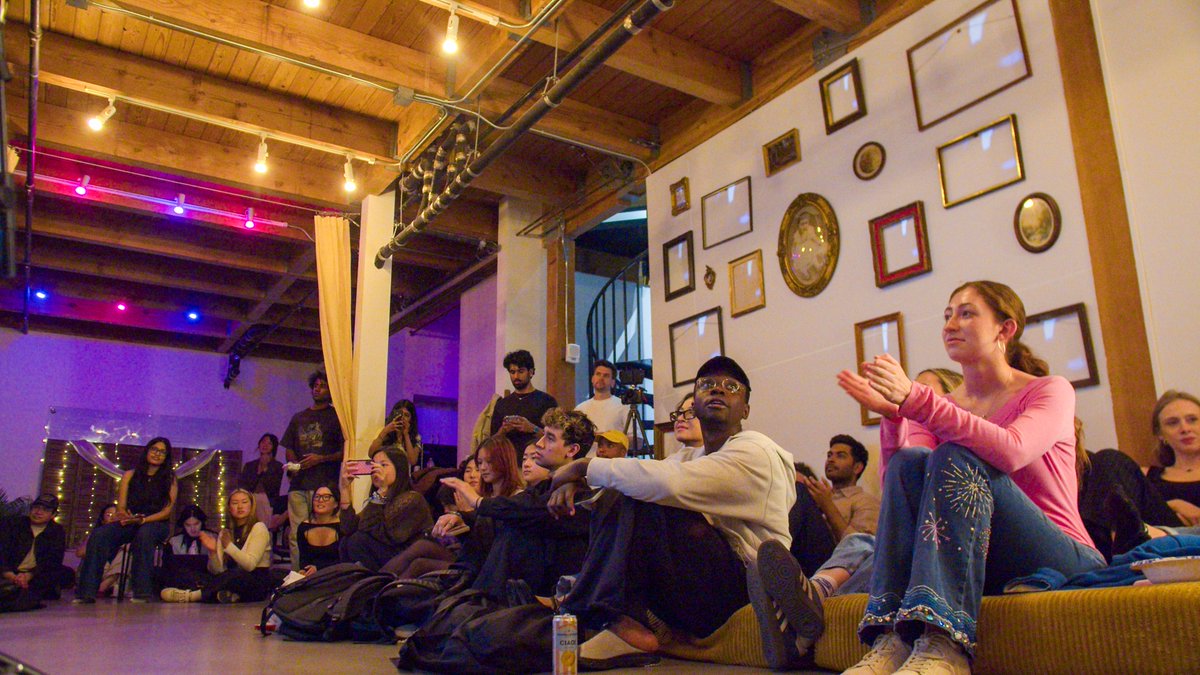
some pics from when we hosted our second Rough Draft night recently the idea is to host a space for creative and design people to share unfinished work a sincere thank you to everyone who joined us - and let me know if you'd like to join for next time!
Sam Gorman tweet mediaSam Gorman tweet mediaSam Gorman tweet mediaSam Gorman tweet media
English
16
0
65
5.4K
Stephen Wu
Stephen Wu@wustep·
Instructions included looking at a high-res photo and a 76 page manual pdf
Stephen Wu tweet media
English
1
0
2
191
Stephen Wu
Stephen Wu@wustep·
Nord Stage 4 (with help from Fable) 🧵 to see how the other models did

English
2
1
19
1.3K
Stephen Wu retweetledi
Jimmy Liu
Jimmy Liu@jimmyliu·
The best place to create and share HTML, whether it’s built by Notion Agent or Claude + Codex. More launches coming very soon! Our goal is to make Notion agent the default cloud agent for knowledge work. Cloud agent + shared workspace + team context = a new kind of computer.
Notion@NotionHQ

New block in Notion: HTML. Build interactive HTML right on your Notion page. Ask AI to turn your content into interactive explainers, prototypes, or diagrams. Share with your team to use and tinker together.

English
1
4
45
4.6K
Stephen Wu
Stephen Wu@wustep·
you might think this video is on 2x speed. nope, that's just @sbcatania's normal talking speed. and then there's the hands
Varadh Jain@varadh

Context Conversations If you have ever tried @NotionHQ and are curious on how you can get the most out of it, you'll enjoy this behind-the-scenes! @sbcatania has one of the best personal and workplace setups: - A personal dashboard for his docs, meetings, customer insights - 1-click flows for engineering to join customer calls - Custom agents that help file directly into Linear from Slack, powered by Notion Workers I've been at Notion for for 95 days now and the biggest opportunity is the gap between how most people use the product vs. how powerful it can be. Closing the gap is now a sidequest of mine :)


English
1
0
17
1.6K
Arjun Karanam
Arjun Karanam@QuantumArjun·
Very bittersweet, but I'm leaving Apple. Anyone who knows me knows how much I admire Apple's story and ethos. The iPhone captured my imagination as a kid, and never let go. And getting to spend the early innings of my career here, working on brand new interfaces on Vision Pro, has been a gift I'll spend a long time trying to repay ❤️ A few things I’ll never forget: (1) Design around the magic moment: Building a good product is really about finding the one moment that does the convincing and building everything else around it. You'll know you've found it when someone smiles without meaning to. I'll never forget the first time a butterfly landed on my finger inside Vision Pro, and my body believed it before my brain did. (2) It takes research to will products into existence: Most people treat research and product like a handoff, where researchers figure out what's possible and the product team figures out what to do with it. The best work happens when both sides are in the same room arguing about the same thing. You don't know what the research is for until someone shapes how a person uses it, and you don't know what to shape until the research tells you what's possible. (3) The best products are arguments, not compromises. Every product is the output of thousands of decisions, and at most companies, each one gets averaged. The result is defensible in every meeting and exciting in none. Great products feel like someone meant them. The work isn't making good decisions, it's protecting the ones that matter from being negotiated into mush. Thank you to everyone who taught me, pushed me, and trusted me with hard problems. You know who you are (and by that I mean more of you should be on X haha) We're at a real shift in how products work, and in the interfaces we'll use to build and interact with them. These shifts only come around every couple of decades, and I couldn't imagine a more exciting time to be a builder. Excited to share what's next soon!!
Arjun Karanam tweet mediaArjun Karanam tweet media
English
47
11
377
45.8K
Stephen Wu retweetledi
Notion Developers
Notion Developers@NotionDevs·
Introducing: the Notion Developer Platform New building blocks that help you (and your coding agents) sync any data source, build any tool, and orchestrate any agent. Follow along 👇 x.com/i/broadcasts/1…
English
31
105
650
528.9K