

xmemory
10 posts

xmemory
@xmemory_ai
The memory layer for AI workflows, built for precision, reliability, observability, and governance.
Katılım Mart 2026
1 Takip Edilen7 Takipçiler
We’re excited to share that our team at @xmemory_ai has published our main white paper.
The core idea is simple: without focus, AI systems try to "remember" everything, and that is where they fail. Schema is the best way to teach them focus.
We compared xmemory against major open-source and commercial RAG and hybrid RAG systems, markdown-file memory approaches ("agentic memory"), and memory implementations in customer-facing frontier AI apps. Instead of testing whether systems can recall similar text, we evaluated whether they can store, update, deduplicate, and retrieve facts and relationships reliably.
xmemory achieved 97% accuracy, compared with 87% for the strongest competitor. Our core also outperforms the latest frontier models’ one-shot APIs in extraction tasks, showing that the harness matters just as much as model quality.
We’ve also open-sourced our measurement datasets and a toolkit to generate new ones synthetically.
Huge thanks to the dream team of engineers at xmemory who keep pushing this vision into production. If your company is seeing memory systems fail in real workflows, we’d love to talk.

English
the truth is spoken here
trash@trashh_dev
engineering teams celebrating agentic workflows that returned the same result two runs in a row
English
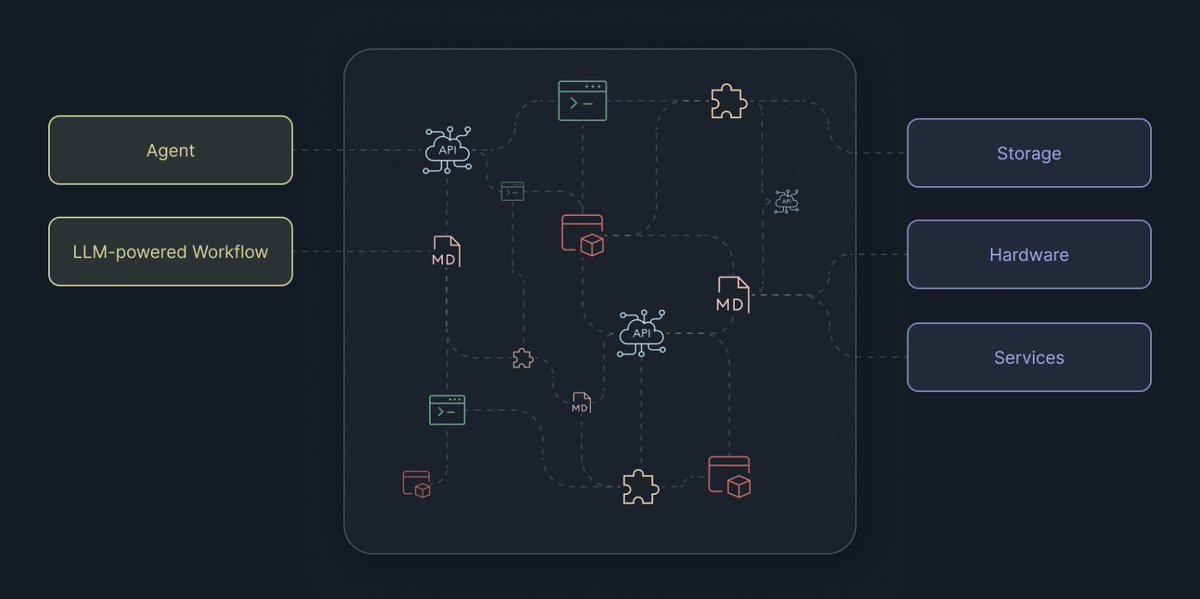
Why are we forcing agents to adapt to software stacks that were never designed for them? A lot of what people call "agent infrastructure" today looks like a temporary patchwork - prompts, wrappers, glue code, and brittle orchestration compensating for systems that cannot express meaning clearly enough on their own.
We think that is backwards. Agents should handle intent and reasoning. Systems should handle semantics, structure, and ambiguity. If that shift happens, it could change the software stack more than most people expect.
Read our second blog post via the link in the first comment.
English
xmemory retweetledi

We first open-sourced @BessemerVP's AI Infrastructure roadmap in 2024. The velocity of progress across the landscape in the past 18 months has been breathtaking, and we’ve already seen generational companies arise.
But the infra evolution is far from over, as the next generation of platforms may prove even more consequential. @lancectk @davidcowan @TaliaGold @gracejhma @bhavikvnagda @BrandonNydick @bar_weiner & I believe the stage is set for five new infra frontiers, each representing a fundamental shift from building AI that can process information to building AI that can truly operate in the world in 2026.
Our full report: bvp.com/atlas/ai-infra…

English
Thrilled to see @xmemory_ai featured in @BessemerVP’s latest AI Infrastructure Roadmap for 2026.
We’re one of the companies highlighted in Memory, Context, and State Management, alongside seven other strong builders.
What stands out even more than the mention is the broader shift it signals: memory is becoming core infrastructure for production AI.
As AI moves from one-off interactions to persistent, real-world workflows, the systems that win will be the ones that can retain context, manage state, and stay grounded over time.
Proud of what the our team is building, and excited for what comes next.
#AIInfrastructure #Memory #ContextManagement #AgenticAI #EnterpriseAI

English
Today we’re sharing our first blog post: “Schema as the Core of Reliability.”
Our view is simple:
AI memory breaks down when facts are stored as unstructured text and reconstructed later. That approach can work for thematic recall, but it becomes fragile when systems need to answer exact questions, maintain state, support workflows, and drive automation.
In the piece, we explore why:
- Search can recover context, but memory must support facts
- Graph RAG is a meaningful step forward, but not the endpoint
- Reliable memory needs structure - types, relations, constraints, deduplication, provenance
- Schema is not decoration - it is the contract that makes memory observable, enforceable, and dependable
If AI systems are going to do more than sound coherent - if they are going to make decisions, trigger workflows, and operate over long horizons - memory has to become a governed system of facts.
That is where reliability starts.
Read the full post - link in the first reply.

English