Yannis Zarkadas

126 posts

Yannis Zarkadas

Yannis Zarkadas

@yanniszark

Software Engineer and Researcher. Currently working on the XLA compiler at @google. Previously, I got my PhD from @columbia.

Katılım Aralık 2018
983 Takip Edilen247 Takipçiler
Yannis Zarkadas retweetledi

Tal Zussman
Tal Zussman@talzuss·
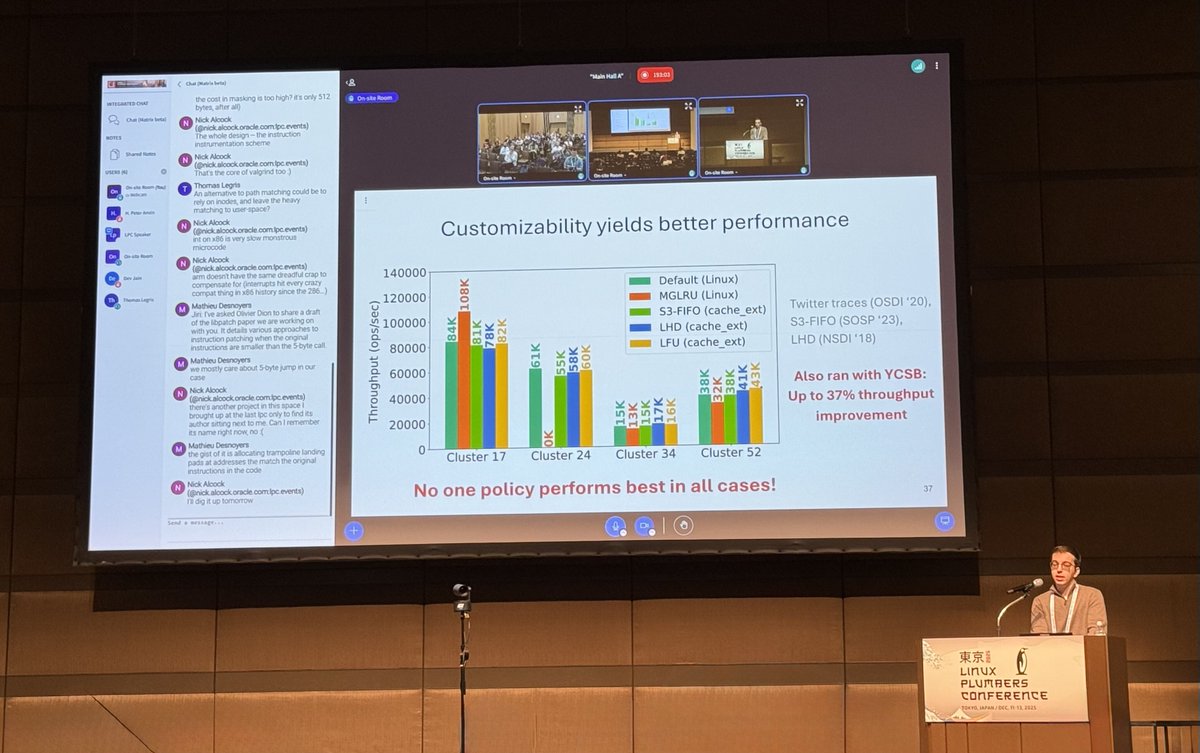
Had a great time presenting cache_ext at @linuxplumbers last week. Lots of productive conversations on next steps for getting it merged upstream. Exciting times ahead for BPF in Linux memory management!
Tal Zussman tweet media
English
2
3
17
2.2K
Yannis Zarkadas retweetledi
Tal Zussman
Tal Zussman@talzuss·
Last week I presented cache_ext at SOSP'25! 🎉 Linux's page cache uses an inflexible LRU-like eviction policy for all applications, leaving performance on the table. cache_ext allows users to customize the page cache using eBPF-based policies to matter match their workloads. 🐝
Tal Zussman tweet media
English
2
5
16
1.4K
Yannis Zarkadas
Yannis Zarkadas@yanniszark·
Preprint available at (under anonymized name cachebpf - to be updated soon): arxiv.org/pdf/2502.02750 This is joint work with my amazing co-authors @talzuss (equal contribution), Jeremy Carin, Andrew Cheng, Hubertus Franke, Jonas Pfefferle and my amazing advisor @asafcidon
English
0
3
9
300
Yannis Zarkadas
Yannis Zarkadas@yanniszark·
We implement several policies using cache_ext, from simpler to more complex, such as LHD and MGLRU. We use workloads such as Twitter traces and mixed GET-SCAN (similar to Shenango) and compare against kernel policies and FADVISE options, showing that there's no single best policy
Yannis Zarkadas tweet mediaYannis Zarkadas tweet media
English
1
0
8
261
Yannis Zarkadas
Yannis Zarkadas@yanniszark·
Super excited to announce that cache_ext is accepted in SOSP 2025! 🎉 The Linux page cache is a central component of the kernel, yet it's been using the same policy (2Q-LRU) for decades, with only some recent improvements (e.g., MGLRU from Google).
English
1
5
31
1.8K
Yannis Zarkadas
Yannis Zarkadas@yanniszark·
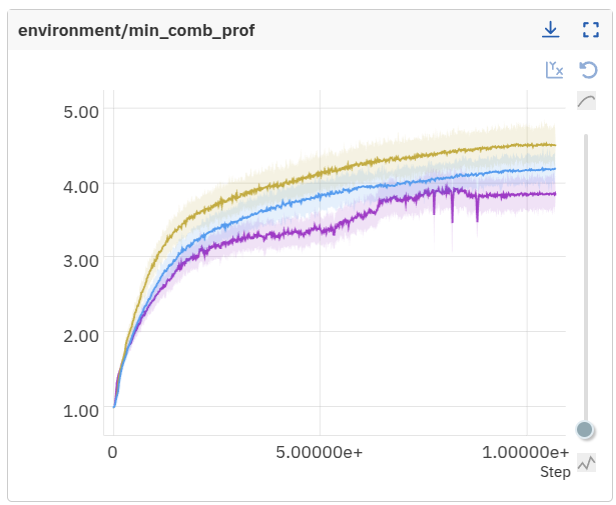
@jsuarez Awesome work! What is the takeaway from this example btw? The green hyperparameter line looked better but ended up worse. So what would have been the right approach?
English
0
0
0
163
Joseph Suarez 🐡
Joseph Suarez 🐡@jsuarez·
6,000 years worth of simulated Neural MMO 3 gameplay on 1 graph. x axis is 100B steps. SOTA by a factor of 2 vs. the current model on PufferLib 2.0. This took less than a week on 1 GPU for all 3 runs. Star the repo to support... and read on to see why I did this!
Joseph Suarez 🐡 tweet media
English
2
2
78
3.4K
Yannis Zarkadas retweetledi
weber
weber@weberwongwong·
Introducing FLORA, Your Intelligent Canvas. Every creative AI tool, thoughtfully connected.
English
858
920
3.8K
622.2K
Jae-Won Chung
Jae-Won Chung@jaewon_chung_cs·
Perseus was accepted to appear at SOSP'24! Perseus is an energy optimization system that identifies and reduces *energy bloat* form large model training. I wrote up a quick blog post: ml.energy/zeus/research_… 1/6
English
4
3
31
2.9K
Yannis Zarkadas
Yannis Zarkadas@yanniszark·
@penberg Thanks, that’s much clearer! So that has me thinking, how does a replica receive other replica updates? Do they make a background remote read along the local one every once in a while? Or maybe there’s a push-pull model. Is the whole db synced or just the keys written/read?
English
0
0
0
40
Pekka Enberg
Pekka Enberg@penberg·
@yanniszark Writes are not async in the model we have. They're always going to one and same primary server, which means there are no concurrent updates that would happen during a network partition.
English
1
0
2
71
Pekka Enberg
Pekka Enberg@penberg·
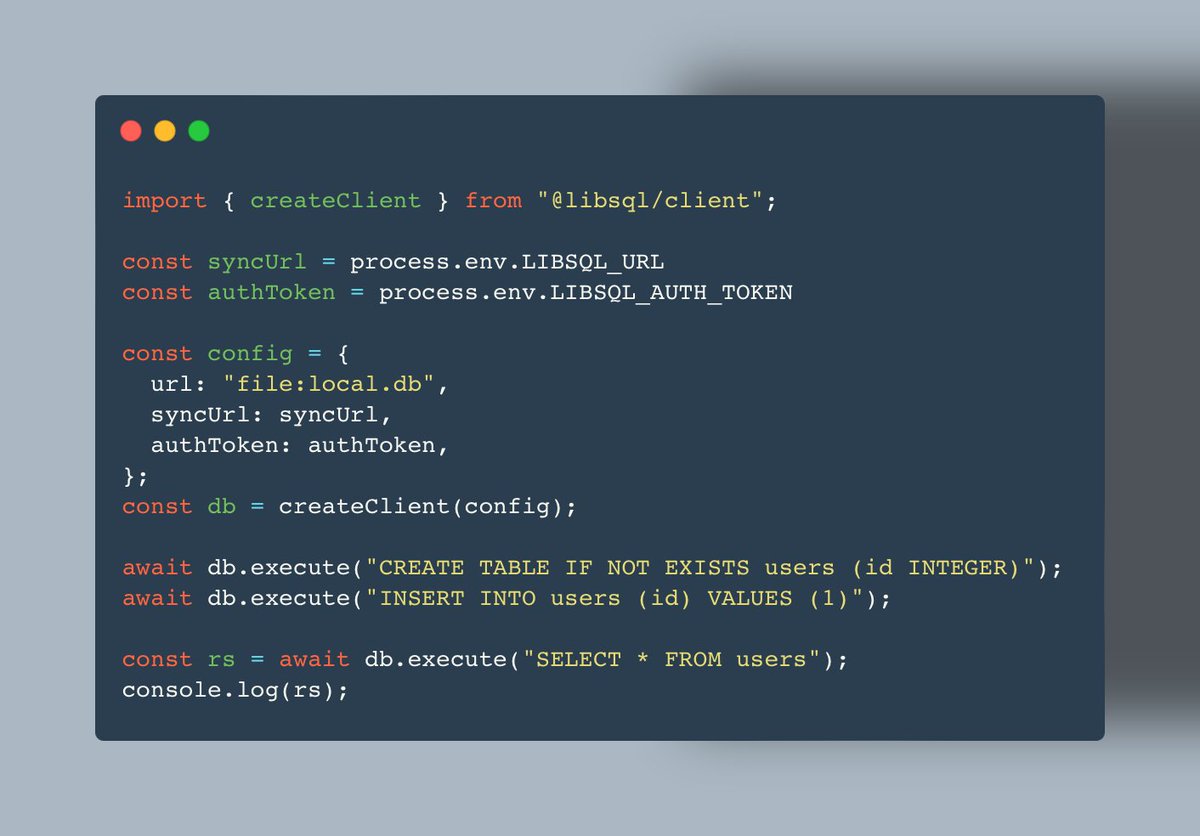
Here's the same ergonomic libSQL fast local reads with transparent remote writes in JavaScript. You write your application like you'd be using a local database, but get your writes delegate to a remote server (where they're durable and replicated).
Pekka Enberg tweet media
Pekka Enberg@penberg

libSQL embedded replica API is much more ergonomic now with read-your-write support. Embedded replicas in libSQL provide local reads and delegate writes to a remote server. Until recently, you had to explicitly call a sync() method to get changes. But now that @lucio_d_franco added support for read-your-writes (implicit sync on write), you can get fast local reads and transparent remote writes automatically. If you run this program multiple times, you will retain a local copy of the database, but sync up with other concurrent writers automatically while still serving reads locally. You can still call the sync() method manually, but that becomes a data freshness thing, not a correctness thing. We're planning on supporting local writes too at some point, but as @glcst pointed out recently, most people seem to just need read-your-writes even when talking about local writes. Curious to see how far we ca go with just this approach!

English
1
1
13
1.8K
Yannis Zarkadas
Yannis Zarkadas@yanniszark·
@penberg But I thiught writes were async right? What happens if there’s a network partition and two instances in different partitions write the same key? I thought they would both succeed locally and then sync later, but my understanding is probably not correct.
English
1
0
1
71
Pekka Enberg
Pekka Enberg@penberg·
@yanniszark There’s always a single writer at a primary server so no conflicts
English
1
0
3
81
Yannis Zarkadas retweetledi
ColumbiaCompSci
ColumbiaCompSci@ColumbiaCompSci·
Kostis Kaffes (@kkaffes) is looking for PhD students who are interested in computer systems, cloud computing, and scheduling. To learn more about him - bit.ly/3UuWQ7E. For info on our #PhD program bit.ly/CSPhDprogram. The deadline to apply is December 15.
ColumbiaCompSci tweet media
English
1
15
49
6.7K
Yannis Zarkadas
Yannis Zarkadas@yanniszark·
@marclou Congrats man, been following you for a while and you ve been shipping solid products. This looks like a winner!
English
0
0
0
35
Marc Lou
Marc Lou@marclou·
My new startup 🛡️ ByeDispute is live! Prevent disputes before they happen: - Save $15 fee - Don't get banned from Stripe - 1-minute no-code setup Get $20 off for the launch for 24 hours → producthunt.com/posts/byedispu… Would love your support 🙏
English
303
84
2.1K
569.3K
Yannis Zarkadas
Yannis Zarkadas@yanniszark·
@_onionesque Yes, NTUA is the school I'm talking about, very surprised that you know it 🤣
English
1
0
2
198
Shubhendu Trivedi
Shubhendu Trivedi@_onionesque·
@yanniszark I have heard this too! e.g. for NTUA, but I recall that they had an extra year? Yes, I am joking because it is generally not possible to make a case for something so 'inefficient.'
English
1
0
2
539
Shubhendu Trivedi
Shubhendu Trivedi@_onionesque·
Controversial opinion: 😋 Teach most of EE to CS undergrads, including control theory, analog integrated circuits, RISCs, information theory, coding theory, robotics, mechatronics, etc. etc., and only then "CS." You are not CS if you are not full stack.
English
40
18
285
85.6K
Yannis Zarkadas
Yannis Zarkadas@yanniszark·
@DaveyHert To put that in context, a ChatGPT subscription is 20$ per month! Seems pretty hard to get 50$ per month for consumer products. B2b on the other hand...
English
2
0
3
3.1K
David Herbert👨🏽‍💻🚀
Someone said in an interview that people don’t realize the road to financial freedom is often in providing value that people are willing to pay anything for. E.g. Imagine building a $50 subscription based product that people would willingly pay that much for. You’d need only 2,000 subscribers to make $100,000 monthly, and a million+ in a year. Easier said than done but this had me really thinking.
English
55
131
962
167.2K
Yannis Zarkadas
Yannis Zarkadas@yanniszark·
@jamonholmgren It's something that's puzzling me too 🤷‍♂️ Likely it likely boils down to supply and demand. I'm guessing the confounding factor is the "quality" of the demand. On a positive note though, working on hard problems usually builds skills that are transferable to more lucrative niches.
English
1
0
1
138
Jamon
Jamon@jamonholmgren·
@yanniszark Yeah if I were to edit the tweet, I'd add "...that software developers get paid well to do"
English
1
0
1
91