Suryang Kwak

174 posts

Suryang Kwak

Suryang Kwak

@yeastalmighty

Katılım Mayıs 2021
63 Takip Edilen26 Takipçiler
Suryang Kwak retweetledi
Brandon Luu, MD
Brandon Luu, MD@BrandonLuuMD·
As Resident Doctors, we work 26h shifts with no sleep. Coffee wasn’t enough to keep me sharp, so I dove into the literature for other solutions. Here are my evidence-based protocols for using CREATINE to maximize cognitive performance during sleep deprivation 🧵1/12
Brandon Luu, MD tweet media
English
45
468
2.3K
497.3K
Suryang Kwak retweetledi
Nathan Crook
Nathan Crook@nathanguy14·
@DenizDurmusogl1 @IbrahimAlabri3 and Daniel Haller have just developed a great suite of inducible promoters for probiotic S. boulardii! With them, we can turn recombinant genes on/off, see where Sb is active in the gut, and even alter Sb's colonization! doi.org/10.1021/acssyn…
English
0
4
8
777
Suryang Kwak retweetledi
Science Magazine
Science Magazine@ScienceMagazine·
A nitrogen-fixing organelle, or “nitroplast,” has been identified in a marine alga. This discovery sheds light on the evolutionary transition from endosymbiont to organelle. Learn more this week in Science: scim.ag/6yX
Science Magazine tweet media
English
41
933
2.8K
446.6K
Suryang Kwak retweetledi
GutMicrobiota Health
GutMicrobiota Health@GMFHx·
In patients with IBS, it is of utmost importance to address mental health comorbidity. This article features recent research from @hmstaudacher & colleagues telling us a new dietary approach may be able to treat not only gut symptoms but also depression: insightplus.mja.com.au/2024/8/a-new-d…
English
1
1
10
1.2K
Suryang Kwak retweetledi
GutMicrobiota Health
GutMicrobiota Health@GMFHx·
Another mechanism by which breastmilk prevents NEC in fragile preemies? New findings show human milk oligosaccharides promote intestinal epithelium regeneration independent of the microbiota: link.springer.com/article/10.100…
English
0
2
6
1.3K
Suryang Kwak retweetledi
Michael Baym
Michael Baym@baym·
Honestly this is probably the single best advice for making it through grad school or a postdoc as well. Just get stuff done. It may feel smart to critique things well, it may even be useful, but ultimately you are judged on what you've gotten done
English
10
148
766
143.3K
Suryang Kwak retweetledi
GutMicrobiota Health
GutMicrobiota Health@GMFHx·
Obesity is a predisposing factor for SIBO. This study shows for the first time the sudden appearance of SIBO after a Roux-en-Y gastric bypass, with a correlation between exhaled hydrogen on a breath test and lipid malabsorption: link.springer.com/article/10.100…
English
1
6
13
1.3K
Suryang Kwak retweetledi
Niko McCarty.
Niko McCarty.@NikoMcCarty·
Cells are fast and crowded places. Numbers help us make sense of them. Here are five of my favorite "bionumbers." 1. ATP synthase spins 134 times/second. That is much faster than the propeller on most piston airplanes, and about half the r.p.m. of a Boeing 737 jet engine.
GIF
English
22
495
2.3K
416.9K
Suryang Kwak retweetledi
GutMicrobiota Health
GutMicrobiota Health@GMFHx·
Microbiome studies report low gut microbial richness and diversity in patients with ulcerative colitis. Recent evidence reveals UC patients who achieve long-term remission show evidence of substantial recovery of the gut microbial ecosystem: academic.oup.com/ibdjournal/art…
English
0
15
40
2.4K
Suryang Kwak retweetledi
Matt Dancho (Business Science)
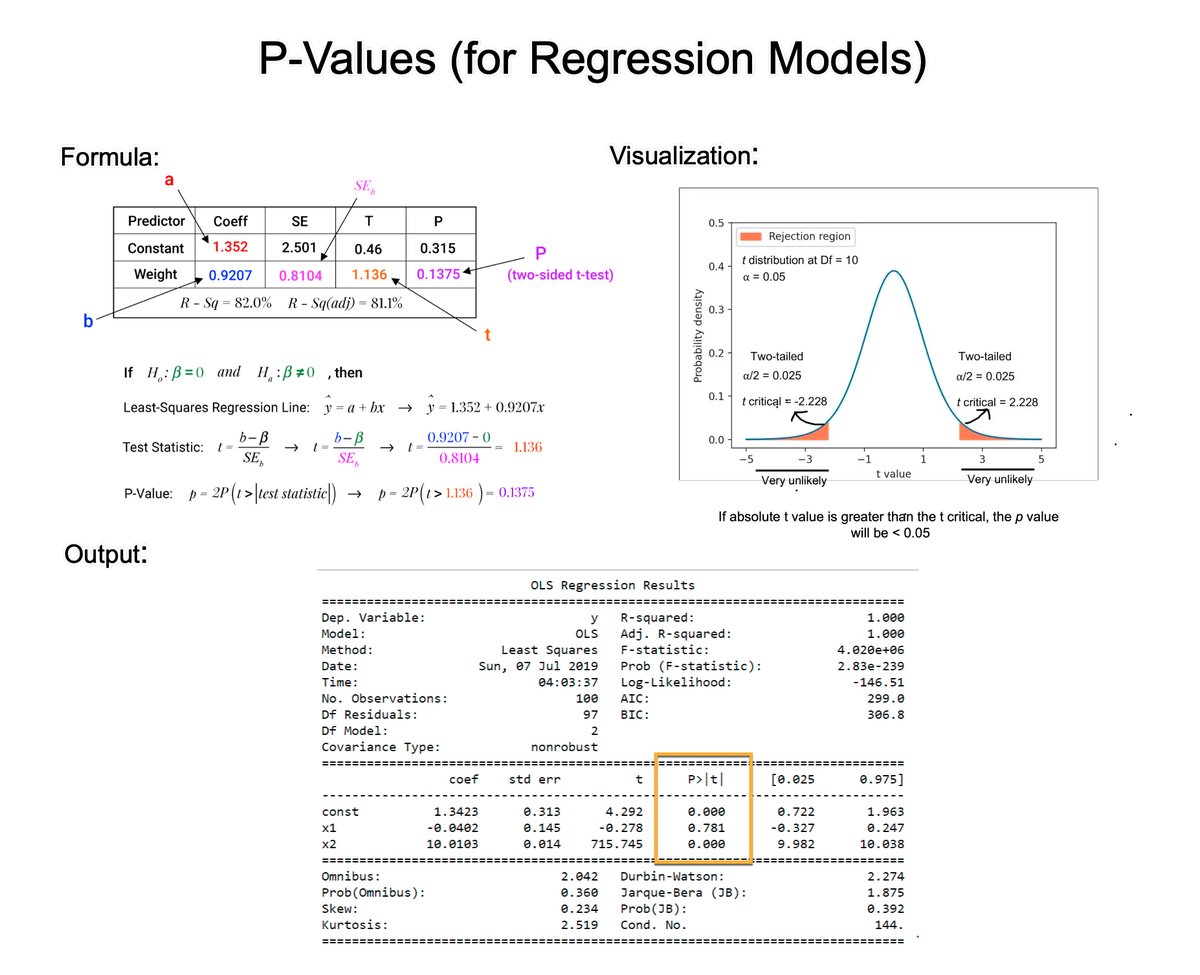
Understanding P-Values is essential for improving regression models. In 2 minutes, learn what took me 2 years to figure out. 1. The p-value: A p-value, in statistics, is a measure used to assess the strength of the evidence against a null hypothesis. 2. Null Hypothesis (H0): This is a general statement or default position that there is no relationship between two measured phenomena or no association among groups. For example, the regressor does not affect the outcome. 3. Alternative Hypothesis (H1): This is what you want to test for. It is often the opposite of the null hypothesis. For example, that the regressor does affect the outcome. 4. Calculating the p-value: The p-value for each coefficient is typically calculated using the t-test. There are several steps involved. Let's break them down. 5. Coefficient Estimate: In a regression model, you have estimates of coefficients (β) for each predictor. These coefficients represent the change in the dependent variable for a one-unit change in the predictor, holding all other predictors constant. 6. Standard Error of the Coefficient: The standard error (SE) measures the accuracy with which a sample represents a population. In regression, the SE of a coefficient estimate indicates how much variability there is in the estimate of the coefficient. 7. Test Statistic (T): The test statistic for each coefficient in a regression model is calculated by dividing the Coefficient Estimate / Standard Error of the Coefficient. This gives you a t-value. 8. Degrees of Freedom: The degrees of freedom (df) for this test are usually calculated as the number of observations minus the number of parameters being estimated (including the intercept). 9. P-Value Calculation: The p-value is then determined by comparing the calculated t-value to the t-distribution with the appropriate degrees of freedom. The area under the t-distribution curve, beyond the calculated t-value, gives the p-value. 10. Interpretation: A small p-value (usually ≤ 0.05) indicates that it is unlikely to observe such a data pattern if the null hypothesis were true, suggesting that the predictor is a significant contributor to the model. Understanding p-values can help improve your models. But with changes in machine learning, there's a lot more to learn. If you'd like to grow your skills and get a data science career, I’d like to help. I put together a free on-demand workshop that covers the 10 skills that helped me make the transition to Data Scientist: learn.business-science.io/free-rtrack-ma… And if you'd like to speed it up, I have a live workshop where I'll share how to use ChatGPT for Data Science: learn.business-science.io/registration-c… If you like this post, please reshare ♻️ it so others can get value.
Matt Dancho (Business Science) tweet media
English
21
661
2.5K
395.6K
Suryang Kwak retweetledi
Boston Business Journal
Boston Business Journal@BosBizJournal·
Synlogic Inc. is saying good-bye to its chief executive and the vast majority of its staff after halting a Phase 3 trial that it said was unlikely to succeed. bizjournals.com/boston/news/20…
English
0
6
13
43.6K
Suryang Kwak retweetledi
GutMicrobiota Health
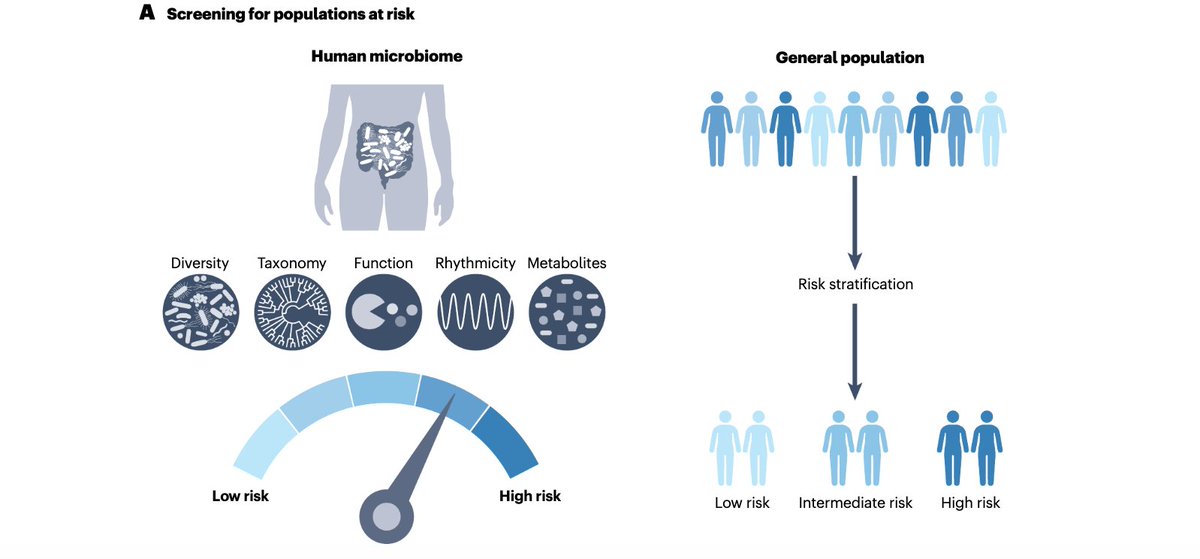
Microbiome can help in personalized medicine. Elinav and colleagues explore the advantages, challenges and future perspectives of utilizing microbiome data in personalized medicine for patient care @NatureRevMicro: nature.com/articles/s4157…
GutMicrobiota Health tweet media
English
1
22
64
7.2K
Suryang Kwak retweetledi
GutMicrobiota Health
GutMicrobiota Health@GMFHx·
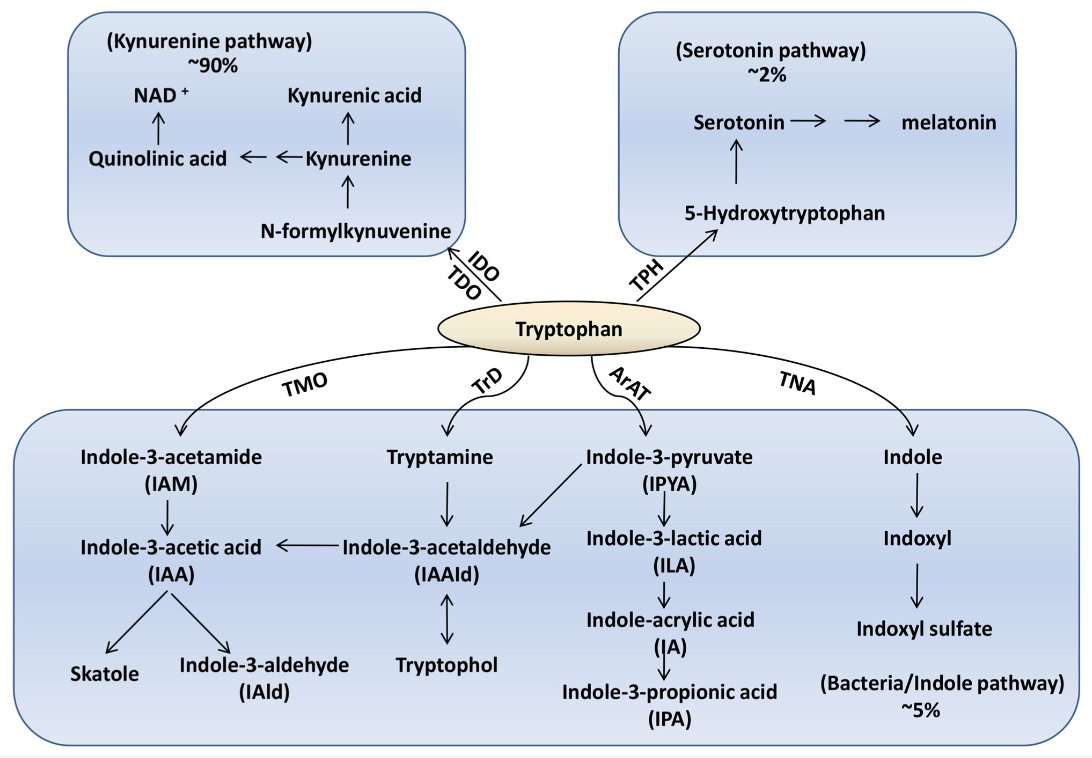
Tryptophan metabolism is gaining scientists' interest in conditions beyond the gut. This review explores the role of targeting tryptophan in immunity and cancer: mdpi.com/2218-1989/13/1…
GutMicrobiota Health tweet media
English
0
25
69
5.3K
Suryang Kwak retweetledi
GutMicrobiota Health
GutMicrobiota Health@GMFHx·
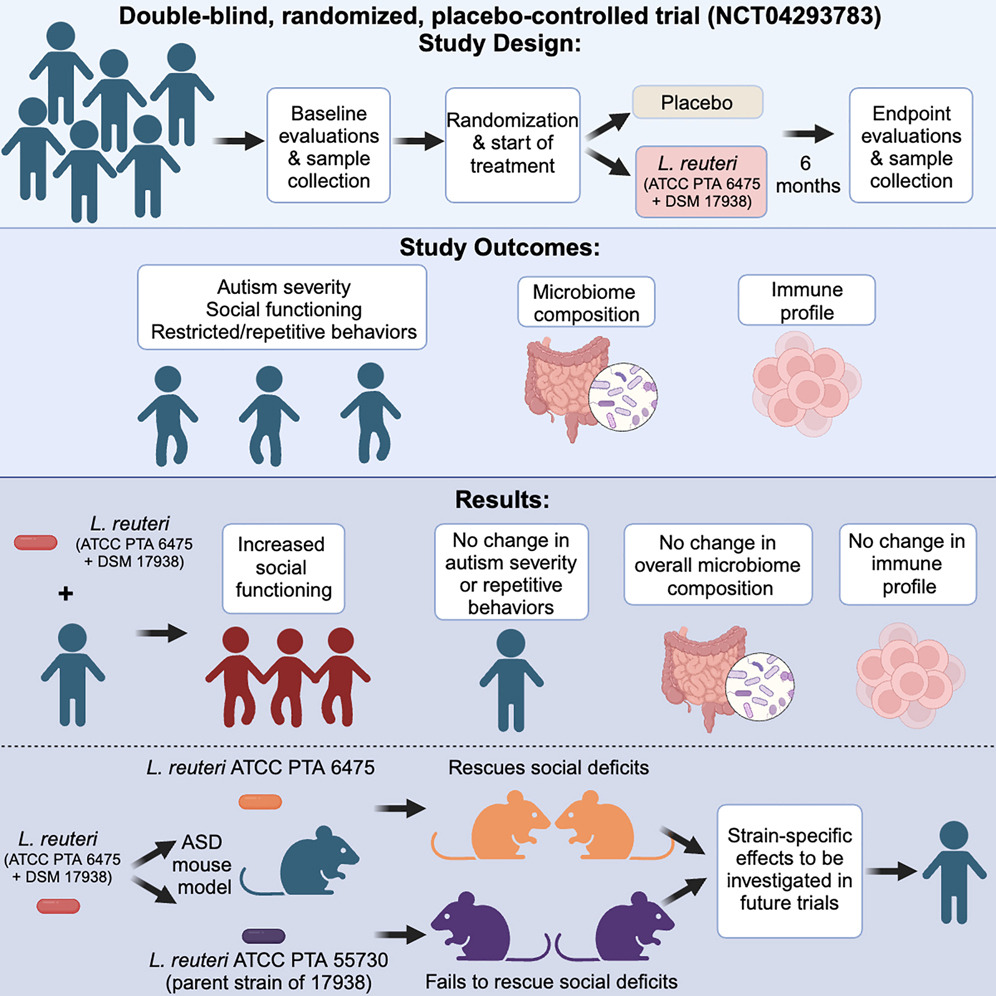
Probiotics are emerging as potential treatments for autism spectrum disorder. New findings show L. reuteri combination yields significant improvements in social functioning in children with autism spectrum disorder: cell.com/cell-host-micr…
GutMicrobiota Health tweet media
English
1
71
172
14.3K
Suryang Kwak retweetledi
GutMicrobiota Health
GutMicrobiota Health@GMFHx·
Some combinations of probiotics or strains may be beneficial in IBS. However, the certainty of the evidence is low or very low, meaning that future studies could find different findings, a recent systematic review concludes: gastrojournal.org/article/S0016-…
English
0
3
22
2.7K
Suryang Kwak retweetledi
Matt Dancho (Business Science)
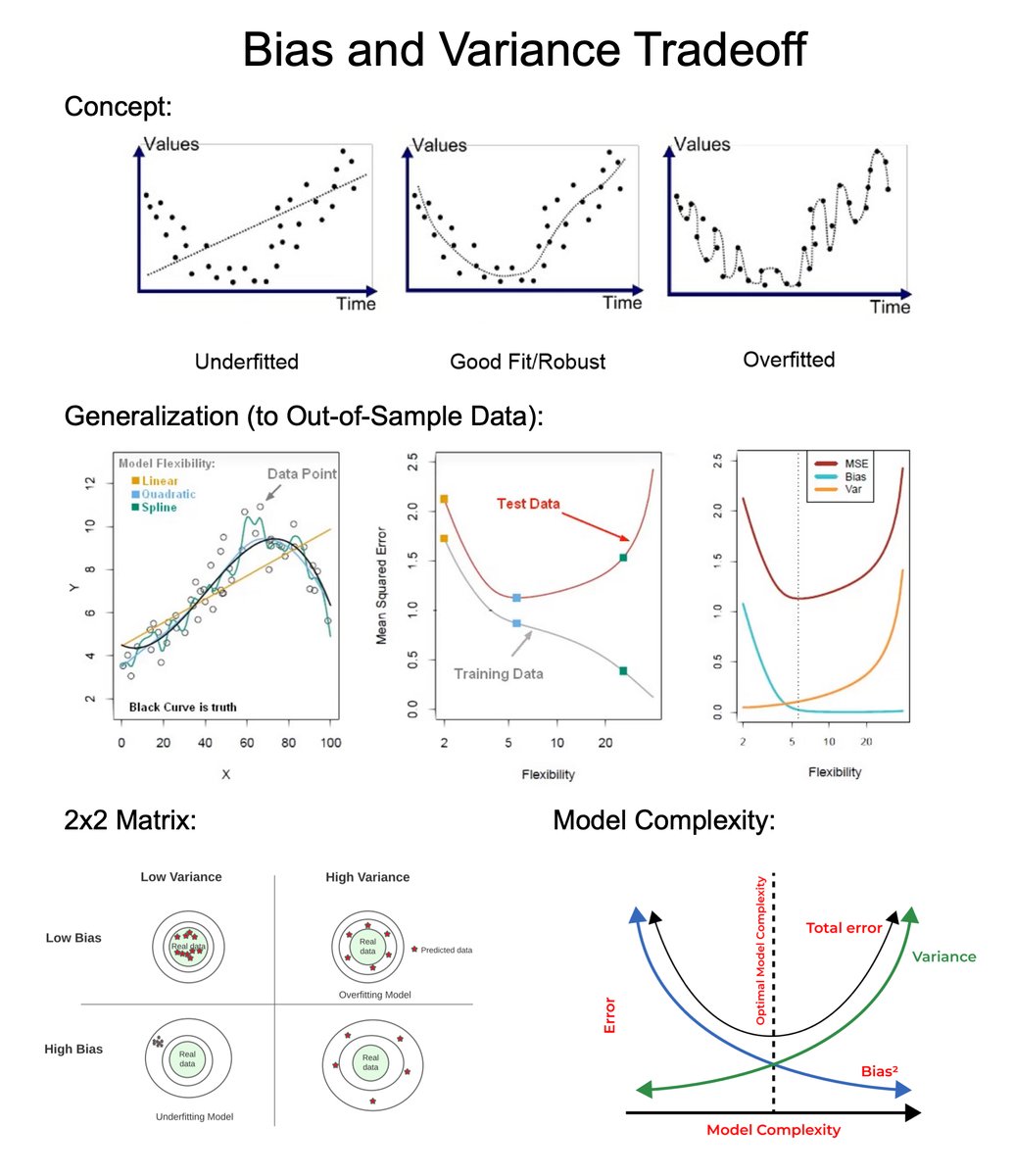
The concept that helped me go from bad models to good models: Bias and Variance. In 4 minutes, I'll share 4 years of experience in managing bias and variance in my machine learning models. Let's go. 1. Generalization: Bias and variance control your models ability to generalize on new, unseen data, not just the data it was trained on. The goal in machine learning is to build models that generalize well. To do so, I manage bias and variance. 2. Low vs High Bias: Models with low bias are usually complex and can capture the underlying patterns in data very well. They are flexible enough to fit the training data closely. Models with high bias are overly simple and cannot capture the complexity in the data. They often underfit the training data, meaning they perform poorly even on the data they were trained on. 3. Low vs High Variance: Models with low variance are not significantly affected by small fluctuations in the training data. They tend to produce consistent predictions across different data sets. Models with high variance are highly sensitive to the specific data they are trained on. They often overfit the training data, capturing noise as if it were a part of the underlying pattern. 4. Model Complexity: As model complexity increases (like adding more parameters or using more flexible models), variance tends to increase and bias tends to decrease. This is because complex models fit the training data better (lower bias) but become more sensitive to noise (higher variance). 5. Strategies for Controlling Bias/Variance: There are 3 strategies I use. Cross-Validation with Hyperparameter Tuning, Regularization (penalization), and Ensembling. Let's break them down. 6. Cross-Validation (and Hyperparameter Tuning: Helps in assessing how the results of a statistical analysis will generalize to an independent data set. Most often I use K-Fold Cross Validation. I combine this with Hyper Parameter tuning. This yields the best parameters that both stabilizes model performance and generalizes well to new data. 7. Regularization: Techniques like L1 (Lasso) and L2 (Ridge) regularization add a penalty to the model for complexity, which helps in controlling overfitting (high variance) by reducing the effect of poor features. 8. Ensemble Methods: Techniques like bagging and boosting combine multiple models to reduce variance. And combining multiple models and prediction averaging often helps stabilize models and produce a high performance prediction on unseen data. === Ready to learn Data Science for Business? I put together a free on-demand workshop that covers the 10 skills that helped me make the transition to Data Scientist: learn.business-science.io/free-rtrack-ma… And if you'd like to speed it up, I have a live workshop where I'll share how to use ChatGPT for Data Science: learn.business-science.io/registration-c… If you like this post, please reshare ♻️ it so others can get value.
Matt Dancho (Business Science) tweet media
English
12
359
1.6K
133.2K