

Zephyr Zoidis
1.2K posts

Zephyr Zoidis
@zephzoid
Decentralizing the Food System Founder @localizefoodapp
Austin, TX Katılım Şubat 2025
135 Takip Edilen1.3K Takipçiler
I’m really not trying to freak people out but some of these stats are dangerously concerning…
3 Billion Birds have vanished.
90% of Monarch Butterflies are gone.
Over 50% of Insect populations have fallen.
90% reduction in bee colonies.
The food most Americans eat everyday is the reason:
The central engine of industrial agriculture is the corn-soybean monoculture system.
Every purchase of fast food, packaged snacks, and factory-farmed meat funds the expansion of this system.
So how does this relate to the ecological collapse we are seeing?
The birds: Grassland varieties (the kinds that roam on pasture) are the hardest hit, with a 50%+ decline and researchers found this was because of pesticide toxicity.
The butterflies: can only eat milkweed which is disappearing because of modern herbicide‑intensive row‑crop production
The insects: synthetic seed coatings raised toxicity levels for insects by nearly 50x
The bees: 62% average colony loss in the last year, collapsing in real time
This is our current food system expressing its true costs in biological terms.
If you buy industrial food, you are part of the problem.
We cannot continue to enable the most evil companies in the World to destroy our environment to extract the most corporate profits.
Shop local, chemical-free food from a real farmer.

English
Texas Schools are proving it’s possible to switch from Sysco to local farms sourcing:
Sid Miller is the elected Agriculture Commissioner for the Texas Department of Agriculture (TDA), an eighth‑generation farmer and rancher
Miller created the Texas Farm Fresh Initiative, a farm‑to‑school program that connects school nutrition programs to local producers
Make all schools farm to table sourced

English
Secret societies are real.
We just usually don’t hear about them for a reason.
300+ Big Tech elites from Sam Altman to Jeff Bezos and Bill Gates meet yearly in rural Idaho to discuss their next moves.
The farmers that neighbor it don’t get an invite, and that’s not an accident:
This July it happened at a time when their companies are converting American farmland into AI data center campuses at a pace that has alarmed farmers, ecologists, and water regulators.
The same cheap power, open land, and abundant water that made Idaho a national agricultural powerhouse are now making it a prime target for Big Tech's infrastructure build-out.
You could even see the cattle roaming as their Private Jets touched down for the yearly meetup.
The proximity is not coincidence.
The CEOs who are most aggressively converting Idaho farmland into data centers gathered within 150 miles of those sites, in a venue explicitly designed for informal deal-making that produces formal transactions months later.
Mix them with governors, senators, and prospective presidential candidates at a conference hosted by investment bankers who profit from facilitating Big Tech deals.
No farmer, agricultural regulator, or rural water rights holder receives an invitation to Sun Valley.
The 175 private jets represent stakeholders on one side of the farmland conversion equation: the buying side.
We need to understand what is happening right in front of our eyes.
We are losing food growing land and the farmers that power this country.
Consumers determined to support them is what we need right now.

English
You weren’t paying attention so Trump’s EPA approved three more forever chemical pesticides linked to cancer:
The EPA approved three new pesticides with strong carbon‑fluorine bonds, the hallmark of PFAS‑type “forever chemicals”
Researchers show these PFAS have increased cancer risk, particularly for one of newly approved chemicals (trifludimoxazin)
This comes with liver and thyroid impacts in animal studies, but the EPA nonetheless concluded they “do not pose unreasonable risks”
Localize Finds Pesticide-Free Farms

English
Spain uses water filled bags instead of insecticides. Japan uses red netting instead of herbicides. America continues to spray the most toxic chemicals.
English
We sprayed so much glyphosate it’s now coming back down on us when it rains
USGS scientists documented glyphosate or its byproduct AMPA in 60 to 100% of air and rain samples across Iowa and Mississippi
The chemical drifts skyward from row crops sprayed all season and from wheat sprayed pre-harvest as a desiccant to dry grain faster for threshing
A single weekly rainfall washes down an average of 97% of the glyphosate floating in the air, USGS researchers estimated
The EU banned desiccant use in 2023 and WHO's cancer arm calls glyphosate a probable carcinogen, though US regulators still call it safe
Locate Growers Who Skip Desiccants

English
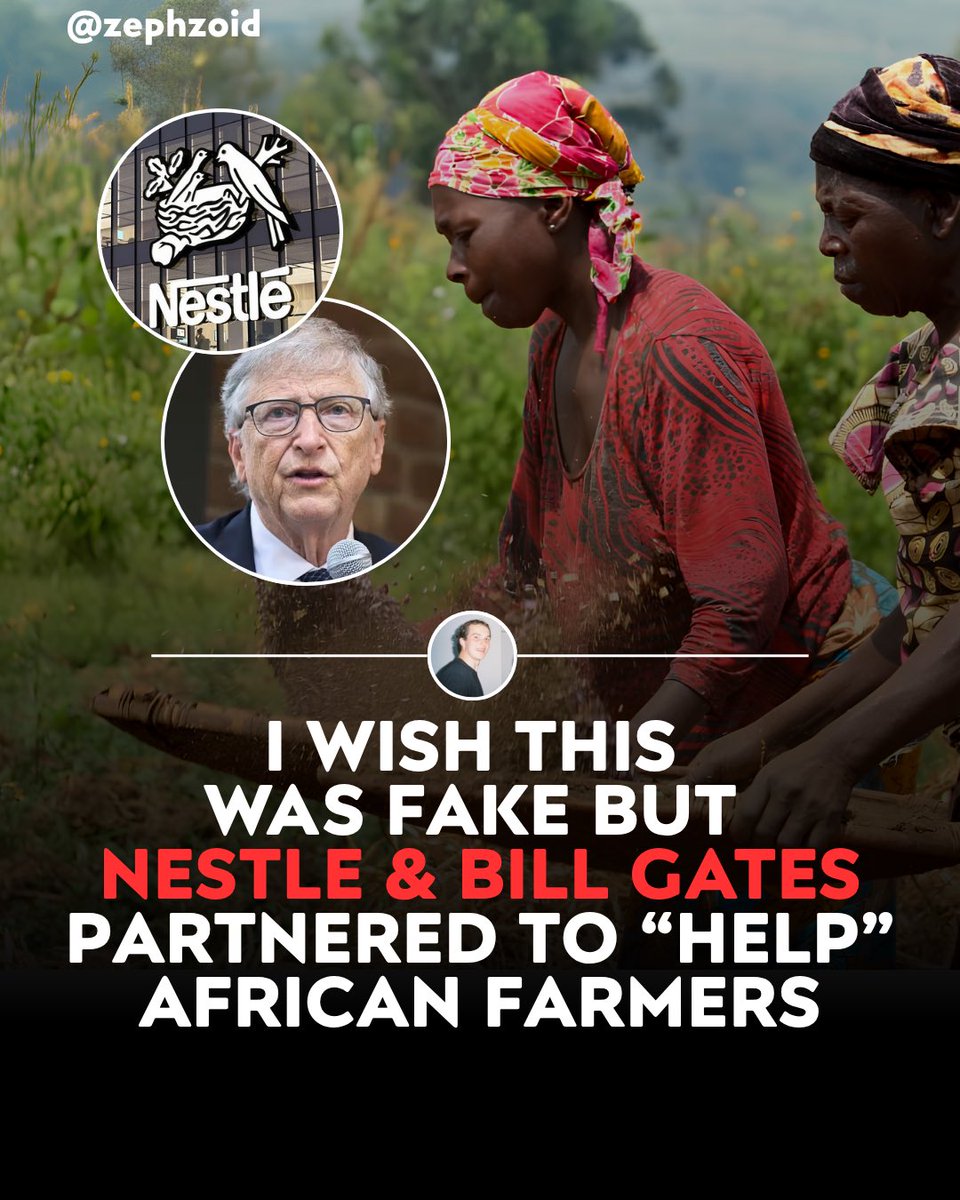
I wish this was fake but Nestle and bill gates partnered to “Help” African Farmers
The Gates Foundation co-founded AGRA in 2006, funding about two thirds of its roughly 1 billion dollar push for hybrid seeds and fertilizer in Africa
Nestle joined that push too, committing 100 million dollars to smallholder farmers in Ghana, Uganda, Tanzania and Mozambique via an AGRA-linked deal
A Tufts review of AGRA's own data found hunger rose 30 percent in its target countries, with incomes flat and farmers newly indebted from input costs
Over 200 African civil society groups have asked Gates to stop funding AGRA, calling it a costly bet on industrial farming over local food systems
Free Farmers from Nestle
English
BREAKING NEWS: Hawai'i just passed a law requiring all raw ahi to display where the fish was actually caught.
For years, consumers were buying foreign, previously frozen tuna gassed with carbon monoxide.
The new law is now protecting local fisherman who were previously struggling to survive because of this lack of transparency:
Hawai'i is now the first state to require country-of-origin labeling on raw processed tuna like poke and sushi sold at retail.
The move aims to fight back against an economy that now imports 90% of food eaten locally.
It also claws back at one of the most deceptive practices: imported ahi can be gassed with carbon monoxide to permanently maintain its bright red color.
The EU, Canada, Japan, and Singapore have all banned carbon monoxide fish treatment but the FDA allows it.
Hawaii's Longline Association estimates that 90% of ahi poke sold in the state is imported which is all previously frozen and CO-treated.
More than 60% of all seafood consumed in Hawaii is imported.
Local fishermen were being priced out of the market because consumers are buying the cheapest often without knowing it comes from foreign fleets.
Honolulu fishing captain Troy Pack captured the absurdity bluntly: "After expenses... I would make more money working at McDonald's.
While across the US local producers are being hurt by imported proteins that still do not require mandatory labeling, Hawai’i is showing states can help fill federal gaps.
Know who you’re buying from and support local production.

English
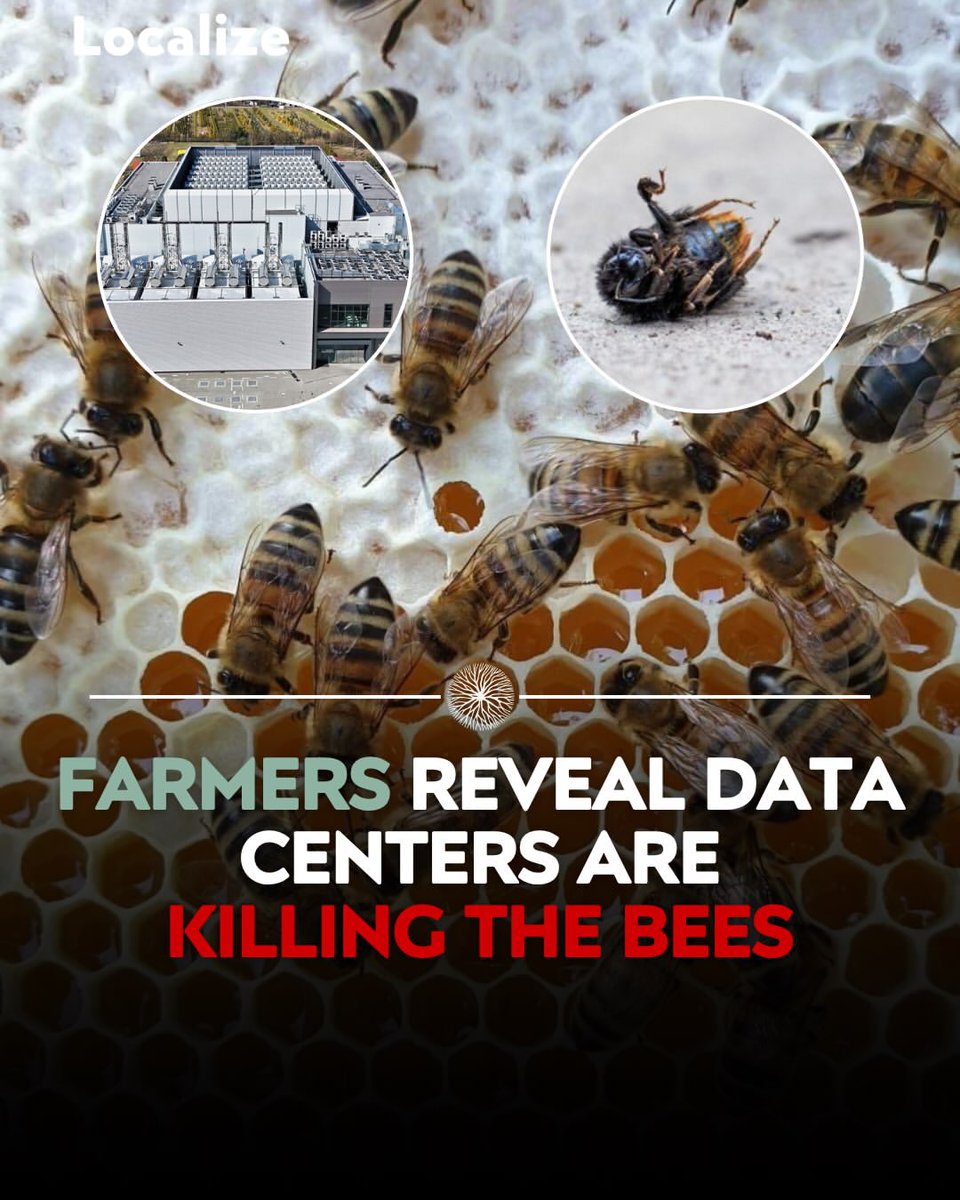
Farmers are reporting data centers are killing their bees.
I don’t think people understand how important this is.
Without Bees, WE die too.
Data centers produce artificial EMF fields that researchers say disrupt the magnetic navigation systems bees have relied on for millions of years:
One farmer claims he hasn’t seen a single bee since a data center was built nearby.
The EMFs are causing document reductions in colony size, decreased breeding efficiency, and distress signals consistent with bees sensing imminent danger.
We already have a bee crisis: the U.S. lost 55.6% of managed colonies in 2024–25, the worst year on record.
Now it’s getting that much worse…
A 2023 review examining EMF impacts on insects broadly documented "decreased reproductive capacity, altered behavior, oxidative stress, DNA damage, and impaired development” (Thill et al.)
Beekeepers are providing anecdotal evidence supporting what the research is showing, expressing concern over the health of their honeybees.
Roughly one in every three bites of food people eat globally relies on pollination by bees and other insects.
1.4 billion people depend on pollination for jobs and income, especially smallholder farmers.
Our entire food supply depends on keeping the bees alive.
Support your local beekeepers and save the environment.
English
“Health Brands” that are really owned by private equity
Good Culture: cottage cheese acquired by L Catterton for over $500 million
Tapatío: hot sauce acquired by Highlander Partners, founding family retains minority stake
Van’s Foods: “better-for-you” frozen waffles/snacks acquired by Healthy Food Holdings
Health‑Ade: kombucha acquired by Generous Brands, backed by Butterfly Equity in a deal around $500 million
Bolthouse Farms: juices, smoothies, fresh carrots and refrigerated dressings also held under private equity firm Butterfly Equity

English
Monarch Butterflies have declined by 90% because industrial farming destroyed their food source:
A U.S. Fish and Wildlife Service report found we have lost 970 million in recent years, a 90% decline from peaks
Monarch caterpillars can only eat milkweed which is disappearing because of modern herbicide‑intensive row‑crop production

English
Hawai’i just passed a law requiring all raw ahi to display where the fish was locally caught:
English
We’ve now reached a point where America has 12x more fast food locations than certified organic farms
We’ve built a food system with twelve times more drive-thrus than farms growing food without synthetic pesticides
75% of America is now overweight or obese, relying on ultra-processed convenience rather than fresh food from farmers

English
3 billion birds have vanished because of pesticide toxicity:
Grassland birds (the kinds that use agricultural fields ) are among the hardest hit, with a 50%+ decline
A study by Pierre Mineau found the toxicity profile of insecticides strongly tracks where bird populations are crashing

English
Farmers are reporting that data centers are killing their bees.
English
Never before has farmland been so consolidated because of billionaires and mega corporations:
Bill Gates is the largest single owner with 275k acres
Top 100 Farmland Owners Have 40M+ Acres
Corporate or institutional ownership has increased by 68% since the year 2000
Family farm ownership has decreased by 31% since 2000

English
For 12,000 years indigenous people harvested wild cranberries.
They were consumed fresh, preserved, used as natural dyes, even medicinally against fever, swelling, and infection.
That all changed when a lawyer found a way to escape monopoly laws.
He created a company that owns an estimated ~70% of North America’s cranberry supply:
The Capper-Volstead Act of 1922 gave associations of agricultural producers broad exemptions from antitrust laws.
It allowed a cooperative to do the following:
- Fix prices at which members will sell their products
- Eliminate price competition among its members
- Achieve monopoly power
Ocean Spray was started by Marcus Urann, a lawyer-turned-cranberry grower, who formed the company as a coop for a deliberate antitrust shield.
He served as President of the company from 1930-54, transforming cranberries from a seasonal holiday commodity into a year-round packaged product.
Through the 1940s and 1950s, the cooperative dominated cranberry processing at 70-80% of the national crop.
Eventually, they caught scrutiny:
2002 - sued by largest competitor in a federal antitrust lawsuit
2012 - some of the company’s own growers sued them for poor pay
In 2015, a judge said that even if the auctions were fake and inflating prices that it DOESN’T make them an illegal monopoly.
By 2017, legal rulings made it harder for many independent growers to pursue claims against Ocean Spray regarding alleged underpayment.
Antitrust laws have completely crumbled in America.
It’s up to us as the consumer to fund the right system and support fruit growers directly.

English
Every July, Allen and Company hosts an invitation only conference at Sun Valley, Idaho.
Tech and media executives fly in privately while the public gets no agenda and no minutes.
Meanwhile, southern Idaho farmland is being rezoned industrial for data centers.
The state approved a sales tax exemption in 2020 to draw them in.
Farmland conversion is permanent.
The people deciding its future are not the ones working it.
Find a farmer. Support a farmer.

English
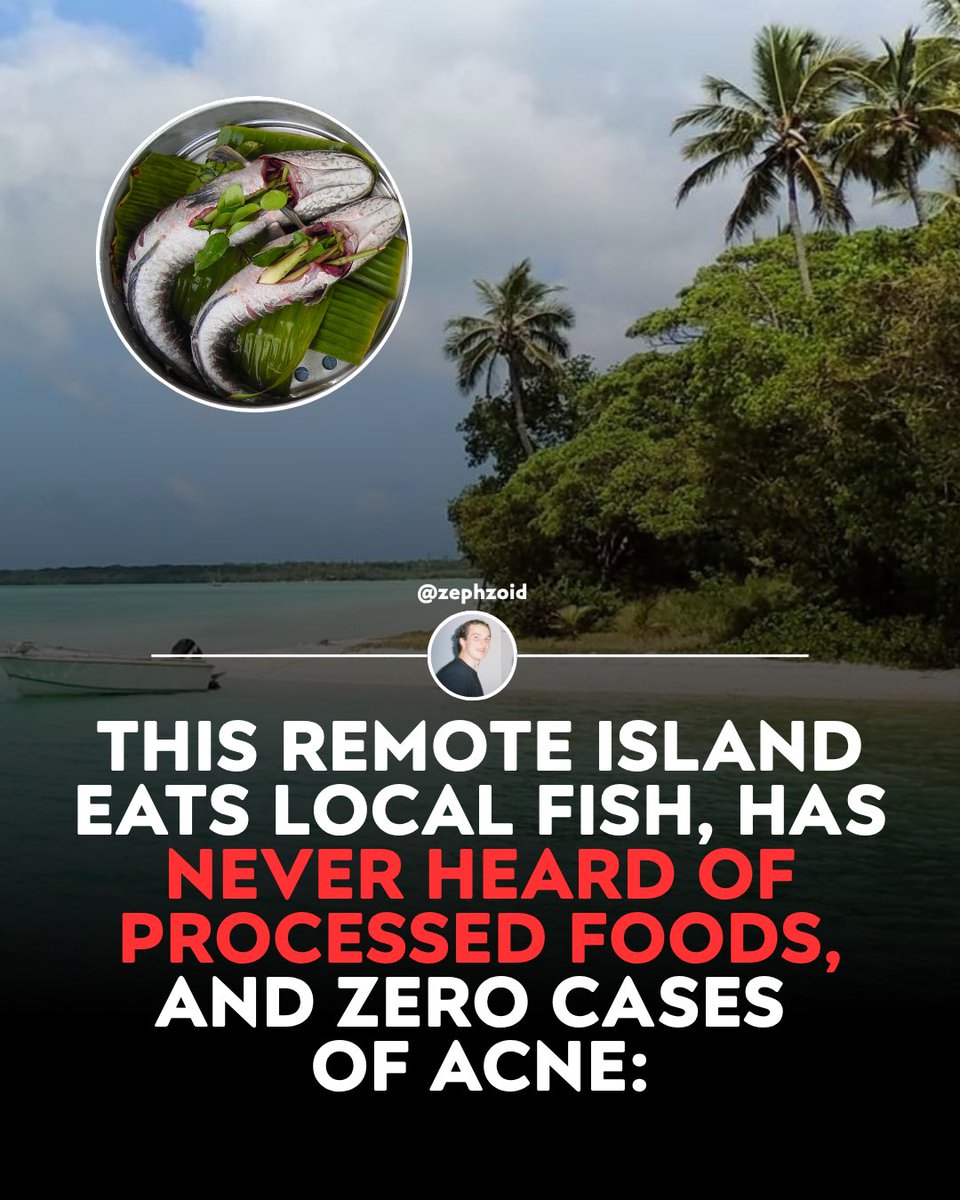
This remote Island eats local fish, has never heard of processed foods, and zero cases of acne:
Kitava, a small island in Papua New Guinea has become famous in dermatology circles because a multi‑year study reported zero acne
Citizens eat local tubers, fish, fruit, and coconut and have essentially no exposure to processed Western foods
English