Zachary Kramer

617 posts

Zachary Kramer banner
Zachary Kramer

Zachary Kramer

@zjkramer

Insurance Pro, dad of @ellakramer_ @miners_wsoc, @samkramerr2027 goalie KC Athletics ECNL 07-08, @abikramersoccer Sporting KC GA 2010, husband of @drlorikramer

Kansas City, Missouri, USA Katılım Mayıs 2009
330 Takip Edilen256 Takipçiler
Zachary Kramer
Zachary Kramer@zjkramer·
Here we go again... In high finance, fear sells. Few have capitalized on this as effectively as Michael Burry, the investor from The Big Short. Known for his prescient bet against the 2008 housing market, Burry has built a modern-day Cassandra persona—cursed to speak truths the market ignores. Lately, he has targeted artificial intelligence, shorting industry leaders and comparing current valuations to the 2000 dot-com bubble. His skepticism grabs headlines, but it rests on a static view of a dynamic world. Burry’s core argument draws parallels between today’s AI boom and the dot-com crash, warning of inevitable catastrophe. That comparison crumbles under scrutiny. The dot-com crash was brutal—driven by revenue-less companies and vaporware—yet the Nasdaq peaked at ~5,048 in March 2000 and now trades near 25,000, a 400% gain from the very top doom-mongers cite. Buying at the absolute worst moment in 2000 and holding would still have generated massive wealth. The market didn’t just recover; it evolved. Following Burry’s perennial bearishness has cost investors dearly. He was right in 2008 but wrong repeatedly since: 2015 crash call (S&P 500 +11% next year), 2017 global meltdown warning (market +19%), 2023 single-word tweet “Sell” right before a historic bull run. Burry keeps predicting rain while ignoring the sunshine needed for crops to grow. Sitting in cash often costs far more than riding out corrections. His pessimism misunderstands utility. The dot-com bubble was speculation on potential; today’s AI boom is driven by real application. AI has become a utility as fundamental as electricity, embedded across the economy. A Midwest farmer with no computer still benefits immensely from the technology Burry bets against: AI-optimized logistics cut his shipping costs, deep-learning models power his weather forecasts, global supply algorithms price his fertilizer. Unlike 2000’s sock-puppet ads, AI is the operating system of the modern economy. Shorting AI today is like shorting the internet itself in 1999. Burry sees a static world where rising valuations must revert to the mean. Reality is dynamic: innovation creates new resources. AlphaFold has solved nearly all known protein structures, accelerating drug discovery by decades. AI optimizes space missions that will make humanity multi-planetary. These breakthroughs generate genuine new value. Prudent risk management matters—putting everything in one volatile stock is reckless. For diversified investors, however, an AI “bubble burst” is a long-term non-event. Markets self-correct: overvalued companies fall, capital flows to better ones. Burry is betting against human ingenuity vies against history. History says that’s a losing wager. The dot-com bubble burst and birthed the digital economy. If today’s AI “bubble” bursts, it will simply pave the way for the mature AI economy ahead. Optimists who stay invested will always outperform pessimists waiting for the sky to fall. @michaeljburr @WSJmarkets @TheEconomist @SuperGrok
Zachary Kramer tweet media
English
0
0
0
56
Massimo
Massimo@Rainmaker1973·
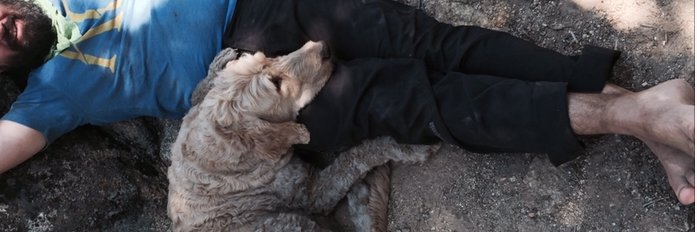
If this dog was yours, what would you name it?
Massimo tweet media
English
1.8K
110
1.5K
259.1K
Zachary Kramer
Zachary Kramer@zjkramer·
The Chicken Egg Fox Paradox: A Critique of Congressional Gridlock #chickeneggfox In the annals of philosophical riddles and literary fables, few motifs capture human folly as vividly as the chicken-or-egg conundrum intertwined with the cunning fox. Dating back to ancient Greece, where Aristotle pondered cause and effect in the 4th century BCE—arguing the actual chicken precedes the potential egg—this paradox has evolved through time, appearing in Plutarch's 1st-century CE essays on causality and even sacred texts asserting divine creation of the hen first. By the Middle Ages, it fused with fox lore in works like the epic Reynard the Fox, a satirical cycle of tales portraying the anthropomorphic fox as a trickster evading justice through wit and deception, much like Aesop's 6th-century BCE fables where foxes symbolize adaptability and sly self-interest. Fast-forward to today, and this timeless blend inspires the "Chicken Egg Fox Paradox," a fresh lens on America's government shutdown woes. Imagine if conservative firebrand Rush Limbaugh, podcast powerhouse Joseph Rogan, and satirical maestro Jon Stewart teamed up to dissect it: Limbaugh railing against elitist swamps, Rogan probing the absurdity with wide-eyed curiosity, and Stewart delivering punchy jabs at the hypocrisy. Picture this scene: Rush Limbaugh thunders, "Folks, this is the liberal playbook—create chaos, blame the other side, and pocket your paycheck while the country suffers!" Joseph Rogan leans in: "Hold up, how did we get here? It's like evolution meets politics; the system's mutated into something that rewards doing nothing." Jon Stewart smirks: "Ah, the noble fox in Congress: Too clever by half, feasting on taxpayer eggs while the chickens cluck in vain." At its heart, the paradox frames American taxpayers as the diligent chicken, laying golden eggs of revenue to hatch a functioning government budget. Yet, lurking is the sly fox—our senators and representatives—who engineer shutdowns through gridlock, then slink away on paid recess, exploiting the very crisis they could resolve. In literature, Aesop's "The Fox and the Grapes" birthed the "sour grapes" idiom, where the fox dismisses unattainable fruit as unworthy; similarly, Congress often decries the other's demands as unpalatable while savoring their salaries. This isn't abstract philosophy—it's the gritty reality of the 2025 federal shutdown, which erupted at midnight on October 1 when Congress failed to pass appropriations bills. As of November 9, 2025, it has dragged on for over 39 days, eclipsing the 2018-2019 record and marking the longest in U.S. history. Essential federal workers—air traffic controllers keeping skies safe, military personnel defending the nation—labor without pay, with some branches facing missed checks by November 14. Programs like SNAP, aiding vulnerable families, teeter on collapse, potentially leaving millions without food assistance. The Bipartisan Policy Center estimates ripple effects: delayed grants to states, disrupted Head Start education, and economic losses echoing the $11 billion hit from 2018-2019. Meanwhile, congressional members draw $174,000 annual salaries (more for leadership) from permanent appropriations, untouched by the Antideficiency Act that halts discretionary spending. Rush Limbaugh might bellow: "This is cronyism on steroids—elites exempt themselves while the little guy pays the price!" Joseph Rogan: "Dude, explain this: They cause the shutdown, won't fix it, but get paid? That's some next-level scam." Jon Stewart: "Congress: Where 'public servant' means serving yourself first, second, and third." The historical tapestry enriches this critique. Aristotle's logic in "Metaphysics" dissected infinite regress—does everything need a predecessor?—mirroring how shutdowns perpetuate because Congress won't convene, yet convening is required to end them. Plutarch, in "The Symposiacs," elevated the chicken-egg to a banquet debate on origins, much like today's partisan finger-pointing. Religious texts, from Genesis's creation narrative to ancient Hindu scriptures pondering cosmic eggs, often resolve it divinely, but in secular literature, Clarice Lispector's 20th-century story "The Egg and the Chicken" turns it existential, questioning identity amid absurdity—apt for a Congress lost in its own maze. Fox motifs amplify the predation: Aesop's tales, like "The Fox and the Crow," show flattery as a tool for theft, paralleling political spin during impasses. Medieval Reynard cycles satirized nobility's cunning, with the fox evading trials through guile, foreshadowing modern lawmakers dodging accountability. Even Chaucer's "Nun's Priest's Tale" in The Canterbury Tales weaves a fox's trickery into moral warnings, blending humor and caution—echoing Stewart's style. Delving into the 2025 crisis, the paradox manifests in raw partisanship. House Republicans pushed a short-term CR laced with policy riders on issues like immigration; Senate Democrats countered with demands for clean funding and extensions for health subsidies under the Affordable Care Act. A rare Saturday Senate session on November 9 adjourned without breakthrough, extending uncertainty. Democrats blocked GOP bills to ensure immediate pay for federal workers and military, arguing for comprehensive safeguards; Republicans decried it as obstruction. Over 670,000 employees are impacted—furloughed or "excepted" but unpaid—with agencies like the National Nuclear Security Administration slashing staff. Jon Stewart quips: "Excepted? More like expected to work for free while the foxes lounge." Joseph Rogan: "These folks are heroes, man—keeping nukes safe without a dime. How's that fair?" Rush Limbaugh: "It's Democrat gamesmanship, holding the military hostage for their agenda!" Precedents abound, revealing a pattern since the 1980s when Attorney General Benjamin Civiletti's opinions formalized shutdown mechanics. The 1995-1996 Clinton-Gingrich clash lasted 21 days, with lawmakers paid amid 284,000 furloughs; blame flew, but no personal cost to Congress. Obama's 2013 shutdown over Obamacare spanned 16 days, affecting 800,000—again, congressional privilege intact. Trump's 2018-2019 border wall fight dragged 35 days, deferring compromise while essential services faltered. Each episode costs billions, disrupts lives, and erodes trust, with approval ratings plummeting to 20%. Yet, the fox thrives, protected by the 27th Amendment—ratified in 1992 after a 203-year odyssey from Madison's proposal—barring mid-term pay changes to curb corruption, now ironically enabling negligence. Solutions demand breaking this cycle. Legislative fixes like Kennedy's bills or Graham's amendment aim to withhold or forfeit pay, incentivizing resolution. Kennedy's escrow approach skirts the 27th by delaying, not varying, compensation—clever as a fox, but for good. Graham's debt-redirection taps fiscal conservatism, appealing to Limbaugh's base. But blocks persist, as with Paul's objection, prompting Trump's social media blasts. Voter action: Stop reelecting incumbents, ending careerism the framers never intended. Term limits, supported by 83% of Americans, could inject fresh blood, reducing self-interest that stalls momentum. Litigation offers judicial recourse: Challenge pay's constitutionality via SCOTUS, arguing it violates equal protection or the Compensation Clause when no "services" occur. Frame it as taxpayers vs. idle elites—why compensate foxes but not chickens? Precedents like shutdown backpay suits suggest viability, though deference to Congress (e.g., Powell v. McCormack) tempers optimism. Rush: "The Court must drain the swamp!" Rogan: "Could this really work, or is it just more talk?" Stewart: "Finally, a plot twist where the foxes get outfoxed." Another potent tool: Vilify Congress with a "fat, sly fox" meme campaign. Flood social media with caricatures—pudgy foxes in suits, pockets bulging with cash, ignoring burning henhouses. Draw from Aesop's wit: "The Fox and the Stork," where reciprocity fails, mirroring unbalanced burdens. Viral memes have toppled scandals before; here, they could shame lawmakers into action, amplifying public outrage (70% disapproval). Stewart's satire excels here: "Meme them into obsolescence—because nothing hurts a politician like becoming a laughingstock. Counterarguments merit airtime. Some scholars warn withholding pay risks executive overreach or rushed legislation harming policy. Pay continuity attracts talent, preserving independence. Backpay for workers, standardized since 2019's Fair Treatment Act, softens inequities. Rogan: "Fair point—do we want amateurs running the show?" But the paradox's persistence—harming the vulnerable while sparing the powerful—demands reform. Historical fables teach that unchecked cunning leads to downfall; let's heed them. In conclusion, the Chicken Egg Fox Paradox, rooted in millennia of philosophical and literary wisdom, demands urgent resolution. Supreme Court, intervene: Override enabling laws, tie pay to duty. Voters, revolt against incumbents. Public, unleash the memes. As our imagined trio concurs—Limbaugh decrying corruption, Rogan questioning sanity, Stewart mocking the madness—America deserves governance, not gamesmanship. No work, no pay. End the paradox, or the foxes win. @WSJ @washingtonpost @TheEconomist @bizjournals
English
0
0
0
31
Grace Gym🏋️‍♀️
Grace Gym🏋️‍♀️@GraceGym_·
High blood pressure issues... See how to clean your arteries 👇
English
98
75
343
30.6K
Zachary Kramer
Zachary Kramer@zjkramer·
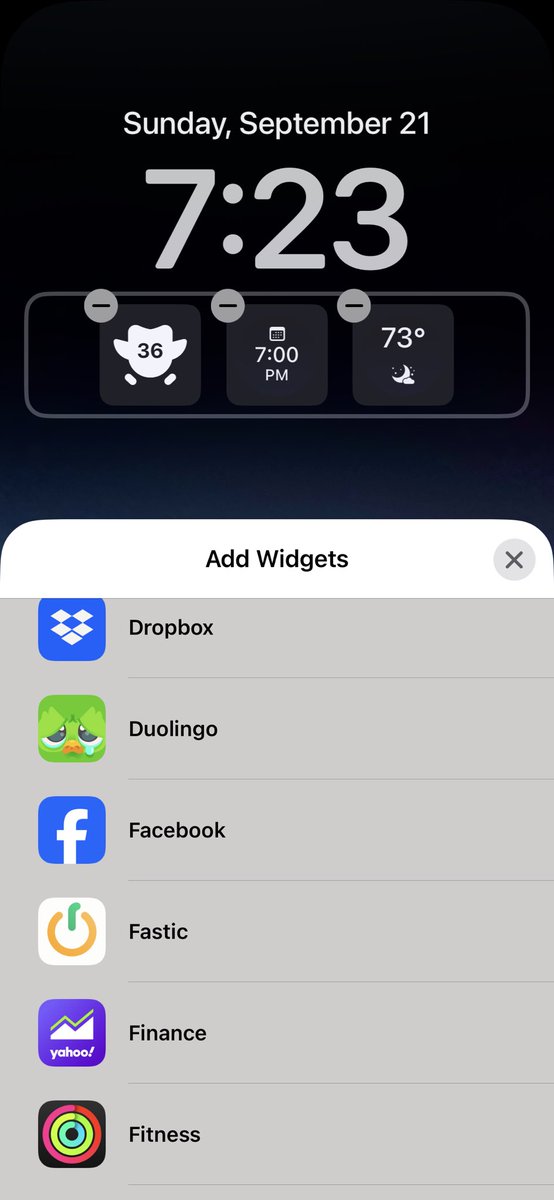
@grok can you create widget for iphone lock screen?
Zachary Kramer tweet media
English
0
0
0
18
Daniel Sperry
Daniel Sperry@sperrydaniel94·
The crowd at kickoff...3 hours delayed. If this had been an original start time I'd have expected the sell out. #KCBaby
Daniel Sperry tweet media
English
1
3
22
2.7K
Jacob Wolf
Jacob Wolf@wlfjcb·
@thekccurrent Why not postpone? It’s not cooling off and to leave the fans in the stands?
English
2
0
24
4.3K
KC Current
KC Current@thekccurrent·
The KC Current match today against the Orlando Pride, scheduled to kick off at 3 p.m. CT, has been delayed due to weather conditions.

For updates, continue to follow KC Current and CPKC Stadium social media platforms. We will provide further updates as they become available.
English
86
37
391
161.5K
Zachary Kramer
Zachary Kramer@zjkramer·
@thekccurrent well you all scheduled a game mid aug at 3pm and now after all the fans are in the stadium you realize its too hot to play. every fan here is too hot and we are just getting hotter by the minute as you keep delaying the game #notcool #usescience #planbetter
English
0
0
0
21
Zachary Kramer
Zachary Kramer@zjkramer·
@elonmusk @Tesla Elon, Take a break from Cyber Truck production and get into delivery vans! It will also tie in well with FSD/auto-pilot, xai, humanoid robots too. @Grok thinks it'll work Then you could sell or lease them in 100 or 1,000 batches instead of single personal use truck sales grok.com/share/c2hhcmQt…
English
1
0
0
51
Coach George
Coach George@CoachGeorge23·
Woke up to this email feeling very grateful (and relieved). This has been an awesome and rewarding experience — I’ve learned a lot from two fantastic instructors and connected with some great people that are now friends. Proud of the progress and motivated for what’s next!
Coach George tweet media
English
1
0
36
874