@joshuapliu The questions I get are so specific to the patient and are usually not ones with hard answers. Should I ride my bicycle 2 weeks after surgery? Well depends on how fast, what surgery, how you are recovering, etc… no study is going to have guidance on that
Lots of hype around using Generative AI to tackle patient portal message overload by letting AI draft replies...
... but isn't the better solution to empower patients with better self-care education and workflows so that many messages can be prevented in the first place?
🤔
It’s so hard to how much you’ll pay for a doctor check up, labs, procedures, or even meds using your health insurance.
We need an automatic way when you scan your insurance card it just tells you. This can’t be hard.
Is anyone doing this?
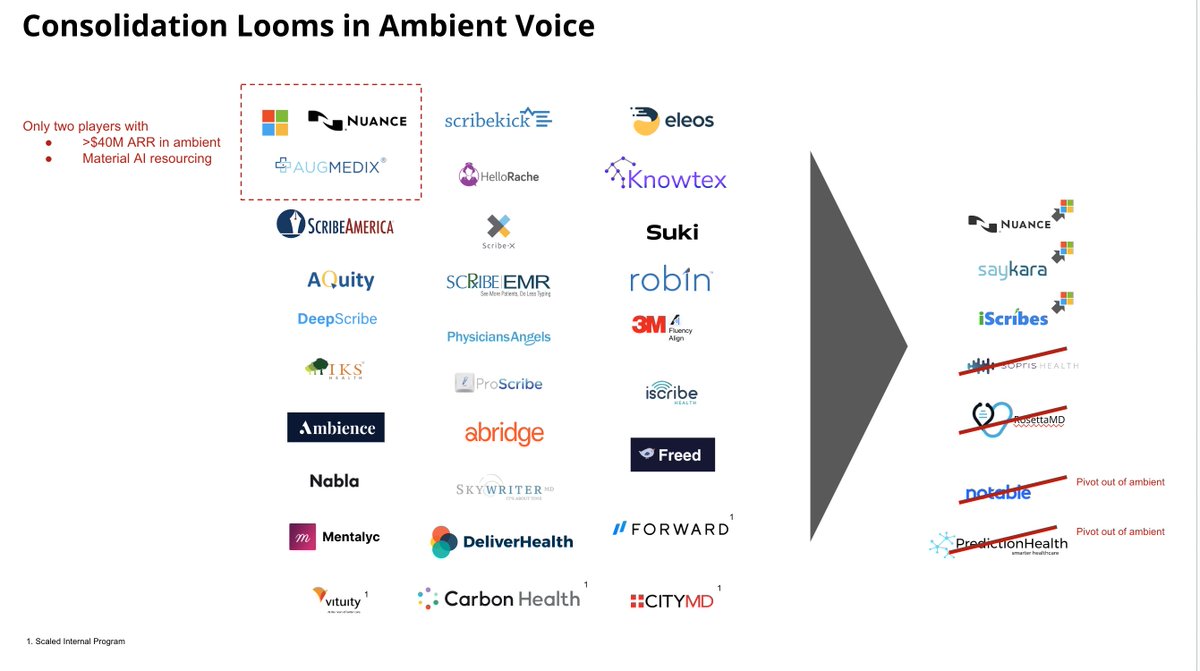
When you look at the # of companies that are building in the medical scribe space you can only think of one thing: it's going to be a blood bath
If these small players are not working towards an M&A exit soon, they will be fucked big time
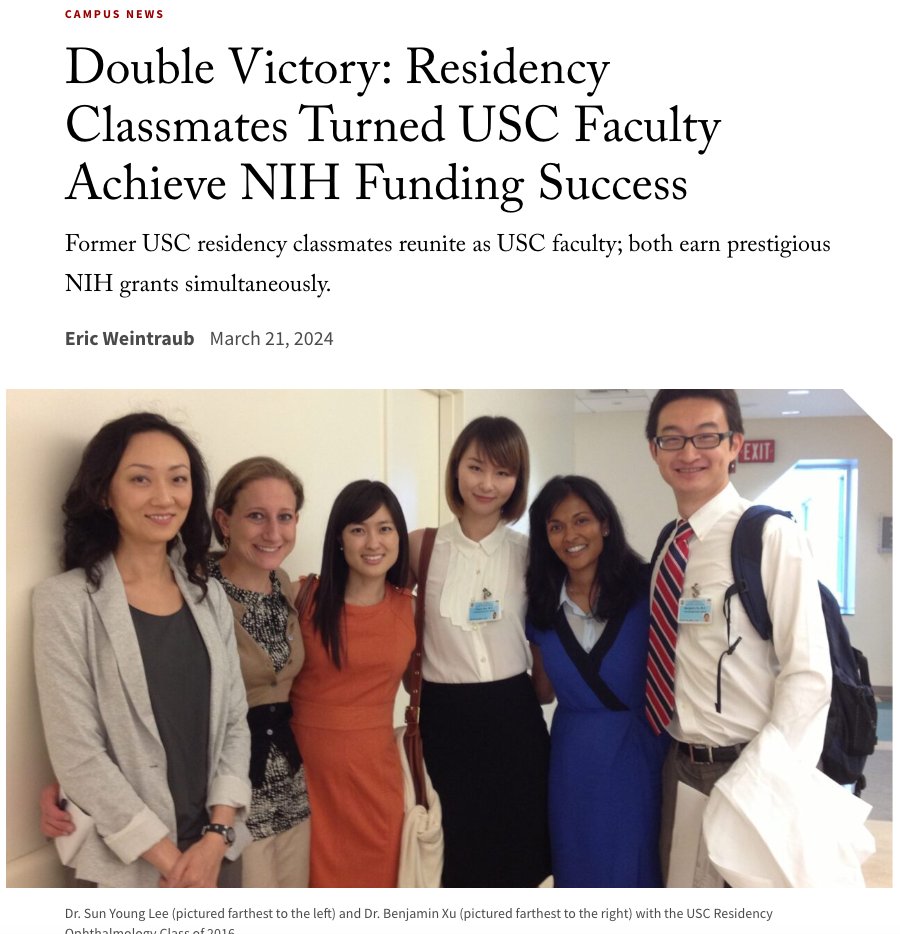
Sunny Lee @LeeRetinaLab and I started residency together @USCEye 11 years ago. This year we both received our first @NIH R01s as colleagues and @USC faculty! Thanks to USC and @EricZWeintraub for detailing our shared journey, friendship, and fortune!
tinyurl.com/xulab05
Today is the deadline for applying to the summer 2024 Y Combinator batch. Don't be deterred from applying if you're not very far along yet. In a typical batch, about 40% of the startups YC funds are just an idea.
@MihaelaVDS This is an excellent foundational work in causal AI in medicine. With traditional statistics and and ML I’ve found a natural cap of around 0.8 AUC in predictions from retinal imaging. Have you seen higher in any examples?
I've worked tirelessly on cracking this problem with generations of students. It’s an extremely challenging area of ML and seeing it come closer to clinical use, where it will empower clinicians & patients alike, is very satisfying: nature.com/articles/s4159…#AI#PatientEmpowerment
@nealkhosla I think that really showcases the importance of teams to solve healthcare problems. We can get really tunnel visioned thinking from our own perspective alone
Most people in healthcare really only know their little slice of it.
There is a dearth of people who think about the system as a whole and know enough details about the slices to make those thoughts valuable.
And there are even fewer who also understand technology.
1) Made a plan: We already had an idea, so all we needed to do was make as much progress as possible in the time we had. We were committed to not seeing daylight for an entire week to make our application as good as possible (this also coincided perfectly with our application for Prod which encourages their applicants to do just this). We wanted to prove that we could both build and sell, so we came up with an ambitious plan to do just that in a week.
5 days until the application deadline to apply to @ycombinator !
Claire and I started building our company Paradigm ~1 week before applying to yc, applied on the exact minute the application was due, and got in.
Here’s how we did it:
@vkhosla@atulbutte@TEDTalks Knowledge but more so entertainment is created by the human imagination for other humans. Can that creative process ever be replicated by a machine and be as impactful to a human audience? Generative AI is only trained by the data we give it. Humans are influenced by everything.
Entrepreneurs, with passion for a vision, invent the future they want. These are my predictions for abundant, awesome, technology-based, Possible Tomorrows (2035-2049) ... if we allow them to happen! #TED2024@TEDTalks
@CaizenEye It’s technically not against the rules if what is being copy forwarded if factually correct and reflective of services provided.
I’d be more concerned if insurance companies are using it to deny care