Aditi Chaudhary retweetou
Aditi Chaudhary
86 posts

Aditi Chaudhary
@Chaudharyadit23
PhD | Demographer l Public Health Enthusiast l Writer l IIPS Mumbai l PopulationCouncil Consulting l Views expressed are personal
Mumbai, India Entrou em Ocak 2015
112 Seguindo54 Seguidores
Aditi Chaudhary retweetou
Happy New Year from PopulationCouncil Consulting!
In 2026, we look forward to deepening impact, strengthening partnerships, and continuing our mission of delivering insights that improve lives.
#SocialImpact #ImpactAtScale #KnowledgePartner
English
Aditi Chaudhary retweetou

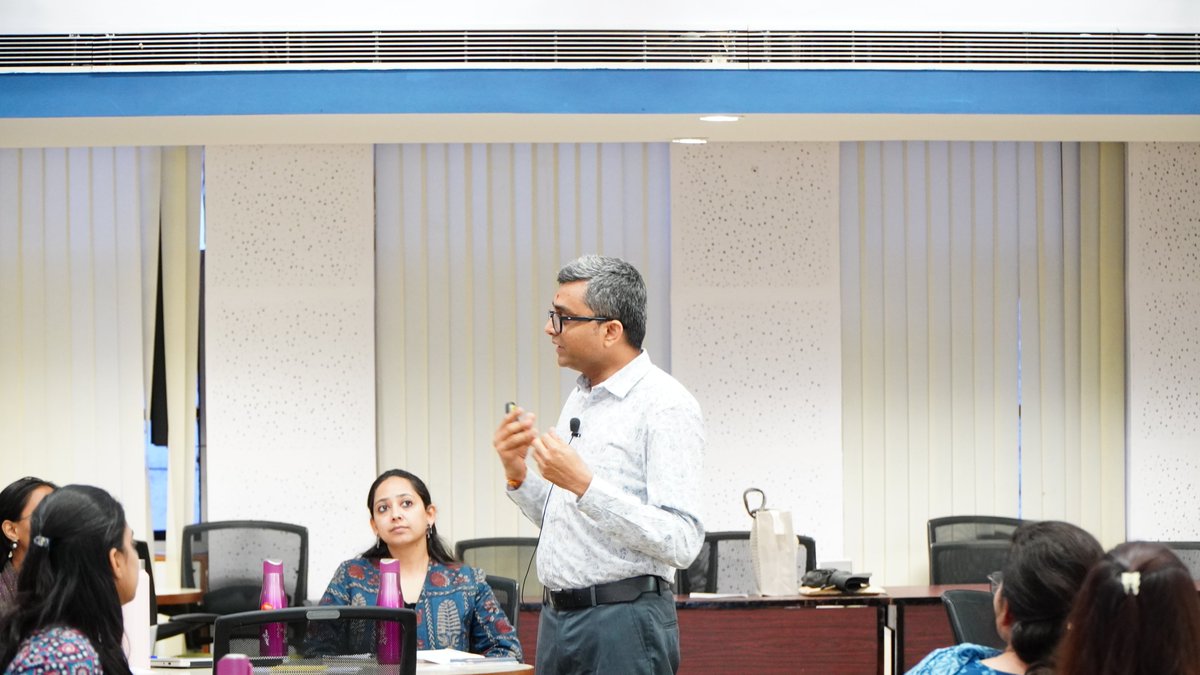
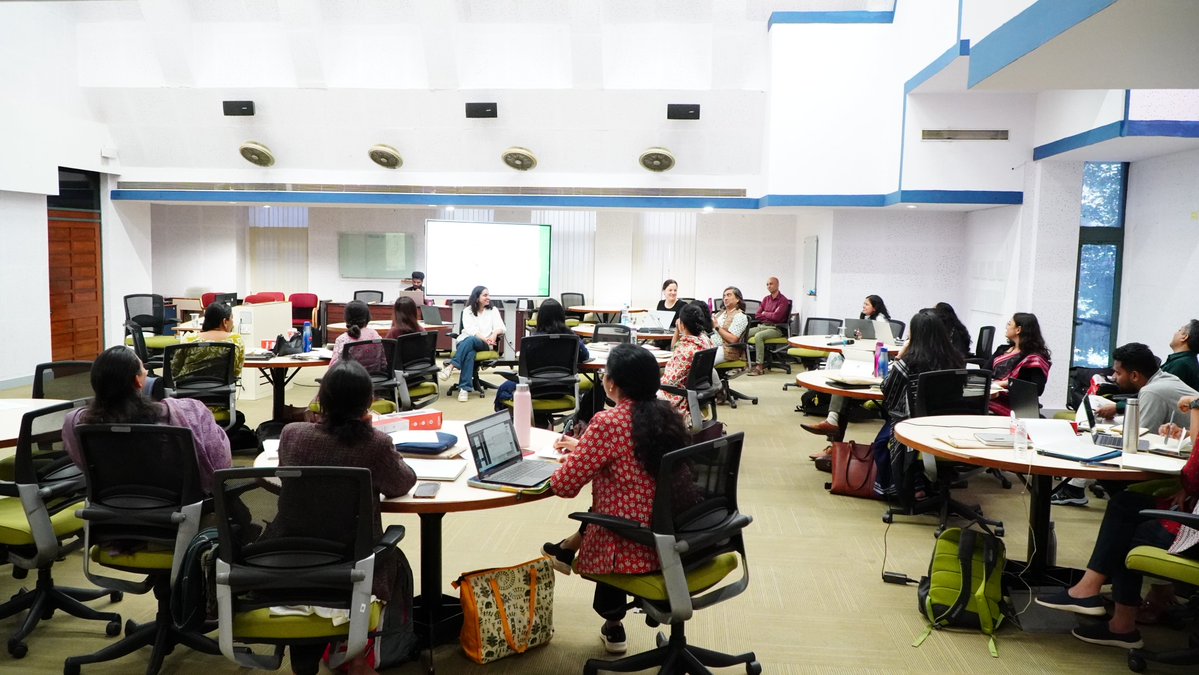
Day 3 of the #RealistResearchBlendedCourse began with two of our participants volunteering to share their insights and provide an overview of the Day 2 sessions.
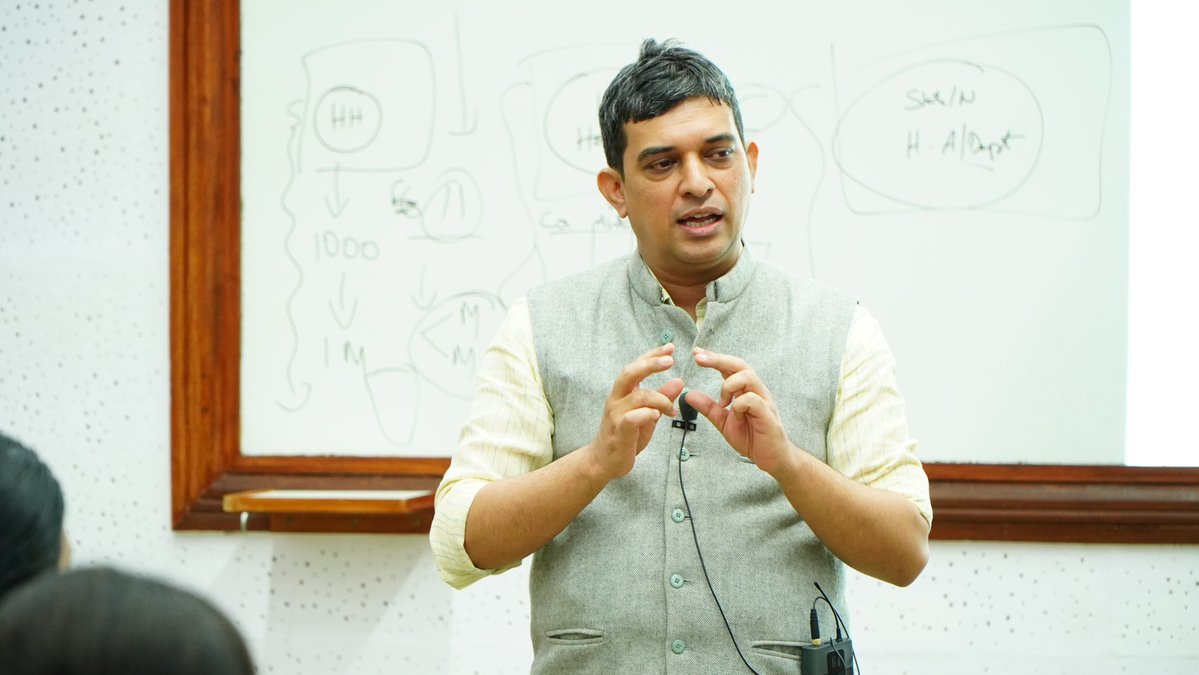
The workshop then moved to a glimpse of other theory-driven methods. One of the sessions was led by Dr Vaibhav Agavane and focused on the approach called “theory of change. ” He noted that every programme or intervention carries both implicit and explicit ideas about how change is expected to occur, and that a theory of change helps make those assumptions and the programme’s logic explicit. Through an example, he illustrated the various elements of a theory of change.
Dr Upendra Bhojani described another theory-driven method, Qualitative Comparative Analysis (QCA). He explained how QCA combines the strengths of both qualitative and quantitative approaches to identify deterministic outcomes and examine causal pathways. Drawing on an example, he walked through the different components of QCA including cases, outcomes, conditions, and the construction of a truth table.
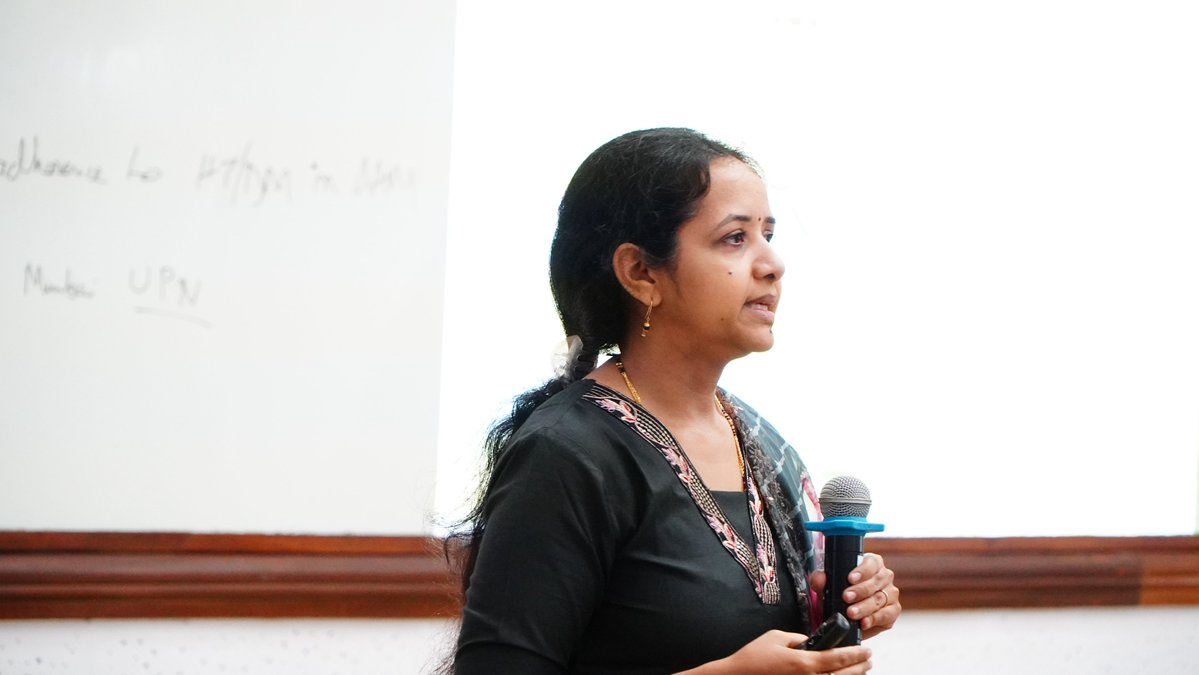
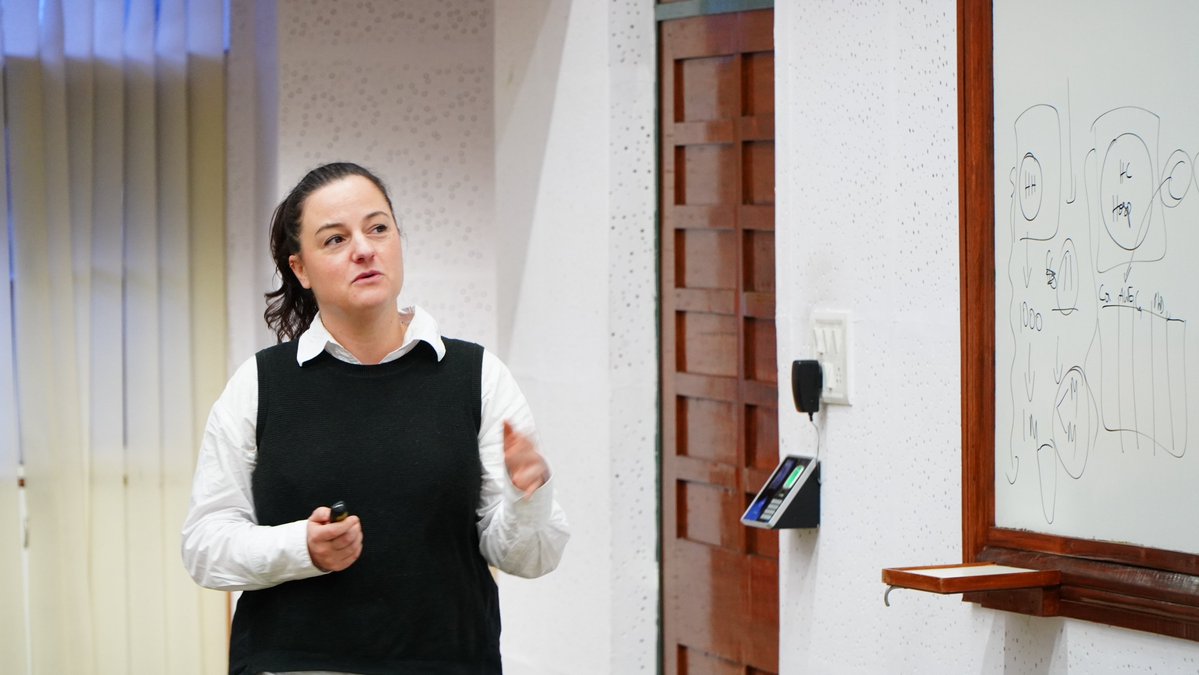
Dr Pragati Hebbar delved into what a realist synthesis is, and how it differs from a realist evaluation or a conventional systematic review. She explained the process of realist synthesis and underscored that realist synthesis is theorydriven, it does not place literature in a strict hierarchy, and allows the use of a wide range of sources, She highlighted both the strengths and the limitations of realist synthesis and demonstrated how to conduct a realist synthesis through an example.
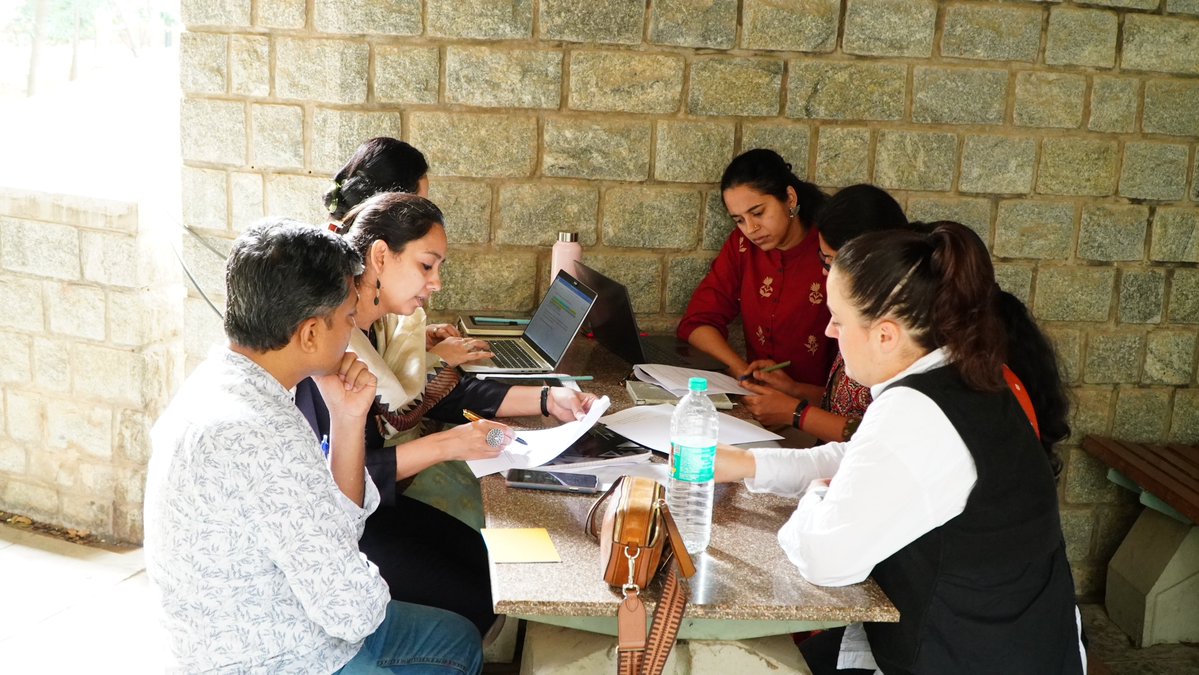
Following this session, the participants spent time reading a selected article on realist synthesis. Afterwards, they broke into small groups to critically appraise a published realist synthesis study. Once group work was complete, each team presented their findings to the rest of the participants.
The course concluded with an overview of resources and support for realist evaluation practitioners, including HSGSHAPES and RAMESES, followed by certificate distribution and a dedicated feedback session.
@Chaudharyadit23 @AvishekHazra23, @commed_doc @MonicaShriv @punitrd @HiralkarSakshi @brynne_gilmore
#IPHBengaluru #TTNSoAS #RealistResearch2025 #IPHEvents #blendedlearning


English
Aditi Chaudhary retweetou

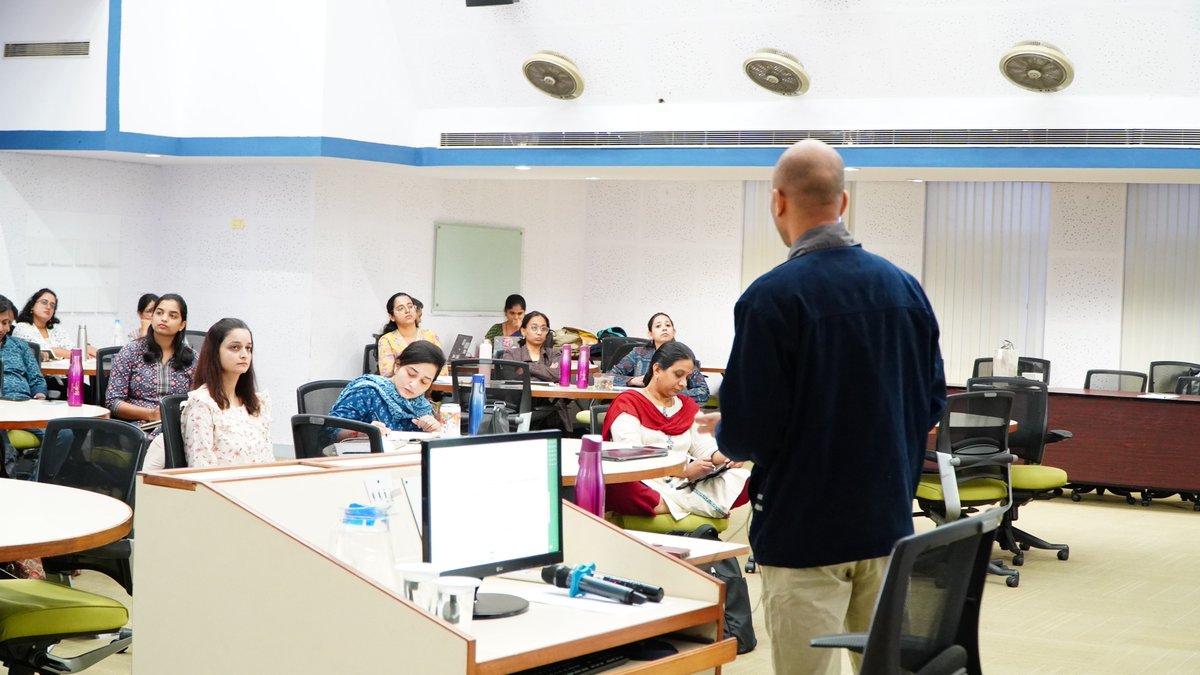
Kicked off Day 1 of the #RealistResearchBlendedCourse (Face-to-Face Phase) at @iimb_official
The recap session explored whether research can ever be neutral, emphasizing that every method is grounded in its own philosophical roots. It revisited the philosophical foundations of realist research, highlighting realism as a bridge between the real world and the interpreted world. The session also underscored that people remain the driving force behind any programme.
Dr. Prashanth N. S. led a session on concepts and terminology that explored how programmes and policies are ideas shaped by underlying assumptions and contextual factors. It also featured an interactive illustration, where participants contributed a policy or programme idea and collectively unpacked its assumptions and contextual elements.
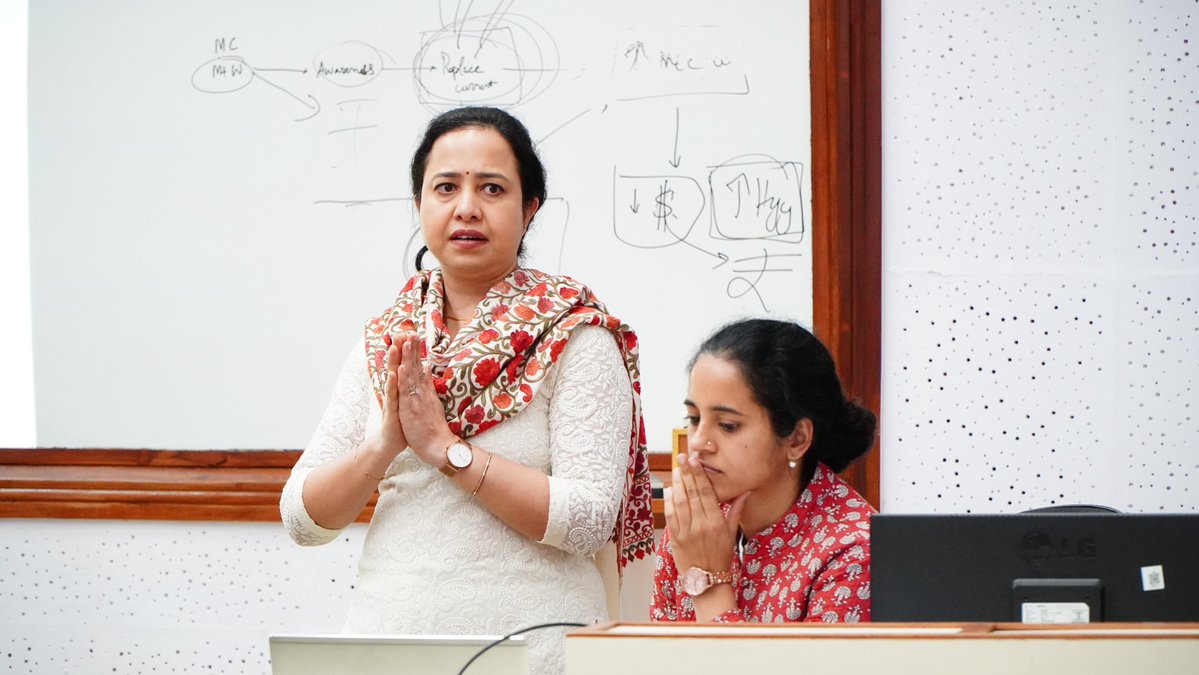
Dr. Pragati Hebbar used a variety of examples to explain how programme theories are developed, emphasizing the ontological layers. She also discussed why it is important to construct Initial Programme Theories (IPTs) and the different levels of programme theory. Although many possible programme theories exist, she pointed out that time and resource constraints force us to select only a few to address specific parts of the larger picture.
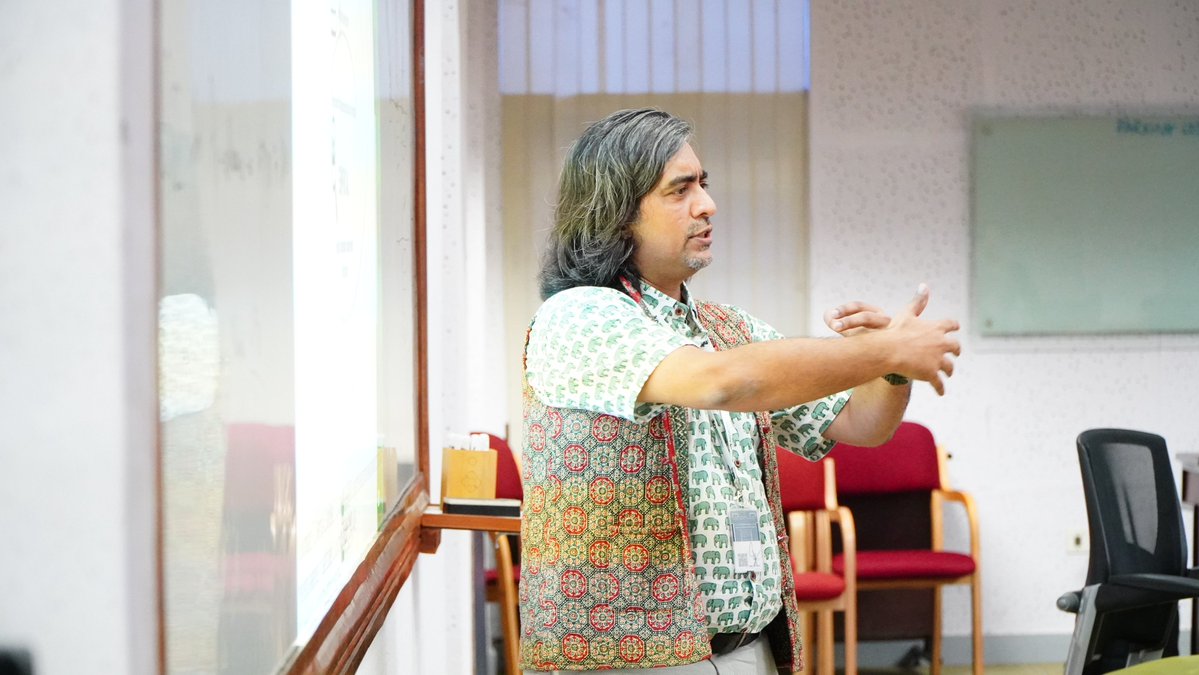
Finally, Prof. Sara Van Belle unpacked CMO (Context-Mechanism-Outcome) configurations, discussed different approaches to causalityand generative causation, introduced alternative frameworks such as CIMO (Context-Intervention-Mechanism-Outcome) and ICAMO (Intervention-Context-Actor-Mechanism-Outcome), and explained its use for data analysis in realist research.
@Chaudharyadit23 @AvishekHazra23, @commed_doc @MonicaShriv @punitrd @HiralkarSakshi
#IPHBengaluru #TTNSoAS #RealistResearch2025 #IPHEvents #blendedlearning


English
Aditi Chaudhary retweetou

Day 2 of the #RealistResearchBlendedCourse opened with a short recap from two volunteer participants, who shared their most important takeaways from Day 1 of the in-person session.
This was followed by a session led by Dr. Prashanth N.S., who walked us through the steps of conducting a realist evaluation from theory development to empirical testing and finally theory refinement and synthesis. He emphasised the importance
of developing a priori theories, which can be constructed using multiple sources such as literature reviews, programme documents, stakeholder interviews, hunches informed by field interactions, and empirical data.
Dr. Brynne Gilmore led a detailed session on data analysis and synthesis in realist evaluation and unpacked its methodological aspects. She introduced the teacher–learner approach, theory-driven interviewing, and the importance of asking questions in the right way. She also discussed in depth the concept of retroductive analysis to identify hidden causal factors, which draws on a combination of induction, deduction, and insights from intuitive reasoning (abduction).
After the session, participants worked in groups on a few casestudy examples to analyze data, refine the program theory, and apply their learnings. They then shared their insights with all participants.Professor Bruno Marchal demonstrated, through a variety of real-world examples, how realist methods can be applied across multiple levels of health systems.
Finally, Professor Arnab Mukherji discussed a case study to illustrate how patterns emerging from data can shape
development of initial program theory for realist research.
@Chaudharyadit23 @AvishekHazra23, @commed_doc @MonicaShriv @punitrd @HiralkarSakshi @brynne_gilmore
#IPHBengaluru #TTNSoAS #RealistResearch2025 #IPHEvents #blendedlearning


English
Aditi Chaudhary retweetou

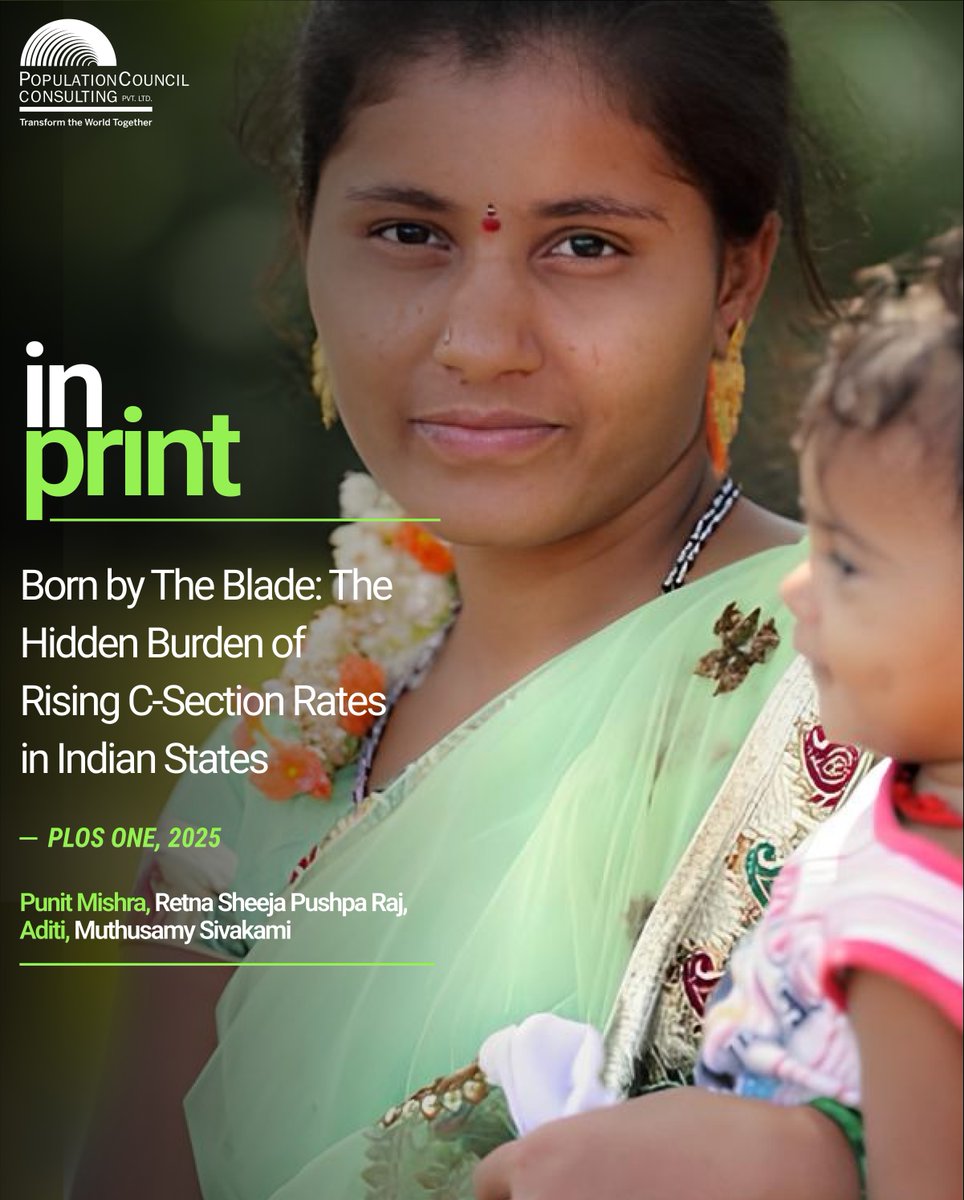
Unnecessary C-sections are on the rise, posing risks to mothers & newborns. A new study using #NFHS5 data unpacks trends across 5 southern states. Read more: journals.plos.org/plosone/articl…
Let’s support safe, evidence-based maternal care.
#MaternalHealth #PublicHealth #HealthEquity

English
Aditi Chaudhary retweetou

Reproductive Health Equity | #IUSSP2025
Dr Punit Mishra presented our paper on ‘Demystifying unmet need for family planning among young women in Uttar Pradesh’, highlighting the complex social and structural barriers that shape reproductive choices.
(1/4)

English
Aditi Chaudhary retweetou

Dil se Delhi Police... Thanks for your acknowledgement.
From Tweet to Task — Swift Action Delivered!
@SanilSharma75
#DilSeDelhiPolice
#KindnessPost

English
Aditi Chaudhary retweetou

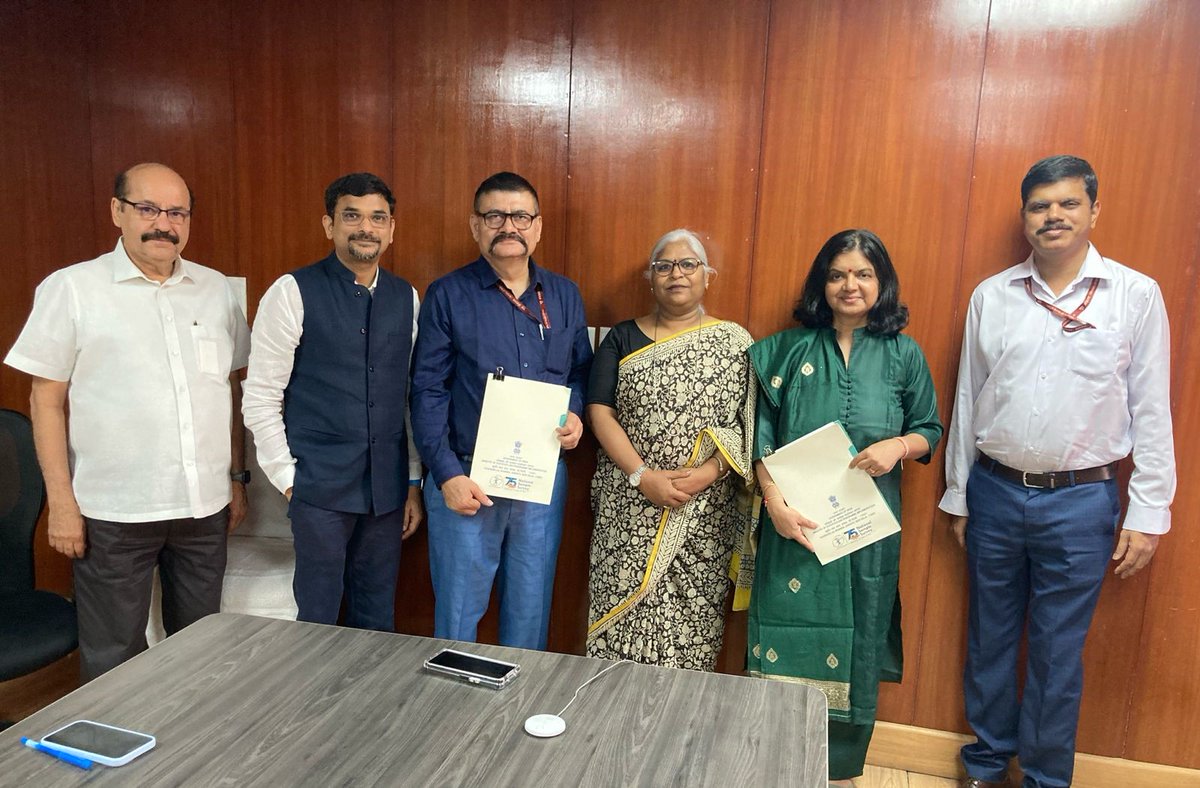
Ministry of Statistics and Programme Implementation signed an MoU today with the Population Council Institute (PCI), New Delhi, strengthening commitment to data-driven governance and statistical excellence. This collaboration marks a new milestone in producing and disseminating high quality data widely using AI/ ML tools and Big Data Analytics.
This MoU was signed by Sh. Kishore Kumar, ADG, Coordination and Quality Control Division, NSO (CQCD) and Dr. Soumya Ramesh, Executive Director, PCI in presence of Ms. Geeta Singh Rathore, Director General (NSS). #MoSPI #DataForDevelopment.
@Rao_InderjitS @_saurabhgarg @PIB_India @PibMospi @NITIAayog @mygovindia

English
Aditi Chaudhary retweetou

Can digital access redefine social norms? A study using NFHS data shows how tech is influencing premarital sexual behaviour & contraception use among youth in India. Let’s harness its power for awareness & responsible choices! Read more: rdcu.be/d5Pg0 #TechForChange

English
Aditi Chaudhary retweetou

Is women's empowerment an impediment to exclusive breastfeeding?
Dr. Aditi's work shows it's not empowerment, but lack of supportive systems that hinder breastfeeding. Let’s change the system, not women.
Read: bit.ly/4fSE2sG
#MaternalHealth #WomenAtWork #Breastfeeding

English

An alarming 10% of older adults experience falls, and among those with depression, the risk is nearly 80% higher than non-depressed older adults. Access our new paper here doi.org/10.1186/s12877… @BioMedCentral @SpringerSocSci @MRINMOY06197
#ML #MentalHealth #healthyageing
English

Why are medical personnel under so much stress within their community? How are they supposed to HEAL others when all they have is- intense pressure and no support from their fraternity? #justicefordiveshgarg #medical #doctorsdeservebetter
ravish kumar@ravish_journo
इस मामले की ठीक से जाँच होनी चाहिए। दिवेश गर्ग के सहपाठी हिले हुए हैं। उन सभी के लिए ज़रूरी है कि इंसाफ मिले ताकि वे इस संस्थान में आगे की पढ़ाई शांति से कर सकें।
English

FEB 6 is International Day of Zero Tolerance for Female Genital Mutilation, so much modernisation still we have these ongoing cruel social norms! This should be stopped and condemned! #FGM #FemaleGenitalMutilation #WomensHealth #SDGs5
Aditi Chaudhary@Chaudharyadit23
200 million girls worldwide face brutal Female Genital Mutilation, and India alone has around 5 million mutilated girls. Read to find out more about the FGM. #Health #sustainabledevelopment #FGM #WHO @payalmathur22 counterview.net/2023/01/ensuri…
English
Aditi Chaudhary retweetou

200 million girls worldwide face brutal Female Genital Mutilation, and India alone has around 5 million mutilated girls.
Read to find out more about the FGM.
#Health #sustainabledevelopment #FGM #WHO
@payalmathur22
counterview.net/2023/01/ensuri…
English


The cost burden of Stroke in NE India is as high as INR 50,000 per person per year, with an added burden of disabilities. Hypertension, diabetes, and less physical activity remain prime risks. Check doi.org/10.1038/s41598… for detailed insights! @SciReports

English
Aditi Chaudhary retweetou

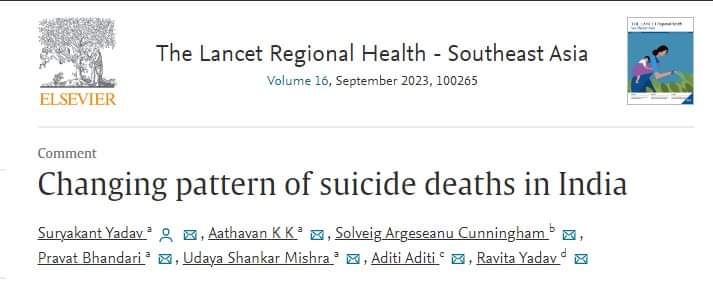
Changing pattern of suicide deaths in India by Suryakant Yadav and others published in The Lancet Regional Health - Southeast Asia, Volume 16, September 2023.
sciencedirect.com/science/articl…

English