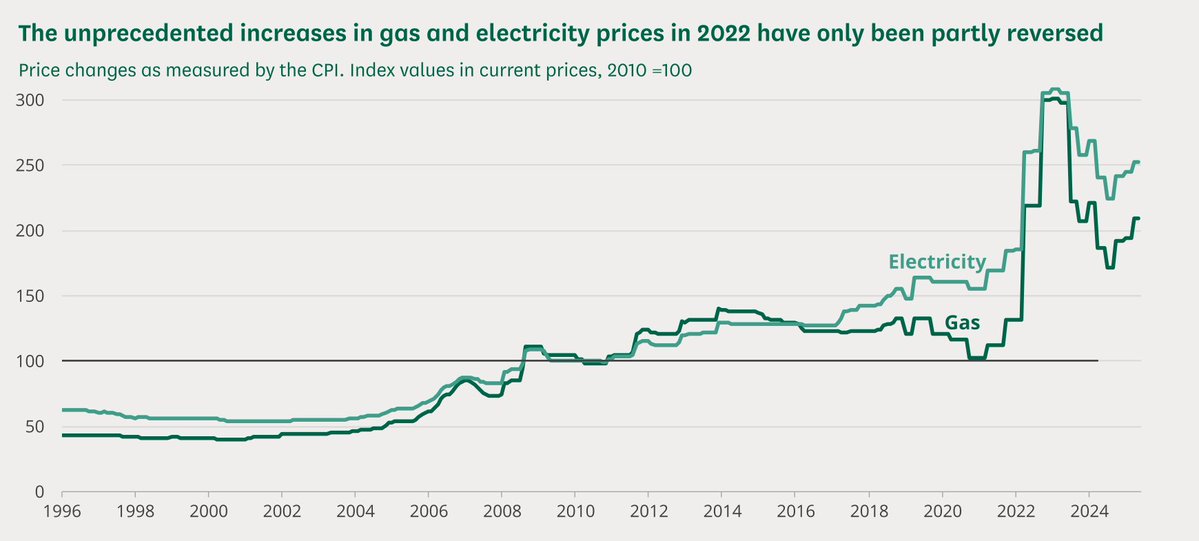
@AaronBastani Electrification comes from cheap electricity.
Cheap electricity comes from cheap energy sources.
It is the left, not the right who are largely against cheap energy sources.
English
BillyTheRetard
943 posts
@HoustonPuddle
Correcting Leftist Drivel

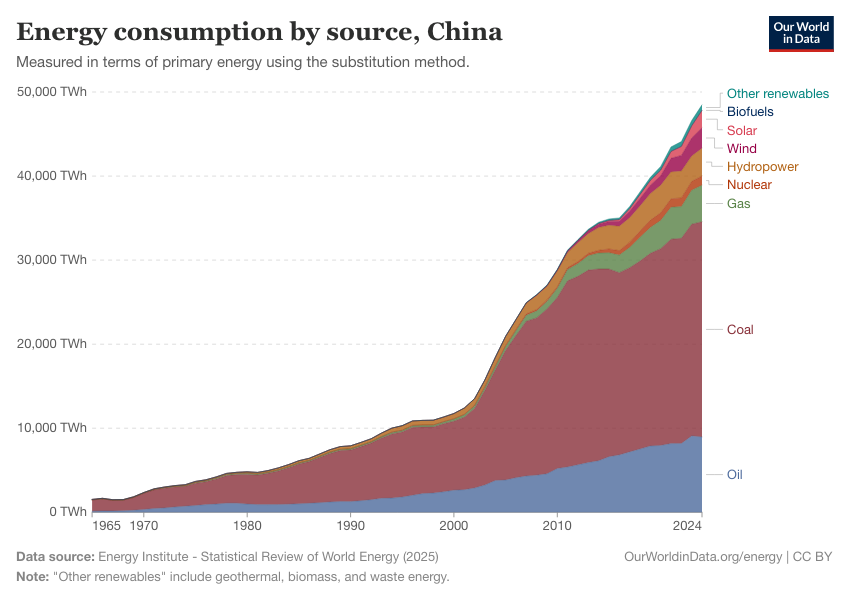
80% of buses are electric in China. This has nothing to do with Net Zero, its all about energy security. We need to be a lot less ideological about the energy mix - if we make it lets use it, wind. nuclear, oil, gas or solar.
Supermarkets and energy companies are profiteering off your misery on a never before seen scale. Tax them until they’ve got nothing left.


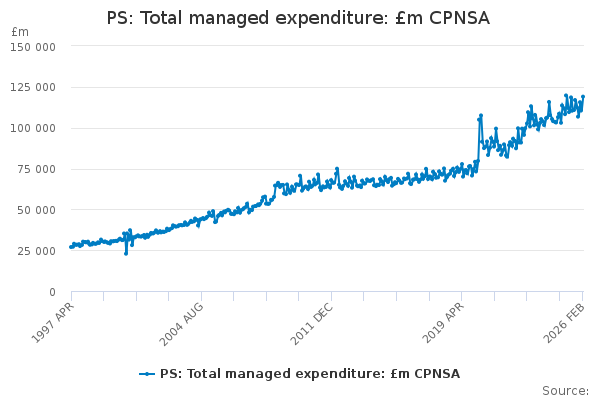
Another example: 93% of the cars bought by the government subsidised Motability scheme are manufactured outside of the UK What this means is that we’ve spent a Crossrail amount of money (£16B over a decade!) on juicing demand for foreign manufacturing (automation heavy, high tech) and domestic low productivity growth industries like car dealerships, vehicle maintenance (low automation, low value), and insurance. If the £~3.5B/year spigot of government money going to Motabilty was turned off, all of the jobs in dealerships and insurance it ‘created’ would fade, and its car fleet would age and depreciate. Despite spending a biblical amount of cash, I doubt any sustainable industries have been created, and it’s long term impact pales in comparison to other spending options that will exist in decades to come, like Crossrail or Manchester’s tram network.

Thatcher inherited a Britain where the state owned everything from steel mills to telephone lines. Unemployment hit 11.9% in 1984, inflation ran at 18% when she took office, and strikes paralyzed entire industries for months (the three-day work week wasn't a lifestyle choice). She privatized British Telecom in 1984, British Gas in 1986, and rolled back union power that had strangled productivity for decades. The results speak louder than any economic theory: Britain's GDP per capita rose from $10,000 in 1980 to $19,000 by 1990. Critics still blame her for "inequality" - missing the point entirely. You can't redistribute wealth that doesn't exist first. The alternative wasn't some egalitarian paradise... it was Argentina.

The Future Homes Standard: - Means that from 2028 new homes CANNOT be on the gas network - Your home HAS to have solar panels on the roof, equivalent to 40% of the ground floor area - It will cost £10,000 more to build Homes designed by Ed Miliband, paid for by you...



I don’t know whether this is the same place, but I know lots of these new developments in Cambridgeshire have this 40% affordability requirement and the result has been middle-class homeowners being terrorised by actual criminals, with the leaseholders (for some reason) always siding with the criminals over everyone else.

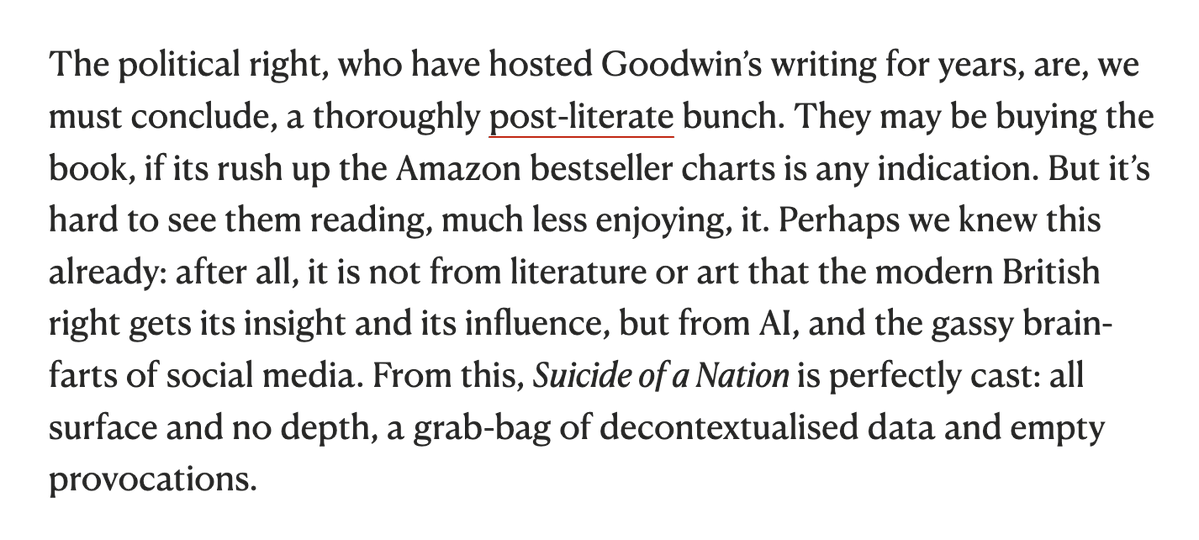
Matt Goodwin’s intellectual suicide In his new book, Reform’s in-house academic set out to articulate his ideas. He produced trash By @johnpmerrick #Echobox=1774363145" target="_blank" rel="nofollow noopener">newstatesman.com/ideas/2026/03/…
A CERTAIN IDEA OF ED MILIBAND by @Will___lloyd The story of the post-Blair Labour party, if it can be contained in one individual, is the story of Ed Miliband. This is not a story about backstabbing brothers, back room deals with “union paymasters”, election promises printed on tomb stones, questionable slogans on mugs, bacon sandwiches, or double kitchens; nor anything as vulgar as retail policies aimed at marginal constituencies. Miliband’s story is really about the exhilaration of ideas: where they come from, why some of us fall in love with them, and what propels those ideas from the fringes of the debate to the fulcrum of an era. This is not an argument about whether those ideas and the policies they eventually become are right or wrong. It’s a story about the long-term political power that commanding those ideas allows an individual to wield. It is about the years of Edward Samuel Miliband - and Milibandism - which might be seen as the latest, or perhaps even the last, attempt to restore a social democratic political economy in Britain. Since July 2024, when Labour returned to government, it has been hard to work out precisely the point of this administration: to spend a bit more here and there, but leave an abject economic settlement largely intact; or to be much more than that, to fundamentally reshape Britain? For the last 20 months, Miliband has stood distinctly apart from those growing doubts. Even his enemies admit that the Minister for Energy Security and Net Zero knows what he is doing. That, in large part, is why he is so hated by his opponents. Miliband is getting social democratic things done at scale: during an era of uncontrollable global conflict, which began with the Ukraine war and is spiralling in Iran, when the direction of energy policy has become the most fiercely disputed issue in British politics. Miliband and his ideas have become a lightning rod for opponents of this government. (“Eco-zealot”; “madman”; “hysterical eco-obsessive”; “muddled climate zealot”; “demented fantasies”; these are Fleet Street editorials’ relentless tribute to his perceived threat.) And yet, as one of those critics, a source who had worked with Miliband during his leadership of the Labour Party between 2010 and 2015, grudgingly admitted: “There is something about Ed that is significant. He is a symbolic figure… the last flickering of social democracy.” Cover art by Mona Eing and Michael Meißner

A CERTAIN IDEA OF ED MILIBAND by @Will___lloyd The story of the post-Blair Labour party, if it can be contained in one individual, is the story of Ed Miliband. This is not a story about backstabbing brothers, back room deals with “union paymasters”, election promises printed on tomb stones, questionable slogans on mugs, bacon sandwiches, or double kitchens; nor anything as vulgar as retail policies aimed at marginal constituencies. Miliband’s story is really about the exhilaration of ideas: where they come from, why some of us fall in love with them, and what propels those ideas from the fringes of the debate to the fulcrum of an era. This is not an argument about whether those ideas and the policies they eventually become are right or wrong. It’s a story about the long-term political power that commanding those ideas allows an individual to wield. It is about the years of Edward Samuel Miliband - and Milibandism - which might be seen as the latest, or perhaps even the last, attempt to restore a social democratic political economy in Britain. Since July 2024, when Labour returned to government, it has been hard to work out precisely the point of this administration: to spend a bit more here and there, but leave an abject economic settlement largely intact; or to be much more than that, to fundamentally reshape Britain? For the last 20 months, Miliband has stood distinctly apart from those growing doubts. Even his enemies admit that the Minister for Energy Security and Net Zero knows what he is doing. That, in large part, is why he is so hated by his opponents. Miliband is getting social democratic things done at scale: during an era of uncontrollable global conflict, which began with the Ukraine war and is spiralling in Iran, when the direction of energy policy has become the most fiercely disputed issue in British politics. Miliband and his ideas have become a lightning rod for opponents of this government. (“Eco-zealot”; “madman”; “hysterical eco-obsessive”; “muddled climate zealot”; “demented fantasies”; these are Fleet Street editorials’ relentless tribute to his perceived threat.) And yet, as one of those critics, a source who had worked with Miliband during his leadership of the Labour Party between 2010 and 2015, grudgingly admitted: “There is something about Ed that is significant. He is a symbolic figure… the last flickering of social democracy.” Cover art by Mona Eing and Michael Meißner
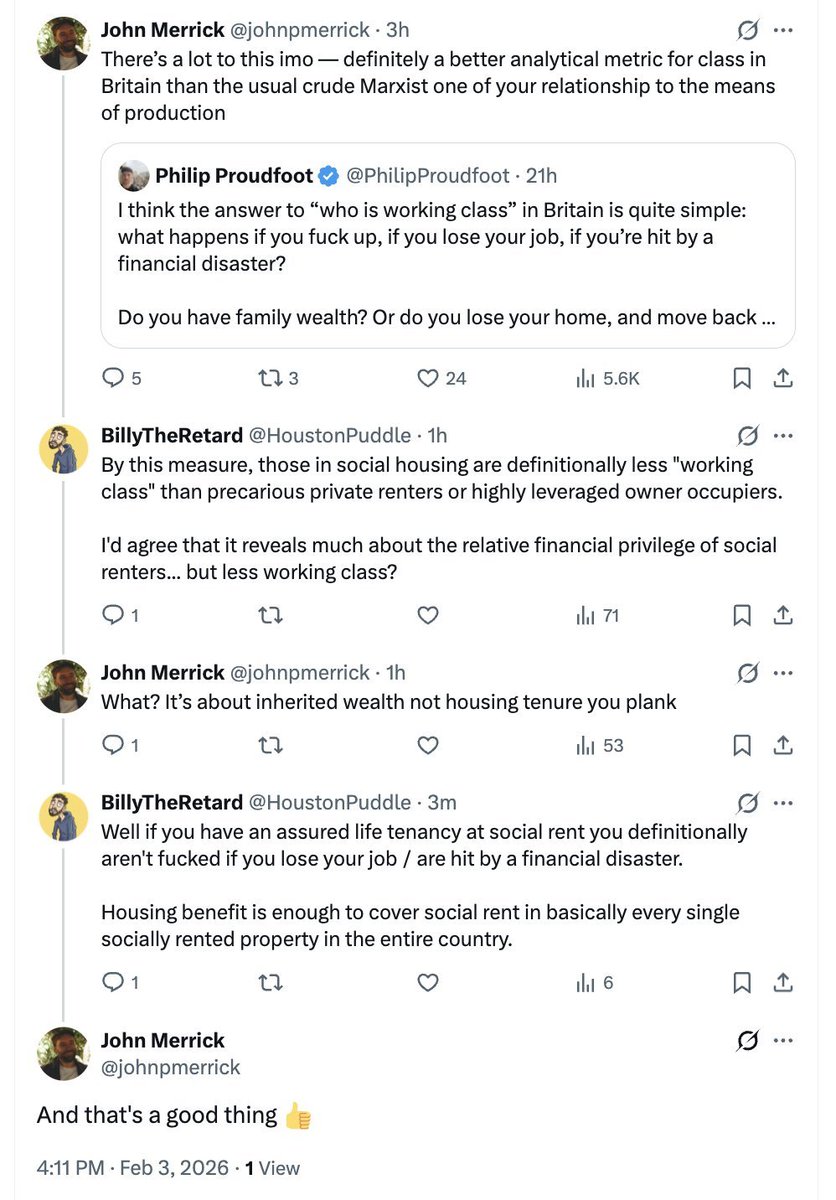

@Layo_FH By tiny elite, do you include the socially housed, who you work for?

One of the things ruining London is that, of these 109 new homes, only 47 are available for sale to ordinary people.
“It is basic Keynes — we need to look at the long-term impact of investment, how it brings money back into the economy and builds purchasing power for ordinary people.” @ZackPolanski answering a question on borrowing and our long-term economic strategy at his speech at the New Economics Foundation.




The English have always - but always - preferred houses with gardens. So, that's what should be built. If we hanged the planners that's also what would be built too.