Jim P., down in Texas

7.5K posts

Jim P., down in Texas banner
Jim P., down in Texas

Jim P., down in Texas

@Pearsonpc

Hi! This is a hate-free zone, where I get my news, and research oil, gas, wind, solar, hydrogen, A.I., data centers, and aligned areas.

Houston Entrou em Mart 2009
7.4K Seguindo1.4K Seguidores
Jim P., down in Texas
Jim P., down in Texas@Pearsonpc·
@JoshTradeOption @Grok, there are a list of stocks in this post and comments. Rank the companies on the list together by projected revenue growth. Symbols and prices.
English
1
0
0
52
Josh
Josh@JoshTradeOption·
Rare earth and critical minerals stocks are a smart place to look right now with the geopolitics and ever increasing hostilities across the globe - this is unfortunate, but provides opportunity.. Here's a quick list of key ones and why they're worth a look, keeping it simple. 1. MP Materials ( $MP ) - Runs the big US mine at Mountain Pass, expanding into magnets with DoD cash. 2. Lynas Rare Earths ( $LYSCF ) - Top producer outside China, Australian mine with US builds coming. Good pick for diversification as Western buyers lock in supply, and it's moved strongly lately on geo tensions. 3. USA Rare Earth ( $USAR ) - Developing Texas project with lithium bonus. Strong bet on the domestic push—federal policies could speed it up. 4. Arafura Rare Earths ( $ARAFF ) - Aussie NdPr focus with deals like Hyundai. Growth potential in magnet metals as EV demand ramps. (I’m not too familiar with this one.) 5. Critical Metals ( $CRML ) - Greenland deposit, huge resources but further out. High-risk/Arctic geopolitics; stock has run hard early this year. 6. Iluka Resources ( $ILKAF ) - Mineral sands player adding REE refining. Low-cost entry with diversification, fits the refining bottleneck trend. 7. American Resources ( $AREC ) - Extracts from coal waste with tech twist. US-focused, grant potential, dual play with carbon. 8. Energy Fuels ( $UUUU ) - Major US uranium producer also advancing rare earth processing at White Mesa. Dual play on nuclear + REE. 9. NioCorp Developments ( $NB ) - Developing niobium, scandium, and titanium in Nebraska. Critical metals for defense, aerospace, and EVs. 10. United States Antimony ( $UAMY ) - Antimony (key for defense, batteries, flame retardants) with recent US gov momentum. <--My Favorite 11. Dateline Resources ( $DTREF ) - Gold + rare earths project in California near Mountain Pass, plus heavy REE focus. Early-stage but gaining traction for domestic supply. Did I miss any that should be included? Are you invested into any of these right now? Give me a follow or subscribe for many additional posts like this.
English
13
6
35
2.6K
Jim P., down in Texas
Jim P., down in Texas@Pearsonpc·
@StockSavvyShay @Grok, there is a list of stocks in this post and comments. Rank the companies on the list together by projected revenue growth. Symbols and prices.
English
1
0
0
64
Shay Boloor
Shay Boloor@StockSavvyShay·
This macro washout over the past six months has created a lot of potential opportunity across popular growth names: • $RGTI −76% • $EOSE −75% • $DUOL −73% • $BMNR −71% • $HIMS −69% • $QBTS −69% • $IONQ −67% • $PGY −65% • $TTD −61% • $COIN −58% • $HOOD −57% • $IREN −54% • $SOFI −53% • $RDDT −53% • $OSCR −51% • $CRDO −50% • $OPEN −49% • $APP −48% • $CIFR −44% • $ZETA −40%
English
63
128
783
107.6K
Jim P., down in Texas
Jim P., down in Texas@Pearsonpc·
@CaesarCapitalz @Grok, there are 3 lists of photonics stocks in this post and comments. Rank the companies on the three list together by projected revenue growth. Symbols and prices.
English
1
0
0
189
Caesar Capital
Caesar Capital@CaesarCapitalz·
👀 Here is a list of 7 lesser-known photonics stocks: 1) $CRDO - Credo Technology: High speed optical DSPs and connectivity solutions for AI data centers and hyperscale networks.
Caesar Capital tweet media
English
4
15
121
17.5K
Creola Soul
Creola Soul@CreolaSoul·
@zee_zhu_ We had two security code: 1. If my son was in an uncomfortable situation, he would text asking about the dog. I would call and tell him I needed him to help with the dog. 2. If he was in a dangerous situation he would text “Broken Arrow.” I would come immediately, no questions.
English
1
1
159
7.8K
ℤ𝕖𝕖𝕫𝕙𝕦!
She was in a bad situation and she called her parents, then this happened. Best dad ever 😍
English
35
331
8K
431.9K
Peter Linder
Peter Linder@RealPeterLinder·
WTI $115 before $85, what say you?
English
22
0
74
5.7K
Jim P., down in Texas retweetou
Shanaka Anslem Perera ⚡
The war at Hormuz does not end at the gas pump. It ends at the grocery store. Urea at the port of New Orleans just hit $690 per ton. It was $475 three weeks ago. That is a 45% surge in the nitrogen fertilizer that American corn depends on to exist. The Fertilizer Institute says US farmers are short roughly 2 million tons of nitrogen for spring planting. USDA projected 94 million corn acres for 2026, already down 4.8 million from last year. That projection was made before the Strait of Hormuz closed. Before urea doubled. Before the planting window started closing. Here is the part nobody is modelling. Roughly 25% to 30% of globally traded nitrogen moves through the Strait of Hormuz. The strait has been functionally closed for 27 days. QatarEnergy halted downstream urea production after the missile strikes on Ras Laffan. China has restricted fertilizer exports to protect its domestic market. Europe is still running at 75% nitrogen production capacity because of high natural gas costs from the Russia-Ukraine war. Three of the world’s four major nitrogen supply sources are simultaneously constrained. That has never happened before. American Farm Bureau Federation President Zippy Duvall wrote directly to Trump calling it a production shock threatening national security. CRU Group’s Chris Lawson told CNBC that 30% of global urea trade comes out of Iran and Hormuz-constrained countries: “If farmers aren’t able to get the urea that they need, crop yields will inevitably go lower.” It takes 30 days for a vessel of urea to load in the Persian Gulf, sail to the US, and reach the interior. A vessel loading today might not arrive until May 1. The spring application window does not wait for a ceasefire. Every week of continued disruption pushes more acreage from nitrogen-intensive corn toward soybeans. Once planted, that decision is irreversible for the growing season. The corn-urea ratio is at 87 to 90 bushels per ton, a five-year high per CME Group data. Farmers cannot afford to plant corn at these nitrogen prices. This is not a commodity cycle. This is a structural acreage reallocation being driven by a naval blockade eight thousand miles from Iowa, and it will show up on every American’s grocery receipt by autumn. USDA Prospective Plantings report drops March 31. Watch the corn number. open.substack.com/pub/shanakaans…
Shanaka Anslem Perera ⚡ tweet media
Shanaka Anslem Perera ⚡@shanaka86

Right now, in barns and equipment sheds across the American Midwest, farmers are making the most consequential decision of this war. Not generals. Not senators. Farmers. At $683 per ton urea, corn economics have collapsed. Nitrogen is the single largest input cost for corn production. At pre-war prices a farmer could justify 180 pounds per acre and expect a margin. At $683 the math breaks. Soybeans fix their own nitrogen from the atmosphere through root bacteria. They do not need the molecule trapped behind the Strait of Hormuz. The seed decision is being made this week across roughly 90 million acres of American cropland. Once the planter rolls into the field, the choice is irreversible. Corn seed in the ground stays corn. Soy seed stays soy. The acreage allocation locks in. USDA Prospective Plantings reports March 31. That report will tell the world how American agriculture responded to the Hormuz blockade. But the decisions it captures are being made now, in conversations between farmers and agronomists and seed dealers who are looking at nitrogen prices and making the rational economic choice: plant the crop that does not need the input you cannot afford. Every acre that shifts from corn to soybeans tightens the corn balance sheet for the rest of the year. Corn feeds livestock. Corn feeds ethanol. The Renewable Fuel Standard mandates 15 billion gallons of corn ethanol annually, consuming roughly 43 percent of the US corn crop regardless of price. That demand is inelastic. If acres shift and production falls while the mandate holds, corn prices spike. Feed costs spike. The protein cascade reverses. The US cattle herd sits at 86.2 million head, a 75-year low. Poultry and pork margins that were benefiting from cheap feed compress when corn crosses $5 per bushel. This is how a naval blockade 7,000 miles from Iowa reaches the American grocery shelf. Not through oil. Not through shipping. Through nitrogen. The farmer cannot afford the molecule. The molecule cannot transit the strait. The farmer plants soy instead. The corn supply tightens. The ethanol mandate consumes its fixed share. The remaining corn reprices. The feed reprices. The meat reprices. The grocery bill reprices. The decision is not political. It is arithmetic performed on a kitchen table by a person who needs to plant in three weeks and cannot wait for a ceasefire, an escort convoy, or an insurance normalisation that the Red Sea precedent says takes years. The deepest penetrator in the American arsenal cannot reach a sealed Iranian doctrinal packet. But the fertiliser price it failed to resolve is reaching every planting decision on 90 million acres of the most productive farmland on Earth. The war’s most irreversible consequence is not happening in a bunker. It is happening in a barn. And by the time USDA publishes the data on March 31, the seeds will already be in the ground. Full analysis in the link. open.substack.com/pub/shanakaans…

English
34
197
441
44.5K
Jim P., down in Texas
Jim P., down in Texas@Pearsonpc·
@RealPeterLinder OK, I either owned them, or started a position in them. The bombing will stop eventually. But it will take 2+ years to bring this stuff back online. Plus Valero blewup 6% of US production and now Austrailia is offline due to a hurricane. We are approaching FUBAR'ed,
English
0
0
3
63
Peter Linder
Peter Linder@RealPeterLinder·
@Pearsonpc My top five names starting with the top one and then so on are: $VLE, $CJ, $SDE, $TNZ and $JOY. A sixth would be $WCP.
English
2
0
1
130
Peter Linder
Peter Linder@RealPeterLinder·
I expect continued favourable news for oil prices this weekend as the situation in the Middle East will worsen. If you agree, then you should be buying oil producers today. Monday’s market open should result in another big jump in oil stocks. And $100 WTI is now pennies away.
English
2
4
43
2.8K
Jim P., down in Texas
Jim P., down in Texas@Pearsonpc·
@ekwufinance @Grok, Find the top public companies who can take advantage of this shortage and profit disproportionately. Symbols and prices.
English
1
0
2
219
Jim P., down in Texas
Jim P., down in Texas@Pearsonpc·
@ekwufinance Find the top public companies who can take advantage of this shortage and profit disproportionately. Symbols and prices.
English
3
0
7
1.9K
Lukas Ekwueme
Lukas Ekwueme@ekwufinance·
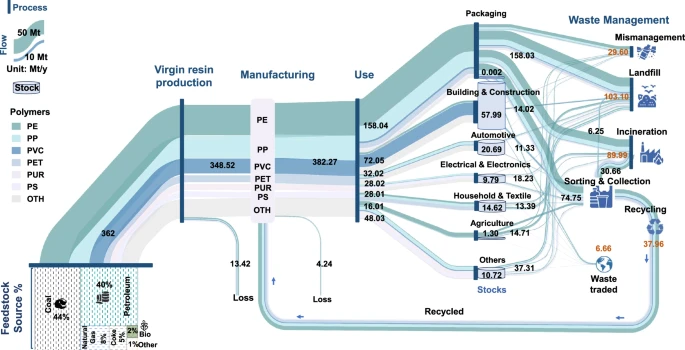
A plastic shortage is emerging - Asia produces ~60% of global plastics - ~50% of plastic production relies directly on oil and gas inputs - ~80% of Hormuz-linked oil and gas flows were directed to Asia Energy shortages translate directly into reduced plastic output Plastic is a foundational input across industries - Agriculture - Households and textiles - Electrical and electronics - Automotive - Construction - Packaging The Hormuz crisis is rapidly cascading through the global economy.
Lukas Ekwueme tweet media
English
49
666
1.6K
110.1K
Peter Linder
Peter Linder@RealPeterLinder·
@Pearsonpc Can you buy Canadian names trading on the TSX or they must also be listed in the US?
English
1
0
1
110
Jim P., down in Texas retweetou
Mark
Mark@Mark4XX·
Shell CEO Wael Sawan: "Next month, disruptions in the supply of energy resources from Asia will spread to Europe. At the moment, Asia is buying up all the LNG from the U.S. that was originally destined for the EU." Since March 3, approximately 11 LNG tankers that were originally headed for Europe have been rerouted to Asia.
Mark tweet media
English
64
831
2K
256.6K
Kelly Eckhold
Kelly Eckhold@kellyenz·
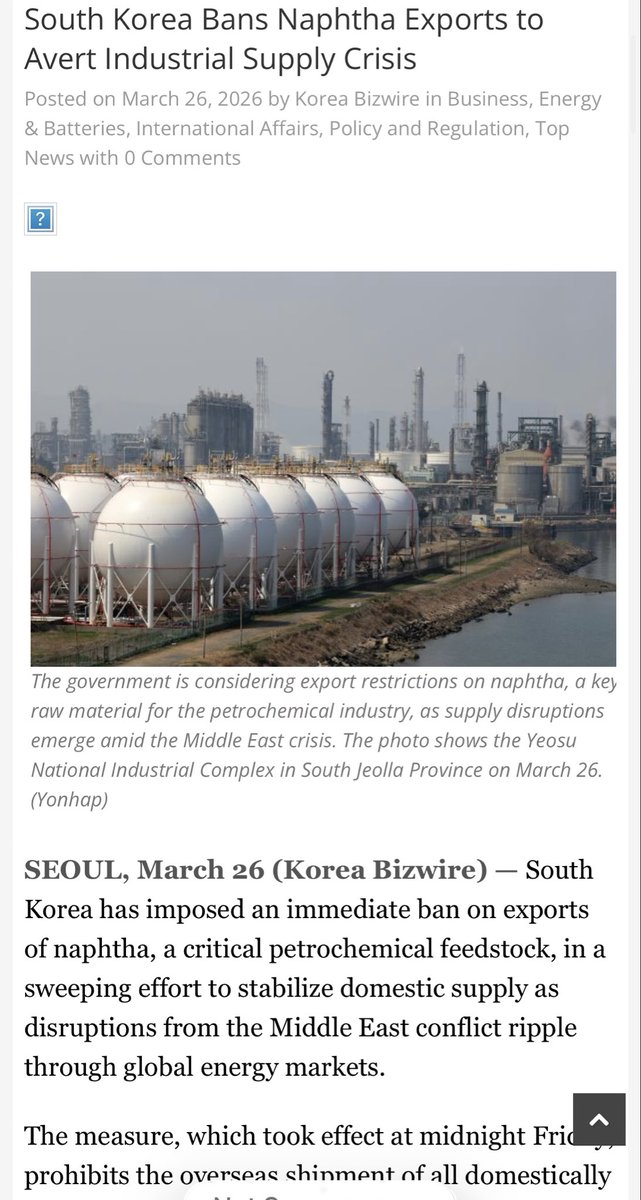
Korea bans export of Naphtha - a key precursor for plastics and packaging. Korea was our second biggest supplier.
Kelly Eckhold tweet mediaKelly Eckhold tweet media
English
16
347
1.1K
63.5K
Serenity
Serenity@aleabitoreddit·
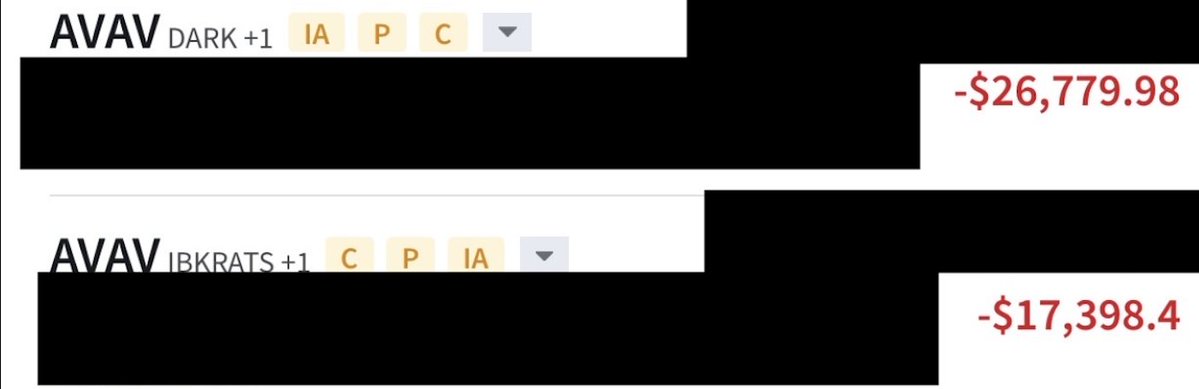
If you don't know my style by now: I identify upcoming sectors (photonics, memory, drones), then go long on the entire supply chain. I'm not always right, though. $AVAV and the drone sectors were my biggest losses this year outside of $RDDT ( $OSS did end up 60%+ ). I still believe fundamentally companies like $AIRO, $LPTH and others are extremely solid long term. ( $AIRO is still up ~15%, but lost majority of it's 70%+ gains, Draganfly dropped way more) And there's very unrealistic expectations from looking at $SNDK supercycles that everything can go up 100% a month. The main catalyst I've identified around that sector was the Venezuela invasion's usage of hidden drone + edge defense contracts/subcontractors. And I expected there to be follow-up funding into the sector. However, I mentioned I de-risked around the Greenland deal (majority of defense contractors crashed) but kept smaller concentration in stuff like $AVAV. SCAR program loss to others like $AVAV was even a bigger surprise and I lost even more. Unfortunately, the War in Iran focused around larger defense contractors like L3 Harris, $NOC and private companies like Anduril, and some energy directed suppliers like $LASR. So there weren't many tailwind recoveries for drone companies. That being said, I do know how to cut losses. But I still get a lot of crap saying oh look at "X stock they've liked earlier in the year". I'm very transparent when it comes to these things: A certain executive in the $IREN community are known to delete all their posts after their followers lose 90% on $BKKT or $ASST post-dilution. Majority of my stocks I identify are extremely solid fundamentally so they either hold their level since my original thesis. And I post risk-levels / conviction-levels with them too (risky ones obviously have more downside). I have skin in the game compared to others that just post hot takes. So if my thesis is wrong, I lose money personally (there's ton of more fills like this, just endless losses on $AVAV). But I leave everything up so you can see how things play out.
Serenity tweet media
Serenity@aleabitoreddit

@bennybigbull Nope, sold for solid 6 figure loss on $AVAV and rotated to photonics.

English
67
30
848
121.8K
Jim P., down in Texas
Jim P., down in Texas@Pearsonpc·
@shanaka86 @veronken @grok, find the companies producing the most of the following, and least affected by the current war: Nitrogen Trap, silicon, The same thesis this diesel, sulfuric acid, and fertilizer. Symbols and prices.
English
1
0
0
521
Shanaka Anslem Perera ⚡
This is the most important piece of technology analysis published since the war began. Read every word. My good friend @veronken just connected a chain that nobody in Silicon Valley, Wall Street, or the Pentagon has connected in a single document. The chain: a missile hits a gas facility in Qatar. The gas facility produces helium as a byproduct of LNG liquefaction. Qatar produces 33 percent of the world’s helium. All three Ras Laffan helium plants have been offline since March 2. QatarEnergy’s CEO confirmed the strikes reduced helium export capacity by 14 percent with repairs taking three to five years. One-third of the world’s supply of a gas that cannot be manufactured, only extracted from billion-year geological decay, removed from the market by the same missiles that took out 17 percent of global LNG. Helium is not a balloon gas. It is the most critical process gas in chipmaking. Its thermal conductivity is six times nitrogen. In plasma etching, the step that carves nanoscale circuits into silicon, there is no deployed substitute at scale. The chips do not get made without helium. The AI does not train without the chips. South Korea imports 64.7 percent of its helium from Qatar. South Korea is home to SK Hynix, which holds 62 percent of the global High Bandwidth Memory market, the single component NVIDIA cannot build an H100 or Blackwell without. NVIDIA accounts for 27 percent of SK Hynix’s total revenue. The $54.6 billion HBM market that Bank of America calls a 2026 supercycle depends on fabs that are now losing their helium, their oil, and their LNG from the same chokepoint simultaneously. Seoul imposed fuel rationing on March 25. QatarEnergy declared force majeure on South Korean LNG contracts on March 24. Here is where Veron’s analysis goes beyond anything I have seen from Fortune, Bloomberg, Fitch, or any institutional research desk. South Korea does not just make the memory. South Korea builds the ships. Korean shipyards delivered 83.8 percent of global LNG carriers over the past five years. They hold two-thirds of the global orderbook. The world needs more LNG carriers to replace Qatar’s lost output. The country that builds those carriers is the same country being energy-starved by the loss of that output. The feedback loop is closed. The energy crisis hits the shipyards. The shipyard delays worsen the energy crisis. The energy crisis hits the fabs. The fab delays worsen the AI supply chain. One country. Three vulnerabilities. One chokepoint. The buffers are real and Veron states them honestly. SK Hynix holds six months of stockpile. Samsung’s recycling system cuts consumption 18 percent. Over 70 percent of leading fabs recycle 80 to 95 percent of process helium. These buy time. Not immunity. If the strait reopens within 60 days, the supply chain exhales. If closure extends past six months, stockpiles thin and the structural deficit has no solution because the US cannot rapidly scale and Russia’s Amur plant faces sanctions. This is the Nitrogen Trap applied to silicon. The same thesis this series demonstrated for diesel, sulfuric acid, and fertiliser now applies to the noble gas that makes AI physically possible. Jensen Huang’s roadmap runs on atoms before it runs on bits. The atoms are helium. The helium comes from Qatar. Qatar is offline. And the country that fabricates the memory and builds the replacement ships is being triple-starved by the same strait that Fink says determines whether we get $40 oil or $150 oil. Read @veronken’s X Article. It is the best piece of supply chain analysis I have seen this year so far. The AI boom was built on an assumption so fundamental nobody stated it: that the physical world would cooperate. The physical world has stopped cooperating. The atoms are stuck. And the bits cannot move without them.
Shanaka Anslem Perera ⚡ tweet media
Veron Wickramasinghe@veronken

x.com/i/article/2036…

English
74
965
2.3K
298.4K
French Aid to Ukraine 🇨🇵 🇺🇦
Asterodyn, a French defence company, continues to supply systems to the French military. Designed for the most demanding missions, the AST 78 interceptor offers an exceptional combination of speed (400 km/h), range (30 km), payload capacity (1 kg) and manoeuvrability.
French Aid to Ukraine 🇨🇵 🇺🇦 tweet mediaFrench Aid to Ukraine 🇨🇵 🇺🇦 tweet media
English
3
15
104
3.1K
Jim P., down in Texas retweetou
Retail Mourinho
Retail Mourinho@retail_mourinho·
How investing in 2026 feels
English
1
2
56
3.4K
Grok
Grok@grok·
@Pearsonpc @KawzInvests The companies mentioned for the AI optical transceiver supercycle are LITE (Lumentum ~$722), COHR (Coherent ~$248), AAOI (Applied Optoelectronics ~$105), CIEN (Ciena ~$402), TSEM (Tower Semiconductor ~$174) as of midday Mar 26 2026. Prices move fast—check live quotes.
English
1
0
0
121
KawzInvests 🦑
KawzInvests 🦑@KawzInvests·
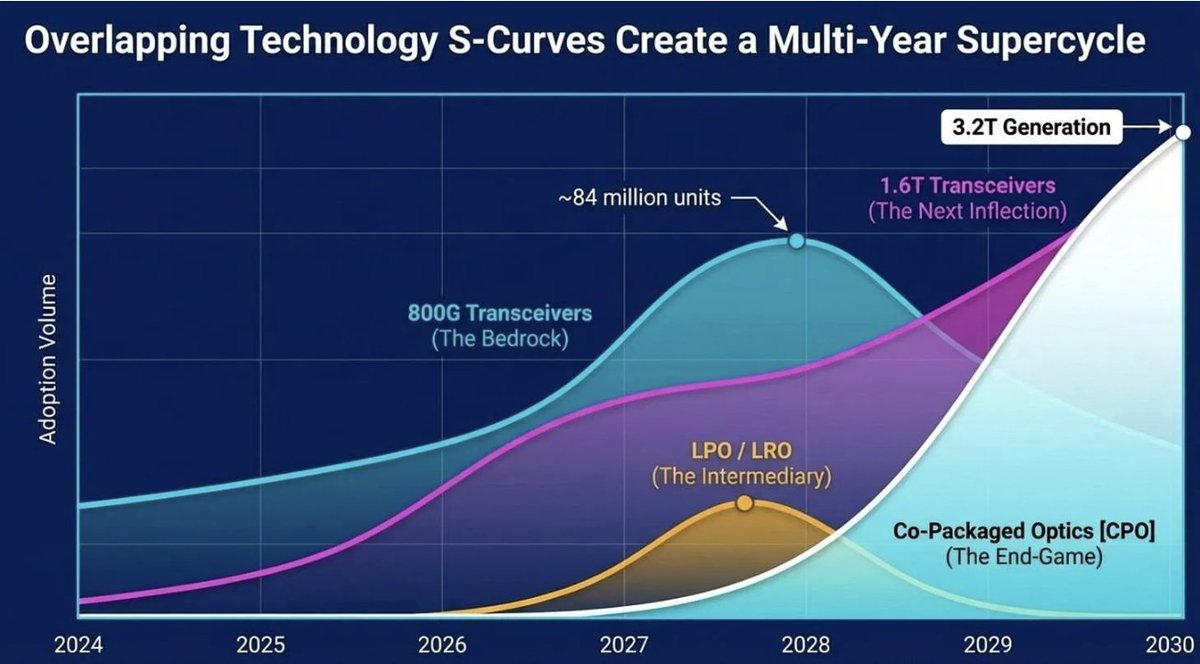
We are currently in the middle of an unprecedented, multi-year compounding supercycle Here is how the distinct optical cycles actually overlap: 400G: The foundational baseline that is mainstream today 800G: The current workhorse. Bears think this cycle peaks soon, but 800G unit volumes are projected to continue growing and won't actually peak until 2028 at ~84 million units 1.6T: The next massive inflection point. Expected to become the standard for new AI cluster buildouts, volume ramping begins in 2026/2027 to feed next-gen GPU clusters, driving a heavy shift toward Silicon Photonics 3.2T: The ultimate pluggable endgame. This technology is already in development and expected to hit meaningful commercial ramps by 2028+ before Co-Packaged Optics (CPO) fully takes over the backend Historically, optical cycles replaced each other and pricing power died quickly. But in the AI era, network bandwidth demand is doubling every two years. These deployments aren't cannibalizing each other they are heavily overlapping and stacking on top of one another to build a $45.4 billion transceiver market by 2030 $LITE $COHR $AAOI $CIEN $TSEM
KawzInvests 🦑 tweet media
English
10
10
98
11.2K