

𝕊m ⚡
1.2K posts

𝕊m ⚡
@StackingMonero
$scrt dev. $xmr maxi. $rune maxi. @AnonsNFT ☕💻🍷
United States Entrou em Kasım 2017
458 Seguindo820 Seguidores

testing new @cakewallet aliases
#XMR
82iAV8vRNV3Y7wPaqoSaLpUTkX6SuaQEjFB2dXo8JE5qam8GTorjkpWL9NoKQf1rYWTE7QnX6P4UC9hGb3t5kBmL2eo8j8E
@l_woetzel @IBCanon look at $SHD price last 3-4mo for definition of dead.
English

@IBCanon The definition of “dead” is interesting that we’d have to figure out too
Does it mean no more dev efforts?
No more tweets?
No more website?
Or just a nuked price below X marketcap?
English
I'm thinking about creating an open source github repo that has a list of all the dead dApps & chains on Cosmos over the last 3+ years.
Not as a means of dunking, but as a means of preserving history / archiving + a deeper appreciation for that which survives.
Good idea?
English
@therunetard @cumpsd @THORChain If I have no reason to passively hold rune, then I will actively sell it.
I’ve done the LP thing… 2 years and nothing to show for it. Value extraction from LPs getting offset by block rewards is net neutral. Nodes dont have same IL risk.
English

@cumpsd @THORChain Maybe. I prefer to incentivise active participation. Doing things to try and pump the price of $RUNE is always short lived.
English
ADR-17 reads like this to me:
“We are going to tax the active participants of @THORChain (NOs & LPs) by 10% & give it to everyone that holds $RUNE (active & passive users alike)”
gitlab.com/thorchain/thor…
English
@Captain_Kole1 we get it. you are bear, now hibernate and stfu for a bit. your incessant bear posting is boring us
English

Bought 2 for the culture 🕵️♂️
AmberDAO@AmberDAO_
🚀📢 Attention all #crypto degens! 📢🚀 🔥 $AMBER is now LIVE on #ShadeSwap! Dive into the $AMBER ↔️ $stkdSCRT pool & let's get this party started! 🎉🐒 🔥 LP Rewards: Earn 5 $AMBER + 3 $SHD daily! (Subject to change based on pool activity. Stay tuned!)
English
@Nakamotolisk @AutisticHODL Why take that risk and pay a borrow fee? Not to mention the wrapping risk.
You could earn ~2% real yield (in btc) with Thorchain savers or take a 0% No liquidation loan with Thorchain Lending. All on L1 bitcoin.
English

@AutisticHODL Convert half your stack to wBTC, put it on AAVE and borrow USDC/USDT/DAI, then spend those or convert to USD and spend.
Downside is liquidation risk, which cannot currently be hedged well.
English

@THORChain we loan ourselves personally from a business we own, and our accountant makes us pay an interest rate (to ourselves as business owners) to appease the tax gods.
So in reality, it would probably help if @THORChain charged a 1% apr on it.
NFA IANAL blah blah.
English

Like with everything; form a reasonably-argued position that has defensibility and precedent.
Thread below on TC lending and how it could be positively perceived by a tax accountant.
TC loan terms are: 0% interest, 200% collateralisation, no expiry and no liquidation.
Fred Krueger@dotkrueger
Opinion of a Tax Accountant on Thor borrowing --------------------------------------------------- (this is from a big law tax attorney, who requests anonymity. Do not use this as "fred advice". Do your own research) "I think the Thorchain question you raise on a loan is important, and there are two ways of looking at this." "Generally, the IRS will ask if there is an intent to pay to see if there is a bona fide loan (as opposed to, e.g., a cash advance that should be taxed). They look at various things and nothing is determinative. You might argue the lack of interest and a term is key, and they are in certain cases — think of a 0% loan with no term and no collateral. " "That’s a cash advance and should be taxed. But the Thorchain stuff is different — not only do we have collateral, this is 2x collateral! I am definitely coming back for that. I absolutely intend to pay. Then another flavor of that comes from the law on recourse loans for stock, where the IRS wants to know is a note to purchase stock should be respected (for long term capital gains) or if it is an option in disguise (and should be taxed on exercise as more punitive compensation tax)." "The IRS wants to know: do I have ‘substantial risk’? If the only collateral is the stock itself, that’s an option b/c when it tanks, I walk away, i.e., no substantial risk. On the other hand, if I make the note 50% recourse, meaning if the stock tanks, you can sue me personally for 50% based on the value of my house, etc., now I have substantial risk and it’s not an option but a bona fide loan." "In this area, a lot of people have said, okay, I don’t want to put my house up here but I’ll secure the note w/ additional shares. The IRS has never ruled on how much stock you need to put in to have substantial risk, but to me, putting up 2x (like with the Thorchain example) is sufficient, and I’ve seen multiple big law firms and major accounting firms go with this approach." "Thanks for highlighting this important issue, and to be clear, people should do their own research. But I can tell you I’m happily using their product. The risks are real, but to me, the risk is on Rune, not the tax side of the house."
English
𝕊m ⚡ retweetou

Want to earn single-sided yield on your favorite crypto assets? 👀
Very soon Eldorado.market will support Savers for $RUNE, $BTC, $ETH, $KUJI, and $DASH.
Thorchads dream to deposit $RUNE and earn in $RUNE. ⚡️
English
@l_woetzel $scrt was $8 last time btc was 60k. the fact that its 60c is just sad. i remember scrt:shd at 1:4 at bottom of bear, now its 1:17. i’m glad i was well positioned with $shd
English

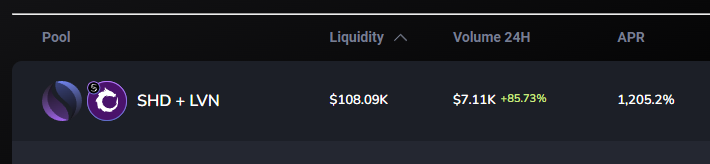
@Shade_Protocol @Levana_protocol dont be fooled here. +$5k dropped APR to ~1200%. figures are backwards looking, so a screenshot after a 100k liquidity add is just misleading.
the 1200% will melt away also a few more Ks, and then you'll be sitting in an asset you may not want to be in.
just my 2c
English

📢💥 PSA: $SHD / $LVN rewards are LIVE! 💥📢
For the next 14 days we're running rewards on this pool. Take advantage of:
⚡️ $SHD Rewards
⚡️ $LVN Rewards
⚡️ Insane Real Yield if you get in now
⚡️ Instant Unbonding
@Levana_protocol #LiquidityPool #RealYield

English
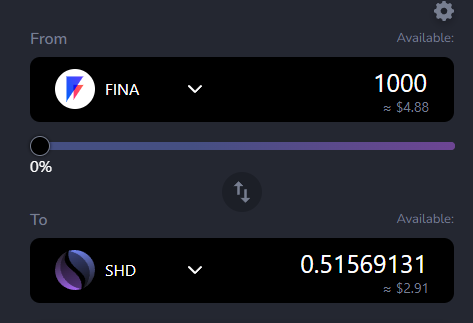
@l_woetzel @FinaCash @Silk_Stable @Shade_Protocol that fina shade pool is so out of balance, and its the only route for fina… gives bad vibes on swap figures.
English
🤔 @FinaCash is to @Silk_Stable as Alice was to Terra.
People are sleeping on DeFi yield being in the same interface as your grocery shopping once Fina goes live in the Shade interface…
I promise you @Shade_Protocol will be almost unrecognizable in 6 months.
$SHD $SILK $FINA
English
@KatieTheRussian They have to save them for all the livestock. Makes you wanna be #vegan right?

English

How come in the US antibiotics are by prescription only?
what's the logic behind it?
It's OTC in my home country?
English