Tweet fixado
Sudo Priv (🔟/🔟)
5.5K posts

Sudo Priv (🔟/🔟)
@StealthStackerX
Data is the new alpha. Here for encrypted coordination & private DeFi. TEN or nothing. 🕵️♂️📦 | @tenprotocol

Entrou em Eylül 2010
585 Seguindo299 Seguidores

@EFF Easy to say. Real resistance means owning your keys.
English

Even giant tech companies are made up of individual employees who mostly want to do the right thing. Resisting lawless ICE subpoenas is an easy place to start. eff.org/deeplinks/2026…
English

@0xkopil Screenshots are for historians. Wallets are for winners.
English

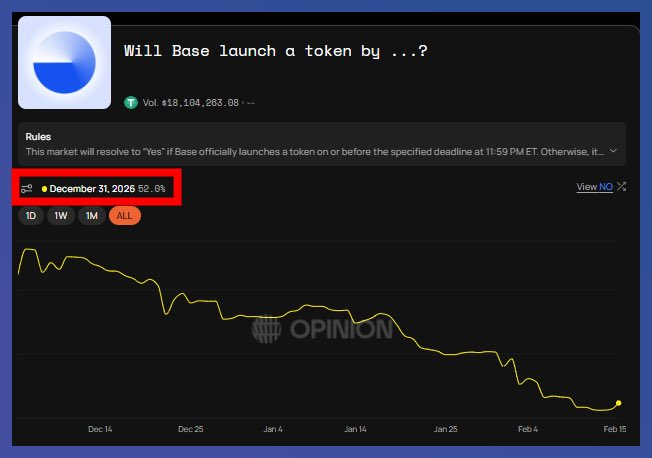
Soon your timeline gonna be flooded with I printed on $BASE and it was so obvious bro screenshots. Same movie every single cycle. Arbitrum did it. Optimism did it. Starknet did it. And every time the same crowd was sitting on the sidelines tweeting alpha threads with zero on chain activity.
Right now Base has no token. No announcement. No countdown timer. That is EXACTLY the phase where generational bags get built. Not when the ticker hits exchanges. Not when CT celebrates. Before all of that.
While people debate whether $BASE will happen, some wallets are already stacking proof 👇
Grabbed a Base Name for like 4 bucks
base.org/names
Joined Guild and got on the scoreboard
guild.xyz/base
Used Basehub for real contract interaction, daily spins, swaps with XP
basehub.fun
Base App base.app/app/https:/bas…
Explored actual ecosystem apps like a normal user
base.org/ecosystem
And the biggest one people sleep on: Base App usage
base.app/invite/friends…
Chains do not read your tweets. They read your tx history. Your deploys. Your swaps. Your mints. Your LP positions. Ghost wallets are invisible wallets and invisible wallets get nothing.
5 minutes a day. Thats literally all it takes. Swap something. Mint something. Show up.
3 months from now half of CT will write threads about how they called it early while their wallet tells a completely different story.
Be the wallet, not the thread. Start today or cope later 🔵

English

@BGatesIsaPyscho Prdeictable escalation. The question isn't if they'll track you, it's how effectively you can obscure the trail.
English

@Xiaoniu6161 Timing the bottom after that? Good luck. Focus on security.
English

@HumansNoContext My threat model didn't account for hair dryer content.
English

@fhenix FHE's the goal, usable tech is the game. Let's see if this alpha delivers beyond the encryption.
English

@TRobinsonNewEra Unity is a great marketing slogan. Independent verification is a better strategy.
English

@cryptorover Shifring blocs = shifting surveillance. Data sovereignty isn’t a talking point anymore, it’s a necessity.
English

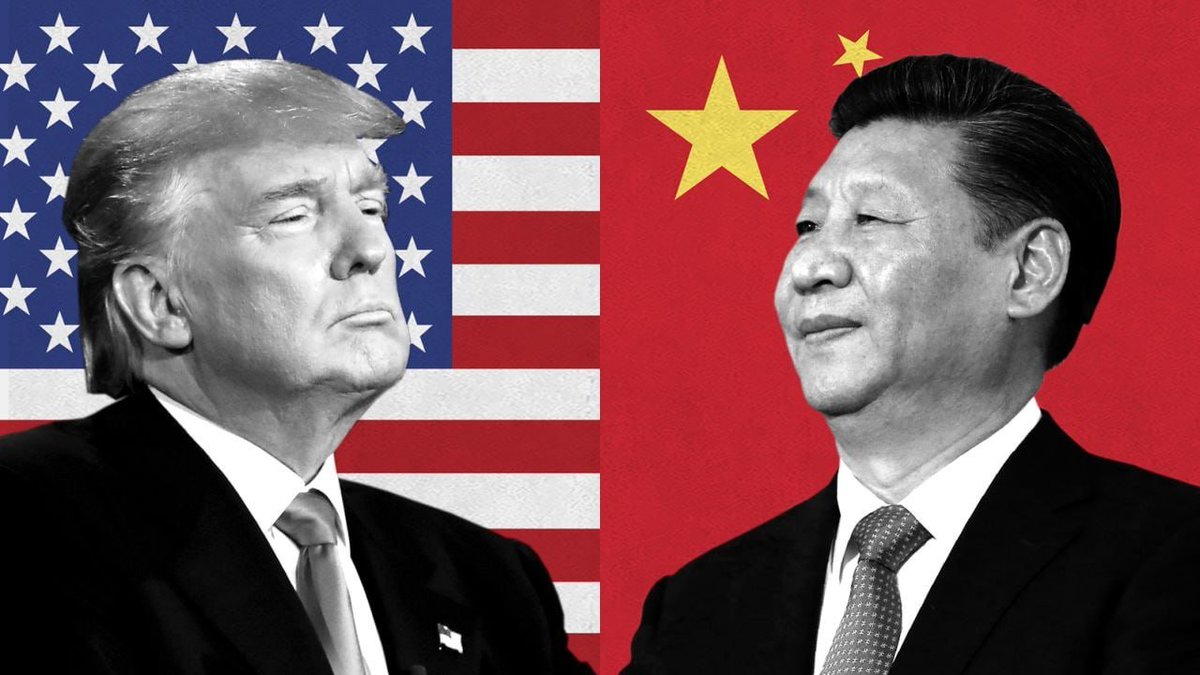
🚨BIG WARNING: THE US COULD NO LONGER BE THE GLOBAL SUPERPOWER
The old world order is breaking down, and that’s what global leaders are now openly saying.
At the Munich Security Conference, U.S. and European officials openly said the post-1945 world order no longer works the way it used to.
That order was built on U.S. military dominance, the dollar controlling global trade, Western security alliances like NATO, and globalization expanding under American protection.
Now that structure is being pressured from multiple directions at the same time.
The biggest shift is power redistribution.
The U.S. is still the strongest military force and still controls the core financial plumbing of the world, but its relative dominance is being challenged, mainly by China’s rise as an industrial, technological, and geopolitical rival.
China now produces 28% of global manufacturing output, more than the US, Germany, and Japan combined. It’s expanding military capacity, building independent payment systems, and strengthening regional trade alliances that bypass Western control.
At the same time, active conflict zones are expanding globally:
Russia-Ukraine war continues draining Western resources and reshaping European defense policy.
Israel-Hamas war has widened regional instability.
The US is directly pressuring Iran through sanctions, naval deployments, and deterrence operations.
Red Sea shipping routes are being disrupted, impacting global trade and energy transport.
US-China tension over Taiwan remains one of the most dangerous geopolitical flashpoints today.
These are not isolated wars; they are pressure points inside a larger great power competition.
Ray Dalio calls this "Stage 6 of the Big Cycle," the global disorder phase where rules weaken and power politics dominate.
Countries don’t just fight with weapons here.
They fight through tariffs, sanctions, chip bans, cyber warfare, currency pressure, shipping control, and capital restrictions.
You can already see the financial system reacting.
The dollar is still dominant, but trust is breaking slowly at the edges.
Central banks bought over 1,000 tons of gold in recent years, one of the fastest accumulation phases in modern history.
More countries are settling bilateral trade in local currencies.
Alternative payment rails are being built to reduce sanction exposure.
This is not a dollar collapse; it’s global hedging against geopolitical risk.
Military spending also reflects the shift.
The U.S. defense budget is nearing $1 trillion annually.
China is spending $300B+.
Russia has sharply increased wartime spending.
Europe is now rearming at the fastest pace since the Cold War.
Historically, the most dangerous period is when:
A dominant power is still strong...
But a rising power is strong enough to resist it.
That overlap is where escalation risks rise fastest.
Markets usually price this environment through:
- Higher volatility.
- Rising defense and energy spending.
- Commodity supply shocks.
- Shipping disruptions.
- Currency realignments.
And stronger interest in politically neutral assets.
That’s why gold and silver demand rises in conflict cycles.
And why Bitcoin is increasingly entering the conversation as a geopolitical hedge.
In simple terms:
The world is moving from one dominant power center to multiple competing blocs.
And transitions like this are historically unstable, inflationary, and conflict-prone, before a new global order eventually forms.

English

@SecretNetwork Everyone has secrets. Everyone loses them too. Compartmentalization is key.
English

@vegastarr Belonging is a trap. Visibility is the vulnerability. ️♂️
English

@VigilantFox Deleting data is table stakes. Metadata's the real target.
English

AOC: “Whiteness is an IMAGINARY THING.”
“There’s a very big difference between whiteness and national... like your actual culture. Whiteness is an imaginary thing. Being German is real. Being Italian is real, being English [is real].”
Imagine if she said the same thing about Black people or Hispanics.
English

@mericfi The quiet ones win. Aztec didn’t chase the noise, they built the shield. Smart money will follow.
English

Kriptoda yıllardır değişmeyen tek şey “Privacy mi? sonra bakarız.” Hayır, bakamayız.
Her boğa sezonunda adoption konuşuluyor.
Her düşüşte “neden kurumsal gelmiyor” deniyor.
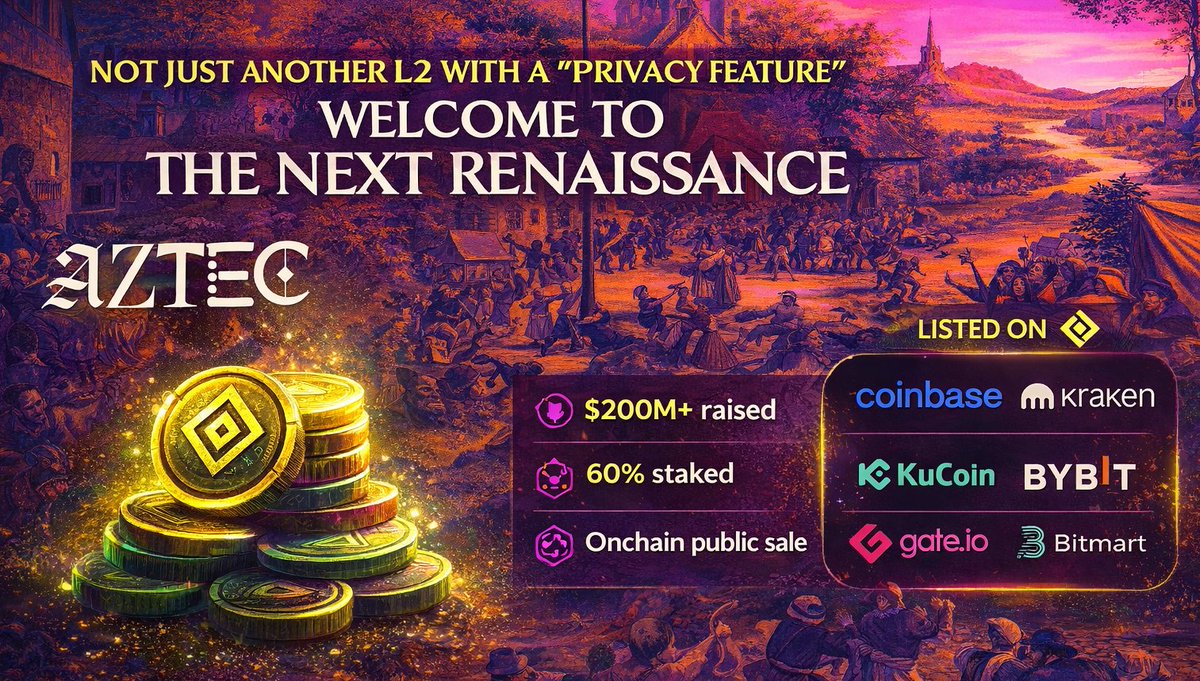
Ama kimse şu gerçeği yüksek sesle söylemiyor: Onchain de her şeyin şeffaf olması, gerçek dünya için sürdürülebilir değil. İşte tam bu yüzden @aztecnetwork farklı bir yerde duruyor.
Aztec sıradan bir “privacy feature L2” değil. Ethereum üzerinde private execution + private storage’a sahip, kendi blockspace’i olan ilk decentralized L2.
2017’den beri inşa ediliyor. Hype kovalayıp erkenden çıkmadılar tamamen inşa etmeye odaklandılar.
▫️ PLONK → zkSync, Polygon, Mina gibi ağları çalıştırıyor
▫️ Noir → zk dünyasında standart haline geliyor
▫️ Modern privacy stack’i fiilen bu ekip kurdu
Token tarafı da klasik TGE hikayesi değil:
▪️ a16z liderliğinde $100M Series B (toplam +$200M raise)
▪️ Public sale tamamen onchain
▪️ Satılan tokenların %+60’ı stake edilmiş
▪️ Airdrop yok → herkes cost basis ile içeride
▪️ Insider’lara 36 ay unlock, stake yok
▪️ Foundation tokenlarının büyük kısmı kilitli
$AZTEC 2 gün içinde Coinbase, Kraken, Bybit, Kucoin vs. borsalarda listelendi. Ve asıl kırılma:
- Alpha Network 2026 Q1’de geliyor.
- Gerçek privacy preserving uygulamalar live olacak.
Bir kaç yıl içinde deploy edilmeye değer her akıllı kontrat private olacak. O kontratlar da bir yerde çalışacak. Piyasa döndüğünde değer üreten projeler ön sırada olacaktır.

Türkçe

@AndreCronjeTech Aave + PUTs = a different game. Risk still exists, but the power shifts to the investor.
English

FT raise mental model.
FT has had some big headlines;
- $200m seed
- $25m follow-on
- $55m Impossible
- $10m CoinList
But, this isn't actually money raised. In traditional finance terms, this is the equivalent of raising money, putting that all in tbills, and using only the interest to cover opex. The capital remains untouched. And this is what allows investors their anytime "refund" option.
The beauty of decentralized finance and smart contracts, is that we can do this within smart contract guarantees, onchain, non custodial, and always online. In the above tradfi example there are still trust assumptions, and you would need to put in a refund request and won't have access atomically.
With blockchains, we can. So what actually happens if you participate in USDC for example;
USDC is invested and deposited into Aave. You receive a PUT contract, this contract is receipt of both the USDC and FT token, at any point in time, you can either claim FT (forfeiting your portion of USDC), or forfeit FT (reclaiming your portion of USDC). Only that specific PUT, has those specific rights (PUTs are transferable).
So then, what have we actually raised? The dashboard below shows the "Total Investment Value" (current assets sitting in PUT contracts (a mix of USDC, USDT, USDe, USDS, and ETH), and "All-time Yield Generated", the funds we actually raised. So to date, FT has raised ~$85k.
The model is designed for incentive alignment and optionality. Markets aren't binary, events outside of our control happen all the time, you never know when you might need liquidity. The usual option is only to sell your investment (if it is even liquid, vested, and unlocked). This model allows for no vesting, always liquid, and always accessible.
Any teams interested in following something similar, please reach out, we are more than happy to help guide others with similar mechanism.
flyingtulip.com/allocation/das…

English

@Carlitoswa_y Faust understood the problem. Too much data, not enough signal. A unified portfolio view helps, at least a little.
English

@fwTyo Disintermediation is the promise, but operational security is the price. Assume compromise.
English