

Theo | web developer
3.2K posts

Theo | web developer
@Tiocode_
Frontend Engineer | TypeScript, React.js, & Next.js | Passionate About Building Scalable, Exceptional User Interfaces
nigeria Entrou em Ağustos 2019
2.4K Seguindo713 Seguidores

This is AI and I made this with just my phone and Higgsfield AI.
Comment UGC for step by step process on how to do it
#higgsfieldpartner
English
Theo | web developer retweetou

At church but don’t have strength to type?
You can simply snap the account and transfer your offering ❤️
Use Beamer today! @beamerbank
Proud to be a cook
English

@realFemiOtedola Please uncle fote, I use God beg you, whatever you want to do , no let anything affect my money at FBN, I beg nna
English

🚨 FREE YouTube Automation Course
30+ videos on how to find niches, how to build a team, how to do topic research, how to scale, templates, etc.
Reply with "COURSE" and I'll send you the link for access!
(must be following)

English
Theo | web developer retweetou

I am going to call this “The project of my life” and I need your help with it, kindly repost and drop a comment thank you! 👏🏾✨
AK@akthawicked
Another hard part about building something by yourself is your don’t know what the right or wrong step is, so you just have to keep taking steps hoping you get it right one day 😶
English

How to actually get good at UI/UX design (the only real path):
1. Master the foundations (visual hierarchy, typography, color theory, layout, accessibility, user psychology
2. Take one solid, structured course (don’t hop between 50 free YouTube playlists)
3. Redesign real products — every single day
4. Practice more
5. And then practice again
6. Share your work publicly (Dribbble, Behance, LinkedIn, Twitter — everywhere)
7. Ask for harsh, specific feedback (not “looks good!”)
8. Actually apply the feedback —
don’t just defend your choices
9. Ship more work
10. Build case studies that explain your thinking
11. Repeat for years
12. Never stop
There is no shortcut.
There is no “talent” excuse.
There’s only doing the reps.
Keep going. The world needs better interfaces — and you’re the one who’s going to build them. 💪
English
Theo | web developer retweetou

She called me and was screaming.
she said "I won!" "There were so many people but I was among the winners!".
It was a proud sister moment for me, I was sooo happy!!
But looking at her right now, it feels like she's leaving me slowly, my girl needs help and I can't do it alone.
David Hundeyin@DavidHundeyin
Marycynthia Okoro - 2nd prize winner
English
@Adikastakes You are ashamed of him not Liverpool fans please
Get it right please 🌚
English

Theo | web developer retweetou

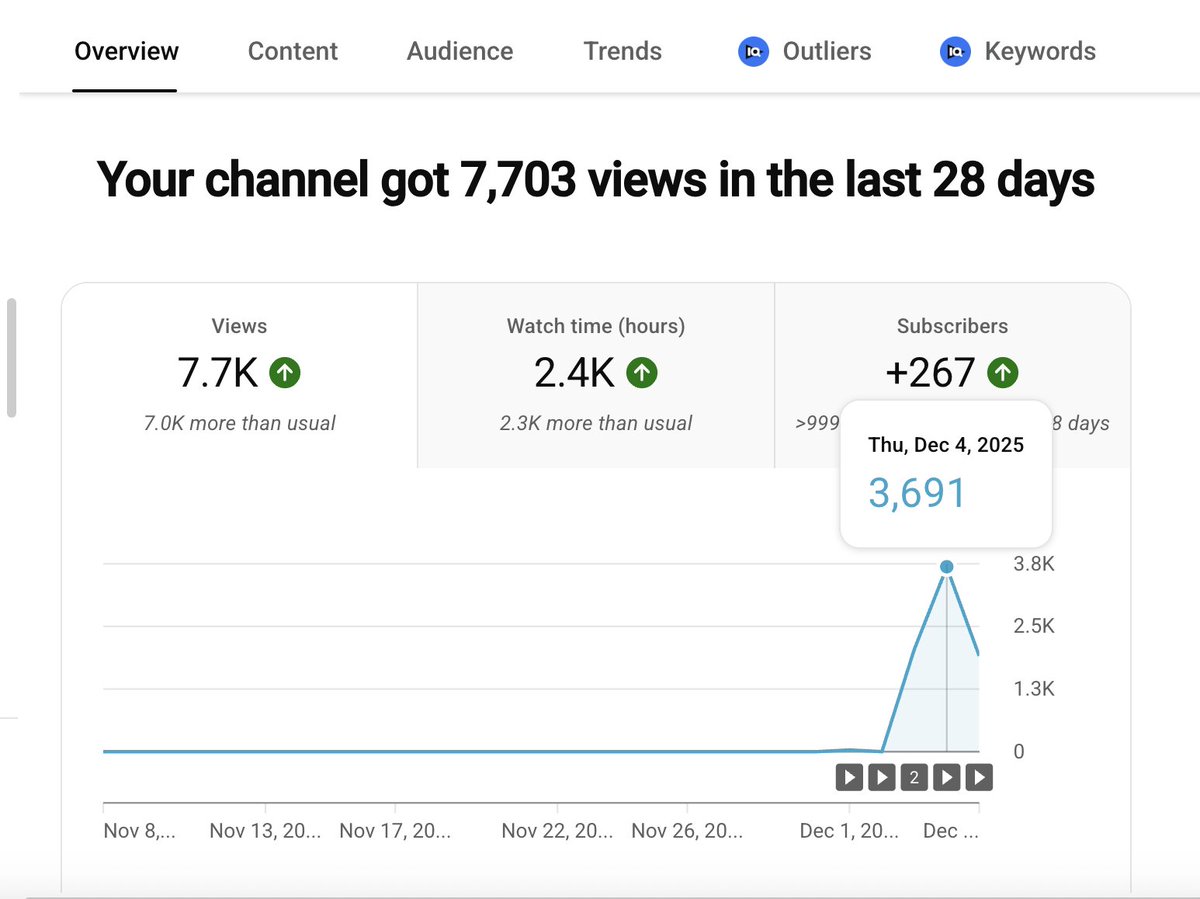
4 days ago, I did something crazy. I picked a channel that already had 88 subscribers, privated all 80 videos that had little to no traction, renamed the channel, set it up, and started posting in a new niche. A suggestion kicked in and boom, everywhere stew. I’m still on a streak of posting one video per day and might increase the upload rate later.
I now have full confidence to pick up all my stubborn channels and switch them to another niche. I might even get this one monetized in two weeks if the traction continues like this.
That said, my programs are currently open for enrollment. I don’t teach anything theoretical, it's 100% practical. I show you how to navigate, create quality content, and figure out what your audience truly wants to see.
2026 is around the corner. You can still end 2025 on a very, very good note.
English

In recent times, a few tough things have happened to me, but I’ve refused to let any of them take away my gratitude or blind me to the goodness of God in my life.
This same year, God blessed me with a car, a new apartment that’s already 80% furnished, new laptops, and plenty of gigs that kept me going.
I remain deeply grateful for everything God has done for me. ❤️
And this year has not ended, God his ways of showing me of 😮💨


English
Theo | web developer retweetou

Finally made a personal site that feels just right :))
Check it out here: fashikun.com
Designed by me, built by @iPariola
English

If I host a 4-week design masterclass where you learn
👉 Product thinking & Strategy
👉 Fundamentals of UX and Design principles application
👉 AI for UX design & User insights
👉 Landing page design with Framer
👉 Portfolio Critics and reviews
👉 UI design presentation methods
would you join ?
English
Theo | web developer retweetou

This is more than an event.
It’s connection.
It’s opportunity.
It’s people coming together to grow, learn, build, and dream.
Do not miss out on this!
RSVP now: bit.ly/devfestph2025
English
Theo | web developer retweetou

When people are suffering because the cost of living is too high, and you (as a policymaker) intend to spend public money to fix this, there are two main routes:
- subsidize demand, or
- subsidize supply
Subsidizing demand is "give people money to pay for the expensive thing."
Subsidizing supply is "give producers money to build out capacity to make more of the expensive thing."
These routes represent a difference between (to use coarse-grained terms) current Western liberal thinking and Chinese socialist thinking.
Subsidizing demand causes inflation if the expensive thing is expensive due to insufficient supply. The number of people who will have access to this thing will not go up, because the actual amount of supply stays the same. Prices eventually rise to reflect the inflation (speed depends on implementation of the subsidy).
Subsidizing supply increases the amount of the expensive thing being produced, reducing its price and increasing availability. More people are likely to have access to it because now there's more of it and it costs less to buy.
There are probably broader considerations involved that professional economists take into account but these dynamics seem relevant for our current economic situation.
A few weird things seem to be involved in this situation in our present cultural moment:
1) Western liberal elites don't like subsidizing supply because subsidies for producers often feels like giving money to owners, or capitalists, or rich people. Why would you give money to the capitalist owner of the factory instead of to the common man?
2) American elite thinking tends to focus on "virtualized" things (like prices) while Chinese elites think more about "real atoms" (actual goods). Hence, viewing the prices of things as being too high leads to favoring virtualized solutions like helping with the price (give more virtualized money to bring down the virtualized price). Thinking about the amount of physical goods leads to thinking about how to make more of the physical good (build more factories).
3) There is this idea that you don't want to "crash prices" through "overproduction." In the West, classical micro-economic incentives lead producers to make a profit-maximizing amount and that it's bad to disturb that; only occasionally disruptive exogenous events result in large changes to supply and deflationary drops in pricing.
There isn't much thought given to the idea that "price collapse" also lowers the cost of the good as an input into other things, as well as (in the case of widely-consumed goods) effectively lowering a tax burden on the population. China seems to think this way, and so subsidizes massive "overcapacity" which results in both everything that uses that good as an input becoming more economically viable, and people who consume it having more money for other things.
The above idea is not obvious so I will give three examples:
1) The idea of asteroid mining and bringing back billions of tons of some valuable metal (nickel or gold or platinum), worth "trillions of dollars." Someone always points out that it'll "crash the price" (it will); this statement shows an inability to separate the virtualized idea of a price from how it represents the cost [to produce/acquire] - in fact it would be bringing trillions of dollars of value to the entire economy, as now there's a lot more of the metal to use, and everyone who uses it to produce something useful has lower cost of production and more downstream products (value) can be made.
2) In my own industry (global reforestation) I hear a similar objection to the idea of enabling much larger scales of sustainable timber: wouldn't it collapse the price of timber? Yes, and that's a good thing: now there's more timber for everyone to use and it's cheaper so more products become economical to make.
3) Finally, the "peace dividend" over the past 30 years where the proliferation of mobile phones made cameras, gyroscopes, and batteries far smaller and cheaper due to forcing producers to scale up production: this is what enabled the drone industry to develop as an economically viable product.
The difference is that the West (to the extent that it remains laissez-faire) only allows these exogenous shocks or market trends to periodically drive down prices by expanding supply - the cause is unpredictable, whether it's discovery of a new source, business model, production methods, etc.
Even the phrase "price collapse" sounds horribly negative and conversation-ending. But if you want to "lower taxes" on your citizenry you can either
a) lower taxes revenues, or
b) find a way to make something that everyone buys cost a lot less
Examples of things that would essentially be a massive tax break for the citizenry if they went through a "price collapse":
- housing
- health care
- education
- fuel
- ... you get the idea
Current Chinese socialism is focused on increasing material wealth for its citizens, and so uses industrial policy to greatly increase production capacity - not just through subsidies, but also via competition: producers are given money to build more factories, but also forced to compete so that they innovate on efficiency and cost. If you give every producer money but tell them only a couple will win, you get a lot more stuff made and it gets better-cheaper-faster.... sooner.
They are essentially accelerating the long-term deflationary effects of capitalism through socialist planning.
But this is not a post about socialism!
That's just the name for it, because the big idea that everyone has missed is that "Chinese socialism" is nothing like what it took from the West - the common moniker is "socialism with Chinese characteristics - but I prefer to think that the degree of distortion from having to translate between such alien cultures and language resulted in so much leeway for re-interpretation that what China ended up with was nothing like what Western socialists had in mind, it's like a Panda Express version of socialism: unrecognizable to people familiar with the authentic original, but optimized for its local conditions.
After all, western conservatives - although apt to implement subsidies for producers ("giveaways to the rich") - still stop short at telling the producers to produce more than the profit-maximizing amount - they assume that the profit-maximizing amount is the "right amount" to be produced for the market. There is not as much thought given to "what are the downstream effects if 10x as much is produced and the price trends towards zero?" Bringing up "it would collapse the price for X" is enough to end most discussions.
(Of course, you do see some modern tech barons thinking this way, and it's part of the galaxy-brain/megolomanical thinking where one company might intend to dominate or reshape an entire ecosystem, but we are mostly talking about non-technocratic Western policymakers right now)
So instead the West contents itself with incremental reduction of prices (cost) through piecemeal innovation and competition, rather than targeted identification of areas where driving down a cost deliberately as close to zero as possible might have some kind of macro effect on society, and then implementation of industrial policy intended to achieve this effect.
This is not socialism, because if it were really socialism (as the West understands it), at least some branch of the extreme Left in the US or EU would be advocating for it. And the Right won't brook quite that much market intervention: it prefers to just deregulate to accelerate the incremental price reductions - you know, regular ol' capitalism.
Here is the point: the argument about whether China is socialist (communist) or capitalist is wrong. It is not either of those things - they are both Western ideas. It is a secret third thing.
Now I am not sure exactly what it is - because I am steeped in American culture while having cultural access via my Chinese ethnicity - I can only tell you that it's not one of those things.
It has something to do with a practical materialism, where "materialism" is not the word with the connotations of "shallow and liking money" (though Chinese people do love money), but rather a concern with real atoms, real things, the real physical world.
It is not as though China has no art or culture or life of the mind, but that there is a profound recognition (perhaps even an overcorrection from being humiliated by "culturally inferior" barbarians) that if you haven't mastered the physical world, nothing else matters. And so it's not about the price, and thus virtualized measures like "GDP" - it's about how much real physical stuff you're making.
For the tech people, it's a bit like counting productivity by Lines of Code (LOC). Writing more code means more productivity, right? Whereupon great programmers turn out to improve functionality by deleting Lines of Code, and so have "negative productivity."
The same glitch exists in GDP, because with Mississippi having a GDP per Capita of $53k and Chongqing having a GDP per Capita of $14k...
Well, you can increase GDP by making incrementally more stuff
And you can increase GDP by giving out subsidies so everyone pays more for the same stuff
But if you figure out a way to make the same stuff for way way cheaper super fast, you'll crater nominal GDP even while real economic welfare rises.
Statistical agencies typically try to correct for quality/price changes like this and can account for it incrementally, but if you simply don't care about GDP as a measurement at all and are using some secret third thing to guide your policymaking towards the idea of "make as much stuff for as many people as possible" I guess you might even end up driving GDP towards zero along with your prices while your people mysteriously get rich.
Anyhow, you might think this is a critique of American policy or something but really it's just a message for the new socialist government of New York City: if you want to drive down cost of living for New Yorkers, don't spend precious public dollars subsidizing goods. Figure out a way to spend it on increasing production capacity so that you can "collapse prices" because then everyone can afford it and have more.
Remember: secret third thing.
Dan Collins@DanCollins2011
Do you think GDP is an accurate Econ stat in 2025? Mississippi GDP per Capita: $53k Chongqing GDP Per Capita: $14k Mississippi Econ Backbone: Eggs farms and food stamps Chongjing Econ Background: Automotive, Electronics, Defense, semiconductors, high tech, tourism
English

Stumbled across another device today
Who can tell me what this is?

English
@LFC Arne slot is fucking clueless
How are you playing second 11 when your first team is not even something to write about 😩💔
You are playing with one of your strongest opponents and you’re just wasting resources
It’s better you leave the club before you reduce lfc to nothing
English




Theo | web developer retweetou

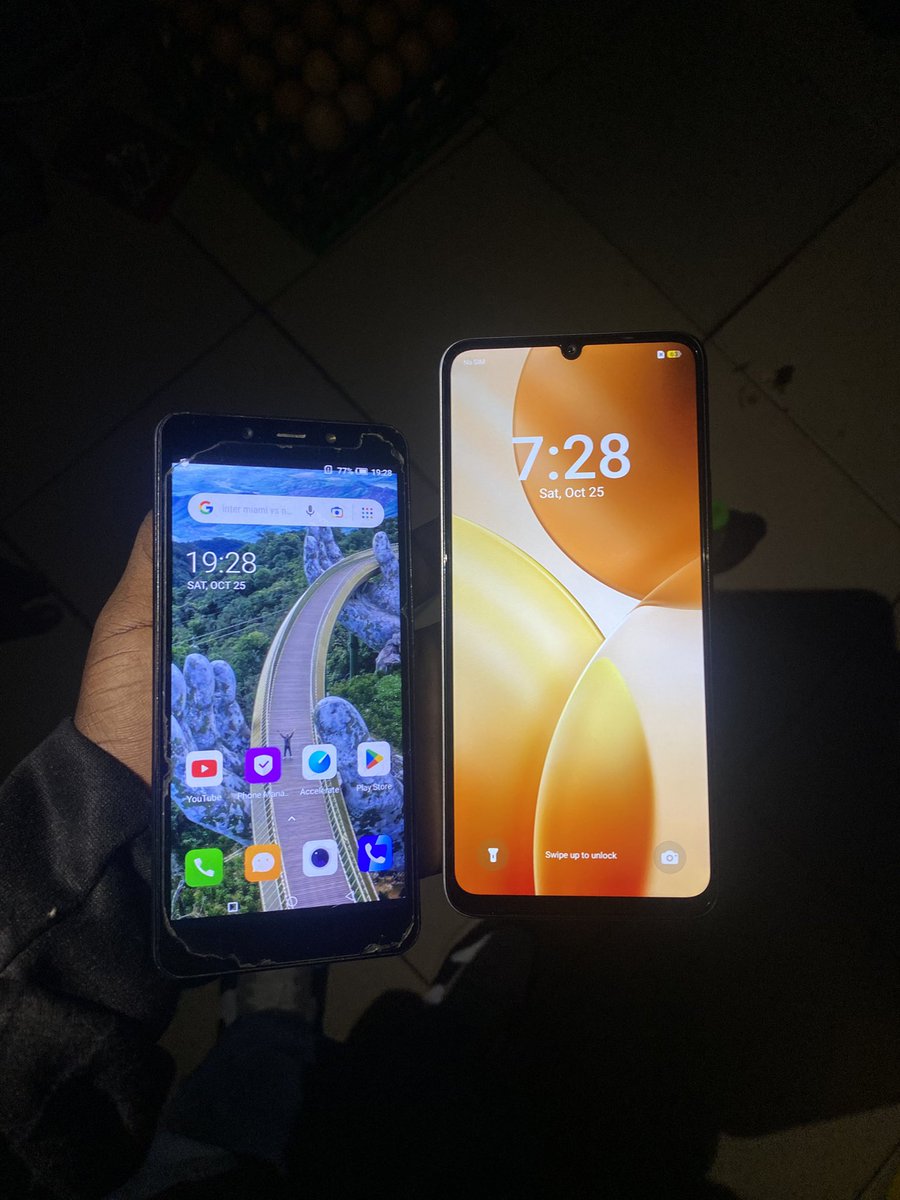
Made a big boy purchase today…
I changed my mom’s phone 🙂↔️
She’s the one who motivated me to go into tech. She bought my first laptop and paid for design course back in 2020.
This is the first real thing I’m doing for her using money made from tech.
Thank you web 3



English
Theo | web developer retweetou

I took a nap, and it felt like I’ve been away for days. It wasn’t just a rest, it felt like my spirit was exploring new worlds, new versions of me. I saw myself teaching, creating, building even in places I have never been.
English
Theo | web developer retweetou

Sometimes, you read a story that makes the blood in your veins run cold.
Blessing's baby, Victory, was born premature and diagnosed with hydrocephalus (fluid in the brain), and she needs an urgent ₦1,000,000 surgery to survive.
Instead of support, Blessing’s husband called her a witch for having a sick child and threw her and their baby out onto the street.
Now, Blessing is alone, fighting for her daughter's life with nothing.
Her husband turned his back, but we will not.
AprokoNation, let's be the family she needs right now. Let's save Victory.
Account Name: Obukohwo Blessing
Account Number: 3581115542
Bank: EcoBank
If you cannot donate, please, I am begging you, your retweet is a powerful gift. It might be the one that brings the help this mother and child desperately need. God bless you.

English