ValuSpect

24 posts

ValuSpect

ValuSpect

@ValuSpect

A complete platform designed for enterprises to track, manage, and optimize savings initiatives.

Entrou em Şubat 2026
17 Seguindo2 Seguidores
Tweet fixado
ValuSpect
ValuSpect@ValuSpect·
Most companies have zero visibility into their actual cost savings. I'm building ValuSpect — a SaaS platform to bring enterprise savings into one place: quantified & actionable. Currently in development. Feedback welcome! 👇 valuspect.com (valuspect.com)
English
0
0
0
69
ValuSpect
ValuSpect@ValuSpect·
3 questions every CFO should be able to answer: → Which cost initiatives are on track vs. at risk? → What's been realized vs. projected this quarter? → Who owns the initiatives that are slipping? If you're pulling these from Excel, you already know the problem.
English
0
0
0
7
ValuSpect
ValuSpect@ValuSpect·
Not a strategy problem. An infrastructure problem.
English
0
0
0
5
ValuSpect
ValuSpect@ValuSpect·
@SecretCFO Still on #1 because the problem compounds: bad master data → wrong cost allocations → no one trusts the savings numbers → initiatives die quietly. The whole chain is broken, not just the data layer. We're working on the savings realization end of it.
English
0
0
0
19
The Secret CFO
The Secret CFO@SecretCFO·
Revisiting this one year on… and number 1 remains the single biggest opportunity for tech builders for corporate finance teams. And I don’t see anyone building it ?!
The Secret CFO@SecretCFO

There is so much low hanging fruit for AI in accounting and finance functions. Here are a few ideas for anyone with accounting domain expertise and the engineering skills to build: 1. Master Data Bleach Master data is a train wreck in most businesses; product data, customer data, inventory data, etc. The basics (i.e. prices, product codes, etc) are normally correct (because they have to be to get cash in and out), but the attributes that drive quality reporting are often inconsistent. This is often the limiting constraint on reporting (rather than reporting capability itself). And can be tens of thousands of records across hundreds of fields. So not easy to keep live. A bot that crawls all company master data looking for inconsistencies in naming, taxonomy, coding etc. And then produces a list of proposed changes, which are then reviewed by the human to accept or reject those changes. The bot then goes and makes the changes. It does this daily / weekly learning each time and improving it's accept %. Probably doesn't save any heads in master data management in the short term, as there will be an increased review workload. But this would unlock huge reporting capability and time savings downstream where the data is being worked many times at different touch points in the organization. Solve the problem at source. 2. Accounts Payable Support AP teams have to maintain contact centers to answer - what is normally - some variation of the question 'when will I get paid?' Quite a bit of the AP function has been automated through RPA bots over the last 15 years or so. (I.e. supplier statement reconciliations). But handling supplier queries and inbound has been mostly untouched. And hearing how fast voice powered AI is coming for customer call centers (first and second level support) - feels like a small leap to stretch this tech across to AP functions. I expect it will be slower on the accounts receivable team (B2B at least), because businesses will be more reluctant to hit their customers with AI generated outbound. (And the cost of a mistake is higher - i.e. don't get paid on time and it blows the cashflow up) 3. Automated Preparation of Annual Reports Preparing 10-K/Qs is a pain in the ass. There are a number of inputs. There are the numbers (which are jsut mapped from the GL). Then there is coordinating a good quality commentary (MD&A), making sure your risk factors are up to date. Control disclosure, regulatory changes, Etc. Different jurisdictions for multi-nationals. And the formatting is a pain too. There is a surprisingly large number of people involved. It's inefficient, and hard to bring together. So this would be cool ... A dedicated tool that takes previous annual reports, control reports, audit report, board packs, local regulation etc and prepares a draft of the annual report. It would asking any questions of management it needs to (as if it were the controller preparing it) and helps manage version control, and workflow to completion. It will still need verifying, but getting to a good quality first draft is most of the work - and crucially is the bit that takes time. 4. Contract Review & Payment Terms Optimization It's hard to track inconsistencies in terms and conditions across thousands of commercial contracts. So many times I've found $$$ left on the table thorugh inconsistencies. It's left me wondering "how many other contracts do we have where we've lost 15 days like this". I presume it would be easy to create an application to: a) review new contracts before approval to find inconsistencies with previous contracts / house terms b) review all contracts to synthesize where your procurement / sales teams are leaving money on the table I know what you are thinking... Chat GPT / Claude, etc can do this already. You just have to know how to prompt it, etc. Or there is already some software tool that does this. That misses the point. Outside of tech circles, no-one in accounting and finance teams are really thinking about AI. They are too busy doing what they've always done. They need the solution put into their hands that works perfectly alongside what they already have. It just needs to take some existing human work, and do it faster and better. Low friction roll out. These are also (by definition) the least efficient teams where all the people / cost savings are - i.e. it's where the money is. Plus there is the issue of needing a safe and compliant private environment on which to manage the data. This will be crucial for getting CFOs on board (who need to get theit baord and auditors comfortable with it.) So a static application / environment that is fool proof for the user (and in time can become trusted) is the key. Any other ideas? Forget the long term ... I know there are way more transformational ideas than the above. I'm interested here specifically on what could be at us VERY quickly... anything else?

English
14
2
45
38.1K
ValuSpect
ValuSpect@ValuSpect·
@SecretCFO The bottleneck has shifted downstream. Pretty dashboards are table stakes now. The hard problem is what's underneath: structured tracking of cost initiatives from approved to actually-realized savings. That's still chaos in most finance teams — and Claude can't fix chaos.
English
0
0
0
16
The Secret CFO
The Secret CFO@SecretCFO·
Creating good looking reporting wrappers ‘in 5 minutes using Claude’ is already a commodified skill. Literally any idiot can do it (using myself as a test subject). To get career alpha as an ‘AI CFO’ you are going to have to be much more ambitious than that (and it will be less glamorous)
English
10
3
74
24.9K
ValuSpect
ValuSpect@ValuSpect·
@BoucherNicolas True, but there's a layer before AI even matters — the data itself. Most finance teams tracking cost initiatives still live in fragmented Excel files. Copilot on top of that just automates the mess. Structure the tracking first, then AI actually multiplies it.
English
0
0
0
12
ValuSpect
ValuSpect@ValuSpect·
@binarybits This is what happens when spreadsheets become source of truth for initiatives. One bad formula multiplies across thousands of decisions—and nobody sees it until it breaks.
English
0
0
0
25
Timothy B. Lee
Timothy B. Lee@binarybits·
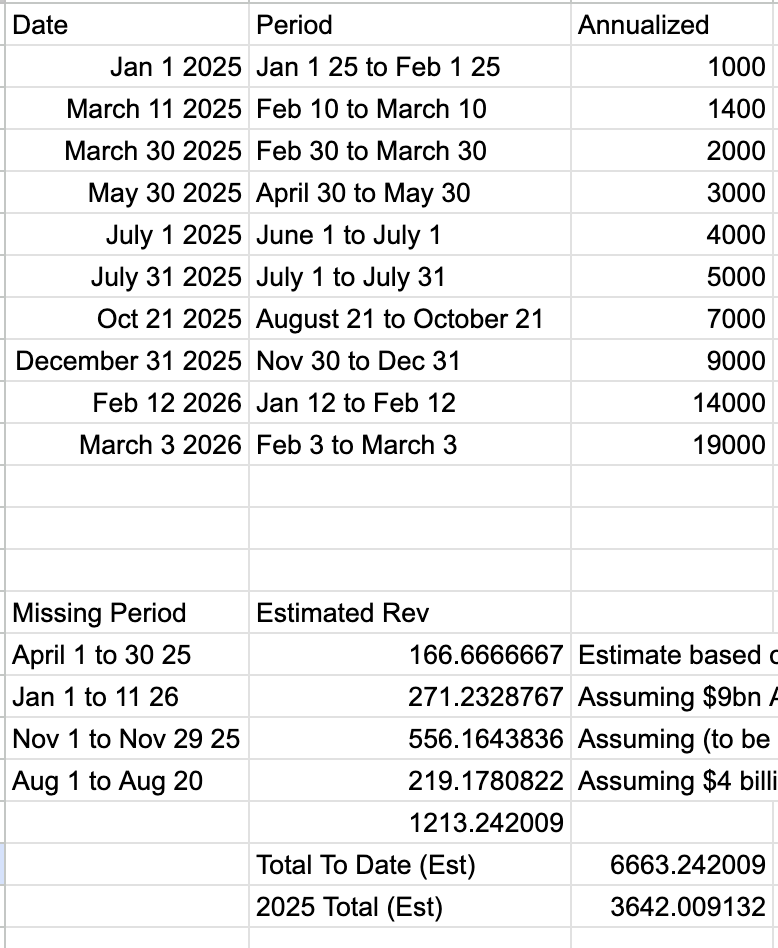
Also, check out this train wreck of a spreadsheet Ed made to estimate Anthropic's revenue for 2025. He doesn't count February 1-10, counts March 1-10 twice, counts August 21-October 21 as one month instead of two, and doesn't count October 21-November 1.
Timothy B. Lee tweet media
English
4
0
59
8.7K
Timothy B. Lee
Timothy B. Lee@binarybits·
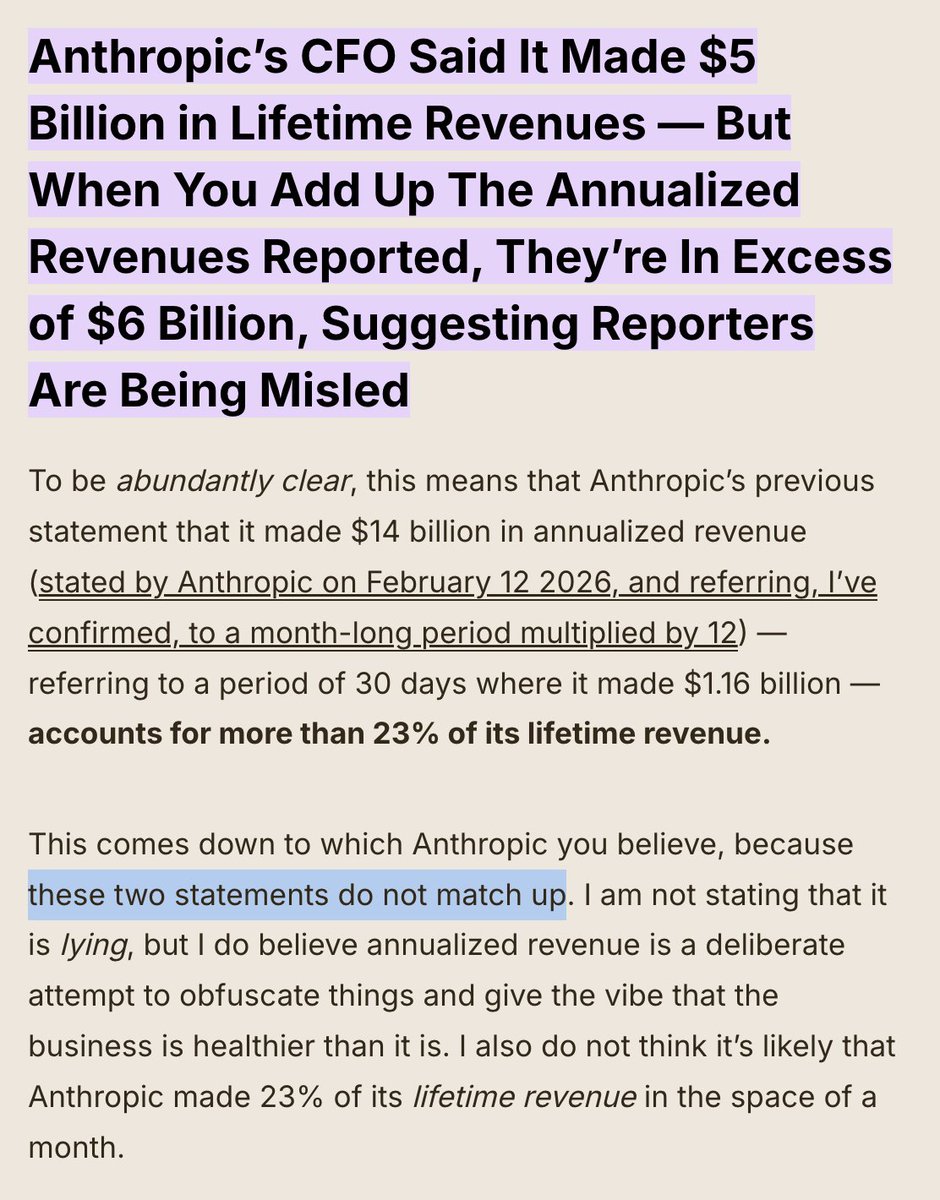
In a recent legal filing, Anthropic said that its revenue "exceed[ed] $5 billion to date." @edzitron says other Anthropic statements indicate it was more than $6 billion and that "these two statements do not match up." But, um, $6 billion exceeds $5 billion?
Timothy B. Lee tweet media
English
5
2
159
28.1K
ValuSpect
ValuSpect@ValuSpect·
@BojanRadojici10 Exactly. And half of those hours spent rebuilding when baseline assumptions shift mid-project. Cost initiatives add another layer—models are great until they need to track real-world delivery & iterate.
English
0
0
0
7
Bojan Radojicic
Bojan Radojicic@BojanRadojici10·
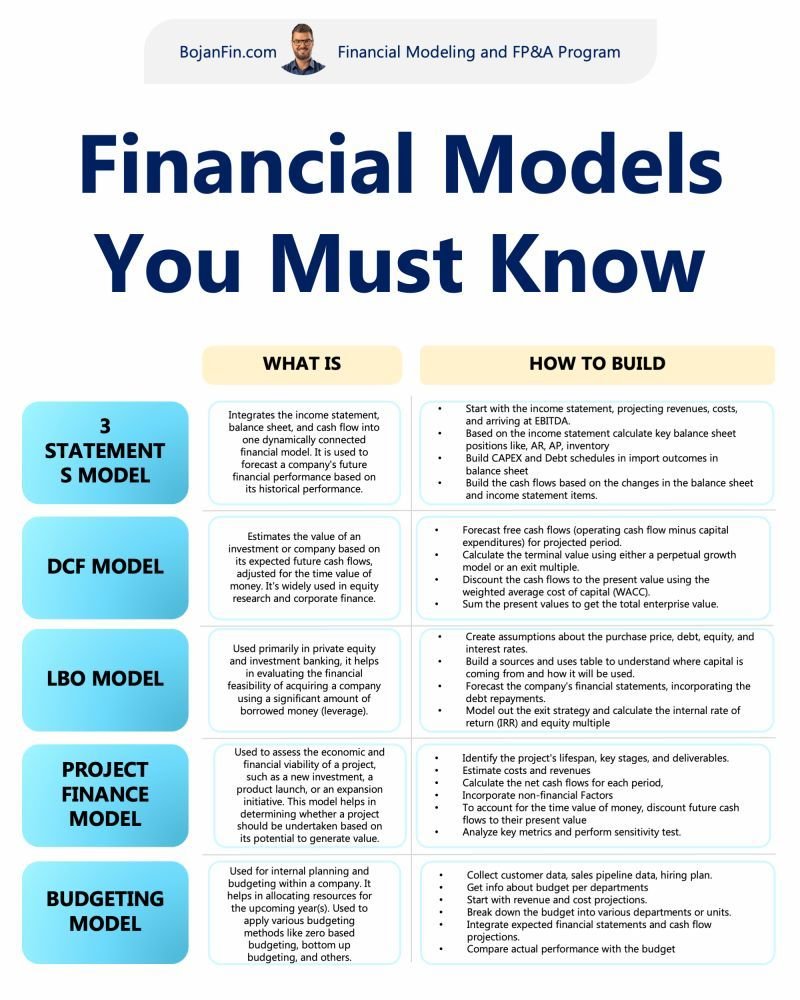
Financial modeling is a critical skill that can transform how you analyze, forecast, and make decisions. But what happens when you don’t know how to build these models? Here are the key challenges and negative impacts for each essential model: 3͟-͟S͟t͟a͟t͟e͟m͟e͟n͟t͟ ͟M͟o͟d͟e͟l͟ Challenge : Struggling to connect income statements, balance sheets, and cash flow statements, inability to forecast future performance accurately. ❌ Poor decision-making due to incomplete financial insights. ❌ Missed opportunities to identify cash flow issues or liquidity risks. ❌ Difficulty communicating financial health to stakeholders. D͟C͟F͟ ͟M͟o͟d͟e͟l͟ Challenge: Lack of understanding of how to value a business or investment. ❌ Overpaying for acquisitions or undervaluing investment opportunities. ❌ Inaccurate valuation leading to poor investment decisions. ❌ Loss of credibility with investors or senior management. B͟u͟d͟g͟e͟t͟i͟n͟g͟ ͟M͟o͟d͟e͟l͟ Challenge: Difficulty aligning departmental budgets with strategic goals. ❌ Budget overruns and misallocated resources. ❌ Frustration among teams due to unrealistic targets. ❌ Inability to adapt to changing business conditions. L͟B͟O͟ ͟(͟L͟e͟v͟e͟r͟a͟g͟e͟d͟ ͟B͟u͟y͟o͟u͟t͟)͟ ͟M͟o͟d͟e͟l͟ Challenge: Struggling to assess the feasibility of leveraged acquisitions. Inability to model debt repayment schedules or equity returns. ❌ Failed acquisitions due to poor financial structuring. ❌ High debt burdens leading to financial distress. ❌ Loss of investor confidence in your ability to execute deals. P͟r͟o͟j͟e͟c͟t͟ ͟F͟i͟n͟a͟n͟c͟e͟ ͟M͟o͟d͟e͟l͟ Challenge: Difficulty forecasting cash flows for large-scale projects. ❌ Projects running over budget or behind schedule. ❌ Inability to secure financing due to weak financial projections. ❌ Loss of profitability or even project failure. If you want this high res PDF, just drop a comment and I’ll send it to you. (Important: follow me so I can DM you!)
Bojan Radojicic tweet media
English
6
50
201
6.1K
ValuSpect
ValuSpect@ValuSpect·
Spreadsheet tracking cost initiatives dies after go-live. Real money waits for structured tracking. valuspect.com
English
0
0
0
25
ValuSpect
ValuSpect@ValuSpect·
Your approved €5M cost reduction initiative. Now you have zero visibility into whether it's actually delivering. That's where it dies. #FP&A
English
0
0
0
23
ValuSpect
ValuSpect@ValuSpect·
@imrant The architecture framing is right. Cost reduction programs fail because the tracking layer breaks — every BU in its own spreadsheet, no approval chain, no single source of truth. That's the gap valuspect.com was built for. How did Corvenia solve the governance piece?
English
0
0
0
7
Imran Tamboli
Imran Tamboli@imrant·
Finance teams spend 80% of time collecting data. 20% analyzing. That is not a staffing problem. It is an architecture problem. At Corvenia we cut consolidation time by 95% across 50+ portfolio companies. The CFO of 2026 should be a strategist, not a spreadsheet jockey.
English
1
0
0
36
ValuSpect
ValuSpect@ValuSpect·
@DarrigoMelanie Massive cost failures = poor tracking across initiatives. Structured cost reduction workflows with visibility would have surfaced this. valuspect.com prevents this.
English
0
0
0
11
ValuSpect
ValuSpect@ValuSpect·
@heynavtoor Raw financial data into dashboards is hard. But tracking cost reduction across business units needs structure + approval workflows first. That's where real value sits.
English
0
0
0
9
Nav Toor
Nav Toor@heynavtoor·
6. The KPMG Financial Ratio Dashboard "You are a senior audit partner at KPMG who builds financial ratio dashboards for clients that transform raw financial data into a visual health check showing exactly where the business is strong and where it's bleeding. I need a complete financial ratio dashboard as a working Excel spreadsheet with automatic calculations and charts. Build: - Liquidity ratios: current ratio, quick ratio, and cash ratio with formulas - Profitability ratios: gross margin, operating margin, net margin, ROE, ROA, and ROIC - Leverage ratios: debt-to-equity, debt-to-EBITDA, and interest coverage ratio - Efficiency ratios: asset turnover, inventory turnover, receivables days, and payables days - Growth metrics: year-over-year revenue, EBITDA, EPS, and free cash flow growth rates - Valuation ratios: P/E, P/B, EV/EBITDA, and free cash flow yield - Traffic light formatting: green (healthy), yellow (caution), red (danger) applied automatically based on thresholds - Trend charts: each key ratio plotted over 5 years to visualize trajectory - Industry benchmarks: a column showing industry average for comparison - One-page summary: a printable executive dashboard with all ratios and charts on a single sheet Format as a downloadable Excel file with an input tab for raw financials and an auto-calculating dashboard with conditional formatting. My financials: [ENTER YOUR COMPANY'S INCOME STATEMENT, BALANCE SHEET, AND CASH FLOW DATA FOR THE LAST 3-5 YEARS]"
English
2
0
0
998
Nav Toor
Nav Toor@heynavtoor·
BREAKING: AI can now build financial models like Goldman Sachs analysts (for free). Here are 12 Kimi prompts that replace $150K/year investment banking work: (it actually builds the excel file, not just explains it)
Nav Toor tweet media
English
17
42
278
165.9K
ValuSpect
ValuSpect@ValuSpect·
@olivier_primeau Massive cost overruns happen when you can't track initiatives across departments. Structured workflows + visibility prevent budget drift. valuspect.com prevents this.
English
0
0
0
9
Olivier Primeau
Olivier Primeau@olivier_primeau·
Je vous rappelle que notre système de santé coûte 80 milliards par année … 80 000 millions et que 40% de nos impôts servent à payer le système de santé québécois.
Français
9
1
71
3K
Olivier Primeau
Olivier Primeau@olivier_primeau·
100 % des Québécois font des sacrifices pour arriver à la fin du mois. 🙃 Les Québécois ont de la misère à manger ce qu’ils veulent et à obtenir les services ( incluant la santé ) qu’on leur a promis en retour des taxes et impôts gigantesques qu’on paie. On peut-tu arrêter de démoniser les États-Unis pour essayer de se remonter ? #sante #quebec #montreal #Economie
Olivier Primeau tweet media
Français
86
60
397
16.2K
ValuSpect
ValuSpect@ValuSpect·
@Simon_Ingari Fiscal spreadsheets eating your day? Structured cost tracking systems eliminate this burden. Real-time consolidation means less copy-paste, more actual analysis.
English
0
0
0
7
Simons
Simons@Simon_Ingari·
Coworker: I see you have three hours open in your calendar this afternoon. Me: Excuse me? Coworker: How are you going to be filling your time? Me: I am capable of effectively managing both my workload and my time. Coworker: Are you working on the fiscal numbers today? Me: I will be working on them, yes. Coworker: Great. Give me a call when you start so I can make sure your calculations are all accurate. Me: Should I need additional support, I’ll be sure to reach out. Coworker: Have them sent over to me by 4 p.m. so I can review them. Me: They will be sent to Titiana, my direct manager, once they’re completed. If you want access to them, I recommend connecting with her. Coworker: You know what, I want them done right, so how about I just do it myself? Me: I am confident in my ability to execute this task, and I value your passion here. I will be completing this independently. Coworker: You know there is no “I” in team. Me: But there are two in micromanaging. Coworker: Silence... A healthy team isn’t built on control — it’s built on trust, accountability, and knowing where your role ends and someone else’s begins.
English
12
12
233
22K
ValuSpect
ValuSpect@ValuSpect·
@dan__rosenthal When pricing shifts, you need visibility into which units/customers absorb costs vs. benefit. Manual tracking here is chaos. Structured analytics help here.
English
0
0
0
27
Dan Rosenthal
Dan Rosenthal@dan__rosenthal·
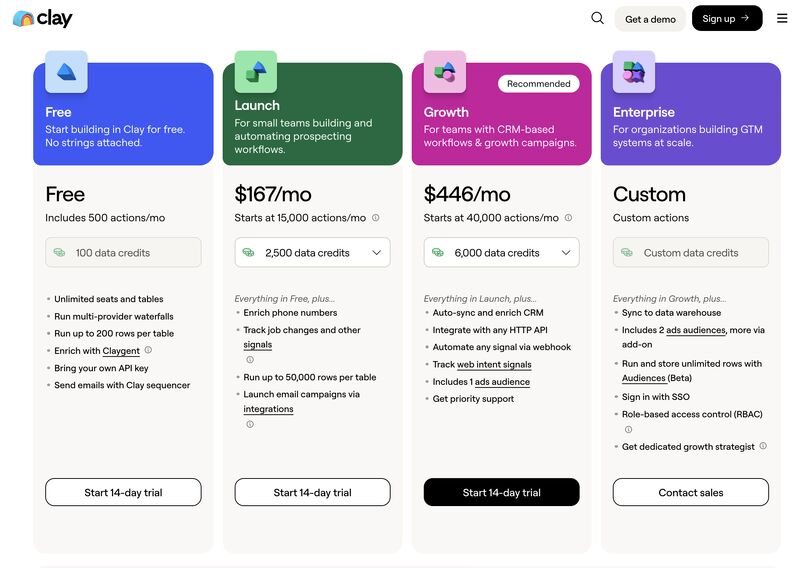
Clay just restructured their entire pricing model. Some users will save money. Others just got a very different bill. BEFORE: - Three plans. - Explorer at $350/mo with 10K credits. - Pro at $800/mo with 50K credits. -Enterprise on custom pricing. - Usage tracked through data credits only. - HTTP calls with your own API keys cost nothing. - Agencies running 7-figure operations could stay on the $350 or $800 plan. AFTER: - Dual-meter system combining Data Credits with Actions. - Every execution step now costs one action. - Enrichments, CRM syncs, HTTP calls, AI tasks, sequencer sends. - Data credit pricing nearly tripled. - Many individual enrichment costs actually dropped. - CRM and ads features became more accessible. - Existing users keep their legacy plans. Clay says 90% of users will save money under the new model. The teams that built around external integrations are feeling this the most. If you ran lean by routing everything through HTTP calls and your own keys, the action meter changes your economics. If you rely on native enrichments, the numbers probably work in your favor. The platform is still best in class for what it does. The question is whether the new pricing supports the way your team actually uses it.
Dan Rosenthal tweet media
English
5
1
17
1.3K
ValuSpect
ValuSpect@ValuSpect·
@ivanburazin Scaling efficiently means tracking cost initiatives across teams. At PMF, manual tracking breaks. Structured approval workflows + real-time visibility become critical.
English
0
0
0
11
Ivan Burazin
Ivan Burazin@ivanburazin·
Once you hit PMF, things get weird. One hand hand, you can't finish the day. Work is endless. Customer demand is overwhelming. Everything is breaking from scale. Your CTO sleeps 4 hours. And everyone's running on fumes. All the problems became good problems. Can you get enough servers? Can you reply to support fast enough? Are you drowning in MSAs? On the other, the speed is so uncomfortable that you question everything. We were doubling revenue every month and dealing with the classic imposter's syndrome. Is it a fluke/bump? But if you don't keep buying servers and hiring, you'll hit a wall and lose customers. So you move through the discomfort as the market pulls you instead of you pushing it.
English
31
11
371
49.9K
ValuSpect
ValuSpect@ValuSpect·
@WallStreetMav Consolidating cost visibility across dozens of legacy systems is the hard part. Need structured workflows + approvals, not just spreadsheets. valuspect.com tracks this.
English
0
0
0
5
Wall Street Mav
Wall Street Mav@WallStreetMav·
This is a huge IT project within the US govt to consolidate dozens of different HR systems into one for the entire federal government. Having all of these separate systems costs over $5 billion per year to maintain and update code on ancient systems. The US govt wants to spend $1.5 billion on one software supplier to do it all for every agency. It can either go to one of several American companies, or SAP (a German company that was just fined $220 million for foreign bribery). Hopefully an American company wins this.
Wall Street Mav tweet media
Wall Street Mav@WallStreetMav

SAP is trying to get a $1.5 billion contract to manage all of the human resources for every agency in the federal govt. This is the same company that was just recently fined $220 million by the US govt (2024) for foreign bribery. American companies should be managing this type of US govt contract. America First.

English
42
89
396
34K
ValuSpect
ValuSpect@ValuSpect·
@tjbredemeyer The inventory cost problem is real. Structured cost tracking with proper workflows solves this. Manual spreadsheets create invisible cost gaps across business units.
English
2
0
1
25
TJ Bredemeyer
TJ Bredemeyer@tjbredemeyer·
Spreadsheets often hide critical timing problems. They also create misleading financial signals. One major issue founders encounter: Inventory costs aren't recognized in the P&L until products sell. This means: - Cash leaves early - Expenses appear later You can look profitable on paper while struggling with liquidity. Once brands scale beyond early growth, inventory visibility becomes essential. Modern systems help manage: - Multi-channel inventory synchronization - Lot and expiration tracking - Automated replenishment alerts - Warehouse cycle counts - AI forecasting Without real-time visibility, you're flying blind.
English
2
0
0
37
ValuSpect
ValuSpect@ValuSpect·
@HijaziHadi77925 The "prettier spreadsheet with a login page" framing is painfully accurate. Most tools consolidate the numbers but the actual initiative tracking, approvals, and variance explanations are still emails and tabs. This is what we're trying to solve at valuspect.com.
English
0
0
0
7
Hadi Hijazi
Hadi Hijazi@_HadiHijazi·
the more I dig into financial operations the more I realize: most "automation" in finance is just a prettier spreadsheet with a login page the actual matching, reconciling, verifying. still humans. still manual. still 2am.
English
1
0
0
14
ValuSpect
ValuSpect@ValuSpect·
Most enterprise projects claim "millions in savings" on paper, but how much actually hits the bottom line? 📉 We're building ValuSpect to close the gap between project projections and realized value. Stop guessing, start tracking. #ProjectManagement #PMO #ValueRealization
English
0
0
0
60