Daniel Fox

1.3K posts

Daniel Fox banner
Daniel Fox

Daniel Fox

@_danielfox

PhD Candidate @Bio21Institute + @MonashBDI 🔬🇦🇺🏳️‍🌈 Views my own.

Naarm/Melbourne Entrou em Eylül 2019
1.2K Seguindo390 Seguidores
Tweet fixado
Daniel Fox
Daniel Fox@_danielfox·
Proud to share some of the work from my PhD is now out in Nature Communications! Very grateful to all coauthors who helped make this happen, especially my supervisors @Rhys__G and @gavinjknott for their support. 🩸 🦠 🔬
English
0
1
7
430
Daniel Fox retweetou
Biology+AI Daily
Biology+AI Daily@BiologyAIDaily·
High-Throughput De Novo Protein Design Yields Novel Immunomodulatory Agonists 🚀 New preprint from David Baker!🚀 1. Researchers have developed a high-throughput de novo design approach to create novel cytokines, termed "Novokines," by fusing pairs of computationally designed binders targeting various receptor subunits. This method generated over a thousand potential Novokines, of which 75 activated pSTAT signaling in peripheral blood mononuclear cells (PBMCs). 2. The study identified new pairings of established common receptors, cross-family pairings such as TrkA-γcommon, and a series of pairings with interferon receptor-1 (IFNAR1), revealing that IFNAR1 can function as a versatile common receptor similar to γcommon or βcommon. 3. The framework provides a blueprint for expanding the understanding of cytokine signaling and generating novel therapeutic strategies. The designed binders are structurally programmable, allowing control over orientation and linker geometry, and can be produced at high throughput in bacteria. 4. The researchers characterized 18 Novokines, including those that drive monocyte proliferation, T cell survival, and CD4+ T cell-specific proliferation. The study also demonstrated that private receptors dictate signaling identity, while common receptors serve as modular scaffolds that enable diverse pairings. 5. The scale of the screen, the diversity of receptor pairings tested, and the use of primary human immune cells represent a substantial advance over previous efforts to engineer novel cytokine signaling. The findings suggest that the natural cytokine signaling network may reflect evolutionary constraints rather than absolute biochemical limits. 📜Paper: biorxiv.org/content/10.110… #ProteinDesign #CytokineSignaling #Novokines #SyntheticBiology #ComputationalBiology
Biology+AI Daily tweet media
English
0
11
45
2.9K
Daniel Fox retweetou
Julian Englert
Julian Englert@julian_englert·
Today we’re releasing real-world experimental data for over 1000 novel AI-designed proteins on our new platform @proteinbase!

Julian Englert tweet media
English
11
109
410
49K
Daniel Fox retweetou
Cynthia Turnbull
Cynthia Turnbull@Cyn_Turnbull·
Had a great time at ASBMB2025! Very different to my usual immunology-heavy conferences with a plethora of com bio, structural and molecular presentations @ITSASBMB Congrats to my fellow ASBMB fellowship winners including ANU/JCSMR friends Daniel Fox @_danielfox and Shouya Feng @shouya_feng. Shouya also received the Fred Collins award and gave an exceptional keynote on her NLRP3 work! UQ’s St Lucia campus in Brisbane is worth a visit for the biology and wildlife!
Cynthia Turnbull tweet mediaCynthia Turnbull tweet mediaCynthia Turnbull tweet mediaCynthia Turnbull tweet media
English
3
2
10
583
Daniel Fox retweetou
Biology+AI Daily
Biology+AI Daily@BiologyAIDaily·
Code to complex: AI-driven de novo binder design 1. This review by Fox et al. explores how AI has transformed de novo protein binder design, making it possible to rapidly generate high-affinity binders for diverse targets with improved efficiency and reduced resource requirements. The integration of AI into protein design marks a significant shift in the field, enabling the creation of custom binders that can neutralize toxins, modulate immune pathways, and engage disordered targets with high specificity. 2. The authors highlight the evolution of protein design from early rational design efforts to the current AI-driven approaches. They discuss how advancements in AI, such as the development of diffusion models and deep learning techniques, have enhanced the accuracy and flexibility of protein structure prediction and design. These improvements allow for the generation of binders with tailored architectures and functions, overcoming previous limitations in predicting sequence-structure relationships. 3. A key innovation is the use of generative diffusion models like RFdiffusion, which can design proteins with specific user-defined architectures and binding geometries. This approach, combined with sequence design models such as ProteinMPNN, has significantly increased the success rates of binder design compared to traditional methods. The integration of these tools into a powerful pipeline enables the in silico generation of binders with high experimental success rates. 4. The review also addresses the challenges and future directions in AI-driven protein design, including the need for better predictive accuracy, expanding the scope of targetable proteins, and addressing issues related to delivery and immunogenicity. Additionally, the authors emphasize the importance of ethical considerations, data integrity, and open access to computational resources to ensure equitable access and responsible use of these technologies. 5. The potential applications of AI-designed binders are vast, ranging from toxin neutralization and immune modulation to the development of novel diagnostics and therapeutics. Recent successes in designing binders for challenging targets like snake venom toxins and immune receptors demonstrate the real-world therapeutic potential of these approaches. As the field continues to advance, AI-driven protein design is poised to revolutionize medicine and biotechnology by enabling the rapid creation of highly specific and functional proteins. 📜Paper: cell.com/structure/full… #AIDrivenDesign #ProteinEngineering #DeNovoBinders #StructuralBiology #Biotechnology #TherapeuticDevelopment
Biology+AI Daily tweet media
English
5
37
169
24.7K
Daniel Fox retweetou
Niko McCarty.
Niko McCarty.@NikoMcCarty·
Out today: A useful review on AI-designed protein binders. It covers the history of this work + has lots of good case studies, including how these tools are being used to make snake anti-venoms. The tables are particularly valuable.
Niko McCarty. tweet mediaNiko McCarty. tweet mediaNiko McCarty. tweet mediaNiko McCarty. tweet media
English
7
55
313
22.1K
Daniel Fox retweetou
Ash
Ash@AshPolitik·
It is only fair. If we ban YouTube for under-16s. We must ban Sky News and News Corp for the over-60s. The latter is arguably more dangerous.
English
359
2.1K
31.4K
357.5K
Daniel Fox retweetou
Leann Tilley
Leann Tilley@LeannTilley·
We are very pleased to share our publication in PLoS Pathogens (@PLOSPathogens) (doi.org/10.1371/journa…. Our team explored a Streptomyces natural product, called dealanylascamycin (DACM). We showed it is a highly mechanism of action.
Leann Tilley tweet media
English
3
4
16
508
Daniel Fox retweetou
Biology+AI Daily
Biology+AI Daily@BiologyAIDaily·
Accurate de novo design of high-affinity protein-binding macrocycles using deep learning @nchembio 🚀 Paper published from David Baker!🚀 1.RFpeptides is a deep learning pipeline that enables de novo design of high-affinity macrocyclic peptide binders against diverse protein targets. It leverages a diffusion-based backbone generator (RFdiffusion) and a sequence designer (ProteinMPNN) with integrated DL and physics-based scoring. 2.The method succeeded in designing macrocycles that bind four distinct proteins (MCL1, MDM2, GABARAP, and RbtA) with medium to high affinity, testing only ~20 designs per target—orders of magnitude fewer than conventional display-based methods. 3.The standout binder, RBB_D10, targets a flat, previously uncharacterized site on Rhombotarget A (RbtA) with a dissociation constant (Kd) of 9.4 nM, despite starting from a predicted structure. The crystal structure of the complex closely matched the design model (Cα RMSD: 1.4 Å). 4.For GABARAP, two macrocycles (GAB_D8 and GAB_D23) exhibited Kd values of 6 nM and 36 nM, and IC50s of 0.7 nM and 2.5 nM in a competitive AlphaScreen assay—among the highest reported affinities for this target class. 5.Crystal structures for macrocycle–protein complexes (MCL1, GABARAP, RbtA) revealed close agreement with the design models, with RMSDs typically under 1.5 Å, validating the atomic accuracy of RFpeptides-generated binders. 6.Unlike traditional approaches, RFpeptides does not require known ligands or templates. It can target specific patches on proteins, including flat or non-canonical binding sites, by guiding the design via user-defined hotspots. 7.Binders adopt a range of structural topologies—α-helices for MCL1 and MDM2, β-sheets for GABARAP, and loop-like conformations for RbtA—demonstrating the structural diversity achievable with the pipeline. 8.Filtering of candidates combines DL-based (iPAE, pLDDT) and physics-based (ddG, SAP, CMS) metrics, followed by clustering and selection based on structural diversity, enabling rational downselection from tens of thousands of in silico models. 9.Even in the absence of explicit solubility constraints during design, successful binders exhibited good aqueous solubility, increasing the feasibility of downstream development. 10.RFpeptides achieves higher success rates and binding accuracy than any prior peptide design method tested, and allows structure-guided optimization without needing experimentally determined complex structures. 11.The approach opens the door to scalable, customizable design of macrocycles for therapeutics and diagnostics—potentially spanning intracellular targets, flat epitopes, or challenging pathogens with no structural data. 💻Code: doi.org/10.5281/zenodo… 📜Paper: nature.com/articles/s4158… #ProteinDesign #Macrocycles #DeepLearning #DeNovoDesign #ComputationalBiology #PeptideTherapeutics
Biology+AI Daily tweet media
English
0
51
199
11.8K
Daniel Fox
Daniel Fox@_danielfox·
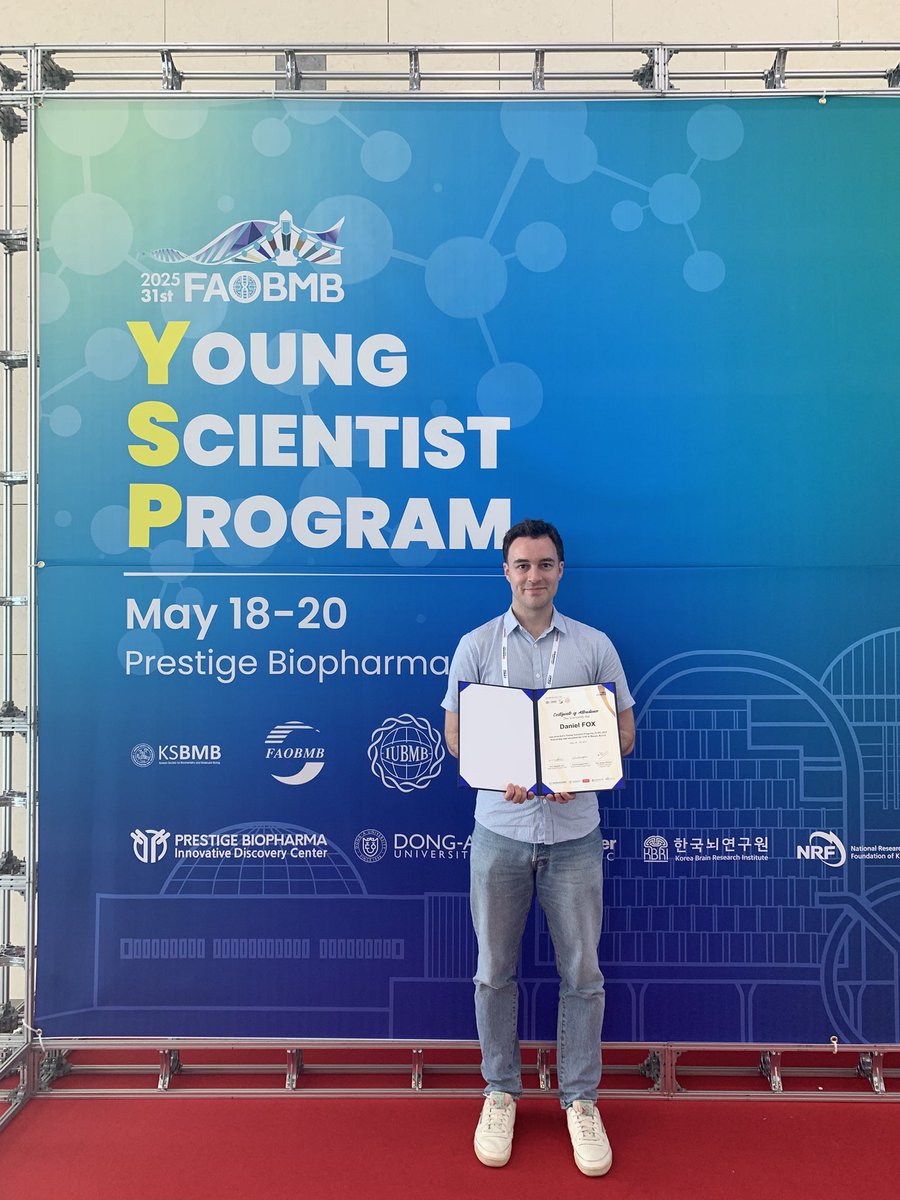
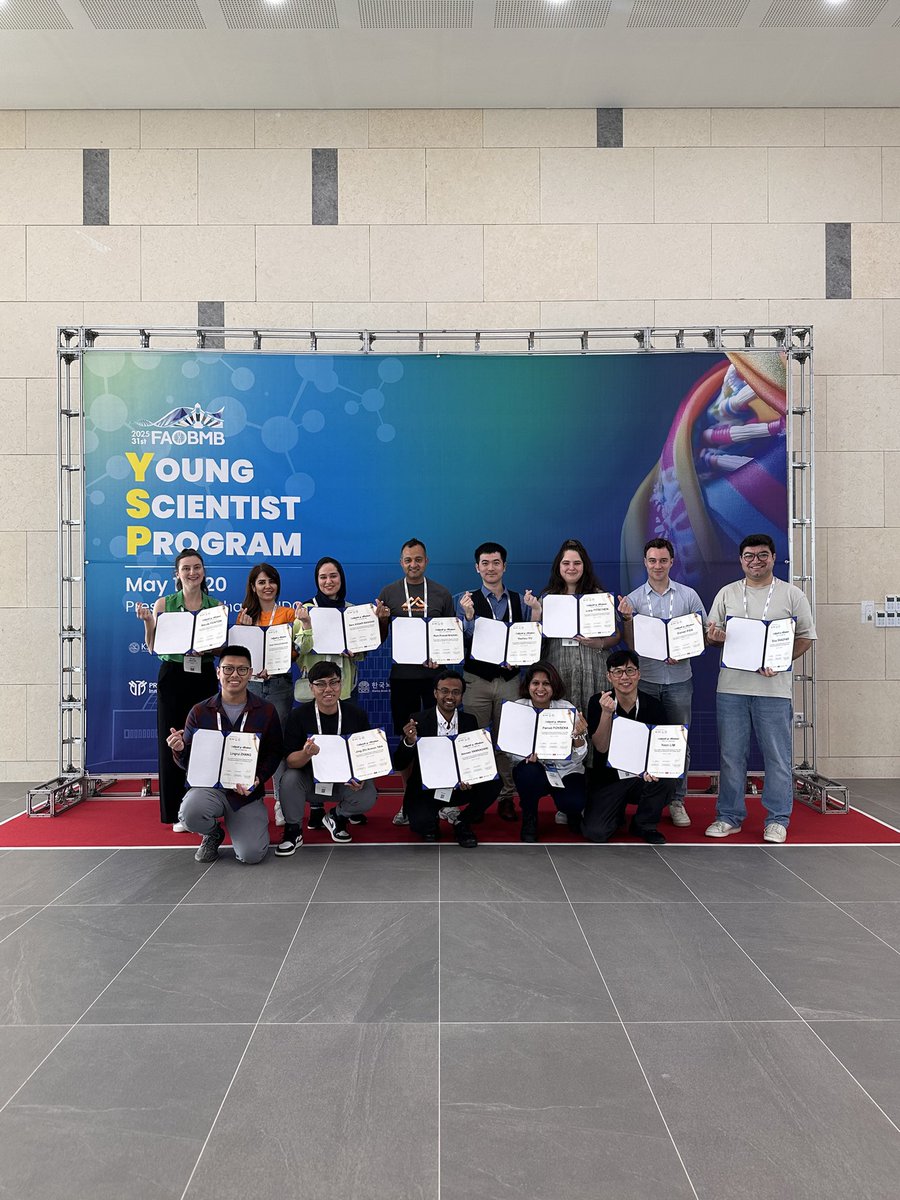
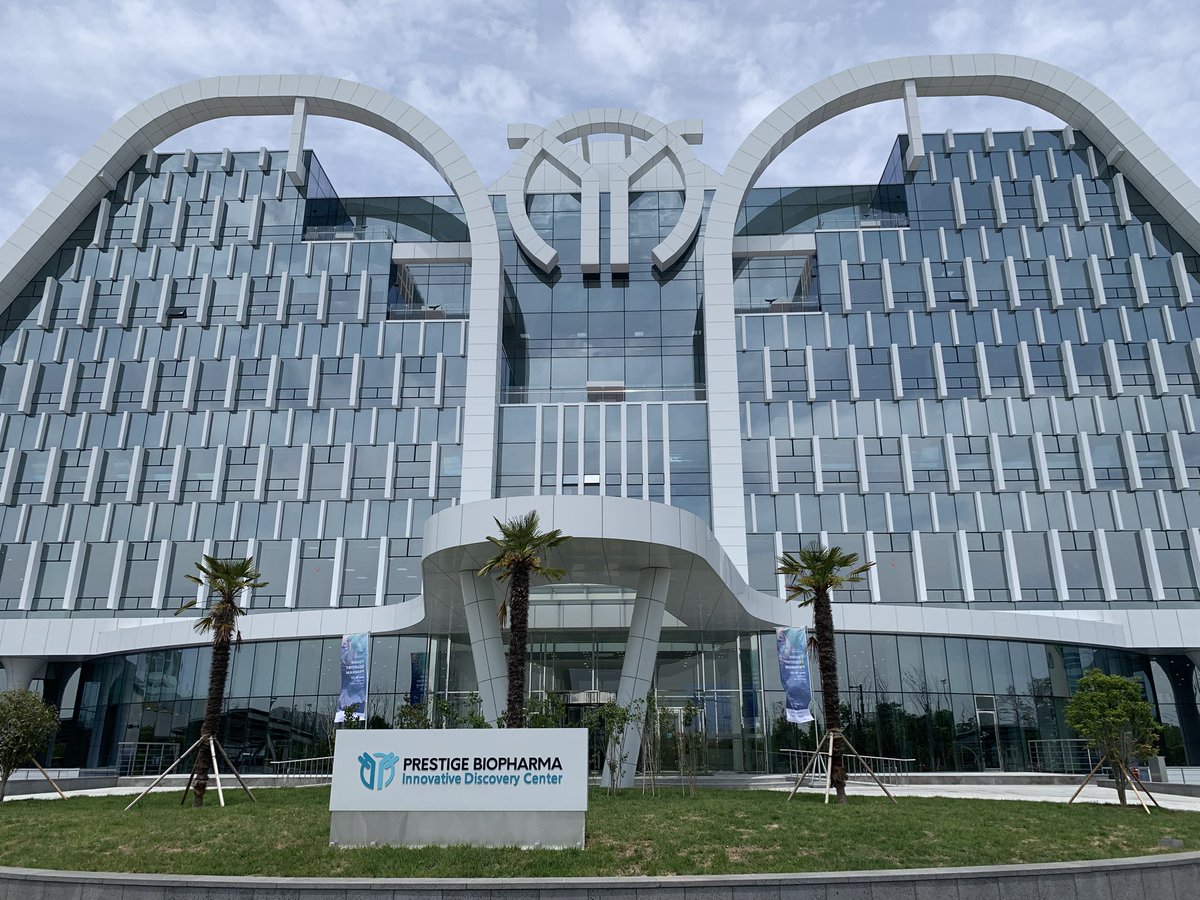
Grateful to have been awarded an ASBMB Fellowship and a YSP Fellowship to be able to present my work at the Young Scientist Program and at the FAOBMB2025 Conference in Busan, South Korea 🇰🇷
Daniel Fox tweet mediaDaniel Fox tweet mediaDaniel Fox tweet mediaDaniel Fox tweet media
English
2
0
13
444
Daniel Fox
Daniel Fox@_danielfox·
It was also a great opportunity to network and mingle with other students and ECRs from our region and was completely inspired by all the cool science and come away with fresh ideas🔬🧬
English
0
0
0
39
Daniel Fox retweetou
ABC News
ABC News@abcnews·
A damning review into ANU's College of Health and Medicine has revealed a dysfunctional culture of bullying, sexism, unfair workloads and nepotism. ab.co/43MN9bu
English
0
9
20
9.8K
Daniel Fox retweetou
The Nobel Prize
The Nobel Prize@NobelPrize·
”If I get an award, I have an opportunity to thank people. I also thank the people who tried to make my life miserable because they made me work harder and become more resilient.” Next week, our podcast returns with conversations featuring our 2024 laureates. In the meantime, have a listen to one of our favourite episodes from last season with 2023 medicine laureate Katalin Karikó: bit.ly/3yQkJQN
The Nobel Prize tweet media
English
9
168
725
50.7K
Daniel Fox retweetou
Adam Bandt
Adam Bandt@AdamBandt·
Labor has done a dirty deal with the Liberals to not preference the Greens in Macnamara. This now risks the Liberals winning the seat, and bringing Dutton one step closer to the Lodge. Labor voters will be furious they are helping Dutton with preferences.
English
901
288
1.3K
139.7K