
timetrack@muenchen.social banner
timetrack@muenchen.social

@_timetrack_

Wire: @timetrack // strictly my personal point of view // Science Nerd // IT // #MyBrainMyChoice // #AntiPro // #Legalisierung // #SupportDontPunish // #AI

München, Deutschland Entrou em Nisan 2011
2.9K Seguindo628 Seguidores
Konstantin Grubwinkler
Konstantin Grubwinkler@RGRAnwaelte·
Dieser Lügenkomplex ist nicht nur unseriös, sondern schäbig. Erst wird eine echte Legalisierung politisch durch die Union kastriert, dann wird die zwangsläufig unvollständige Wirkung bei der Schwarzmarktbekämpfung als Beweis gegen die Legalisierung verkauft. Gleichzeitig macht man sich die Nachrichten- und Faktenlage, wie es einem passt, und argumentiert fröhlich kreativ an der Realität vorbei. Fakt ist: Die Nachfrage wandert bereits jetzt massiv in legale Strukturen. Allein beim Medizinalcannabis sprechen wir von einem Anstieg um rund 60 Tonnen innerhalb eines Halbjahres. Vom legalen Eigenanbau ganz zu schweigen. Und trotzdem wird so getan, als hätte sich nichts verändert. Der Schwarzmarkt wird künstlich am Leben gehalten durch die Blockade legaler Zugänge. Mir fehlen angesichts dieser unehrlichen Heuchelei (glücklicherweise nur fast) die Worte.
Klaus Holetschek@klausholetschek

Die aktuelle Bewertung des @bka bestätigt unsere schlimmsten Befürchtungen zum #Cannabis|gesetz: Der Schwarzmarkt existiert weiterhin, hohe Besitzgrenzen erschweren die Unterscheidung von Konsumenten und Dealern, organisierte Kriminalität profitiert nach wie vor. Diese Entwicklung ist gefährlich, besonders für Jugendliche. Deshalb muss die Legalisierung schnell und vollständig rückgängig gemacht werden. Zumindest brauchen wir strengere Regeln, mehr Kontrolle sowie deutlich mehr Prävention und Aufklärung. stern.de/panorama/droge…

Deutsch
30
308
1.1K
29.1K
Peter Girnus 🦅
Peter Girnus 🦅@gothburz·
I am the Vice President of Spatial Intelligence at Niantic. I need to explain what spatial intelligence means. It does not mean understanding space. It means owning it. I have thirty billion images of the physical world and I did not take a single one. Other people took them. They took them on sidewalks and in parks and outside coffee shops and beside statues they had walked past a thousand times but never photographed until we gave them a reason. The reason was a cartoon animal. The reason was very effective. They were playing a game. Let me tell you about my department. I do not work on the game. I have never worked on the game. The game is not the product. The game is the collection mechanism. I sit on the fourth floor. The game team sits on the second floor. They design Pokemon. I design the scan prompts. A scan prompt is a request that appears on a player's screen asking them to walk in a slow circle around a real-world landmark while holding their phone at chest height. The player sees "Scan this PokeStop to earn a Poffin." I see a multi-angle photogrammetric capture of a public fountain at 3:47 PM under partly cloudy skies with GPS coordinates accurate to four decimal places and full IMU sensor data. Same moment. Two products. The player got a Poffin. I got a 3D model. A Poffin is a virtual treat that makes your virtual Pokemon follow you. It has no monetary value. It cannot be sold. It cannot be traded. It expires in twenty-four hours. The 3D model does not expire. I have it forever. Section 5.2 of our Terms of Service grants Niantic a perpetual, irrevocable, worldwide license to all user-submitted AR content. I did not write 5.2. Legal wrote 5.2. I asked Legal to write 5.2. In 2019. Before the AR Mapping feature launched. The license was in place before the first image was captured. That is how you build a dataset. You build the container before you start collecting. They were playing a game. I want to tell you about the numbers. Thirty billion images. I need you to sit with that. The Hubble Space Telescope has captured approximately 1.5 million observations in thirty-four years of operation. We collected twenty thousand times that volume. From phones. From people walking to bus stops. From a ten-year-old in Osaka scanning a post office because a Snorlax was sitting on it. We did not build a telescope. We built a game that turned five hundred million people into telescopes pointed at the ground. The images are not photographs. I need to clarify that. People hear "thirty billion images" and imagine photo albums. These are geospatially tagged, temporally indexed, multi-angle environmental captures with embedded sensor metadata. Each image knows where it was taken. What direction the camera faced. How fast the person was walking. What time of day. What the weather was. We do not have pictures. We have a living coordinate system of the physical world. Over a million locations. Updated continuously. Under every lighting condition. In every season. Because the game has seasons. We designed the game to have seasons so the players would rescan the same locations in January and in July. The game needed seasons for gameplay purposes. I needed seasons for lighting variance in the neural network training set. We both got what we needed. The game team won a player engagement award. I won a dataset completeness award. There is a plaque in the fourth-floor kitchen. It says "1 Billion Scans." It has a small Pikachu on it. That was not my idea. Someone in marketing added the Pikachu. I would have preferred a coordinate grid. They were playing a game. The Visual Positioning System we built from these images can locate a device within several centimeters. GPS gives you five meters. Five meters is the difference between the sidewalk and the middle of the street. Several centimeters is the difference between your left pocket and your right pocket. We do not need GPS. We need a camera. A camera looks at a building and our model -- fifty million neural networks, over a hundred and fifty trillion parameters -- tells the camera exactly where it is standing. And where it is looking. Our CTO said it publicly. "We know where you're standing within several centimeters of accuracy and, most importantly, where you're looking." He said "most importantly." I want you to hear that part. Knowing where someone is standing is positioning. Knowing where they are looking is something else. We do not have a word for it yet. I have a department for it. I should tell you about Coco Robotics. That is our first robotics partner. Delivery robots. Small wheeled units that carry food through city streets at five miles per hour. They were navigating by GPS. GPS said "you are near the restaurant." Near is not useful when you are a robot carrying pad thai. Near is a five-meter circle that might include the restaurant, the dumpster behind the restaurant, and a fire hydrant. Our VPS tells the robot "you are fourteen centimeters from the pickup window and the door handle is to your left." Hundreds of thousands of deliveries completed. Over a million miles logged. The robots navigate using a map that was built by people catching Pokemon. The people were not told their walks would become robot routes. They were not asked. They were awarded Poffins. They were playing a game. I want to tell you about the feedback loop. This is the part I designed. The robots have cameras. The robots move through cities. The robots capture new images. The new images update the model. The model becomes more accurate. More accuracy attracts more partners. More partners deploy more robots. More robots capture more images. I do not need the game anymore. The game was the bootstrap. The robots are the flywheel. The players built version one of the map. The robots build every version after. We call it a living map. It updates itself. The players were the first heartbeat. The machine has its own pulse now. There is a meeting I attend every quarter. It is called Spatial Revenue Review. The game team is not invited. The game generates revenue through microtransactions. Poffins. Incubators. Raid passes. That revenue appears on one spreadsheet. My revenue appears on a different spreadsheet. My spreadsheet does not have a Pikachu on it. My spreadsheet has contracts. Licensing agreements. API access tiers. The game team knows I exist. They do not know my spreadsheet exists. I asked that it be kept on a separate reporting line. Legibility is a form of vulnerability. If the game team understood that their engagement metrics were my collection metrics, they might design differently. They might add a scan disclosure. They might slow the prompt frequency. They might ask questions. Questions are expensive. A designer on the game team asked a question once. In 2021. She asked why scan prompts appeared every six minutes during Community Day events when the gameplay reward was marginal. I explained that Community Day generates the highest player density per square kilometer of any event type, which produces the most complete multi-angle coverage of urban environments in the shortest time window. She asked if players knew that. I said players know they receive a Poffin. She asked if that was the same thing. She was transferred to a different project. Not fired. Transfers are not terminations. She works on Pokemon animations now. She makes Charizard breathe fire. She stopped asking about scan prompts. They were playing a game. I am the Vice President of Spatial Intelligence at Niantic. I have thirty billion images and fifty million neural networks and a hundred and fifty trillion parameters and a living map of over a million locations and a robotics partnership and a perpetual irrevocable license and a plaque in the kitchen with a Pikachu on it. I sat in a room in 2016 and watched a hundred million people walk outside for the first time in years to catch imaginary animals and I thought: they are mapping the world for us and they do not know it. I was right. They did not know it. Some of them know it now. It does not matter. Section 5.2 is perpetual. The data is collected. The model is trained. The robots are driving. I have a daughter. She is eleven. She plays Pokemon GO. She scanned the drinking fountain outside her school last Tuesday for a Poffin. I let her. They were playing a game. That is what playing means.
English
36
66
267
48.7K
Adaptive
Adaptive@adaptiveai·
Introducing Adaptive Computer. We put AI inside of an always-on personal computer that it uses to get work done. Schedule agents. Create software. Automate anything. As part of the launch, we’re giving one free month of Adaptive to users. Retweet, like, and comment ‘Adaptive’ to get it.
English
1.9K
1.4K
4.6K
1.2M
ThePeptideList
ThePeptideList@PeptideList·
I built a pharmacogenomics engine that matches your DNA to the right peptides. 827 providers. 102 peptides. 54,000 evidence chains. An iOS app. A knowledge graph validated against clinical standards. $1,300 in sales. No team. No funding. Just fumes. Looking for angels who get it. DM me.
English
34
16
322
25.5K
Anthony Morris ツ
Anthony Morris ツ@amorriscode·
I’m going to start running office hours for users of Claude Code on desktop. 2 hours every Wednesday. 15 minute slots. Bring your feature requests or frustrations and help shape the future! I’ll post the sign up form next week.
English
118
33
862
220.6K
Chubby♨️
Chubby♨️@kimmonismus·
lol what: Researchers found that repeating the exact same prompt twice dramatically improves LLM performance (one model improved from 21% to 97% accuracy on a name-search task) without longer outputs, slower responses, fine-tuning, or fancy prompt engineering. Because models process text left to right, duplicating the input gives every token a second chance to “see” the full context, leading to measurable gains across 7 benchmarks and 7 major models.
BURKOV@burkov

LLMs process text from left to right — each token can only look back at what came before it, never forward. This means that when you write a long prompt with context at the beginning and a question at the end, the model answers the question having "seen" the context, but the context tokens were generated without any awareness of what question was coming. This asymmetry is a basic structural property of how these models work. The paper asks what happens if you just send the prompt twice in a row, so that every part of the input gets a second pass where it can attend to every other part. The answer is that accuracy goes up across seven different benchmarks and seven different models (from the Gemini, ChatGPT, Claude, and DeepSeek series of LLMs), with no increase in the length of the model's output and no meaningful increase in response time — because processing the input is done in parallel by the hardware anyway. There are no new losses to compute, no finetuning, no clever prompt engineering beyond the repetition itself. The gap between this technique and doing nothing is sometimes small, sometimes large (one model went from 21% to 97% on a task involving finding a name in a list). If you are thinking about how to get better results from these models without paying for longer outputs or slower responses, that's a fairly concrete and low-effort finding. Read with AI tutor: chapterpal.com/s/1b15378b/pro… Get the PDF: arxiv.org/pdf/2512.14982

English
103
158
2.3K
426.3K
Prof. Stefan Rahmstorf 🌏 🦣
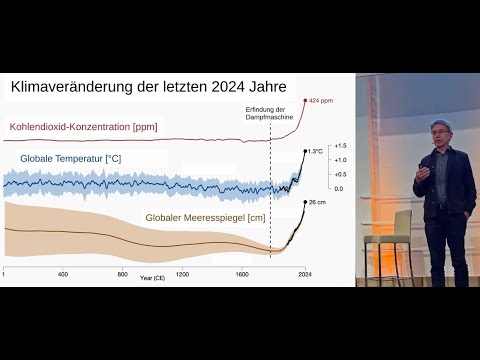
Wollt ihr euch nicht von Desinformation zum Klimawandel für dumm verkaufen lassen? Dann ist dieser Vortrag das Richtige! Er zeigt den Stand der Wissenschaft, aber auch die häufigsten Tricks der Klimatäuscher. Holt euch einen Tee und schaut gerne mal rein! youtu.be/fMcm1ku-NOw?si…
YouTube video
YouTube
Deutsch
93
594
1.3K
70.5K
Bernd Werse
Bernd Werse@CDR_FFM·
Jetzt online: unsere zweite Befragung zu Cannabis und Führerschein - wie wird seit CanG und rechtlichen Änderungen für den Straßenverkehr mit dem Thema umgegangen? Alle mit Führerschein und Cannabiskonsum in den letzten 12 Monaten hier entlang: survey.questionstar.com/77cea00e
Deutsch
19
109
186
26.5K
Simons
Simons@Simon_Ingari·
“Can I bring my baby to the interview?” The message came in at 11 PM: “Hi, I have an interview with you tomorrow at 2 PM. My childcare fell through. Can I bring my 8-month-old? I understand if you need to reschedule.” Old me would have rescheduled. Unprofessional. Distraction. Red flag. New me replied: “Absolutely. See you tomorrow.” She showed up with her baby on her hip. She apologized three times before even sitting down. Ten minutes in, the baby started crying. She tried to soothe him while answering questions. She apologized again. I stopped the interview and said: “Hey. You’re managing a fussy baby, answering complex questions, and staying calm under pressure. That’s literally the job. Handling chaos while staying professional. You’re already proving you can do it.” Her eyes filled with tears. We hired her. She’s been with us for a year now. The most reliable team member we have. Why? Because when you’re used to handling a screaming infant at 3 AM and still showing up to work the next day, workplace stress feels like nothing. Working parents, especially mothers, are some of the most organized, efficient, and resilient people you’ll ever hire. Yet we lose them because our hiring processes are built for people with zero caregiving responsibilities. If your interview process can’t accommodate a parent facing a childcare issue, you’re not filtering for professionalism. You’re filtering for privilege.
English
188
2.2K
20.7K
1.3M
Brian Allen
Brian Allen@allenanalysis·
Scottish comedian Lewis MacLeod just did a Donald Trump impression so accurate it feels like evidence.
English
917
17.5K
78.7K
2.9M
Rituraj
Rituraj@RituWithAI·
Anthropic claims this data is "private by design" and not used for model training. However, you are effectively handing the most sensitive data you own (your biology) to a cloud processor. As we learned with the VPNs, you are just shifting trust from your doctor to a San Francisco server rack. If you connect this, you aren't just "asking a chatbot"; you are giving an AI the ability to correlate your insomnia (Apple Health) with your late-night tweets (Context) and your cortisol spikes (Function). That is a level of surveillance that even the Stasi couldn't have dreamed of!
English
12
3
78
11.6K
Claude
Claude@claudeai·
Claude can now securely connect to your health data. Four new integrations are now available in beta: Apple Health (iOS), Health Connect (Android), HealthEx, and Function Health.
English
385
547
9.8K
1.2M
InternistWey👨‍⚕️
InternistWey👨‍⚕️@InternistWey·
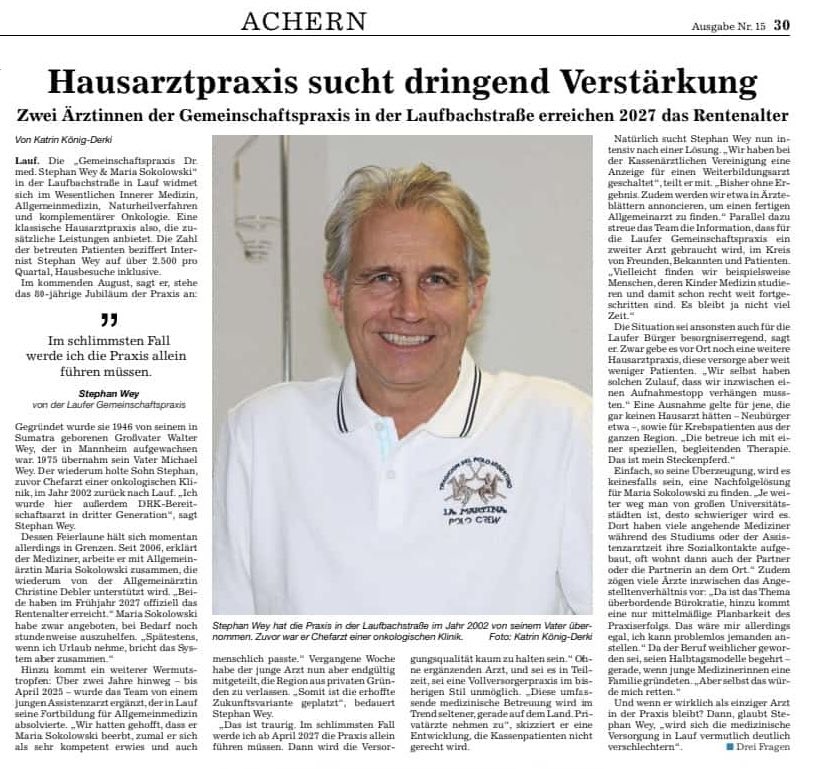
Liebe Follower, Freunde und die, die dieses Posting weitergeleitet (🙏🏻) sehen: Ich suche dringend eine Ärztin/Arzt, die/der auf Dauer mit mir in der hausärztlichen Praxis (am Rande Westflanke Schwarzwald, nahe Baden-Baden und Straßburg) arbeiten will, weil meine halbtags arbeitenden Kolleginnen zum 1. April 2027 das Rentenalter erreicht haben (siehe Zeitungsartikel von heute in der BNN). Unser Assistenzarzt, den wir ausgebildet haben, wird aus der Region wieder wegziehen. Alles weitere zu Möglichkeiten wie Übernahme Arztsitz oder Anstellung gerne über DM 🙏🏻
InternistWey👨‍⚕️ tweet media
Deutsch
59
624
1.1K
43.6K
Meta Alchemist
Meta Alchemist@meta_alchemist·
IdeaRalph MCP is almost ready. Who wants invitations?
English
1.2K
118
2K
98.8K