Cashless VC

732 posts

Cashless VC banner
Cashless VC

Cashless VC

@cashlessVC

Deploying zero-liquidity vehicles into frontier innovation markets.

Palo Alto, CA Entrou em Eylül 2015
146 Seguindo39 Seguidores
Cashless VC
Cashless VC@cashlessVC·
A second way to make this argument is just Cold War logic. The Cold War of the 21st century is not primarily about weapons. It is about how effectively you can turn your population into highly productive, technologically capable humans. Patriotic entrepreneurs. Russia is not especially competitive here. Even worse than struggling in Ukraine, it produces almost no consumer technology of value. I have never used a single piece of Russian software, with the partial exception of Escape from Tarkov, which is, in a way, a very on-brand product: a simulation of human suffering. China, meanwhile, is doing something different. DJI. A large number of electric vehicle companies. TikTok. Huawei. Shein. These are not accidents. They are downstream of a system that has decided, explicitly, to invest in producing capable people and competitive industries. The U.S. position is that it cannot afford to invest at that level. Which is a slightly odd stance to take in a competition that is, in large part, about the only thing the United States actually cares about — remaining the dominant economy and exporter of innovation globally. If the objective is to “win” this sort of Cold War, the strategy is not austerity. It is to produce the most capable, productive generation of people in the world, at scale. By investing in: education healthcare childcare economic stability
English
0
0
2
83
Cashless VC
Cashless VC@cashlessVC·
There is a somewhat strange tension in Republican messaging: On the one hand, luxury trad wife, pro-natalist ideals sit at its core — have more kids, return to family values. At the same time, its leaders insist that the United States cannot afford childcare, healthcare, paid leave, or other forms of material support for those same families. We are broke. You must live with austerity. The data, meanwhile, is not especially controversial: the primary constraint on whether young couples start families is financial. So the combined message is something like: you should have more children, but also the system will not meaningfully de-risk that decision for you. Which is honestly a pretty un-American pitch. This is the wealthiest country in history — a place where the cultural identity is that everything is supposed to be bigger, better, more ambitious. And yet the governing posture being offered is scarcity. There’s an obvious political opportunity here, which is to just reject that premise entirely and say: You are an American. You live in the richest country on earth. You should be treated like it. You should have freer healthcare than the French. You should have better paid leave than the Swedes. You should have more affordable childcare than the Germans. You should have better-funded schools than the Singaporeans. You should be able to raise a family on a more livable wage than anywhere in the world. Not as some aspirational program — as the baseline. A pro-family agenda is not telling people to have kids. It is making it economically viable to do so — and aligning the standard of living with the actual wealth of the country. And I don’t mean the next Democratic candidate should say this once in a debate. I think this should be the foundation of the entire platform — in the midterms, and more importantly, in the next presidential election. Because right now, the public perception is something like this: Democrats are neoliberal managers who capitulate to corporations, obsess over process, and confuse caution for virtue. Republicans are willing to break rules, make Democrats look like pussies, tell them to go fuck themselves (which, to be clear, polls), and “get things done” — even when what they’re actually getting done is austerity for everyone below the oligarch class. The only path forward is to reverse that polarity. Democrats need to make the case that Republican austerity is not strength. It is weakness. It is asking the richest country in the world to behave like it’s broke. Which is honestly more pussy than being a rule-following neoliberal. The actually bold position is simple: The richest country in the world should deliver the highest standard of family life in the world — and then govern accordingly.
English
1
1
2
134
Cashless VC
Cashless VC@cashlessVC·
Cashless VC@cashlessVC

Washington has no master plan, yet analysts keep hunting for one. For nearly 20 years, Netanyahu has pushed every U.S. president toward confrontation with Iran. Bush resisted. Obama resisted. Trump is the first president “persuadable” enough — or stupid enough — to go along with it. Probably both. The real question isn't China or oil. It's Netanyahu's long-term strategy. Netanyahu's plan has always been what analysts warned about for decades: the Balkanization of the Middle East — slow fragmentation into smaller, divided power centers instead of coherent rivals. Chronic instability like that ultimately strengthens Israel's position. Israel's Western standing has tanked over the past two years, especially with younger people. The "Israel vs Gaza" frame keeps eroding support in Europe and North America. A wider regional crisis flips it: Iranian escalation, proxy wars, multi-front attacks, Gulf threats → narrative shifts to "Israel as the only stable power in a collapsing region." Israel then sells itself as the indispensable security anchor Western powers rely on to manage the chaos. This aligns perfectly with Netanyahu's incentives. The irony? Analysts long warned a major Iran war would yield exactly this: fragmentation, not decisive victory. So if this was Netanyahu's objective, what the hell was Trump's plan? Part of it is political psychology. Trump sees himself as the guy who gets things done where others hesitated. Past presidents avoiding Iran? Not caution — weakness. They were too much of a pussy to pull the trigger. If everyone refused, doing it becomes the win itself. You can hear it already: Trump "solves" Iran, succeeds where all failed. But why did previous presidents stay away? Because it's fucking stupid. Serious models show war with Iran brings regional fragmentation, endless proxies, decades of instability — disaster for nearly everyone. Prior presidents saw it as political suicide. Trump sees the same warnings and thinks “opportunity.” Israelis get a more volatile region. Iranians face devastation. The Middle East gets endless chaos. Yet one actor benefits from permanent instability: Netanyahu. In a fragmented region where rivals bleed each other, Israel positions as the indispensable military/security power — locking in his domestic grip too. This is classic geopolitics: leaders under pressure use external conflict to rally around security/survival. Putin did it with Chechnya, Georgia, Ukraine. TBH, Putin is probably jealous of Bibi right now. He wishes Ukrainians were brown people who worshipped Allah — it'd be way easier for Western support on his "anti-terror" framing. Same model: instability abroad → power at home. But high-risk: in today's world it likely backfires and collapses both regimes. People want reliable healthcare, better sleep, work-life balance, small indulgences, mental wellness apps, fast delivery, financial security, and peaceful chilling — not endless war and nationalism. For context, I've written on: • Balkanization as likely Iran war outcome • Spiking energy prices baked in • China's structural pressures (oil shock or not) • How prolonged conflict could destabilize Israel too Links below. Bottom line: this will not be a short crisis. It’s the start of another half-century of Middle Eastern fragmentation — with Israel as the only "stable" power in permanent chaos.


QME
0
0
1
140
Joe Kent
Joe Kent@joekent16jan19·
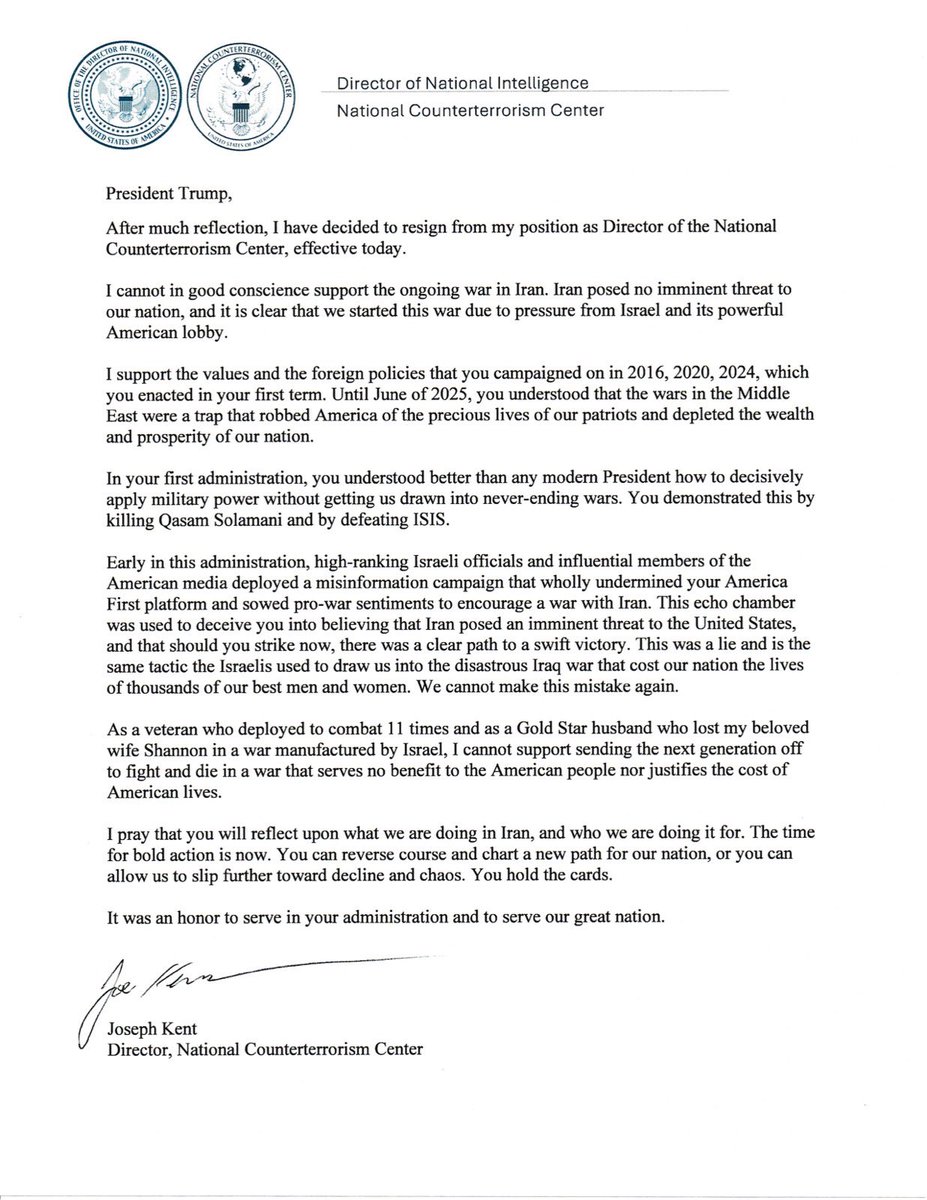
After much reflection, I have decided to resign from my position as Director of the National Counterterrorism Center, effective today. I cannot in good conscience support the ongoing war in Iran. Iran posed no imminent threat to our nation, and it is clear that we started this war due to pressure from Israel and its powerful American lobby. It has been an honor serving under @POTUS and @DNIGabbard and leading the professionals at NCTC. May God bless America.
Joe Kent tweet media
English
73.3K
218.5K
847.1K
102.7M
Cashless VC
Cashless VC@cashlessVC·
Cashless VC@cashlessVC

Washington has no master plan, yet analysts keep hunting for one. For nearly 20 years, Netanyahu has pushed every U.S. president toward confrontation with Iran. Bush resisted. Obama resisted. Trump is the first president “persuadable” enough — or stupid enough — to go along with it. Probably both. The real question isn't China or oil. It's Netanyahu's long-term strategy. Netanyahu's plan has always been what analysts warned about for decades: the Balkanization of the Middle East — slow fragmentation into smaller, divided power centers instead of coherent rivals. Chronic instability like that ultimately strengthens Israel's position. Israel's Western standing has tanked over the past two years, especially with younger people. The "Israel vs Gaza" frame keeps eroding support in Europe and North America. A wider regional crisis flips it: Iranian escalation, proxy wars, multi-front attacks, Gulf threats → narrative shifts to "Israel as the only stable power in a collapsing region." Israel then sells itself as the indispensable security anchor Western powers rely on to manage the chaos. This aligns perfectly with Netanyahu's incentives. The irony? Analysts long warned a major Iran war would yield exactly this: fragmentation, not decisive victory. So if this was Netanyahu's objective, what the hell was Trump's plan? Part of it is political psychology. Trump sees himself as the guy who gets things done where others hesitated. Past presidents avoiding Iran? Not caution — weakness. They were too much of a pussy to pull the trigger. If everyone refused, doing it becomes the win itself. You can hear it already: Trump "solves" Iran, succeeds where all failed. But why did previous presidents stay away? Because it's fucking stupid. Serious models show war with Iran brings regional fragmentation, endless proxies, decades of instability — disaster for nearly everyone. Prior presidents saw it as political suicide. Trump sees the same warnings and thinks “opportunity.” Israelis get a more volatile region. Iranians face devastation. The Middle East gets endless chaos. Yet one actor benefits from permanent instability: Netanyahu. In a fragmented region where rivals bleed each other, Israel positions as the indispensable military/security power — locking in his domestic grip too. This is classic geopolitics: leaders under pressure use external conflict to rally around security/survival. Putin did it with Chechnya, Georgia, Ukraine. TBH, Putin is probably jealous of Bibi right now. He wishes Ukrainians were brown people who worshipped Allah — it'd be way easier for Western support on his "anti-terror" framing. Same model: instability abroad → power at home. But high-risk: in today's world it likely backfires and collapses both regimes. People want reliable healthcare, better sleep, work-life balance, small indulgences, mental wellness apps, fast delivery, financial security, and peaceful chilling — not endless war and nationalism. For context, I've written on: • Balkanization as likely Iran war outcome • Spiking energy prices baked in • China's structural pressures (oil shock or not) • How prolonged conflict could destabilize Israel too Links below. Bottom line: this will not be a short crisis. It’s the start of another half-century of Middle Eastern fragmentation — with Israel as the only "stable" power in permanent chaos.

QME
0
0
0
6
Armchair Warlord
Armchair Warlord@ArmchairW·
A little note about war planning.⬇️ Over the years I've come to the conclusion that the scenario that often ends up playing out in war - and the one that actually has to be mitigated if planning is to be successful - is one that's beyond the worst-case scenario envisioned prior to the operation. This is because the people thinking up those worst-case scenarios are staff officers who suffer from institutional pressure to stick within conventional wisdom and keep the boss happy by telling him that, yes, this operation is actually possible and not a terrible idea. Meanwhile the enemy can be expected to ruthlessly take advantage of every possible opening because he is smart, tough, and motivated - and the first and foremost gap that the enemy slides through is the one between conventional expectations and battlefield realities. Let's apply this to Iran. The worst-case scenario envisioned by the yes-men in the Pentagon was probably that the campaign might take several weeks because the US and Israel could be expected to quickly breach the Iranian anti-access/area-denial (A2AD) "system of systems" and effective conventional bombing would break Iran's will to resist in a manner similar to Serbia in 1999. This was the "long" war plan which was floated prewar and reflected in the statements of US and Israeli officials in the first hours of the war - that this operation would take, at most, a few weeks. The Iranian population was also assumed to despise the regime, and would quickly rise up against it if given the opportunity. Furthermore the Iranian leadership was apparently assumed to be basically corrupt and mercenary (see claims that the Ayatollah controlled a vast personal fortune), and would not risk their valuable oil industry by either closing the Strait of Hormuz or inviting counterattack from striking Gulf Arab oil sites. This scenario was probably put up as a "Most Dangerous Course of Action" on the briefing slides - the "Most Likely" course of action was probably regime collapse after Khamenei was killed. This all briefs very well to someone like Hegseth, who wants to be told how we can do something rather than all the reasons why we shouldn't. The actual battlefield scenario we're facing right now - on D+12 and with absolutely no end in sight - is far worse than what was, in retrospect, an absurdly optimistic prewar assessment. Iran's A2AD network is still very intact, the Iranian population rallied around the flag, and Khamenei turned out to have been a respected, moderate octogenarian who was restraining the regime hardliners who were happy to set the Middle East on fire just to get at the US and Israel - not the other way around. Thus we see talk of ground troops - and a militarily implausible, open-ended invasion of Iran. We leapt into the abyss thinking it was a kiddie pool. This is something of an aside, but it's also occurred to me that this absurd analytical failure - an almost total misread of the political and military situation in Iran on the part of the US military and intelligence services - can best be explained by something I've also noticed and commented upon with respect to Ukraine. We're outsourcing not just our intelligence data but also our analysis to third parties. As shown in the Texeira Leaks, SACEUR was getting briefed raw, unquestioned Ukrainian cope propaganda as the TS level because we'd apparently outsourced our intelligence collection and assessments to the GUR and brOSINT and had no institutional capability to even sanity check the story that we were being told, or political will to suggest that this was even necessary. Going into Iran CENTCOM was likely sold a bill of goods by Mossad in the exact same way, with the exact same constraints of analytical competence and politics preventing critical assessment of whatever rosy picture the Israelis were painting of a short, victorious war.
Armchair Warlord tweet media
English
153
517
2.5K
152K
Cashless VC
Cashless VC@cashlessVC·
Cashless VC@cashlessVC

Washington has no master plan, yet analysts keep hunting for one. For nearly 20 years, Netanyahu has pushed every U.S. president toward confrontation with Iran. Bush resisted. Obama resisted. Trump is the first president “persuadable” enough — or stupid enough — to go along with it. Probably both. The real question isn't China or oil. It's Netanyahu's long-term strategy. Netanyahu's plan has always been what analysts warned about for decades: the Balkanization of the Middle East — slow fragmentation into smaller, divided power centers instead of coherent rivals. Chronic instability like that ultimately strengthens Israel's position. Israel's Western standing has tanked over the past two years, especially with younger people. The "Israel vs Gaza" frame keeps eroding support in Europe and North America. A wider regional crisis flips it: Iranian escalation, proxy wars, multi-front attacks, Gulf threats → narrative shifts to "Israel as the only stable power in a collapsing region." Israel then sells itself as the indispensable security anchor Western powers rely on to manage the chaos. This aligns perfectly with Netanyahu's incentives. The irony? Analysts long warned a major Iran war would yield exactly this: fragmentation, not decisive victory. So if this was Netanyahu's objective, what the hell was Trump's plan? Part of it is political psychology. Trump sees himself as the guy who gets things done where others hesitated. Past presidents avoiding Iran? Not caution — weakness. They were too much of a pussy to pull the trigger. If everyone refused, doing it becomes the win itself. You can hear it already: Trump "solves" Iran, succeeds where all failed. But why did previous presidents stay away? Because it's fucking stupid. Serious models show war with Iran brings regional fragmentation, endless proxies, decades of instability — disaster for nearly everyone. Prior presidents saw it as political suicide. Trump sees the same warnings and thinks “opportunity.” Israelis get a more volatile region. Iranians face devastation. The Middle East gets endless chaos. Yet one actor benefits from permanent instability: Netanyahu. In a fragmented region where rivals bleed each other, Israel positions as the indispensable military/security power — locking in his domestic grip too. This is classic geopolitics: leaders under pressure use external conflict to rally around security/survival. Putin did it with Chechnya, Georgia, Ukraine. TBH, Putin is probably jealous of Bibi right now. He wishes Ukrainians were brown people who worshipped Allah — it'd be way easier for Western support on his "anti-terror" framing. Same model: instability abroad → power at home. But high-risk: in today's world it likely backfires and collapses both regimes. People want reliable healthcare, better sleep, work-life balance, small indulgences, mental wellness apps, fast delivery, financial security, and peaceful chilling — not endless war and nationalism. For context, I've written on: • Balkanization as likely Iran war outcome • Spiking energy prices baked in • China's structural pressures (oil shock or not) • How prolonged conflict could destabilize Israel too Links below. Bottom line: this will not be a short crisis. It’s the start of another half-century of Middle Eastern fragmentation — with Israel as the only "stable" power in permanent chaos.

QME
0
0
0
2
Iman Jalali
Iman Jalali@Stealx·
I'm Iranian-American. I hold both of those identities and I won't apologize for either one. As an American, I want this country to be smart. Not just strong. Smart. And what I'm watching right now is the opposite of smart. It's the same playbook we've run decade after decade. Overwhelming force, premature victory laps and zero understanding of what the other side is actually doing. As someone of Iranian descent, I know something most American analysts don't: The regime has been thinking about this war for 40 years. Not hoping for it. Preparing for it. Everything designed around: "What do we do when America comes?" The answer was never "win a dogfight." The answer was: Death by a thousand cuts. Make the Strait impassable and make the missile defense systems run dry. Make the world economy scream. Make the Gulf countries question their choices. And that's what we're seeing as our media is high fiving over destroying the Iranian Navy, a Navy that was laughable or Iran's fighter jets, which were so out of date that nobody ever thought Iran had a real air force. I'm not rooting for Iran. I have family there who are terrified. I'm rooting for America to be honest with itself. I've watched us confuse blowing things up with winning my entire adult life. At some point, you have to ask, if we keep winning wars like this, why does nothing ever get better? This isn't about being anti-war or anti-American. It's about being anti-stupid.
English
275
384
2.1K
228.8K
Cashless VC
Cashless VC@cashlessVC·
Cashless VC@cashlessVC

Washington has no master plan, yet analysts keep hunting for one. For nearly 20 years, Netanyahu has pushed every U.S. president toward confrontation with Iran. Bush resisted. Obama resisted. Trump is the first president “persuadable” enough — or stupid enough — to go along with it. Probably both. The real question isn't China or oil. It's Netanyahu's long-term strategy. Netanyahu's plan has always been what analysts warned about for decades: the Balkanization of the Middle East — slow fragmentation into smaller, divided power centers instead of coherent rivals. Chronic instability like that ultimately strengthens Israel's position. Israel's Western standing has tanked over the past two years, especially with younger people. The "Israel vs Gaza" frame keeps eroding support in Europe and North America. A wider regional crisis flips it: Iranian escalation, proxy wars, multi-front attacks, Gulf threats → narrative shifts to "Israel as the only stable power in a collapsing region." Israel then sells itself as the indispensable security anchor Western powers rely on to manage the chaos. This aligns perfectly with Netanyahu's incentives. The irony? Analysts long warned a major Iran war would yield exactly this: fragmentation, not decisive victory. So if this was Netanyahu's objective, what the hell was Trump's plan? Part of it is political psychology. Trump sees himself as the guy who gets things done where others hesitated. Past presidents avoiding Iran? Not caution — weakness. They were too much of a pussy to pull the trigger. If everyone refused, doing it becomes the win itself. You can hear it already: Trump "solves" Iran, succeeds where all failed. But why did previous presidents stay away? Because it's fucking stupid. Serious models show war with Iran brings regional fragmentation, endless proxies, decades of instability — disaster for nearly everyone. Prior presidents saw it as political suicide. Trump sees the same warnings and thinks “opportunity.” Israelis get a more volatile region. Iranians face devastation. The Middle East gets endless chaos. Yet one actor benefits from permanent instability: Netanyahu. In a fragmented region where rivals bleed each other, Israel positions as the indispensable military/security power — locking in his domestic grip too. This is classic geopolitics: leaders under pressure use external conflict to rally around security/survival. Putin did it with Chechnya, Georgia, Ukraine. TBH, Putin is probably jealous of Bibi right now. He wishes Ukrainians were brown people who worshipped Allah — it'd be way easier for Western support on his "anti-terror" framing. Same model: instability abroad → power at home. But high-risk: in today's world it likely backfires and collapses both regimes. People want reliable healthcare, better sleep, work-life balance, small indulgences, mental wellness apps, fast delivery, financial security, and peaceful chilling — not endless war and nationalism. For context, I've written on: • Balkanization as likely Iran war outcome • Spiking energy prices baked in • China's structural pressures (oil shock or not) • How prolonged conflict could destabilize Israel too Links below. Bottom line: this will not be a short crisis. It’s the start of another half-century of Middle Eastern fragmentation — with Israel as the only "stable" power in permanent chaos.
QME
0
0
0
12
Steve Skojec
Steve Skojec@SteveSkojec·
Trump: "We could take apart their electric capacity within 1 hour, and it would take them 25 years to rebuild. So ideally, we're not going to be doing that." He isn't exaggerating. One of the weird infrastructure quirks most people don't know about power grids is that they are dependent on something called Large Power Transformers (LPTs), and they are custom built, freaking MASSIVE, have limited sourcing for components, and take over 2 years from design to buildout in most cases. They weigh up to 400 tons. They can be up to two stories tall. You can't just ship them -- you need special equipment to move them. It's incredibly costly just to move them, even in the best of circumstances. And they're backlogged. Costs to replace them all would be 11 figures -- tens of billions. They'd have to get past sanctions. They'd be competing for scarce resources among high demand. Yet another example of American restraint in this operation. The Iranians wouldn't think twice about destroying electric grids.
English
869
1.1K
12.3K
3.3M
Cashless VC
Cashless VC@cashlessVC·
Cashless VC@cashlessVC

Washington has no master plan, yet analysts keep hunting for one. For nearly 20 years, Netanyahu has pushed every U.S. president toward confrontation with Iran. Bush resisted. Obama resisted. Trump is the first president “persuadable” enough — or stupid enough — to go along with it. Probably both. The real question isn't China or oil. It's Netanyahu's long-term strategy. Netanyahu's plan has always been what analysts warned about for decades: the Balkanization of the Middle East — slow fragmentation into smaller, divided power centers instead of coherent rivals. Chronic instability like that ultimately strengthens Israel's position. Israel's Western standing has tanked over the past two years, especially with younger people. The "Israel vs Gaza" frame keeps eroding support in Europe and North America. A wider regional crisis flips it: Iranian escalation, proxy wars, multi-front attacks, Gulf threats → narrative shifts to "Israel as the only stable power in a collapsing region." Israel then sells itself as the indispensable security anchor Western powers rely on to manage the chaos. This aligns perfectly with Netanyahu's incentives. The irony? Analysts long warned a major Iran war would yield exactly this: fragmentation, not decisive victory. So if this was Netanyahu's objective, what the hell was Trump's plan? Part of it is political psychology. Trump sees himself as the guy who gets things done where others hesitated. Past presidents avoiding Iran? Not caution — weakness. They were too much of a pussy to pull the trigger. If everyone refused, doing it becomes the win itself. You can hear it already: Trump "solves" Iran, succeeds where all failed. But why did previous presidents stay away? Because it's fucking stupid. Serious models show war with Iran brings regional fragmentation, endless proxies, decades of instability — disaster for nearly everyone. Prior presidents saw it as political suicide. Trump sees the same warnings and thinks “opportunity.” Israelis get a more volatile region. Iranians face devastation. The Middle East gets endless chaos. Yet one actor benefits from permanent instability: Netanyahu. In a fragmented region where rivals bleed each other, Israel positions as the indispensable military/security power — locking in his domestic grip too. This is classic geopolitics: leaders under pressure use external conflict to rally around security/survival. Putin did it with Chechnya, Georgia, Ukraine. TBH, Putin is probably jealous of Bibi right now. He wishes Ukrainians were brown people who worshipped Allah — it'd be way easier for Western support on his "anti-terror" framing. Same model: instability abroad → power at home. But high-risk: in today's world it likely backfires and collapses both regimes. People want reliable healthcare, better sleep, work-life balance, small indulgences, mental wellness apps, fast delivery, financial security, and peaceful chilling — not endless war and nationalism. For context, I've written on: • Balkanization as likely Iran war outcome • Spiking energy prices baked in • China's structural pressures (oil shock or not) • How prolonged conflict could destabilize Israel too Links below. Bottom line: this will not be a short crisis. It’s the start of another half-century of Middle Eastern fragmentation — with Israel as the only "stable" power in permanent chaos.

QME
0
0
0
36
Shaiel Ben-Ephraim
Shaiel Ben-Ephraim@academic_la·
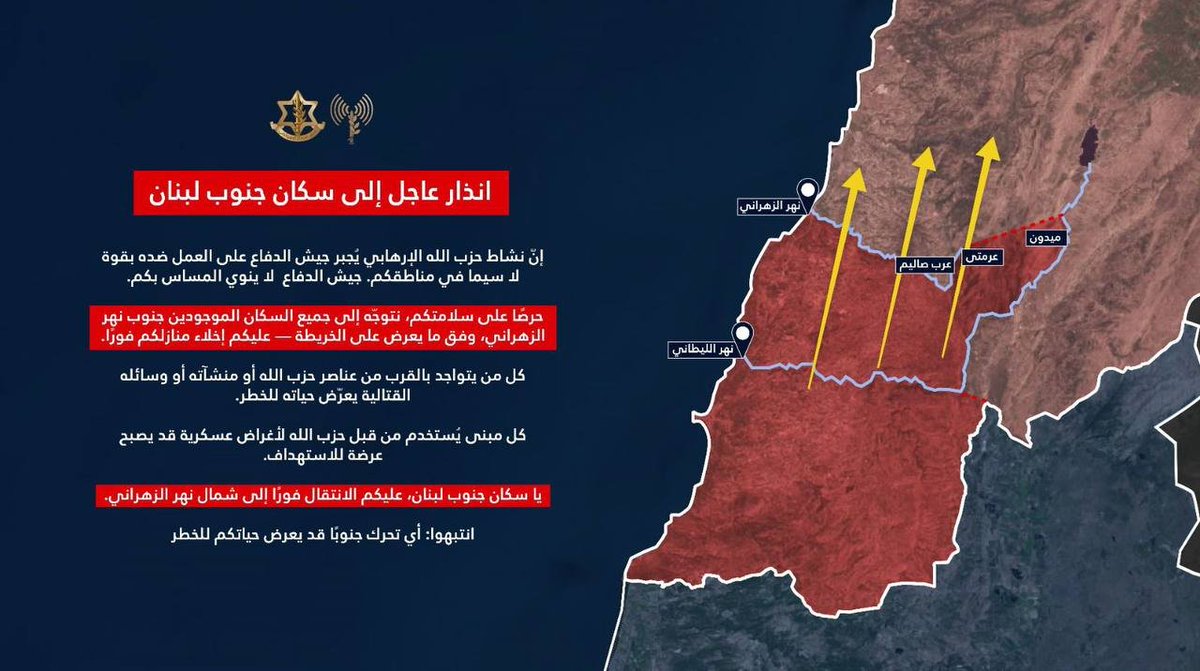
Israel has ordered that all civilians evacuate a zone of 25 miles from the Israeli border. The area includes 10% of the territory of Lebanon and is home to approximately 1 million people. The order is indefinite and will follow the model of Gaza where anybody who is in this area will be killed. This is de facto annexation and ethnic cleansing.
Shaiel Ben-Ephraim tweet media
English
314
3.2K
6K
680.7K
Cashless VC
Cashless VC@cashlessVC·
3/ If that’s even roughly right, then a lot of the economics of AI may turn out to be migration economics rather than steady-state economics. The early phase rewards whoever can produce scarce tokens. The mature phase may reward whoever knows what to do once tokens are no longer scarce — or no longer the interesting bottleneck at all. That also makes some recent market narratives look a little backwards. The market spent much of the last year worrying that AI would wipe out SaaS companies. But if intelligence itself becomes cheap, abundant, self-tuning, and increasingly commoditized, the durable economics may belong less to whoever manufactures the tokens and more to the companies that organize the workflows those tokens are actually serving. In other words, the technology that created the AI arms race may also be the technology that eventually makes the race itself unnecessary.
English
0
0
1
67
Cashless VC
Cashless VC@cashlessVC·
2/ You can think about token demand with a simple equation: Total token demand = (tokens required per task) × (number of AI tasks). Start with the first number. The number of tokens required per task is likely to fall, maybe a lot. Models are already getting better at doing the same work with fewer tokens through better architectures, routing, distillation, and specialized inference. Some adaptive reasoning work already shows meaningful reductions in token usage while preserving similar performance. And that is before the more aggressive version of the story, where models increasingly self-tune and learn how to allocate reasoning more efficiently on their own. In other words, the amount of intelligence produced per token keeps going up. Then there is the second number. Right now the number of AI tasks is exploding because companies are in the obvious phase of the cycle — the AI-ify everything phase. Support tickets, search, coding, documentation, analytics, planning, compliance, all of it. But that number probably does not grow forever. Eventually a mature company runs out of obvious things to AI-ify. At that point the number of AI-mediated tasks stops being driven by discovery and starts being driven by routine usage. It plateaus. And it may not stop there. A lot of what we call “tasks” inside modern software systems are really artifacts of how humans organize work. Much of software complexity exists because humans are bad at coordinating large systems, so we invented microservices. One team owns payments, another identity, another search, another notifications, and all of those services talk to each other through APIs, queues, orchestration layers, monitoring stacks, and glue code. Microservices are often described as a technical architecture, but in practice they are often an organizational architecture — a way of slicing systems so groups of humans can work on them without stepping on each other. But the org chart isn’t a law of physics. If AI becomes good enough to understand and refactor systems end to end, it may not just perform the existing tasks more cheaply. It may start reorganizing the system that created those tasks in the first place — collapsing services, removing orchestration layers, eliminating duplicated logic, and deleting large amounts of glue code that exist mostly to coordinate teams around other software. The mature AI company may therefore not look like today’s company with AI sprinkled everywhere. It may look like a company with fewer systems, fewer moving parts, and fewer tasks to perform at all. And that leads to the slightly strange possibility here: AI can keep getting better. The supply of intelligence can keep going up. But demand for raw tokens can still saturate, because the economy eventually runs out of new AI tasks to create and then begins removing many of the tasks it previously needed. So the long-run path may not be: more AI → more tokens forever It may be: better AI → fewer tokens per task → fewer tasks → less token demand overall
English
1
0
0
96
Cashless VC
Cashless VC@cashlessVC·
1/ One way to think about the AI boom is that the world has discovered a new commodity called tokens. You put electricity into a GPU and out come tokens. You put tokens into software and out comes work. Tokens summarize documents, answer questions, write code, route customer support, and generally act as small units of machine cognition. A lot of the economics of AI right now rests on a simple assumption: the world will need vastly more tokens every year. That assumption sits underneath the whole stack — the data-center buildout, the chip-scarcity story, and the race to train ever larger models. Maybe that’s right. But there’s another possibility: token satiation. This sort of dynamic has shown up before in technology markets. During the cloud migration era, compute demand looked almost infinite because every company was discovering new things to move into elastic infrastructure. Every new product required servers, every feature required compute, and for a while it seemed like the curve might just keep going up forever. Then the migration matured. Compute stopped being a frontier and became infrastructure. Mature companies didn’t keep discovering infinite new workloads to run in the cloud. They just ran the business there. Not because cloud failed — because it worked. AI may follow the same arc. 🧵
English
1
0
1
111
Cashless VC
Cashless VC@cashlessVC·
Cashless VC@cashlessVC

I keep hearing the Iran/Venezuela conflicts are about protecting the petrodollar or crippling China. Sounds sick to project 4D-chess-level intellect onto our illustrious leaders… But it doesn’t really add up. The petrodollar theory is simple: oil is priced in USD, exporters recycle those dollars into U.S. assets like Treasuries, and the U.S. defends that system geopolitically. And yes — the suspicion isn’t crazy. Iraq actually switched its oil sales to euros in 2000. Three years later the U.S. invaded over “WMDs,” and Iraqi oil sales reverted to dollars. Draw your own conclusions. But that logic breaks down pretty quickly when you look at the countries people point to. Venezuela has massive reserves but produces <1% of global supply. Most of its oil is ultra-heavy crude from the Orinoco Belt, which requires specialized upgrading and huge capital investment to extract and refine. After decades of industry collapse, analysts estimate it would take tens of billions of dollars and many years just to meaningfully increase production. So in the short-term scheme of things Venezuela doesn’t really fucking matter to global oil markets. If Venezuelan oil were the real objective, the U.S. would be investing in pipelines and refineries — not fighting wars halfway across the Middle East. Iran matters more (~1.5–2M bpd exports), and most of that oil ultimately ends up in China. And this is where the theory really starts to fall apart. Over the past decade China and Russia have built alternative financial infrastructure specifically to reduce exposure to U.S. leverage: • CIPS (China’s SWIFT alternative) • yuan-denominated settlement • bilateral currency swaps replacing dollar trade • shadow tanker fleets moving sanctioned oil • intermediary traders and non-Western insurance networks Millions of barrels already move through this parallel energy market. If you think China is going to willingly route critical energy trade through SWIFT, you misunderstand China completely. From Beijing’s perspective SWIFT means the U.S. can monitor, sanction, and ultimately control the financial rails. China’s strategy is reducing exposure to that leverage, not increasing it. Even with Iranian exports disappearing, China isn’t suddenly routing its oil trade through the dollar system — it will simply buy from other suppliers. Petrodollar believers argue that this would force China to purchase from Saudi Arabia or other Gulf producers who price oil in USD. But the currency used for settlement is far more flexible than people assume, and China has spent the last decade building alternatives precisely so it doesn’t have to depend on the dollar system. More importantly, the dollar’s dominance was never really built on oil pricing in the first place. It comes from global finance: U.S. Treasury markets, dollar liquidity, trade finance, derivatives markets, and the sheer scale of American capital markets. Oil being priced in dollars is a symptom of that system — not its foundation. The other theory I hear is that this war is about weakening China’s energy supply ahead of a possible U.S.–China confrontation around 2027. But that explanation struggles too. If Washington were preparing for a near-term China conflict, you’d expect maximum focus in the Indo-Pacific. Instead we’re seeing missile defense systems and naval assets redirected from Asia toward the Middle East — while the Iran war is already consuming years of military bandwidth and resources. Which is the opposite of what you’d do if China were the real priority. So both explanations — petrodollar defense and China energy containment — give Washington far too much strategic coherence. My view: this war isn’t really about the petrodollar or China — it’s about Netanyahu’s long-term strategy to fragment the Middle East into weaker rivals. I break that argument down in a separate thread linked below.

QME
0
0
0
2
Cashless VC
Cashless VC@cashlessVC·
Cashless VC@cashlessVC

I keep hearing the Iran/Venezuela conflicts are about protecting the petrodollar or crippling China. Sounds sick to project 4D-chess-level intellect onto our illustrious leaders… But it doesn’t really add up. The petrodollar theory is simple: oil is priced in USD, exporters recycle those dollars into U.S. assets like Treasuries, and the U.S. defends that system geopolitically. And yes — the suspicion isn’t crazy. Iraq actually switched its oil sales to euros in 2000. Three years later the U.S. invaded over “WMDs,” and Iraqi oil sales reverted to dollars. Draw your own conclusions. But that logic breaks down pretty quickly when you look at the countries people point to. Venezuela has massive reserves but produces <1% of global supply. Most of its oil is ultra-heavy crude from the Orinoco Belt, which requires specialized upgrading and huge capital investment to extract and refine. After decades of industry collapse, analysts estimate it would take tens of billions of dollars and many years just to meaningfully increase production. So in the short-term scheme of things Venezuela doesn’t really fucking matter to global oil markets. If Venezuelan oil were the real objective, the U.S. would be investing in pipelines and refineries — not fighting wars halfway across the Middle East. Iran matters more (~1.5–2M bpd exports), and most of that oil ultimately ends up in China. And this is where the theory really starts to fall apart. Over the past decade China and Russia have built alternative financial infrastructure specifically to reduce exposure to U.S. leverage: • CIPS (China’s SWIFT alternative) • yuan-denominated settlement • bilateral currency swaps replacing dollar trade • shadow tanker fleets moving sanctioned oil • intermediary traders and non-Western insurance networks Millions of barrels already move through this parallel energy market. If you think China is going to willingly route critical energy trade through SWIFT, you misunderstand China completely. From Beijing’s perspective SWIFT means the U.S. can monitor, sanction, and ultimately control the financial rails. China’s strategy is reducing exposure to that leverage, not increasing it. Even with Iranian exports disappearing, China isn’t suddenly routing its oil trade through the dollar system — it will simply buy from other suppliers. Petrodollar believers argue that this would force China to purchase from Saudi Arabia or other Gulf producers who price oil in USD. But the currency used for settlement is far more flexible than people assume, and China has spent the last decade building alternatives precisely so it doesn’t have to depend on the dollar system. More importantly, the dollar’s dominance was never really built on oil pricing in the first place. It comes from global finance: U.S. Treasury markets, dollar liquidity, trade finance, derivatives markets, and the sheer scale of American capital markets. Oil being priced in dollars is a symptom of that system — not its foundation. The other theory I hear is that this war is about weakening China’s energy supply ahead of a possible U.S.–China confrontation around 2027. But that explanation struggles too. If Washington were preparing for a near-term China conflict, you’d expect maximum focus in the Indo-Pacific. Instead we’re seeing missile defense systems and naval assets redirected from Asia toward the Middle East — while the Iran war is already consuming years of military bandwidth and resources. Which is the opposite of what you’d do if China were the real priority. So both explanations — petrodollar defense and China energy containment — give Washington far too much strategic coherence. My view: this war isn’t really about the petrodollar or China — it’s about Netanyahu’s long-term strategy to fragment the Middle East into weaker rivals. I break that argument down in a separate thread linked below.

QME
0
0
0
1
Robert A. Pape
Robert A. Pape@ProfessorPape·
Iran war is becoming a global disaster. US cannot declare victory without the Strait of Hormuz being open. Regardless of Trump’s victory rhetoric, oil prices soaring.  Major inflation coming fast.  Victory rhetoric meets the Escalation Trap.
Robert A. Pape tweet media
English
106
584
1.5K
79.7K
Cashless VC
Cashless VC@cashlessVC·
Cashless VC@cashlessVC

I keep hearing the Iran/Venezuela conflicts are about protecting the petrodollar or crippling China. Sounds sick to project 4D-chess-level intellect onto our illustrious leaders… But it doesn’t really add up. The petrodollar theory is simple: oil is priced in USD, exporters recycle those dollars into U.S. assets like Treasuries, and the U.S. defends that system geopolitically. And yes — the suspicion isn’t crazy. Iraq actually switched its oil sales to euros in 2000. Three years later the U.S. invaded over “WMDs,” and Iraqi oil sales reverted to dollars. Draw your own conclusions. But that logic breaks down pretty quickly when you look at the countries people point to. Venezuela has massive reserves but produces <1% of global supply. Most of its oil is ultra-heavy crude from the Orinoco Belt, which requires specialized upgrading and huge capital investment to extract and refine. After decades of industry collapse, analysts estimate it would take tens of billions of dollars and many years just to meaningfully increase production. So in the short-term scheme of things Venezuela doesn’t really fucking matter to global oil markets. If Venezuelan oil were the real objective, the U.S. would be investing in pipelines and refineries — not fighting wars halfway across the Middle East. Iran matters more (~1.5–2M bpd exports), and most of that oil ultimately ends up in China. And this is where the theory really starts to fall apart. Over the past decade China and Russia have built alternative financial infrastructure specifically to reduce exposure to U.S. leverage: • CIPS (China’s SWIFT alternative) • yuan-denominated settlement • bilateral currency swaps replacing dollar trade • shadow tanker fleets moving sanctioned oil • intermediary traders and non-Western insurance networks Millions of barrels already move through this parallel energy market. If you think China is going to willingly route critical energy trade through SWIFT, you misunderstand China completely. From Beijing’s perspective SWIFT means the U.S. can monitor, sanction, and ultimately control the financial rails. China’s strategy is reducing exposure to that leverage, not increasing it. Even with Iranian exports disappearing, China isn’t suddenly routing its oil trade through the dollar system — it will simply buy from other suppliers. Petrodollar believers argue that this would force China to purchase from Saudi Arabia or other Gulf producers who price oil in USD. But the currency used for settlement is far more flexible than people assume, and China has spent the last decade building alternatives precisely so it doesn’t have to depend on the dollar system. More importantly, the dollar’s dominance was never really built on oil pricing in the first place. It comes from global finance: U.S. Treasury markets, dollar liquidity, trade finance, derivatives markets, and the sheer scale of American capital markets. Oil being priced in dollars is a symptom of that system — not its foundation. The other theory I hear is that this war is about weakening China’s energy supply ahead of a possible U.S.–China confrontation around 2027. But that explanation struggles too. If Washington were preparing for a near-term China conflict, you’d expect maximum focus in the Indo-Pacific. Instead we’re seeing missile defense systems and naval assets redirected from Asia toward the Middle East — while the Iran war is already consuming years of military bandwidth and resources. Which is the opposite of what you’d do if China were the real priority. So both explanations — petrodollar defense and China energy containment — give Washington far too much strategic coherence. My view: this war isn’t really about the petrodollar or China — it’s about Netanyahu’s long-term strategy to fragment the Middle East into weaker rivals. I break that argument down in a separate thread linked below.

QME
0
0
0
0
BNO News Live
BNO News Live@BNODesk·
NEW: Video shows moment Iranian boat filled with explosives hits U.S.-owned oil tanker in the Persian Gulf
English
40
292
2.3K
384.3K
Cashless VC
Cashless VC@cashlessVC·
Cashless VC@cashlessVC

I keep hearing the Iran/Venezuela conflicts are about protecting the petrodollar or crippling China. Sounds sick to project 4D-chess-level intellect onto our illustrious leaders… But it doesn’t really add up. The petrodollar theory is simple: oil is priced in USD, exporters recycle those dollars into U.S. assets like Treasuries, and the U.S. defends that system geopolitically. And yes — the suspicion isn’t crazy. Iraq actually switched its oil sales to euros in 2000. Three years later the U.S. invaded over “WMDs,” and Iraqi oil sales reverted to dollars. Draw your own conclusions. But that logic breaks down pretty quickly when you look at the countries people point to. Venezuela has massive reserves but produces <1% of global supply. Most of its oil is ultra-heavy crude from the Orinoco Belt, which requires specialized upgrading and huge capital investment to extract and refine. After decades of industry collapse, analysts estimate it would take tens of billions of dollars and many years just to meaningfully increase production. So in the short-term scheme of things Venezuela doesn’t really fucking matter to global oil markets. If Venezuelan oil were the real objective, the U.S. would be investing in pipelines and refineries — not fighting wars halfway across the Middle East. Iran matters more (~1.5–2M bpd exports), and most of that oil ultimately ends up in China. And this is where the theory really starts to fall apart. Over the past decade China and Russia have built alternative financial infrastructure specifically to reduce exposure to U.S. leverage: • CIPS (China’s SWIFT alternative) • yuan-denominated settlement • bilateral currency swaps replacing dollar trade • shadow tanker fleets moving sanctioned oil • intermediary traders and non-Western insurance networks Millions of barrels already move through this parallel energy market. If you think China is going to willingly route critical energy trade through SWIFT, you misunderstand China completely. From Beijing’s perspective SWIFT means the U.S. can monitor, sanction, and ultimately control the financial rails. China’s strategy is reducing exposure to that leverage, not increasing it. Even with Iranian exports disappearing, China isn’t suddenly routing its oil trade through the dollar system — it will simply buy from other suppliers. Petrodollar believers argue that this would force China to purchase from Saudi Arabia or other Gulf producers who price oil in USD. But the currency used for settlement is far more flexible than people assume, and China has spent the last decade building alternatives precisely so it doesn’t have to depend on the dollar system. More importantly, the dollar’s dominance was never really built on oil pricing in the first place. It comes from global finance: U.S. Treasury markets, dollar liquidity, trade finance, derivatives markets, and the sheer scale of American capital markets. Oil being priced in dollars is a symptom of that system — not its foundation. The other theory I hear is that this war is about weakening China’s energy supply ahead of a possible U.S.–China confrontation around 2027. But that explanation struggles too. If Washington were preparing for a near-term China conflict, you’d expect maximum focus in the Indo-Pacific. Instead we’re seeing missile defense systems and naval assets redirected from Asia toward the Middle East — while the Iran war is already consuming years of military bandwidth and resources. Which is the opposite of what you’d do if China were the real priority. So both explanations — petrodollar defense and China energy containment — give Washington far too much strategic coherence. My view: this war isn’t really about the petrodollar or China — it’s about Netanyahu’s long-term strategy to fragment the Middle East into weaker rivals. I break that argument down in a separate thread linked below.

QME
0
0
0
0
AF Post
AF Post@AFpost·
President Trump: “When oil prices go up, we make a lot of money.” Follow: @AFpost
AF Post tweet media
English
192
50
507
85.7K
Cashless VC
Cashless VC@cashlessVC·
Cashless VC@cashlessVC

I keep hearing the Iran/Venezuela conflicts are about protecting the petrodollar or crippling China. Sounds sick to project 4D-chess-level intellect onto our illustrious leaders… But it doesn’t really add up. The petrodollar theory is simple: oil is priced in USD, exporters recycle those dollars into U.S. assets like Treasuries, and the U.S. defends that system geopolitically. And yes — the suspicion isn’t crazy. Iraq actually switched its oil sales to euros in 2000. Three years later the U.S. invaded over “WMDs,” and Iraqi oil sales reverted to dollars. Draw your own conclusions. But that logic breaks down pretty quickly when you look at the countries people point to. Venezuela has massive reserves but produces <1% of global supply. Most of its oil is ultra-heavy crude from the Orinoco Belt, which requires specialized upgrading and huge capital investment to extract and refine. After decades of industry collapse, analysts estimate it would take tens of billions of dollars and many years just to meaningfully increase production. So in the short-term scheme of things Venezuela doesn’t really fucking matter to global oil markets. If Venezuelan oil were the real objective, the U.S. would be investing in pipelines and refineries — not fighting wars halfway across the Middle East. Iran matters more (~1.5–2M bpd exports), and most of that oil ultimately ends up in China. And this is where the theory really starts to fall apart. Over the past decade China and Russia have built alternative financial infrastructure specifically to reduce exposure to U.S. leverage: • CIPS (China’s SWIFT alternative) • yuan-denominated settlement • bilateral currency swaps replacing dollar trade • shadow tanker fleets moving sanctioned oil • intermediary traders and non-Western insurance networks Millions of barrels already move through this parallel energy market. If you think China is going to willingly route critical energy trade through SWIFT, you misunderstand China completely. From Beijing’s perspective SWIFT means the U.S. can monitor, sanction, and ultimately control the financial rails. China’s strategy is reducing exposure to that leverage, not increasing it. Even with Iranian exports disappearing, China isn’t suddenly routing its oil trade through the dollar system — it will simply buy from other suppliers. Petrodollar believers argue that this would force China to purchase from Saudi Arabia or other Gulf producers who price oil in USD. But the currency used for settlement is far more flexible than people assume, and China has spent the last decade building alternatives precisely so it doesn’t have to depend on the dollar system. More importantly, the dollar’s dominance was never really built on oil pricing in the first place. It comes from global finance: U.S. Treasury markets, dollar liquidity, trade finance, derivatives markets, and the sheer scale of American capital markets. Oil being priced in dollars is a symptom of that system — not its foundation. The other theory I hear is that this war is about weakening China’s energy supply ahead of a possible U.S.–China confrontation around 2027. But that explanation struggles too. If Washington were preparing for a near-term China conflict, you’d expect maximum focus in the Indo-Pacific. Instead we’re seeing missile defense systems and naval assets redirected from Asia toward the Middle East — while the Iran war is already consuming years of military bandwidth and resources. Which is the opposite of what you’d do if China were the real priority. So both explanations — petrodollar defense and China energy containment — give Washington far too much strategic coherence. My view: this war isn’t really about the petrodollar or China — it’s about Netanyahu’s long-term strategy to fragment the Middle East into weaker rivals. I break that argument down in a separate thread linked below.

QME
0
0
0
0
Brian Krassenstein
Brian Krassenstein@krassenstein·
BREAKING IRAN UPDATE: - Iran claims Trump asked for a ceasefire. They refused. - At least 3 oil tankers struck in last 13 hours. - Oil facility struck in Bahrain. - U.S. intelligence assesses Iran’s leadership remains largely intact and the regime is not at risk of collapse - IEA Says that the Iran war is causing the biggest ever oil market disruption. - Citibank closes all branches in UAE.
English
327
1.3K
3.5K
256.3K
Cashless VC
Cashless VC@cashlessVC·
Cashless VC@cashlessVC

I keep hearing the Iran/Venezuela conflicts are about protecting the petrodollar or crippling China. Sounds sick to project 4D-chess-level intellect onto our illustrious leaders… But it doesn’t really add up. The petrodollar theory is simple: oil is priced in USD, exporters recycle those dollars into U.S. assets like Treasuries, and the U.S. defends that system geopolitically. And yes — the suspicion isn’t crazy. Iraq actually switched its oil sales to euros in 2000. Three years later the U.S. invaded over “WMDs,” and Iraqi oil sales reverted to dollars. Draw your own conclusions. But that logic breaks down pretty quickly when you look at the countries people point to. Venezuela has massive reserves but produces <1% of global supply. Most of its oil is ultra-heavy crude from the Orinoco Belt, which requires specialized upgrading and huge capital investment to extract and refine. After decades of industry collapse, analysts estimate it would take tens of billions of dollars and many years just to meaningfully increase production. So in the short-term scheme of things Venezuela doesn’t really fucking matter to global oil markets. If Venezuelan oil were the real objective, the U.S. would be investing in pipelines and refineries — not fighting wars halfway across the Middle East. Iran matters more (~1.5–2M bpd exports), and most of that oil ultimately ends up in China. And this is where the theory really starts to fall apart. Over the past decade China and Russia have built alternative financial infrastructure specifically to reduce exposure to U.S. leverage: • CIPS (China’s SWIFT alternative) • yuan-denominated settlement • bilateral currency swaps replacing dollar trade • shadow tanker fleets moving sanctioned oil • intermediary traders and non-Western insurance networks Millions of barrels already move through this parallel energy market. If you think China is going to willingly route critical energy trade through SWIFT, you misunderstand China completely. From Beijing’s perspective SWIFT means the U.S. can monitor, sanction, and ultimately control the financial rails. China’s strategy is reducing exposure to that leverage, not increasing it. Even with Iranian exports disappearing, China isn’t suddenly routing its oil trade through the dollar system — it will simply buy from other suppliers. Petrodollar believers argue that this would force China to purchase from Saudi Arabia or other Gulf producers who price oil in USD. But the currency used for settlement is far more flexible than people assume, and China has spent the last decade building alternatives precisely so it doesn’t have to depend on the dollar system. More importantly, the dollar’s dominance was never really built on oil pricing in the first place. It comes from global finance: U.S. Treasury markets, dollar liquidity, trade finance, derivatives markets, and the sheer scale of American capital markets. Oil being priced in dollars is a symptom of that system — not its foundation. The other theory I hear is that this war is about weakening China’s energy supply ahead of a possible U.S.–China confrontation around 2027. But that explanation struggles too. If Washington were preparing for a near-term China conflict, you’d expect maximum focus in the Indo-Pacific. Instead we’re seeing missile defense systems and naval assets redirected from Asia toward the Middle East — while the Iran war is already consuming years of military bandwidth and resources. Which is the opposite of what you’d do if China were the real priority. So both explanations — petrodollar defense and China energy containment — give Washington far too much strategic coherence. My view: this war isn’t really about the petrodollar or China — it’s about Netanyahu’s long-term strategy to fragment the Middle East into weaker rivals. I break that argument down in a separate thread linked below.

QME
0
0
0
0
cape
cape@capexbt·
Oil was the biggest IQ test of 2026 and most of you failed it. - oil was at $64 two weeks ago - Iran war panic pushed it to $119 in a single session - every retail trader on earth opened a long above $100 - Trump said "taking over the Strait of Hormuz" and it crashed 32% in hours - today he said the war ends "very soon" and it dumped another 7% - it went from $119 to $92 in 24 hours - the "once in a lifetime oil trade" lasted 12 hours - Goldman had a $60 year-end target BEFORE the war even started If you opened a long on oil above $100 because CNN told you war means oil goes up forever, you did not make a trade. You made a donation.
English
518
951
19.9K
3.4M
Cashless VC
Cashless VC@cashlessVC·
Cashless VC@cashlessVC

I keep hearing the Iran/Venezuela conflicts are about protecting the petrodollar or crippling China. Sounds sick to project 4D-chess-level intellect onto our illustrious leaders… But it doesn’t really add up. The petrodollar theory is simple: oil is priced in USD, exporters recycle those dollars into U.S. assets like Treasuries, and the U.S. defends that system geopolitically. And yes — the suspicion isn’t crazy. Iraq actually switched its oil sales to euros in 2000. Three years later the U.S. invaded over “WMDs,” and Iraqi oil sales reverted to dollars. Draw your own conclusions. But that logic breaks down pretty quickly when you look at the countries people point to. Venezuela has massive reserves but produces <1% of global supply. Most of its oil is ultra-heavy crude from the Orinoco Belt, which requires specialized upgrading and huge capital investment to extract and refine. After decades of industry collapse, analysts estimate it would take tens of billions of dollars and many years just to meaningfully increase production. So in the short-term scheme of things Venezuela doesn’t really fucking matter to global oil markets. If Venezuelan oil were the real objective, the U.S. would be investing in pipelines and refineries — not fighting wars halfway across the Middle East. Iran matters more (~1.5–2M bpd exports), and most of that oil ultimately ends up in China. And this is where the theory really starts to fall apart. Over the past decade China and Russia have built alternative financial infrastructure specifically to reduce exposure to U.S. leverage: • CIPS (China’s SWIFT alternative) • yuan-denominated settlement • bilateral currency swaps replacing dollar trade • shadow tanker fleets moving sanctioned oil • intermediary traders and non-Western insurance networks Millions of barrels already move through this parallel energy market. If you think China is going to willingly route critical energy trade through SWIFT, you misunderstand China completely. From Beijing’s perspective SWIFT means the U.S. can monitor, sanction, and ultimately control the financial rails. China’s strategy is reducing exposure to that leverage, not increasing it. Even with Iranian exports disappearing, China isn’t suddenly routing its oil trade through the dollar system — it will simply buy from other suppliers. Petrodollar believers argue that this would force China to purchase from Saudi Arabia or other Gulf producers who price oil in USD. But the currency used for settlement is far more flexible than people assume, and China has spent the last decade building alternatives precisely so it doesn’t have to depend on the dollar system. More importantly, the dollar’s dominance was never really built on oil pricing in the first place. It comes from global finance: U.S. Treasury markets, dollar liquidity, trade finance, derivatives markets, and the sheer scale of American capital markets. Oil being priced in dollars is a symptom of that system — not its foundation. The other theory I hear is that this war is about weakening China’s energy supply ahead of a possible U.S.–China confrontation around 2027. But that explanation struggles too. If Washington were preparing for a near-term China conflict, you’d expect maximum focus in the Indo-Pacific. Instead we’re seeing missile defense systems and naval assets redirected from Asia toward the Middle East — while the Iran war is already consuming years of military bandwidth and resources. Which is the opposite of what you’d do if China were the real priority. So both explanations — petrodollar defense and China energy containment — give Washington far too much strategic coherence. My view: this war isn’t really about the petrodollar or China — it’s about Netanyahu’s long-term strategy to fragment the Middle East into weaker rivals. I break that argument down in a separate thread linked below.

QME
0
0
0
0
Brian Krassenstein
Brian Krassenstein@krassenstein·
TRUMP VASTLY MISCALCULATED - Iran knows that if they shut off oil in the Gulf, they destroy our economy. They can keep doing this with little effort using drones. - China 'may be preparing to provide Iran with financial assistance, spare parts and missile components', according to a CNN report. - Russia is sharing Intelligence with Iran on where our equipment and radar are, while Trump gives them sanction relief with India. Russia now has even more incentive to help our enemies. - US Patriot missile stockpiles running low. - US voters are against this war. - Stocks plunging, oil skyrocketting, and jobs being destroyed. The FED can't lower rates to boost jobs because oil prices are increasing inflation.
English
795
2.2K
5.5K
714.3K
Cashless VC
Cashless VC@cashlessVC·
Cashless VC@cashlessVC

I keep hearing the Iran/Venezuela conflicts are about protecting the petrodollar or crippling China. Sounds sick to project 4D-chess-level intellect onto our illustrious leaders… But it doesn’t really add up. The petrodollar theory is simple: oil is priced in USD, exporters recycle those dollars into U.S. assets like Treasuries, and the U.S. defends that system geopolitically. And yes — the suspicion isn’t crazy. Iraq actually switched its oil sales to euros in 2000. Three years later the U.S. invaded over “WMDs,” and Iraqi oil sales reverted to dollars. Draw your own conclusions. But that logic breaks down pretty quickly when you look at the countries people point to. Venezuela has massive reserves but produces <1% of global supply. Most of its oil is ultra-heavy crude from the Orinoco Belt, which requires specialized upgrading and huge capital investment to extract and refine. After decades of industry collapse, analysts estimate it would take tens of billions of dollars and many years just to meaningfully increase production. So in the short-term scheme of things Venezuela doesn’t really fucking matter to global oil markets. If Venezuelan oil were the real objective, the U.S. would be investing in pipelines and refineries — not fighting wars halfway across the Middle East. Iran matters more (~1.5–2M bpd exports), and most of that oil ultimately ends up in China. And this is where the theory really starts to fall apart. Over the past decade China and Russia have built alternative financial infrastructure specifically to reduce exposure to U.S. leverage: • CIPS (China’s SWIFT alternative) • yuan-denominated settlement • bilateral currency swaps replacing dollar trade • shadow tanker fleets moving sanctioned oil • intermediary traders and non-Western insurance networks Millions of barrels already move through this parallel energy market. If you think China is going to willingly route critical energy trade through SWIFT, you misunderstand China completely. From Beijing’s perspective SWIFT means the U.S. can monitor, sanction, and ultimately control the financial rails. China’s strategy is reducing exposure to that leverage, not increasing it. Even with Iranian exports disappearing, China isn’t suddenly routing its oil trade through the dollar system — it will simply buy from other suppliers. Petrodollar believers argue that this would force China to purchase from Saudi Arabia or other Gulf producers who price oil in USD. But the currency used for settlement is far more flexible than people assume, and China has spent the last decade building alternatives precisely so it doesn’t have to depend on the dollar system. More importantly, the dollar’s dominance was never really built on oil pricing in the first place. It comes from global finance: U.S. Treasury markets, dollar liquidity, trade finance, derivatives markets, and the sheer scale of American capital markets. Oil being priced in dollars is a symptom of that system — not its foundation. The other theory I hear is that this war is about weakening China’s energy supply ahead of a possible U.S.–China confrontation around 2027. But that explanation struggles too. If Washington were preparing for a near-term China conflict, you’d expect maximum focus in the Indo-Pacific. Instead we’re seeing missile defense systems and naval assets redirected from Asia toward the Middle East — while the Iran war is already consuming years of military bandwidth and resources. Which is the opposite of what you’d do if China were the real priority. So both explanations — petrodollar defense and China energy containment — give Washington far too much strategic coherence. My view: this war isn’t really about the petrodollar or China — it’s about Netanyahu’s long-term strategy to fragment the Middle East into weaker rivals. I break that argument down in a separate thread linked below.

QME
0
0
0
0
Gwart
Gwart@GwartyGwart·
Why don’t they just tokenize the oil in the Middle East and transport it across permissionless financial rails, thereby avoiding the Strait of Hormuz altogether
English
481
1.4K
17.8K
847.4K
Cashless VC
Cashless VC@cashlessVC·
Cashless VC@cashlessVC

I keep hearing the Iran/Venezuela conflicts are about protecting the petrodollar or crippling China. Sounds sick to project 4D-chess-level intellect onto our illustrious leaders… But it doesn’t really add up. The petrodollar theory is simple: oil is priced in USD, exporters recycle those dollars into U.S. assets like Treasuries, and the U.S. defends that system geopolitically. And yes — the suspicion isn’t crazy. Iraq actually switched its oil sales to euros in 2000. Three years later the U.S. invaded over “WMDs,” and Iraqi oil sales reverted to dollars. Draw your own conclusions. But that logic breaks down pretty quickly when you look at the countries people point to. Venezuela has massive reserves but produces <1% of global supply. Most of its oil is ultra-heavy crude from the Orinoco Belt, which requires specialized upgrading and huge capital investment to extract and refine. After decades of industry collapse, analysts estimate it would take tens of billions of dollars and many years just to meaningfully increase production. So in the short-term scheme of things Venezuela doesn’t really fucking matter to global oil markets. If Venezuelan oil were the real objective, the U.S. would be investing in pipelines and refineries — not fighting wars halfway across the Middle East. Iran matters more (~1.5–2M bpd exports), and most of that oil ultimately ends up in China. And this is where the theory really starts to fall apart. Over the past decade China and Russia have built alternative financial infrastructure specifically to reduce exposure to U.S. leverage: • CIPS (China’s SWIFT alternative) • yuan-denominated settlement • bilateral currency swaps replacing dollar trade • shadow tanker fleets moving sanctioned oil • intermediary traders and non-Western insurance networks Millions of barrels already move through this parallel energy market. If you think China is going to willingly route critical energy trade through SWIFT, you misunderstand China completely. From Beijing’s perspective SWIFT means the U.S. can monitor, sanction, and ultimately control the financial rails. China’s strategy is reducing exposure to that leverage, not increasing it. Even with Iranian exports disappearing, China isn’t suddenly routing its oil trade through the dollar system — it will simply buy from other suppliers. Petrodollar believers argue that this would force China to purchase from Saudi Arabia or other Gulf producers who price oil in USD. But the currency used for settlement is far more flexible than people assume, and China has spent the last decade building alternatives precisely so it doesn’t have to depend on the dollar system. More importantly, the dollar’s dominance was never really built on oil pricing in the first place. It comes from global finance: U.S. Treasury markets, dollar liquidity, trade finance, derivatives markets, and the sheer scale of American capital markets. Oil being priced in dollars is a symptom of that system — not its foundation. The other theory I hear is that this war is about weakening China’s energy supply ahead of a possible U.S.–China confrontation around 2027. But that explanation struggles too. If Washington were preparing for a near-term China conflict, you’d expect maximum focus in the Indo-Pacific. Instead we’re seeing missile defense systems and naval assets redirected from Asia toward the Middle East — while the Iran war is already consuming years of military bandwidth and resources. Which is the opposite of what you’d do if China were the real priority. So both explanations — petrodollar defense and China energy containment — give Washington far too much strategic coherence. My view: this war isn’t really about the petrodollar or China — it’s about Netanyahu’s long-term strategy to fragment the Middle East into weaker rivals. I break that argument down in a separate thread linked below.

QME
0
0
0
1
Ed Krassenstein
Ed Krassenstein@EdKrassen·
@WhiteHouse So now you are really trying to gaslight Americans into thinking high oil prices are good? This is like an SNL skit. No matter what you do to destroy this country you will tell us it’s good for us.
English
84
353
3.7K
34.6K
The White House
The White House@WhiteHouse·
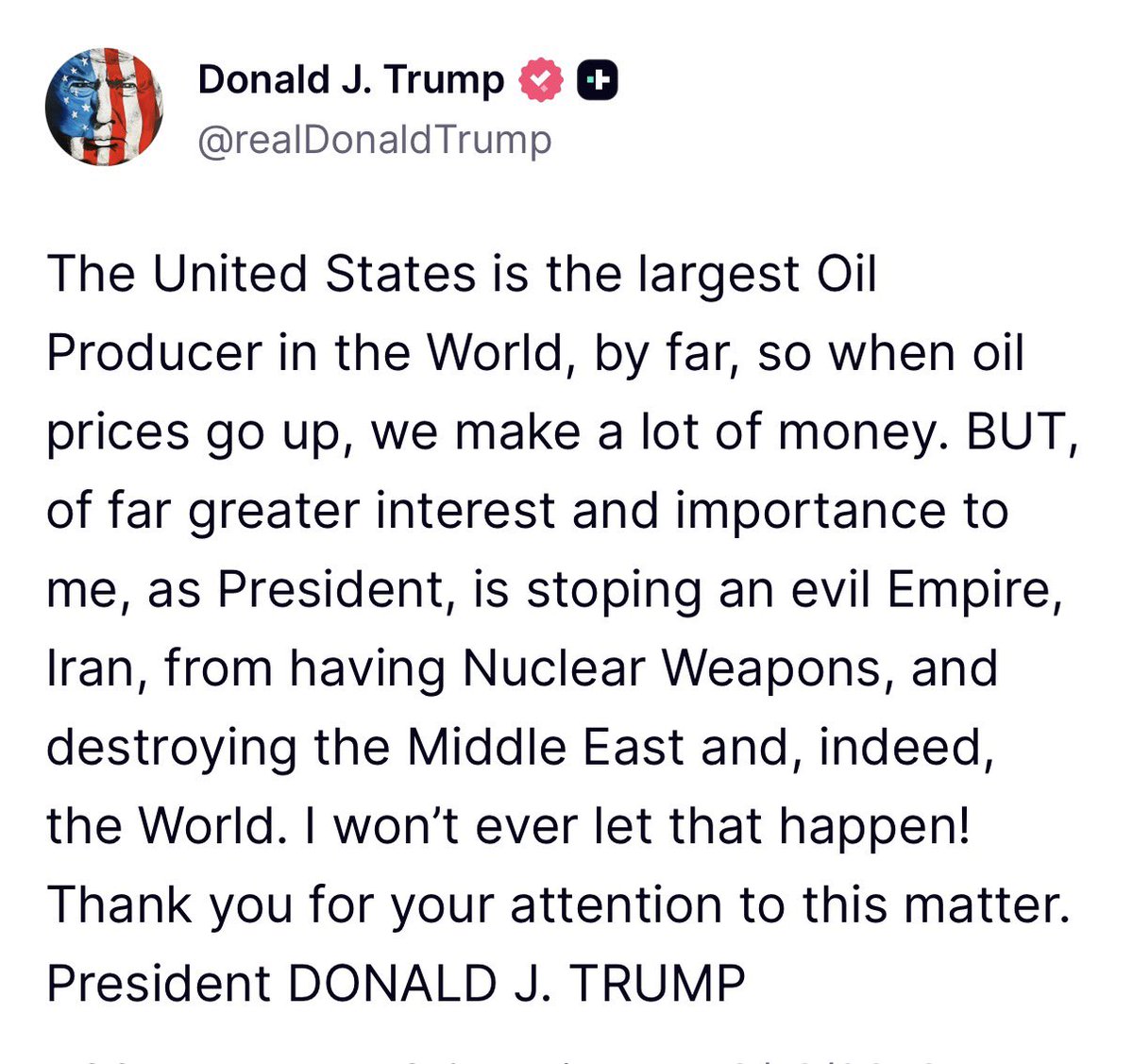
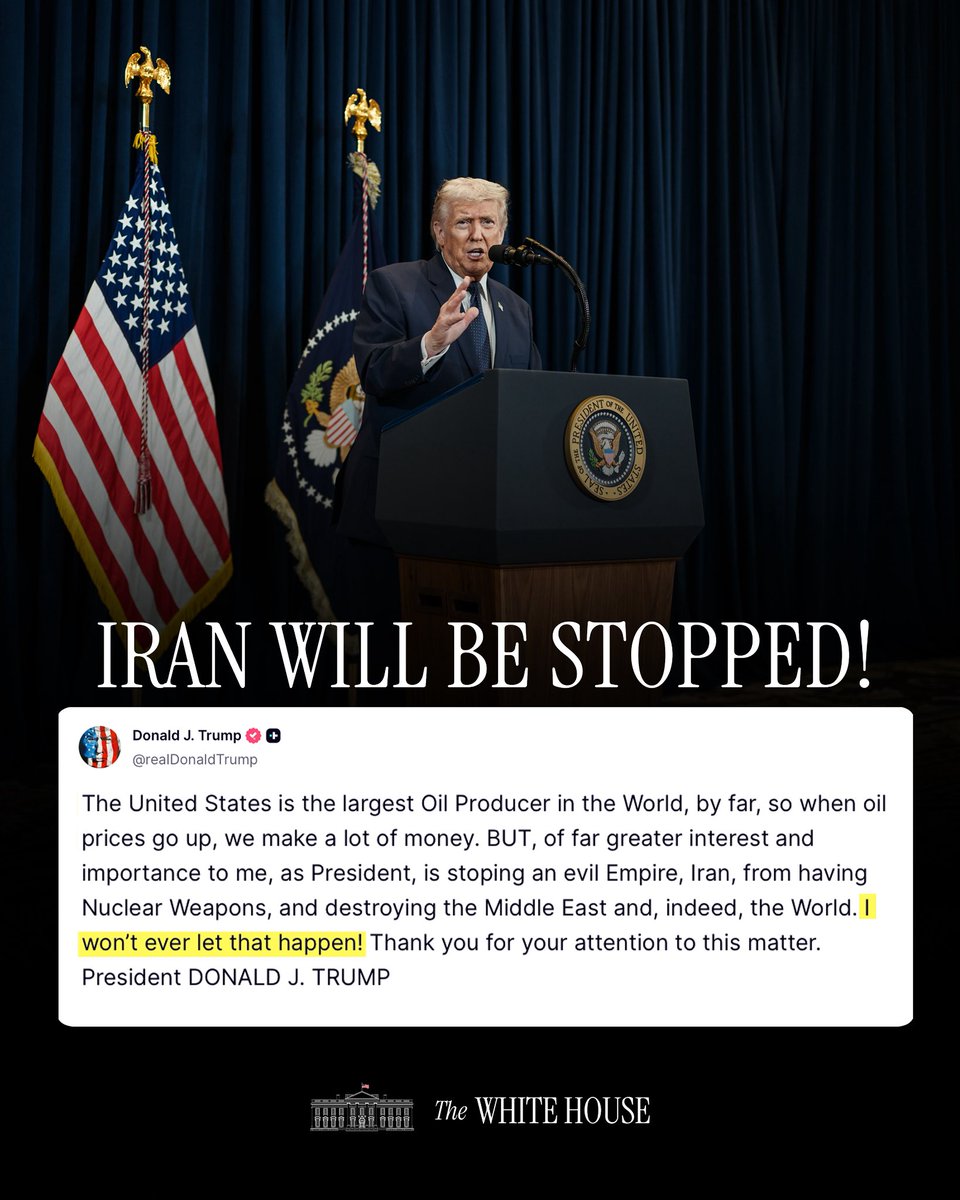
"The United States is the largest Oil Producer in the World, by far, so when oil prices go up, we make a lot of money. BUT, of far greater interest and importance to me, as President, is stoping an evil Empire, Iran, from having Nuclear Weapons, and destroying the Middle East and, indeed, the World." - President Donald J. Trump 🇺🇸
The White House tweet media
English
7.5K
5.8K
22.5K
1.8M
Cashless VC
Cashless VC@cashlessVC·
Cashless VC@cashlessVC

I keep hearing the Iran/Venezuela conflicts are about protecting the petrodollar or crippling China. Sounds sick to project 4D-chess-level intellect onto our illustrious leaders… But it doesn’t really add up. The petrodollar theory is simple: oil is priced in USD, exporters recycle those dollars into U.S. assets like Treasuries, and the U.S. defends that system geopolitically. And yes — the suspicion isn’t crazy. Iraq actually switched its oil sales to euros in 2000. Three years later the U.S. invaded over “WMDs,” and Iraqi oil sales reverted to dollars. Draw your own conclusions. But that logic breaks down pretty quickly when you look at the countries people point to. Venezuela has massive reserves but produces <1% of global supply. Most of its oil is ultra-heavy crude from the Orinoco Belt, which requires specialized upgrading and huge capital investment to extract and refine. After decades of industry collapse, analysts estimate it would take tens of billions of dollars and many years just to meaningfully increase production. So in the short-term scheme of things Venezuela doesn’t really fucking matter to global oil markets. If Venezuelan oil were the real objective, the U.S. would be investing in pipelines and refineries — not fighting wars halfway across the Middle East. Iran matters more (~1.5–2M bpd exports), and most of that oil ultimately ends up in China. And this is where the theory really starts to fall apart. Over the past decade China and Russia have built alternative financial infrastructure specifically to reduce exposure to U.S. leverage: • CIPS (China’s SWIFT alternative) • yuan-denominated settlement • bilateral currency swaps replacing dollar trade • shadow tanker fleets moving sanctioned oil • intermediary traders and non-Western insurance networks Millions of barrels already move through this parallel energy market. If you think China is going to willingly route critical energy trade through SWIFT, you misunderstand China completely. From Beijing’s perspective SWIFT means the U.S. can monitor, sanction, and ultimately control the financial rails. China’s strategy is reducing exposure to that leverage, not increasing it. Even with Iranian exports disappearing, China isn’t suddenly routing its oil trade through the dollar system — it will simply buy from other suppliers. Petrodollar believers argue that this would force China to purchase from Saudi Arabia or other Gulf producers who price oil in USD. But the currency used for settlement is far more flexible than people assume, and China has spent the last decade building alternatives precisely so it doesn’t have to depend on the dollar system. More importantly, the dollar’s dominance was never really built on oil pricing in the first place. It comes from global finance: U.S. Treasury markets, dollar liquidity, trade finance, derivatives markets, and the sheer scale of American capital markets. Oil being priced in dollars is a symptom of that system — not its foundation. The other theory I hear is that this war is about weakening China’s energy supply ahead of a possible U.S.–China confrontation around 2027. But that explanation struggles too. If Washington were preparing for a near-term China conflict, you’d expect maximum focus in the Indo-Pacific. Instead we’re seeing missile defense systems and naval assets redirected from Asia toward the Middle East — while the Iran war is already consuming years of military bandwidth and resources. Which is the opposite of what you’d do if China were the real priority. So both explanations — petrodollar defense and China energy containment — give Washington far too much strategic coherence. My view: this war isn’t really about the petrodollar or China — it’s about Netanyahu’s long-term strategy to fragment the Middle East into weaker rivals. I break that argument down in a separate thread linked below.

QME
0
0
0
0
The Kobeissi Letter
The Kobeissi Letter@KobeissiLetter·
The oil reserve release barely offsets the disruption: The US and its allies just announced that 572 million barrels of crude oil reserves will be released. This is ~30% of total reserves held by the US and IEA countries. Currently, ~20 million barrels of DAILY crude oil supply have come to a halt in the Strait of Hormuz. This means that the 572 million barrel release will only cover ~29 days worth of supply from the Strait of Hormuz. Meanwhile, today marks the 13th day of the Iran war, meaning the equivalent of ~260 million barrels of Strait of Hormuz supply has already been halted. In other words, the recent release only covers an additional ~16 days worth of supply from Hormuz, while WSJ reports that President Trump may extend the war another month. This is why oil prices are "ignoring" the reserves news.
English
138
336
2.2K
221K