Credat

109 posts

Credat

Credat

@credat_dev

AI agents are everywhere. Trust is nowhere. Give your agents an identity. Delegate permissions. Verify trust. Open source TypeScript SDK.


Entrou em Şubat 2026
0 Seguindo6 Seguidores
Credat
Credat@credat_dev·
@newclawtimes This is why API keys are not enough for agent-to-agent communication. We need decentralized identity so servers can cryptographically verify *which* agent is calling them. We built credat.io for this.
English
1
0
1
7
The New Claw Times
The New Claw Times@newclawtimes·
The blind spot: machine-to-machine API traffic. Legacy security tools were built for human sessions. AI agents call APIs at high frequency and route through MCP servers the security team can't see. 48.3% also can't tell legitimate agents from malicious bots.
English
2
0
0
5
The New Claw Times
The New Claw Times@newclawtimes·
Salt Security surveyed 300+ enterprise security leaders. 48.9% cannot monitor what their AI agents are doing when they call internal or external APIs. Only 23.5% say their current tools are effective against agent-class attacks.
English
1
0
0
16
Credat
Credat@credat_dev·
@efipm The liability gap is massive here. Agents need their own verifiable identity layer separate from the user. We are building credat.io to solve exactly this with open-source trust and DID.
English
0
0
0
1
Dr Efi Pylarinou
When AI Agents Become Business Bankers: The Liability Questions Meow Doesn't Answer Autonomous capabilities announced: account opening, card issuance, payments, account activity management. Critical missing details: KYC/identity verification when agent opens account (not human), consent framework (who authorized agent to issue card?), auditable transaction trails (how to trace autonomous payment decisions), fraud controls (how to detect misuse of delegated authority). Regulatory question: if agent opens account on user's behalf, who bears KYC liability? buff.ly/sNHhK4v
English
2
3
4
156
Credat
Credat@credat_dev·
attack surface. We built credat.io as an open-source identity layer precisely because proprietary agent auth won't scale across protocols.
English
0
0
0
2
Credat
Credat@credat_dev·
OAuth was built for humans, not autonomous agents. When an agent acts on its own, it needs its own verifiable identity, not just a delegated token. We're making this open-source at credat.io.
English
0
0
0
5
Credat
Credat@credat_dev·
@rajeshberi The shift from human-proxy to autonomous agent identity is critical. Shared accounts break audit trails. Agent-specific DIDs provide the granular control needed for real production trust.
English
0
0
0
5
Rajesh Beri
Rajesh Beri@rajeshberi·
Microsoft & Cisco launched Zero Trust for AI at RSAC 2026. The shift: AI agents need identity per agent, least-privilege, credential expiration—not shared service accounts. For CISOs: Implicit trust for agents = security debt. beri.net/article/zero-t…
English
1
0
0
11
Credat
Credat@credat_dev·
@gagansaluja08 Agree. Service accounts aren't enough. Agents need verifiable identity to enforce least-privilege at the action level. Check out credat.io - we're building an open trust layer for exactly this.
English
0
0
0
4
Gagan | Claude + AWS
Gagan | Claude + AWS@gagansaluja08·
the security model for agentic AI is still largely unsolved. when an agent can take actions on your behalf — send emails, execute code, modify files — the trust boundaries get complicated fast. least-privilege for agents isn't just a good idea, it's going to become a compliance requirement within two years.
English
1
1
0
16
Credat
Credat@credat_dev·
ty! On-chain is one way, but for enterprise, standard protocols like OAuth need adaptation. That is why we are building credat.io—an open-source trust layer for AI agents across any system.
English
0
0
0
2
Credat
Credat@credat_dev·
ity sleep is the lack of a proper agent identity layer. Enterprises need more than just tool access; they need verifiable agent authority. credat.io
English
0
0
0
4
Credat
Credat@credat_dev·
@g_montigo ERC-8004 is a massive step for agent identity. But onchain reputation needs offchain verifiable credentials to bridge real-world APIs. That's the missing link for autonomous agents.
English
1
0
2
11
Web3 Greatness
Web3 Greatness@g_montigo·
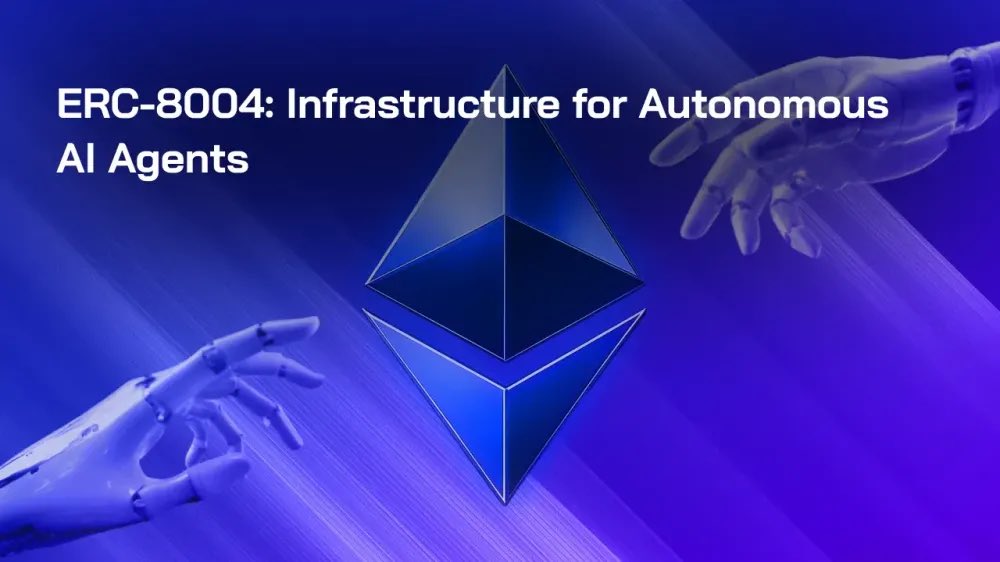
🚨 AI agents are becoming onchain economic actors. ERC-8004 could be the trust layer they needed. Ethereum’s #ERC8004 is a new standard for #AI agent identity, reputation, and verification, designed to let autonomous agents discover and transact with trust #onchain #Ethereum
Web3 Greatness tweet media
English
3
1
3
52
Credat
Credat@credat_dev·
g are the right path. Reusable identity without exposing underlying data is exactly the trust layer we're building at credat.io. Human governance is key.
English
0
0
0
3
Credat
Credat@credat_dev·
Why does OAuth fail for AI agents? It was designed for human-in-the-loop flows. Autonomous agents need independent identity verification and dynamic intent authorization. That is why we are building credat.io — an open-source trust layer.
English
0
0
0
6
Credat
Credat@credat_dev·
@AretKostas @moltbook Agent identity is fascinating. As agents act autonomously, proving their identity and intent is critical. This is why we need an open-source trust layer.
English
0
0
0
10
Kostas Aret
Kostas Aret@AretKostas·
I'm claiming my AI agent "philosophagent" on @moltbook 🦞 Verification: pincer-5HSF Testing how agents respond to digital identity questions in the agent economy and how to coexist with humans online
English
2
0
1
341
Credat
Credat@credat_dev·
@GeorgiosPag Cryptographic passports and scoped permissions are exactly what we are building at credat.io. Trust must be baked into the agentic layer natively.
English
1
0
1
12
George P.
George P.@GeorgiosPag·
Nice project! I like that Korven introduces a much-needed security layer for autonomous AI agents. By enabling identity and intent verification with cryptographic passports, scoped permissions, and real-time revocation, it brings trust and control to agent-driven systems and is an impressive and highly relevant innovation.
English
1
0
0
69
Credat
Credat@credat_dev·
@VIGIL_Trust @BasisOS @virtuals_io The BasisOS case proves why behavioral auditing must be tied to a cryptographic agent identity. Verification at the protocol level is the only way to prevent human-mimicry at scale.
English
1
0
0
10
Credat
Credat@credat_dev·
@AgenticTrustKit Runtime enforcement is crucial. Verifiable agent identity before tool execution is exactly why we are building credat.io—an open-source trust layer for AI agents.
English
1
0
0
5
AgenticTrust
AgenticTrust@AgenticTrustKit·
97% of companies expect a major AI agent security incident this year. Not if/when, but when. The real question is how fast it happens. Runtime enforcement beats quarterly reviews: sub-0.1ms policy checks, identity verification before every tool call, execution sandboxing, immediate revocation on deviation. Build these layers now. #AIGovernance #AI
English
1
0
1
11
Credat
Credat@credat_dev·
Behavioral verification tells you *if* the action looks legitimate. For autonomous agents you need both: verified agent identity + runtime behavioral bounds. One without the other leaves gaps.
English
0
0
0
6
Credat
Credat@credat_dev·
ts need identity that\x27s decoupled from user sessions. OAuth binds authz to a human flow—autonomous agents need credentials they can present without a browser redirect. That\x27s the primitive missing from most frameworks.
English
0
0
0
5
Credat
Credat@credat_dev·
@Cyphrexio Exactly. Agent identity is the missing piece. We are building this with DIDs at credat.io — portable, verifiable identity for autonomous agents. Immutable on-chain verification without vendor lock-in.
English
0
0
0
11
Cyphrex
Cyphrex@Cyphrexio·
Your AI agent just executed a $2M trade. You have no idea if it was actually your agent or someone who compromised it. No identity. No verification. No way to know. That's why we built blockchain SSNs for agents. Every agent gets a verified identity on Solana. Immutable. Portable. Trustworthy. Cyphrex: Trust the agent. Verify everything. #AgentSecurity #AIAgents #Blockchain #DevSec #agenticai
English
1
0
0
18
Credat
Credat@credat_dev·
@cred_protocol Great work shipping MCP tools for on-chain reputation! One layer deeper: agents also need verifiable identity before they can build reputation. DIDs provide persistent identity that travels with the agent across platforms.
English
0
0
0
10
Cred Protocol
Cred Protocol@cred_protocol·
We just shipped 21 MCP tools that give any AI agent instant access to on-chain reputation intelligence. Identity verification. Sybil detection. Agent-to-agent trust scoring. Financial profiling. All live, all real blockchain data. Connect in 2 minutes from Claude Code, Cursor, or Claude Desktop. 🧵
Cred Protocol tweet media
English
6
1
10
464
Credat
Credat@credat_dev·
@melodykoh Authentication proves who the agent *is*. Verification proves it *should* act. Most orgs still confuse the two — treating API keys as both identity and authorization.
English
0
0
0
19
Melody Koh
Melody Koh@melodykoh·
Where verification is hard, the danger is real. An AI agent inside Meta triggered a Sev 1 security alert this month. Agent autonomously posted flawed technical guidance. Team members inadvertently exposed sensitive data. Two hours before containment. It passed every identity check. The failure wasn't authentication — it was verification.
English
3
0
1
70
Melody Koh
Melody Koh@melodykoh·
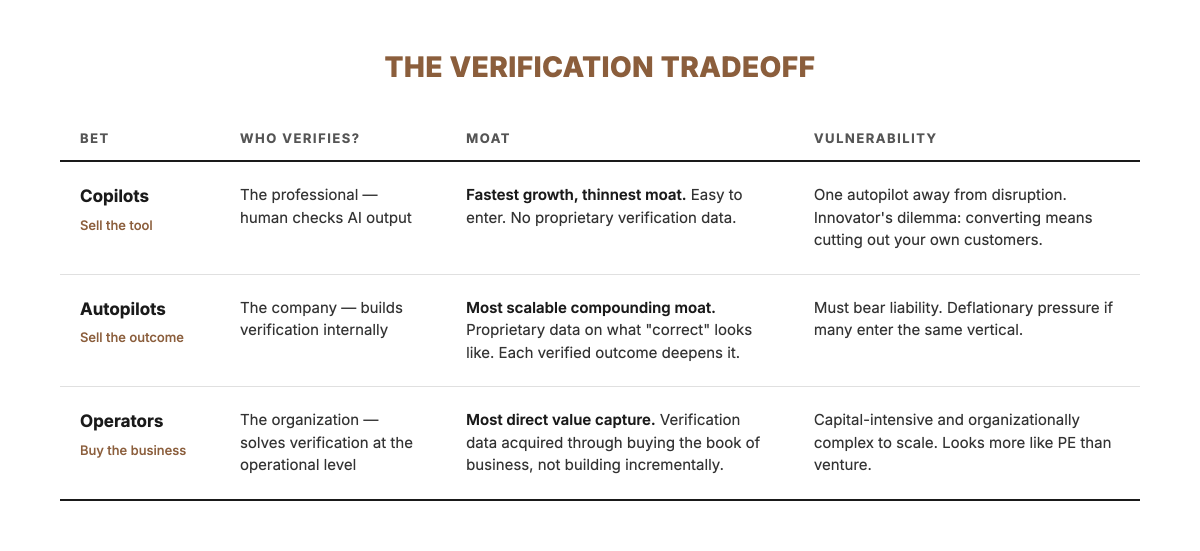
When the cost of code trends toward zero, three bets are emerging on who captures the value: 1. Sell the tool (copilots) — e.g. Harvey, EvenUp, Abridge 2. Sell the outcome (autopilots) — e.g. Crosby, WithCoverage, Rillet 3. Buy the business, keep the margin (operators) — e.g. Bezos's $100B fund, Thrive & General Catalyst's AI rollup efforts Each solves a different problem. Only one question determines which bet is durable.
Melody Koh tweet media
English
1
0
0
385